

P0420 on 2008-2012 Subaru Outback 2.5L: Catalyst Inefficiency Causes and Fixes
On a 2008-2012 Subaru Outback with the 2.5L engine, the P0420 code is most often caused by a failing front catalytic converter. Before replacing this expensive part, it's crucial to rule out exhaust leaks and faulty oxygen sensors, which are also common culprits. Underlying engine issues like oil consumption must be addressed to prevent repeat failures.
- The P0420 code on a 2008-2012 Outback most likely means the front catalytic converter is failing.
- Before spending money on a new converter, you must rule out cheaper fixes like exhaust leaks and faulty oxygen sensors.
- Use a scan tool to watch live sensor data. If the rear O2 sensor's readings mirror the front sensor's, the converter is bad.
- Due to platform sensitivities, using an OEM Subaru catalytic converter is highly recommended over aftermarket options for a long-term fix.
- Address any other engine codes (especially for misfires or fuel mixture problems) before replacing the converter to prevent damaging the new part.
What's Unique About the 2008-2012 Subaru Outback

Subarus, particularly those with the EJ253 engine, are known for being sensitive to the P0420 code. The boxer engine design and a history of issues like oil consumption or head gasket leaks can lead to contamination that shortens the life of the catalytic converter. This contamination, from oil or coolant entering the exhaust stream, coats the precious metals inside the converter and renders it useless. As a result, catalytic converter failure is a more common cause for this code on Subarus compared to many other vehicles. Owners and technicians frequently report that aftermarket converters do not last long, and OEM parts are strongly recommended for a lasting repair. A Technical Service Bulletin (WVM-23R) was even released for some 2008-2009 models to reprogram the ECM with improved logic to better manage the catalytic converter and prevent premature degradation under severe driving.
Generation note: This range covers two Outback generations: the end of the third generation (2008-2009) and the start of the fourth generation (2010-2012). Both generations use the 2.5L EJ253 engine and share the same common causes and diagnostic principles for the P0420 code. The primary exhaust components, including the front catalytic converter assembly (OEM Part #44620AC13A), are very similar in function and high failure rate across these years. However, a key difference is that some 2008-2009 models were eligible for an ECM software update (TSB WVM-23R) to improve catalyst management, which does not apply to the 2010+ models.
Symptoms You May Notice
- Check Engine Light is on
- Flashing cruise control light (a common Subaru-specific behavior when a CEL is present).
- Traction control light is on.
- Inability to use cruise control.
- Reduced engine performance (if the converter is clogged).
- Decreased fuel efficiency.
- Rotten egg smell from the exhaust (rare, indicates a rich fuel condition).
- Rattling noise from the exhaust if the converter's internal ceramic substrate has broken apart.
- Immediately replacing the catalytic converter without checking for exhaust leaks or verifying sensor data. An exhaust leak is a much cheaper fix and a common cause.
- Replacing oxygen sensors without confirming they are faulty. While sensors can fail, the catalytic converter itself is the more frequent point of failure for this code on Subarus.
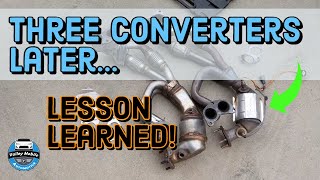
- Using a cheap, non-OEM catalytic converter. 🎬 Watch: Why OEM matters and how to replace the converter. Many owners report the P0420 code returning within months of installing an aftermarket cat that lacks the necessary precious metal loading for Subaru's sensitive ECU.
Most Likely Causes

- Failing Catalytic Converter 🔴 High Probability Subaru catalytic converters on this platform have a high failure rate, often due to age, high mileage, or contamination from engine oil or coolant consumption, which are known issues with the EJ253 engine. The internal catalyst materials become coated or physically break down.
How to confirm: Use a scan tool to graph the upstream (A/F) and downstream (O2) sensor data. At a steady 2,000-2,500 RPM, the downstream sensor voltage should be stable and steady (e.g., >0.6V). If it fluctuates rapidly, mirroring the upstream sensor, the converter is not working. An infrared thermometer can also be used; the converter's outlet should be at least 100°F hotter than the inlet on a working unit.
Typical fix: Replace the front catalytic converter assembly. Using an OEM Subaru part (Part #44620AC13A for 2010-2012 manual transmission models) is strongly recommended for longevity. Aftermarket brands like Magnaflow also offer direct-fit options (e.g., Part #52726).
Est. part cost: $600-$1800 - Exhaust Leak 🟡 Medium Probability Exhaust gaskets, especially the donut gaskets at the head-to-manifold flanges and the 3-bolt flange after the converter, fail from heat cycles and corrosion. An exhaust leak before the rear O2 sensor can introduce oxygen, fooling the sensor into reporting poor catalyst efficiency. The exhaust manifold where the pipes merge is also a common point for cracks to develop.
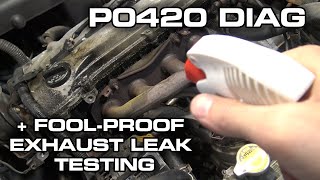
How to confirm: Perform a visual and audible inspection for soot trails or hissing sounds, especially when the engine is cold. A professional smoke test is the most definitive method. 🎬 See how to perform a professional exhaust leak test. Pay close attention to the flange where the manifold pipes merge.
Typical fix: Replace the leaking gasket(s). Common OEM gasket part numbers include 44616AA030 and 44011AC030. If the manifold itself is cracked, it must be replaced.
Est. part cost: $20-$60 - Faulty Rear (Downstream) Oxygen Sensor ⚪ Low Probability The rear O2 sensor can become 'lazy' or contaminated over time, sending inaccurate signals to the ECM. While less common than a failed cat, it's a frequent misdiagnosis.
How to confirm: If the catalytic converter tests good but the code persists, the rear O2 sensor may be failing. Graph its voltage on a scan tool; a healthy sensor on a good cat should show a steady, non-fluctuating voltage above 0.6V at cruise. The heater circuit resistance can also be tested and should typically be between 11.7 and 14.5 ohms on a post-cat sensor.
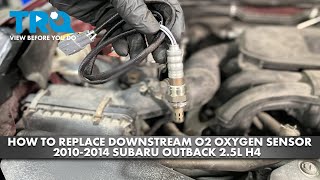
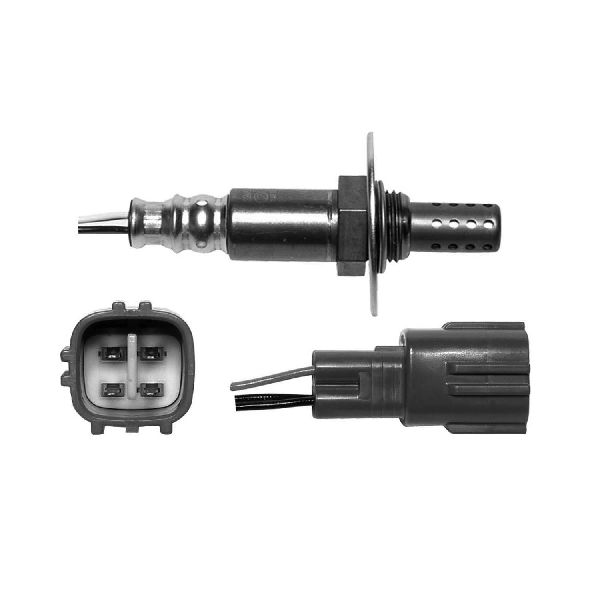
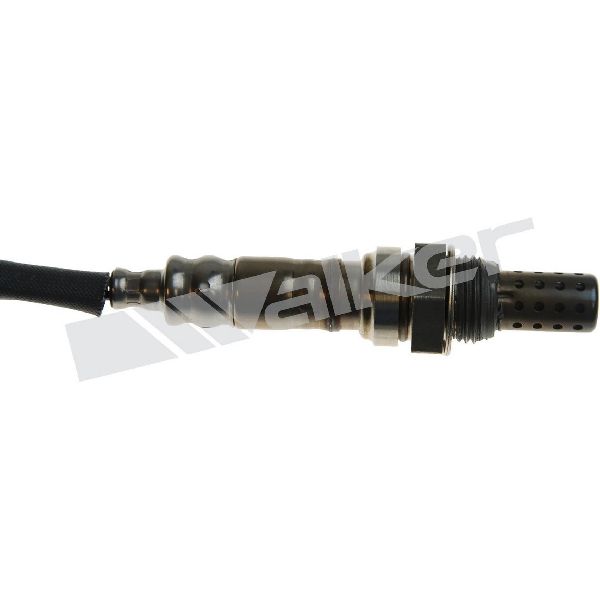
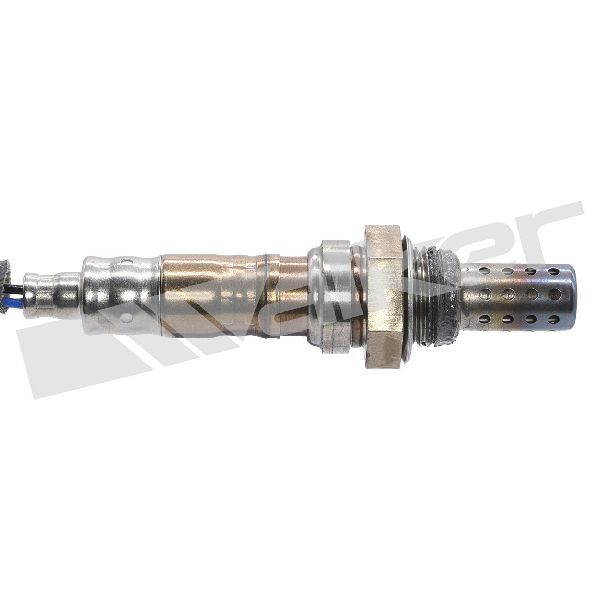
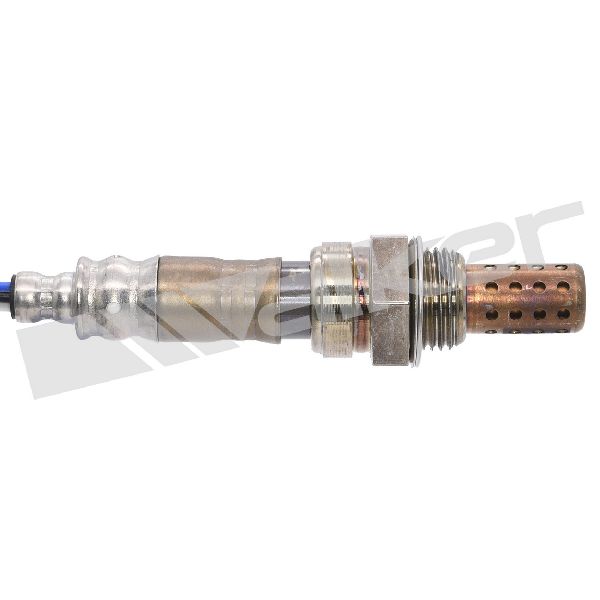
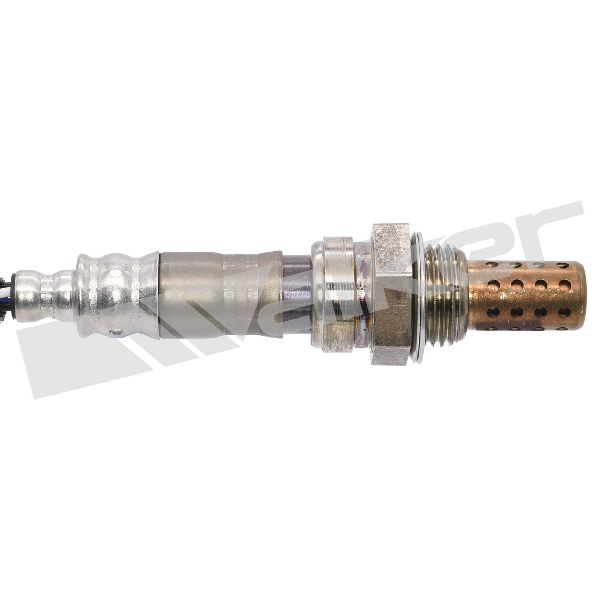
Typical fix: Replace the rear oxygen sensor. The OEM supplier is Denso, and a common part number is 234-4445. 🎬 Watch this step-by-step downstream oxygen sensor replacement guide. It's often recommended to replace sensors when replacing the catalytic converter.
Est. part cost: $80-$180
Rare But Worth Checking
- Faulty Front (Upstream) Air/Fuel Ratio Sensor: A failing front A/F sensor can cause an incorrect fuel mixture. A long-term rich condition can damage the catalytic converter, making the P0420 code a symptom of this other problem. The OEM supplier is Denso, and a common part number is 234-9123.
- Underlying Engine Issues: Excessive oil consumption (from piston rings) or a leaking head gasket can contaminate the exhaust and destroy a new catalytic converter quickly. These root causes must be addressed to prevent a recurring P0420 code. Check for oil residue on spark plugs or white smoke from the tailpipe.
- Contaminated MAF/MAP Sensor or Wrong Air Filter: In some cases, a dirty Mass Airflow (MAF) or Manifold Absolute Pressure (MAP) sensor, or even a restrictive aftermarket air filter, can provide incorrect data to the ECU, leading to fuel trim issues that can trigger a P0420. One owner reported fixing a persistent P0420 by cleaning these sensors and switching to an OEM Subaru air filter after a dealer had already replaced the entire exhaust.
Diagnosis Steps

- Check for any other stored trouble codes. Address any misfire, fuel trim, or sensor codes first, as per Subaru's diagnostic guidance (e.g., TSB 11-81-07R).
- Visually and audibly inspect the entire exhaust system from the engine to the tailpipe for any signs of leaks, especially around gaskets and flanges. Look for black soot marks.
- Check engine oil level and condition. Excessive consumption or coolant contamination points to a larger problem that will destroy a new converter.
- Use a scan tool with live data graphing capabilities. Warm the engine to operating temperature.
- Bring the engine RPM to a steady 2,000-2,500 RPM and hold it.
- Observe the voltage graphs for the upstream (Bank 1, Sensor 1) and downstream (Bank 1, Sensor 2) oxygen sensors.
- A healthy system will show the upstream sensor fluctuating rapidly, while the downstream sensor remains relatively flat and steady (above ~0.6V), indicating the catalyst is working.
- If the downstream sensor's graph mimics the upstream sensor's fluctuations, the catalytic converter has likely failed.
- If the sensor readings are inconclusive, consider testing the sensors themselves or performing a temperature test on the converter with an infrared thermometer (the outlet should be significantly hotter than the inlet on a working converter).
- Gently tap the catalytic converter with a rubber mallet (when cool) and listen for rattling, which indicates a broken internal substrate.
Parts You'll Likely Need

- Front Catalytic Converter Assembly
(OEM #44620AC13A (Fits 2010-2012 Manual Trans models, check VIN for exact fitment))— This is the most common failure point for a P0420 code on this specific vehicle.
Trusted brands: Subaru (OEM), MagnaFlow (e.g., 52726), Walker
OEM price range: $1100-$1650
Aftermarket price range: $500-$900 - Rear Oxygen Sensor
(OEM #Denso 234-4445 (Denso is OEM supplier))— Sometimes fails and causes the code, but is more often replaced as a preventative measure along with the catalytic converter.
Trusted brands: Denso (OEM supplier), NGK/NTK, Bosch
OEM price range: $150-$250
Aftermarket price range: $80-$150 - Exhaust Gaskets
(OEM #44616AA030 (Manifold), 44011AC030 (Flange))— Required when replacing the catalytic converter or fixing an exhaust leak. They are not reusable.
Related Codes That Often Appear With This One
- P030x (e.g., P0301, P0302) — Misfire codes indicate that unburned fuel is entering the exhaust, which can quickly overheat and destroy the catalytic converter. Misfires must be fixed before addressing the P0420.
- P0171 or P0172 — Fuel trim codes (lean or rich) indicate a problem with the air-fuel mixture. A persistent rich condition (P0172) is especially damaging to the catalyst and is a common underlying cause of P0420.
- P0057 — This ignition system related code was reported by an owner in NHTSA ODI #11646326 alongside P0420, leading to a diagnostic visit at a local dealer.
Technical Service Bulletins (TSBs) & Recalls

- TSB 09-110-23R: This Service Information Bulletin announces diagnostic service procedures to be followed when DTC P0420 is detected by the Engine Control Module (ECM). While officially for 2017+ models, its diagnostic logic is relevant. It mandates checking for other DTCs, verifying oil levels, and inspecting for exhaust leaks before proceeding with P0420-specific diagnosis, reinforcing the 'diagnose first' principle.
Platform-Specific Known Issues
- Subaru has issued Technical Service Bulletins (TSBs) for P0420 diagnostic procedures on similar models, emphasizing a strict diagnostic process to avoid misdiagnosis. For example, TSB 09-110-23R, while for newer models, highlights the importance of checking for other codes, oil levels, and exhaust leaks before condemning the converter.
- Aftermarket catalytic converters are known to fail quickly on these vehicles, often causing the P0420 code to return within a year or two. Many owners and technicians strongly recommend using genuine Subaru parts for a lasting repair.
- A common but not recommended (and often illegal) workaround discussed by owners is the use of an O2 sensor spacer or 'riser' on the downstream sensor. This pulls the sensor partially out of the exhaust stream to trick the ECU, but it does not fix the underlying emissions problem.
Mechanic-Grade Diagnostic Values
- Rear (Downstream) O2 Sensor Voltage — expected: Steady voltage above 0.6V - 0.7V at steady cruise RPM (2000-2500).. Failure: Voltage fluctuates rapidly, mirroring the upstream sensor's waveform.
- Front (Upstream) A/F Sensor Heater Resistance — expected: Approximately 5-6 ohms when the engine is cool.. Failure: An open circuit (infinite resistance) or a value significantly outside the expected range.
- Rear (Downstream) O2 Sensor Heater Resistance — expected: Approximately 11.7 to 14.5 ohms.. Failure: An open circuit (infinite resistance) or a value significantly outside this range.
- Ignition Coil Primary Resistance — expected: Approximately 0.73 ohms (+/- 10%) at the pin connector.. Failure: A reading significantly higher or lower than the specification.
- Ignition Coil Secondary Resistance — expected: Approximately 12,800 ohms (12.8 kOhms) (+/- 15%) between the outputs.. Failure: A reading significantly outside the specification, or an open circuit.
- Fuel Pressure — expected: Between 49 and 52 PSI.. Failure: Pressure that is too high or too low can affect the air/fuel mixture and contribute to P0420.
Hidden / Shadow Codes Worth Checking
- Mode $06, TID:$01, CID:$01: This is not a shadow code but the generic OBD-II test ID for the Catalyst Monitor Bank 1. It provides the raw test value and the min/max thresholds set by the manufacturer. A test value that is very close to the failure threshold can indicate a borderline catalytic converter, even before the P0420 code sets consistently. (see via A scan tool capable of reading Mode $06 data.)
Scan Tool Commands That Help
- Subaru Select Monitor (SSM) or equivalent professional scan tool: ECM Reprogramming — For 2008-2009 models, TSB WVM-23R describes an update to the ECM logic to improve catalyst management. If a P0420 code is present and the vehicle falls within the applicability range, checking for and applying this software update is a critical step before replacing parts.
- Any scan tool with live data graphing: Graphing Upstream and Downstream O2 Sensors — This is the primary diagnostic method. By observing the sensor waveforms at a steady 2,500 RPM, a technician can visually confirm if the catalyst is functioning. A flat downstream signal indicates a good cat; a fluctuating signal mirroring the upstream sensor indicates a failed cat.
Wiring & Ground Locations
- GB-5 and GV — GB-5 is a ground point located in the right kick panel area. GV is a ground point located on the right side of the engine.. The Engine Control Module (ECM) and its sensors rely on clean and solid ground connections. A corroded or loose engine-to-chassis ground strap can cause erratic sensor readings, potentially leading to incorrect fuel trim and, eventually, a P0420 code.
- Fuse & Relay Box (F/B) — Located in the left kick panel inside the cabin.. This box contains fuses and relays critical for engine management. While not a direct cause, checking for any related blown fuses is a fundamental step in electrical diagnosis.
- Rear O2 Sensor Connector — The connector for the rear O2 sensor is located near the airbox in the engine bay for easy access.. Knowing the connector location is essential for testing the sensor's heater resistance and signal without having to raise the vehicle.
Real Owner Repair Stories
- NHTSA ODI #11241873 — An owner reported that the cruise control, skid control, brake light, and check engine light all illuminated simultaneously due to a P0420 code and O2 sensor issues.
- NHTSA ODI #10321730 — One owner reported that their vehicle would not pass an emissions test due to the P0420 code and was informed that a computer-related issue was involved.
- Reddit user in r/MechanicAdvice (2008 Buick Lucerne (similar P0420 principle)) — P0420 code, hesitation.
❌ Tried (didn't work) Using Seafoam and Lucas fuel treatments., Adding lacquer thinner to the fuel tank.
✅ What actually fixed it Replacing the catalytic converter (Walker brand from RockAuto). The root cause was suspected to be a previously stuck-open fuel injector that damaged the original cat. - Reddit user in r/subaru (2008 Subaru Outback) — P0420 code
❌ Tried (didn't work) Using an O2 sensor spacer/defouler.
✅ What actually fixed it Replaced both the upstream and downstream O2 sensors, then replaced the catalytic converter with a $160 unit from Amazon. - Subaru Legacy International forum user (Subaru Legacy (similar EJ engine and exhaust setup)) — P0420 code, especially after installing an aftermarket exhaust.
❌ Tried (didn't work) Using a single O2 sensor spacer.
✅ What actually fixed it Stacking two O2 sensor spacers (one drilled out completely, one with a smaller hole) to pull the rear O2 sensor further out of the exhaust stream. This is a workaround, not a repair, that tricks the ECU. - AcuraZine forum user (2008 Acura MDX (demonstrates a non-Subaru case)) — P0420 code.
❌ Tried (didn't work) The code would return after clearing.
✅ What actually fixed it The check engine light repeatedly went away after adding STP Fuel Injector Cleaner to the gas tank, and came back when a tank without the additive was used. This suggests a dirty or leaking injector was causing a fuel mixture issue that triggered the P0420.
"I Checked Everything" — The Actual Cause
- In many forum discussions, a smoke test for exhaust leaks comes back clean. The ultimate cause is often a catalytic converter that has lost its chemical efficiency due to age or contamination from oil/coolant, even with no physical leaks. Another possibility is a hairline crack in the exhaust manifold that only opens up and leaks when hot, which a cold smoke test would miss.
When the Usual Fixes Don't Work
- While the most common fix is replacing the catalytic converter, numerous owner accounts exist where this did not solve the problem. In one case, after replacing the cat and both O2 sensors, the P0420 code returned. The final fix was replacing a torn air intake duct between the MAF sensor and the throttle body, which was causing an unmetered air leak and incorrect fuel trims. In another instance, a user fixed a persistent P0420 only after replacing the ignition coil, spark plugs, wires, and finally the O2 sensors with OEM Denso parts, after which the code was resolved.
Model Year Variations Within This Range
- 2008-2009: These model years were subject to Subaru Technical Service Bulletin WVM-23R, which involved an ECM reprogramming to improve catalyst efficiency management. This is a crucial diagnostic step for these specific years that does not apply to the 2010-2012 models.
- 2010-2012: These models are part of the fourth generation Outback. While they use the same EJ253 engine, wiring diagrams and ground point locations (like GB-5 in the right kick panel) are specific to this generation's chassis and should be referenced accordingly.
Diagnostic Flowchart
Real Owner Stories
Aggregated from forums and TSBs cited above. Mileages and costs reflect what owners reported in those sources.
2013 Subaru Outback
Symptoms: Experienced an intermittent P0420 code. A shop initially replaced the upstream O2 sensor, but the code returned.
What fixed it: Replaced the downstream O2 sensor on the advice of a dealer, which finally resolved the code.
Source hint: r/subaruoutback - 'P0420 code' (2021)
Subaru WRX
Symptoms: Persistent P0420 code. The dealer failed to fix the issue four times, which included replacing the entire exhaust system.
What fixed it: The owner fixed the P0420 code by cleaning the MAF/MAP sensors and installing an OEM air filter.
Cost: $1500-$1500
Source hint: YouTube - 'P0420 on Subaru: The $1500 Mistake Everyone Makes' by MrSubaru1387 (2022)
Subaru (Model Unspecified)
Symptoms: Persistent P0420 code that the owner wanted to bypass cheaply.
What fixed it: Installed an O2 sensor spacer to pull the rear sensor out of the direct exhaust stream, stabilizing its reading and tricking the ECU (noted as an illicit workaround, not a true repair).
Cost: $5-$5
Source hint: ultimatesubarumessageboard.org - 'how i fixed my F***ing 420 code' (2010)
Documented NHTSA Reports
- NHTSA ODI #11646326: An owner reported that unknown warning lights illuminated, and a scan retrieved DTC codes P0420 and P0057. The vehicle was subsequently taken to a local dealer for diagnosis.
- NHTSA ODI #11241873: A report describes the cruise, skid control, brake light, and check engine light coming on due to a P0420 code and O2 sensor issues.
- NHTSA ODI #10321730: An owner reported that their vehicle would not pass an emissions test due to the P0420 code at approximately 85,000 miles.
Related OBD-II Codes
Frequently Asked Questions
Why are my cruise control and traction control lights flashing along with the P0420 code on my Outback?
Should I use an aftermarket catalytic converter to fix the P0420 code on my EJ253 engine?
Does TSB 09-110-23R apply to my 2008-2012 Outback?
What exhaust gaskets should I check for leaks before replacing the catalytic converter?
Can engine oil consumption cause a P0420 code on my Subaru?
Is an O2 sensor spacer a legitimate fix for the P0420 code on my Outback?
Helpful Videos
We Have This Part in Stock


The information in this article is provided for general reference and educational purposes only. Vehicle specifications, procedures, and part compatibility can vary by production date, trim level, and region. Always consult your vehicle's factory service manual and verify part numbers before purchasing or performing repairs. Safety-critical components such as airbags, seat belts, and braking systems should be installed by a qualified professional.
- Subaru Outback:
- 🎬 Helpful Videos
- 🛍️ Shop This Part
- What's Unique About the 2008-2012 Subaru Outback
- Symptoms You May Notice
- Most Likely Causes
- Rare But Worth Checking
- Diagnosis Steps
- Parts You'll Likely Need
- Related Codes That Often Appear With This One
- Technical Service Bulletins (TSBs) & Recalls
- Platform-Specific Known Issues
- Mechanic-Grade Diagnostic Values
- Hidden / Shadow Codes Worth Checking
- Scan Tool Commands That Help
- Wiring & Ground Locations
- Real Owner Repair Stories
- "I Checked Everything" — The Actual Cause
- When the Usual Fixes Don't Work
- Model Year Variations Within This Range
- Diagnostic Flowchart
- Real Owner Stories
- 2013 Subaru Outback
- Subaru WRX
- Subaru (Model Unspecified)
- Documented NHTSA Reports
- Related OBD-II Codes
- Frequently Asked Questions
- 🎟️ Get 5% Off