

P0420 on 2014-2021 Subaru Forester: Catalyst Efficiency Causes and Fixes
On a 2014-2021 Forester, P0420 most often means the catalytic converter is failing, a costly repair. However, always check for cheaper fixes first, like exhaust leaks or a faulty rear oxygen sensor, as Subaru's system is very sensitive. Ignoring underlying issues like oil consumption will destroy a new converter.
- P0420 on a 2014-2021 Forester means the catalytic converter's efficiency is low, but this doesn't always mean the converter is bad.
- Always diagnose in order: check for other codes, inspect for exhaust leaks, then analyze sensor data before buying parts.
- A faulty rear O2 sensor or an exhaust leak are common, cheaper problems that can mimic a failed converter.
- If the catalytic converter does need replacement, it is critical to address any underlying engine issues (like oil burning) to prevent repeat failure.
- Using a cheap aftermarket catalytic converter may not solve the problem, as Subaru's sensitive electronics may still trigger the P0420 code.
What's Unique About the 2014-2021 Subaru FORESTER

Subaru's engine management software is known for being particularly sensitive to catalyst efficiency, sometimes triggering a P0420 code at a threshold where other vehicles might not. This has led some owners on forums to call it 'The Subaru Code'. Furthermore, some FB series engines in these Foresters can experience excessive oil consumption, which can contaminate and prematurely fail the catalytic converter. This makes it crucial to investigate underlying engine health before assuming the converter itself is the sole problem. The appearance of the P0420 code is also famous for causing the 'Christmas tree' effect on the dashboard, where the Check Engine Light is joined by a flashing 'CRUISE' light and a solid traction control light, disabling those systems as a precaution.
Diagnostic Flowchart

Tap your situation to follow the diagnostic path that matches what you're seeing on this vehicle.
Generation note: This range covers two Forester generations. The 4th Gen (SJ, 2014-2018) offered a 2.5L naturally-aspirated FB25 engine and a 2.0L turbo FA20DIT engine. The 5th Gen (SK, 2019-2021) discontinued the turbo, offering only an updated direct-injection 2.5L engine. While the P0420 code's meaning is the same, the specific catalytic converter and exhaust parts are different between these generations and engines, affecting part numbers and cost.
Symptoms You May Notice

- Solid Check Engine Light
- Flashing 'CRUISE' indicator on the dashboard
- Solid vehicle traction/stability control light ('VDC' or car with squiggly lines)
- Inability to use cruise control
- Reduced fuel economy or sluggish acceleration if the converter is clogged
- A rattling sound from under the vehicle if the internal catalyst material has broken apart
- A 'rotten egg' or sulfur smell from the exhaust
- Exhaust smell inside the cabin if the cause is a significant exhaust leak before the converter
- Replacing the catalytic converter without first diagnosing and fixing the root cause, such as an oil consumption issue, a bad A/F sensor, or an exhaust leak. The P0420 code will likely return.
- Immediately replacing oxygen sensors without testing them. While they can be the cause, it's common to replace them only to find the converter was the actual problem.
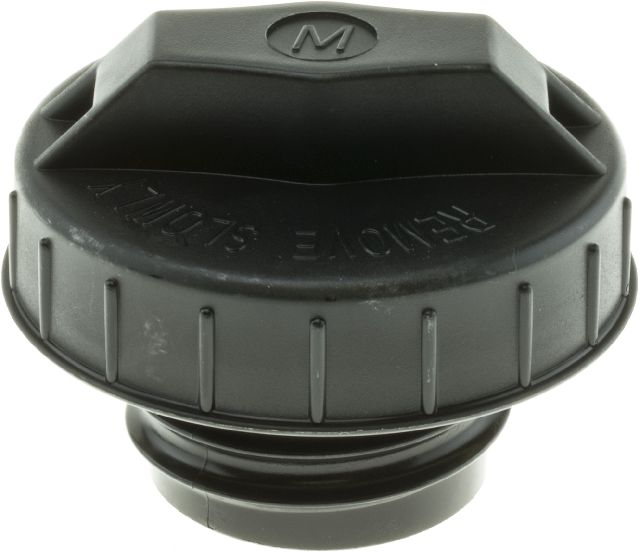
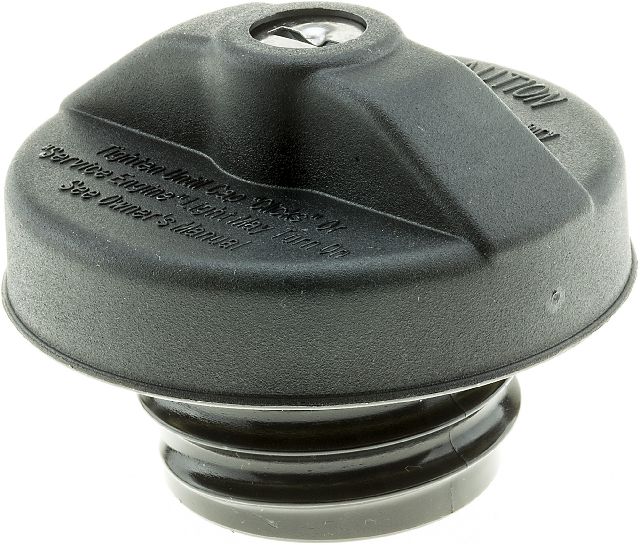
- Assuming a loose gas cap is the cause. A loose cap triggers EVAP system codes (e.g., P0457), not catalyst efficiency codes.
- Using cheap aftermarket catalytic converters. Many owners report on forums that aftermarket cats, especially non-CARB compliant ones, do not meet the efficiency requirements of Subaru's sensitive monitoring system and cause the code to return quickly.
Most Likely Causes
- Failing Catalytic Converter 🔴 High Probability Can be caused by normal aging, but is often accelerated by underlying issues like oil consumption common to some Subaru engines of this era. A real-world owner complaint to the NHTSA for a 2017 Forester with P0420 resulted in a diagnosis of catalytic converter failure. [OWNER COMPLAINT ODI #11628507] Subaru has also issued service bulletins (e.g., WVM-23R) that explicitly state to replace the catalytic converter if P0420 is present after checking for other codes.
How to confirm: After confirming sensors and exhaust integrity, use a scan tool to graph both O2 sensors. If the downstream sensor voltage mirrors the upstream sensor's, the converter is not working. A severely clogged converter will cause a major loss of power, especially under load.
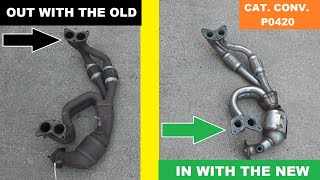
Typical fix: Replace the catalytic converter assembly. 🎬 See how to replace the converter using basic hand tools It is critical to fix any other issues (oil consumption, misfires, vacuum leaks) first, or the new converter will fail prematurely.
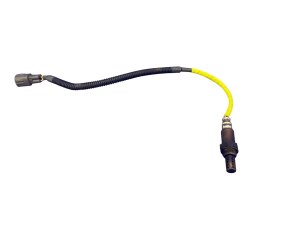
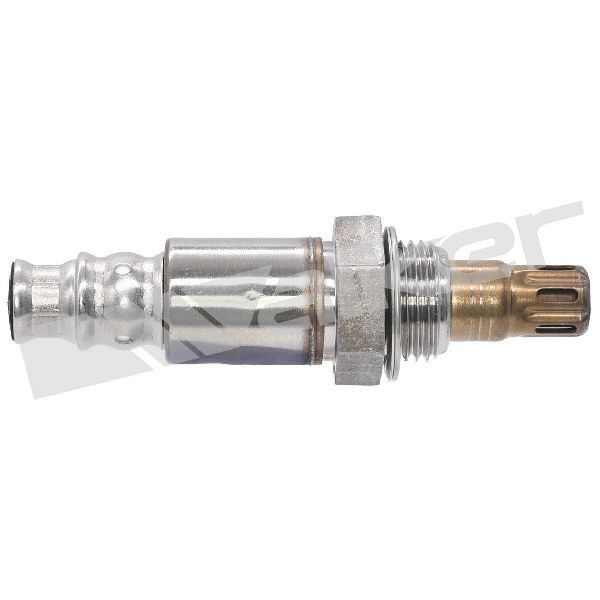
Est. part cost: $1500-$3500 (OEM), $400-$1000 (Aftermarket) - Faulty Rear (Downstream) Oxygen Sensor 🟡 Medium Probability The rear O2 sensor is the primary source of information for catalyst monitoring. It can become 'lazy' or biased with age, sending incorrect data to the ECM that suggests the converter has failed when it hasn't. Many owners on forums report replacing this sensor first as a cheaper diagnostic step.
How to confirm: Monitor the sensor's live data on a scan tool. It should show a relatively steady voltage (e.g., >0.6V) on a warm, healthy engine at steady cruise. If it's stuck high or low, or fluctuates rapidly like the front sensor, it may be faulty.
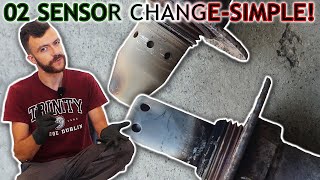
Typical fix: Replace the rear oxygen sensor. 🎬 Watch: How to easily change your Subaru oxygen sensors Use of OEM/Denso sensors is highly recommended by forum users to avoid compatibility issues.
Est. part cost: $150-$250 (OEM), $70-$150 (Aftermarket) - Exhaust System Leak 🟡 Medium Probability Rust can cause leaks at gaskets or flex pipes, particularly the donut gasket between the manifold and mid-pipe. A leak located between the front and rear O2 sensors allows outside oxygen to enter the exhaust stream, which skews the rear O2 sensor's reading and tricks the ECM into setting a P0420 code.
How to confirm: Visually inspect the exhaust manifold, gaskets, and pipe between the sensors for black soot trails or cracks. A smoke test is the most effective way to find small leaks. An audible ticking or hissing sound that gets louder with RPM is also a strong indicator.
Typical fix: Replace the leaking gasket or repair/replace the leaking section of the exhaust pipe.
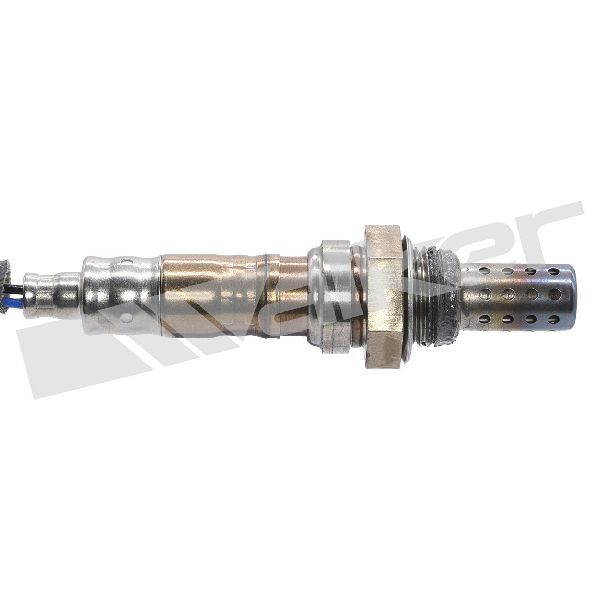
Est. part cost: $20-$300 - Faulty Front Air/Fuel (A/F) Ratio Sensor ⚪ Low Probability The front A/F sensor is the primary input for fuel control. If it becomes slow or inaccurate, it can cause the engine to run slightly rich or lean, which over time can damage the catalytic converter and trigger P0420.
How to confirm: Graph the sensor's response on a scan tool. It should react very quickly to changes in throttle. A slow or 'lazy' response indicates a problem. Some forum members recommend replacing this as a preventative measure when chasing a P0420.
Typical fix: Replace the front air/fuel ratio sensor. Again, OEM/Denso parts are strongly recommended.
Est. part cost: $150-$250 (OEM), $80-$160 (Aftermarket)
Rare But Worth Checking
- Engine Mechanical Issues (Oil or Coolant Burning): Subaru's own TSB 09-110-23R for P0420 explicitly requires checking for white smoke from the tailpipe, which indicates burning oil or coolant. These contaminants will quickly destroy a catalytic converter. An oil consumption test may be necessary if suspected. This is a known issue, with Subaru extending the powertrain warranty for excessive oil consumption on some models.
- Leaking Fuel Injector or High Fuel Pressure: A rich running condition caused by a bad injector or fuel pressure regulator can overwhelm the catalytic converter with unburnt fuel, causing it to overheat and fail.
- Outdated ECM Software: Subaru has released software updates for the ECM to change the sensitivity and logic for P0420 detection. TSB WVM-23R mentions reprogramming the ECM to improve management of the catalytic converter. It's worth checking with a dealer if any updates are available for your vehicle's VIN.
Diagnosis Steps
- Check for Other DTCs: Scan the ECM for any other codes. Per Subaru TSB 09-110-23R, address any misfire (P030x), fuel trim (P0171/P0172), 🎬 Watch: A step-by-step guide to addressing the P0420 code or O2/AF sensor circuit codes (P0030-P0141 range) *before* diagnosing P0420.
- Perform Visual & System Inspection: Check engine oil level and for signs of contamination. Check for white/blue smoke from the tailpipe. Inspect the air intake system for leaks and ensure the air filter is clean. Check for exhaust leaks, especially between the two O2 sensors.
- Analyze Live Sensor Data: Use a scan tool to graph the upstream A/F sensor and downstream O2 sensor. At a steady 2500 RPM on a fully warmed-up engine, the upstream sensor should fluctuate rapidly. The downstream sensor should hold a steady, high voltage (typically >0.6V).
- Evaluate Catalyst Efficiency: If the downstream O2 sensor's waveform mimics the upstream sensor's rapid fluctuations, the catalytic converter is not storing oxygen and has likely failed.
- Test the Oxygen Sensors: If the readings are inconclusive, test the sensors directly. A lazy sensor may not respond quickly to changes in throttle or induced rich/lean conditions.
- Check for ECM Updates: Contact a Subaru dealer or use a professional resource to check if your vehicle's VIN has an available ECM software update related to P0420 logic.
Parts You'll Likely Need

- Catalytic Converter
- Rear Oxygen Sensor
- Front Air/Fuel Ratio Sensor
- Exhaust Gaskets
Related Codes That Often Appear With This One
- P0300-P0304 — Misfire codes (P030X) indicate unburnt fuel is entering the exhaust, which can quickly damage the catalytic converter and lead to a P0420. TSB 09-110-23R lists these as primary codes to check for.
- P0171 or P0172 — System Too Lean (P0171) or System Too Rich (P0172) codes indicate a fuel mixture problem that, if left unaddressed, can contaminate or overheat the catalytic converter, causing P0420. These are also listed for priority diagnosis in TSB 09-110-23R.
Technical Service Bulletins (TSBs) & Recalls
- 09-110-23R: This bulletin, revised in November 2023, provides the official Subaru diagnostic procedure for DTC P0420 for a wide range of models including the 2017-2023 Forester. It prioritizes checking for other DTCs, exhaust leaks, and oil/coolant burning before condemning the converter.
- WVM-23R: An older service program bulletin that involved reprogramming the ECM to improve the management of the catalytic converter and prevent premature P0420 codes under certain driving conditions. It also instructed dealers to replace the converter if P0420 was already stored.
- 02-157-15R: While not directly for P0420, this TSB addresses excessive oil consumption and extends the powertrain warranty to 8 years/100,000 miles for affected vehicles, which is a primary root cause of converter failure.
Platform-Specific Known Issues
- Oil Consumption Leading to Converter Failure: The FB25 2.5L engine used in many Foresters of this era can suffer from excessive oil consumption due to issues with the piston rings. This burning oil contaminates the catalytic converter with ash, poisoning the catalyst materials (like cerium) and rendering it ineffective, which directly causes a P0420 code. Subaru acknowledged this with a warranty extension (TSB 02-157-15R). It is the number one root cause to investigate before replacing a converter.
- O2 Sensor Spacers / 'The Spark Plug Non-Fouler Trick': Due to the high cost of converter replacement, a common but legally questionable workaround discussed on forums is the use of an O2 sensor spacer (also called a 'non-fouler' or 'J-pipe'). This pulls the rear O2 sensor slightly out of the direct exhaust stream, tricking it into seeing less oxygen and reporting to the ECM that the (failing) converter is working correctly. While some users report success, others say it doesn't work or causes other codes. This does not fix the underlying emissions problem and is illegal in jurisdictions with emissions testing.
Mechanic-Grade Diagnostic Values
- Downstream O2 Sensor Voltage (Healthy Cat) — expected: Relatively stable and high, around 0.6V - 0.8V at steady cruise/RPM.. Failure: Voltage fluctuates rapidly, mimicking the sine wave of the upstream A/F sensor.
- Fuel Pressure (2.5L Non-Turbo) — expected: 49 PSI to 52 PSI.. Failure: Pressure outside this range can cause lean or rich conditions that damage the converter.
- Ignition Coil Primary Resistance (EJ253 engine, for reference) — expected: 12,800 Ohms (12.8 kΩ) +/- 15%.. Failure: A reading outside this range indicates a failing coil, which can cause misfires that lead to P0420.
Hidden / Shadow Codes Worth Checking
- Mode $06, TID $21: This is not a 'code' but a monitor ID within the OBD-II system for Catalyst Efficiency Bank 1. Technicians can view the test results from the ECM's last catalyst monitor test. (see via A professional scan tool with Mode $06 data capability is required. The technician can compare the reported value against the manufacturer's maximum allowable limit to see how close the catalyst is to failing the test.)
Scan Tool Commands That Help
- Subaru Select Monitor (SSM) or equivalent professional scan tool: Catalyst Efficiency Test / On-Board Monitors — After a repair, such as replacing a catalytic converter, a technician can use the scan tool to monitor the catalyst readiness monitor (Mode $06, CAT $21) to verify the fix is working correctly before the P0420 code has a chance to return.
- Subaru Select Monitor (SSM): INSPECTION MODE V — As per TSB 09-110-23R, this is a specific road test procedure involving a set drive pattern to force the catalyst efficiency monitor to run and confirm if a fault is still present after a repair.
Wiring & Ground Locations
- ECM Main Ground — On many Subaru models, the ECU's main ground is bolted directly to the intake manifold, near the throttle body.. A poor ground connection at the intake manifold can cause erratic behavior in all engine sensors, including the A/F and O2 sensors, leading to incorrect data and false codes. The ECU itself relies on this ground for its operation.
- Rear O2 Sensor Connector — The connector for the rear (downstream) O2 sensor is typically located on the side of the transmission, clipped to a bracket just above the rear transmission cross-member. The harness runs down the left side of the transmission.. This connector is a key test point. It can be disconnected to test sensor resistance or to check for voltage from the ECM. Corrosion or damage at this connector can interrupt the signal and cause P0420 or other sensor-related codes.
- Engine to Chassis Ground Strap — There are multiple ground straps, but a key one often runs from the engine block or cylinder head to the chassis rail, sometimes near the battery or strut tower.. Subaru ground straps are known to corrode and degrade over time. A weak engine-to-chassis ground can cause the electrical system to find alternative paths, leading to voltage drops and unpredictable sensor readings that could trigger a P0420.
Real Owner Repair Stories
- thesubaruforums.com user 'dzubot' (2015 Forester XT) — Persistent P0420 code.
❌ Tried (didn't work) Replacing the catalytic converter with an OEM part., Replacing the front A/F sensor with an OEM part., Replacing the rear O2 sensor with an OEM part., Replacing the PCV valve., Replacing spark plugs.
✅ What actually fixed it The user reported that after all the parts replacement, the issue was finally traced to a software problem. A PCM flash (ECM update) resolved the issue. The dealer noted odd, spiking rear O2 sensor readings even with all new parts, which pointed away from a hardware failure. - Reddit user r/MechanicAdvice (Vehicle unspecified, but common Subaru issue.) — P0420 code returned after replacing catalytic converter and O2 sensors.
❌ Tried (didn't work) Replacing O2 sensors., Replacing catalytic converter.
✅ What actually fixed it The final fix was cleaning a corroded ground connection. In a separate case on the same thread, another user found the root cause to be leaking fuel injector O-rings, which created a rich condition that the new parts couldn't overcome. - O2 Sensor Spacer / Non-Fouler Trick (Multiple Forums) (Various Subaru models, including Foresters.) — P0420 code, often with an aftermarket or aging catalytic converter.
❌ Tried (didn't work) Clearing the code, only for it to return.
✅ What actually fixed it This is not a true fix, but a workaround. Owners install one or two spark plug non-foulers into the downstream O2 sensor port, and then screw the O2 sensor into the non-fouler. This pulls the sensor tip out of the direct exhaust stream, fooling it into seeing a cleaner, less fluctuating reading. Some users add steel wool inside the fouler to further dampen the readings. This method only masks the problem and is illegal in areas with emissions testing.
"I Checked Everything" — The Actual Cause
- In a documented case on a Subaru forum, a user with a 2015 Forester XT had replaced every relevant part (cat, both O2 sensors, PCV, plugs) with OEM components and still had the P0420 code. An exhaust smoke test would have shown no leaks. The final resolution was a PCM/ECM software flash, indicating the fault logic itself was the problem, not a physical leak or failed part.
Model Year Variations Within This Range
- 2019-2021: The 5th Generation (SK) Forester introduced a direct-injection version of the 2.5L engine. While more efficient, direct-injection engines can be more susceptible to carbon buildup on intake valves. While not a direct cause of P0420, significant carbon buildup can affect combustion and lead to conditions (like misfires or poor running) that eventually damage the catalytic converter.
Real Owner Stories
Aggregated from forums and TSBs cited above. Mileages and costs reflect what owners reported in those sources.
2017 Subaru Forester
Symptoms: P0420 code present
What fixed it: Catalytic converter replacement
Source hint: OWNER COMPLAINT ODI #11628507
Related OBD-II Codes
Frequently Asked Questions
Does TSB 02-157-15R apply to my Forester's P0420 code?
Why are my cruise control and traction control lights flashing along with the check engine light?
What are the OEM part numbers for the catalytic converter on a 2014-2021 Forester 2.5L?
Should I use an aftermarket O2 sensor to fix my P0420?
Is there a specific exhaust leak that causes P0420 on this vehicle?
What does TSB 09-110-23R say about diagnosing P0420?
Helpful Videos
Used OEM Parts in Stock
New Aftermarket Parts Available


The information in this article is provided for general reference and educational purposes only. Vehicle specifications, procedures, and part compatibility can vary by production date, trim level, and region. Always consult your vehicle's factory service manual and verify part numbers before purchasing or performing repairs. Safety-critical components such as airbags, seat belts, and braking systems should be installed by a qualified professional.
- Subaru FORESTER:
- 🎬 Helpful Videos
- 🛍️ Shop This Part
- What's Unique About the 2014-2021 Subaru FORESTER
- Diagnostic Flowchart
- Symptoms You May Notice
- Most Likely Causes
- Rare But Worth Checking
- Diagnosis Steps
- Parts You'll Likely Need
- Related Codes That Often Appear With This One
- Technical Service Bulletins (TSBs) & Recalls
- Platform-Specific Known Issues
- Mechanic-Grade Diagnostic Values
- Hidden / Shadow Codes Worth Checking
- Scan Tool Commands That Help
- Wiring & Ground Locations
- Real Owner Repair Stories
- "I Checked Everything" — The Actual Cause
- Model Year Variations Within This Range
- Real Owner Stories
- 2017 Subaru Forester
- Related OBD-II Codes
- Frequently Asked Questions
- 🎟️ Get 5% Off