

P0420 on 2020-2025 Ford Explorer 3.3L: Catalytic Converter Failure vs. Software Glitch
For a 2020 Explorer 3.3L, P0420 is very likely a failed catalytic converter covered by Ford's Customer Satisfaction Program 24M01. On 2022-2025 models, it's often a PCM software glitch fixed by a dealer update. Always check for TSBs before replacing parts.
- For this specific vehicle, ALWAYS check with a Ford dealer for TSBs before buying parts. The fix varies significantly by model year.
- If you have a 2020 Explorer 3.3L, your catalytic converter replacement may be covered for free under Ford's Customer Satisfaction Program 24M01 S1.
- If you have a 2022-2025 Explorer, the P0420 code is very likely a software glitch that can be fixed with a simple PCM update at the dealer.
- Never replace a catalytic converter without first diagnosing and fixing any engine misfire codes (P0300-P0306), as the misfire will destroy the new converter.
What's Unique About the 2020-2025 Ford Explorer
The sixth-generation Explorer with the 3.3L engine has two very distinct, well-documented causes for a P0420 code depending on the model year. Early models (specifically 2020) are known to suffer from premature catalytic converter failure, an issue so common Ford created a specific program (24M01 S1) to replace them. This program extends the warranty for this specific part to 15 years or 150,000 miles. Conversely, later models (2022-2025) are subject to technical service bulletins that identify a PCM software glitch as the cause of a false P0420 code. This makes it absolutely critical to check for applicable TSBs before assuming an expensive hardware failure.
Symptoms You May Notice
- Check Engine Light is on
- Failure to pass an emissions inspection
- Reduced engine power or poor acceleration (if converter is clogged)
- Rotten egg or sulfur smell from the exhaust
- Black smoke from the exhaust in severe cases of rich fuel mixture.
- Replacing the catalytic converter on a 2022-2025 model without first checking for a PCM software update.
- Replacing oxygen sensors when the catalytic converter is the true cause of failure (especially on 2020 models).
- Assuming an aftermarket converter will fix the issue. Many cheap aftermarket converters do not have enough precious metal loading and will fail to meet the PCM's efficiency threshold, causing the code to return quickly.
Most Likely Causes
- Faulty Catalytic Converter 🔴 High Probability 2020 models with the 3.3L engine are known to have premature catalytic converter failures, as acknowledged by Ford's Customer Satisfaction Program 24M01 S1. The bulletin states the converters may develop cracks or internal heat damage. This program also applies to the Ford Police Interceptor Utility.
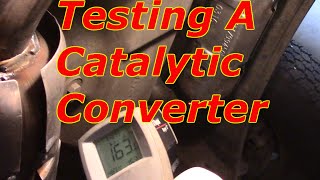
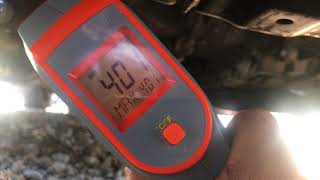
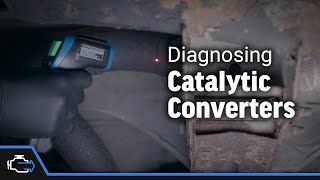
How to confirm: A dealer can confirm eligibility for program 24M01 S1 using your VIN. Otherwise, a scan tool showing the downstream O2 sensor voltage fluctuating rapidly like the upstream sensor indicates a failed converter. An infrared thermometer can also be used; the outlet should be at least 100°F hotter than the inlet on a working converter.
Typical fix: Replace the Bank 1 catalytic converter. For eligible 2020 models, this is covered free of charge under Ford's program 24M01, which extends the part warranty to 15 years/150,000 miles.
Est. part cost: $700-$1400 - Powertrain Control Module (PCM) Software Error 🔴 High Probability Ford issued TSBs 25-2188 (for 2022 models) and 25-2072 (for 2025 models) because the PCM software can be overly sensitive and incorrectly trigger a P0420 code when no hardware fault exists. TSB 25-2233 also addresses P0420/P0430 due to calibration sensitivity and requires a PCM reprogram followed by a specific drive cycle.
How to confirm: Contact a Ford dealership with your VIN. They can check their internal system (OASIS) for applicable TSBs or required software updates for your vehicle. This should always be the first step for 2022+ models.
Typical fix: The dealer reprograms the PCM to the latest software version. This is often a simple, low-cost fix compared to hardware replacement.
Est. part cost: $0-$200 - Faulty Downstream Oxygen Sensor 🟡 Medium Probability Oxygen sensors are wear items. A lazy or failing downstream sensor can send incorrect data to the PCM, mimicking the signal of a bad catalytic converter. On Police Interceptor Utility models, the Bank 1 Sensor 2 connector is in the passenger-side rear wheel well and is prone to water intrusion and corrosion, causing codes like P0138 or P0141 but can also contribute to P0420 issues.
How to confirm: Use a scan tool to graph the sensor's voltage. A healthy downstream sensor should show a relatively steady, slow-fluctuating voltage above 0.5V. If it's stuck at one voltage or not responding, it has likely failed. Visually inspect the connector for corrosion, especially on police models.
Typical fix: Replace the Bank 1, Sensor 2 (downstream) oxygen sensor and clean or replace the connector if corroded.
Est. part cost: $100-$150 - Exhaust Leak ⚪ Low Probability
How to confirm: Visually inspect the exhaust system from the engine to the catalytic converter for black soot marks, cracks, or audible hissing/ticking sounds. A smoke machine test is the most effective way to find small leaks. Leaks before the O2 sensors are most critical.
Typical fix: Replace the leaking gasket or repair the cracked pipe section.
Est. part cost: $20-$100
Rare But Worth Checking
- Engine Misfire or Fuel System Issue: An unresolved engine misfire (P0300-P0306) or a leaking fuel injector can dump unburnt fuel into the exhaust, which will quickly destroy a new catalytic converter. These issues must be fixed first. Program 24M01 includes an inspection for wire harness chafing that could cause misfires.
Diagnosis Steps
- Check for TSBs and Customer Satisfaction Programs: Contact a Ford dealer with your VIN. This is the most critical first step. The fix could be a free converter replacement (2020 models under program 24M01) or a simple software update (2022+ models under TSBs 25-2188, 25-2072, 25-2233).
- Scan for Other Codes: Check for any accompanying codes, especially for misfires (P030x) or fuel system issues (P008A). Address these first to prevent damaging a new converter.
- Inspect for Exhaust Leaks: Visually and audibly check the exhaust system between the engine and the rear oxygen sensor for any leaks. A smoke test is definitive.
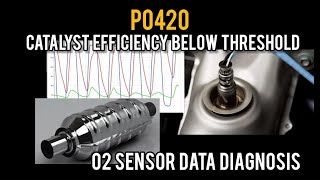
- Analyze Oxygen Sensor Data: Use a scan tool with live data graphing. Observe the upstream (Bank 1, Sensor 1) and downstream (Bank 1, Sensor 2) O2 sensors. The upstream sensor should fluctuate rapidly between approximately 0.1V and 0.9V. A healthy downstream sensor will show a much steadier, flatter voltage, typically above 0.5V-0.6V. If the downstream sensor's graph mimics the upstream sensor's, the catalytic converter is not working.
- Test the Downstream O2 Sensor: If the sensor's signal is erratic or flatlined, it may be faulty. Test its heater circuit and response. Inspect the connector in the passenger wheel well for corrosion.
- Inspect the Catalytic Converter: If all other possibilities are ruled out, the converter is the likely culprit. An infrared temperature gun should show the outlet is at least 100°F hotter than the inlet on a warm engine.
Parts You'll Likely Need
- Catalytic Converter (Bank 1)
(OEM #L1MZ-5E212-AC)— This is the direct cause of the code if the converter has failed internally. It is a known failure point on 2020 3.3L models, covered by Ford Program 24M01 S1. This part number fits the 3.3L Gas and Hybrid Explorer and Police Interceptor Utility.
Trusted brands: Motorcraft, Walker Exhaust, MagnaFlow
OEM price range: $700-$1400
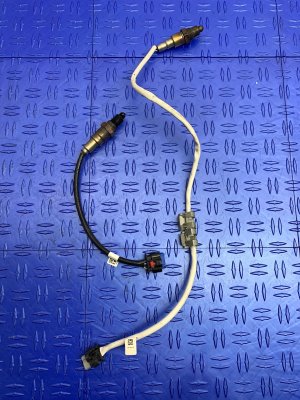
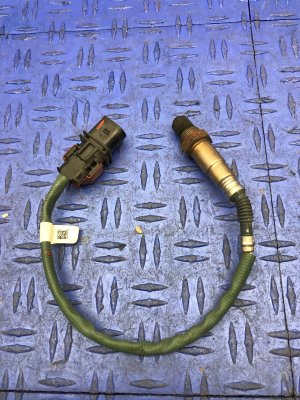
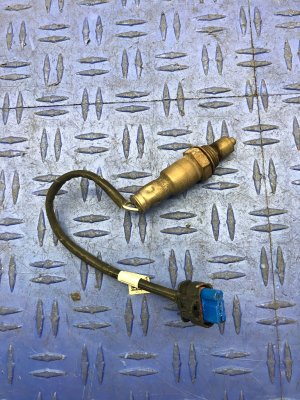
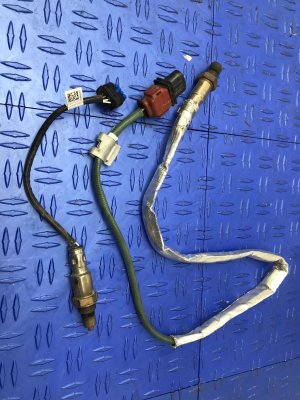
Aftermarket price range: $450-$800 - Downstream Oxygen Sensor (Bank 1, Sensor 2)
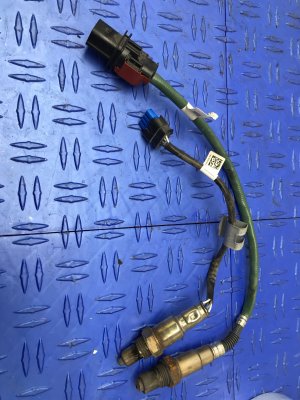
(OEM #DY-1527)— A faulty sensor can send incorrect data, falsely triggering the P0420 code. It is a common wear item and a frequent misdiagnosis. The connector is also a known failure point due to corrosion.
Trusted brands: Motorcraft, Bosch, Denso, NTK
OEM price range: $100-$150
Aftermarket price range: $60-$100 - Upstream Oxygen Sensor (Bank 1, Sensor 1)
(OEM #DY-1536)— While less likely to cause P0420 directly, a failing upstream sensor can affect fuel trim and indirectly contribute to conditions that harm the converter over time. It's often replaced as preventative maintenance when replacing a converter.
Trusted brands: Motorcraft, Bosch, Denso
OEM price range: $130-$200
Aftermarket price range: $80-$140
Related Codes That Often Appear With This One
- P0430 — This is the same catalyst efficiency code but for Bank 2 (the front/radiator side of the engine). If both appear, it may point to a systemic issue like a bad batch of fuel or a problem affecting the whole engine. Program 24M01 covers both P0420 and P0430.
- P008A — This code for 'Low Pressure Fuel System Pressure - Too Low' is specifically mentioned alongside P0420 in TSB 25-2072, indicating a potential software link between the fuel system and false catalyst codes.
- P0300-P0306 — These are cylinder misfire codes. A persistent misfire allows unburnt fuel to enter the exhaust, which can overheat and destroy the catalytic converter. A misfire must be addressed before replacing the converter.
Technical Service Bulletins (TSBs) & Recalls
- 24M01 S1: Catalytic Converter Replacement Program for 2020 3.3L models.
- 25-2188: Incorrect MIL with DTC P0420 for 2022 models due to PCM software.
- 25-2072: Incorrect MIL with DTCs P008A and/or P0420 for 2025 models due to PCM software.
- 25-2233: Illuminated MIL with DTC P0420/P0430 due to calibration sensitivity, requires reprogram and drive cycle.
Platform-Specific Known Issues
- Customer Satisfaction Program 24M01 S1: Specifically for 2020 Explorer and Police Interceptor Utility models with the 3.3L engine, Ford has a program to replace the catalytic converters for DTC P0420 or P0430. This extends the warranty for this specific part to 15 years or 150,000 miles and includes a wiring harness inspection.
- Incorrect MIL for P0420
Mechanic-Grade Diagnostic Values
- Upstream O2 Sensor (Bank 1, Sensor 1) Voltage — expected: Rapidly fluctuating between 0.1V and 0.9V at steady RPM.. Failure: Slow or no fluctuation, stuck at a specific voltage.
- Downstream O2 Sensor (Bank 1, Sensor 2) Voltage — expected: Relatively steady voltage above 0.5V - 0.6V on a warm, functioning converter.. Failure: Voltage fluctuates rapidly, mimicking the upstream sensor, indicating the converter is not storing oxygen.
- Mode $06 Catalyst Monitor Test (TID $81) — expected: The test value should be below the maximum limit specified by the PCM. A common threshold ratio is < 0.75.. Failure: The reported value exceeds the maximum limit, indicating the catalyst's oxygen storage capacity is too low. This can predict a P0420 before the light comes on.
- Catalytic Converter Temperature Differential — expected: The outlet pipe temperature should be at least 100°F hotter than the inlet pipe temperature on a fully warmed-up engine.. Failure: Outlet temperature is the same as or cooler than the inlet, indicating no catalytic reaction is occurring.
Hidden / Shadow Codes Worth Checking
- Mode $06, TID $81: This is not a DTC, but a non-continuous monitor test result for 'Bank 1 Oxygen Storage Capacity'. It provides raw data on the catalyst's performance before it degrades enough to set a P0420 code. A failing value here is an early warning that the converter is losing efficiency. (see via An advanced OBD-II scan tool capable of displaying Mode $06 data.)
Scan Tool Commands That Help
- Ford IDS / FORScan: Catalyst Monitor Drive Cycle — This is a specific, multi-step driving procedure required by the PCM to run the catalyst efficiency test. It must be performed after replacing a converter or clearing codes to verify the repair and ensure the P0420 code does not return.
- Ford IDS / FORScan: PCM Self-Test (KOEO/KOER) — Key On Engine Off (KOEO) and Key On Engine Running (KOER) self-tests can reveal additional codes that may not be stored as standard DTCs, helping to identify underlying issues like sensor circuit faults.
- Ford IDS: SCR Parameter Reset — While primarily for diesel (SCR) systems, a similar PCM reset or adaptation clearing function is necessary after replacing a catalytic converter to make the PCM relearn the efficiency values of the new part.
Wiring & Ground Locations
- G104 / G106 — Typically located on the driver's side inner fender or near the firewall in the engine compartment.. These are primary engine and chassis ground points. A loose or corroded ground here can cause erratic voltage to the PCM, ignition coils, or O2 sensor heaters, leading to performance issues that can either mimic a P0420 or cause damage to the catalytic converter.
- Bank 1 Sensor 2 Connector — In the passenger-side rear wheel well area for Police Interceptor Utility models, susceptible to water and debris.. Corrosion or damage to this specific connector can cause faulty downstream O2 sensor readings, directly leading to a false P0420 code. This is a known issue on the police variant.
Real Owner Repair Stories
- AutoCheck Report for a 2020 Explorer Police Interceptor (2020 Ford Explorer Police Interceptor Utility 3.3L) — Diagnostic Trouble Code P0420 or P0430 stored in the PCM.
✅ What actually fixed it The vehicle was serviced under Manufacturer Customer Satisfaction Program 24M01, which involves replacing the catalytic converters and inspecting the wire harness for misfire conditions.
Model Year Variations Within This Range
- 2020: This model year is specifically targeted by Customer Satisfaction Program 24M01 S1 for premature catalytic converter hardware failure. The primary cause is a physical defect in the converter.
- 2022, 2025: These model years are covered by TSBs 25-2188 and 25-2072, which identify an overly sensitive PCM software calibration as the cause for an incorrect P0420 code. The fix is a software update, not a hardware replacement.
Diagnostic Flowchart
Other Known Issues on This Vehicle
Issues unrelated to this code that are worth knowing about as an owner of this generation:
- Rear Axle Bolt Fracture 🔴 High — Common enough to trigger multiple recalls (NHTSA 23V-675 / Ford 23S55) affecting 2020-2022 models across all powertrains. Can lead to loss of power or vehicle rollaway. (Ref: Recall 23S55 (NHTSA 23V-675))
- 10R60 Transmission Problems 🟠 Medium — Widespread owner complaints of harsh shifting, delayed engagement, and shuddering. Numerous TSBs have been issued to address issues via software updates (e.g., TSB 23-2176 for delayed reverse) or mechanical repairs. (Ref: Multiple TSBs (e.g., 23-2176, 22-2428))
- 360-Degree Camera Failure 🟡 Low — Very common on 2020-2023 models, resulting in a blue or black screen. Led to a major recall (NHTSA 23V-342 / Ford 23S23). (Ref: Recall 23S23 (NHTSA 23V-342))
- Transmission Cooler Line Failure 🟠 Medium — A known issue on early 2020 models where unsupported cooler lines could break, causing a massive transmission fluid leak and potential transmission failure. (Ref: Yes, a recall was issued for early 2020 models.)
- Wiring Harness Chafing 🟠 Medium — A recall was issued for some 2020 3.3L models where the harness could contact the A/C compressor pulley, causing damage and potential stalling. Program 24M01 also includes a harness inspection. (Ref: Recall 20S42)
Used vs. New Parts: Buying Guide for This Vehicle
When a used part is the smart pick: For this specific vehicle and code, buying a used catalytic converter is NOT recommended. A used oxygen sensor from a low-mileage donor vehicle (<50,000 miles) could be a viable budget option if its history is known.
Donor-vehicle mileage cap: roughly under 50000 miles for the part to have meaningful remaining life.
What to inspect on the donor part:
- For an O2 sensor, ensure the donor vehicle had no known engine issues (misfires, oil/coolant consumption).
- Inspect the sensor's electrical connector for corrosion or damage.
- Check the sensor tip for heavy carbon fouling or white, ashy deposits, which indicate a problem with the donor engine.
OEM-only on this vehicle (don't cheap out):
- Catalytic Converter: Aftermarket converters for this platform are notorious for failing to meet the PCM's strict efficiency monitoring, causing the P0420 code to return within a year. Given the free replacement program (24M01) for 2020 models and software issues on later models, an OEM converter is the only reliable long-term solution if hardware replacement is truly necessary.
Aftermarket brands forum-validated for this vehicle:
- Oxygen Sensors: Bosch, Denso, and NTK are reputable OEM suppliers and their aftermarket sensors are widely considered reliable replacements.
Brands owners have reported issues with on this vehicle:
- Catalytic Converters: Generic, low-cost brands found on sites like eBay or Amazon should be avoided. Mechanics report that brands like Walker and MagnaFlow are higher quality aftermarket options, but even they may not last as long as OEM on modern, sensitive vehicles.
Real Owner Stories
Aggregated from forums and TSBs cited above. Mileages and costs reflect what owners reported in those sources.
2020 Ford Explorer 3.3L V6 — ~150000 miles
Symptoms: Check Engine Light on for P0420; catalytic converter developed cracks or internal heat damage.
What fixed it: Replacement of the Bank 1 catalytic converter under Ford Customer Satisfaction Program 24M01.
Cost: $0-$0
Source hint: Customer Satisfaction Program 24M01 S1
2022 Ford Explorer 3.3L V6
Symptoms: Incorrect MIL (Check Engine Light) with DTC P0420 despite no apparent hardware failure.
What fixed it: PCM reprogramming to the latest software version as per TSB 25-2188.
Cost: $0-$200
Source hint: TSB 25-2188
2020-2025 Ford Explorer 3.3L V6
Symptoms: Recurring P0420 codes even after replacing the catalytic converter.
What fixed it: Diagnosing and fixing root causes like fuel system problems or ensuring high-quality replacement parts were used.
Source hint: Reddit r/MechanicAdvice & r/FordExplorer
2020-2025 Ford Explorer 3.3L V6
Symptoms: P0420/P0430 codes; O2 sensors sometimes resolve the issue even at lower mileage.
What fixed it: Replacing the Oxygen (O2) sensors.
Source hint: explorerforum.com
Related OBD-II Codes
Frequently Asked Questions
I have a 2020 Ford Explorer 3.3L with a P0420 code. Is there a special warranty for this?
My 2022 Explorer 3.3L is showing a P0420 code, but the car runs fine. Could it be a software issue?
Does the 2025 Ford Explorer 3.3L have any known issues with the P0420 code?
I drive a Ford Police Interceptor Utility 3.3L. Are there specific P0420 concerns for this model?
What is TSB 25-2233, and how does it affect my P0420 diagnosis?
Can a fuel system problem cause a P0420 on my 2025 Explorer?
Helpful Videos

We Have This Part in Stock

The information in this article is provided for general reference and educational purposes only. Vehicle specifications, procedures, and part compatibility can vary by production date, trim level, and region. Always consult your vehicle's factory service manual and verify part numbers before purchasing or performing repairs. Safety-critical components such as airbags, seat belts, and braking systems should be installed by a qualified professional.
- Ford Explorer:
- 🎬 Helpful Videos
- 🛍️ Shop This Part
- What's Unique About the 2020-2025 Ford Explorer
- Symptoms You May Notice
- Most Likely Causes
- Rare But Worth Checking
- Diagnosis Steps
- Parts You'll Likely Need
- Related Codes That Often Appear With This One
- Technical Service Bulletins (TSBs) & Recalls
- Platform-Specific Known Issues
- Mechanic-Grade Diagnostic Values
- Hidden / Shadow Codes Worth Checking
- Scan Tool Commands That Help
- Wiring & Ground Locations
- Real Owner Repair Stories
- Model Year Variations Within This Range
- Diagnostic Flowchart
- Other Known Issues on This Vehicle
- Used vs. New Parts: Buying Guide for This Vehicle
- Real Owner Stories
- 2020 Ford Explorer 3.3L V6 — ~150000 miles
- 2022 Ford Explorer 3.3L V6
- 2020-2025 Ford Explorer 3.3L V6
- 2020-2025 Ford Explorer 3.3L V6
- Related OBD-II Codes
- Frequently Asked Questions
- 🎟️ Get 5% Off