

P0420 on 2013-2015 Chevrolet Trax: Catalyst Efficiency Code Causes and Fixes
For a 2013-2015 Trax with a P0420 code, the most likely cause is a software issue, not a bad catalytic converter. GM issued Technical Service Bulletin #19-NA-057 (which supersedes #18-NA-331) to fix this with an ECM reprogram. This issue also affects the Buick Encore, which shares the same engine and platform. Always have a dealer check for this software update before replacing any parts, as the reprogram often resolves the code without any hardware changes.
- Before any repairs, have a GM dealer check if TSB #19-NA-057 (for a software update) applies to your vehicle. This is the most common and cheapest fix.
- If the software is up to date, the next most likely cause is a physical exhaust leak, especially from the front flex pipe.
- Do not replace the expensive catalytic converter or oxygen sensors until you have ruled out both the software issue and any exhaust leaks.
- The engine for this vehicle is the 1.4L Turbo LUV.
- This issue is specific to the 2013-2015 model years and is well-documented by GM.
What's Unique About the 2013-2015 Chevrolet TRAX

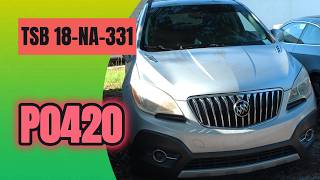
On this specific vehicle and its platform-mate, the Buick Encore, the P0420 code is frequently a false alarm. GM acknowledged that the original software calibration for the Engine Control Module (ECM) was too sensitive and could incorrectly trigger the code even with a perfectly good catalytic converter. The official fix, outlined in TSB #19-NA-057, is a simple software update 🎬 Watch: Why you should try this software fix before replacing parts. that also requires reprogramming the Transmission Control Module (TCM) at the same time. It is crucial to check for this before undertaking expensive part replacements.
Diagnostic Flowchart

Tap your situation to follow the diagnostic path that matches what you're seeing on this vehicle.
Symptoms You May Notice
- Check Engine Light is on
- Reduced engine power or sluggish acceleration
- Rotten egg smell from the exhaust
- Vehicle may not accelerate above 30-40 mph in severe cases
- Rough idle
- Replacing the catalytic converter before verifying the ECM software is up to date per TSB #19-NA-057.
- Replacing oxygen sensors without proper diagnosis, when the root cause is the ECM calibration or a physical exhaust leak.
- Using a low-quality aftermarket catalytic converter which is not efficient enough to satisfy the ECM's monitoring, causing the code to return.
Most Likely Causes

- Engine Control Module (ECM) Software Calibration Error 🔴 High Probability The original factory software had overly sensitive parameters for monitoring catalyst efficiency, as acknowledged by GM in official service bulletins for both the Trax and Buick Encore.
How to confirm: Contact a Chevrolet dealership with your VIN and ask if TSB #19-NA-057 or #18-NA-331 has been performed. A shop with GM's Service Programming System (SPS) can also check the calibration ID numbers to see if an update is available.
Typical fix: Reprogram the ECM and TCM to the latest software version. This is a non-parts fix performed by a dealer or qualified independent shop. The cost for this service is typically around one hour of labor.
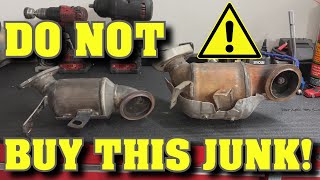
Est. part cost: $0 - Failed Catalytic Converter 🟡 Medium Probability Converters can fail from age or contamination from other engine issues. However, this should only be considered after the ECM update has been performed and ruled out. Many owners have replaced the converter only for the code to return because the software was the real issue. Using cheaper aftermarket converters can also cause the code to return, as they may lack sufficient catalyst material. 🎬 Watch: Why cheap aftermarket converters often cause the P0420 code to return.
How to confirm: After confirming the ECM software is up to date, a mechanic can use a scan tool to watch O2 sensor data, perform an exhaust backpressure test, or use an infrared thermometer to check the converter's inlet and outlet temperatures (outlet should be hotter). A visual inspection may not be enough, as a converter can be chemically ineffective but look physically intact.
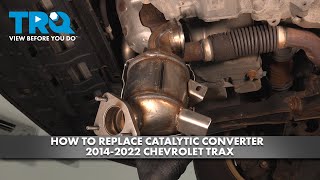
Typical fix: Replace the catalytic converter assembly. It is an integrated unit with the exhaust manifold on this engine. 🎬 See this step-by-step walkthrough on how to replace the catalytic converter.
Est. part cost: $350-$1200 - Exhaust Leak ⚪ Low Probability The flex pipe located before the catalytic converter is a known weak point that can crack or break. This introduces outside air into the exhaust stream, which skews O2 sensor readings and can falsely trigger a P0420 code.
How to confirm: Visually inspect the exhaust system, especially the braided flex pipe between the engine and converter, for cracks, breaks, or soot trails. A mechanic can perform a smoke test to definitively identify leaks. The sound of the exhaust may also be louder.
Typical fix: Repair or replace the leaking section of the exhaust, which is often the front pipe assembly containing the integrated flex joint.
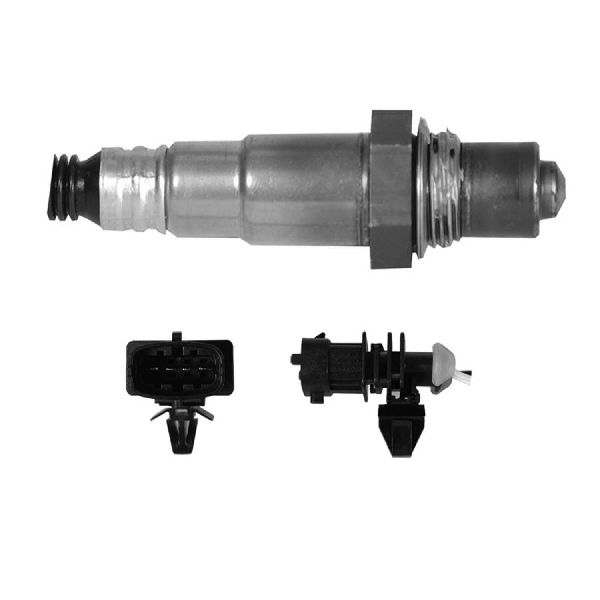
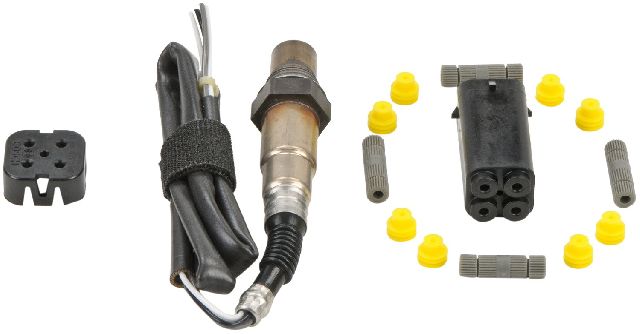
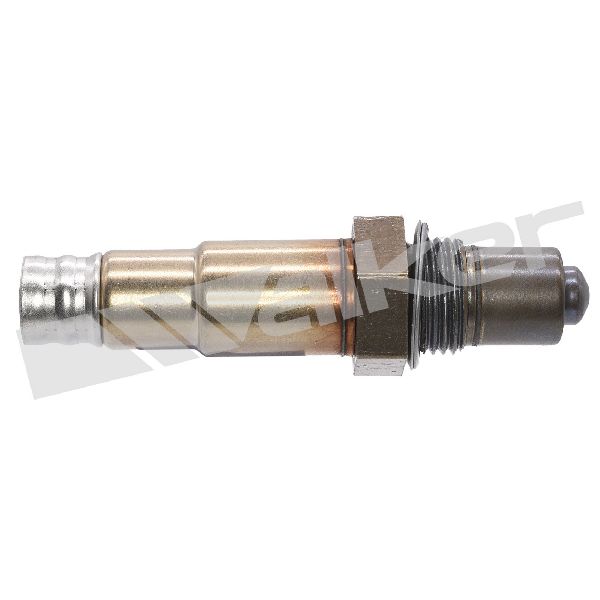
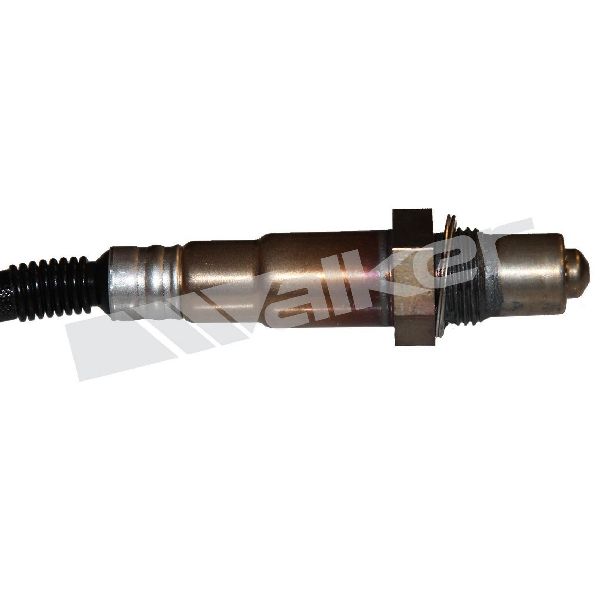
Est. part cost: $100-$250 - Failed Oxygen (O2) Sensor ⚪ Low Probability A lazy or failing downstream (post-catalyst) O2 sensor can send incorrect data that mimics a bad converter. While less common than the software issue on this platform, sensors are a wear item and a frequent point of misdiagnosis.
How to confirm: Use a scan tool to graph the voltage of the downstream O2 sensor (Bank 1, Sensor 2). On a healthy, warm converter, the voltage should be relatively steady. If it fluctuates rapidly like the upstream sensor, the sensor or the converter is suspect.
Typical fix: Replace the downstream (Position 2) oxygen sensor.
Est. part cost: $40-$150
Rare But Worth Checking
- Underlying Engine Performance Issues: Problems like leaking fuel injectors, engine misfires (bad spark plugs or coils), or excessive oil consumption (from PCV issues or turbo leaks) can destroy a new catalytic converter quickly. These issues usually trigger other codes (e.g., P030x for misfires) and must be fixed before replacing the converter to prevent repeat failure.
Diagnosis Steps
- Read the code with an OBD-II scanner to confirm P0420 is present. Note any other codes, as they may point to a root cause (e.g., P0300-P0304 for misfires).
- Contact a Chevrolet dealer with your VIN to determine if TSB #19-NA-057 (or the older #18-NA-331) is applicable and has been completed. This is the most critical first step for this specific vehicle.
- If the TSB has not been performed, have the ECM and TCM reprogrammed by a dealer or qualified shop. This will very likely fix the issue.
- If the TSB has been done or is not applicable, proceed with standard diagnosis.
- Visually inspect the exhaust system for any cracks, holes, or loose connections, paying close attention to the braided flex pipe between the engine and the catalytic converter.
- Use a scan tool to monitor the live data streams for the upstream (Bank 1, Sensor 1) and downstream (Bank 1, Sensor 2) oxygen sensors. The upstream should fluctuate rapidly, while the downstream should be relatively stable on a fully warmed-up engine.
- If the downstream sensor is lazy or mimics the upstream, test the sensor itself before condemning the converter.
- If the sensors test good, perform a temperature test on the catalytic converter using an infrared thermometer. The outlet should be at least 100°F hotter than the inlet on a fully warmed-up engine.
- If all other causes are ruled out, the catalytic converter has likely failed.
Parts You'll Likely Need

- Catalytic Converter
(OEM #95468206)— This is the part that fails if the P0420 code is legitimate (not a software bug). On the Trax, it is an integrated unit with the exhaust manifold that bolts to the turbocharger.
Trusted brands: ACDelco, GM Genuine, Walker, MagnaFlow
OEM price range: $1100-$1400
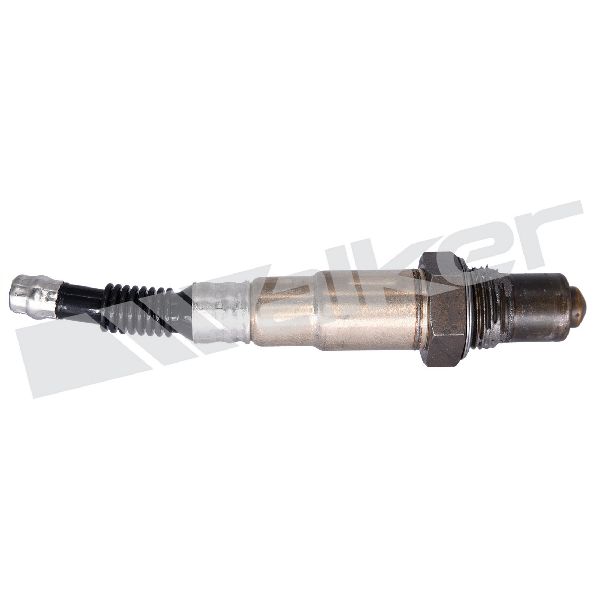
Aftermarket price range: $350-$700 - Downstream Oxygen Sensor (Position 2)
(OEM #55503721)— A failing downstream sensor can send incorrect readings, falsely triggering a P0420 code. It's a common misdiagnosis but can be the actual cause in some cases.
Trusted brands: ACDelco, Denso, Bosch, NTK
OEM price range: $100-$180
Aftermarket price range: $40-$90 - Upstream Oxygen Sensor (Position 1)
(OEM #55572993)— While less likely to directly cause a P0420, a failing upstream sensor can affect the air-fuel mixture, which can reduce the life of the catalytic converter over time.
Trusted brands: ACDelco, Denso, Bosch, NTK
OEM price range: $120-$200
Aftermarket price range: $50-$110
Technical Service Bulletins (TSBs) & Recalls
- 19-NA-057: Malfunction Indicator Lamp (MIL) Illuminated, DTC P0420 Set. This bulletin supersedes 18-NA-331 and provides the procedure to reprogram the ECM for a 'calibration error' causing the code. It explicitly applies to 2013-2015 Trax and Encore models with the 1.4L LUV engine and notes the TCM must be reprogrammed simultaneously.
- 18-NA-331: Malfunction Indicator Lamp (MIL) On, DTC P0420 Set. The original bulletin released to address the software anomaly causing the code. It has been superseded by 19-NA-057.
Platform-Specific Known Issues
- A primary issue is the ECM software calibration being too sensitive, leading to false P0420 codes. This is addressed by TSB #19-NA-057, which requires reprogramming both the ECM and TCM.
- The front exhaust flex pipe is prone to cracking, causing leaks that can trigger a P0420 code by allowing unmetered oxygen into the exhaust stream.
- This issue is shared with platform mates like the Buick Encore and Chevrolet Sonic, which also use the 1.4L LUV engine and have similar TSBs or owner complaints.
Mechanic-Grade Diagnostic Values
- Downstream O2 Sensor (Bank 1, Sensor 2) Voltage — expected: Relatively steady reading around 0.6V - 0.8V at idle on a fully warmed-up engine.. Failure: Voltage fluctuates rapidly, mirroring the upstream O2 sensor's pattern, indicating the catalyst is not storing oxygen.
- Upstream O2 Sensor (Bank 1, Sensor 1) Voltage — expected: Constantly fluctuating between approximately 0.1V and 0.9V as the ECM adjusts the air-fuel mixture.. Failure: A lazy or flat-lined signal indicates a failed sensor, which can lead to poor fuel control and damage the catalytic converter.
- Mode 6, Test ID $21 (Catalyst Monitor Bank 1) — expected: The test value should be below the maximum threshold set by the manufacturer.. Failure: If the test value exceeds the maximum limit, it indicates the catalyst efficiency test has failed, even if a DTC has not yet been set.
Scan Tool Commands That Help
- GM Service Programming System (SPS): Reprogram ECU / Replace and Program ECU — This is the specific function required to perform TSB #19-NA-057. A technician uses a J2534 pass-thru device to connect a PC with an ACDelco TDS subscription to the vehicle, then selects this function to load the updated calibration file into the Engine Control Module (ECM) and Transmission Control Module (TCM).
Wiring & Ground Locations
- G103 — Often located on the engine block or on the cowl/firewall, sometimes above the brake booster.. This is a major ground point for the Body Control Module (BCM) and other critical components. A poor connection here can cause a host of bizarre, hard-to-diagnose electrical issues, potentially affecting sensor readings.
- G105 — Typically found at the front of the engine compartment, sometimes behind cooling fan relays or on the engine block itself.. This ground often serves the ECM and TCM. A corroded or loose G105 can directly impact the signals from the O2 sensors to the ECM, potentially causing false codes.
- ECM Connector J2 — On the Engine Control Module.. According to generic GM pinouts, pins like J2-3 (O2 Sensor B1S1 High) and J2-4 (O2 Sensor B1S2 High) are the direct signal lines. Testing for voltage and continuity at these specific pins can rule out wiring breaks between the sensors and the computer.
Real Owner Repair Stories
- Reddit user in r/cruze (2013 Chevy Cruze 1.4L Turbo) — P0420 code returned one month after replacing the catalytic converter. Noticed oil vapor on the passenger side of the engine.
❌ Tried (didn't work) Replacing the catalytic converter
✅ What actually fixed it Replaced the valve cover, which contains the PCV diaphragm. The theory was a failed PCV system was forcing oil vapor into the exhaust, contaminating the new converter and sensors. - Reddit user in r/cruze (Chevy Cruze 1.4L Turbo) — Recurring P0420 code.
❌ Tried (didn't work) Chasing other potential causes.
✅ What actually fixed it Found and repaired a split in the corrugated PCV hose that runs across the engine. The code stopped returning after the hose was fixed. - Reddit user in r/MechanicAdvice (2015 Chevy Trax) — Persistent P0420 code.
❌ Tried (didn't work) Replacing the catalytic converter (under warranty), Replacing both O2 sensors, Fixing a vacuum leak
✅ What actually fixed it The final diagnosis pointed to the valve cover gasket. While the user did not post a final confirmation, this aligns with other reports of the PCV system within the valve cover being the root cause.
"I Checked Everything" — The Actual Cause
- A common scenario for the 1.4L Turbo engine (in the Trax, Cruze, and Sonic) is a P0420 code that persists after the catalytic converter and O2 sensors are replaced, and a smoke test reveals no exhaust leaks. The hidden cause is often a failure within the engine's PCV system. A ruptured diaphragm in the valve cover or a failed check valve in the intake manifold allows turbo boost pressure to enter the crankcase. This over-pressurizes the engine, forcing oil vapor past seals and into the exhaust stream, where it contaminates the O2 sensors and poisons the catalytic converter. This is missed because it's an engine oiling/pressure issue, not an exhaust leak that a smoke machine would detect.
When the Usual Fixes Don't Work
- While the ECM software update (TSB #19-NA-057) is the most common fix for P0420 on 2013-2015 models, it is not a silver bullet. There are numerous documented cases where the code returned after the update because an underlying mechanical fault was also present. The most frequent culprits that must be ruled out are cracks in the exhaust flex pipe and failures in the engine's PCV system (valve cover diaphragm or intake manifold check valve) which contaminate the exhaust with oil. Performing the software update without diagnosing and fixing these root causes will lead to the code returning.
Model Year Variations Within This Range
- 2013-2015: These specific model years are subject to TSB #19-NA-057, which states the P0420 code is likely caused by an overly sensitive ECM software calibration. For models after 2015, while P0420 can still occur, it is much less likely to be a software issue and should be diagnosed as a traditional hardware fault (e.g., failed converter, exhaust leak, sensor failure).
Real Owner Stories
Aggregated from forums and TSBs cited above. Mileages and costs reflect what owners reported in those sources.
2015 Trax — ~30000 miles
Symptoms: Recurring P0420 code, check engine light.
What fixed it: The GM dealer found that the ECM needed an update (referencing TSB 18-NA-331).
Source hint: YouTube comment by KOEO on 'P0420 Code on Buick Encore or Chevy Trax? Don't Replaced the Cat Yet- Try This First!'
2015 Chevy Trax
Symptoms: Check engine light with P0420 code.
What fixed it: Dealer quoted a catalytic converter replacement, but the owner was seeking other options. No final fix reported by the original poster.
Cost: $1800
Source hint: Reddit r/MechanicAdvice
Related OBD-II Codes
Frequently Asked Questions
Does TSB #19-NA-057 apply to my 2013-2015 Chevy Trax?
Should I replace my catalytic converter right away if I get a P0420 on my Trax?
Why is the exhaust flex pipe mentioned for a P0420 code on the 1.4L engine?
How much does it cost to fix the P0420 code on a Chevy Trax?
Are there other vehicles that share this exact P0420 issue with the Trax?
Helpful Videos
We Have This Part in Stock


The information in this article is provided for general reference and educational purposes only. Vehicle specifications, procedures, and part compatibility can vary by production date, trim level, and region. Always consult your vehicle's factory service manual and verify part numbers before purchasing or performing repairs. Safety-critical components such as airbags, seat belts, and braking systems should be installed by a qualified professional.
- Chevrolet TRAX:
- 🎬 Helpful Videos
- 🛍️ Shop This Part
- What's Unique About the 2013-2015 Chevrolet TRAX
- Diagnostic Flowchart
- Symptoms You May Notice
- Most Likely Causes
- Rare But Worth Checking
- Diagnosis Steps
- Parts You'll Likely Need
- Technical Service Bulletins (TSBs) & Recalls
- Platform-Specific Known Issues
- Mechanic-Grade Diagnostic Values
- Scan Tool Commands That Help
- Wiring & Ground Locations
- Real Owner Repair Stories
- "I Checked Everything" — The Actual Cause
- When the Usual Fixes Don't Work
- Model Year Variations Within This Range
- Real Owner Stories
- 2015 Trax — ~30000 miles
- 2015 Chevy Trax
- Related OBD-II Codes
- Frequently Asked Questions
- 🎟️ Get 5% Off