

P0403 on 2001-2010 Dodge Grand Caravan 3.8L: EGR Circuit Malfunction Causes and Fixes
On the 3.8L Grand Caravan, code P0403 almost always means the electronic EGR valve assembly has failed. The internal solenoid or control circuit burns out, requiring replacement of the entire valve. Replacing the valve is the most common fix. Expect to pay $100-$150 for an aftermarket part or $200-$250 for an OEM Mopar part. It is a DIY-friendly repair for most home mechanics, though accessing the lower bolt can be tricky.
- P0403 on this van is most often caused by a failed EGR valve assembly.
- Always inspect the wiring and connector at the EGR valve for damage before replacing parts.
- Using an OEM Mopar replacement EGR valve is highly recommended over aftermarket alternatives to avoid premature failure.
- This code is frequently accompanied by P0404 and/or P0406, which further points to a faulty EGR valve unit.
- The repair is straightforward for a DIYer with basic tools, though the lower bolt can be difficult to reach.
What's Unique About the 2001-2010 Dodge Grand Caravan

The EGR valve on the 3.3L and 3.8L Chrysler minivan engines is a notoriously common failure point. While the P0403 code is for a circuit malfunction, the root cause is very frequently the internal solenoid within the EGR valve assembly burning out. Many owners and mechanics report that aftermarket EGR valves have a high failure rate, sometimes right out of the box, and strongly recommend using a genuine OEM Mopar part for a lasting repair. In some cases, the pintle inside the valve can get stuck with carbon, which can sometimes be temporarily freed by removing the cap and manually moving it, though this is not a permanent solution.
Generation note: This guide covers the fourth generation (2001-2007) and the fifth generation (2008-2010) of the Dodge Grand Caravan. The 3.8L EGH V6 engine and the electronic EGR system design are very similar across these years, making the causes, diagnosis, and repair procedures nearly identical. The procedure is also the same for the 3.3L V6 found in these vans. The primary difference noted by owners is the PCM's location, which moved to the driver's side front wheel well for the 5th generation (2008-2010), making its connectors more susceptible to water damage.
Symptoms You May Notice
- Check Engine Light is on
- Rough idle or stalling, especially when the engine is cold
- Engine knocking or pinging sounds during acceleration
- Reduced engine power and sluggish acceleration
- Failing an emissions test
- Slight surging at steady speeds (e.g., around 30-35 mph)
- Faint smell of gasoline from the exhaust due to incomplete combustion
- Replacing the EGR valve repeatedly with cheap aftermarket parts. Many owners find the issue returns until an OEM Mopar valve is installed.
- Replacing the EGR valve when the true fault is a broken wire or corroded pin in the harness or at the PCM connector.
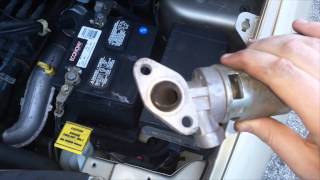
- Cleaning a heavily carboned-up valve. While cleaning can sometimes resolve 🎬 Watch: How to clean or replace your minivan's EGR valve flow codes like P0401 or P0404, it rarely fixes a P0403 circuit code, as the electrical components inside the valve have already failed.
Most Likely Causes

- Faulty EGR Valve Assembly 🔴 High Probability The electronic solenoid integrated into the EGR valve is a very common failure point on this platform due to heat cycles and age. The internal coil can burn out or the driver can fail, creating an open circuit.
How to confirm: Using a capable scan tool, command the EGR valve to open and close. If the valve doesn't respond or if live data for the position sensor doesn't change as expected, the valve is likely bad. You can also test for resistance across the solenoid pins with a multimeter; an open circuit (infinite resistance) indicates failure. A working valve should show continuity with a resistance between 19.9 and 23.4 ohms when cold.
Typical fix: Replace the entire EGR valve assembly and both gaskets. It is highly recommended to use an OEM Mopar part (Part #4861662AF, which supersedes 4861662AE) for reliability.
Est. part cost: $150-$250 - Damaged Wiring or Corroded Connector 🟡 Medium Probability The wiring harness connector sits on top of the hot engine, and the wires can become brittle, frayed, or break over time. The connector pins can also corrode from moisture and heat.
How to confirm: Visually inspect the EGR valve's 5-pin electrical connector for pushed-out pins, corrosion, or melted plastic. Unplug it and check for a secure fit. Trace the wiring harness back as far as possible, looking for any breaks, chafing, or damage. A detailed diagnosis may involve using an oscilloscope to check for a bad ground signal at the connector, which can cause the valve to operate erratically.
Typical fix: Repair the damaged section of wire or replace the connector pigtail. In some cases, the terminal pins inside the connector need to be cleaned with electrical contact cleaner or replaced. If a bad ground is identified, a new ground wire may need to be run.
Est. part cost: $15-$40
Rare But Worth Checking
- Corroded PCM Connector: On the 5th generation (2008-2010), the PCM is located in the driver's side front wheel well, a location prone to water intrusion. This can cause corrosion on the connector pins, leading to various electrical faults, including P0403. One owner fixed the code by replacing a corroded PCM connector after multiple EGR valve replacements failed to solve the issue.
- Faulty Powertrain Control Module (PCM): While rare, it's possible for the driver circuit inside the PCM that controls the EGR solenoid to fail. This should only be considered after the EGR valve and all wiring have been thoroughly tested and confirmed to be good. One owner on a forum replaced both aftermarket and OEM EGR valves and verified wiring continuity before suspecting the PCM was the final point of failure. A shop may need to verify this with advanced diagnostic tools before condemning the PCM.
- Incorrect PCM software (Flex Fuel Vehicles): A very unusual case was reported where a 2003 E-85 compliant Grand Caravan, which did not have an EGR valve from the factory, began throwing a P0403 code. This suggests a potential PCM software mismatch or corruption, where the computer is looking for a circuit that doesn't exist on the vehicle.
Diagnosis Steps

- Read the Codes: Use an OBD-II scanner to confirm P0403 and check for any other related codes like P0404, P0406, or P0401. A P0403 that appears immediately after clearing codes points to a hard electrical fault.
- Inspect the Connector: Visually inspect the 5-pin electrical connector on the EGR valve. Look for any signs of melting, corrosion, or loose/damaged wires. Ensure it is plugged in securely and the red locking tab is engaged.
- Test the Circuit: With the key on, engine off, use a multimeter to check for 5-volt reference (Pink/Yellow wire) and a good ground (Dark Blue/Dark Green wire) at the connector, according to your vehicle's wiring diagram. A capable scan tool can also be used to command the EGR solenoid on and off to see if the circuit is responding. An oscilloscope is the best tool to diagnose intermittent ground or signal issues.
- Inspect the EGR Valve and Tube: The EGR valve is located on the front of the engine, near the passenger side. While a clogged passage usually sets a P0401 code, it's worth checking for heavy carbon buildup that could cause the valve to stick mechanically.
- Replace the EGR Valve: If the wiring and connector are good, the EGR valve assembly itself is the most likely culprit. It is held on by two 10mm bolts to the engine and two 8mm bolts that attach the EGR tube. The lower 10mm bolt can be tricky to access due to the alternator. A swivel socket extension is 🎬 See this walkthrough to solve the P0403 circuit code highly recommended to reach this bolt without removing the alternator.
- Clear Codes and Test Drive: After replacing the part, clear the codes with your scanner. Some owners report needing to disconnect the battery for a few minutes to fully reset the computer. In some cases, the code may not clear on its own even if the repair is successful and must be manually cleared with a scan tool. Perform a test drive to ensure the Check Engine Light does not return.
Parts You'll Likely Need
- EGR Valve
(OEM #4861662AF (supersedes 4861662AE, 4861662AD, 4861662AC, 4861662AB, 4861662AA, 4861663AA))— This is the most common cause of P0403. The internal electronic solenoid fails, causing the circuit malfunction. The OEM part is recommended for longevity.
Trusted brands: Mopar (OEM), Standard Motor Products (EGV823), Dorman (911-203)
OEM price range: $190-$260
Aftermarket price range: $100-$150 - EGR Valve Gaskets
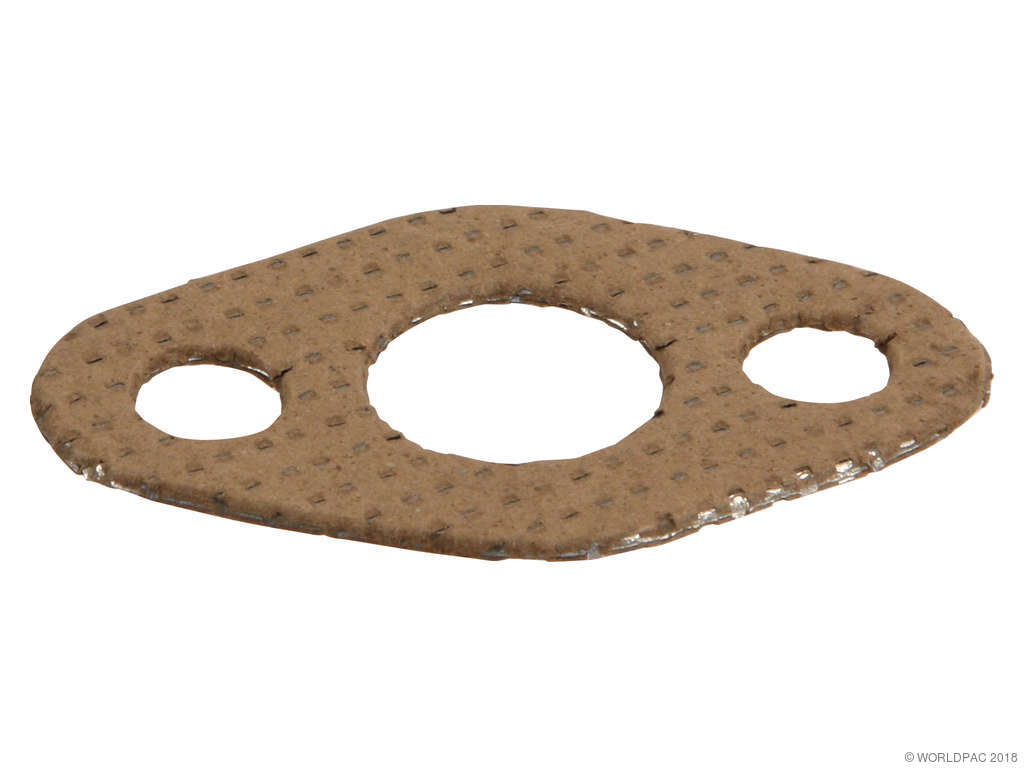
(OEM #Included with new valve)— Two gaskets are required when replacing the EGR valve: one for the valve-to-engine connection and one for the tube-to-valve connection. New valves almost always include new gaskets.
Trusted brands: Fel-Pro, Mahle
OEM price range: $10-$20
Aftermarket price range: $5-$15
Related Codes That Often Appear With This One
- P0406 — P0406 means 'EGR Sensor 'A' Circuit High.' Since the position sensor and the control solenoid are part of the same EGR valve assembly, an internal failure often triggers both codes simultaneously.
- P0404 — P0404 means 'EGR 'A' Control Circuit Range/Performance.' This code indicates the valve's reported position doesn't match the position the PCM commanded. It frequently appears with P0403 and points to a faulty EGR valve assembly.
- P0401 — P0401 means 'EGR Flow Insufficient Detected.' While P0403 is an electrical code, a malfunctioning control circuit can prevent the valve from opening, leading to insufficient flow and triggering P0401 as well.
Platform-Specific Known Issues
- Difficult Lower Bolt Access: The lower 10mm bolt holding the EGR valve to the engine block is notoriously difficult to access because of its proximity to the alternator. Many DIYers struggle with this bolt. The most successful method involves using a 1/4" drive ratchet with a swivel (universal joint) socket and an extension. This often allows removal without having to loosen or remove the alternator.
- Intermittent Ground Connection: In some cases that are difficult to diagnose, the P0403 code is caused by an intermittent ground connection in the EGR wiring harness. Even after replacing the valve multiple times, the code can return. Advanced diagnosis with an oscilloscope may be required to observe the ground signal from the PCM during operation to confirm the integrity of the circuit.
Mechanic-Grade Diagnostic Values
- EGR Valve Solenoid Coil Resistance — expected: 19.9 - 23.4 Ω (when cold). Failure: An open circuit (infinite resistance) or a reading significantly outside the expected range indicates a failed solenoid coil.
- EGR Connector 5V Reference Voltage (Key On, Engine Off) — expected: 4.8V - 5.2V. Failure: No voltage or low voltage points to a wiring issue or a problem with the PCM's 5V reference circuit.
- EGR Connector Ground Circuit (Key On, Engine Off) — expected: < 0.1V (when checking voltage) or good continuity to ground.. Failure: Voltage present on the ground wire indicates a bad ground. This can be confirmed using a test light connected to battery positive; the light should illuminate brightly.
- EGR Position Sensor Signal Voltage (Live Data) — expected: Approximately 4.0V - 4.1V on a new, healthy valve with the key on, engine off.. Failure: Voltage that is erratic, stuck at 0V or 5V, or significantly lower (e.g., 3.7V on a known bad valve) can indicate an internal sensor failure.
Scan Tool Commands That Help
- DRB III (or emulator): EGR System Test — This bidirectional control, found under 'System Tests', allows a technician to command the EGR solenoid to open at various duty cycles (e.g., 16%, 32%, etc.). This is used to verify if the PCM driver is sending a signal and if the valve is mechanically responding. While watching live data, commanding the valve open should cause the engine to stumble or stall, confirming flow.
- Oscilloscope: Monitor EGR Control Wire — Connect the scope to the EGR control signal wire to visually inspect the duty cycle waveform sent by the PCM. When used with a scan tool to command the EGR open, you can confirm the PCM driver is functioning correctly and sending the proper signal, which helps isolate the fault to the valve itself or the wiring.
Wiring & Ground Locations

- EGR Valve Connector — On top of the EGR valve, which is located on the front of the engine, near the passenger side, below the intake plenum.. This 5-pin connector is the primary interface for all power, ground, and signal wires to the EGR valve. Corrosion or damage here is a common cause of P0403.
- EGR 5V Reference Wire — Pink/Yellow wire at the EGR connector on 2008+ models.. This wire supplies the necessary 5 volts from the PCM to power the position sensor within the EGR assembly. A loss of this voltage will cause circuit codes.
- EGR Sensor Ground Wire — Dark Blue/Dark Green wire at the EGR connector on 2008+ models.. This is the dedicated sensor ground provided by the PCM. A poor connection here will cause incorrect sensor readings and can trigger circuit or performance codes.
- Powertrain Control Module (PCM) - 5th Gen — Located in the driver's side front wheel well, behind the fender liner (2008-2010 models).. This location is prone to water and salt spray, which can cause corrosion on the main PCM connectors, leading to an open or short in the EGR control circuit. This should be inspected if a new valve and harness pigtail do not fix the code.
Real Owner Repair Stories
- DodgeForum.com user 'spike14' (2001 Dodge Grand Caravan 3.8L) — Check Engine Light with codes P0401 and P0403.
❌ Tried (didn't work) Replacing the EGR valve., Replacing the EGR electrical connector pigtail., Driving over 300 miles and through many drive cycles, hoping the code would clear itself.
✅ What actually fixed it The problem was resolved after manually clearing the stored fault codes with a scan tool. The codes did not return after being cleared, indicating the initial repairs had worked but the PCM did not clear the history codes on its own. - Reddit user in r/AskMechanics (2008 Chrysler Town and Country 3.8L) — Check Engine Light with code P0403, preventing state inspection.
❌ Tried (didn't work) Replacing the EGR valve with an aftermarket part., Replacing the aftermarket EGR valve with a genuine OEM Mopar part., Testing the wiring harness from the PCM to the EGR connector for continuity (OHM'd out okay)., Checking for blockages in the EGR tube.
✅ What actually fixed it The thread concluded with the owner suspecting a faulty PCM driver was the only remaining possibility, as all other components in the circuit had been verified as good. This highlights a rare but possible root cause when all common fixes fail.
OEM Part Supersession History
4861662AA, 4861662AB, 4861662AC, 4861662AD, 4861662AE, 4861663AA→4861662AF— Standard part evolution for design improvements, material changes, or supplier consolidation.
Model Year Variations Within This Range
- 2008-2010: The Powertrain Control Module (PCM) was relocated from the engine bay firewall area to the front driver's side wheel well. This makes the main PCM connectors more vulnerable to corrosion from water and road salt, which can be a direct cause of circuit codes like P0403 if the pins for the EGR circuit are affected.
Diagnostic Flowchart
Used vs. New Parts: Buying Guide for This Vehicle
When a used part is the smart pick: A used EGR valve is generally not recommended for this vehicle due to the high failure rate of the internal electronics. It should only be considered as a last resort for budget constraints, and only if the donor vehicle is confirmed to have low mileage and was running without any EGR-related codes.
Donor-vehicle mileage cap: roughly under 75000 miles for the part to have meaningful remaining life.
What to inspect on the donor part:
- Inspect the electrical connector pins for any signs of green or white corrosion.
- Check the plastic housing for cracks or signs of melting.
- If possible, bring a multimeter to the junkyard and test the solenoid coil resistance. It should be between 19.9 and 23.4 ohms.
OEM-only on this vehicle (don't cheap out):
- EGR Valve: Due to numerous reports of aftermarket valves failing out of the box or within a short period, using a genuine Mopar part (4861662AF) is strongly recommended for a lasting repair.
Aftermarket brands forum-validated for this vehicle:
- Standard Motor Products (SMP): Generally regarded as a higher-quality aftermarket option. Some owners have had success with their EGV823 part, and the brand has a better reputation than store-brand alternatives.
Brands owners have reported issues with on this vehicle:
- Dorman: Reviews for the Dorman 911-203 are mixed, with several documented cases of the part being dead on arrival or failing within days or weeks of installation. While some users have success, it is considered a gamble.
Real Owner Stories
Aggregated from forums and TSBs cited above. Mileages and costs reflect what owners reported in those sources.
2010 Dodge Grand Caravan SXT 3.8L
Symptoms: Check engine light with code P0403, which appeared a month after a P0401 code.
What fixed it: The problem was not resolved by the owner. The code kept returning even after replacing the EGR valve twice, cleaning the EGR line and upper intake manifold, and replacing the MAP sensor.
Source hint: reddit.com/r/MechanicAdvice
2001 Dodge Grand Caravan 3.8L
Symptoms: Engine codes P0401 and P0403 appeared together.
What fixed it: The issue was resolved by replacing the EGR valve and then clearing the codes with a scanner.
Source hint: dodgeforum.com - A user with a 2001 3.8L discussed troubleshooting P0403 and P0401 together...
2008 Chrysler Town & Country 3.8L
Symptoms: A persistent P0403 code that did not go away after installing a new OEM Mopar replacement EGR valve.
What fixed it: The issue was not resolved by the part replacement; the owner was investigating the wiring to the PCM, highlighting that the fault was likely in the circuit, not the valve.
Source hint: reddit.com/r/AskMechanics - A user with a 2008 Town & Country (platform mate)...
Jeep Wrangler (JK) 3.8L
Symptoms: A persistent P0403 code returned even after the EGR valve was replaced.
What fixed it: A dealer diagnosed the problem as a corroded main engine ground wire, which was repaired to fix the code.
Source hint: JK-Forum.com - A Jeep Wrangler owner with the same 3.8L engine...
NHTSA Reported EGR Absence
Symptoms: A vehicle was found to be missing the Exhaust Gas Recirculation (EGR) valve entirely, resulting in DTCs P0403 and P0404.
What fixed it: According to NHTSA ODI #11701888, the vehicle was eventually taken to a repair facility where an EGR valve was installed to address the missing component.
Source hint: NHTSA ODI #11701888
Related OBD-II Codes
Frequently Asked Questions
What is the recommended replacement EGR valve for my 2001-2010 Grand Caravan?
Why is the lower bolt on the EGR valve so hard to remove?
I replaced the EGR valve, but the P0403 code came back. What else could be wrong?
How can I test the EGR circuit on my van without just replacing parts?
My Check Engine Light for P0403 came on immediately after I cleared it. What does that signify?
Does the Chrysler Town & Country have this same P0403 issue?
After replacing the EGR valve, the Check Engine Light is still on. How do I turn it off?
Helpful Videos
We Have This Part in Stock



The information in this article is provided for general reference and educational purposes only. Vehicle specifications, procedures, and part compatibility can vary by production date, trim level, and region. Always consult your vehicle's factory service manual and verify part numbers before purchasing or performing repairs. Safety-critical components such as airbags, seat belts, and braking systems should be installed by a qualified professional.
- Dodge Grand Caravan:
- 🎬 Helpful Videos
- 🛍️ Shop This Part
- What's Unique About the 2001-2010 Dodge Grand Caravan
- Symptoms You May Notice
- Most Likely Causes
- Rare But Worth Checking
- Diagnosis Steps
- Parts You'll Likely Need
- Related Codes That Often Appear With This One
- Platform-Specific Known Issues
- Mechanic-Grade Diagnostic Values
- Scan Tool Commands That Help
- Wiring & Ground Locations
- Real Owner Repair Stories
- OEM Part Supersession History
- Model Year Variations Within This Range
- Diagnostic Flowchart
- Used vs. New Parts: Buying Guide for This Vehicle
- Real Owner Stories
- 2010 Dodge Grand Caravan SXT 3.8L
- 2001 Dodge Grand Caravan 3.8L
- 2008 Chrysler Town & Country 3.8L
- Jeep Wrangler (JK) 3.8L
- NHTSA Reported EGR Absence
- Related OBD-II Codes
- Frequently Asked Questions
- 🎟️ Get 5% Off