

P0400 on 2001-2007 Ford Escape 3.0L V6: EGR Flow Malfunction Causes and Fixes
P0400 on a first-generation Ford Escape 3.0L V6 most often indicates a problem with the EGR system's flow, frequently caused by a faulty DPFE sensor, clogged EGR passages, or a bad EGR valve. Diagnosis should start with checking the DPFE sensor and its connecting hoses and wiring before replacing more expensive parts.
- P0400 means there's a problem with the amount of exhaust gas being recirculated.
- On the 2001-2007 Escape 3.0L, the most likely culprit is the DPFE sensor, not the EGR valve itself.
- Always test the DPFE sensor's voltage before buying parts. A reading outside the 0.5V-1.2V range (with key on, engine off) strongly suggests it has failed.
- Checking for clogged EGR passages and cracked vacuum hoses are essential diagnostic steps that cost nothing but time.
- Ignoring this code will cause you to fail an emissions test and can lead to poor engine performance.
What's Unique About the 2001-2007 Ford Escape

On this generation of Ford Escape with the 3.0L V6, the EGR system uses a component called a DPFE (Differential Pressure Feedback EGR) sensor to measure flow. This sensor, along with its connecting rubber hoses, is a notoriously common failure point and a frequent cause of EGR-related codes like P0400 and P0401. Ford issued a TSB (TSB-04-01-17) for an updated version of this sensor (part F77Z-9J460-AB) to improve its durability. Owners often mistakenly replace the EGR valve first, when the actual problem lies with this sensor providing incorrect data to the engine computer.
Symptoms You May Notice
- Check Engine Light (or Service Engine Soon light) is on
- Rough idle or stalling, especially if the EGR valve is stuck open
- Engine hesitation or stumbling during acceleration
- Audible engine pinging or knocking, especially under load or when climbing hills
- Reduced fuel economy
- Failure to pass an emissions/smog test
- Replacing the EGR valve when the DPFE sensor is the actual cause of the problem.
- Replacing the O2 sensors, as engine pinging could be mistaken for a lean condition caused by a bad sensor instead of a non-functional EGR system.
Most Likely Causes


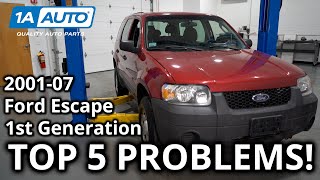
- Faulty DPFE Sensor 🔴 High Probability The DPFE sensor is exposed to intense heat and corrosive exhaust gases. The original design was known to fail, prompting Ford to release an updated part (F77Z-9J460-AB) for better durability. It is listed as a top 5 common problem for this vehicle. 🎬 Watch: Top 5 common problems for the 1st Gen Escape
How to confirm: With the key on and engine off, back-probe the sensor's signal wire. The voltage should be between 0.5V and 1.2V. A reading significantly outside this range (e.g., near 0V or over 1.5V) indicates a bad sensor. Cleaning a failed sensor is not an effective repair; it must be replaced.
Typical fix: Replace the DPFE sensor (Motorcraft DPFE-15 or F77Z-9J460-AB) and inspect its two connecting rubber hoses for cracks or deterioration, replacing them as needed.
Est. part cost: $30-$80 - Clogged EGR Passages 🟡 Medium Probability Over time, carbon (soot) from the exhaust builds up and can restrict or completely block the small passages the EGR gas flows through. The blockage is often found in the small tube that injects exhaust into the intake manifold, which may require removing the throttle body or entire intake manifold for thorough cleaning.
How to confirm: Remove the EGR valve and/or throttle body to visually inspect the ports for heavy carbon deposits. A pipe cleaner or small wire should be able to pass through the passages freely.
Typical fix: Clean the carbon out of the EGR passages and the EGR valve itself using brushes, picks, and carburetor cleaner. In severe cases, the upper intake manifold must be removed for access.
Est. part cost: $5-$15 (for cleaning supplies) - Faulty EGR Valve 🟡 Medium Probability
How to confirm: With the engine idling, apply vacuum to the EGR valve port with a hand-held vacuum pump. The engine should stumble or stall. If it doesn't, the valve's pintle is stuck closed or the passage is blocked. The valve should also hold vacuum without leaking down; if it leaks, the internal diaphragm is ruptured.
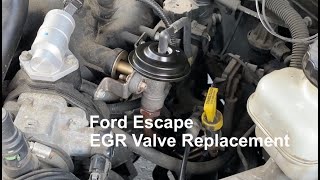
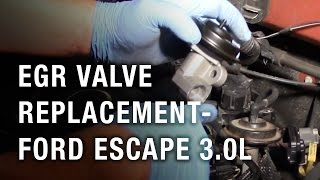
Typical fix: Replace the EGR valve and the corresponding gasket. 🎬 Watch: Step-by-step guide to replacing the EGR valve
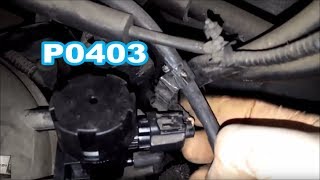
Est. part cost: $70-$150 - Faulty EGR Vacuum Regulator (EVR) Solenoid or Wiring ⚪ Low Probability The wiring harness for the EVR solenoid is routed at a sharp angle, making the wires prone to breaking right at the connector, which will cause an EGR control circuit code like P0403 but can also contribute to a P0400.
How to confirm: Inspect the wires leading to the EVR solenoid connector for breaks or corrosion. To test the solenoid, apply 12V directly to its terminals; you should hear a click. You can also test for vacuum passthrough when it's activated.
Typical fix: Repair the broken wire(s) with a new pigtail connector or replace the EVR solenoid (Motorcraft F63Z9J459AA) if it fails the electrical test.
Est. part cost: $25-$60 - Cracked or Disconnected Vacuum Lines ⚪ Low Probability
How to confirm: Visually inspect all rubber vacuum lines connected to the EGR valve, the EVR solenoid, and the DPFE sensor. Look for cracks, brittleness, or loose connections. A smoke test can also reveal hard-to-see leaks.
Typical fix: Replace any damaged sections of vacuum hose.
Est. part cost: $5-$20
Diagnosis Steps

- Read the freeze frame data to understand the engine conditions when the code was set.
- Visually inspect all vacuum hoses connected to the EGR valve, EVR solenoid, and DPFE sensor for cracks, breaks, or disconnections.
- Inspect the wiring and connector at the EVR solenoid. Gently tug on each wire at the connector to check for internal breaks, a very common failure point.
- Test the DPFE sensor. With the key on and engine off, check the voltage on the signal wire. It should be approximately 0.5V to 1.2V. If it's out of this range, the sensor is bad and must be replaced.
- Test the EGR valve's mechanical function. At idle, apply vacuum with a hand pump to the valve's diaphragm. The engine should run rough or stall. If there's no change, the valve is stuck or passages are blocked.
- If the valve functions but the code persists, remove the EGR valve to inspect the passages leading into the intake manifold for carbon buildup. Clean them thoroughly if clogged.
- Test the EGR Vacuum Regulator (EVR) solenoid. Check for a click when applying 12V and ensure it passes vacuum when energized.
- If all components test good, consider a restriction in the exhaust tube leading to the EGR valve or a clogged catalytic converter causing backpressure issues.
Parts You'll Likely Need
- Differential Pressure Feedback EGR (DPFE) Sensor
(OEM #DPFE-15 (supersedes F77Z-9J460-AA, updated to F77Z-9J460-AB))— This is the most common failure point for EGR codes on this platform due to its design and exposure to harsh conditions.
Trusted brands: Motorcraft, Standard Motor Products, Dorman
OEM price range: $60-$100
Aftermarket price range: $30-$60 - EGR Valve — The valve can fail by getting stuck open or closed due to carbon buildup or a ruptured internal diaphragm.
Trusted brands: Motorcraft, Delphi, Standard Motor Products
OEM price range: $120-$200
Aftermarket price range: $70-$150 - EGR Vacuum Regulator (EVR) Solenoid
(OEM #F63Z9J459AA)— Can fail electrically or, more commonly, the wiring pigtail can break, causing control circuit faults.
Trusted brands: Motorcraft, Standard Motor Products
OEM price range: $40-$70
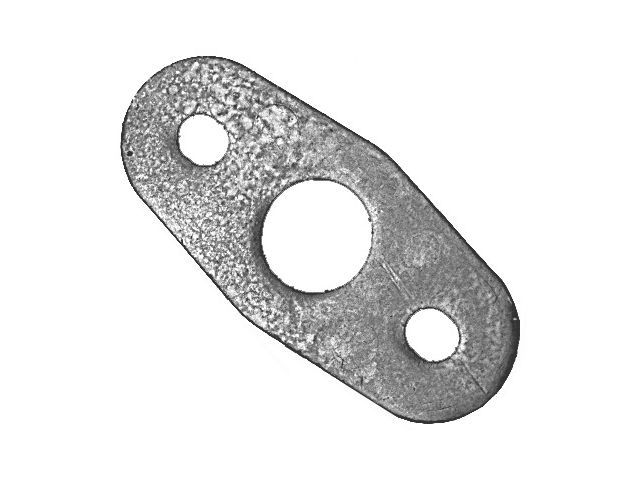
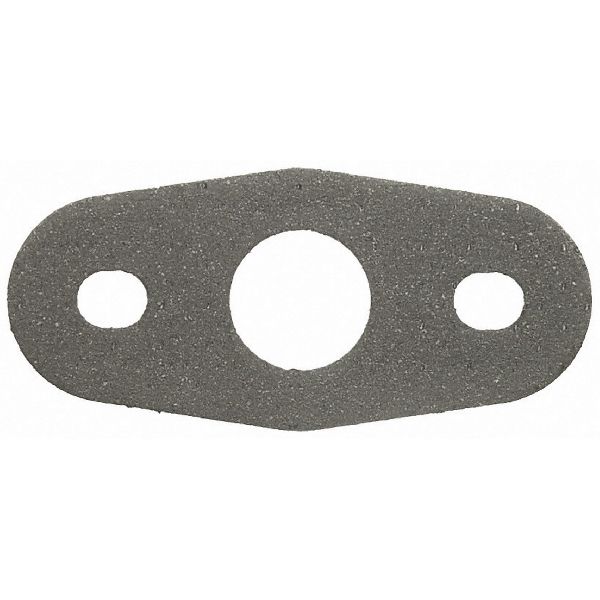
Aftermarket price range: $25-$50 - EGR Valve Gasket
(OEM #YL8Z9J469AA)— Must be replaced whenever the EGR valve is removed to prevent exhaust leaks. Most new valves include one.
Trusted brands: Motorcraft, Fel-Pro
OEM price range: $5-$15
Aftermarket price range: $3-$10
Related Codes That Often Appear With This One
- P0401 — P0401 indicates 'Insufficient EGR Flow,' which is a more specific version of the general P0400 'Flow Malfunction.' They share the same common causes, like a bad DPFE sensor or clogged passages.
- P0402 — P0402 indicates 'Excessive EGR Flow,' often caused by an EGR valve stuck open or a faulty DPFE sensor reporting incorrect high-flow values.
- P0403 — This code points to an electrical fault in the EGR control circuit, often caused by a failed EVR solenoid or, very commonly on this platform, a broken wire at the solenoid's connector pigtail.
- P0405 — This code points specifically to an electrical fault in the DPFE sensor circuit (low input), reinforcing the diagnosis of a failed sensor.
Technical Service Bulletins (TSBs) & Recalls
- TSB 04-01-17 - EGR Pressure Valve Position Sensor Update: Issued in January 2004, this TSB announces a revised DPFE sensor, changing the part number from F77Z-9J460-AA to F77Z-9J460-AB. The updated part, often with a plastic housing instead of the original metal one, was designed for improved durability against heat and moisture, which caused the original sensors to fail and provide incorrect voltage feedback to the PCM.
Platform-Specific Known Issues
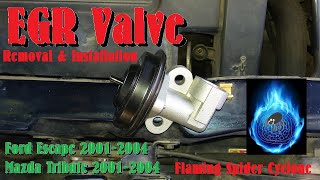
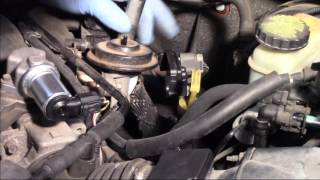
- Broken Wire at EVR Solenoid Connector: A very common but often overlooked cause for EGR codes (especially P0403, but can affect P0400) on the 3.0L V6 is a broken wire right at the electrical connector for the EGR Vacuum Regulator (EVR) solenoid. The harness is routed at a sharp angle, causing fatigue. A visual inspection and a gentle pull on the wires can reveal a break inside the insulation. This issue is documented in detail by DIY repair videos for the Escape and its Mazda Tribute twin.
Mechanic-Grade Diagnostic Values

- DPFE Sensor Signal Voltage (Key On, Engine Off) — expected: ~0.5V to 1.2V. Failure: Voltage near 0V, or above 1.5V, indicates a failed sensor.
- DPFE Sensor Signal Voltage (Engine at ~2000 RPM) — expected: Typically around 1.6V, but will vary with load.. Failure: Voltage does not increase from idle or shows erratic readings when vacuum is applied to the EGR valve.
- EVR Solenoid Coil Resistance — expected: Approximately 26 to 40 Ohms.. Failure: A reading of infinity (open circuit) or near zero (short circuit) indicates a failed solenoid coil.
Hidden / Shadow Codes Worth Checking
- Mode $06, TID $01, CID $11: This refers to the On-Board Diagnostic Test Results for the EGR system. A failing value here can indicate an intermittent problem with EGR flow before it's bad enough to set a continuous P0400 or P0401 code. It monitors the DPFE sensor's response during a test cycle. (see via A professional scan tool or advanced DIY tool (like FORScan) that can access Mode $06 test data.)
Scan Tool Commands That Help
- FORScan / Ford IDS: EGRVR (EGR Vacuum Regulator) Duty Cycle Command — This bidirectional control allows a technician to manually command the EVR solenoid to open at varying percentages while the engine is idling. By monitoring engine RPM and DPFE voltage, you can confirm if the EGR valve is opening, if passages are clear, and if the DPFE sensor is responding correctly, without using a manual vacuum pump.
- FORScan / Ford IDS: KOER (Key On, Engine Running) Self-Test — Initiating the KOER self-test will cause the PCM to cycle through various actuators, including the EVR solenoid. The PCM will briefly open the EGR valve and look for the expected change in DPFE voltage and engine RPM. A failure during this test can quickly point to a problem in the EGR system.
Wiring & Ground Locations
- G101 and G104 — Primary engine bay ground points, typically located on the inner fender aprons near the battery tray or on the firewall. For the 3.0L, G101 is often near the battery and G104 is at the left front corner of the engine compartment.. The PCM and its sensors, including the DPFE, rely on a clean ground reference. A corroded or loose ground at these points can cause erratic sensor readings, leading to false codes.
- PCM Connector C175e — The main engine computer (PCM) is located in the recess on the upper center of the firewall.. Specific pins on this connector are for the DPFE sensor signal (Pin 56, Gray/Red wire), sensor reference voltage (Pin 90, Brown/White wire), and sensor ground (Pin 91, Gray/Red wire). Testing for voltage and continuity at these pins can isolate a wiring fault from a sensor failure.
- EVR Solenoid Connector — Located near the EGR valve, at the back of the engine.. Pin 1 (White/Pink wire) should have 12V+ with the key on. Pin 2 (Brown/Pink wire) is the control wire that the PCM grounds to activate the solenoid. A break in either wire, especially right at the connector, will prevent the EGR valve from being activated.
Real Owner Repair Stories
- YouTube channel 'KY Home Garage' (2010 Ford Escape 3.0L (Note: 2nd gen, but EGR system diagnosis is similar for P0400)) — Check Engine Light with code P0400 for insufficient EGR flow.
❌ Tried (didn't work) The technician first performed bidirectional controls which showed the solenoid was being commanded and drawing current, suggesting the electrical side was likely okay.
✅ What actually fixed it The technician removed the hose between the EGR valve and the intake manifold and found the port on the intake manifold was completely blocked with baked-on carbon. Cleaning out the severely clogged passage restored flow and fixed the code. - Ford Truck Enthusiasts Forum user 'norain' (2004 Ford Escape V6) — Terrible running condition, no power, surging idle, and a loud sound of rushing air from the engine bay.
❌ Tried (didn't work) Initial diagnosis was unclear due to the severity of the symptoms.
✅ What actually fixed it The root cause was a clogged catalytic converter. The extreme backpressure it created was so high that it blew a large hole in the EGR valve. The fix required replacing all three catalytic converters and the damaged EGR valve.
"I Checked Everything" — The Actual Cause
- A standard intake smoke test may show no leaks, but the P0400 code can persist. This is often because the restriction is not a vacuum leak, but an internal blockage. The most common scenario is carbon buildup inside the EGR passages or the intake manifold ports, which a smoke test cannot detect.
- Another case is a partially clogged catalytic converter. This won't show up on an intake smoke test but creates exhaust backpressure that alters the pressure differential read by the DPFE sensor, leading the PCM to incorrectly believe there is an EGR flow issue.
OEM Part Supersession History
F7UE-9J460-AA (and others with metal housing)→F77Z-9J460-AB / Motorcraft DPFE-15 (typically plastic housing)— The original metal-cased DPFE sensors were highly prone to failure from internal corrosion caused by moisture in the exhaust gas. The updated plastic-housed design offered better resistance to this moisture and heat, improving longevity.
Model Year Variations Within This Range
- 2001-2004 (approx.): Earlier models were more likely to be equipped with the original, failure-prone metal-bodied DPFE sensor (e.g., F7UE-9J460-AA). If this part is still on the vehicle, it is highly suspect.
- 2005-2007 (approx.): Later models in this generation were more likely to come from the factory with the updated plastic-bodied DPFE sensor (F77Z-9J460-AB), though failures can still occur. The diagnostic procedure remains the same.
Diagnostic Flowchart
Other Known Issues on This Vehicle
Issues unrelated to this code that are worth knowing about as an owner of this generation:
- Premature Alternator Failure 🔴 High — Commonly occurs around 100,000 miles. The alternator is poorly located near the hot exhaust manifold, contributing to failure. Replacement is extremely labor-intensive, often requiring removal of the passenger-side CV axle.
- CD4E Automatic Transmission Failure 🔴 High — This transmission is a known weak point, with failures reported from 45,000 miles onward. Issues include hard shifting, flashing O/D light, solenoid failure, and complete loss of engagement.
- Subframe and Control Arm Corrosion 🔴 High — Especially prevalent on 2001-2004 models in regions using road salt. The front subframe and lower control arm mounts can rust to the point of structural failure, compromising safety. (Ref: NHTSA Action Number: PE04040 (Investigation))
- Ignition Coil-on-Plug Failure 🟠 Medium — Moisture can get into the spark plug wells, causing the ignition coils to corrode and fail, leading to engine misfires. (Ref: TSB 041601 addresses COP diagnosis.)
- Cracked Flexible Brake Hoses 🔴 High — The original smooth-jacketed rubber brake hoses are prone to cracking and sudden failure, leading to a complete loss of braking pressure. This affects all four corners.
Used vs. New Parts: Buying Guide for This Vehicle
When a used part is the smart pick: For this repair, obtaining used parts is generally not recommended for the electronic or vacuum components. However, if the intake manifold needs to be replaced due to stripped threads or cracks, a used manifold from a junkyard is a viable option, provided it is thoroughly cleaned of all carbon deposits before installation.
Donor-vehicle mileage cap: roughly under 80000 miles for the part to have meaningful remaining life.
What to inspect on the donor part:
- For an intake manifold, check for any visible cracks or damage, especially around mounting points.
- Ensure all threaded holes are intact.
- Look for vehicles with lower mileage and no signs of front-end collision damage.
OEM-only on this vehicle (don't cheap out):
- While not strictly 'OEM-only', it is highly recommended to use a Motorcraft (Ford's OEM brand) DPFE sensor. Many forum users report that cheap, no-name aftermarket sensors are often dead-on-arrival or fail very quickly, leading to repeat repairs.
Aftermarket brands forum-validated for this vehicle:
- Standard Motor Products (SMP)
- Delphi
- Dorman (often provides redesigned parts that can be an improvement)
Brands owners have reported issues with on this vehicle:
- Unbranded, generic parts from online marketplaces like eBay or Amazon are frequently cited by owners as having extremely high failure rates for this specific repair.
Real Owner Stories
Aggregated from forums and TSBs cited above. Mileages and costs reflect what owners reported in those sources.
2001-2007 Ford Escape / Mazda Tribute 3.0L V6
Symptoms: Check Engine Light on with an EGR circuit code (P0403, related to P0400).
What fixed it: Repairing a broken wire right at the EVR solenoid's pigtail connector.
Source hint: YouTube/NoNonsenseKnowHow: Mazda Tribute P0403 EGR Ford Escape broken wire on solenoid harness pigtail
2001-2007 Ford Escape 3.0L V6
Symptoms: Check Engine Light on with code P0400.
What fixed it: The problem was identified as being caused by the DPFE sensor ('Backpressure Transducer') or its connecting hoses, which are a common failure point.
Source hint: Ford SportTrac Forum: Ford Escape CEL P0400 ??
2001-2007 Ford Escape 3.0L V6
Symptoms: Check Engine Light due to a common EGR system problem.
What fixed it: The DPFE sensor was identified as a top 5 common failure for this vehicle, and the correct fix is replacement of the sensor, not attempting to clean it.
Source hint: YouTube/1A Auto: Top 5 Problems Ford Escape SUV 1st Generation 2001-07
Related OBD-II Codes
Frequently Asked Questions
I see TSB 04-01-17 mentioned for my Ford Escape. What is it about and do I need the updated part?
I've checked my EGR valve and DPFE sensor, but the P0400 code is still there. What's this I hear about a broken wire?
How difficult is it to clean the clogged EGR passages on my 3.0L V6 Escape?
What voltage should I see when testing the DPFE sensor on my 2001-2007 Escape?
Can I use EGR system parts from a Mazda Tribute or Mercury Mariner on my Ford Escape?
My engine is pinging when going up hills. Could this be related to the P0400 code?
Helpful Videos
We Have This Part in Stock


The information in this article is provided for general reference and educational purposes only. Vehicle specifications, procedures, and part compatibility can vary by production date, trim level, and region. Always consult your vehicle's factory service manual and verify part numbers before purchasing or performing repairs. Safety-critical components such as airbags, seat belts, and braking systems should be installed by a qualified professional.
- Ford Escape:
- 🎬 Helpful Videos
- 🛍️ Shop This Part
- What's Unique About the 2001-2007 Ford Escape
- Symptoms You May Notice
- Most Likely Causes
- Diagnosis Steps
- Parts You'll Likely Need
- Related Codes That Often Appear With This One
- Technical Service Bulletins (TSBs) & Recalls
- Platform-Specific Known Issues
- Mechanic-Grade Diagnostic Values
- Hidden / Shadow Codes Worth Checking
- Scan Tool Commands That Help
- Wiring & Ground Locations
- Real Owner Repair Stories
- "I Checked Everything" — The Actual Cause
- OEM Part Supersession History
- Model Year Variations Within This Range
- Diagnostic Flowchart
- Other Known Issues on This Vehicle
- Used vs. New Parts: Buying Guide for This Vehicle
- Real Owner Stories
- 2001-2007 Ford Escape / Mazda Tribute 3.0L V6
- 2001-2007 Ford Escape 3.0L V6
- 2001-2007 Ford Escape 3.0L V6
- Related OBD-II Codes
- Frequently Asked Questions
- 🎟️ Get 5% Off