

P0363 on 2011-2020 Dodge Journey 3.6L: Misfire Fueling Disabled Causes & Fixes
P0363 means your Journey's engine has a severe misfire and has shut off fuel to a cylinder to prevent damage. This is often a bad ignition coil or spark plug. However, if you hear a ticking noise, it's very likely a failed rocker arm, a common and more serious issue with the 3.6L Pentastar engine.
- P0363 is a critical code indicating a severe misfire; do not continue to drive the vehicle.
- The code will be paired with a P030X code (e.g., P0301-P0306) that tells you which cylinder is failing.
- Listen for an engine tick. A ticking noise strongly points to a failed rocker arm, a common and serious issue on the 3.6L Pentastar engine.
- If there is no ticking noise, the most likely cause is a bad ignition coil or a worn spark plug.
- A simple diagnostic is to swap the ignition coil from the misfiring cylinder to another cylinder to see if the fault code follows the coil.
What's Unique About the 2011-2020 Dodge Journey
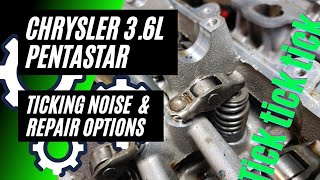
While P0363 is a generic code, its causes on the 3.6L Pentastar V6 are often specific. This engine is widely known for a valve train defect where the rocker arm bearings fail prematurely, causing a distinct ticking noise ('Pentastar Tick'). This mechanical failure is a very common cause of misfires that can lead to a P0363 code. While standard issues like ignition coils and spark plugs are still frequent culprits, any diagnosis on this engine must consider the high probability of rocker arm failure, especially if a ticking sound is present. A strong indicator of this failure is finding metallic 'glitter' in the engine oil or filter during an oil change.
Generation note: The 2011-2020 Dodge Journey is a single generation (JC). However, early Pentastar engines (2011-2013) had a specific, well-documented issue with the left cylinder head that could cause misfires on cylinders 2, 4, and 6. This was covered by Chrysler's extended warranty X69 (related to TSB 09-002-14 Rev. B), which provided coverage for 10 years or 150,000 miles. The issue of failing rocker arms is a known problem across the entire 2011-2020 model year range.
Symptoms You May Notice
- Flashing or solid Check Engine Light
- Severe loss of engine power
- Rough, shaking, or vibrating idle
- Engine stalling or difficulty starting
- Audible ticking or tapping noise from the top of the engine, which may get louder as it warms up
- Poor acceleration and hesitation
- Increased fuel consumption
- Replacing only the VVT solenoid when a ticking noise is present. A failed rocker arm can cause erratic camshaft movement, sometimes triggering VVT-related codes. If a tick is heard, the mechanical rocker arms should be inspected first before replacing electrical components.
Most Likely Causes
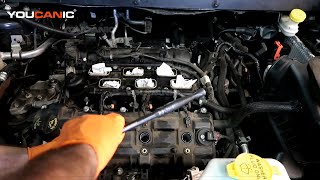
- Failed Ignition Coil 🔴 High Probability Ignition coils are a common wear item that can fail from heat and vibration. On the 3.6L, the rear coils (cylinders 1, 3, 5) are under the intake manifold, making them more labor-intensive to replace. 🎬 Watch: How to remove the upper intake manifold for access.
How to confirm: Use a scan tool to identify the misfiring cylinder (e.g., P0304 for cylinder 4). Swap the ignition coil from the misfiring cylinder with one from a non-misfiring cylinder. Clear the codes and run the engine. If the misfire code moves to the new cylinder (e.g., changes to P0302 if you swapped with cylinder 2), the coil is bad.
Typical fix: Replace the failed ignition coil. It is highly recommended to replace the spark plug at the same time. For rear bank misfires, many mechanics and owners choose to replace all three coils and plugs under the intake manifold at once to save on future labor costs. 🎬 See this walkthrough for replacing ignition coils and spark plugs.
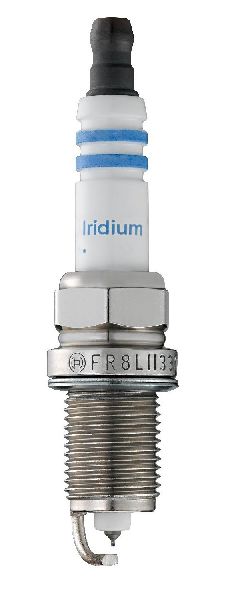
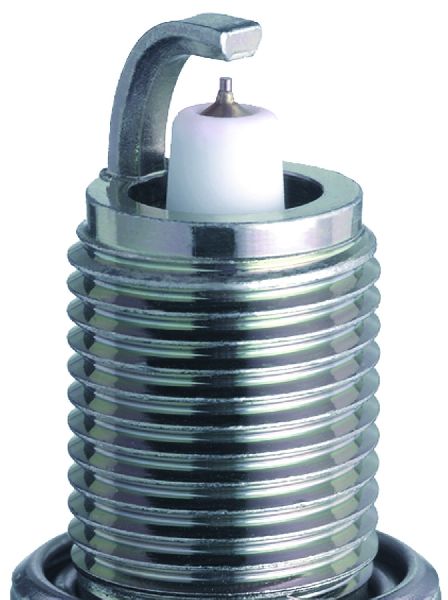
Est. part cost: $25-$60 per coil - Worn or Fouled Spark Plugs 🔴 High Probability Spark plugs are a regular maintenance item. The 3.6L Pentastar specifies a 100,000-mile interval for the original iridium plugs, but they can fail earlier, causing a misfire.
How to confirm: After identifying the misfiring cylinder, remove the spark plug and inspect it. Look for a worn electrode, heavy carbon buildup, oil fouling, or cracks in the porcelain. If the plugs are near their 100,000-mile service life, they should be replaced regardless.
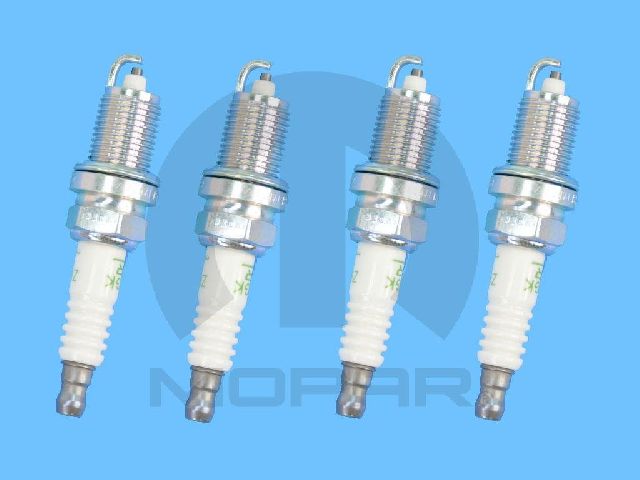
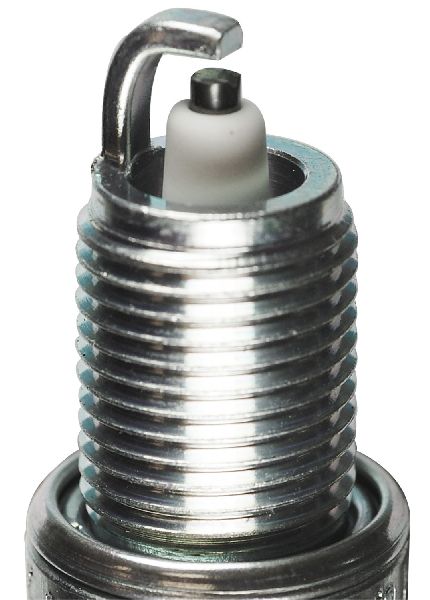
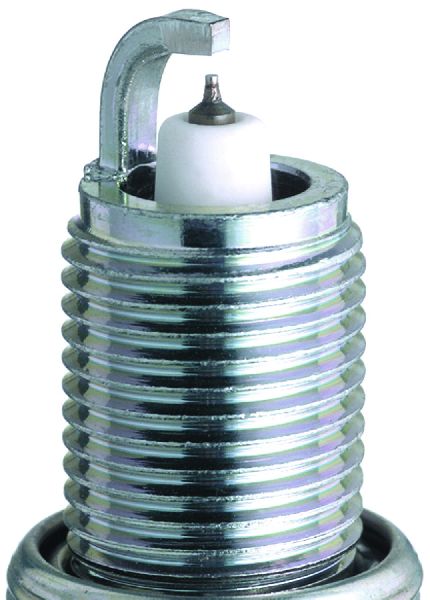
Typical fix: Replace all six spark plugs. It is critical to replace them as a full set to ensure consistent performance. Use OEM-spec Iridium plugs for best results.
Est. part cost: $40-$100 for a set of six - Failed Rocker Arm(s) 🟡 Medium Probability This is a well-documented design flaw in the 3.6L Pentastar V6. The needle bearings in the rocker arm rollers fail, causing the arm to seize, wear, and damage the camshaft lobe, leading to a misfire and ticking noise.
How to confirm: The most common symptom is a distinct ticking or tapping noise from the upper engine. A mechanic can confirm by removing the valve cover to inspect the rocker arms and camshafts for wear, scoring, or out-of-place arms. Finding fine metal shavings ('glitter') in the oil or oil filter is another strong indicator of this internal engine wear.
Typical fix: This is a labor-intensive repair. It involves replacing all 24 rocker arms and lifters (12 per head). The camshafts must also be inspected for damage and replaced if necessary. It is recommended to use the updated Mopar rocker arm part.
Est. part cost: $150-$400 for rocker arms and lifters per head
Rare But Worth Checking
- Faulty Fuel Injector: While less common than ignition or mechanical issues, a clogged or failed fuel injector can cause a persistent misfire on a single cylinder. This can be diagnosed by swapping injectors between cylinders, similar to an ignition coil test, but this is a more involved process requiring removal of the fuel rail.
- PCM Software Issue: Chrysler has issued Technical Service Bulletins (TSBs) to update the PCM software to prevent false or intermittent misfire codes. For example, TSB 18-055-16 was released for some 2015 models to address misfire DTCs. If no physical cause is found, checking if the vehicle has the latest software is a valid step.
- Cylinder Head Failure (2011-2013 models): Early production 3.6L engines had a known issue with the left cylinder head (cylinders 2, 4, 6) that caused misfires and was addressed by TSB 09-002-14 Rev. B. Chrysler extended the warranty to 10 years/150,000 miles for this specific problem under warranty code X69. Diagnosis requires a cylinder leak-down test; leakage over 25% confirms the failure.
Diagnosis Steps
- Connect an OBD-II scanner to the vehicle.
- Read all stored fault codes. Identify the specific cylinder misfire code (P0301-P0306) that is present alongside P0363. This tells you where to focus your efforts.
- Start the engine and listen carefully for a rhythmic ticking or tapping sound from the top of the engine. If a 'Pentastar Tick' is present, suspect a mechanical rocker arm failure and proceed with caution.
- If no ticking is heard, begin with the most common cause: the ignition system. Swap the ignition coil from the misfiring cylinder with a coil from a cylinder that is working correctly.
- Clear the codes and drive the vehicle until the check engine light returns. Re-scan the codes.
- If the misfire code has moved to the cylinder where you placed the suspect coil, the ignition coil is faulty and needs to be replaced.
- If the misfire code stays on the original cylinder, the coil is likely good. The next step is to inspect the spark plug for that cylinder. Replace if it is worn, fouled, or overdue for replacement.
- If the coil and plug are good, check for metallic particles in the engine oil, which would point to rocker arm failure.
- For 2011-2013 models with a misfire on cylinders 2, 4, or 6, a cylinder leak-down test should be performed to check for the known cylinder head issue. Leakage over 25% warrants cylinder head replacement according to TSB 09-002-14 Rev. B.
- If none of the above steps identify the issue, the problem could be a fuel injector, wiring issue, or internal engine damage requiring professional diagnosis.
Parts You'll Likely Need
- Ignition Coil
(OEM #5149168AI)— This is one of the most common causes of a misfire. It's a relatively inexpensive and easy part to replace for diagnosis.
Trusted brands: Mopar, NGK, Denso, Delphi
OEM price range: $50-$75
Aftermarket price range: $25-$60 - Spark Plugs
(OEM #SP149125AE)— Spark plugs are a routine maintenance item and a primary cause of misfires as they wear out.
Trusted brands: Champion, NGK
OEM price range: $15-$25 per plug
Aftermarket price range: $8-$15 per plug - Engine Rocker Arm
(OEM #5184296AH)— A known major failure point on the 3.6L Pentastar engine that directly causes misfires. If a ticking noise is present, this is the most likely culprit. This part number supersedes previous versions like 5184296AD, AE, AF, and AG.
Trusted brands: Mopar
OEM price range: $8-$15 per arm
Aftermarket price range: $5-$10 per arm - Engine Valve Lifter / Tappet
(OEM #5184332AA)— When replacing failed rocker arms, it is standard practice to replace the lifters as well to ensure proper valve train function and prevent a repeat failure.
Related Codes That Often Appear With This One
- P0300 — This is a code for 'Random/Multiple Cylinder Misfire'. The PCM may set this code first before it isolates the severe misfire to a specific cylinder and sets P0363.
- P0301, P0302, P0303, P0304, P0305, or P0306 — P0363 will almost always be accompanied by one of these codes, which tells you exactly which cylinder is misfiring (e.g., P0304 is Cylinder 4). This is the most important piece of information for starting your diagnosis. The left cylinder head issue on 2011-2013 models specifically relates to codes P0302, P0304, and P0306.
Technical Service Bulletins (TSBs) & Recalls
- 09-002-14 Rev. B: MIL Illumination: P0300, P0302, P0304 or P0306 (X56 Warranty Extension)
- 18-055-16: Flash: Powertrain Diagnostic and System Improvements
Platform-Specific Known Issues
- Rocker Arm Failure ('Pentastar Tick'): The 3.6L V6 is notorious for premature failure of the rocker arm roller bearings. This causes a distinct ticking noise and leads to misfires and potential camshaft damage. A class-action lawsuit was filed regarding this defect.
- Left Cylinder Head Defect (2011-2013): Early models were subject to a manufacturing defect in the left cylinder head that caused valve seat issues and misfires, primarily on cylinders 2, 4, and 6. Chrysler issued an extended warranty (X56) for this specific problem.
Mechanic-Grade Diagnostic Values
- Fuel Injector Coil Resistance — expected: 12.0 - 14.0 Ohms. A common reading is ~12.9 Ohms.. Failure: An open circuit ('OL' or infinite resistance) is the most common failure. A reading below 10 Ohms could indicate an internal short.
- Ignition Coil Primary Resistance — expected: ~0.46 - 0.59 Ohms. Failure: Significant deviation from the expected value, such as a reading of 1.2 Ohms, can indicate a faulty coil even if it still produces a spark.
- Ignition Coil Secondary Resistance — expected: ~8.5 kOhms - 15.7 kOhms. Failure: A reading outside of the specified range (e.g., 12.4 kOhms when spec is 8.5-10.5) points to a failing coil.
- Camshaft Position Sensor Supply Voltage — expected: 4.8 to 5.2 Volts DC at the sensor connector with key on, engine off.. Failure: Voltage below 4.8V or above 5.2V points to a wiring or PCM issue, not necessarily a bad sensor.
- Camshaft Position Sensor Signal (Hall Effect Test) — expected: Voltage should switch between ~0V and ~5V when a ferrous metal object is moved near the sensor tip.. Failure: If the voltage does not toggle, the sensor is likely bad.
Scan Tool Commands That Help
- wiTECH (or advanced aftermarket): VVT System Test / Actuator Tests — If a misfire persists after checking coils and plugs, and especially if cam/crank codes are also present, this function can command the VVT solenoids and cam phasers to move, helping to determine if the mechanical side of the variable valve timing is responding correctly. This can help differentiate between an electrical solenoid failure and a mechanical phaser or rocker arm issue.
- wiTECH (or advanced aftermarket): Cylinder Misfire / Contribution Test — This function allows the technician to view real-time misfire counts per cylinder. It's the primary tool for confirming which cylinder is the source of the P0363 code and for verifying if a repair (like swapping a coil) has moved the problem.
- wiTECH (or advanced aftermarket): View Environmental Data / Freeze Frame — When P0363 is set, the PCM stores a snapshot of all engine parameters at the moment of the fault. Reviewing this data (engine temperature, RPM, load, etc.) can provide crucial clues about the conditions under which the misfire occurs (e.g., only when cold, only under heavy load).
Wiring & Ground Locations
- Ignition Coil Connector — Connects directly to the top of each ignition coil.. The plastic locking tabs on the 2-wire connectors for the ignition coils frequently become brittle from heat and break. This can lead to a loose connection, causing intermittent misfires that can be hard to diagnose. The connector can be de-pinned and replaced without cutting and splicing wires.
- PCM Connector C1 (example) — The Powertrain Control Module (PCM) is located in the engine bay. Specific pinouts are required for advanced diagnosis.. For a deep electrical diagnosis, checking continuity from the PCM to the ignition coil requires the correct pin. For example, on some models, the control wire for Coil 1 is a Dark Blue/Dark Green wire at Pin 1 of the C2 connector. This information is critical for ruling out a wiring harness break.
Real Owner Repair Stories
- YouTube channel 'Online Mechanic Tips' (Chrysler with 3.6L Pentastar (specific model not stated)) — P0305 (Cylinder 5 Misfire)
❌ Tried (didn't work) Replacing camshaft position sensors, Swapping the ignition coil from cylinder 5 to another cylinder (misfire did not move)
✅ What actually fixed it A compression test revealed low compression on cylinder 5. The final diagnosis was a burnt exhaust valve, which required cylinder head replacement. The mechanic noted this can be caused by valve guide issues on this engine. - AliExpress Reviewer (2014 Dodge Charger 3.6L Pentastar V6) — P0300 (Random Misfire) and P0304 (Cylinder 4 Misfire), hesitation during acceleration.
❌ Tried (didn't work) Initial diagnosis pointed to a general ignition system failure.
✅ What actually fixed it The owner used a multimeter to test the ignition coils. The coil on cylinder 1 showed a primary resistance of 1.2 ohms (spec is 0.5-0.7) and secondary of 12.4 kΩ (spec is 8.5-10.5). Replacing just the one out-of-spec ignition coil resolved all codes and symptoms.
OEM Part Supersession History
5184296AD, 5184296AE, 5184296AF, 5184296AG→5184296AH— This is the updated rocker arm with improved roller bearings designed to address the common 'Pentastar Tick' and premature failure.5149168AH→5149168AI / 5149168AJ— Standard part revision for the common ignition coil used on most 3.6L Pentastar engines.
Model Year Variations Within This Range
- 2011-2013: These early model years were prone to a left cylinder head defect causing misfires on cylinders 2, 4, and 6, covered by an extended warranty (X69). Diagnosis requires a leak-down test.
- 2016+: Starting in 2016, a second-generation 3.6L Pentastar was introduced. It featured changes to the VVT system, added Variable Valve Lift (VVL), and used different fuel injectors. While the rocker arm issue still exists, diagnostics on a post-2016 engine must account for these different components.
Diagnostic Flowchart
Other Known Issues on This Vehicle
Issues unrelated to this code that are worth knowing about as an owner of this generation:
- Cracked Oil Filter Cooler Housing 🔴 High — Very common on 2014+ models. The plastic housing becomes brittle from heat cycles and cracks, causing significant oil and/or coolant leaks into the engine valley.
- 62TE Transmission Shudder or Failure 🟠 Medium — Reported by owners, sometimes leading to shuddering, slipping, or premature failure. Regular fluid changes are critical.
- Premature Brake and Rotor Wear 🟡 Low — A common complaint among owners is faster-than-average wear on brake pads and warping of rotors, requiring frequent replacement.
- Uconnect Infotainment System Glitches 🟡 Low — Issues include screen freezing, Bluetooth connectivity problems, and random reboots. Software updates can sometimes resolve these problems.
- Water Pump Failure 🟠 Medium — The water pump can fail, leading to coolant leaks and potential overheating. This is a common issue across many vehicles with the 3.6L Pentastar.
Used vs. New Parts: Buying Guide for This Vehicle
When a used part is the smart pick: A used ignition coil from a low-mileage, reputable salvage yard can be a cost-effective way to diagnose a misfire by swapping it with the suspect coil. If the misfire moves, you have your answer without buying a new part for testing. However, for the final repair, a new part is recommended.
Donor-vehicle mileage cap: roughly under 60000 miles for the part to have meaningful remaining life.
What to inspect on the donor part:
- For an ignition coil, ensure the plastic housing is free of cracks and the connector pins are clean and not corroded.
- Check the salvage vehicle's VIN to confirm it's from a similar year range and not from an early (2011-2013) model if you are trying to avoid parts from the cylinder-head-issue era.
- Ask for a vehicle history report if possible to check for reported accidents or flood damage.
OEM-only on this vehicle (don't cheap out):
- Engine Rocker Arms
- Engine Valve Lifters
Aftermarket brands forum-validated for this vehicle:
- NGK or Denso for Ignition Coils
- NGK or Champion for Spark Plugs (use specified Iridium type)
Brands owners have reported issues with on this vehicle:
- Avoid unbranded or 'white-box' rocker arms and lifters. Given that the original failure is a design flaw, using a cheap, unverified aftermarket part for such a labor-intensive job is extremely risky. Stick with the updated Mopar OEM part (5184296AH).
Real Owner Stories
Aggregated from forums and TSBs cited above. Mileages and costs reflect what owners reported in those sources.
2014 Dodge Journey 3.6L
Symptoms: Distinct ticking or tapping noise from the upper engine; rocker arms failing.
What fixed it: Replacement of rocker arms and lifters; the owner noted that using the updated Mopar rocker arm part is recommended.
Source hint: Reddit r/AskMechanics/comments/1dshw2z/2014_dodge_journey_rocker_arms_failing/
2014 Dodge Journey 3.6L
Symptoms: Ticking noise from the engine area.
What fixed it: Rocker arm replacement.
Source hint: https://www.dodgejourneyforum.com/topic/7724-20014-journey-36-rocker-replacement-no-more-ticking/
2011-2013 Dodge Journey 3.6L
Symptoms: MIL Illumination with codes P0300, P0302, P0304, or P0306; cylinder head issues.
What fixed it: Cylinder head replacement under the X56 Warranty Extension after a cylinder leak-down test showed leakage over 25%.
Source hint: TSB 09-002-14 Rev. B
Related OBD-II Codes
Frequently Asked Questions
I have a 2012 Dodge Journey with a misfire on cylinder 2. Is there a special warranty for this?
My 3.6L Pentastar has a loud ticking noise and a P0363 code. What is the most likely cause?
The mechanic says my rear ignition coils are bad. Why is the labor so expensive on my Journey?
Should I replace my spark plugs before the 100,000-mile interval to avoid P0363?
Can a software update fix my misfire and P0363 code?
What kind of spark plugs should I use for my 3.6L Dodge Journey?
Helpful Videos


Used OEM Parts in Stock


New Aftermarket Parts Available


The information in this article is provided for general reference and educational purposes only. Vehicle specifications, procedures, and part compatibility can vary by production date, trim level, and region. Always consult your vehicle's factory service manual and verify part numbers before purchasing or performing repairs. Safety-critical components such as airbags, seat belts, and braking systems should be installed by a qualified professional.
- Dodge Journey:
- 🎬 Helpful Videos
- 🛍️ Shop This Part
- What's Unique About the 2011-2020 Dodge Journey
- Symptoms You May Notice
- Most Likely Causes
- Rare But Worth Checking
- Diagnosis Steps
- Parts You'll Likely Need
- Related Codes That Often Appear With This One
- Technical Service Bulletins (TSBs) & Recalls
- Platform-Specific Known Issues
- Mechanic-Grade Diagnostic Values
- Scan Tool Commands That Help
- Wiring & Ground Locations
- Real Owner Repair Stories
- OEM Part Supersession History
- Model Year Variations Within This Range
- Diagnostic Flowchart
- Other Known Issues on This Vehicle
- Used vs. New Parts: Buying Guide for This Vehicle
- Real Owner Stories
- 2014 Dodge Journey 3.6L
- 2014 Dodge Journey 3.6L
- 2011-2013 Dodge Journey 3.6L
- Related OBD-II Codes
- Frequently Asked Questions
- 🎟️ Get 5% Off