

P0363 on 2007-2013 BMW M3: Misfire Detected & Fuel Cut-Off Causes and Fixes
On the S65 V8, code P0363 indicates a severe misfire where the DME (engine computer) has cut fuel to a cylinder to prevent catalytic converter damage. This is most often caused by a failed ignition coil or a worn spark plug. Expect to pay $50-$100 for a single OEM-brand coil and $15-$25 for a spark plug.
- P0363 is not the root problem; it's the engine's protective reaction to a severe misfire detected in one of the cylinders.
- Always start diagnosis with the simple, high-probability items: identify the misfiring cylinder with a P030x code, then swap the ignition coil, then the spark plug.
- If plugs and coils are good, the next most likely cause on an S65 is a faulty fuel injector.
- If misfires are persistent and hard to trace, the unique Ionic Current Control Module is a likely culprit specific to this engine.
- Do not drive the car with this code. The flashing check engine light signals a risk of expensive catalytic converter damage.
What's Unique About the 2007-2013 BMW M3
The S65 V8 engine has a sophisticated ignition system that uses an 'Ionic Current Control Module' to monitor combustion quality through the spark plugs. While standard ignition parts like coils and plugs are the most common cause for P0363, this unique Ionic module can also fail, leading to persistent misfires that are difficult to diagnose with standard methods. There are two modules, one for each bank of cylinders, and swapping them is a key diagnostic step. Additionally, while fuel injectors are a common cause on many cars, they are a known failure point on the S65, with a tendency to get stuck open. This is theorized to be caused by the degradation of the 'lifetime' in-tank fuel filter, which allows debris to reach the injectors. A stuck-open injector can quickly lead to cylinder wall scoring from fuel wash, potentially destroying the engine.
Symptoms You May Notice
- Flashing Check Engine Light
- Engine running very rough, shaking, or vibrating, especially at idle.
- Significant loss of engine power and sluggish acceleration.
- Engine may stall or struggle to stay running.
- Audible change in engine note, sounds like it's missing a beat or 'like a Subaru'.
- Reduced power message on the iDrive screen.
- Strong smell of unburnt fuel from the exhaust.
- Replacing only spark plugs when an ignition coil is the true cause.
- Replacing oxygen sensors, when the sensor is accurately reporting a problem (the misfire) caused by a bad plug, coil, or injector. An exhaust leak is a more likely culprit if O2 sensor codes are present with bank-wide misfires.
- Assuming a major mechanical failure before performing basic ignition system diagnostics (coil and plug swaps).
- Replacing throttle body actuators for a single-cylinder misfire. Actuator failure typically affects an entire bank and throws specific TA codes.
Most Likely Causes
- Failed Ignition Coil 🔴 High Probability Ignition coils are a common failure item on many modern BMWs, including the S65, due to high heat in the engine bay and the demands of the high-revving V8. It's recommended that all coils be of the same brand (e.g., all Bosch or all Eldor) for consistent performance.
How to confirm: Identify the misfiring cylinder from the accompanying P030x code. Swap the ignition coil from the misfiring cylinder with one from a known good cylinder. Clear the codes and run the engine. If the misfire code follows the coil to the new cylinder (e.g., P0301 becomes P0302), the coil is faulty.
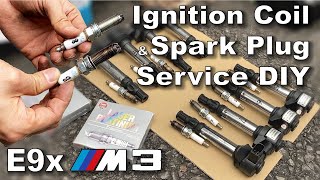
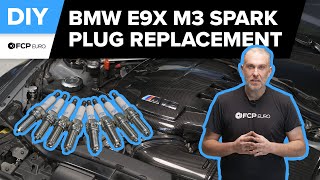
Typical fix: Replace the failed ignition coil. It is often recommended to replace all eight coils if they are original and high-mileage, especially if one has failed. 🎬 Watch: S65 spark plug and ignition coil replacement guide Use only reputable OEM suppliers like Bosch, Delphi, or the later-spec Eldor.
Est. part cost: $50-$100 per coil - Worn or Fouled Spark Plugs 🔴 High Probability The S65 has a recommended spark plug change interval of 30,000-37,000 miles. This engine is sensitive to plug choice; only the specified NGK LKR8AP plugs should be used. Plugs that are worn, loose, or fouled with oil or carbon can easily cause a misfire.
How to confirm: After confirming the coil is good, remove the spark plug from the misfiring cylinder. Inspect it for wear (worn electrode), damage (cracked porcelain), or heavy deposits of oil or carbon. A loose spark plug can also be the cause.
Typical fix: Replace the spark plug. It is best practice to replace all eight spark plugs at the same time with NGK LKR8AP plugs if they are near or past their service interval.
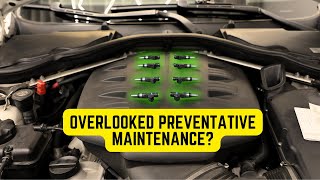
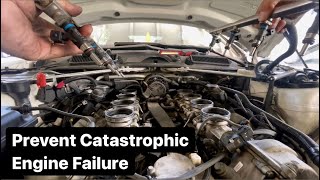
Est. part cost: $15-$25 per plug - Faulty Fuel Injector 🟡 Medium Probability The S65 injectors are known to fail, either by clogging or, more dangerously, sticking open. Debris from a 'lifetime' in-tank fuel filter is a suspected cause of injector failure over time. A stuck-open injector can cause cylinder bore wash, leading to catastrophic engine failure. Many owners now consider injectors a preventative maintenance item.
How to confirm: If the misfire remains on the same cylinder after swapping the coil and plug, the injector is the next likely suspect. A professional can perform a flow test. A DIY method is to remove the fuel rail with injectors attached, place them in containers, and crank the engine to observe the spray pattern and check for drips. A strong fuel smell and a black, sooty plug in the misfiring cylinder are strong indicators.
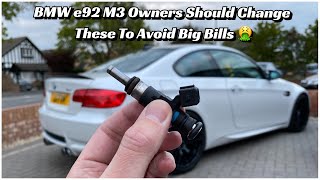
Typical fix: Replace the faulty fuel injector. Given the labor involved to access the fuel rail under the intake plenum, many owners elect to replace all eight injectors as a preventative measure. 🎬 See this step-by-step fuel injector and breather valve DIY Installing an aftermarket in-line fuel filter kit is also a popular upgrade to protect the new injectors.
Est. part cost: $150-$250 per injector - Failed Ionic Current Control Module ⚪ Low Probability This module, specific to S65/S85 engines, monitors combustion and can fail from engine heat, causing persistent misfires that don't resolve with new plugs or coils. There are two modules, one for each bank (Bank 1 passenger side, Bank 2 driver side). Updated part numbers exist which are reportedly more reliable.
How to confirm: This is typically diagnosed after ruling out all other common causes. The primary diagnostic step is to swap the modules between banks. If a Bank 2 misfire (e.g., P0305) moves to Bank 1 (e.g., P0301) after the swap, the module is confirmed to be faulty. A BMW-specific scan tool (like ISTA) can also help read specific fault codes related to the module.
Typical fix: Replace the failed Ionic Current Control Module. The part is plug-and-play and does not require coding, but fault memory should be cleared from the DME after installation.
Est. part cost: $400-$500 per module
Rare But Worth Checking
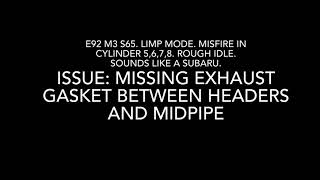
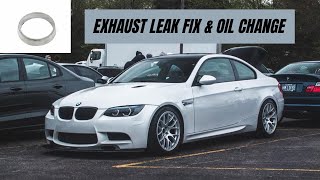
- Exhaust Gasket Leak: A leak from the gasket (graphite ring) between the exhaust manifold (headers) and the mid-pipe can introduce unmetered air. This throws off the pre-cat oxygen sensor readings, causing the DME to adjust fuel trims incorrectly and trigger misfires on an entire bank (e.g., P0305-P0308). Several owners on M3Post have fixed persistent bank-wide misfires by replacing these gaskets. 🎬 Watch: How an exhaust leak causes misfires and limp mode
- Failed Throttle Body Actuator: This is a very common S65 failure that causes limp mode, rough running, and a 'Christmas tree' of lights on the dash. It typically sets its own specific codes (e.g., 2B15, 2B16, CDC0). While it's unlikely to be the direct cause of a single-cylinder P0363 without other codes, the severe running issues it creates could potentially be misinterpreted by the DME as a misfire in extreme cases. The failure is often due to worn plastic gears or failed electronics on the circuit board inside the actuator.
- Faulty Fuel Tank Breather Valve: A faulty fuel tank breather valve (part number 13-90-7-838-281) has been cited as a cause for misfires across all cylinders, particularly after refueling.
Diagnosis Steps
- Read the fault codes with an OBD-II scanner to identify the specific misfiring cylinder (e.g., P0304 for cylinder 4). Note all other codes present, such as those for throttle actuators or oxygen sensors.
- Access the engine by removing the plastic covers. The S65 cylinder numbering is 1-4 on the passenger side (Bank 1, front to back) and 5-8 on the driver side (Bank 2, front to back).
- Swap the ignition coil from the misfiring cylinder with a coil from a non-misfiring cylinder (e.g., swap coil from cylinder 4 with cylinder 1).
- Clear the codes and start the engine. Let it run until the check engine light reappears.
- Scan the codes again. If the misfire code has moved to the cylinder where you placed the suspect coil (e.g., now shows P0301 instead of P0304), the ignition coil is bad and needs replacement.
- If the misfire stays on the original cylinder, repeat the swap process with the spark plug. If the misfire then moves, the spark plug is bad.
- If the misfire still remains on the same cylinder after swapping the coil and plug, the issue is likely a fuel injector, the Ionic module, or a mechanical issue.
Parts You'll Likely Need
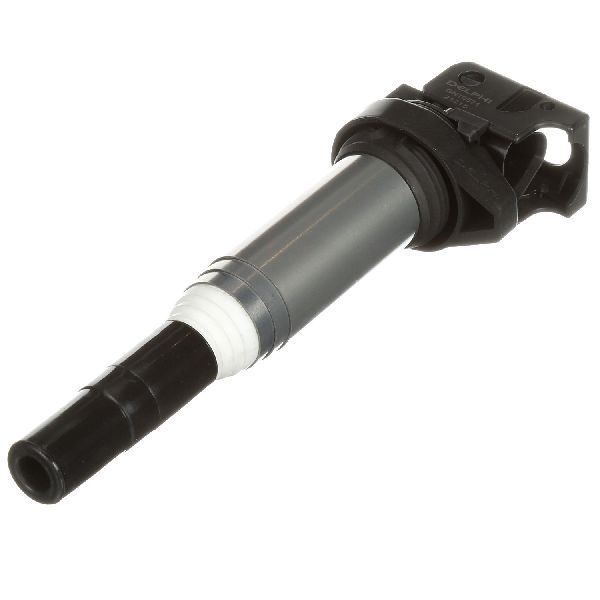
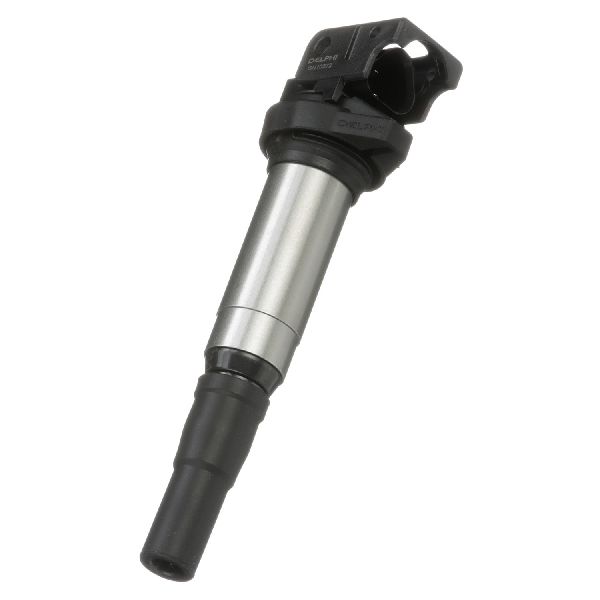
- Ignition Coil
(OEM #12138657273 (Eldor), 12137841754 (Bosch))— This is one of the most frequent causes of misfires on the S65 engine. Eldor is a later OEM supplier and considered an update over earlier Bosch/Delphi coils.
Trusted brands: Bosch, Delphi, Eldor
OEM price range: $60-$100
Aftermarket price range: $35-$70 - Spark Plug
(OEM #12120032273)— A regular maintenance item with a ~37k mile interval; worn plugs are a primary cause of misfires. The S65 is sensitive to plug type.
Trusted brands: NGK (LKR8AP)
OEM price range: $15-$25
Aftermarket price range: $12-$20 - Fuel Injector
(OEM #13537836865 (Bosch 62418))— A known failure point that can stick open, risking engine damage. Many owners replace as a preventative set.
Trusted brands: Bosch
OEM price range: $150-$250
Aftermarket price range: $100-$180 - Ionic Current Control Module
(OEM #13627834713)— A unique component to the S65/S85 that can cause difficult-to-diagnose misfires when it fails.
Trusted brands: Genuine BMW
OEM price range: $400-$500
Related Codes That Often Appear With This One
- P0301, P0302, P0303, P0304, P0305, P0306, P0307, or P0308 — These codes are essential, as they specify which cylinder is misfiring (e.g., P0301 for Cylinder 1). P0363 is the action the DME takes *because* one of these codes is present and severe.
- P0300 — This 'Random/Multiple Cylinder Misfire' code may appear if the issue is intermittent or affects several cylinders, such as with a failing Ionic module, a large vacuum/exhaust leak, or a faulty fuel tank breather valve.
- 2B42-2B49 (Misfire impairing exhaust emission) — These are the BMW-specific equivalents to the generic P030x codes, often seen when using more advanced diagnostic software. They can sometimes be triggered by the cold start sequence and may be resolved by a software tune that removes the cold start routine.
Platform-Specific Known Issues
- Failure of the Ionic Current Control Module can cause difficult-to-diagnose misfires that seem to appear randomly after spark plugs and coils have been replaced.
- Fuel injectors are prone to failure from debris, which can lead to a stuck-open condition, potentially causing catastrophic engine damage from hydrolocking (a cylinder filling with fuel).
Mechanic-Grade Diagnostic Values
- Low-Pressure Fuel System — expected: 3.0 to 6.0 Bar (43.5 to 87 PSI), variable based on DME request.. Failure: Pressure that is unstable, fails to build, or reads outside the expected range can indicate a failing fuel pump or a faulty low-pressure fuel sensor. A bad sensor can also cause codes like 2722 or 2788.
- Fuel Injector Pulse Width (at idle) — expected: Typically around 3ms at idle for a healthy, warm engine.. Failure: On a bank with a severe misfire and fuel cut-off (like Bank 2 in the source), the pulse width will read 0ms as the DME has commanded the injectors to shut off.
Hidden / Shadow Codes Worth Checking
- 2B39 - 2B3C: Misfire with shutdown, cylinder 5 through 8. These are the BMW-specific codes for a severe misfire on an entire bank (Bank 2 in this case) where fuel cut-off has been initiated. (see via BMW-specific diagnostic software like ISTA, INPA, or advanced handheld scanners.)
- 2B41: Misfire with shutdown of several cylinders. This indicates that the DME has detected severe misfires on multiple cylinders and has cut fuel to them. (see via BMW-specific diagnostic software like ISTA, INPA, or advanced handheld scanners.)
- 2B57: Motor emergency program activated. This is a general code indicating the vehicle has entered a limp-home mode, often triggered by severe faults like multiple misfires or throttle actuator problems. (see via BMW-specific diagnostic software like ISTA, INPA, or advanced handheld scanners.)
Scan Tool Commands That Help
- ISTA (BMW Dealer Software): Clear adaptations — After replacing major components like fuel injectors, throttle actuators, or mass air flow sensors, it is critical to reset the engine's learned adaptations to ensure it operates correctly with the new parts.
- ISTA (BMW Dealer Software): Fuel injector coding/calibration — When replacing fuel injectors on the S65, each new injector has a calibration value printed on it that must be programmed into the DME. This ensures the DME can precisely control the new injector. Failure to do this can lead to rough running, poor fuel economy, and misfires.
- ISTA (BMW Dealer Software): Ionic Current Module Test Plan — If an Ionic Current Module is suspected of failing, ISTA has a guided diagnostic test plan that can help confirm the fault, often instructing the technician to swap the modules between banks to see if the fault follows the module.
Wiring & Ground Locations
- Engine Ground Strap — The main engine-to-chassis ground strap is typically located on the driver's side of the engine, connecting the engine block or engine mount arm to the chassis rail.. A corroded or loose engine ground strap can cause a multitude of electrical issues, including weak spark and erratic sensor readings. This can lead to misfires that are difficult to diagnose because the primary components (coils, plugs) may test as healthy. It's an often-overlooked check for persistent, unexplained misfires.
Real Owner Repair Stories
- Bimmerpost user 'aggieshan' (2012 E92 M3, 53k miles) — Sudden rough idle at a stop, followed by reduced engine power message. Misfires on all of Bank 2 (cylinders 5, 6, 7, 8) with fuel cut-off.
❌ Tried (didn't work) Replacing spark plugs (done 5k miles prior)., Replacing pre-cat O2 sensors (done 3k miles prior)., Replacing throttle actuators (done 5k miles prior)., Visually inspecting fuel injectors by cranking engine with fuel rail out (all appeared to spray fuel).
✅ What actually fixed it The user had already replaced the exhaust X-pipe O-ring gaskets based on forum suggestions, which is a known fix for bank-wide misfires caused by exhaust leaks. - Reddit user on r/MechanicAdvice (BMW M3 with S65 engine) — Misfire on cylinder 6. After shop replaced all 8 plugs, a new misfire appeared on cylinder 1 immediately after pickup.
❌ Tried (didn't work) Replacing the ignition coil on the newly misfiring cylinder 1., Cleaning oil off the new spark plug and reinstalling it.
✅ What actually fixed it The story suggests the root cause was likely a leaking valve cover gasket or spark plug tube seal. The act of removing and installing the spark plugs likely disturbed the already failing seal, allowing oil to foul the new plug in cylinder 1, causing the new misfire. The final fix would be replacing the valve cover gaskets and associated seals.
"I Checked Everything" — The Actual Cause
- A common scenario for bank-wide misfires (e.g., on cylinders 5-8) is an exhaust leak between the header and the x-pipe. This will not be found with a traditional intake smoke test. The leak introduces unmetered air into the exhaust stream ahead of the primary O2 sensor, causing the DME to incorrectly enrich the fuel mixture for that entire bank, leading to fouling and misfires. The fix is to replace the donut gaskets/graphite rings at the header-to-x-pipe connection.
OEM Part Supersession History
Multiple (Bosch)→Eldor brand coils are now often supplied as the Genuine BMW replacement.— Reports in the community suggest the Eldor coils may have a lower failure rate than the earlier Bosch units they replaced.
Heads up: While Bosch, Delphi, and Eldor coils are technically interchangeable, it is strongly recommended to use a matching set of eight coils from the same manufacturer to ensure consistent performance.13627834713 (for S85, also used on S65)→13627838514 (S65 specific), then to 13627841754— Part consolidation and potential minor revisions for reliability.
Heads up: The latest part number should be used. While older versions may work, the newest revision is considered the most reliable. The modules are specific to S65/S85 engines and not interchangeable with other BMWs.
Model Year Variations Within This Range
- 2008 - early 2010 vs. mid-2010 - 2013: The original S65 engines used connecting rod bearings with a copper/lead composition. Around mid-2010, BMW switched to a different bearing material (tin/aluminum). This does not directly affect a P0363 code but is a critical reliability distinction for the engine.
- Pre-May 2008 vs. Post-May 2008: BMW changed the accessory belt routing in May 2008. Early cars have a single-sided serpentine belt, while later cars use a double-sided belt. This is irrelevant to the P0363 code itself but is a key service difference.
Diagnostic Flowchart
Other Known Issues on This Vehicle
Issues unrelated to this code that are worth knowing about as an owner of this generation:
- Rod Bearing Wear 🔴 High — Considered a critical preventative maintenance item. Many owners replace them proactively between 50,000 and 80,000 miles, as failure can be sudden and lead to catastrophic engine destruction.
- Throttle Body Actuator Failure 🔴 High — Extremely common, often failing between 50,000-70,000 miles. Failure of one of the two actuators will put the car into limp mode with reduced power, but will not destroy the engine.
- Idle Control Valve Failure 🟠 Medium — A common failure that causes erratic or high idle speed and can throw fault codes. Less critical than rod bearings or throttle actuators but a frequent annoyance.
- Valve Cover Gasket Leaks 🟡 Low — Common on most aging BMW engines. Oil leaks from the valve cover gaskets can drip onto exhaust manifolds, causing a burning smell. If oil leaks into the spark plug tubes, it can cause ignition coil failure and misfires.
- VANOS System Issues 🟠 Medium — While more robust than the system on the S85, the S65 can still suffer from issues with VANOS solenoids, leading to rough idle and reduced power.
Used vs. New Parts: Buying Guide for This Vehicle
When a used part is the smart pick: Used parts can be a cost-effective option for expensive, purely electronic modules like the DME (engine computer) or an Ionic Current Control Module, provided you buy from a reputable salvage yard with a warranty and understand that DME replacement requires specialized programming to your car's security system (CAS).
Donor-vehicle mileage cap: roughly under 80000 miles for the part to have meaningful remaining life.
What to inspect on the donor part:
- For electronic modules, check for any signs of water damage, corrosion on the pins, or physical damage to the casing.
- For mechanical parts like throttle actuators, ask for the mileage of the donor car. Lower mileage is always better.
- Verify the part number on the used component matches the part you are replacing or its known supersession.
- Prefer sellers who provide a short-term (30-90 day) warranty against the part being dead on arrival.
OEM-only on this vehicle (don't cheap out):
- Fuel Injectors: Due to the precision required and the risk of engine damage from a faulty injector, new OEM (Bosch) or high-quality, flow-matched aftermarket sets (like Injector Dynamics or Fuel Injector Clinic) are strongly recommended.
- Spark Plugs: Only use the specified NGK LKR8AP plugs. The cost is low and the risk of using incorrect plugs is high.
- Ignition Coils: Given the labor to access them and their critical function, new OEM (Bosch, Eldor) or OEM-quality aftermarket coils are the wise choice. The cost savings on used coils is minimal compared to the risk of repeated labor.
Aftermarket brands forum-validated for this vehicle:
- Ignition Coils: Bosch, Eldor, Delphi.
- Fuel Injectors (Performance Upgrade): Injector Dynamics, Fuel Injector Clinic, DeatschWerks.
- Throttle Actuator (Rebuild/Upgrade): Evolve, Hack Engineering (offer rebuilt units with upgraded gears and lifetime warranties).
Brands owners have reported issues with on this vehicle:
- Unnamed, no-brand ignition coils and fuel injectors from online marketplaces. The quality control is often non-existent and can lead to persistent issues or even engine damage.
Real Owner Stories
Aggregated from forums and TSBs cited above. Mileages and costs reflect what owners reported in those sources.
2008 BMW M3 S65 4.0L V8
Symptoms: Engine running very rough and shaking at idle; 'Reduced Power' message appeared on the iDrive screen with a flashing Check Engine Light.
What fixed it: Identified the misfiring cylinder via OBD-II, swapped the ignition coil to another cylinder to confirm failure, and replaced the faulty coil with a new Bosch unit.
Source hint: Article context symptoms and diagnosis steps
2011 BMW M3 S65 4.0L V8
Symptoms: Strong smell of unburnt fuel from the exhaust and a black, sooty spark plug in the misfiring cylinder.
What fixed it: Replaced a faulty fuel injector that was suspected of sticking open. The owner also elected to install an aftermarket in-line fuel filter kit to protect the new injectors from debris.
Source hint: M3Post thread titled 'Official S65 Injector Failure Thread - M3Post'
2009 BMW M3 S65 4.0L V8
Symptoms: Car went into limp mode with misfire codes; owner suspected an exhaust leak.
What fixed it: Repaired a leak at the header-to-cat gasket which was causing the car to trigger limp mode and misfire faults.
Source hint: M3Post thread titled 'Exhaust leak??'
2010 BMW M3 S65 4.0L V8
Symptoms: Persistent misfires that did not resolve after replacing both spark plugs and ignition coils.
What fixed it: Swapped the Ionic Current Control Modules between Bank 1 and Bank 2; the misfire moved to the other bank, confirming a failed module which was then replaced.
Source hint: Article context common causes and vehicle-specific issues
Related OBD-II Codes
Frequently Asked Questions
Which specific spark plugs should I use for my S65 V8 to avoid misfire codes?
I've replaced my coils and plugs, but I still have a persistent misfire. Could it be the Ionic Current Control Module?
Is there a specific brand of ignition coil recommended for the 2007-2013 M3?
How often should I be changing the spark plugs on my M3 to prevent P0363 and misfire codes?
Can a fuel injector issue cause engine damage on this car?
Does the S65 share its misfire diagnostic components with any other BMW engines?
Helpful Videos

Used OEM Parts in Stock


New Aftermarket Parts Available


The information in this article is provided for general reference and educational purposes only. Vehicle specifications, procedures, and part compatibility can vary by production date, trim level, and region. Always consult your vehicle's factory service manual and verify part numbers before purchasing or performing repairs. Safety-critical components such as airbags, seat belts, and braking systems should be installed by a qualified professional.
- BMW M3:
- 🎬 Helpful Videos
- 🛍️ Shop This Part
- What's Unique About the 2007-2013 BMW M3
- Symptoms You May Notice
- Most Likely Causes
- Rare But Worth Checking
- Diagnosis Steps
- Parts You'll Likely Need
- Related Codes That Often Appear With This One
- Platform-Specific Known Issues
- Mechanic-Grade Diagnostic Values
- Hidden / Shadow Codes Worth Checking
- Scan Tool Commands That Help
- Wiring & Ground Locations
- Real Owner Repair Stories
- "I Checked Everything" — The Actual Cause
- OEM Part Supersession History
- Model Year Variations Within This Range
- Diagnostic Flowchart
- Other Known Issues on This Vehicle
- Used vs. New Parts: Buying Guide for This Vehicle
- Real Owner Stories
- 2008 BMW M3 S65 4.0L V8
- 2011 BMW M3 S65 4.0L V8
- 2009 BMW M3 S65 4.0L V8
- 2010 BMW M3 S65 4.0L V8
- Related OBD-II Codes
- Frequently Asked Questions
- 🎟️ Get 5% Off