

P0354 on 2000-2007 Mercedes-Benz C-Class: Ignition Coil 'D' Circuit Failure Causes and Fixes
P0354 on a W203 C-Class indicates a fault with the ignition coil for cylinder 4. The most common fix is replacing the faulty ignition coil and the spark plugs for that cylinder. Expect to pay $50-$100 for an aftermarket coil and $10-$20 per spark plug. On V6 models, cylinder 4 is at the front on the driver's side; on 4-cylinder models, it's the rearmost cylinder.
- P0354 points directly to a problem with the ignition coil circuit for cylinder 4, which almost always results in a P0304 misfire code as well.
- The most common cause is a failed ignition coil, a relatively simple and inexpensive DIY replacement.
- Always swap the suspect coil with a known good one from another cylinder to confirm the coil is the problem before buying a new one.
- On V6 engines, check for oil in the spark plug wells from leaking valve cover gaskets. On 4-cylinder engines, inspect for oil in the wiring harness connectors.
- Cylinder 4 is in a different location depending on whether you have a V6 (front, driver's side) or a 4-cylinder (rear, near firewall) engine.
What's Unique About the 2000-2007 Mercedes-Benz C-Class
The 2000-2007 C-Class (W203) used different engine types, which changes the location of cylinder 4 and the type of ignition coil. V6 models (like the C240 and C320 with the M112 engine) have a twin-spark system, with one coil pack firing two spark plugs per cylinder. On these V6 engines, cylinder 4 is the front-most cylinder on the driver's side (left side of the engine). In contrast, the 4-cylinder Kompressor models (like the C230 with the M271 engine) use a simpler coil-on-plug design, and cylinder 4 is the rearmost cylinder, closest to the firewall.
Symptoms You May Notice
- Check Engine Light is illuminated or flashing
- Rough or shaking engine idle
- Noticeable loss of power and sluggish acceleration
- Engine hesitation or stumbling during driving
- Increased fuel consumption
- Engine may be difficult to start
- Replacing only the spark plugs without testing the ignition coil. If the coil is faulty, the problem will persist.
- Replacing a fuel injector. While a bad injector can cause a misfire (P0304), it will not cause a coil circuit code (P0354).
- Assuming the coil is bad without swapping it first. A wiring issue can present the same code, and replacing a good coil will not fix the problem.
Most Likely Causes
- Faulty Ignition Coil 🔴 High Probability Ignition coils are a common wear item that can fail from heat cycles and age. Oil leaks from the valve cover gaskets, a known issue, can also seep into the spark plug wells and damage the ignition coil boots, leading to failure.
How to confirm: Swap the ignition coil from cylinder 4 with an adjacent cylinder (e.g., cylinder 5 on a V6, or cylinder 3 on a 4-cyl). Clear the codes and drive. If the fault code changes to P0355 or P0353 respectively, the coil is bad. If P0354 returns, the problem is in the wiring or PCM.
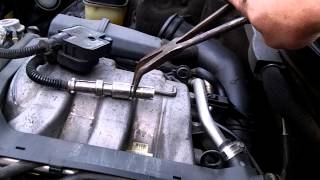
Typical fix: Replace the failed ignition coil for cylinder 4. It is best practice to replace the corresponding spark plugs at the same time. For V6 models, there are two plugs per cylinder. Use reputable brands like Bosch or Beru. 🎬 Watch: Step-by-step spark plug replacement for the M112 V6 engine.
Est. part cost: $50-$120 - Worn or Defective Spark Plugs 🟡 Medium Probability Spark plugs have a finite service life. On V6 models with twin-spark ignition, there are two plugs per cylinder, increasing the chance of a failure. A heavily worn, fouled, or incorrectly gapped plug can increase resistance in the secondary ignition circuit, stressing the coil and causing it to fail, which in turn triggers the P0354 code.
How to confirm: Remove the spark plug(s) from cylinder 4 and inspect for wear, fouling (black, oily, or white deposits), or damage to the electrode or ceramic insulator. Mercedes recommends replacement at specific intervals (typically around 100,000 km or 60,000 miles).
Typical fix: Replace the spark plug(s) for cylinder 4. It is highly recommended to replace all spark plugs as a set if their age is unknown to ensure balanced performance. Ensure the new plugs are gapped correctly.
Est. part cost: $10-$25 per plug - Damaged Wiring or Connector ⚪ Low Probability Engine bay heat and vibration can make plastic connectors brittle and wires fragile over time. The wiring harness leading to the coil can chafe or break. In some cases, oil from leaking camshaft sensors can wick through the wiring harness ('oil-in-harness' issue) and contaminate the coil connector and even the PCM connector, causing this fault.
How to confirm: Visually inspect the electrical connector and wiring going to the cylinder 4 ignition coil. Look for cracked plastic, corroded pins, or frayed wires. Check for the presence of oil inside the connector. Use a multimeter to check for continuity and proper voltage at the connector pins leading back to the PCM.
Typical fix: Repair the damaged section of wire or replace the pigtail connector for the ignition coil. If oil contamination is found, the source of the leak (e.g., camshaft position sensor) must be fixed, and the harness and connectors must be thoroughly cleaned with an appropriate electrical contact cleaner.
Est. part cost: $15-$40 for a connector pigtail
Rare But Worth Checking
- Faulty Powertrain Control Module (PCM): This is very rare. The internal driver circuit in the PCM that fires the ignition coil can fail. This should only be considered after all other possibilities (coil, plugs, wiring) have been definitively ruled out. A full diagnostic scan with Mercedes-specific software (like STAR/Xentry) is often needed to confirm a faulty PCM.
Diagnosis Steps
- Read the code with an OBD-II scanner to confirm P0354 and check for any other codes like P0304.
- Identify your engine type (4-cylinder or V6) to locate cylinder 4. For V6 (M112), it's the front cylinder on the driver's side. For I4 (M271), it's the rearmost cylinder near the firewall.
- Swap the ignition coil from cylinder 4 with another cylinder (e.g., cylinder 3 on an I4, or cylinder 5 on a V6).
- Clear the fault codes with the scanner.
- Start the engine and drive the vehicle until the Check Engine Light returns.
- Re-scan for codes. If the code has moved to the cylinder where you placed the coil (e.g., P0353 or P0355), the ignition coil is faulty and needs replacement.
- If code P0354 returns, the problem is not the coil. Carefully inspect the wiring harness and connector for cylinder 4. Look for any damage, corrosion, loose connections, or signs of oil contamination.
- If the wiring appears intact, use a multimeter to check for correct voltage and ground at the coil connector. Check for continuity on the signal wire from the PCM to the coil connector.
- While the coil is removed, inspect the spark plug(s). If they are old, fouled, or damaged, replace them. On V6 models, remember there are two plugs per cylinder.
- If all wiring, plugs, and the coil are confirmed to be good, the issue may be a rare failure of the PCM's ignition driver circuit.
Parts You'll Likely Need
- Ignition Coil
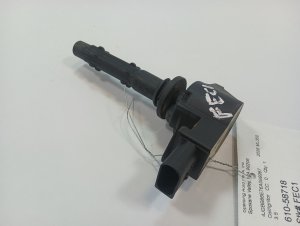
(OEM #A0001501980 (or A2729060060 for later V6 models))— This is the most frequent cause of a P0354 code, as the coil itself fails internally.
Trusted brands: Bosch, Beru, Delphi, NGK
OEM price range: $90-$150
Aftermarket price range: $50-$100 - Spark Plug
(OEM #Bosch YR7MPP33 or NGK PLKR7A (Varies by engine))— It is best practice to replace spark plugs when replacing a coil, as a worn plug can cause a coil to fail, and their service life is limited.
Trusted brands: Bosch, NGK
OEM price range: $15-$25
Aftermarket price range: $8-$18
Related Codes That Often Appear With This One
- P0304 — P0304 means 'Cylinder 4 Misfire Detected'. This code is almost always present with P0354 because the coil circuit failure directly causes the cylinder to misfire.
- P0300 — This code for 'Random/Multiple Cylinder Misfire' can sometimes appear if the misfire from cylinder 4 is severe enough to affect overall engine balance and crankshaft speed readings.
- P0351, P0352, P0353, etc. — If multiple ignition coil codes are present simultaneously, it strongly suggests a systemic problem like a bad ground, a major wiring harness issue, or a failing PCM, rather than multiple individual coil failures.
Platform-Specific Known Issues
- On M112 V6 engines, oil leaks from the valve cover gaskets are common. This oil can pool in the spark plug wells, saturating the ignition coil boot and causing it to swell, degrade, and fail, leading to misfires and coil circuit codes.
- On M271 4-cylinder engines, a known issue involves oil leaking from the camshaft adjuster magnets (solenoids) and traveling through the wiring harness. This 'oil-in-harness' problem can contaminate connectors for the ignition coils and even the main engine computer (PCM), causing various electrical faults including P0354.
Mechanic-Grade Diagnostic Values
- Ignition Coil Primary Winding Resistance — expected: 0.3 to 2.0 ohms. Failure: A reading of 0 ohms (short circuit) or OL/infinity (open circuit).
- Ignition Coil Secondary Winding Resistance — expected: 5,000 to 15,000 ohms (5kΩ - 15kΩ). Failure: A reading significantly outside the expected range, or OL/infinity.
- Ignition Coil Connector - Power Supply Pin — expected: Battery Voltage (approx. 12.6V with key on, engine off). Failure: Low or no voltage indicates a problem with the power supply from the fuse/relay.
- Ignition Coil Connector - Trigger Signal (with engine running) — expected: A fluctuating frequency signal, typically between 5 and 20 Hz at idle when measured with a multimeter with a Hz function.. Failure: No frequency signal suggests a wiring break to the PCM or a failed PCM driver.
- STAR Diagnosis 'Smooth Running' Value — expected: Values should be relatively stable and close to 0. A typical tolerance range is -3.5 to +3.5.. Failure: A cylinder showing a consistently high positive or negative value indicates the ECU is compensating for a misfire on that cylinder.
Hidden / Shadow Codes Worth Checking
- 0987: This is a Mercedes-specific fault code that can accompany the generic P0354, pointing more directly to the ignition coil circuit malfunction for cylinder 4. (see via A Mercedes-Benz specific scanner like STAR/Xentry or a high-end professional scanner capable of reading manufacturer-specific codes.)
Scan Tool Commands That Help
- STAR/Xentry: Smooth Running Test (Live Data) — This function is invaluable for confirming an intermittent misfire when the P0354 code is present. It displays real-time data on how the ECU is adjusting for rotational speed variations in each cylinder. A cylinder with a faulty coil circuit will show a large correction value, pinpointing the source of the rough running.
- STAR/Xentry: Misfire Counter ('contador de averías') — While diagnosing, monitoring the live misfire counter for each cylinder can confirm that cylinder 4 is the one actively misfiring, directly linking the P0354 circuit fault to a performance symptom.
Wiring & Ground Locations
- T1/4 — This is the Mercedes wiring diagram designation for the ignition coil on cylinder 4.. When referencing official Mercedes wiring diagrams, T1/4 is the component you need to trace wiring for.
- W11 — Main engine ground point, typically a braided strap from the engine block/bell housing to the chassis/firewall.. A corroded or loose W11 ground can cause widespread electrical issues, including weak spark and intermittent ignition coil circuit faults. The PCM relies on a solid ground reference to properly control the coils.
- Ignition Coil Connector (M112/M271) — The 3-pin or 4-pin plastic connector that plugs directly into the top of the ignition coil.. The pins are typically: Pin 1 - Power (12V+), Pin 2 - Ground, Pin 3 - Signal from PCM. Verifying power, ground, and signal at this connector is the primary electrical diagnostic step after swapping the coil.
Real Owner Repair Stories
- MercedesForum.com user 'Bimmerod' (2006 C350 Sport (W203)) — Intermittent P0304 (Cylinder 4 Misfire) and P0354 (Coil D Circuit). Rough idle, bad exhaust smell, extremely high fuel consumption.
❌ Tried (didn't work) Swapped ignition coil from cylinder 4 to cylinder 1; the fault did not move., Swapped spark plug; the fault did not move., Re-checked all connections after a recent intake manifold replacement., Performed a vacuum leak test with carb cleaner; no leaks found.
✅ What actually fixed it The vehicle was taken to a shop with Mercedes STAR software. The diagnostic pointed to faulty upstream O2 sensors. After replacing the upstream O2 sensors (Bosch parts), the misfire and all codes, including P0354, were resolved and did not return.
When the Usual Fixes Don't Work
- While the most common fix for P0354 is a new ignition coil, there are documented cases where the code persisted after swapping both the coil and spark plug. In one instance involving a 2006 C350, the root cause was ultimately diagnosed by a dealer-level scan tool as faulty upstream O2 sensors. The bad sensor data was likely causing such a severe fuel trim issue that it led to misfires the ECU incorrectly attributed to the ignition circuit. This highlights that if standard coil/plug/wiring checks fail, the problem may lie in an upstream sensor providing incorrect data to the PCM.
OEM Part Supersession History
A0001501580→A0001502580— Part revision and supplier changes for M271 4-cylinder engines.A2711502733→A2711500156 (Kit)— For the M271 'oil-in-harness' issue, Mercedes released a kit that includes updated pigtail harnesses designed to stop oil from wicking into the main loom.
Heads up: This is a preventative part. The pigtail is added between the leaking sensor and the main harness.
Model Year Variations Within This Range
- 2004/2005-2007 (Facelift): Facelift W203 models feature a completely different interior, most notably the instrument cluster which changed from a large central speedometer to two equally sized dials. They also received clear lens headlights, updated bumpers, and improved rust protection with galvanized body panels. Some engine offerings were updated, such as the introduction of the M272 V6 to replace the M112 in some markets.
Diagnostic Flowchart
Other Known Issues on This Vehicle
Issues unrelated to this code that are worth knowing about as an owner of this generation:
- Premature Rust 🔴 High — Very common on pre-facelift models (2000-2003/4). Affects wheel arches, door bottoms, and trunk lid. Less common but still possible on post-facelift galvanized models.
- M271 Engine Timing Chain Stretch 🔴 High — Common on the 4-cylinder Kompressor engines, typically after 80,000 miles. A stretched single-row timing chain can cause a startup rattle, jump time, and lead to catastrophic engine damage.
- M112 Engine Harmonic Balancer Failure 🔴 High — The rubber damper on the crankshaft pulley can delaminate on early M112 V6 engines (approx. 1998-2001). Failure can cause the pulley to separate, leading to loss of all belt-driven accessories and potential damage to the timing cover and oil pan. (Ref: Mercedes Service Campaign No. 2005020003 addressed certain part numbers (A1120350000, A1120350600).)
- Valeo Radiator / Glycol Contamination 🔴 High — On automatic transmission models equipped with a Valeo brand radiator, an internal failure can cause coolant (glycol) to leak into the transmission fluid via the cooler lines. This contaminates the transmission fluid and can destroy the torque converter and transmission clutches. (Ref: While not a formal recall, this is a widely documented issue. Checking the radiator brand is a common pre-purchase inspection point.)
- SAM (Signal Acquisition Module) Failure 🟠 Medium — The front or rear SAM units can fail, causing a wide range of bizarre electrical issues, such as lights not working, fuel gauge errors, and key fob problems. Water ingress into the fuse box area is a common cause.
Used vs. New Parts: Buying Guide for This Vehicle
When a used part is the smart pick: A used wiring harness pigtail for the ignition coil is a viable option if the original connector is physically broken (e.g., broken locking tab) and you can source one from a low-mileage, non-oily donor car. For most other parts related to this code, new is strongly recommended.
Donor-vehicle mileage cap: roughly under 80000 miles for the part to have meaningful remaining life.
What to inspect on the donor part:
- For a wiring pigtail, ensure the plastic is not brittle and the locking tab is intact.
- Check inside the connector for any signs of green corrosion or oil residue.
- Ensure at least 6 inches of wire is attached to make splicing easy.
OEM-only on this vehicle (don't cheap out):
- Powertrain Control Module (PCM) - Aftermarket or improperly matched used units often have compatibility or programming issues.
Aftermarket brands forum-validated for this vehicle:
- Bosch (often the OEM supplier)
- Beru
- NGK
- Delphi
Brands owners have reported issues with on this vehicle:
- Unbranded, no-name ignition coils from online marketplaces are frequently reported to fail prematurely or be dead-on-arrival.
Real Owner Stories
Aggregated from forums and TSBs cited above. Mileages and costs reflect what owners reported in those sources.
2014 C300
Symptoms: Intermittent P0354 and P0304 codes.
What fixed it: After replacing the coil and plugs did not resolve the issue, the owner was advised to investigate the 'oil-in-harness' issue, where oil wicks from sensors into the main wiring loom.
Source hint: MBWorld.org: A user with a 2014 C300 reported intermittent P0354 and P0304 codes. After replacing the coil and plugs, the issue returned. A suggestion was made to check for the 'oil-in-harness' issue, a known problem where oil wicks from sensors into the main wiring loom. URL: https://mbworld.org/forums/c-class-w204/870230-intermittent-misfire-issue.html
W203 C-Class
Symptoms: Check Engine Light with codes P0301, P0304, and P0354.
What fixed it: The community identified the P0354 code as a clear indicator of an ignition coil circuit failure for cylinder 4 and advised the owner to replace the coil pack and spark plugs for that cylinder.
Source hint: MBWorld.org: In a thread from 2010, a user with a W203 experienced P0301, P0304, and P0354. The community correctly identified the P0354 as an ignition coil circuit failure for cylinder 4 and advised replacing the coil pack and plugs. URL: https://mbworld.org/forums/c-class-w203/385802
Related OBD-II Codes
Frequently Asked Questions
Where is cylinder 4 located on my 2000-2007 C-Class engine?
I found oil in the spark plug well for cylinder 4 on my V6 C-Class. Could this cause code P0354?
My mechanic mentioned an 'oil-in-harness' issue on my 4-cylinder C-Class. Is that related to P0354?
I replaced the ignition coil but P0354 came back. What should I check next?
How many spark plugs do I need to replace for cylinder 4 on my V6 model?
What brand of ignition coil and spark plugs are recommended for this repair?
Helpful Videos
We Have This Part in Stock


The information in this article is provided for general reference and educational purposes only. Vehicle specifications, procedures, and part compatibility can vary by production date, trim level, and region. Always consult your vehicle's factory service manual and verify part numbers before purchasing or performing repairs. Safety-critical components such as airbags, seat belts, and braking systems should be installed by a qualified professional.
- Mercedes-Benz C-Class:
- 🎬 Helpful Videos
- 🛍️ Shop This Part
- What's Unique About the 2000-2007 Mercedes-Benz C-Class
- Symptoms You May Notice
- Most Likely Causes
- Rare But Worth Checking
- Diagnosis Steps
- Parts You'll Likely Need
- Related Codes That Often Appear With This One
- Platform-Specific Known Issues
- Mechanic-Grade Diagnostic Values
- Hidden / Shadow Codes Worth Checking
- Scan Tool Commands That Help
- Wiring & Ground Locations
- Real Owner Repair Stories
- When the Usual Fixes Don't Work
- OEM Part Supersession History
- Model Year Variations Within This Range
- Diagnostic Flowchart
- Other Known Issues on This Vehicle
- Used vs. New Parts: Buying Guide for This Vehicle
- Real Owner Stories
- 2014 C300
- W203 C-Class
- Related OBD-II Codes
- Frequently Asked Questions
- 🎟️ Get 5% Off