

P0353 on 2015 Honda Fit: Ignition Coil 'C' Circuit Malfunction Causes and Fixes
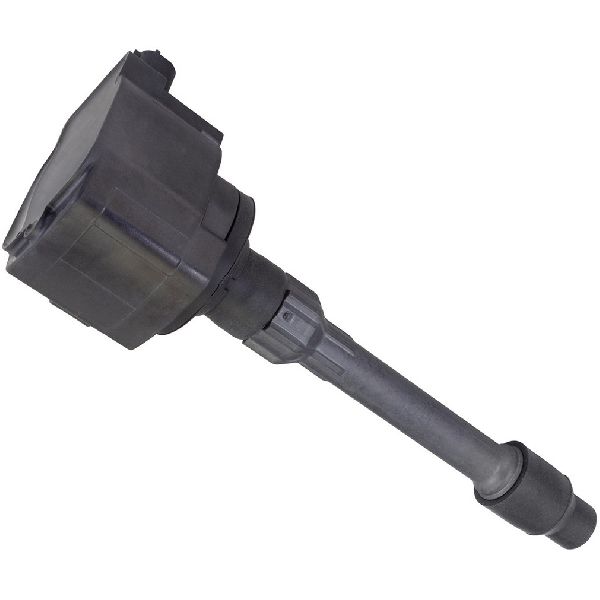
P0353 on a 2015 Honda Fit almost always means the ignition coil on cylinder #3 has failed. It's a simple, DIY-friendly fix that involves swapping the coil. An OEM replacement coil costs around $70-$105, while aftermarket options are available for $40-$70. This is a common wear-and-tear failure.
- P0353 on a 2015 Fit points directly to a problem with the ignition coil circuit for cylinder #3.
- The most likely culprit is a failed ignition coil, which is a common wear item and was subject to an early-production TSB.
- A simple 'swap test' by moving the cylinder #3 coil to another cylinder is the fastest way to confirm if the coil is bad.
- This is a very DIY-friendly repair that requires minimal tools and can be completed in under 30 minutes.
What's Unique About the 2015-2015 Honda Fit
The 2015 Honda Fit uses the 1.5L L15B 'Earth Dreams' direct-injection engine, which features a reliable coil-on-plug ignition system. While generally robust, individual coil failures are the most common ignition-related issue as the vehicle ages. There was a recall/TSB for early 2015 Fits (TSB #A15-060, NHTSA ID #10107004) concerning noise suppression capacitors inside the ignition coils that could degrade and cause engine malfunction, confirming that early production coils had known issues. However, a random P0353 code on a higher-mileage vehicle is typically a standard wear-and-tear failure of the coil on cylinder #3.
Symptoms You May Notice
- Check Engine Light is on (may be flashing, which indicates a severe misfire)
- Rough or shaky engine idle
- Noticeable loss of engine power, especially during acceleration
- Engine hesitation or stumbling
- Reduced fuel economy
- Engine may be hard to start
- Replacing the fuel injector on cylinder #3. While a faulty injector can cause a P0303 misfire code, the P0353 code specifically points to an electrical fault in the ignition circuit, not the fuel system. Diagnosis should always start with the ignition system for a P035x code.
Most Likely Causes
- Failed Ignition Coil (Cylinder 3) 🔴 High Probability Ignition coils are wear items that operate under high heat and voltage. After many years and miles, the internal windings can break down, causing a circuit fault. Early 2015 models were also subject to a TSB for ignition coil capacitor degradation.
How to confirm: The easiest method is to swap the ignition coil from cylinder #3 with another cylinder (e.g., cylinder #2). Clear the codes and run the engine. If the code changes to P0352 (Ignition Coil 'B' Circuit), the coil is confirmed to be faulty. This is the standard diagnostic procedure recommended by mechanics and experienced owners on forums like FitFreak.net.
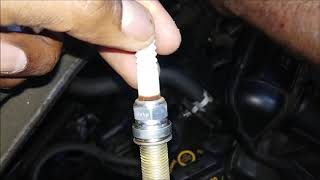
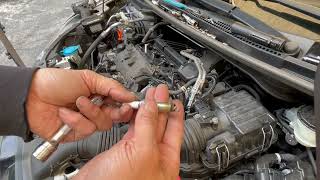
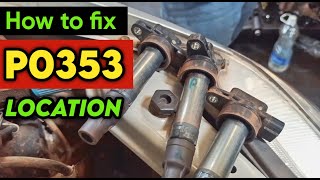
Typical fix: Replace the failed ignition coil. 🎬 Watch this video on removing the spark plugs and ignition coils It is held in by a single 10mm bolt and is easily accessible.
Est. part cost: $40-$105 - Damaged Wiring or Connector 🟡 Medium Probability The plastic connector clip can become brittle with age and break, leading to a poor connection that vibrates loose. Wires in the engine bay are also subject to heat and vibration, which can cause them to fray or break over time, resulting in an open or short in the circuit.
How to confirm: Visually inspect the wiring harness and the 3-pin connector going to the ignition coil on cylinder #3. Look for any signs of corrosion, backed-out pins, or broken wires. Wiggle the connector with the engine running to see if it affects the misfire. A multimeter can be used to check for 12V power, ground, and the trigger signal from the PCM at the connector.
Typical fix: Repair the damaged section of wire or replace the pigtail connector if it's broken. Pigtail connectors are widely available.
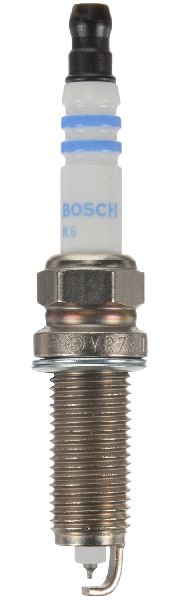
Est. part cost: $10-$30 - Worn or Defective Spark Plug ⚪ Low Probability While a bad spark plug typically throws a misfire code (P0303), a severely worn, fouled, or internally shorted plug can put excessive stress on the ignition coil, potentially causing it to overheat and fail, which then triggers the P0353 circuit fault. Forum users on FitFreak.net report that loose spark plugs can also cause misfires that are sometimes misdiagnosed as coil failures.
How to confirm: Remove the spark plug from cylinder #3 and inspect it. Look for heavy carbon buildup, oil fouling, a cracked insulator, or an excessively wide gap. Compare it to the other plugs. Ensure it is torqued to specification.
Typical fix: Replace the spark plug. It is good practice to replace all four spark plugs if they are near the end of their service life (typically 100,000 miles for iridium plugs).
Est. part cost: $10-$20 per plug
Rare But Worth Checking
- Failed Powertrain Control Module (PCM): This is very rare. The internal driver circuit for the ignition coil can fail. This should only be considered after all other possibilities (coil, plug, wiring) have been definitively ruled out by thorough testing.
Diagnosis Steps
- Read the trouble codes with an OBD-II scanner to confirm P0353 and any related codes like P0303.
- Locate cylinder #3. On the 2015 Fit's 1.5L engine, the cylinders are numbered 1-2-3-4 from the passenger side (crank pulley side) to the driver side (transmission side). Cylinder #3 is the third one from the passenger side.
- Visually inspect the ignition coil and its electrical connector on cylinder #3. Check for cracks, corrosion, or a loose connection. Ensure the connector clip is not broken.
- Perform the 'swap test': Turn off the engine. Unplug the connectors and remove the 10mm bolts for the coils on cylinder #3 and cylinder #2. Swap their positions. Reinstall the bolts and connectors.
- Clear the codes with the scanner, start the engine, and let it run for a minute or take a short drive.
- Re-scan for codes. If the code has changed to P0352 ('Ignition Coil B Circuit'), the ignition coil you moved is bad and needs to be replaced.
- If the code P0353 returns, the original coil is good, and the problem is in the wiring or PCM.
- Inspect the spark plug in cylinder #3. Remove it and check for wear, fouling, or damage. If it is old or fouled, replace it. It's recommended to replace all four at the same time for even performance. 🎬 See how to replace spark plugs on a Honda Fit
- If the coil and plug are good, carefully inspect the wiring harness to cylinder #3 for damage. Check for continuity and voltage at the connector using a multimeter and a vehicle-specific wiring diagram.
- If all wiring tests pass, the issue may be a rare failure of the PCM's ignition driver.
Parts You'll Likely Need
- Ignition Coil
(OEM #30520-5R0-013)— This is the most common failure point for a P0353 code. The internal electronics of the coil fail from heat and age. The original part number 30520-5R0-003 was superseded by 30520-5R0-013.
Trusted brands: Honda (Genuine), NGK, Denso, Hitachi
OEM price range: $70-$105
Aftermarket price range: $40-$70 - Iridium Spark Plug
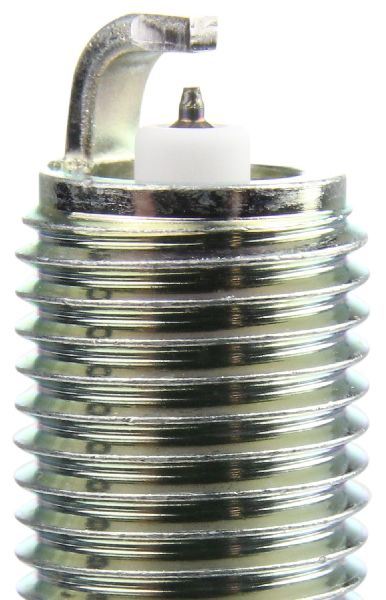
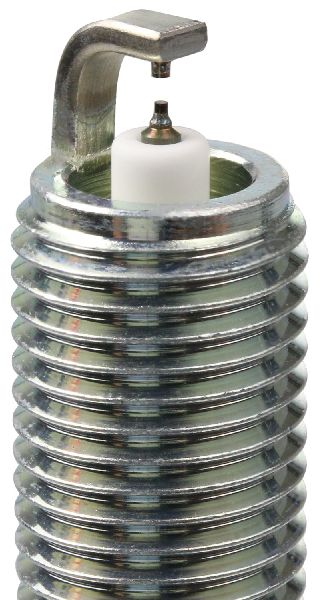
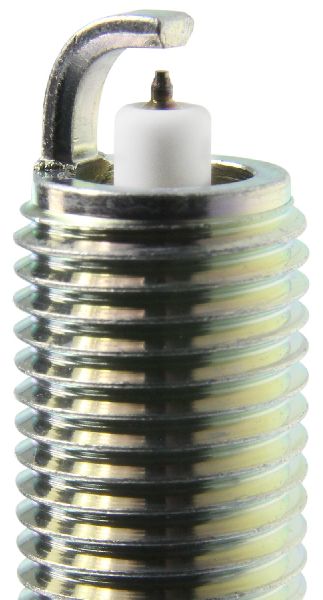
(OEM #12290-5R0-003 (NGK DILZKAR7C11S))— While not usually the direct cause, it's best practice to replace the spark plug when replacing a coil, especially if it's old or shows signs of wear. A worn plug can overwork the coil.
Trusted brands: NGK, Denso
OEM price range: $15-$25
Aftermarket price range: $10-$18
Related Codes That Often Appear With This One
- P0303 — This code means 'Cylinder 3 Misfire Detected.' P0353 is the cause (the coil circuit is failing), and P0303 is the effect (the cylinder isn't firing correctly). They almost always appear together.
- P0300 — This code means 'Random/Multiple Cylinder Misfire.' If the P0353 fault is intermittent, it might initially be logged as a random misfire before the PCM isolates the problem to cylinder 3.
Technical Service Bulletins (TSBs) & Recalls
- TSB #A15-060 / NHTSA ID #10107004: Addresses potential degradation of noise suppression capacitors inside the ignition coils on 2015 Fit models, which could lead to engine malfunction or CEL illumination.
Platform-Specific Known Issues
- Real-World Repair on FitFreak.net: A user on the Unofficial Honda FIT Forums with a 2009 Fit (similar ignition setup) experienced a misfire on cylinder #3. After a shop replaced the coil, the problem returned a month later. This highlights the importance of proper diagnosis, such as checking spark plugs and wiring, not just replacing the coil.
- Ignition Coil TSB: Honda issued TSB #A15-060 for 2015 Fits regarding internal noise suppression capacitors in the ignition coils that could degrade and cause malfunctions. This confirms a known potential weakness in the original coils for this model year.
Mechanic-Grade Diagnostic Values
- Ignition Coil Connector - Power Pin — expected: 10-12V DC with key on, engine off. Failure: 0V indicates a problem with the power supply from the fuse/relay.
- Ignition Coil Connector - Ground Pin — expected: Good ground continuity to chassis/battery negative. Failure: High resistance or an open circuit indicates a broken or corroded ground wire.
- Ignition Coil Connector - Signal Pin — expected: A flashing signal on a 12V test light (connected to battery positive) while cranking the engine.. Failure: No flashing indicates the PCM is not sending the trigger signal.
- PCM Connector B, Pin 26 (IGN03) — expected: This pin sends the trigger/pulse signal to the #3 ignition coil.. Failure: Testing here can confirm if the signal is leaving the PCM, helping to isolate a wiring issue vs. a PCM issue.
- Ignition Coil Primary Resistance — expected: ~0.5 to 2.0 Ohms. Failure: A reading of zero indicates a short; an infinite reading (OL) indicates an open circuit.
- Ignition Coil Secondary Resistance — expected: ~7 kΩ to 17 kΩ. Failure: A value significantly outside this range, or a comparison test showing one coil is much higher or lower than the others, indicates a bad coil.
Wiring & Ground Locations
- Ignition Coil #3 Connector — On top of the engine, third coil from the passenger side.. This 3-pin connector provides power, ground, and the trigger signal to the ignition coil. A bad connection here is a common cause of P0353.
- PCM Connector B, Pin 26 — At the Powertrain Control Module (PCM), which is typically located in the engine bay or behind the dashboard.. This is the specific pin on the PCM that sends the command signal (IGN03) to the #3 ignition coil. A continuity test from this pin to the signal pin on the coil connector can rule out a broken wire.
- G101 (Engine Ground) — Typically located on the engine block or cylinder head, often near the thermostat housing.. This is a primary ground point for many engine components, including the ignition system. A loose or corroded G101 can cause intermittent and hard-to-diagnose electrical issues, including ignition faults.
- G1, G2, G3 — G1 is the main battery ground to chassis. G2 is an engine ground cable. G3 is a transmission ground cable.. The overall health of the vehicle's grounding system is critical. A poor connection at any of these main points can create voltage drops and electrical noise that may affect sensitive components like ignition coils.
Real Owner Repair Stories
- YouTube channel 'Fix it Angel' (Honda Odyssey (similar V6 engine, but same diagnostic principle)) — Check engine light with a misfire on cylinder 3.
❌ Tried (didn't work) Swapping the ignition coil from cylinder 3 to another cylinder did not make the misfire code move.
✅ What actually fixed it The spark plug for cylinder 3 was found to be severely worn. The mechanic also tested the resistance of the original coil from cylinder 3 and found it was over 100 ohms higher than the other coils (1835 ohms vs. ~1725 ohms). Both the worn spark plug and the high-resistance coil were replaced to fix the issue. - Unofficial Honda FIT Forums user (2007 Honda Fit (older generation, but similar coil-on-plug design)) — Persistent and worsening engine misfire over the course of a year.
❌ Tried (didn't work) Replacing one ignition coil helped temporarily but the problem returned.
✅ What actually fixed it The user disassembled the coil packs and found significant corrosion and arcing between the internal spring and the high-voltage contact point ('coil core'). The final fix was to thoroughly clean the contact points on the spring and core with sandpaper and a cleaner like DeOxit or WD-40 to restore a clean electrical connection. This completely eliminated the misfire.
OEM Part Supersession History
30520-5R0-003→30520-5R0-013— The original coils were subject to a recall (NHTSA #15V559, TSB #A15-060). The noise suppression capacitors inside the original coils could degrade, leading to electrical noise, engine malfunction, and potential stalling. The new part has an improved design to prevent this.
Model Year Variations Within This Range
- Early 2015 (mfg. Dec 2013 - Aug 2014): These vehicles were equipped with the original ignition coils (PN 30520-5R0-003) that were subject to recall JT9. If the vehicle exhibits P0353, it is crucial to check if this recall was performed. The fix involves replacing all four coils with the updated part number. The TSB also notes that if other misfire codes (P0300-P0304) are present, a separate procedure (SB 16-034) should be addressed first.
Diagnostic Flowchart
Other Known Issues on This Vehicle
Issues unrelated to this code that are worth knowing about as an owner of this generation:
- VTC Actuator Rattle on Cold Start 🟠 Medium — Very common. A loud, grinding rattle for 1-2 seconds on a cold start. Can eventually lead to timing chain stress if ignored. (Ref: Honda TSB #16-088 describes the issue and repair procedure, which involves replacing the defective VTC actuator.)
- Starter Motor / Start Button Failure 🔴 High — Common complaint where the engine fails to start on the first button press, sometimes requiring multiple attempts. Can be caused by a failing starter or a faulty start/stop switch. (Ref: Honda extended the warranty on the Engine Start/Stop switch via TSB #20-098 (NHTSA #10184317) to 9 years/125,000 miles.)
- Fuel Injector Failure 🔴 High — Widespread issue due to improperly installed injectors from the factory, leading to misfires (P030x codes), poor fuel economy, and potential catalyst damage. (Ref: Honda extended the warranty on fuel injectors to 10 years/150,000 miles. See TSB #22-002 and customer letter (NHTSA #10213565).)
- Direct Injection Carbon Buildup 🟡 Low — As with many early direct-injection engines, carbon can build up on the intake valves over time, leading to misfires. Not as prevalent as other issues but a known long-term maintenance concern. (Ref: TSB #A21-007 addresses misfire detection (P0300-P0304) and notes that carbon buildup can be a cause.)
- Poor Build Quality (First Year Model) 🟡 Low — The 2015 model was the first year built at Honda's Celaya, Mexico plant. Owners report various quality control issues like ill-fitting bumpers, water leaks, and premature rust on some components.
Used vs. New Parts: Buying Guide for This Vehicle
When a used part is the smart pick: A used ignition coil from a junkyard can be a very cheap way to perform the 'swap test' to confirm a diagnosis without buying a new part. However, given that coils are a common wear item, installing a used coil as a permanent replacement is a gamble on its remaining lifespan.
Donor-vehicle mileage cap: roughly under 80000 miles for the part to have meaningful remaining life.
What to inspect on the donor part:
- Check the plastic housing for any cracks or signs of heat damage/melting.
- Inspect the 3-pin connector for corrosion or broken locking tabs.
- Look down the boot opening for any signs of white corrosion or rust on the spring.
- If possible, choose a donor vehicle that appears to have been well-maintained and is from a later model year (2016+) to get the updated coil design.
Aftermarket brands forum-validated for this vehicle:
- NGK
- Denso
- Hitachi
- Bosch
- Standard Motor Products (SMP)
Real Owner Stories
Aggregated from forums and TSBs cited above. Mileages and costs reflect what owners reported in those sources.
2009 Honda Fit
Symptoms: Experienced a misfire on cylinder #3. After a shop replaced the coil, the problem returned a month later.
What fixed it: The source highlights the importance of checking spark plugs and wiring rather than just the coil; in this case, the initial coil replacement did not provide a permanent fix due to lack of proper diagnosis of related components.
Source hint: FitFreak.net - Unofficial Honda FIT Forums
Related OBD-II Codes
Frequently Asked Questions
Is there a TSB for ignition coil issues on the 2015 Honda Fit?
Where is cylinder #3 located on my 2015 Fit's 1.5L engine?
Could my P0353 code be caused by the fuel injector issues common to this model?
I heard loose spark plugs are an issue; could that cause a P0353?
How much should I expect to pay for a replacement ignition coil for my Fit?
Is the starter motor failure related to my ignition coil code?
Helpful Videos
Used OEM Parts in Stock

New Aftermarket Parts Available


The information in this article is provided for general reference and educational purposes only. Vehicle specifications, procedures, and part compatibility can vary by production date, trim level, and region. Always consult your vehicle's factory service manual and verify part numbers before purchasing or performing repairs. Safety-critical components such as airbags, seat belts, and braking systems should be installed by a qualified professional.
- Honda Fit:
- 🎬 Helpful Videos
- 🛍️ Shop This Part
- What's Unique About the 2015-2015 Honda Fit
- Symptoms You May Notice
- Most Likely Causes
- Rare But Worth Checking
- Diagnosis Steps
- Parts You'll Likely Need
- Related Codes That Often Appear With This One
- Technical Service Bulletins (TSBs) & Recalls
- Platform-Specific Known Issues
- Mechanic-Grade Diagnostic Values
- Wiring & Ground Locations
- Real Owner Repair Stories
- OEM Part Supersession History
- Model Year Variations Within This Range
- Diagnostic Flowchart
- Other Known Issues on This Vehicle
- Used vs. New Parts: Buying Guide for This Vehicle
- Real Owner Stories
- 2009 Honda Fit
- Related OBD-II Codes
- Frequently Asked Questions
- 🎟️ Get 5% Off