

P0352 on 2009-2013 Toyota Corolla: Ignition Coil 'B' Circuit Malfunction Causes and Fixes
P0352 on a 2009-2013 Toyota Corolla almost always means the ignition coil for cylinder #2 has failed. It's a straightforward DIY replacement, with a quality aftermarket coil costing around $25-$75. Swapping the coil from cylinder #2 with another is the definitive test.
- P0352 points directly to a problem with the ignition coil circuit for cylinder #2.
- The most likely cause is a failed ignition coil, which is a very common and inexpensive DIY fix.
- A simple diagnostic test is to swap the #2 coil with another one and see if the code follows the coil.
- While you're replacing the coil, it's a good idea to inspect and, if needed, replace the spark plugs.
- Be careful with the plastic connector clip, as it is likely brittle and can break easily.
What's Unique About the 2009-2013 Toyota Corolla

The 10th generation Toyota Corolla, particularly with the 1.8L 2ZR-FE engine, is known for its exceptional reliability, but ignition coil failure is one of the most common repairs owners face as the car ages. The coil-on-plug design is simple and very easy to access directly on top of the engine, making diagnosis and replacement one of the easier DIY jobs on this vehicle. The issue is rarely more complicated than the coil itself, making it a predictable and straightforward fix.
Symptoms You May Notice
- Check Engine Light is on (solid or flashing)
- Rough or shaky idle
- Engine misfiring or stumbling, especially under load or during acceleration
- Noticeable loss of power
- Hesitation or intermittent stumbling that may initially correct itself
- Difficulty starting the engine
- Poor fuel economy
- Replacing the fuel injector for cylinder #2. While a bad injector can cause a misfire (P0302), it will not cause a P0352 code, which is specific to the ignition coil's electrical circuit.
Most Likely Causes

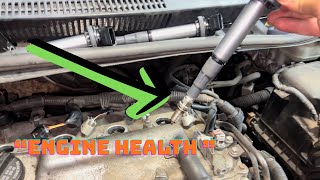
- Failed Ignition Coil (Cylinder #2) 🔴 High Probability Ignition coils are a common wear-and-tear item. High voltage and constant heat cycles eventually cause the internal windings or the built-in igniter to fail. This is the most frequent cause for a P0352 code 🎬 Watch a mechanic fix a P0352 code on this Corolla. on this model.
How to confirm: The easiest way to confirm is to swap the ignition coil from cylinder #2 with another cylinder (e.g., cylinder #3). Clear the codes and run the engine. If the code changes to P0353 (for cylinder #3), the coil is definitively bad.
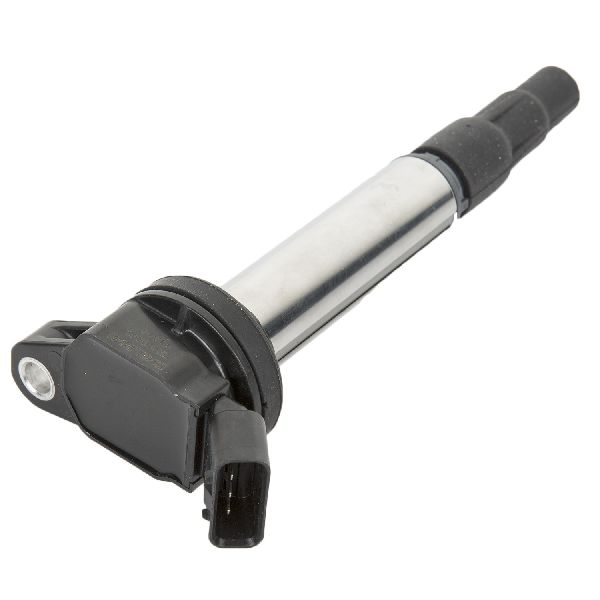
Typical fix: Replace the faulty ignition coil. The coils are individual (coil-on-plug) and held by a single 10mm bolt.
Est. part cost: $25-$75 for a quality aftermarket part like Denso or NGK. - Worn or Fouled Spark Plug (Cylinder #2) 🟡 Medium Probability If spark plugs are not changed at the recommended 120,000-mile interval, a wide gap or carbon fouling can increase the electrical resistance. This puts extra strain on the ignition coil, which can lead to its premature failure or trigger a fault code.
How to confirm: Remove the spark plug from cylinder #2 and inspect it. Look for a worn-down center electrode, heavy carbon deposits, or oil fouling. The correct plugs for this engine are long-life iridium types.
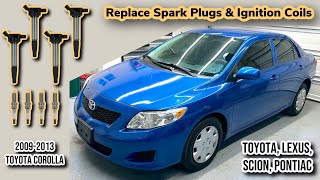
Typical fix: Replace the spark plugs. It is highly recommended to replace all four spark plugs at the same time with the correct OEM-spec iridium plugs (e.g., Denso SC20HR11) to ensure consistent performance. It's also wise to do this when replacing a failed coil. 🎬 Watch this walkthrough on changing your spark plugs and coils.
Est. part cost: $30-$60 for a set of four iridium plugs. - Damaged Wiring or Connector ⚪ Low Probability The plastic connector clip for the ignition coil can become extremely brittle over time from engine heat cycles and may break when disconnected. Rodents can also chew on the soy-based wiring insulation used in many modern cars.
How to confirm: Visually inspect the wiring harness and the 4-pin connector for cylinder #2's ignition coil. Check for frayed or chewed wires, loose pins inside the connector, or a broken locking tab. Wiggle the connector and harness with the engine running to see if it induces a misfire.
Typical fix: If the connector is damaged, a new pigtail connector (e.g., Dorman 645-940) can be spliced in. If only the plastic housing is broken, it can be replaced by de-pinning the wires and inserting them into a new connector shell, avoiding the need to cut wires.
Est. part cost: $15-$30 for a pigtail connector.
Rare But Worth Checking
- Faulty Engine Control Module (ECM): This is extremely rare. Before condemning the ECM, all other possibilities (coil, spark plug, wiring) must be exhaustively ruled out. An ECM failure for a single coil driver circuit is uncommon on this platform, but not impossible, as noted in some forum discussions for platform mates. A failure of the IGF circuit affecting all coils at once can also point to an ECM issue or a short in the shared IGF wire.
Diagnosis Steps

- Confirm the code is P0352 using an OBD-II scanner. Note if P0302 is also present.
- Locate cylinder #2. On the 1.8L 2ZR-FE engine, the cylinders are numbered 1-2-3-4 from left to right (passenger side to driver side in LHD vehicles) as you face the engine. Cylinder #2 is the second one from the passenger side.
- Perform the Coil Swap Test: Swap the ignition coil from cylinder #2 with the coil from cylinder #3. This requires removing a single 10mm bolt on each coil. Mark the coils to keep track of them.
- Clear the diagnostic codes with the scanner.
- Start the engine and let it run or take a short drive. Re-scan for codes.
- If the code has changed to P0353 ('Ignition Coil C'), the ignition coil you moved from cylinder #2 is faulty and must be replaced. This is the most common outcome.
- If P0352 Returns: The problem is not the coil. The issue lies in the wiring, connector, or spark plug for cylinder #2.
- Inspect the Spark Plug: Remove and inspect the spark plug for cylinder #2. Replace if it is worn, fouled, or damaged. It is best practice to replace all four plugs at once if they are due.
- Inspect the Connector: Visually inspect the wiring connector for cylinder #2 for damage, corrosion, or pushed-out pins. Ensure it clicks securely onto the coil.
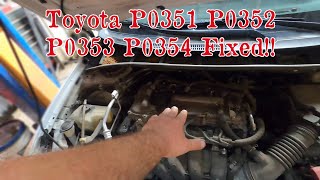
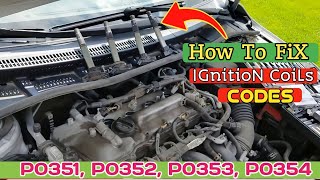
- Advanced Test (Multimeter): If the above steps fail, test the connector's 4 pins with the key on, engine off. Pin 1 (+B) should have battery voltage. Pin 4 (Ground) should have continuity to ground. Pin 2 (IGF) is the confirmation signal, and Pin 3 (IGT) is the trigger signal from the ECM. A failure in power or ground points to a wiring issue. Testing IGT/IGF signals accurately requires an oscilloscope. 🎬 See how to test and fix these ignition coil codes.
Parts You'll Likely Need

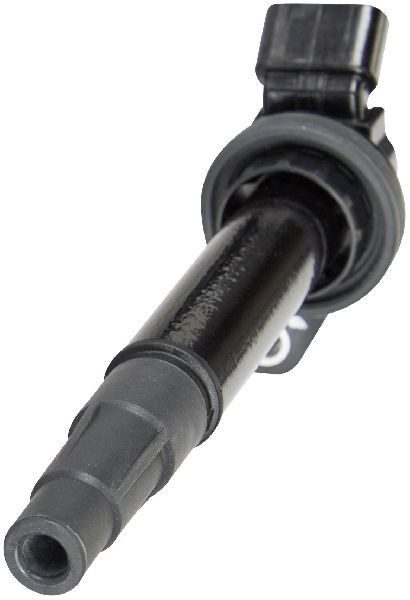
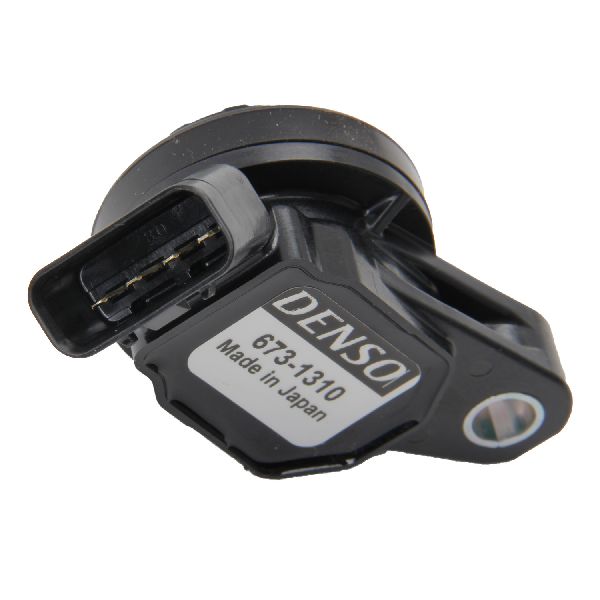
- Ignition Coil
(OEM #90919-02258)— This is the most common failure point for code P0352. The original part number 90919-02252 was superseded by 90919-02258.
Trusted brands: Denso (OEM supplier, Part #673-1310), NGK (Part #48944)
OEM price range: $80-$110
Aftermarket price range: $25-$75 - Spark Plugs (Set of 4, Iridium)
(OEM #90919-01253)— A worn spark plug can cause this code or be a contributing factor. It is best practice to replace them when replacing a coil, especially if their service history is unknown.
Trusted brands: Denso (SC20HR11), NGK (ILKAR7B11)
OEM price range: $40-$60
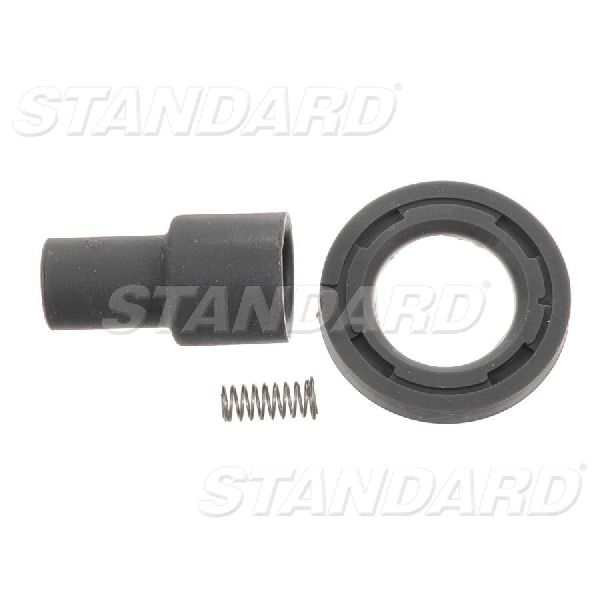
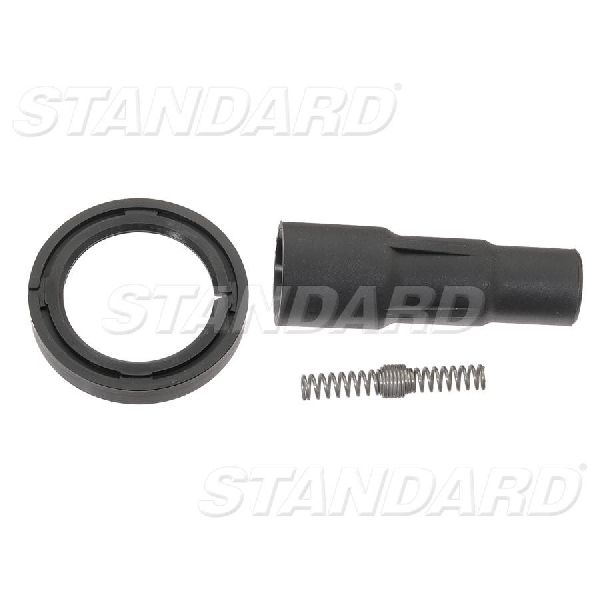
Aftermarket price range: $30-$50 - Ignition Coil Connector Pigtail — Needed if the original connector's locking tab breaks or if the terminals or wires are corroded/damaged.
Trusted brands: Dorman 645-940, Standard Motor Products S2438
OEM price range: N/A
Aftermarket price range: $15-$30
Related Codes That Often Appear With This One
- P0302 — P0302 means 'Cylinder 2 Misfire Detected'. Since P0352 indicates a fault in the ignition coil circuit for cylinder 2, the cylinder will not fire correctly, directly causing a misfire. These codes almost always appear together.
- P0351, P0353, P0354 — Seeing all four coil circuit codes simultaneously is rare but possible. It usually points to a problem common to all coils, such as a short in the shared IGF (Ignition Feedback) wire, a blown fuse, or a problem with the ECM itself.
Platform-Specific Known Issues
- Intermittent Failure at First: Owners often report that the symptoms (rough idle, hesitation) are intermittent at first. The car might run fine for a while, then stumble, trigger the code, and then run normally again after a restart. This intermittent phase can last for days or weeks before the coil fails completely.
- Brittle Connector Clips: The plastic locking tabs on the ignition coil connectors become very brittle from years of heat exposure. It is extremely common for them to break upon removal, even when being careful. If the clip breaks, the connector may not stay seated securely, leading to a repeat of the P0352 code. A zip tie can be a temporary fix, but replacing the pigtail is the correct repair.
Mechanic-Grade Diagnostic Values
- Ignition Coil Connector Pin 1 (+B) Voltage — expected: Battery voltage (approx. 12V) with key on, engine off.. Failure: Voltage significantly below 12V or 0V indicates a power supply issue (fuse, relay, or wiring).
- Ignition Coil Connector Pin 4 (Ground) Resistance — expected: Continuity to chassis ground (less than 1 Ohm).. Failure: High resistance or an open circuit (OL) indicates a bad ground connection.
- IGT (Ignition Trigger) Signal Waveform — expected: A square wave signal from the ECM when the engine is cranking or running. Typically viewed at 2V/Div and 20ms/Div on an oscilloscope.. Failure: A flat line or distorted waveform indicates a problem with the ECM's driver or the wiring between the ECM and the coil.
- IGF (Ignition Confirmation) Signal Waveform — expected: A square wave pulse sent from the igniter back to the ECM shortly after the IGT signal. Typically viewed at 2V/Div and 20ms/Div on an oscilloscope.. Failure: Absence of this signal when an IGT signal is present is the direct trigger for code P0352, pointing to a fault within the ignition coil/igniter assembly.
Scan Tool Commands That Help
- Toyota Techstream: Active Test — The Active Test menu within the Engine and ECT module allows a technician to command specific components to operate. While not explicitly detailed in search results, this function could be used to try and fire individual coils to test the circuit from the ECM without the engine running, helping to isolate a wiring or ECM driver issue from the coil itself.
Wiring & Ground Locations

- Ignition Coil Connector (4-Pin) — On top of each ignition coil.. This is the primary connection point for testing. Pin 1: +12V Power, Pin 2: IGF (Confirmation), Pin 3: IGT (Trigger), Pin 4: Ground. A fault at any of these pins for the #2 coil will cause P0352.
- Engine Ground Points (e.g., EA, EB) — Various points on the cylinder head and engine block in the engine bay.. The ignition coils share a common ground wire that is bolted to the engine. A loose or corroded main ground for this circuit could cause intermittent and difficult-to-diagnose ignition issues, potentially affecting multiple cylinders.
Real Owner Repair Stories
- YouTube channel 'Toyota Maintenance' (2009 Toyota Corolla, 113,000 miles) — Engine running rough, hesitation, Check Engine Light with code P0352. The problem was reported as intermittent at first.
❌ Tried (didn't work) The owner immediately suspected the coil based on the code.
✅ What actually fixed it Replacing the ignition coil on cylinder #2 resolved the issue. The owner also inspected the spark plugs, which were the correct Denso iridium type and in good condition. - YouTube channel 'Fix and Fly' (2009 Toyota Corolla) — Check Engine Light with code P0352, engine running fine intermittently.
✅ What actually fixed it Replacing the ignition coil for cylinder 'B' (cylinder #2) fixed the problem. The Check Engine Light went off on its own after the replacement.
OEM Part Supersession History
90919-02252→90919-02258— Standard part revision and update by the manufacturer.
Heads up: None. The new part number is a direct, backward-compatible replacement for the original.
Diagnostic Flowchart
Used vs. New Parts: Buying Guide for This Vehicle
When a used part is the smart pick: A used part is a reasonable choice for the ignition coil connector if only the plastic housing or locking tab is broken. The wires can be carefully de-pinned from the broken connector and inserted into the used one, avoiding splicing. Buying a used ignition coil itself is generally not recommended as it is a primary wear item with an unknown remaining service life.
Donor-vehicle mileage cap: roughly under 75000 miles for the part to have meaningful remaining life.
What to inspect on the donor part:
- For a connector: Ensure the plastic is not chalky or brittle and that the locking tab is intact and flexible.
- For a coil: Inspect for any cracks in the plastic housing, signs of melting or overheating, and check that the rubber boot is pliable with no carbon tracking or tears.
OEM-only on this vehicle (don't cheap out):
- No parts for this specific repair are considered 'OEM-only', as high-quality aftermarket options are widely available and trusted.
Aftermarket brands forum-validated for this vehicle:
- Denso (often the original OEM supplier)
- NGK
Brands owners have reported issues with on this vehicle:
- Generic, unbranded ignition coils from online marketplaces are often reported to have a high premature failure rate. It is safer to stick with reputable brands.
Real Owner Stories
Aggregated from forums and TSBs cited above. Mileages and costs reflect what owners reported in those sources.
2009 Toyota Corolla — 260000 miles
Symptoms: The car was running really rough and was down on power. It was stumbling and the check engine light came on.
What fixed it: Replaced the ignition coil for cylinder 'B' (the second one from the passenger side).
Cost: $70
Source hint: Big Al's Garage - I Fix a P0352 Code on my 2009 Corolla - YouTube
2008 Toyota Matrix
Symptoms: A P0352 code appeared intermittently and kept returning after an initial repair. The issue eventually progressed to a no-start condition.
What fixed it: The issue was misdiagnosed as just a coil; the shop ultimately suspected a rare ECM failure was the root cause.
Source hint: ToyotaNation Forum - '2008 Matrix P0352, running issues and finally no crank no start...bad ECM?'
Toyota RAV4 (Cross-Manufacturer Reference)
Symptoms: An owner reported an engine coil failure resulting in error code P0352.
What fixed it: NHTSA ODI #10393827 notes that this is a common problem with these types of engines.
Source hint: NHTSA ODI #10393827
Related OBD-II Codes
Frequently Asked Questions
Where is cylinder #2 on my 2010 Toyota Corolla's engine?
I swapped the coil from cylinder #2 to #3 and the code changed to P0353. What does this mean?
The plastic clip on my ignition coil connector broke off. Can I still drive it?
My Corolla is hesitating but the check engine light only comes on sometimes. Could it still be the ignition coil?
What are the correct spark plugs for a 2009-2013 Corolla with the 1.8L engine?
Does this P0352 issue also happen on the Toyota Matrix or Pontiac Vibe?
Helpful Videos
Used OEM Parts in Stock


New Aftermarket Parts Available


The information in this article is provided for general reference and educational purposes only. Vehicle specifications, procedures, and part compatibility can vary by production date, trim level, and region. Always consult your vehicle's factory service manual and verify part numbers before purchasing or performing repairs. Safety-critical components such as airbags, seat belts, and braking systems should be installed by a qualified professional.
- Toyota Corolla:
- 🎬 Helpful Videos
- 🛍️ Shop This Part
- What's Unique About the 2009-2013 Toyota Corolla
- Symptoms You May Notice
- Most Likely Causes
- Rare But Worth Checking
- Diagnosis Steps
- Parts You'll Likely Need
- Related Codes That Often Appear With This One
- Platform-Specific Known Issues
- Mechanic-Grade Diagnostic Values
- Scan Tool Commands That Help
- Wiring & Ground Locations
- Real Owner Repair Stories
- OEM Part Supersession History
- Diagnostic Flowchart
- Used vs. New Parts: Buying Guide for This Vehicle
- Real Owner Stories
- 2009 Toyota Corolla — 260000 miles
- 2008 Toyota Matrix
- Toyota RAV4 (Cross-Manufacturer Reference)
- Related OBD-II Codes
- Frequently Asked Questions
- 🎟️ Get 5% Off