

P0351 on 2000-2006 Toyota Tundra 4.7L V8: Ignition Coil 'A' Circuit Causes and Fixes
This code almost always means the ignition coil on cylinder #1 has failed. It's a straightforward DIY replacement with an aftermarket coil costing around $25-$50 and an OEM Denso coil costing $50-$80. The job takes less than 30 minutes.
- P0351 on your Tundra means the ignition coil on cylinder #1 (front, passenger side) has a problem.
- The most likely cause is a failed ignition coil, which is a common issue on older vehicles.
- The easiest way to diagnose this is to swap the cylinder #1 coil with another coil (like cylinder #3) and see if the code 'moves' to the new cylinder (P0353).
- This is a simple and inexpensive DIY repair that requires only basic hand tools and about 15-30 minutes of your time.
- Driving with this code for an extended period can damage your catalytic converter.
What's Unique About the 2000-2006 Toyota Tundra
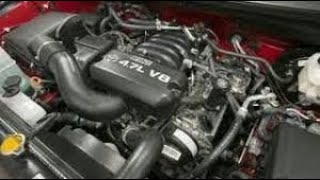
The 2UZ-FE V8 engine in the first-generation Tundra uses a reliable coil-on-plug ignition system, with one coil sitting directly on top of each spark plug. This design is easy to service. While generally robust, the ignition coils are a common failure item as the vehicle ages and accumulates mileage. The failure is almost always the coil itself rather than the wiring, making diagnosis simple by swapping the suspected bad coil with a known good one from another cylinder.
Symptoms You May Notice
- Check Engine Light is on
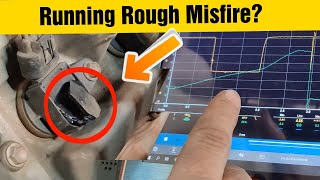
- Engine running rough or shaking, especially at idle
- Noticeable loss of power and hesitation during acceleration
- Flashing Check Engine Light under load (a sign of active misfire)
- Reduced fuel economy
- Replacing only the spark plug when the coil is the actual cause.
- Assuming a fuel injector problem due to the misfire symptoms without checking codes.
- Replacing the PCM without first ruling out a wiring harness issue.
Most Likely Causes
- Failed Ignition Coil (Cylinder #1) 🔴 High Probability After many years and heat cycles, the internal windings of the ignition coils can fail. This is the most common point of failure for this code on high-mileage Tundras.
How to confirm: Swap the ignition coil from cylinder #1 with the coil from cylinder #3 (another easily accessible cylinder on the same bank). Clear the codes and run the engine. If the code changes to P0353, the coil is confirmed to be faulty.
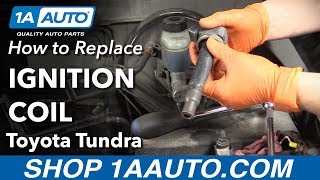
Typical fix: Replace the faulty ignition coil. It is also best practice to replace the corresponding spark plug at the same time.
Est. part cost: $25-$80 - Damaged Connector or Wiring ⚪ Low Probability The plastic connector lock can become brittle and break over time, leading to a poor connection. Wires can also be damaged by engine heat or improper handling during previous repairs, especially rodent damage.
How to confirm: After confirming the coil is good (by swapping it), visually inspect the connector for cracks, corrosion, or pushed-out pins. Tug gently on the wires at the back of the connector to ensure they are secure. Use a multimeter to check for 12V power and continuity to ground at the connector.
Typical fix: Repair the wiring or replace the connector pigtail. An example pigtail is part number 90980-11246.
Est. part cost: $10-$25 - Worn or Fouled Spark Plug ⚪ Low Probability While a bad spark plug typically causes a misfire code (P0301), an extremely worn plug with a very large gap can put excessive strain on the ignition coil, potentially contributing to its failure and triggering the P0351 code.
How to confirm: Remove and inspect the spark plug for cylinder #1. Look for excessive wear on the electrode, heavy carbon deposits, or oil fouling.
Typical fix: Replace the spark plug. It's recommended to replace all 8 if their service history is unknown.
Est. part cost: $5-$15 per plug
Rare But Worth Checking
- Faulty Powertrain Control Module (PCM): This is extremely rare. The PCM should only be considered after all other possibilities (coil, plug, wiring) have been exhaustively tested and ruled out. In some cases, a shorted ignition coil can damage the driver circuit within the PCM.
Diagnosis Steps
- Read the trouble codes with an OBD-II scanner. Confirm P0351 is present, and note any other codes like P0301.
- Locate cylinder #1. On the 2UZ-FE V8, it is the front-most cylinder on the passenger side (right bank) of the engine.
- Visually inspect the ignition coil and its electrical connector for any obvious damage, cracks, or loose connections.
- The easiest diagnostic test is to swap parts. Disconnect and remove the ignition coil from cylinder #1. Swap it with the coil from cylinder #3 (the next one back on the passenger side).
- Clear the trouble codes using the scanner.
- Start the engine and let it run for a minute. Re-scan for codes.
- If the code has changed to P0353 ('Ignition Coil 'C' Circuit Malfunction'), you have confirmed the ignition coil is bad. Purchase a new coil.
- If the code P0351 returns, the problem is not the coil itself but lies in the wiring or, rarely, the PCM. At this point, you should inspect the wiring harness and connector for cylinder #1 more closely.
- If the wiring appears good, use a multimeter to test for power (12V with key on) and ground at the coil connector. Check the IGT (trigger) and IGF (confirmation) signal wires for continuity back to the ECM if you have the appropriate wiring diagrams.
Parts You'll Likely Need
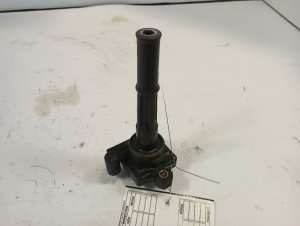
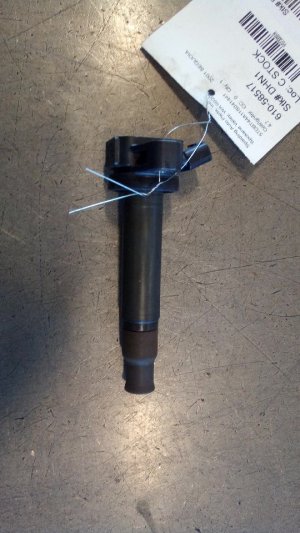
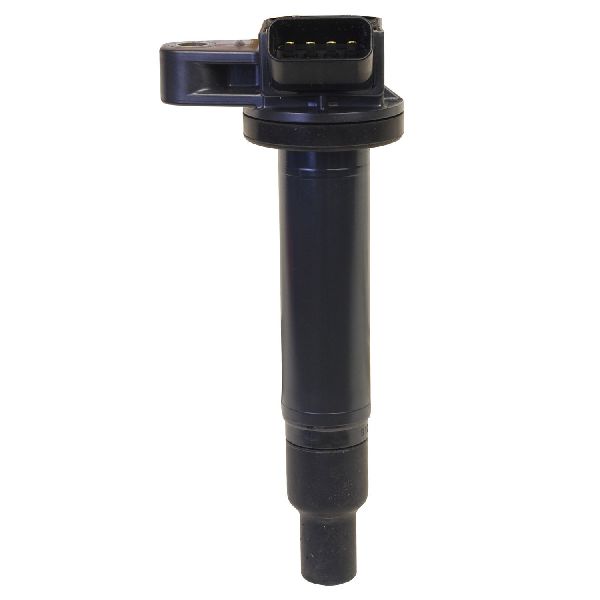
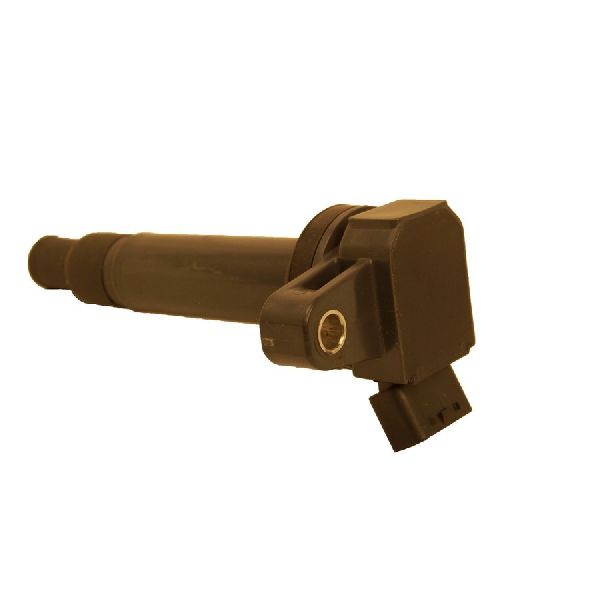
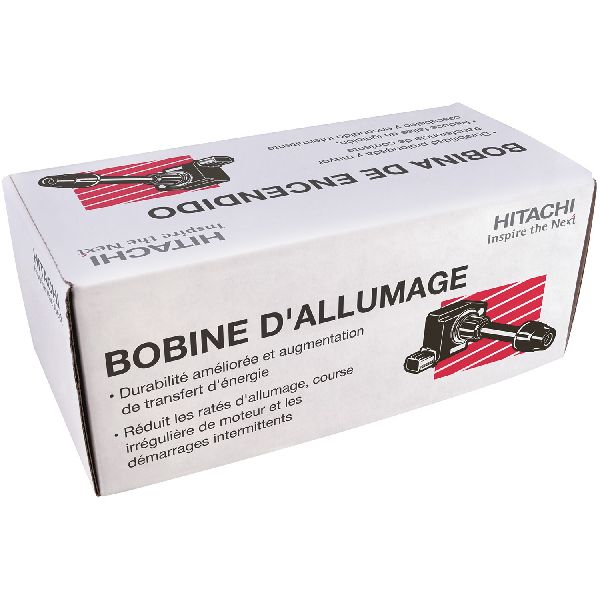
- Ignition Coil
(OEM #90919-02239)— This is the component that fails in over 90% of cases for a P0351 code on this engine.
Trusted brands: Denso (OEM), NGK, Delphi
OEM price range: $50-$80
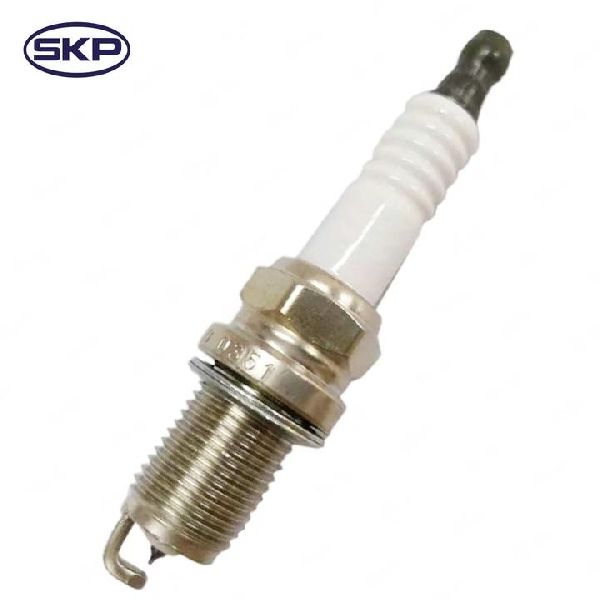
Aftermarket price range: $25-$50 - Spark Plug
(OEM #Denso SK20R11 or NGK IFR6A11 (Iridium))— It is best practice to replace the spark plug when replacing a coil, as a worn plug can stress the new coil and their service lives are related.
Trusted brands: Denso, NGK
OEM price range: $8-$15
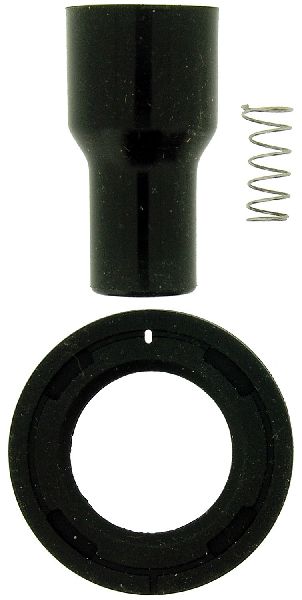
Aftermarket price range: $5-$10 - Ignition Coil Connector Pigtail
(OEM #90980-11246 (example))— Needed if the original connector is cracked, corroded, or the locking tab is broken, causing a poor connection.
Trusted brands: Dorman, Standard Motor Products, OEM
OEM price range: $15-$30
Aftermarket price range: $10-$20
Related Codes That Often Appear With This One
- P0301 — P0301 means 'Cylinder 1 Misfire Detected.' Since P0351 indicates a fault in the ignition system for cylinder 1, it directly causes a misfire, making these two codes almost always appear together.
Platform-Specific Known Issues
- On some 2005 Tundras, multiple ignition coil codes (e.g., P0351, P0354, P0356, P0357) can appear simultaneously. This often points to a single, severely shorted ignition coil that is disrupting the shared IGF (ignition feedback) circuit, rather than multiple coils failing at once. The 2UZ-FE uses two separate IGF circuits: one for cylinders 1, 4, 6, and 7, and another for cylinders 2, 3, 5, and 8. 🎬 Watch: Diagnosing multiple simultaneous coil codes on a Tundra A fault on one coil can therefore trigger codes for other coils on the same circuit.
- Real World Example: A Confusing Diagnosis: A user on a Lexus forum reported a P0351 code that would appear intermittently. After extensive diagnostics, the problem was traced to a faulty coil pack on cylinder #2 that was shorting the shared IGF feedback line, causing the ECM to incorrectly report a fault on cylinder #1. This highlights how a failure on one cylinder can sometimes manifest as a code for another.
Mechanic-Grade Diagnostic Values
- Ignition Coil Primary Winding Resistance — expected: 0.67 - 1.05 Ohms (cold). Failure: A reading outside this range indicates a faulty coil.
- Ignition Coil Secondary Winding Resistance — expected: 9,300 - 16,000 Ohms (cold). Failure: A reading outside this range indicates a faulty coil.
- IGT (Ignition Trigger) Signal Voltage at ECM — expected: 0.1 - 4.5 Volts while cranking. Failure: No voltage or voltage outside this range suggests a wiring or ECM driver issue.
- IGF (Ignition Feedback) Signal Waveform — expected: A square wave signal should be present on an oscilloscope when the engine is running.. Failure: A missing or erratic waveform indicates a fault in the coil's internal igniter or the IGF circuit back to the ECM.
- Power at Ignition Coil Connector (Pin 1 to Ground) — expected: Battery Voltage (approx. 12V) with ignition ON. Failure: Low or no voltage indicates a problem with the power supply circuit, potentially a fuse or relay.
- Ignition Timing at Idle — expected: 5 to 15° BTDC @ idling (transmission in neutral, A/C OFF). Failure: While not a direct test for P0351, incorrect timing can be a symptom viewable in Techstream live data.
Scan Tool Commands That Help
- Toyota Techstream: Data List Monitoring (IGN Advance, Misfire Count) — Use to monitor ignition timing advance and check for misfires on specific cylinders in real-time to confirm the fault is isolated to cylinder #1.
- Toyota Techstream: Active Test (e.g., 'Activate the Starter Relay') — While there isn't a direct 'fire coil' command for this model, other active tests can help verify related systems and ECM functionality. For example, activating relays confirms the ECM can command outputs.
- Toyota Techstream: Read Freeze Frame Data — Essential for understanding the engine conditions (speed, load, temperature) at the exact moment the P0351 code was triggered.
Wiring & Ground Locations
- EC & ED — Rear bank of the left (ED) and right (EC) cylinder heads.. These are the primary engine block grounds. A loose or corroded connection at these points can create a weak ground for the ignition coils, leading to intermittent misfires and codes like P0351. The bolt holding the ignition coil to the valve cover also serves as a crucial ground point.
- Ignition Coil Connector Pinout (4-pin) — Connector on top of ignition coil #1.. Pin 1: +B (12V Power from ignition relay). Pin 2: IGT (Ignition Trigger signal from ECM). Pin 3: IGF (Ignition Confirmation signal to ECM). Pin 4: Ground (to cylinder head). Knowing the pinout is essential for multimeter testing of power, ground, and signal integrity.
- EA / ET — Front left (EA) and front right (ET) fender aprons.. These are main chassis grounds. While not the direct ground for the coils, poor connections here can cause widespread electrical issues that could potentially manifest in strange ways, though it's less likely to cause a single-cylinder code like P0351.
OEM Part Supersession History
90919-02239→90919-02262— Standard part revision and update by the manufacturer.
Heads up: The newer part number 90919-02262 is a direct replacement for 90919-02239 and is fully compatible with the 2000-2006 Tundra.
Model Year Variations Within This Range
- 2005-2006: For the 2005 model year, Toyota added VVT-i (Variable Valve Timing with intelligence) to the 2UZ-FE engine. This also included a switch to a 5-speed automatic transmission (from a 4-speed) and an electronic throttle-by-wire system. While the fundamental coil-on-plug design and P0351 diagnosis remain the same, the ECM and engine wiring harness are different from the 2000-2004 models.
Diagnostic Flowchart
Other Known Issues on This Vehicle
Issues unrelated to this code that are worth knowing about as an owner of this generation:
- Frame Rust/Corrosion 🔴 High — Very common, especially in states with road salt. Led to a major recall and warranty extension program. Affects the rear crossmember and other frame sections. (Ref: Toyota Limited Service Campaign (LSC) A0F & D0D, and Warranty Enhancement Program ZH7 covered inspection, CRC application, or frame replacement for affected vehicles.)
- Cracked Exhaust Manifolds 🟠 Medium — Extremely common across all 2UZ-FE platforms. Owners report a 'ticking' noise, especially when the engine is cold, which disappears as the metal expands. (Ref: No official recall, but a widely acknowledged design flaw.)
- Lower Ball Joint Failure 🔴 High — Prone to premature wear and catastrophic failure, which can cause the wheel to separate from the vehicle. A recall was issued for 2002-2004 models, but earlier models with the same parts were also affected. (Ref: NHTSA Recall 07V-013 for 2004-2006 models. Earlier recalls also existed for 2002-2004 models.)
- Timing Belt Replacement (Interference Engine) 🔴 High — Not a failure, but a critical maintenance item. The 2UZ-FE is an interference engine, meaning if the timing belt breaks, catastrophic engine damage will occur. The recommended replacement interval is every 90,000 miles or 9 years.
Used vs. New Parts: Buying Guide for This Vehicle
When a used part is the smart pick: A used OEM Denso ignition coil from a junkyard can be a cost-effective solution, especially if you can pull it yourself from a low-mileage donor vehicle. Given the high reliability of the OEM parts, a used coil often has significant life remaining.
Donor-vehicle mileage cap: roughly under 120000 miles for the part to have meaningful remaining life.
What to inspect on the donor part:
- Check the plastic housing for cracks or signs of extreme heat stress.
- Inspect the connector area for broken locking tabs or corrosion on the pins.
- Look at the rubber boot for tears, swelling, or brittleness.
- If possible, check the donor vehicle's odometer to verify mileage.
OEM-only on this vehicle (don't cheap out):
- While not strictly 'OEM-only', Denso (the original equipment manufacturer) is highly recommended. Many forum users report premature failure from no-name or 'ultra-cheap' online ignition coils.
Aftermarket brands forum-validated for this vehicle:
- Denso (OEM)
- NGK
- Delphi
Brands owners have reported issues with on this vehicle:
- Unnamed, unbranded ignition coils sold in bulk packs on sites like Amazon or eBay are frequently cited by owners as having high failure rates.
Real Owner Stories
Aggregated from forums and TSBs cited above. Mileages and costs reflect what owners reported in those sources.
2005 Toyota Tundra 4.7L V8
Symptoms: The owner reported getting P0351, P0354, P0356, and P0357 simultaneously. They swapped coils, but the multiple codes remained.
What fixed it: This was identified as a single coil failure on one of the two shared IGF circuits, which caused the ECM to flag all cylinders on that specific circuit (1, 4, 6, and 7).
Source hint: Tundra Forum: What is going on? (https.www.tundras.com/threads/what-is-going-on.105703/)
2003-2009 Lexus GX470 4.7L V8
Symptoms: An intermittent P0351 code that would appear specifically after hard braking incidents.
What fixed it: The issue suggested a potential wiring short or loose connection in the harness triggered under specific physical conditions.
Source hint: ClubLexus Forum: p0351 coil issue (https.www.clublexus.com/forums/gx-2nd-gen-2010-2023/1010323-p0351-coil-issue.html)
Lexus 4.7L V8 (2UZ-FE)
Symptoms: A P0351 code appeared intermittently. Extensive diagnostics were required because the ECM was incorrectly reporting a fault on cylinder #1.
What fixed it: The problem was traced to a faulty coil pack on cylinder #2 that was shorting the shared IGF feedback line.
Source hint: Real World Example: A Confusing Diagnosis (Lexus forum report)
Toyota RAV4 (Cross-Manufacturer Reference)
Symptoms: An owner reported a loss of power and the need to replace all six coils. Shortly after, code P0351 for a bad coil on cylinder 1 was thrown, followed by P0355 for cylinder 5 (NHTSA ODI #10969044).
What fixed it: The report highlights recurring coil failures even after recent replacements, emphasizing the importance of using high-quality components.
Related OBD-II Codes
Frequently Asked Questions
Where is cylinder #1 located on my 2000-2006 Tundra 4.7L V8?
My 2005 Tundra is showing P0351, P0354, P0356, and P0357 all at once. Do I need four new coils?
Is there a specific replacement part number for the ignition coil connector if the plastic clip broke?
Could my Tundra's cracked exhaust manifold be causing this P0351 code?
Is there a recall for the ignition coils on the 2000-2006 Tundra?
Can I use the 'swap test' to confirm a bad coil on my 4.7L V8?
Helpful Videos
Used OEM Parts in Stock


New Aftermarket Parts Available


The information in this article is provided for general reference and educational purposes only. Vehicle specifications, procedures, and part compatibility can vary by production date, trim level, and region. Always consult your vehicle's factory service manual and verify part numbers before purchasing or performing repairs. Safety-critical components such as airbags, seat belts, and braking systems should be installed by a qualified professional.
- Toyota Tundra:
- 🎬 Helpful Videos
- 🛍️ Shop This Part
- What's Unique About the 2000-2006 Toyota Tundra
- Symptoms You May Notice
- Most Likely Causes
- Rare But Worth Checking
- Diagnosis Steps
- Parts You'll Likely Need
- Related Codes That Often Appear With This One
- Platform-Specific Known Issues
- Mechanic-Grade Diagnostic Values
- Scan Tool Commands That Help
- Wiring & Ground Locations
- OEM Part Supersession History
- Model Year Variations Within This Range
- Diagnostic Flowchart
- Other Known Issues on This Vehicle
- Used vs. New Parts: Buying Guide for This Vehicle
- Real Owner Stories
- 2005 Toyota Tundra 4.7L V8
- 2003-2009 Lexus GX470 4.7L V8
- Lexus 4.7L V8 (2UZ-FE)
- Toyota RAV4 (Cross-Manufacturer Reference)
- Related OBD-II Codes
- Frequently Asked Questions
- 🎟️ Get 5% Off