

OBD-II Code P0357: Ignition Coil 'G' Circuit Malfunction
The Ultimate Guide to What P0357 Means, Why It Triggers, and Exactly How to Fix It
- Code P0357 indicates an electrical circuit failure in the cylinder #7 ignition coil, with a dead coil being the culprit in over 80% of cases.
- Swap the cylinder #7 ignition coil with cylinder #1 to instantly confirm if the coil is dead; if the code changes to P0351, the coil is the problem.
- Never drive with a flashing Check Engine Light, as raw fuel from the misfiring cylinder #7 destroys a $1,500+ catalytic converter in under 50 miles.
- Expect to see code P0307 (Cylinder 7 Misfire) alongside P0357; fixing the electrical circuit fault automatically resolves the misfire without needing fuel system repairs.
What Does P0357 Mean?

P0357 means the Powertrain Control Module (PCM) detects an electrical fault in the cylinder #7 ignition coil circuit. The letter 'G' corresponds to the seventh cylinder in the engine's firing order. This fault prevents the spark plug from receiving the high voltage needed to ignite the air-fuel mixture, causing an engine misfire.
Technical definition: The SAE/OBD-II definition is "Ignition Coil 'G' Primary/Secondary Circuit Malfunction." The PCM continuously monitors voltage feedback from the ignition coil circuit and expects a specific electrical signature when commanding the coil to fire. If this signature is missing or incorrect—due to a broken wire, short, or failed coil winding—the PCM sets code P0357. As a fail-safe, the PCM typically disables the cylinder #7 fuel injector to prevent raw fuel from melting the catalytic converter.
Can I Drive With P0357?
Yes, But With Caution. You can drive short distances, but we strongly advise against it, especially if the check engine light flashes. A flashing light signifies a severe misfire actively dumping raw, unburnt fuel into your exhaust. This destroys your catalytic converter rapidly, turning a minor repair into a $1,500+ expense, so address this code immediately.
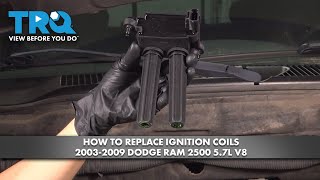
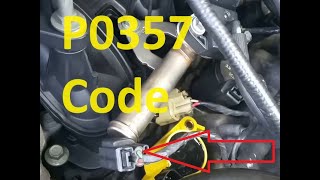
🎬 Watch: Step-by-step guide for fixing a cylinder 7 ignition fault.Common Causes

- Faulty Ignition Coil (Very Common) — The ignition coil is the most frequent point of failure. Over many heat cycles and constant vibration, the delicate internal windings break or short out, causing a total loss of spark-generating capability.
- Damaged Wiring or Connector (Common) — The wiring harness operates in a harsh environment where wires become brittle, insulation chafes, or rodents chew through lines, causing shorts to ground. The plastic connector also cracks, and pins loosen or corrode, creating high electrical resistance.
- Worn or Defective Spark Plug (Common) — An old, fouled, or excessively gapped spark plug creates high resistance for the spark to jump. This extra electrical load overworks the ignition coil's secondary circuit, causing it to overheat and fail.
- Oil or Water Intrusion (Less Common) — A leaking valve cover gasket allows engine oil to pool in the spark plug tube, saturating the coil boot and causing a short circuit. Similarly, water from rain or engine washing enters the plug well, causing corrosion and electrical faults.
- Low System Voltage (Less Common) — A weak battery (providing below 12V) or a faulty alternator delivers insufficient power to the ignition coil's primary circuit. The PCM interprets this low voltage as a circuit performance fault, often occurring after a jump-start. 🎬 Watch: A breakdown of common causes and circuit fixes.
- Faulty Powertrain Control Module (PCM) (Rare) — The internal driver circuit inside the PCM that controls the ignition coil sometimes fails. On specific vehicles like 2004-2010 Ford F-150s, a shorted ignition coil permanently damages the PCM driver, requiring module replacement.
Symptoms

- Check Engine Light On — The check engine light illuminates. A flashing light indicates a severe misfire actively dumping unburnt fuel into the exhaust, which destroys the catalytic converter rapidly.
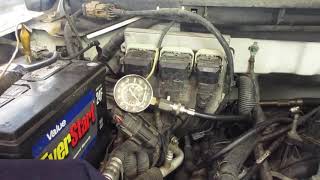
- Engine Misfire (Rough Running) — The engine runs rough, shakes, or vibrates at idle and under acceleration. Cylinder #7 contributes no power, causing a rotational imbalance felt throughout the vehicle. 🎬 See how a Ford 5.4L runs with a P0357 code.
- Loss of Power and Stalling — The vehicle feels sluggish, struggles to accelerate, and stalls at low speeds because it operates on one less cylinder.
- Reduced Fuel Economy — The vehicle burns significantly more fuel. Unburnt fuel from cylinder #7 wastes out the exhaust, and the PCM enriches the fuel mixture on other cylinders to compensate for the power loss.
Diagnostic Flowchart

Tap your situation to follow the diagnostic path that matches what you're seeing on this code.
Common Fixes & Costs
- Replace Ignition Coil #7 — Parts: $40-$100, Labor: $50-$150, ~0.5 hr book time (DIY)
- Replace Ignition Coil & Spark Plug — Parts: $60-$150, Labor: $100-$200, ~0.7 hr book time (DIY)
- Repair Wiring or Replace Connector — Parts: $20-$50, Labor: $100-$200, ~1.5 hr book time (Intermediate)
- Replace Valve Cover Gasket (if leaking oil) — Parts: $30-$80, Labor: $200-$600, ~3.5 hr book time (Professional)
- Replace Powertrain Control Module (PCM) — Parts: $600-$1200, Labor: $150-$300, ~1.5 hr book time (Professional)
- Make-Specific Cost: Ford F-150 Coil Replacement — Parts: $174-$233, Labor: $55-$81, ~0.6 hr book time (DIY)
- Make-Specific Cost: Ram 1500 Coil Replacement — Parts: $69-$144, Labor: $49-$72, ~0.5 hr book time (DIY)
DIY vs Professional
- Replace Ignition Coil — Beginner:
Tools: Socket set, ratchet, torque wrench, dielectric grease. - Repair Wiring or Connector — Beginner:
Tools: Multimeter, wire cutters/strippers, soldering iron or crimp tool, heat shrink tubing, wiring diagram. - Replace Valve Cover Gasket — Beginner:
Tools: Extensive socket/wrench set, torque wrench, gasket scraper, sealant, repair manual. - Replace PCM — Beginner:
Tools: Basic hand tools, specialized scan tool for programming.
Used vs. New Parts: Buying Guide
When a used part is worth it: Buying a used ignition coil rarely makes sense. The minimal savings do not justify the risk of receiving a part near the end of its service life.
Donor-vehicle mileage cap: roughly under 40000 miles for the part to have meaningful remaining life.
Donor quality checklist:
- Only consider a used coil from a wrecked, low-mileage vehicle.
- Ensure the part number matches exactly.
- Avoid parts with corrosion, melting, or physical damage.
Decision logic:
- If The cost of a new aftermarket coil is under $100 → Always buy new. The savings from a used part aren't worth repeating the labor.
- If The vehicle is over 15 years old and budget is the absolute top priority → A used coil with a 30-90 day warranty is a low-cost gamble, but not a long-term solution.
- If The part has a known wear-out failure mode → Favor new parts, as a used one has consumed part of its finite lifespan.
Warranty tradeoff: Used parts have a 30-90 day warranty. New aftermarket parts carry a 1-year to lifetime warranty. New OEM parts offer a 1-2 year warranty.
Worst-case if a used part fails: 150-300. If a used coil fails, you pay for the part and labor again.
What Happens If You Wait — Timeline
- 0-1 month: Check Engine Light illuminates. A noticeable rough idle and vibration are present. Fuel economy drops slightly. (MPG impact: 5-10%% · Added cost: $20-50 in wasted fuel)
- 1-3 months: The Check Engine Light flashes during acceleration, indicating a severe misfire. Raw fuel dumps into the exhaust, overheating the catalytic converter. (MPG impact: 10-15%% · Added cost: $50-150 in wasted fuel)
- 3-6 months: The catalytic converter's internal honeycomb structure melts and clogs from extreme heat. The vehicle becomes sluggish, and the exhaust glows red. Damage is irreversible. (MPG impact: 15-25%% · Added cost: $1200-2800 (for catalytic converter replacement))
- 6+ months: Complete catalytic converter failure creates extreme backpressure, leading to burnt exhaust valves or damaged oxygen sensors. The vehicle cannot accelerate past low speeds. (MPG impact: 25-50%% · Added cost: $3000+ (for catalytic converter and secondary engine damage))
Cost of Not Fixing It
- Immediate (0-1 month): Failed emissions test, noticeable drop in fuel economy (5-15%), and a constant rough ride. (Added cost: 0)
- Short Term (1-6 months): Catalytic converter overheats due to raw fuel dumping into the exhaust, leading to irreversible damage. (Added cost: 1200-2800)
- Long Term (6+ months): Persistent misfires foul spark plugs, damage oxygen sensors, and cause cylinder washdown, accelerating engine wear. (Added cost: 3000+)
Diagnosis Steps
- Read the Trouble Codes & Freeze Frame Data
Use an OBD-II scanner to confirm P0357 is present. Look for related codes like P0307 (Cylinder 7 Misfire). Note the freeze frame data to understand the engine's speed, load, and temperature when the fault occurred.
Tools: OBD-II Scanner (Beginner) - Visually Inspect the Area
Locate ignition coil #7. Inspect the coil, electrical connector, and nearby wiring for cracks, burn marks, melting, corrosion on pins, or oil/water contamination.
Tools: Flashlight, Repair Manual/Diagram (Beginner) - Swap the Ignition Coil (The 'Money Saver' Test)
Swap the ignition coil from cylinder #7 with an adjacent cylinder (like #5). Clear the codes, start the engine, and see which code returns. If the code changes to P0355, you confirmed the ignition coil is faulty.
Tools: Socket/ratchet set, OBD-II Scanner (Beginner) - Inspect the Spark Plug
If the code did not move with the coil swap, remove the spark plug from cylinder #7. Inspect it for a worn electrode, cracked porcelain, or heavy fouling. Replace it if it looks suspect.
Tools: Spark plug socket, ratchet (Intermediate) - Test the Coil Connector's Circuit (Voltage Check)
Disconnect the coil connector with the Key On, Engine Off. Use a multimeter to test the pins: 1) Power Supply pin must have battery voltage (11.5V - 12.6V). 2) Ground pin must have excellent continuity to chassis ground (<0.5 ohms). 3) Trigger Signal pin must show a pulsing voltage (1-5V) when cranking the engine. No power/ground indicates a wiring fault; no trigger indicates a wiring or PCM problem.
Tools: Multimeter, Noid Light (optional), Vehicle-specific wiring diagram (Advanced) - Test the Ignition Coil (Resistance Check)
Remove the coil and set a multimeter to Ohms (Ω). Test primary resistance across the positive and negative terminals (typically 0.4 to 2 ohms). Test secondary resistance from the high-voltage output to a terminal (typically 6,000 to 15,000 ohms). 'OL' indicates an open circuit; zero indicates a short.
Tools: Multimeter, Repair Manual with specifications (Advanced) - Check Wiring Harness Continuity
Disconnect the coil connector and the PCM connector. Use a multimeter to check for continuity (<1 ohm) in the power, ground, and signal wires. Check for shorts by testing continuity between each wire and ground. Any reading other than infinite (OL) requires repair.
Tools: Multimeter, Vehicle-specific wiring diagram (Advanced) - Analyze the Ignition Waveform (Professional-Level)
Connect an oscilloscope to the coil's primary signal wire. A good waveform shows a sharp vertical voltage spike, a flat 'burn line', and diminishing oscillations. A missing spike suggests a bad coil; no oscillations points to a short.
Tools: Automotive Oscilloscope, Back-probe pins (Professional) - Test the PCM Driver
Use a bidirectional scanner to command the PCM to fire the coil circuit. If the PCM fails to produce a trigger signal at its pin during this test, and the wiring is confirmed good, the PCM is faulty and requires replacement.
Tools: High-end bidirectional scanner, Oscilloscope (Professional)
When This Code Triggers (Freeze-Frame Conditions)
- Engine Coolant Temp: 180-200°F (Fully warmed up, during normal operation.)
- RPM: 1500-2500 (Occurs under light to moderate acceleration or steady-state cruising.)
- Engine Load: 30-60% (Detected when a moderate demand is placed on the engine, not necessarily at idle or full throttle.)
- Vehicle Speed: 35-55 mph (Logged during city or highway cruise conditions.)
Related Codes
- P0307 — Means 'Cylinder 7 Misfire Detected.' P0357 indicates the electrical circuit is bad, preventing spark and causing the P0307 misfire. Fixing P0357 resolves P0307.
- P0207 — Means 'Cylinder 7 Injector Circuit Malfunction.' The PCM intentionally shuts down the fuel injector when it detects a loss of spark to protect the catalytic converter.
- P0300 — Means 'Random/Multiple Cylinder Misfire Detected.' Suggests a wider problem like a failing PCM, major vacuum leak, or low fuel pressure affecting the whole engine.
- P0350 — A generic code for 'Ignition Coil Primary/Secondary Circuit Malfunction'. Suggests the PCM cannot isolate the fault to one cylinder, or there is an issue with the main power feed.
Climate & Environmental Factors
- High Heat: Repeated heat cycles and 'heat soak' degrade the coil's internal insulation and windings, leading to shorts or open circuits.
- Humidity and Moisture: Moisture from rain or engine washing seeps into spark plug wells, shorting the coil against the cylinder head and corroding connector pins.
- Extreme Cold: Extreme cold makes wiring insulation and plastic connectors brittle and susceptible to breaking during service.
- High Altitude: Thinner air increases the voltage required for a spark to jump the plug gap, exposing weak coils that perform adequately at sea level.
How to Talk to a Mechanic About This Code
Say this: "I have a P0357 code for the ignition coil 'G' circuit on cylinder 7, and the engine is misfiring. Please start by swapping the #7 coil with another cylinder to see if the fault follows the coil."
This directs the technician to a specific, efficient test, preventing them from starting with expensive diagnostics and reducing the chance of being sold unnecessary parts.
Avoid saying:
- 'Just fix whatever's wrong'
- 'My check engine light is on, can you look at it?'
- 'Whatever you recommend'
Questions to ask before authorizing the repair:
- Did the fault code move to the other cylinder after you swapped the ignition coil?
- If the coil swap didn't move the code, what were the voltage and ground readings at the coil's electrical connector?
- Before you recommend replacing the PCM, did you test the signal wire for continuity between the coil and the PCM?
- What is the warranty on the parts and labor for this repair?
Where to Take It: Dealer vs Independent vs Chain
- Dealer:
Best for: Vehicles still under a powertrain or emissions warranty., Complex PCM replacement and programming., Known manufacturer-specific quirks.
Downsides: Significantly higher labor rates (often 1.5-2x) compared to independent shops., May recommend replacing an entire assembly instead of a smaller component. (Typical cost: +50% vs. baseline) - Independent Shop:
Best fit for most situations. A P0357 code is a routine repair for any competent independent shop, performed at a lower cost than a dealership.
Best for: Out-of-warranty vehicles where cost is a major factor., Common diagnostic codes like P0357 that have a standard repair procedure.
Downsides: Quality varies widely; vet the shop through reviews and ASE certifications., May lack specialized tools for very new models. (Typical cost: +0% vs. baseline) - Chain Shop:
Use with caution. Acceptable for a straightforward ignition coil replacement, but avoid them for complex wiring or PCM diagnostics.
Best for: Simple, routine maintenance like oil changes and brake pads.
Downsides: Technician skill varies dramatically., High pressure to meet sales quotas leads to upselling (e.g., recommending all 8 coils when only one is faulty). (Typical cost: -10% vs. baseline)
When to Walk Away From the Repair
If the estimated repair cost exceeds 40-50% of your car's private-party value, seriously consider selling or trading in the vehicle.
- Car worth $3000, fix is $1500: Walk away. The repair cost is 50% of the car's value. Put this money toward a more reliable vehicle.
- Car worth $15000, fix is $1500: Fix it. The repair cost is 10% of the vehicle's value and is a worthwhile investment.
- Car worth $5000, fix is $350: Fix it. A simple coil replacement is a low percentage of the car's value.
What Scan Tool You Need for This Code
Minimum: A basic OBD-II reader that reads/clears codes and displays Freeze Frame data.
A sub-$30 reader cannot show live data. Viewing live misfire counts per cylinder is crucial to confirm the problem is isolated to cylinder #7.
Budget: BlueDriver Bluetooth Pro (~$100) — Pairs with your smartphone to read/clear codes, view freeze frame data, and graph live misfire counts with no subscription fees.
Mid-range: Foxwell NT809BT (~$350) — Offers bidirectional controls to command the PCM to fire the coil, providing a definitive test of the driver circuit without an oscilloscope.
Professional: Autel MaxiCOM MK808Z (~$450-550) — Provides full bidirectional control, extensive live data graphing, and access to all vehicle modules to diagnose complex wiring and PCM issues.
Rent vs buy: If this is a one-time repair, borrow a free scanner from an auto parts store. Buy a scanner only if you perform diagnostics regularly.
How to Clear the Code After You Fix It
- Reconnect battery if disconnected.
- Use an OBD-II scan tool to select 'Clear/Erase Codes'.
- Perform a complete drive cycle to run readiness monitors.
Drive cycle (~30 minutes): 1) Cold start and idle for 2-3 minutes. 2) Drive in stop-and-go traffic for 10-15 minutes. 3) Drive at a steady highway speed (55-60 mph) for 10 minutes. 4) Let the vehicle cool down completely.
Readiness monitors affected: Misfire Monitor, Comprehensive Component Monitor, Catalyst Monitor, Oxygen Sensor Monitor
Before emissions retest: drive at least 100 miles to fully set monitors.
Watch out for:
- Disconnecting the battery clears the code but resets all readiness monitors to 'Not Ready', guaranteeing an emissions test failure.
- The code returns immediately if the electrical fault remains unfixed.
- Not driving through varied conditions prevents readiness monitors from setting.
Will This Fail Emissions / State Inspection?
Yes — this code typically fails an OBD-II emissions inspection.
- California: An active P0357 code is an automatic smog check failure. After repair, you must complete a drive cycle to set all readiness monitors to 'Ready' before re-testing.
- New York: An illuminated Check Engine Light for P0357 causes an automatic failure of the NYS DMV emissions inspection.
- Texas: In emissions-testing counties, an active P0357 code fails the OBD inspection. The Check Engine Light must be off and readiness monitors set.
Most Commonly Affected Vehicles

- Ford F-150 (2004-2010) — The 5.4L 3V Triton engine is notorious for this code. A failed coil shorts and sends voltage back to the PCM, damaging the driver circuit. Replace ALL coils and plugs if a PCM failure is found.
- Dodge / Ram 1500/2500 with HEMI V8 (2009-2018) — HEMI engines frequently experience P035x codes due to heat-related coil failure. Cylinder #7 is on the driver's side, second from the back.
- Chevrolet / GMC Silverado / Sierra 1500 (2007-2013) — V8 engines in these trucks are prone to ignition coil failures as they age. The ECM illuminates the MIL on the second consecutive ignition cycle that the diagnostic fails.
- Toyota Tundra / Sequoia (2007-2021) — The ECM actively looks for an Ignition Confirmation Signal (IGF) from the coil; a lack of this signal triggers the code.
- BMW X5 / 5-Series / 7-Series with V8 (2002-2013) — V8-equipped BMWs are susceptible to P0357 due to failed coils or leaking valve cover gaskets causing oil saturation.
- Ford Expedition (2005-2014) — Sharing the 5.4L V8 with the F-150, these SUVs suffer high rates of coil failures and associated PCM damage.
- Ford E-150 / E-250 (2005-2014) — Workhorse vans with V8 engines log this code due to heat buildup in the compact engine bay, leading to premature coil failure.
- Volkswagen Touareg / Phaeton (2004-2009) — V8 and W12 engines log P0357 due to failed coil-on-plug units. Tight packaging increases labor costs.
Manufacturer-Specific Notes
- Ford: On 5.4L 3V engines (2004-2010), a shorted coil destroys the PCM driver. If the PCM is bad, you MUST replace ALL 8 ignition coils and spark plugs, or the new PCM fails immediately.
- Dodge/Chrysler/Jeep (Stellantis): On HEMI V8 engines, cylinder #7 is on the driver's side, the rearmost cylinder. Access requires removing the brake booster vacuum line.
- General Motors (Chevy/GMC): For LS-based V8 engines, cylinder #7 is on the driver's side, the rearmost cylinder. A scan tool displaying 'Short to Ground/Open' for IC Circuit 7 confirms the fault.
- Toyota/Lexus: Toyota V8s use a 4-wire coil that sends an Ignition Confirmation Signal (IGF) to the ECM. A failure to send a valid IGF signal triggers P0357.
- All: As of late 2024, there are no active, widespread recalls for code P0357. Failures are handled under standard warranties.
Real Owner Stories
2012 Ford Mustang GT (~50K miles) - The Simple Fix
Check engine light came on with a P0357 code and a slight engine shudder. The owner swapped the ignition coil from cylinder #7 to #8, but the P0357 code returned.
What they tried:
- Swapped ignition coil #7 with #8; code remained P0357.
- Swapped spark plug #7 with #8; code changed to P0358.
Outcome: The problem followed the spark plug. Replacing the single faulty NGK Iridium spark plug resolved the issue completely.
Lesson: Never assume the coil is bad. A faulty spark plug causes the exact same circuit code. Always perform the 'swap test' with both the coil and the spark plug before buying parts.
2005 Ford F-150 5.4L (~150K miles) - A Misdiagnosis Story
Truck shuddered and threw code P0357. The owner replaced the #7 ignition coil and spark plug, but the problem persisted after the engine warmed up.
What they tried:
- Replaced ignition coil and spark plug on cylinder #7.
- Swapped the new coil and plug with another cylinder; the code stayed on #7.
- Visually inspected the wiring harness.
Outcome: The owner replaced the pigtail connector for the #7 ignition coil, fixing the issue. The root cause was a bad connection in the harness plug, not the coil.
Lesson: If swapping the coil and plug doesn't move the code, suspect the wiring immediately. The small plastic connector is a common failure point and costs much less than a PCM.
2003 Dodge Ram 1500 5.7L HEMI - The Unusual Root Cause
A P0357 code appeared shortly after jump-starting another vehicle. The truck developed dimming lights at idle, a rough idle, and the P0357 code.
What they tried:
- Replaced alternator and battery.
- Tested the #7 ignition coil with an ohmmeter.
- Checked fuses.
Outcome: The voltage spike from the improper jump-start damaged the PCM's internal voltage regulator and the driver circuit for coil #7. Replacing the PCM resolved both issues.
Lesson: If P0357 appears immediately after an electrical event like a jump-start, suspect wider system damage. Voltage surges destroy PCM drivers.
How to Prevent This Code From Triggering
- Replace Spark Plugs at Recommended Intervals (Every 60,000-100,000 miles) — Worn spark plugs have a larger gap, increasing the voltage required to create a spark. This overworks the ignition coil, causing it to overheat and fail prematurely.
- Address Oil Leaks Promptly (As soon as detected) — Leaking valve cover gaskets allow oil to pool in the spark plug tubes. This saturates the coil and its boot, causing misfires and eventual electrical failure.
- Keep Engine Bay Clean and Dry (During regular car washes) — Moisture from water or leaking oil degrades the coil's plastic housing and shorts out the high-voltage connection to the cylinder head.
- Inspect and Clean Coil Electrical Connectors (Every 30,000 miles) — Vibration loosens pins, and moisture causes corrosion. A poor connection creates high resistance, mimicking a coil failure and triggering a circuit code.
Frequently Asked Questions
Where is cylinder 7 and ignition coil 'G'?
For most domestic V8s (Ford, GM, Dodge), cylinder #7 is on the driver's side of the engine (Bank 2). It is usually the last or second-to-last cylinder in the bank. Always consult a repair manual for your specific vehicle to be certain.
What are the most common mistakes when diagnosing P0357?
The biggest mistake is replacing the coil and spark plug without confirming the failure, as a broken wire causes the exact same code. Always perform a free 'coil swap' test to verify the coil is dead before buying parts. Never condemn the PCM without exhaustively testing the wiring between the coil and the computer first.
My battery died and after a jump-start, I got a P0357 code. Are they related?
Yes, a weak battery or a voltage spike during a jump-start causes erratic signals that the PCM interprets as a circuit fault. Before diving into complex diagnostics, ensure your battery is fully charged and the charging system outputs at least 13.5V. Clear the codes and see if P0357 returns.
Can I just replace the spark plug to fix P0357?
While a bad spark plug eventually causes a coil to fail, P0357 specifically points to a fault in the coil's electrical circuit, not the plug itself. The most common cause is the coil. Always swap coils first to see if the problem moves.
What happens if I ignore the P0357 code?
Ignoring it leads to a rough ride, poor gas mileage, and failed emissions tests. Raw fuel from the misfiring cylinder dumps into the exhaust, rapidly destroying your catalytic converter—a repair costing up to $2,500.
Is it better to replace just one ignition coil or all of them?
If one coil fails and the others have over 80,000 miles, they are nearing the end of their service life. Replacing all coils prevents future breakdowns, especially if they are difficult to access. If budget is tight, replacing only the failed coil is acceptable.
My scanner only says 'Ignition Coil G'. How do I know that's cylinder 7?
In the standardized OBD-II system, the letters A, B, C, D, etc., correspond to cylinder numbers 1, 2, 3, 4, and so on. Therefore, 'G' is the seventh letter and corresponds to cylinder #7.
What is dielectric grease and should I use it on the new coil?
Yes, dielectric grease is a non-conductive paste that protects electrical connections from moisture and corrosion. Apply a pea-sized amount inside the new ignition coil's spark plug boot to seal out water. Never apply it directly to the metal electrical connector pins, as it blocks the low-voltage signal.
Key Takeaways
- Code P0357 indicates an electrical circuit failure in the cylinder #7 ignition coil, with a dead coil being the culprit in over 80% of cases.
- Swap the cylinder #7 ignition coil with cylinder #1 to instantly confirm if the coil is dead; if the code changes to P0351, the coil is the problem.
- Never drive with a flashing Check Engine Light, as raw fuel from the misfiring cylinder #7 destroys a $1,500+ catalytic converter in under 50 miles.
- Expect to see code P0307 (Cylinder 7 Misfire) alongside P0357; fixing the electrical circuit fault automatically resolves the misfire without needing fuel system repairs.
Helpful Videos

The information in this article is provided for general reference and educational purposes only. Vehicle specifications, procedures, and part compatibility can vary by production date, trim level, and region. Always consult your vehicle's factory service manual and verify part numbers before purchasing or performing repairs. Safety-critical components such as airbags, seat belts, and braking systems should be installed by a qualified professional.
- 🎬 Helpful Videos
- What Does P0357 Mean?
- Can I Drive With P0357?
- Common Causes
- Symptoms
- Diagnostic Flowchart
- Common Fixes & Costs
- DIY vs Professional
- Used vs. New Parts: Buying Guide
- What Happens If You Wait — Timeline
- Cost of Not Fixing It
- Diagnosis Steps
- When This Code Triggers (Freeze-Frame Conditions)
- Related Codes
- Climate & Environmental Factors
- How to Talk to a Mechanic About This Code
- Where to Take It: Dealer vs Independent vs Chain
- When to Walk Away From the Repair
- What Scan Tool You Need for This Code
- How to Clear the Code After You Fix It
- Will This Fail Emissions / State Inspection?
- Most Commonly Affected Vehicles
- Manufacturer-Specific Notes
- Real Owner Stories
- 2012 Ford Mustang GT (~50K miles) - The Simple Fix
- 2005 Ford F-150 5.4L (~150K miles) - A Misdiagnosis Story
- 2003 Dodge Ram 1500 5.7L HEMI - The Unusual Root Cause
- How to Prevent This Code From Triggering
- Frequently Asked Questions
- Where is cylinder 7 and ignition coil 'G'?
- What are the most common mistakes when diagnosing P0357?
- My battery died and after a jump-start, I got a P0357 code. Are they related?
- Can I just replace the spark plug to fix P0357?
- What happens if I ignore the P0357 code?
- Is it better to replace just one ignition coil or all of them?
- My scanner only says 'Ignition Coil G'. How do I know that's cylinder 7?
- What is dielectric grease and should I use it on the new coil?
- Key Takeaways
- 🎟️ Get 5% Off