

P0351 on 2006-2012 Toyota RAV4 3.5L V6: Ignition Coil 'A' Circuit Causes and Fixes
P0351 on a Toyota RAV4 V6 almost always means the ignition coil for cylinder #1 has failed. The most common fix is to replace the faulty coil. Expect to pay $40-$90 for an OEM-quality coil and about 1-1.5 hours of labor if you have a shop do it, as it's on the harder-to-reach rear cylinder bank.
- P0351 means the ignition coil for cylinder #1 has a circuit fault, confirmed by the ECM.
- The most likely fix is replacing the ignition coil for cylinder #1.
- Cylinder #1 is on the rear bank against the firewall, making it difficult to access and often requiring intake manifold removal.
- Use the 'swap test' with an easier-to-reach coil to confirm the diagnosis before buying parts.
- Consider replacing the spark plug and intake manifold gaskets at the same time, as the labor to access them is the same.
What's Unique About the 2006-2012 Toyota RAV4
The 2GR-FE engine is widely used across the Toyota and Lexus lineup and is known for its reliability. However, ignition coil failure is a documented and common issue, especially on earlier models from 2005-2010. Toyota acknowledged this by issuing a Technical Service Bulletin (TSB) and later updating the ignition coil design to improve durability. For the RAV4, cylinder #1 is located on the rear bank against the firewall, making it significantly more difficult to access than the front three coils (bank 2), often requiring removal of the upper intake manifold.
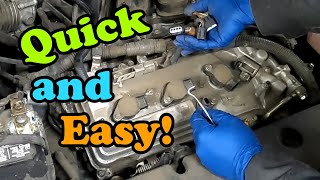
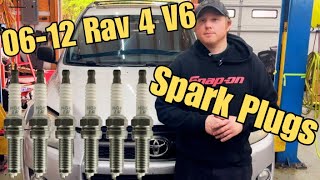
🎬 Watch: Full walkthrough of the RAV4 V6 coil replacement process.Symptoms You May Notice
- Check Engine Light is on
- Engine running rough or vibrating (misfire)
- Hesitation or lack of power during acceleration
- Flashing Check Engine Light under heavy load
- Reduced fuel economy
- Engine stalling at idle in severe cases
- Replacing the spark plug without testing the ignition coil. The P035x code specifically points to a fault in the coil's primary or secondary circuit, making the coil itself the prime suspect.
- Replacing the ECM. This is an expensive and very unlikely solution to the problem.
Most Likely Causes
- Failed Ignition Coil (Cylinder #1) 🔴 High Probability This is a well-documented failure item on the 2GR-FE engine. Heat cycles and age cause the internal windings or the built-in igniter of the coil to fail. Toyota released updated part numbers to address this weakness.
How to confirm: The most reliable method is to swap the ignition coil from cylinder #1 with an easily accessible coil from the front bank (e.g., cylinder #2). Clear the codes with a scanner. Start the engine and let it run. If the code changes to P0352, the coil is confirmed bad.
Typical fix: Replace the faulty ignition coil. It is often recommended to replace the corresponding spark plug at the same time, and some owners choose to replace all three rear coils to avoid future labor.
Est. part cost: $40-$90 - Damaged Wiring or Connector ⚪ Low Probability The plastic connector and wiring can become brittle over time due to engine heat. Rodents chewing on the soy-based wiring insulation used in some modern vehicles can also be a cause. This is less common than outright coil failure but possible.
How to confirm: After swapping the coil, if the P0351 code returns, the fault is likely in the harness. Visually inspect the wiring harness and the connector for cylinder #1's coil. Look for cracks, corrosion on the pins, or loose/chewed wires. Use a multimeter to check for 12V power and ground at the connector with the key on.
Typical fix: Repair the damaged section of the wiring harness or replace the connector pigtail using heat-shrink butt connectors. The 4-pin connector part number is typically 90980-11885.
Est. part cost: $10-$30 - Worn or Fouled Spark Plug ⚪ Low Probability While a bad spark plug typically causes a misfire code (P0301), a severely fouled or worn plug with an excessive gap can increase the electrical load on the ignition coil, potentially contributing to a circuit fault code over time.
How to confirm: When you remove the ignition coil to test or replace it, remove the spark plug and inspect its condition. Look for heavy carbon buildup, oil fouling, or a worn-out electrode.
Typical fix: Replace the spark plug. If replacing one, it's best practice to replace all three on that bank, or all six if they are due for service.
Est. part cost: $10-$25 per plug
Rare But Worth Checking
- Failed Engine Control Module (ECM): This is extremely rare. The ECM contains driver circuits that fire the coils. While a driver can fail, this should only be considered after all other possibilities (coil, plug, wiring) have been definitively ruled out by proper testing.
Diagnosis Steps
- Read the code with an OBD-II scanner and confirm P0351 is present. Note any other codes like P0301.
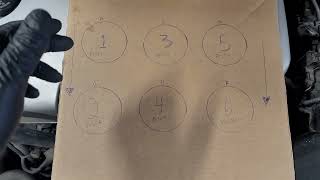
- Identify Cylinder #1. On the RAV4's transverse-mounted 3.5L V6, the cylinders are numbered 2-4-6 on the front bank (near the radiator) and 1-3-5 on the rear bank (near the firewall). Cylinder #1 is the rear-most cylinder on the passenger side.
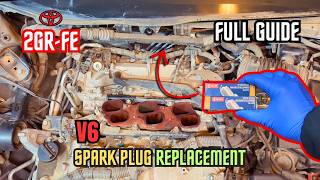
- Access the rear ignition coils. This is the most difficult part of the job. It requires removing the engine cover, air intake assembly, and throttle body. To gain full access, the upper intake manifold (plenum) must be unbolted and removed. Remember to cover the open lower intake ports with tape or clean rags to prevent debris from falling into the engine.
- Perform the 'Swap Test'. Disconnect and remove the ignition coil from cylinder #1. Swap it with the coil from cylinder #2 (the front-most cylinder on the passenger side). This is a crucial step to avoid buying unnecessary parts.
- Temporarily reassemble enough to run the engine, or use jumper wires if you are skilled in electrical diagnosis. Clear the trouble codes with the scanner.
- Start the engine and let it run for a minute. Re-scan for codes.
- If code P0352 appears, the ignition coil you moved is faulty and needs to be replaced.
- If code P0351 reappears, the problem lies in the wiring or connector for cylinder #1. Inspect the harness and connector pins for damage, corrosion, or looseness. Test for power and ground at the connector.
- While the coil is out, it is a good time to inspect and/or replace the spark plug for cylinder #1. If removing the intake manifold, it is highly recommended to replace the intake manifold gaskets to prevent vacuum leaks.
Parts You'll Likely Need
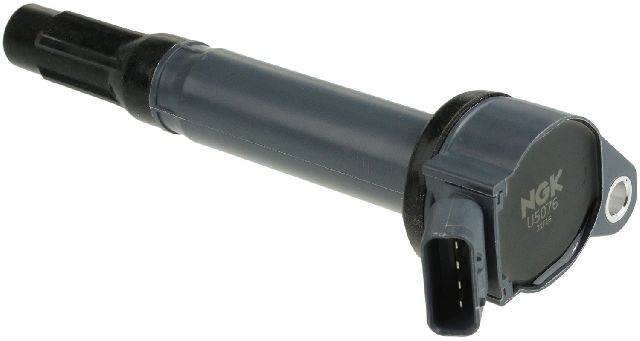
- Ignition Coil
(OEM #90919-A2007)— This is the most common failure part for a P0351 code on this engine. Toyota has superseded the original part number multiple times. 90919-A2007 is a common updated replacement, which itself is superseded by 90919-A2013. Earlier numbers include 90919-A2002 and 90919-A2004.
Trusted brands: Denso (OEM Manufacturer), NGK
OEM price range: $70-$110
Aftermarket price range: $40-$75 - Iridium Spark Plug
(OEM #Denso FK20HR11)— It is best practice to replace the spark plug when replacing a coil, especially on a high-mileage vehicle or a difficult-to-access cylinder. A worn plug increases stress on the coil.
Trusted brands: Denso, NGK
OEM price range: $15-$25
Aftermarket price range: $10-$18 - Intake Manifold Gasket Set — If the upper intake manifold (plenum) is removed to access the rear coils, the gaskets should be replaced to prevent vacuum leaks upon reassembly. This is a critical preventative step.
Trusted brands: Fel-Pro, Mahle, Toyota OEM
OEM price range: $20-$40
Aftermarket price range: $10-$25
Related Codes That Often Appear With This One
- P0301 — P0301 indicates a misfire detected on cylinder #1. Since P0351 means the coil for cylinder #1 is malfunctioning, the cylinder cannot fire correctly, leading the ECM to also detect the resulting misfire.
Technical Service Bulletins (TSBs) & Recalls
- T-SB-0047-10: Issued March 1, 2011, this TSB addresses a MIL ON condition with codes P0351-P0356 on 2005-2010 vehicles with the 2GR-FE engine, including the RAV4. The fix involves inspecting the wiring and replacing the affected ignition coil with an updated part (P/N 90919-A2004 or later). 🎬 Watch: Mechanic explains the fix for P0351-P0356 circuit codes.
Platform-Specific Known Issues
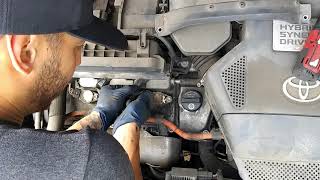
- Accessing the rear bank of cylinders (1, 3, 5) is challenging due to the intake manifold being in the way. While some mechanics have developed methods to replace the coils without removing the manifold, many procedures call for its removal, which adds significant labor time. 🎬 See how to replace rear plugs without removing the manifold.
- A video by 'The Car Care Nut' on YouTube, while not on a RAV4 specifically, details the process on a transverse 2GR-FE, showing the need to remove the intake plenum and highlighting the importance of covering the intake ports to prevent debris entry.
Mechanic-Grade Diagnostic Values
- Ignition Coil Connector - Power Supply Voltage — expected: 11-14 Volts (Battery Voltage) with ignition ON. Failure: 0V or significantly lower voltage indicates a problem with the power supply wire or fuse/relay.
- Ignition Coil Connector - IGT (Ignition Trigger) Signal — expected: A pulsing signal between 5-20 Hz when checked with a multimeter on the frequency (Hz) setting while the engine is cranking or running. On an oscilloscope, it's a 0-5V square wave.. Failure: No frequency reading or a steady voltage indicates a broken wire or a faulty ECM driver.
- Ignition Coil Connector - IGF (Ignition Confirmation) Signal — expected: On an oscilloscope, a 0-5V square wave should be present, confirming the coil has fired.. Failure: Absence of this signal when the IGT signal is present is what triggers the P035x code. This points to a failure within the coil's internal igniter.
- Ignition Coil Primary Resistance — expected: Approximately 0.5Ω ± 0.1Ω. This test is often not performed as it doesn't test the internal igniter, which is the common failure point.. Failure: An open or shorted reading. However, a coil can pass a resistance test and still be faulty.
- Ignition Coil Secondary Resistance — expected: Approximately 9.5-12 kΩ. Like the primary test, this is not a definitive test of coil health.. Failure: An open or shorted reading.
Scan Tool Commands That Help
- Toyota Techstream: Active Test: Control the Injection (All Cylinders / Cylinder 1) — This function allows a technician to command the ECM to fire a specific ignition coil on demand. By listening for the spark or using a spark tester, you can confirm if the ECM driver and wiring are capable of firing the coil, helping to isolate the fault to the coil itself.
Wiring & Ground Locations
- Ignition Coil #1 Connector — On the rear cylinder bank (Bank 1), passenger side of the engine, under the intake manifold.. This is the primary connection point for all tests. It has 4 pins: Pin 1 (+B - 12V Power), Pin 2 (IGF - Confirmation Signal to ECM), Pin 3 (IGT - Trigger Signal from ECM), Pin 4 (GND - Ground).
- Engine Ground Points — Key ground points for the 2GR-FE are typically located on the cylinder heads and the engine block, connected to the chassis via ground straps. A full wiring diagram should be consulted for exact locations like 'EA' or 'EB' on a 2009 RAV4 diagram.. A poor engine ground can cause a host of electrical issues, including weak spark and ignition system fault codes. While not a common cause for a single coil code, it's a critical check for intermittent or multiple ignition faults.
- ECM (Engine Control Module) — On earlier models, it's often located behind the glove box. On later models, it was moved to the engine bay.. This is the source of the IGT signal and the destination for the IGF signal. All wiring for the ignition coil circuit ultimately terminates here.
Real Owner Repair Stories
- rav4world.com forum user (2008 Toyota RAV4 V6 with ~140,000 miles) — Check Engine Light with code P0351. Engine ran smoothly with no noticeable misfire.
❌ Tried (didn't work) Swapped coil #1 with coil #2, code remained P0351., Replaced spark plug for cylinder #1, code remained P0351., Checked wiring harness for continuity between coil connector and ECM connector, all wires tested good., Tested for 12V power and ground at the connector, both were present.
✅ What actually fixed it The owner took the vehicle to a dealership, who diagnosed a faulty ECM. The ignition driver circuit for cylinder #1 inside the ECM had failed. Replacing the ECM and programming it to the vehicle resolved the P0351 code permanently. - NHTSA ODI #10969044 — An owner reported a loss of power and replaced all six coils at approximately 80,000 miles. However, only nine months and 7,000 miles later, code P0351 (bad coil on cylinder 1) was thrown again, followed shortly by code P0355 for cylinder 5.
OEM Part Supersession History
90919-A2002, 90919-02251→90919-A2004 -> 90919-A2007 -> 90919-A2013— Toyota updated the internal design of the coils to improve durability and resistance to heat-related failure, which was the subject of T-SB-0047-10.
Heads up: While coils from the 2GR-FKS engine may physically fit, they have different electrical characteristics and should not be used on a 2GR-FE as they can cause performance issues.
Model Year Variations Within This Range
- 2005-2010: These earlier model years are more prone to the original coil failure as documented in T-SB-0047-10. Vehicles produced after this range likely came from the factory with the improved coil design.
Diagnostic Flowchart
Used vs. New Parts: Buying Guide for This Vehicle
When a used part is the smart pick: For this specific repair, buying a used ignition coil is strongly discouraged. Ignition coils are a known high-failure item on this engine, and a used part from a junkyard has an unknown history and is likely near the end of its own service life. The significant labor required to access the rear bank makes it unwise to risk using a part that may fail again shortly.
Donor-vehicle mileage cap: roughly under 15000 miles for the part to have meaningful remaining life.
What to inspect on the donor part:
- Only consider from a documented, very low-mileage wreck.
- Inspect the plastic housing for any cracks or signs of heat stress.
- Ensure the connector pins are clean and free of corrosion.
OEM-only on this vehicle (don't cheap out):
- While not strictly 'OEM-only', using a non-reputable, unbranded ignition coil is a major risk due to the labor involved. Stick to OEM or OEM-supplier brands.
Aftermarket brands forum-validated for this vehicle:
- Denso (who is the original equipment manufacturer for Toyota; buying a Denso-branded coil is often cheaper than the Toyota-boxed part).
- NGK is also a highly reputable brand for ignition components.
Brands owners have reported issues with on this vehicle:
- Unbranded, generic 'white box' ignition coils from online marketplaces. While tempting due to low cost, their failure rate is notoriously high, and early failure would mean repeating the difficult labor.
Real Owner Stories
Aggregated from forums and TSBs cited above. Mileages and costs reflect what owners reported in those sources.
2009 Toyota RAV4 2GR-FE 3.5L V6 — ~125000 miles
Symptoms: The Check Engine Light came on with a P035x code. The owner noted the significant difficulty in accessing the rear bank of cylinders to perform the diagnosis.
What fixed it: After using the coil swap test to confirm the faulty coil on the rear bank, the owner opted to replace all three rear ignition coils and their corresponding spark plugs at the same time to avoid repeating the labor-intensive job of removing the intake manifold in the future.
Source hint: rav4world.com: Multiple threads
NHTSA ODI #10969044 — ~80,000 miles
Symptoms: The vehicle lost power, leading to the replacement of all six coils. However, only nine months and 7,000 miles later, code P0351 (bad coil on cylinder 1) was thrown, followed shortly by code P0355 for cylinder 5.
What fixed it: This report highlights the recurring nature of ignition coil issues on this platform even after multiple replacements.
Source hint: NHTSA ODI #10969044
Related OBD-II Codes
Frequently Asked Questions
Where exactly is cylinder #1 on my 2008 RAV4's 3.5L V6 engine?
How difficult is it to replace the ignition coil for cylinder #1?
How can I confirm the ignition coil is bad before buying a new one?
Is there an updated, more reliable ignition coil for this engine?
I'm already removing the intake manifold for the coil. What else should I replace?
Does Toyota Technical Service Bulletin T-SB-0047-10 apply to my RAV4?
Helpful Videos

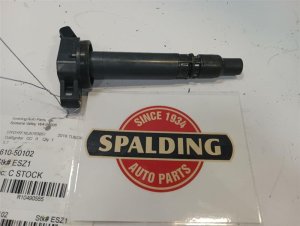
Used OEM Parts in Stock



New Aftermarket Parts Available


The information in this article is provided for general reference and educational purposes only. Vehicle specifications, procedures, and part compatibility can vary by production date, trim level, and region. Always consult your vehicle's factory service manual and verify part numbers before purchasing or performing repairs. Safety-critical components such as airbags, seat belts, and braking systems should be installed by a qualified professional.
- Toyota RAV4:
- 🎬 Helpful Videos
- 🛍️ Shop This Part
- What's Unique About the 2006-2012 Toyota RAV4
- Symptoms You May Notice
- Most Likely Causes
- Rare But Worth Checking
- Diagnosis Steps
- Parts You'll Likely Need
- Related Codes That Often Appear With This One
- Technical Service Bulletins (TSBs) & Recalls
- Platform-Specific Known Issues
- Mechanic-Grade Diagnostic Values
- Scan Tool Commands That Help
- Wiring & Ground Locations
- Real Owner Repair Stories
- OEM Part Supersession History
- Model Year Variations Within This Range
- Diagnostic Flowchart
- Used vs. New Parts: Buying Guide for This Vehicle
- Real Owner Stories
- 2009 Toyota RAV4 2GR-FE 3.5L V6 — ~125000 miles
- NHTSA ODI #10969044 — ~80,000 miles
- Related OBD-II Codes
- Frequently Asked Questions
- 🎟️ Get 5% Off