

P0351 on 2011-2020 Dodge Grand Caravan 3.6L: Ignition Coil 'A' Circuit Causes and Fixes
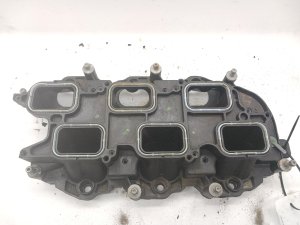
This code means the ignition coil for cylinder #1 has an electrical fault. The most common fix is replacing the cylinder #1 ignition coil, which costs about $40-$90 for the part. However, this cylinder is on the difficult-to-access rear bank of the engine, requiring removal of the upper intake manifold. Due to the labor, it's wise to replace all three rear coils, all six spark plugs, and the intake gaskets at the same time.
- P0351 points directly to an electrical fault in the ignition system for cylinder #1.
- The most likely cause is a bad ignition coil, which can be confirmed by swapping it with another cylinder's coil.
- Cylinder #1 is on the rear bank against the firewall, requiring removal of the upper intake manifold for access, which significantly increases repair complexity and time.
- Always replace the upper intake manifold gaskets when performing this repair to prevent future vacuum leaks.
- If you hear a loud ticking noise along with the misfire, investigate for a possible rocker arm failure before replacing ignition parts.
What's Unique About the 2011-2020 Dodge Grand Caravan
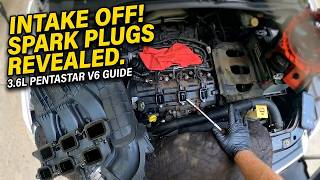
On the 3.6L Pentastar engine in a Grand Caravan, the V6 is mounted transversely (sideways). This places cylinder #1 on the rear cylinder bank, tucked against the firewall. This location makes accessing the coil significantly more difficult than the front three cylinders (2, 4, 6), requiring the removal of the upper intake manifold for a DIY repair. 🎬 Watch: Step-by-step guide to removing the intake manifold While the cause is usually a simple bad coil, the labor involved is more intensive, making it critical to replace other wear items like adjacent coils and all spark plugs during the same service to avoid repeating the job.
Symptoms You May Notice
- Check Engine Light is on
- Engine misfire (shaking, stumbling, or rough idle)
- Flashing Check Engine Light (indicates a severe, catalyst-damaging misfire)
- Reduced engine power and poor acceleration
- Difficulty starting the engine
- Increased fuel consumption
- Engine may stall intermittently
- Replacing the ignition coil when the actual problem is a failed rocker arm. The 3.6L Pentastar is known for issues with rocker arm bearings failing, which causes a distinct ticking noise ('Pentastar Tick') and a misfire (often P0301). If you have a persistent misfire with a ticking sound, the problem could be mechanical in the valvetrain, not electrical in the ignition system, and requires a different diagnostic path.
Most Likely Causes
- Failed Ignition Coil on Cylinder #1 🔴 High Probability Ignition coils are a common wear item that fail from heat cycles and vibration over time. The Pentastar engine is not noted for unusually high coil failure rates, 🎬 Watch: How to replace Pentastar spark plugs and coils but it is the most probable cause for this specific code.
How to confirm: The most effective method is to swap the ignition coil from cylinder #1 with another cylinder (e.g., cylinder #2 on the accessible front bank). Clear the codes. If the code changes to P0352, the coil is confirmed bad. If P0351 returns, the coil is not the issue. This test requires removing the upper intake manifold.
Typical fix: Replace the faulty ignition coil. It is strongly recommended to replace all three rear ignition coils (1, 3, 5), all six spark plugs, and the upper intake manifold gaskets at the same time to prevent repeat labor.
Est. part cost: $40-$90 - Worn or Fouled Spark Plug 🟡 Medium Probability Spark plugs are a maintenance item with a typical 100,000-mile service life. A plug with an excessively wide gap or heavy fouling forces the ignition coil to work harder, which can lead to premature coil failure or trigger a misfire code on its own. Given the labor to access cylinder #1, it's wise to replace the plug if the coil is being serviced.
How to confirm: After removing the ignition coil, remove the spark plug and inspect it for wear, carbon fouling, oil, or damage to the electrode or ceramic insulator. Some 2020-2021 models were subject to TSB 09-013-20 REV. A for factory plugs with internal cracks causing misfires.
Typical fix: Replace the spark plug. Most mechanics replace all six plugs at once if they are near the end of their service life.
Est. part cost: $8-$20 per plug - Damaged Wiring or Connector ⚪ Low Probability The plastic connector lock tabs on coil connectors can become brittle from engine heat and break, leading to a poor connection. Wires can also be damaged from heat, abrasion, or improper routing during previous repairs, causing an open or short in the driver circuit.
How to confirm: Visually inspect the connector and wiring harness leading to the cylinder #1 coil. Check for broken plastic, corrosion on the pins, or any signs of chafed or melted wires. Wiggle the connector and harness with the engine running to see if it induces a change in the misfire.
Typical fix: Repair the damaged section of the wiring harness or replace the connector pigtail.
Est. part cost: $15-$40 for a pigtail
Rare But Worth Checking
- Faulty Powertrain Control Module (PCM): A failed ignition coil can sometimes short out and damage the driver circuit inside the PCM. If a new coil does not fix the P0351 code, the code returns instantly, and wiring tests good, the PCM may be the culprit. Forum users and technicians have noted that PCM failure is a known, albeit uncommon, cause for these codes on Chrysler products. Recall U87 (NHTSA 18V-524) was issued for some 2017-2018 models for a faulty PCM voltage regulator that could cause stalling, which is related to PCM integrity.
Diagnosis Steps
- Read the code with an OBD-II scanner and confirm P0351 is present. Note any other codes, especially P0301.
- Listen carefully to the engine for a rhythmic ticking sound, especially from the passenger side of the engine. A 'Pentastar Tick' strongly suggests a mechanical rocker arm failure, not an ignition part failure. If a tick is present, further valvetrain diagnosis is required.
- Locate Cylinder #1. On the Grand Caravan's 3.6L engine, the cylinders are numbered 2-4-6 on the front bank (near the radiator) and 1-3-5 on the rear bank (near the firewall). Cylinder #1 is on the passenger side, closest to the firewall.
- To test the coil, you must remove the upper intake manifold to access the rear bank. This is a multi-hour job.
- Once the manifold is off, swap the cylinder #1 ignition coil with the cylinder #2 coil (front bank, passenger side).
- Temporarily reinstall the manifold and necessary connections, clear the DTCs with the scanner, and drive the vehicle until the Check Engine Light returns.
- If the code is now P0352, the ignition coil you moved is faulty. Purchase a new coil.
- If the code P0351 returns, the problem is not the coil. The issue lies with the spark plug, wiring, or PCM.
- Inspect the spark plug for cylinder #1. Replace it if it is worn, fouled, or damaged. It is best practice to replace all six plugs and the three rear coils since you have access.
- If the plug and coil are good, carefully inspect the wiring harness and connector for cylinder #1. Check for 12V power at the connector with the key on and check for a pulsing ground signal from the PCM (using a noid light or voltmeter on AC Hertz scale) while cranking.
- If all wiring and components test good, the final possibility is a faulty driver in the Powertrain Control Module (PCM).
Parts You'll Likely Need
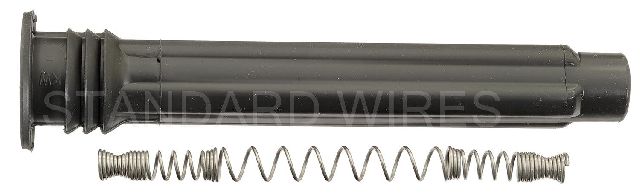
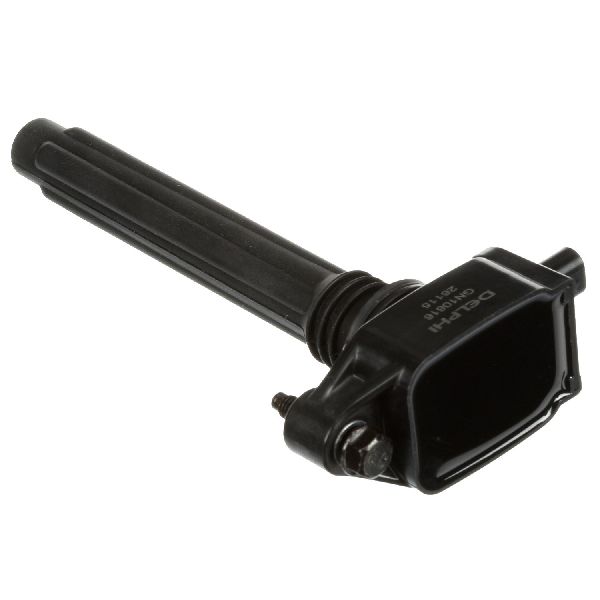
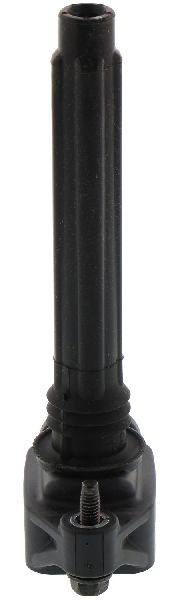
- Ignition Coil
(OEM #5149168AJ)— This is the most common component to fail and cause a P0351 code. The OEM part number 5149168AJ supersedes 5149168AH and 5149168AI.
Trusted brands: Mopar, NGK, Denso, Delphi
OEM price range: $80-$100
Aftermarket price range: $40-$90 - Spark Plug
(OEM #SP149125AE)— A worn spark plug can cause the coil to fail and should be replaced at the same time, especially given the labor to access cylinder #1.
Trusted brands: Mopar, NGK, Champion
OEM price range: $15-$25
Aftermarket price range: $8-$20 - Upper Intake Manifold Gasket Set
(OEM #5184562AC)— The upper intake manifold must be removed to access the rear bank of cylinders. The gaskets are one-time use and must be replaced to prevent vacuum leaks.
Trusted brands: Mopar, Fel-Pro, Mahle
OEM price range: $25-$40
Aftermarket price range: $15-$30
Related Codes That Often Appear With This One
- P0301 — P0351 indicates an electrical fault in the cylinder #1 ignition circuit. P0301 ('Cylinder 1 Misfire Detected') is the direct physical result of that electrical fault, as the PCM detects a rotational speed loss at the crankshaft. They almost always appear together.
- P2302 — This code means 'Ignition Coil 'A' Secondary Circuit Malfunction'. It's a more specific code that points to a problem on the high-voltage side of the coil (e.g., the boot or spark plug connection) and often accompanies P0351.
- P0300 — This 'Random/Multiple Cylinder Misfire' code can appear alongside P0351 if the fault is intermittent or if other underlying issues, like a failing rocker arm or vacuum leak, are causing misfires on other cylinders as well.
Technical Service Bulletins (TSBs) & Recalls
- TSB 09-002-14 Rev. B: Addresses valvetrain issues (specifically for the left cylinder head, cylinders 2, 4, 6) and is often mentioned in discussions of Pentastar misfires, though it does not directly apply to a P0301/P0351 on the right bank.
- TSB 09-013-20 REV. A: Issued for 2020-2021 models with the 3.6L engine, this bulletin points to a manufacturing defect in factory spark plugs causing internal cracks and misfires.
Platform-Specific Known Issues
- Recall U87 / NHTSA 18V-524: Affecting some 2017-2018 models, this recall was for a faulty voltage regulator chip in the PCM that could cause a stall or no-start condition. This points to potential PCM vulnerabilities that could relate to ignition circuit codes.
- TSB 09-013-20 REV. A: While for newer 2020-2021 models, this TSB is relevant to the Pentastar engine family, identifying a batch of factory-installed spark plugs with internal cracks that could cause misfires.
Mechanic-Grade Diagnostic Values
- Ignition Coil Primary Winding Resistance — expected: 0.4 - 2.0 Ohms. Failure: A reading of OL (open) or near zero (short) indicates a failed coil.
- Ignition Coil Secondary Winding Resistance — expected: 7.0k - 15.0k Ohms. Failure: A reading significantly outside this range points to an internal failure of the secondary windings.
- Ignition Coil Connector Power Supply (Key On, Engine Off) — expected: 12V (Battery Voltage). Failure: 0V indicates a problem with the power supply from the Auto Shutdown (ASD) relay, fuse, or wiring.
- PCM Driver Signal at Coil Connector (Engine Cranking/Running) — expected: 5 to 20 Hz signal on a voltmeter set to AC Hertz.. Failure: No signal (0 Hz or a steady DC voltage) indicates a break in the control wire to the PCM or a failed PCM driver.
- Wiring Continuity (Coil Connector to PCM Connector) — expected: < 5.0 Ohms. Failure: A reading higher than 5.0 Ohms or OL (Open Line) indicates a break or high resistance in the wire.
Scan Tool Commands That Help
- Professional Scan Tool (e.g., Witech): Misfire Counters (Live Data) — To confirm which cylinder is misfiring without a specific P030x code. A mechanic can view live data to see the misfire count for each cylinder, confirming the issue is isolated to cylinder #1 before disassembly.
- Professional Scan Tool (e.g., Witech): Ignition Coil Driver Test — Some advanced scan tools may have a bidirectional test to command the PCM to fire the ignition coil. This can help verify if the PCM driver is capable of sending a signal, helping to isolate the fault between the PCM, wiring, and coil without needing a voltmeter.
Wiring & Ground Locations
- Cylinder #1 Ignition Coil Connector — On the ignition coil for the rearmost cylinder on the passenger side, under the upper intake manifold.. This is the primary point for testing. It has two wires: one is the power feed from the ASD (Auto Shutdown) relay, and the other is the driver (control) wire from the PCM.
- PCM Connector C2, Pin 85 — The Powertrain Control Module (PCM) is located in the engine bay, often near the firewall. C2 is one of the main connectors. Pin 85 is specifically for the cylinder #1 ignition coil driver circuit.. This is the origin of the control signal. Testing for continuity between this pin and the coil connector pin is the definitive test for the control wire's integrity.
- Engine Ground Strap (Part # 4685816AA) — A braided strap that connects the engine block (often near the accessory belt/power steering pump area) to the vehicle's frame/chassis.. A broken or corroded main engine ground strap can cause a host of intermittent and difficult-to-diagnose electrical problems, including ignition system faults. If multiple, seemingly unrelated electrical issues are present, this ground should be inspected.
Real Owner Repair Stories
- DodgeForum.com user (Vehicle with JTEC PCM (similar to early Caravans)) — Engine cuts out, sometimes refuses to restart for 5-10 minutes, P0351 code present.
❌ Tried (didn't work) Replacing the ignition coil
✅ What actually fixed it The user suspected a faulty PCM. A former Chrysler technician on the forum confirmed that PCM failure is a common cause for this code on this platform and recommended tapping the PCM or heating it with a blow dryer to see if the problem could be duplicated, which pointed towards PCM replacement. - Quora user question (Unspecified Dodge vehicle) — Recurring P0351 code every few months, despite numerous repairs.
❌ Tried (didn't work) Replacing the ECM (PCM), Replacing the wiring harness, Replacing the battery, Reloading software, Replacing the TCM, Repairing grounds
✅ What actually fixed it This story is an example of an unresolved, extreme edge case. A professional technician commented that after all these parts were replaced, the issue could be an intermittent problem the PCM is correctly detecting, such as a subtle wiring issue, a poor connection pin, or a problem with what the sensor is measuring, rather than a faulty component.
OEM Part Supersession History
5149168AH, 5149168AI→5149168AJ— Standard part revision and improvement by the manufacturer.
Heads up: The newer 5149168AJ is the correct and backward-compatible service part for the entire 2011-2020 range.
Model Year Variations Within This Range
- 2016-2020: For the 2016 model year, the 3.6L Pentastar engine was significantly updated. This included new ignition coils, a higher compression ratio (11.3:1 vs 10.2:1), and other internal changes. While the P0351 diagnostic process is the same, be aware that coils for a 2011-2015 may differ from a 2016-2020, though the primary service part number (5149168AJ) appears to cover the whole range.
Diagnostic Flowchart
Other Known Issues on This Vehicle
Issues unrelated to this code that are worth knowing about as an owner of this generation:
- Cracked Oil Filter / Cooler Housing 🔴 High — Extremely common, often after 60,000 miles. The plastic housing warps and cracks, causing major oil and/or coolant leaks into the engine valley. (Ref: No recall has been issued, but it is a widely documented failure. Upgraded aluminum aftermarket parts (e.g., Dorman 926-959) are the recommended fix.)
- Rocker Arm / Lifter Failure ('Pentastar Tick') 🔴 High — Very common, particularly in earlier (2011-2014) models but can occur at any mileage. Needle bearings in the rocker arms fail, causing a distinct ticking sound, misfires (P030x), and potential camshaft damage. (Ref: TSB 09-002-14 Rev. B addresses a related issue on the left cylinder head, but rocker failure is a broader problem.)
- Heater Core Clogging 🟠 Medium — Common issue where heater core passages become blocked with casting sand from the engine block, resulting in poor or no heat on the driver's side first, then total loss of heat.
- Overheating from Cooling System Component Failure 🟠 Medium — Failures of the water pump, radiator, and thermostat housing are common and can lead to overheating.
- Totally Integrated Power Module (TIPM) Failure 🔴 High — More prevalent on earlier models of the generation, a faulty TIPM can cause a wide range of bizarre electrical issues, including no-start conditions, fuel pump problems, and random accessory activation. (Ref: Subject of numerous complaints and a class-action lawsuit, but no universal recall for this specific vehicle.)
Used vs. New Parts: Buying Guide for This Vehicle
When a used part is the smart pick: A used OEM Mopar ignition coil from a reputable salvage yard can be a smart choice. Forum users and technicians report that genuine Mopar coils are significantly more reliable than many new, budget-friendly aftermarket brands. Given the high labor cost to access the rear bank, a reliable used OEM part is often preferable to a new, unproven aftermarket one.
Donor-vehicle mileage cap: roughly under 80000 miles for the part to have meaningful remaining life.
What to inspect on the donor part:
- Check for a clean, crack-free plastic housing.
- Ensure the rubber boot is pliable, not dry-rotted or swollen.
- Look for the Mopar logo or part number on the coil body.
- Avoid coils that show signs of oil saturation on the boot, as this indicates they came from an engine with a valve cover leak which can damage the coil.
OEM-only on this vehicle (don't cheap out):
- Powertrain Control Module (PCM) - Due to programming and security requirements (VIN matching), a PCM must be sourced from a specialist that can program it for your specific vehicle or from a dealer.
Aftermarket brands forum-validated for this vehicle:
- NGK
- Denso
- Delphi
Brands owners have reported issues with on this vehicle:
- Unnamed or 'white-box' budget brands from online marketplaces. Many owners across multiple forums report premature failure with cheap aftermarket coils on the Pentastar engine.
Real Owner Stories
Aggregated from forums and TSBs cited above. Mileages and costs reflect what owners reported in those sources.
2012 Dodge Caravan 3.6L
Symptoms: Troubleshooting P0351 and P0352 codes; suspected the coil pack even though it was recently replaced.
What fixed it: Checking for a pulse from the PCM using a test light and confirming wiring integrity.
Source hint: DodgeForum.com thread titled 'Help on P0351 P0352 codes'
2nd Gen Dodge platform (3.6L equivalent)
Symptoms: The van would cut out and refuse to restart.
What fixed it: PCM replacement, as PCM failure is a common cause for ignition driver codes on these platforms.
Source hint: DodgeForum.com thread titled 'code P0351 and cutting out not firing back up issue'
Related OBD-II Codes
Frequently Asked Questions
Where is Cylinder #1 located on my 2011-2020 Dodge Grand Caravan 3.6L?
Does TSB 09-013-20 REV. A apply to my 2020 Dodge Grand Caravan?
Is there a recall for the PCM that might be causing my P0351 code?
Why is the labor for a P0351 code so high on this specific van?
I hear a ticking sound along with my P0351 code; is it just a bad coil?
Should I replace all the coils when fixing P0351 on my Grand Caravan?
Helpful Videos
Used OEM Parts in Stock


New Aftermarket Parts Available


The information in this article is provided for general reference and educational purposes only. Vehicle specifications, procedures, and part compatibility can vary by production date, trim level, and region. Always consult your vehicle's factory service manual and verify part numbers before purchasing or performing repairs. Safety-critical components such as airbags, seat belts, and braking systems should be installed by a qualified professional.
- Dodge Grand Caravan:
- 🎬 Helpful Videos
- 🛍️ Shop This Part
- What's Unique About the 2011-2020 Dodge Grand Caravan
- Symptoms You May Notice
- Most Likely Causes
- Rare But Worth Checking
- Diagnosis Steps
- Parts You'll Likely Need
- Related Codes That Often Appear With This One
- Technical Service Bulletins (TSBs) & Recalls
- Platform-Specific Known Issues
- Mechanic-Grade Diagnostic Values
- Scan Tool Commands That Help
- Wiring & Ground Locations
- Real Owner Repair Stories
- OEM Part Supersession History
- Model Year Variations Within This Range
- Diagnostic Flowchart
- Other Known Issues on This Vehicle
- Used vs. New Parts: Buying Guide for This Vehicle
- Real Owner Stories
- 2012 Dodge Caravan 3.6L
- 2nd Gen Dodge platform (3.6L equivalent)
- Related OBD-II Codes
- Frequently Asked Questions
- 🎟️ Get 5% Off