

P0345 on 2006-2010 Ford Explorer 4.6L V8: Camshaft Sensor Circuit Causes and Fixes
For the 2006-2010 Ford Explorer with the 4.6L V8, code P0345 is often more than just a bad sensor. While the Bank 2 camshaft sensor can fail (~$25-$60), this code frequently points to deeper mechanical timing issues (phasers, chains, tensioners) common to this engine, which is a significantly more expensive repair. A unique and critical diagnostic step for this platform is to test the alternator for excessive AC ripple voltage, as a failing alternator can create electrical noise that mimics a se
- Always test the alternator for AC ripple voltage before assuming the cause is a bad sensor or expensive timing components.
- The easiest first step is to swap the driver's side (Bank 2) and passenger's side (Bank 1) camshaft sensors to see if the code moves to P0340.
- On the 4.6L 3V engine, P0345 is a strong clue that a major timing job may be needed soon, especially if you hear any rattling from the engine.
- Bank 2 is the driver's side on this Ford V8 engine.
What's Unique About the 2006-2010 Ford Explorer
The Ford 4.6L 3-valve V8 engine has a well-documented history of issues with its timing chain components, including the VCT phasers, plastic chain guides, and tensioners. While P0345 can be a simple sensor failure, on this specific engine it is often an early warning sign of these more serious mechanical problems, which can lead to catastrophic engine failure if ignored. Additionally, Ford issued Technical Service Bulletin (TSB) 06-19-12, which specifically identifies the 2006 Explorer with the 4.6L 3V engine, noting that a failing alternator can produce excessive AC voltage (electrical noise or "ripple") that interferes with the camshaft sensor signal, triggering P0345 or P0349. This makes testing the alternator a crucial, cost-saving first step before assuming a major mechanical fault.
Symptoms You May Notice
- Check Engine Light is on
- Engine is difficult to start or takes longer to crank
- Engine stalls, especially at idle or low speeds
- Rough idling and engine misfires
- Noticeable loss of engine power and poor acceleration
- Increased fuel consumption
- Engine revs slowly and feels sluggish
- Immediately replacing timing components without first checking the sensor, wiring, and alternator. The alternator issue is a known curveball for this engine and can save a DIYer thousands in unnecessary repairs.
- Replacing the camshaft sensor with a cheap aftermarket part, which may be faulty out of the box or fail quickly, leading to the code's return.
Most Likely Causes
- Faulty Camshaft Position Sensor (Bank 2) 🔴 High Probability Sensors are exposed to extreme heat and vibration and can fail electronically or leak oil into the connector, causing a poor connection. It's the most straightforward and common starting point for this code. Using cheap, low-quality aftermarket sensors is a common reason for the code returning after a repair.
How to confirm: Swap the Bank 1 (passenger side) and Bank 2 (driver side) sensors. They are identical parts. Clear the codes and run the engine. If the code changes to P0340 (Bank 1), the sensor is confirmed bad. If the code remains P0345, the sensor is likely good and the issue is elsewhere. Also, inspect the sensor's connector for oil contamination.
Typical fix: Replace the Bank 2 camshaft position sensor, preferably with a Motorcraft OEM part. 🎬 Watch: See this step-by-step camshaft sensor replacement walkthrough.
Est. part cost: $25-$60 - Wiring Harness or Connector Damage 🟡 Medium Probability The wiring harness in the engine bay is subject to heat, oil, and vibration, which can cause wires to become brittle, shorted, or connectors to loosen. The plastic locking tab on the connector can also become brittle and break.
How to confirm: Visually inspect the wiring and connector leading to the Bank 2 sensor for any signs of damage, corrosion, or loose pins. Check for a secure connection. Use a multimeter to check for proper voltage (around 5V reference) and ground at the connector with the key on.
Typical fix: Repair the damaged section of wiring or replace the pigtail connector.
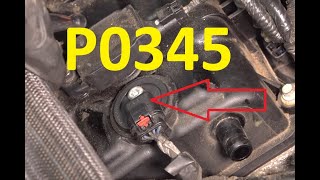
Est. part cost: $15-$40 - Failing Alternator 🟡 Medium Probability Per Ford TSB 06-19-12, a failing alternator can produce excessive AC voltage (ripple), which creates electrical noise that interferes with the camshaft sensor signal, specifically causing P0345/P0349 🎬 Watch: A visual guide to diagnosing P0345 and P0349 codes. on the 2006 Explorer 4.6L 3V.
How to confirm: Use a multimeter with an AC voltage function to test at the battery terminals while the engine is running with electrical loads (headlights, blower fan) on. AC voltage should be very low, typically under 0.1V (100mV). A reading higher than this indicates a bad diode in the alternator. The TSB specifies a more advanced frequency test with an oscilloscope, looking for ripple frequency below 500 Hz at idle to confirm a fault.
Typical fix: Replace the alternator.
Est. part cost: $150-$300 - Worn or Failed Timing Components ⚪ Low Probability The 4.6L 3V engine is known for issues with plastic timing chain guides breaking, tensioners failing (especially if oil pressure is low), and VCT phasers malfunctioning. This causes timing slack or incorrect cam timing, which the sensor detects as a fault during cranking or running.
How to confirm: This is a complex diagnosis. After ruling out all electrical causes, listen for rattling or ticking noises from the front of the engine, especially on startup. Confirmation requires removing the valve covers to inspect the phasers and potentially the engine front cover to inspect chains, guides, and tensioners. A mechanic can also use a scan tool to monitor camshaft angle deviation.
Typical fix: Replace the timing chains, guides, tensioners, and VCT phasers. This is often done as a complete kit. This is a labor-intensive job.
Est. part cost: $400-$800 for a full kit
Rare But Worth Checking
- Weak Battery or Starter: During engine cranking, a weak battery or a starter drawing too much current can cause a voltage drop sufficient to disrupt the camshaft sensor signal and set the code. A user on Ford F150 Forum notes that P0345 is specifically a code that can be set during cranking, making this a plausible, though less common, cause.
- Faulty Powertrain Control Module (PCM): This is extremely rare. The PCM is the last component to suspect after all other possibilities, including all wiring and mechanical components, have been exhaustively tested and proven to be good.
Diagnosis Steps
- Read all fault codes from the PCM. Note if any other codes are present, especially P0349, P0022, or misfire codes.
- Check the battery. Ensure it is fully charged and healthy. A weak battery can cause erroneous codes during startup.
- Test the alternator for excessive AC ripple voltage per TSB 06-19-12. With the engine running and accessories on, use a multimeter set to AC volts on the battery terminals. A reading above 100mV (0.1V) AC suggests a faulty alternator that could be causing the code.
- Inspect the wiring and connector for the Bank 2 (driver's side) camshaft position sensor. Look for any visible damage, oil contamination, or corrosion. Ensure the connector clicks securely.
- Perform a sensor swap. Exchange the Bank 2 sensor with the Bank 1 (passenger side) sensor. They are located on the front of each valve cover, held by a single 8mm bolt. Clear the codes and run the engine. If the code returns as P0340 (Bank 1), the original sensor is faulty.
- If the code remains P0345 after the swap, the problem lies in the circuit or mechanical timing. 🎬 Watch: Learn more about common causes and fixes for P0345. Test the sensor connector for 5V reference, ground, and signal continuity back to the PCM.
- If all electrical tests pass, the cause is almost certainly mechanical. Listen for rattling or ticking from the front of the engine. The next step is to remove the valve cover on Bank 2 to inspect the VCT phaser and look for signs of a loose or jumped timing chain.
Parts You'll Likely Need
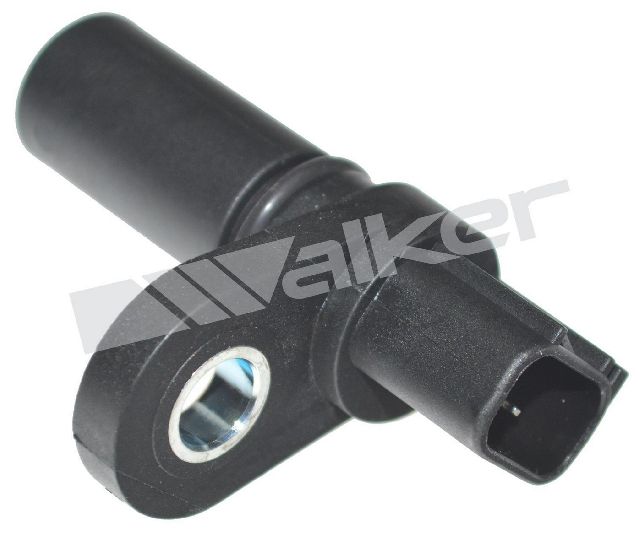
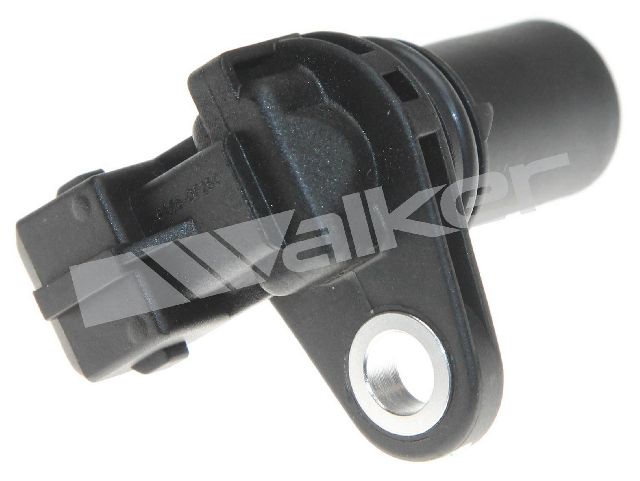
- Camshaft Position Sensor (Bank 2)
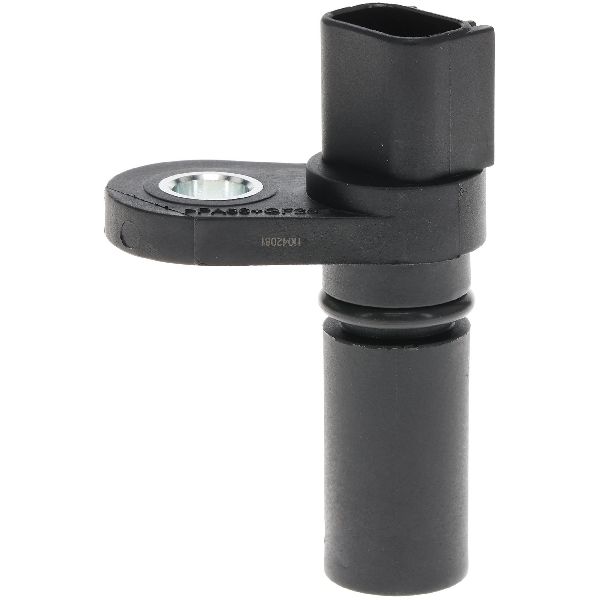
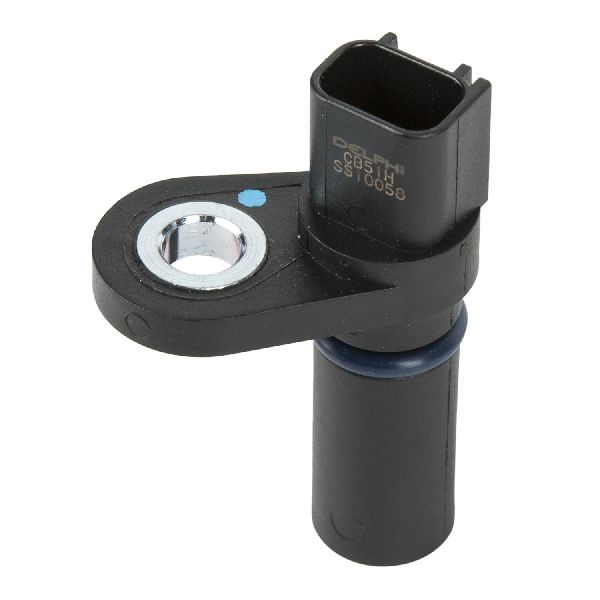
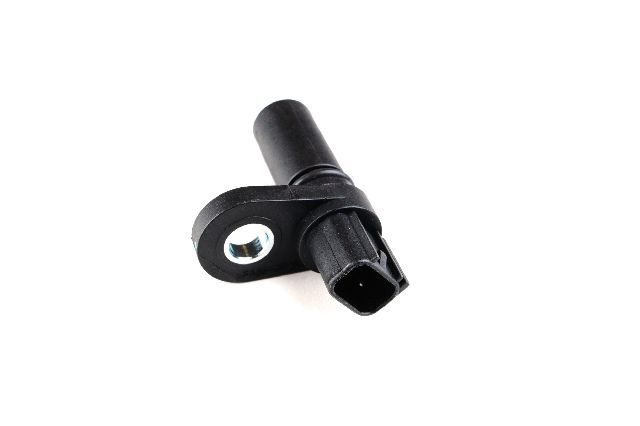
(OEM #3L3Z-6B288-AA)— This is the most common and simplest fix. If the sensor itself has failed, replacing it will resolve the code.
Trusted brands: Motorcraft (OEM), Bosch, Delphi, Standard Motor Products
OEM price range: $40-$60
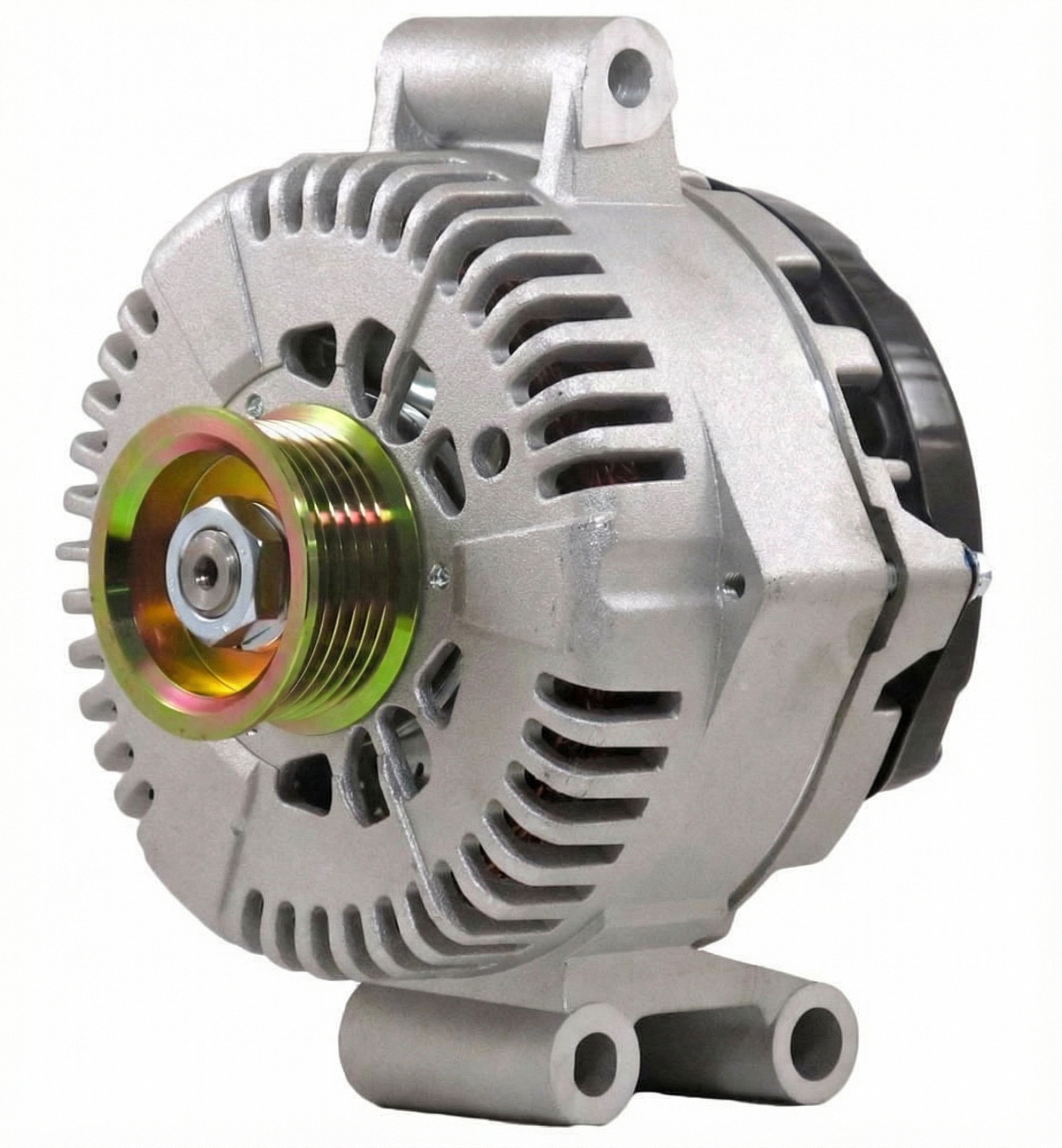
Aftermarket price range: $25-$45 - Alternator — A failing alternator with bad diodes can introduce AC ripple voltage into the electrical system, which interferes with the sensitive camshaft position sensor signal, triggering P0345 per a Ford TSB.
Trusted brands: Motorcraft (OEM), Bosch, Denso
OEM price range: $200-$300
Aftermarket price range: $150-$250 - Timing Chain Kit — If the code is caused by a jumped timing chain, broken guide, or failed VCT phaser, a full timing job is required. This is a common failure pattern on the 4.6L 3V engine.
Trusted brands: Ford/Motorcraft (OEM), Cloyes
OEM price range: $600-$800
Aftermarket price range: $400-$600
Related Codes That Often Appear With This One
- P0349 — P0349 is 'Camshaft Position Sensor 'A' Circuit Intermittent Bank 2'. It often appears with P0345 and points to the same set of causes, but indicates the fault is happening sporadically rather than constantly. TSB 06-19-12 explicitly groups P0345 and P0349 together.
- P0022 — 'Intake Camshaft Position Timing - Over-Retarded (Bank 2)'. This code points more directly to a mechanical timing issue with the VCT phaser on Bank 2 and is a strong indicator that the problem is not just a simple sensor failure.
- P0300, P0302, P0304, P0306, P0308 — Random or specific cylinder misfire codes for Bank 2. Incorrect camshaft timing will disrupt the engine's rhythm, leading to misfires on the affected bank.
- P0340 — This is the equivalent code for Bank 1 (passenger side). If this code appears after swapping sensors for diagnosis, it confirms the original Bank 2 sensor was faulty.
Technical Service Bulletins (TSBs) & Recalls
- TSB 06-19-12: Specifically mentions 2006 Explorer/Mountaineer and 2007 Sport Trac with 4.6L 3V engines may exhibit DTC P0345/P0349 due to a malfunctioning diode in the generator (alternator). Recommends a frequency test before replacing parts.
Platform-Specific Known Issues
- The 4.6L 3V engine is susceptible to timing chain guide failure, where the plastic guides break apart and can cause the chain to jump time or lose tension.
- Low oil pressure, often due to a failing oil pump or use of incorrect oil viscosity, can accelerate wear on the VCT phasers and timing chain tensioners, leading to codes like P0345.
Mechanic-Grade Diagnostic Values
- Camshaft Position Sensor (CMP) Internal Resistance — expected: 205 - 579 Ohms. Failure: A reading outside this range indicates a faulty sensor.
- Variable Cam Timing (VCT) Solenoid Internal Resistance — expected: 7.0 - 14.0 Ohms. Failure: A reading outside this range, especially an open (infinite) or shorted (zero) reading, indicates a failed solenoid.
- CMP Sensor Connector Voltage (Key On, Engine Off) — expected: Greater than 10.0 Volts. Failure: Voltage below 10.0V suggests a wiring issue or a weak battery, as the sensor needs sufficient voltage to operate correctly during cranking.
- Engine Oil Pressure at Hot Idle — expected: Above 25 PSI. Failure: A forum user reported that a pressure of only 15 PSI at hot idle was insufficient to keep the cam phasers from acting up, which in turn set code P0345.
Scan Tool Commands That Help
- Ford IDS (or equivalent): VCT Solenoid On/Off Command — This bidirectional control allows a technician to command the VCT solenoid on and off to verify its mechanical operation and check for a response in engine behavior, helping to isolate a faulty solenoid from a wiring or PCM issue.
- Manual Diagnostic (No Scan Tool): Unplug both VCT Solenoids — Unplugging the electrical connectors for both VCT solenoids and then running the engine forces the cam phasers into their default, locked (zero retard) position. If code P0345 does not return during this test (though VCT circuit codes will appear), it strongly suggests the mechanical locking pin inside the phaser is working correctly and the issue may be related to oil pressure or the solenoids themselves. If P0345 *does* return, it points towards a base timing issue (jumped chain) or a failed phaser locking pin.
Wiring & Ground Locations
- PCM Connector C175E, Pins 44 & 45 — At the Powertrain Control Module (PCM), which is typically located in the engine bay near the firewall or battery.. These are the specific input pins for the Bank 2 camshaft position sensor. Pin 44 (Solid Orange wire) and Pin 45 (Dark Blue/Orange wire) carry the signal to the PCM. Checking for continuity and shorts to ground on these wires between the sensor and the PCM is a definitive circuit test.
- PCM Pin 58 (Signal Return) — At the Powertrain Control Module (PCM).. This pin provides a shared 'signal return' or ground for multiple sensors, including both camshaft position sensors, the Power Steering Pressure Sensor, and the Fuel Rail Pressure Sensor. If you have codes for multiple sensors on this circuit, it points to a problem with this specific wire or the PCM. Conversely, if only P0345 is present, a fault on this shared circuit is less likely.
- G102 / G103 — Engine bay, typically on the chassis frame rails or inner fenders.. These are major chassis ground points for engine-related components. A corroded or loose ground at these locations can introduce electrical noise or voltage drops that affect various sensors, including the camshaft position sensor.
Real Owner Repair Stories
- Ford Truck Enthusiasts Forums user (2006 F-150 5.4L 3V (mechanically very similar to Explorer 4.6L 3V)) — P0345 code, rough idle at operating temperature.
❌ Tried (didn't work) Complete timing chain set replacement (chains, guides, tensioners).
✅ What actually fixed it The root cause was diagnosed as low oil pressure (15 psi at hot idle). The user temporarily fixed the symptom by using thicker 15W-40 oil, which raised hot idle pressure to 40 psi and made the P0345 code disappear. This confirmed the VCT phasers were not getting enough oil pressure, causing the timing deviation detected by the sensor. The ultimate fix was trading in the vehicle, but the diagnosis proved the issue was oil pressure, not the timing parts themselves. - Rios Mechanic Shop Llc on YouTube (2006 Ford Explorer 4.6L) — P0345 and P0349, Check Engine Light would return moments after clearing.
❌ Tried (didn't work) Replacing the Bank 2 camshaft position sensor., Checking the wiring harness.
✅ What actually fixed it The timing chain on Bank 2 had jumped by one tooth. After disassembling the front of the engine and correctly setting the timing, the codes were resolved. - F150Torqued on Ford F150 Forum (2004 F-150 5.4L 3V) — P0345 after replacing all timing components.
❌ Tried (didn't work) New timing chain, phasers, camshaft sensor, crankshaft sensor, VCT solenoid.
✅ What actually fixed it The expert diagnosis, though not a confirmed fix by the original poster, was that P0345 is set during cranking when the PCM does not see the phaser finger at its base (locked) position. This means the phaser's internal locking pin is not engaging correctly on shutdown, causing a timing error on the next startup before oil pressure can take over. The problem is purely mechanical inside the phaser, not electrical. - NHTSA ODI #11568355 — An owner reported the cam position sensor throwing code P0345. They replaced the part, but the code returned a week later despite the alternator, battery, and starter testing fine. The engine started rattling a week after the code returned.
- NHTSA ODI #11163346 — A report describes a vehicle where the motor is missing and the codes present are P0345, P0349, and P0171.
OEM Part Supersession History
3L3Z-6B288-AA→BL3Z-6B288-A, which was then superseded by BL3Z-6B288-C.— Standard part revision and improvement by the manufacturer.
Heads up: The parts are interchangeable, but it is always best to use the latest revision (BL3Z-6B288-C) for any design improvements.
Diagnostic Flowchart
Real Owner Stories
Aggregated from forums and TSBs cited above. Mileages and costs reflect what owners reported in those sources.
Ford 4.6L 3V V8
Symptoms: Check engine light illuminated with codes P0345 and P0349, indicating the camshaft position sensor was out of range.
What fixed it: Performed a mechanical timing inspection and found the timing chain had jumped one tooth. Correcting the mechanical timing resolved the issue without needing to replace the camshaft sensor.
Source hint: YouTube comment by Rios Mechanic Shop Llc
Related OBD-II Codes
Frequently Asked Questions
Does TSB 06-19-12 apply to my 2006 Ford Explorer 4.6L 3V?
I replaced the Bank 2 camshaft sensor but the P0345 code came back. What should I check next?
How can I easily test if the Bank 2 camshaft position sensor is actually bad on my 4.6L 3V?
Can low oil pressure cause a P0345 code on this specific engine?
What is the difference between code P0345 and P0349 on my Explorer?
Helpful Videos
Used OEM Parts in Stock



New Aftermarket Parts Available


The information in this article is provided for general reference and educational purposes only. Vehicle specifications, procedures, and part compatibility can vary by production date, trim level, and region. Always consult your vehicle's factory service manual and verify part numbers before purchasing or performing repairs. Safety-critical components such as airbags, seat belts, and braking systems should be installed by a qualified professional.
- Ford Explorer:
- 🎬 Helpful Videos
- 🛍️ Shop This Part
- What's Unique About the 2006-2010 Ford Explorer
- Symptoms You May Notice
- Most Likely Causes
- Rare But Worth Checking
- Diagnosis Steps
- Parts You'll Likely Need
- Related Codes That Often Appear With This One
- Technical Service Bulletins (TSBs) & Recalls
- Platform-Specific Known Issues
- Mechanic-Grade Diagnostic Values
- Scan Tool Commands That Help
- Wiring & Ground Locations
- Real Owner Repair Stories
- OEM Part Supersession History
- Diagnostic Flowchart
- Real Owner Stories
- Ford 4.6L 3V V8
- Related OBD-II Codes
- Frequently Asked Questions
- 🎟️ Get 5% Off