

P0345 on 2011-2017 Audi A8 4.2L FSI V8: Camshaft Sensor Causes and Fixes
P0345 on an Audi A8 4.2L FSI most often means the driver's side intake camshaft position sensor has failed. A DIY replacement costs around $40-$120. Before replacing, check for simple issues like a loose connector. This code can also be an early warning for more serious timing chain problems, so diagnosis is key.
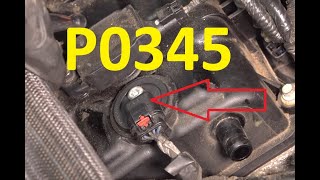
- P0345 on this Audi A8 refers to the intake camshaft position sensor on the driver's side.
- The most likely fix is replacing the sensor itself, which is an easy and affordable DIY job.
- Before buying parts, swap the driver's side and passenger's side intake sensors to confirm the sensor is the problem. If the code moves to P0340, the sensor is bad.
- A persistent P0345 code, especially when accompanied by a brief rattling noise from the back of the engine on startup, could indicate a serious timing chain issue requiring a professional. Use VCDS to check Measuring Block 93 for confirmation.
- Ensure the sensor connector is clean and securely plugged in, as a bad connection can mimic a failed sensor.
What's Unique About the 2011-2017 Audi A8
The D4 generation Audi A8 with the 4.2L FSI V8 (Engine Code: CDRA) has four camshaft position sensors in total—an intake and exhaust sensor for each cylinder bank. While a P0345 code is most commonly a simple sensor failure, this engine family has its timing chains located at the rear of the engine, against the firewall. This design makes any timing-related service extremely labor-intensive and expensive, often requiring the engine to be removed from the vehicle. Therefore, while the sensor itself is an easy fix, it's critical to rule out underlying timing chain or tensioner issues, which can also trigger this code and are a known issue on this platform.
Symptoms You May Notice
- Check Engine Light is on
- Engine is hard to start or requires extended cranking
- Engine stalls, especially when coming to a stop
- Rough idle or misfiring
- Noticeable loss of engine power and sluggish acceleration
- Reduced fuel economy
- Engine may enter limp mode
- Replacing the crankshaft position sensor. The code P0345 is specific to the camshaft sensor circuit, not the crankshaft.
- Immediately assuming a timing chain failure without performing basic sensor diagnostics first. Always swap sensors or check wiring before condemning the timing components.
- Replacing only the sensor without checking the connector and wiring for damage.
Most Likely Causes
- Failed Bank 2 Intake Camshaft Position Sensor 🔴 High Probability Heat and age cause the internal electronics of the Hall-effect sensor to fail over time. It is the most common point of failure for this code.
How to confirm: Swap the Bank 2 (driver's side) intake sensor with the Bank 1 (passenger's side) intake sensor. They are identical parts (OEM P/N 07L905163C). Clear the codes and run the engine. If the fault code changes to P0340 (Bank 1), the sensor is bad. This is the most definitive DIY test.
Typical fix: Replace the faulty camshaft position sensor. It is held in by a single T30 Torx screw and is accessible after removing the engine cover.
Est. part cost: $40-$120 - Wiring Harness or Connector Issue 🟡 Medium Probability The plastic connector can become brittle with age and fail to make a secure connection. Wires can also chafe or corrode, especially given the engine's heat.
How to confirm: Visually inspect the connector and wiring going to the Bank 2 intake camshaft sensor. Check for cracks, corrosion on the pins, or loose connections. Use a multimeter to confirm 5V power and ground at the connector with the ignition on. A video by Carsntoys on YouTube demonstrates this test on a similar Audi V-engine.
Typical fix: Clean the connector pins. If the connector is broken, replace it (pigtail kits are available). Repair any damaged sections of the wiring harness with solder and heat shrink.
Est. part cost: $5-$50 - Stretched Timing Chain or Failing Tensioner ⚪ Low Probability While more reliable than the previous generation S4's 4.2L V8, the timing components on the FSI engine can still wear out, typically over 100,000 miles. Lack of oil pressure at startup, often due to extended oil change intervals, can accelerate wear on the hydraulic tensioners and plastic guides.
How to confirm: Listen for a distinct rattling or slapping noise from the back of the engine (near the firewall) on a cold start that lasts for more than a second or two. This is a classic sign of failing tensioners that bleed down oil pressure overnight. For a definitive diagnosis, use a diagnostic tool like VCDS to check camshaft adaptation values. In the Engine module, check Measuring Block 93. Add the intake and exhaust phase position values for Bank 1 and Bank 2 separately. If either sum exceeds approximately 7-8 degrees, it indicates significant timing deviation. Note that on newer UDS protocol ECUs, you must use 'Advanced Measuring Values' and search for 'Camshaft adaptation' as numbered blocks are not available.
Typical fix: This is a major, engine-out repair that involves replacing the four timing chains, all guides, and all tensioners. It is a very expensive job (often $4,000-$8,000+) best left to an Audi specialist.
Est. part cost: $1000-$2000
Rare But Worth Checking
- Fouled Sensor Tip: An AudiWorld forum user reported fixing similar cam-related codes on a 4.2L FSI by simply removing the sensor and cleaning a white residue off the tip. It's a simple check worth performing before buying parts.
- Low Oil Level or Pressure: The camshaft adjusters (phasers) are hydraulically operated by engine oil. Severely low oil level or low oil pressure can affect their operation and potentially set correlation codes or, in extreme cases, sensor codes. Always check the oil level first.
- Failing Engine Control Module (ECM): While extremely rare, the ECM itself can fail, causing it to misinterpret the sensor signal. This should only be considered after all other possibilities, including wiring, have been exhaustively ruled out.
Diagnosis Steps
- Read the fault codes with an OBD-II scanner to confirm P0345 is the primary code.
- Remove the plastic engine cover to access the top of the engine.
- Locate the intake camshaft position sensor on the driver's side (Bank 2). It is on the rear of the cylinder head, near the firewall.
- Inspect the sensor's electrical connector for any signs of damage, corrosion, or looseness. Ensure it is fully seated.
- If the connector looks good, swap the Bank 2 (driver's side) intake sensor with the identical Bank 1 (passenger side) intake sensor. The exhaust sensors are different, so ensure you are swapping intake-to-intake.
- Clear the fault codes, start the engine, and let it run for a few minutes.
- Re-scan for codes. If P0340 (Bank 1) now appears, the sensor you moved is faulty and must be replaced.
- If P0345 returns, the problem is likely in the wiring to the Bank 2 sensor or a more serious mechanical timing issue. Proceed to check wiring for 5V reference and ground.
- At this point, listen carefully for a startup rattle from the rear of the engine. If a rattle is present, use VCDS or a similar tool to check camshaft adaptation values in Measuring Block 093 (or Advanced Measuring Values for UDS controllers) to assess for timing chain stretch.
- If wiring is confirmed good and timing values are out of spec, professional diagnosis of the timing system is strongly recommended.
Parts You'll Likely Need
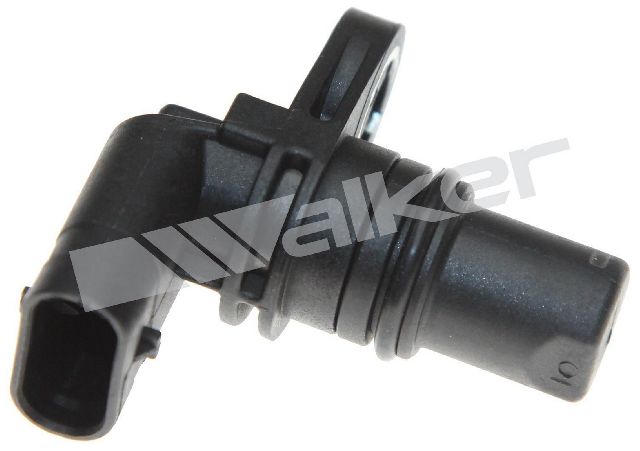
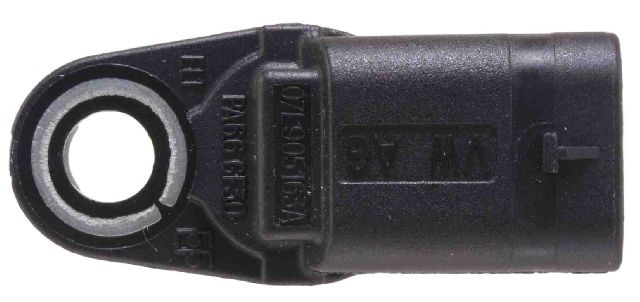
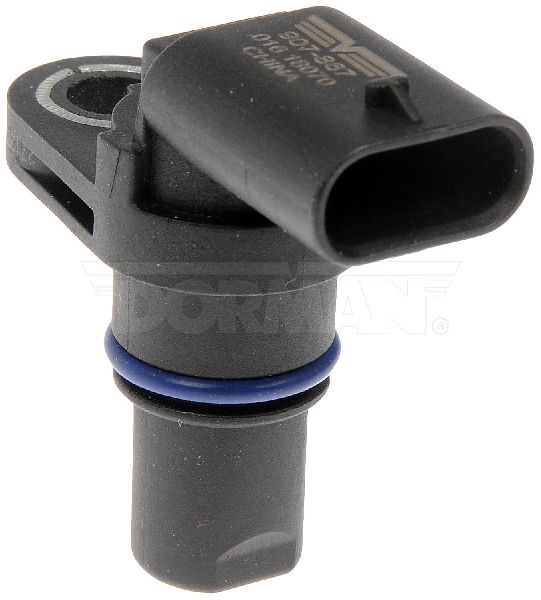
- Camshaft Position Sensor
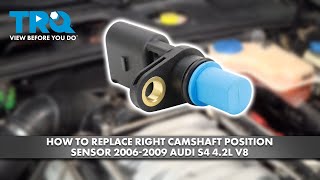
(OEM #07L905163C)— This sensor is the most common cause of a P0345 fault code due to internal electronic failure from heat and age. The part number 07L905163C supersedes previous versions 07L905163B, 07L905163A, and 7L905163.
Trusted brands: Bosch (often the OEM supplier), HELLA, VEMO, NTK
OEM price range: $80-$120
Aftermarket price range: $40-$75
Related Codes That Often Appear With This One
- P0340 — If you swap a faulty Bank 2 sensor to Bank 1 for diagnosis, this code will appear, confirming the sensor is bad.
- P0018 — This code indicates a correlation issue between the crankshaft and the Bank 2 camshaft. It can appear alongside P0345 if there is a legitimate timing problem, such as a stretched chain or failing cam adjuster.
- P0300, P0305, P0306, P0307, P0308 — Random (P0300) or specific cylinder misfire codes for Bank 2 (cylinders 5, 6, 7, 8) can occur because the incorrect camshaft signal leads to improper ignition and fuel timing.
- P0346 — This code indicates a range/performance issue with the same sensor circuit. It points to an intermittent or unstable signal, rather than a complete loss of signal, but the root causes are the same.
Technical Service Bulletins (TSBs) & Recalls
- While no TSB is directly for P0345 on this specific model, TSB 2039995/2 was issued for the related 3.0T V6 for 'Engine rattling noises at cold start' caused by upper chain tensioners. This indicates that Audi is aware of tensioner issues causing startup rattle on engines from this era. Owners should be aware that dealers may consider a 1-2 second rattle 'normal', but it can be an early warning sign of tensioner wear.
Platform-Specific Known Issues
- Real Owner Experience: Sensor Swap Confirms Failure: On the iATN (International Automotive Technicians Network), a technician with a personal 2002 Audi A6 3.0L experiencing P0345 and misfires confirmed the diagnostic procedure of swapping sensors between banks to isolate the faulty component before replacing it. This highlights the validity of the sensor swap technique across different Audi V-engine generations.
- VCDS for Timing Chain Diagnosis: Multiple threads on AudiWorld forums for various 4.2L V8s confirm the use of VCDS and checking Measuring Block 93 as the standard method for diagnosing timing chain stretch. Owners discuss acceptable values, with totals over 8 degrees being a clear indicator of a problem requiring mechanical intervention.
Mechanic-Grade Diagnostic Values
- Camshaft Position Sensor (G163) Connector Voltage — expected: Approximately 5.0V between Pin 1 (Power) and Pin 3 (Ground) with the ignition on and sensor unplugged.. Failure: No voltage or significantly lower voltage indicates a wiring issue, blown fuse, or ECM fault. If voltage is present and the code returns after swapping sensors, the wiring harness is suspect.
- VCDS Advanced Measuring Value - Camshaft Adaptation — expected: The value for 'Camshaft adaptation intake bank 2: phase position' should be between 0 and -7 degrees. A value approaching or exceeding -8 degrees indicates significant timing chain stretch.. Failure: A value more negative than -8 degrees (e.g., -9, -10) strongly suggests worn timing chain guides or a stretched chain, requiring mechanical inspection.
Scan Tool Commands That Help
- VCDS (VAG-COM): [01 - Engine] -> [Basic Settings - 04] -> Drop-down menu: "Reset learned values for camshaft adjustment" — This function should be used after replacing timing chains or camshaft adjusters. It resets the stored adaptation values that the ECM has learned to compensate for old, stretched components. Failure to reset this can cause rough running or timing correlation codes even with new parts.
Wiring & Ground Locations
- G163 Connector — On the Bank 2 (driver's side) cylinder head, at the rear near the firewall, connecting to the intake camshaft position sensor.. This is the direct connection point for the sensor. The pins are: Pin 1 (Power, +5V), Pin 2 (Signal), Pin 3 (Ground). Verifying power at Pin 1 and ground at Pin 3 is the primary electrical test.
- Engine to Chassis Ground Strap — While exact D4 A8 diagrams are scarce, the main engine-to-chassis ground strap on large Audi platforms is typically located on the driver's side frame rail, connecting the engine block or transmission to the chassis. A secondary ground is often near the ECU.. A poor engine ground can introduce electrical noise and voltage drops, potentially causing intermittent and difficult-to-diagnose sensor circuit faults, including P0345.
Real Owner Repair Stories
- AudiWorld Forums (Audi A6 Allroad (4.2L V8, similar architecture)) — Check Engine Light with code 17755 (P1347) - Camshaft Position Sensor 2 (G163) / Engine Speed Sensor (G28): Incor. Correl. The car ran perfectly with no noticeable performance issues.
❌ Tried (didn't work) Swapping the Bank 1 and Bank 2 camshaft position sensors; the fault remained on Bank 2., Dealer replaced the sensor with a new one., Dealer checked wiring and claimed it was fine.
✅ What actually fixed it The dealer eventually found a short in the wiring harness between the sensor and the ECU. The user was initially quoted $480 just to begin inspecting the mechanical timing, highlighting how a persistent wiring issue can be misdiagnosed as a major mechanical failure.
OEM Part Supersession History
07L905163A, 07L905163B→07L905163C— Typically, part supersessions for electronic components involve updated internal materials or electronics for improved durability and resistance to heat-related failure.
Heads up: The newest revision, 07L905163C, is fully backward compatible with the older versions. When replacing, it is always best to use the latest part number available.
Model Year Variations Within This Range
- 2011-2012: The 4.2L FSI V8 (CDRA) was only offered in the North American Audi A8 D4 for the 2011 and 2012 model years before being replaced by the 4.0T V8. There are no significant documented variations in the camshaft sensor system within this short two-year span.
Diagnostic Flowchart
Other Known Issues on This Vehicle
Issues unrelated to this code that are worth knowing about as an owner of this generation:
- Intake Valve Carbon Buildup 🔴 High — Inevitable on all FSI engines. Performance degradation is noticeable by 60,000-80,000 miles, requiring cleaning by 100,000 miles.
- Adaptive Air Suspension Failure 🔴 High — Common failure point after 80,000-120,000 miles. Air struts can develop leaks, and the compressor can burn out. A hidden 40A fuse for the compressor is a common, often-missed failure point.
- Timing Chain Tensioner Wear / Startup Rattle 🔴 High — Becomes common over 100,000 miles. A 1-2 second rattle on cold start is the first symptom. If left unaddressed, it can lead to catastrophic engine failure. (Ref: TSB 2039995/2 for similar V6 engine notes the issue.)
- Thermostat Failure 🟠 Medium — Can fail and stick open or closed, causing CEL for temperature regulation or overheating. Mentioned as a known issue for the D4 platform.
- Upper Control Arm Bushing Wear 🟠 Medium — Front upper control arm bushings are known to wear prematurely, causing clunking noises over bumps and affecting alignment.
Used vs. New Parts: Buying Guide for This Vehicle
When a used part is the smart pick: For this specific repair, buying a used camshaft position sensor is generally not recommended. It is a relatively inexpensive electronic component whose primary failure mode is internal breakdown due to age and heat cycles. A used sensor from a junkyard carries a high risk of having limited remaining life or being faulty from the start.
Donor-vehicle mileage cap: roughly under 50000 miles for the part to have meaningful remaining life.
What to inspect on the donor part:
- If buying used is unavoidable, look for a donor vehicle with the lowest possible mileage.
- Inspect the plastic connector housing for any cracks or brittleness.
- Ensure the metal mounting tab is not bent or damaged.
- Ask for a return policy or warranty, as testing the sensor without installing it is difficult.
OEM-only on this vehicle (don't cheap out):
- While the sensor itself has reliable aftermarket options, any repair involving the timing chains, guides, or tensioners should use OEM or OE-supplier parts exclusively. The cost of labor for a timing job is so high that using cheaper, unproven components is an unacceptable risk.
Aftermarket brands forum-validated for this vehicle:
- Bosch (often the original equipment manufacturer)
- HELLA
- NTK
Brands owners have reported issues with on this vehicle:
- Unnamed, no-brand sensors from online marketplaces should be avoided. The savings are minimal compared to the risk of premature failure and repeated diagnostic effort.
Real Owner Stories
Aggregated from forums and TSBs cited above. Mileages and costs reflect what owners reported in those sources.
2002 Audi A6 3.0L V6
Symptoms: The vehicle was experiencing a P0345 fault code accompanied by engine misfires.
What fixed it: The technician swapped the camshaft sensors between banks to isolate the failure. Once the code moved to the other bank, the faulty sensor was identified and replaced.
Source hint: iATN (International Automotive Technicians Network) technician report mentioned in vehicle_specific_issues
2011-2017 Audi A8 4.2L FSI V8 — ~100000 miles
Symptoms: Distinct rattling or slapping noise from the back of the engine near the firewall during a cold start lasting for more than a second.
What fixed it: This required a major engine-out repair to replace all four timing chains, guides, and tensioners.
Cost: $4,000-$8,000
Source hint: AudiWorld Forums and common_causes context
Related OBD-II Codes
Frequently Asked Questions
Where is the Bank 2 intake camshaft position sensor located on my 4.2L FSI V8?
Is there a specific part number I should look for when replacing the sensor?
Does TSB 2039995/2 apply to the P0345 code on my A8?
How can I use VCDS to check if my timing chains are stretched?
Can I swap the intake and exhaust sensors to test for a failure?
What does a 1-2 second rattle on a cold start mean for my A8?
Helpful Videos
We Have This Part in Stock

The information in this article is provided for general reference and educational purposes only. Vehicle specifications, procedures, and part compatibility can vary by production date, trim level, and region. Always consult your vehicle's factory service manual and verify part numbers before purchasing or performing repairs. Safety-critical components such as airbags, seat belts, and braking systems should be installed by a qualified professional.
- Audi A8:
- 🎬 Helpful Videos
- 🛍️ Shop This Part
- What's Unique About the 2011-2017 Audi A8
- Symptoms You May Notice
- Most Likely Causes
- Rare But Worth Checking
- Diagnosis Steps
- Parts You'll Likely Need
- Related Codes That Often Appear With This One
- Technical Service Bulletins (TSBs) & Recalls
- Platform-Specific Known Issues
- Mechanic-Grade Diagnostic Values
- Scan Tool Commands That Help
- Wiring & Ground Locations
- Real Owner Repair Stories
- OEM Part Supersession History
- Model Year Variations Within This Range
- Diagnostic Flowchart
- Other Known Issues on This Vehicle
- Used vs. New Parts: Buying Guide for This Vehicle
- Real Owner Stories
- 2002 Audi A6 3.0L V6
- 2011-2017 Audi A8 4.2L FSI V8 — ~100000 miles
- Related OBD-II Codes
- Frequently Asked Questions
- 🎟️ Get 5% Off