

P0341 on 2001-2007 Toyota Highlander: Camshaft Sensor Causes and Fixes
P0341 on a first-generation Highlander usually means the camshaft position sensor has failed. It's most often a simple sensor replacement. Expect to pay $40-$100 for an OEM-quality sensor and about 30 minutes of DIY labor for the 2.4L I4 or the front V6 sensor. The rear sensor on V6 models is much harder to access and can take 2-3 hours.
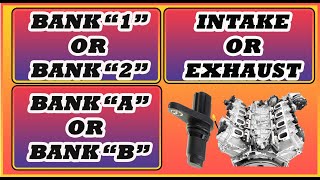
- P0341 most likely points to a bad camshaft position sensor on Bank 1.
- Before replacing parts, check the wiring and connector for damage or oil contamination, and ensure your battery is healthy.
- On V6 models, confirm you are working on Bank 1 (the rear bank by the firewall), which is much harder to access than the front.
- If a new sensor doesn't fix the code, the issue could be more serious, such as a problem with the timing belt (V6) or timing chain (I4), which may require professional diagnosis.
What's Unique About the 2001-2007 Toyota Highlander
On the first-generation Highlander, the most significant difference is between the engine types. The V6 engines (1MZ-FE and 3MZ-FE) use a timing belt, which is a maintenance item with a 90,000-mile replacement interval. If this belt stretches or jumps a tooth, it can trigger a P0341 code, representing a severe mechanical issue. The 2.4L 2AZ-FE four-cylinder engine uses a timing chain, which is designed to last the life of the engine but can stretch at very high mileage (over 150,000 miles), also causing this code.
Symptoms You May Notice
- Check Engine Light is on
- Difficulty starting the engine, or extended cranking time
- Engine stalls, especially at idle or low speeds
- Rough idle and engine misfires
- Hesitation or stumbling during acceleration
- Noticeable loss of engine power
- Reduced fuel economy
- Engine may not shift into the highest gear, causing high RPMs at highway speeds.
- Replacing the Crankshaft Position Sensor: While related, the crankshaft sensor has its own set of codes (e.g., P0335). P0341 specifically points to the camshaft sensor circuit.
- Replacing the wrong camshaft sensor on V6 models: P0341 is for Bank 1, which is the rear cylinder bank near the firewall. Many people mistakenly replace the easier-to-access front sensor (Bank 2), which will not fix the code.
Most Likely Causes
- Faulty Camshaft Position Sensor 🔴 High Probability The sensor is an electronic component that fails over time due to constant heat cycles and vibration in the engine bay. Denso is the OEM supplier for Toyota, and using an OEM or equivalent quality sensor is highly recommended for reliability.
How to confirm: After checking wiring, test the sensor's internal resistance with a multimeter. For the V6 engines, resistance should be 835-1400 Ω when cold. If the reading is out of spec, infinite (open), or zero (short), the sensor is bad.
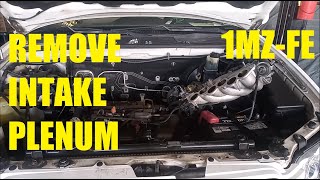
Typical fix: Replace the faulty camshaft position sensor. On V6 engines, P0341 refers to Bank 1 (rear), which is notoriously difficult to access and may require removing the intake plenum. 🎬 Watch: Step-by-step Bank 1 sensor replacement for V6 engines The 2.4L engine and the V6 Bank 2 (front) sensor are much easier to replace.
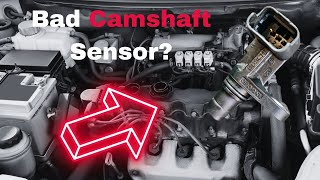
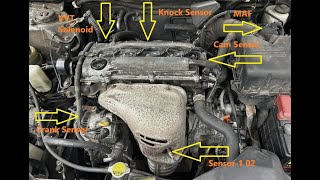
Est. part cost: $40 - $110 - Wiring or Connector Damage 🟡 Medium Probability Engine bay heat can make wiring insulation brittle and connectors fragile over time. A common issue on the 2AZ-FE 🎬 See this guide for all 2.4L engine sensor locations is the wiring harness rubbing against a pulley and shorting out. Oil from a leaking valve cover gasket can also contaminate the connector and disrupt the signal.
How to confirm: Visually inspect the sensor's wiring harness for cracks, fraying, or melting. Unplug the connector and check for corrosion, bent pins, or oil contamination. Check for 5V reference voltage and ground at the connector with the ignition on.
Typical fix: Clean the connector with electrical contact cleaner. Repair or replace any damaged sections of the wiring harness. Fix any oil leaks that are contaminating the sensor.
Est. part cost: $5 - $50 - Stretched or Jumped Timing Belt/Chain ⚪ Low Probability On V6 models, the timing belt is a maintenance item that can stretch or break if not replaced at the recommended 90,000-mile interval. On the 2.4L I4, the timing chain can stretch at very high mileage (150k+ miles), though this is less common.
How to confirm: This is a more advanced diagnosis. It involves removing covers to physically inspect the timing marks on the camshaft and crankshaft sprockets to ensure they are aligned. A rattling noise on startup can be a symptom of a loose timing chain on the 2.4L engine. For the V6, the 3MZ-FE is an interference engine, meaning a broken belt will cause catastrophic engine damage, while the 1MZ-FE is non-interference.
Typical fix: Replace the timing belt, tensioner, and water pump (on V6 models). Replace the timing chain, guides, and tensioner (on 2.4L models). This is a significant repair.
Est. part cost: $150 - $400
Rare But Worth Checking
- Low Battery Voltage: During extended cranking due to a weak battery or starter, the ECM can receive an erratic signal from the cam sensor and set a P0341 code. Before diving into complex diagnostics, ensure your battery is fully charged and healthy.
- Faulty Engine Control Module (ECM): This is very rare. The ECM itself can fail, but all other possibilities should be exhausted before considering ECM replacement.
Diagnosis Steps
- Check for Other Codes: Use an OBD-II scanner to see if any other codes are present. Misfire or timing-related codes can provide additional clues.
- Inspect Battery Voltage: Ensure the battery is fully charged and the charging system is working correctly. A voltage below 11V during cranking can trigger this code.
- Inspect the Wiring and Connector: Visually inspect the wiring harness leading to the Bank 1 camshaft sensor. Look for any signs of damage, melting, or corrosion. Pay close attention to areas where the harness might rub against pulleys or brackets. Unplug the connector and check for oil contamination or bent pins.
- Test the Sensor: If the wiring looks good, test the sensor's resistance with a multimeter. Compare the reading to the manufacturer's specification (approx. 835-1400 Ω cold for V6, and 835-1400 Ω cold / 1060-1645 Ω hot for the 2AZ-FE). If it fails the test, it needs replacement.
- Check for Signal (Advanced): Using an oscilloscope, you can back-probe the signal wire to see the waveform it produces while the engine is running. A missing or erratic waveform confirms a bad sensor or wiring issue.
- Inspect Mechanical Timing: If the sensor and wiring are confirmed to be good, the next step is to inspect the mechanical timing. This involves removing covers to check the alignment of the timing belt (V6) or timing chain (I4). This is an advanced step and may require professional help.
Parts You'll Likely Need
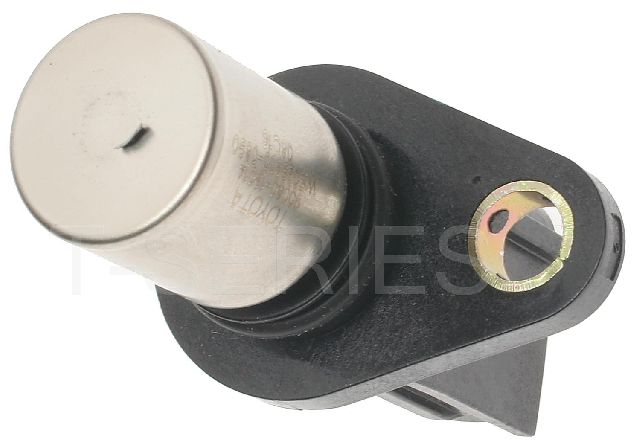
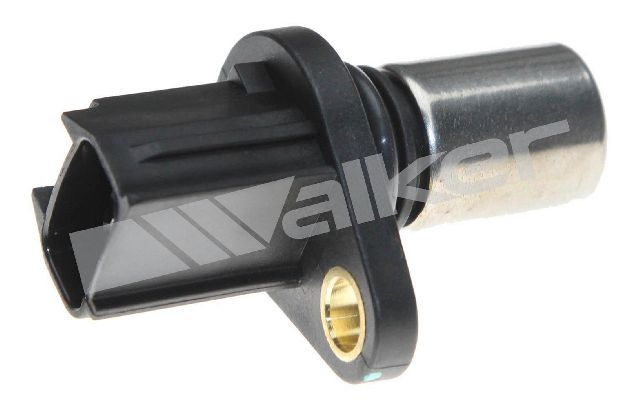
- Camshaft Position Sensor
(OEM #90919-05026 (for 1MZ-FE/3MZ-FE, supersedes to 90080-19014), 90919-05043 (for 2AZ-FE))— This is the most common failure point for code P0341. It's an electronic sensor that wears out from heat and age.
Trusted brands: Denso (OEM), NGK, Delphi
OEM price range: $90-$110
Aftermarket price range: $25-$75
Related Codes That Often Appear With This One
- P0340 — P0340 indicates a general circuit malfunction, while P0341 indicates a performance/range problem. They often appear together as they both point to a problem with the same sensor circuit.
- P0300, P0301-P0306 — If the camshaft signal is incorrect, it can lead to improper ignition timing, causing random (P0300) or specific cylinder misfires (P0301-P0306).
Platform-Specific Known Issues
- Access to the Bank 1 (rear) camshaft position sensor on the 1MZ-FE and 3MZ-FE V6 engines is notoriously difficult, requiring removal of the intake manifold plenum for access and significantly increasing labor time compared to the front sensor or the sensor on the 2AZ-FE engine.
Mechanic-Grade Diagnostic Values
- 2AZ-FE Camshaft Position Sensor Resistance (Cold) — expected: 835 to 1,400 Ω. Failure: Reading is outside this range, infinite (open), or zero (short).
- 2AZ-FE Camshaft Position Sensor Resistance (Hot) — expected: 1,060 to 1,645 Ω. Failure: Reading is outside this range after warming the engine.
- V6 (1MZ-FE/3MZ-FE) Camshaft Position Sensor Resistance (Cold) — expected: 835 to 1,400 Ω. Failure: Reading is outside this range, infinite (open), or zero (short).
- Sensor Connector Voltage (All Engines) — expected: Approximately 5V reference and signal voltage (Key On, Engine Off). Battery voltage (approx. 12.6V) when checking ground pin to positive battery terminal.. Failure: No voltage or voltage outside the expected range indicates a wiring or ECM issue, not a sensor failure.
Scan Tool Commands That Help
- Toyota Techstream: Freeze Frame Data Analysis — Always check the freeze frame data first. It records engine conditions (speed, load, temperature) at the exact moment the P0341 code was set, which can help determine if the fault occurred during cranking, at idle, or under load.
- Toyota Techstream: Live Data List (Cam/Crank Sync) — While the engine is running, monitor the camshaft and crankshaft position sensor signals simultaneously. Dropouts or an unsynchronized pattern in the live data point towards a failing sensor or a mechanical timing issue, helping to differentiate between the two.
Wiring & Ground Locations
- EA1 — On 3MZ-FE V6 engines, this is the connector joining the engine wire and sensor wire, located on the right side of the cylinder head.. This is a key junction to inspect for corrosion or loose pins if you suspect a wiring issue between the camshaft sensor and the main engine harness.
- EB1 — On 3MZ-FE V6 engines, this connector joins the engine wire to the main engine room wire harness, located at the front side of the engine room relay block.. A problem at this major connection point could disrupt the signal from multiple engine sensors, including the camshaft sensor.
Real Owner Repair Stories
- YouTube video by 'trackpalmer' (2014 Toyota Highlander V6 (newer generation but same principle)) — Check Engine Light with code P0012 (Camshaft Position Timing Over-Retarded), which is often related to P0341.
❌ Tried (didn't work) Initially, the owner considered many complex possibilities.
✅ What actually fixed it The problem was resolved by replacing the Bank 1 (rear) camshaft position sensor. The owner noted that after replacement, the check engine light turned off on its own after about 7 minutes of driving, as the ECU recognized the good sensor signal.
OEM Part Supersession History
90919-05026→90080-19014— Standard part update/revision by Toyota.
Heads up: The new part number is a direct, compatible replacement for the old one.
Model Year Variations Within This Range
- 2001-2003 (V6): These models used the 3.0L 1MZ-FE engine. This is a non-interference engine, meaning if the timing belt breaks, the pistons and valves will not collide, preventing catastrophic engine damage.
- 2004-2007 (V6): These models used the larger 3.3L 3MZ-FE engine. This is an interference engine. A broken timing belt will cause the pistons to hit the valves, resulting in severe and expensive engine damage. This makes timely timing belt replacement even more critical.
- 2001-2007 (I4): The 2.4L 2AZ-FE uses a timing chain, not a belt. P0341 on this engine is more likely a sensor/wiring issue, but a rattling noise on startup can indicate a stretched chain at high mileage (150,000+ miles).
Diagnostic Flowchart
Other Known Issues on This Vehicle
Issues unrelated to this code that are worth knowing about as an owner of this generation:
- 2AZ-FE Stripped Cylinder Head Bolts 🔴 High — Common on 2002-2006 models. The threads in the aluminum block for the rear head bolts can strip, causing a catastrophic coolant leak and overheating. (Ref: Toyota TSB EG015-07 recommended a short block replacement, but a common, more affordable fix is to drill and install thread inserts (e.g., Time-Sert or NS300L kit).)
- 1MZ-FE V6 Engine Oil Sludge 🔴 High — Affects 2001-2003 V6 models, particularly if oil changes were neglected. A design flaw in the rear valve cover's PCV baffle system causes oil to break down and form thick sludge, clogging oil passages and leading to oil starvation. (Ref: Was part of a class-action lawsuit settled in 2007. The fix involves cleaning the engine and potentially replacing the short block. A preventative measure is to replace the rear valve cover with the improved design from the 3MZ-FE engine.)
- 2AZ-FE Excessive Oil Consumption 🟠 Medium — More prevalent in later 2AZ-FE engines (post-2006) but can affect this generation. Piston ring design can lead to burning more than 1 quart of oil per 1,200 miles. (Ref: Toyota issued an extended warranty (ZE7) for this issue on some models, but it primarily covered 2007+ model years.)
- EVAP System Faults (Charcoal Canister/VSV) 🟡 Low — A common source of Check Engine Lights. The charcoal canister or the vacuum switching valve (VSV) can fail, leading to EVAP codes like P0446.
- Transmission Hesitation or Failure 🟠 Medium — Some owners report issues with harsh shifting, hesitation, or premature failure, especially at higher mileage.
- Seized Brake Calipers 🟡 Low — If not serviced regularly, the brake caliper slide pins can seize, causing uneven brake pad wear and dragging brakes.
Used vs. New Parts: Buying Guide for This Vehicle
When a used part is the smart pick: For this repair, using a salvaged part is generally not recommended for the sensor itself due to its low cost new and high failure rate. However, a used wiring harness pigtail from a junkyard is a smart choice if only the connector is damaged, as it provides an OEM-quality connector for splicing.
Donor-vehicle mileage cap: roughly under 100000 miles for the part to have meaningful remaining life.
What to inspect on the donor part:
- For a wiring pigtail, ensure the plastic is not brittle or cracked.
- Check for any signs of oil contamination inside the connector.
- Verify the locking tab is intact and functional.
- Ensure at least 4-6 inches of wire is available for a clean splice.
OEM-only on this vehicle (don't cheap out):
- Camshaft Position Sensor
Aftermarket brands forum-validated for this vehicle:
- Denso (OEM supplier)
- NGK/NTK
- Delphi
Brands owners have reported issues with on this vehicle:
- Ultra-cheap, unbranded sensors from online marketplaces are frequently reported to be dead-on-arrival or fail within a few months.
Real Owner Stories
Aggregated from forums and TSBs cited above. Mileages and costs reflect what owners reported in those sources.
2001 Toyota Highlander
Symptoms: The owner described a transmission issue where the vehicle failed to shift into top gear, which was ultimately traced back to engine sensor problems.
What fixed it: Repairing the engine sensor issues resolved the transmission's inability to shift into the highest gear.
Source hint: Car Talk Community - '2001 Toyota Highlander transmission issue'
Toyota Highlander (2AZ-FE 2.4L I4) — ~150000 miles
Symptoms: The owner experienced a P0341 code likely due to high-mileage wear on the internal engine timing components.
What fixed it: Replacement of the timing chain, guides, and tensioner.
Source hint: ARTICLE CONTEXT - common_causes (Stretched or Jumped Timing Belt/Chain)
Toyota Highlander (1MZ-FE 3.0L V6)
Symptoms: The owner dealt with oil sludge issues caused by a poorly designed PCV system in the rear valve cover, which can lead to sensor contamination.
What fixed it: Upgrading to the revised valve cover from the 3MZ-FE engine to mitigate sludge and protect engine components.
Source hint: BobIsTheOilGuy - 'Oil for Toyota 1MZ-FE sludge engine?'
Related OBD-II Codes
Frequently Asked Questions
Why is the Bank 1 camshaft sensor on my Highlander V6 so much more expensive to replace than the front one?
Can I use any aftermarket sensor to fix the P0341 code on my 2AZ-FE engine?
My 2001 Highlander is having trouble shifting into top gear on the highway; could this be related to P0341?
I hear a rattling noise when I start my 2.4L Highlander. Is this related to the camshaft sensor code?
How can I tell if my V6 timing belt is the cause of the P0341 code?
Could an oil leak cause my P0341 code?
Helpful Videos
We Have This Part in Stock



The information in this article is provided for general reference and educational purposes only. Vehicle specifications, procedures, and part compatibility can vary by production date, trim level, and region. Always consult your vehicle's factory service manual and verify part numbers before purchasing or performing repairs. Safety-critical components such as airbags, seat belts, and braking systems should be installed by a qualified professional.
- Toyota Highlander:
- 🎬 Helpful Videos
- 🛍️ Shop This Part
- What's Unique About the 2001-2007 Toyota Highlander
- Symptoms You May Notice
- Most Likely Causes
- Rare But Worth Checking
- Diagnosis Steps
- Parts You'll Likely Need
- Related Codes That Often Appear With This One
- Platform-Specific Known Issues
- Mechanic-Grade Diagnostic Values
- Scan Tool Commands That Help
- Wiring & Ground Locations
- Real Owner Repair Stories
- OEM Part Supersession History
- Model Year Variations Within This Range
- Diagnostic Flowchart
- Other Known Issues on This Vehicle
- Used vs. New Parts: Buying Guide for This Vehicle
- Real Owner Stories
- 2001 Toyota Highlander
- Toyota Highlander (2AZ-FE 2.4L I4) — ~150000 miles
- Toyota Highlander (1MZ-FE 3.0L V6)
- Related OBD-II Codes
- Frequently Asked Questions
- 🎟️ Get 5% Off