

P0341 on 2008-2011 Subaru Impreza 2.5L: Cam Sensor and Timing Fixes
On a 2008-2011 Impreza, P0341 is almost always a failing passenger-side camshaft position sensor. The definitive first diagnostic step is to swap the identical passenger-side and driver-side sensors; if the code changes to P0346, the sensor is bad. If a new, high-quality sensor doesn't fix it, the timing belt has likely skipped a tooth. A new OEM sensor costs around $110, and it is strongly advised to avoid cheap aftermarket sensors which are known to fail.
- P0341 on this Impreza points to the passenger-side camshaft position sensor.
- The easiest first diagnostic step is to swap the passenger and driver-side sensors to see if the code moves to P0346, which confirms a bad sensor.
- If a new, high-quality sensor does not fix the problem, you must have the timing belt inspected for a skipped tooth, a known issue on this engine.
- Do not use cheap, unbranded aftermarket sensors, as they are known to fail quickly and cause the code to return. Stick with OEM, Denso, or NTK brands.
- Because this is an interference engine, ignoring a potential timing belt issue can lead to catastrophic engine failure.
What's Unique About the 2008-2011 Subaru Impreza
The 2008-2011 Impreza uses the EJ253 SOHC engine, which has a timing belt with a 105,000-mile service interval. This is a critical distinction from newer Subarus with FB-series engines that use timing chains. While a faulty sensor is a very common cause for P0341, a stretched or skipped timing belt is a significant and platform-specific possibility that must be considered. Because the EJ253 is an interference engine, a timing belt issue can lead to catastrophic engine damage if ignored. It is also critical to note that Technical Service Bulletins (TSBs) for newer Subarus that mention adding shims or reprogramming the ECU (like TSB 11-130-13R) do NOT apply to this engine.
Symptoms You May Notice
- Check Engine Light is on
- Flashing cruise control light (a common Subaru trait when a CEL is present)
- Difficulty starting the engine, or a crank-no-start condition
- Rough or uneven idle
- Engine stalling, especially at low speeds or when stopping
- Hesitation or stumbling during acceleration
- Noticeable loss of engine power
- Reduced fuel economy
- Replacing the sensor with a cheap, low-quality aftermarket part, which often fails quickly and causes the code to return.
- Replacing the crankshaft position sensor (P0335) instead of the camshaft position sensor.
- Assuming the sensor is bad when the actual fault is a skipped timing belt, especially if a timing service was recently performed.
- Attempting to apply TSBs from newer FB-engine Subarus, such as adding shims to the sensor, which is not a valid repair for the EJ253.
Most Likely Causes
- Failing Camshaft Position Sensor (Bank 1) 🔴 High Probability The sensor is exposed to high heat in the engine bay, and the internal electronics can fail over time. Oil contamination from common valve cover gasket leaks can also degrade the sensor or its connector, disrupting the signal.
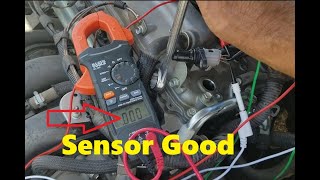
How to confirm: Swap the passenger-side (Bank 1) and driver-side (Bank 2) camshaft position sensors, as they are identical parts. If the code changes to P0346 (Bank 2), the sensor is faulty. You can also test the sensor's resistance with a multimeter; a reading between 1-4 kilo-ohms is expected. A reading outside this range indicates a bad sensor.
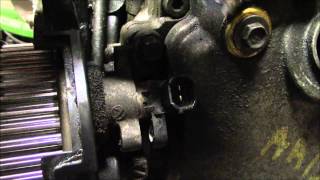
Typical fix: Replace the passenger-side camshaft position sensor. It is held in by a single 10mm bolt. 🎬 Watch this walkthrough to see how to replace the sensor. It is strongly recommended to use an OEM Subaru or high-quality Denso/NTK sensor, as cheap aftermarket sensors are known to fail quickly on this platform.
Est. part cost: $40-$150 - Skipped, Stretched, or Incorrectly Installed Timing Belt 🟡 Medium Probability The EJ253 engine uses a timing belt. If the belt is past its service interval, has stretched, a weak tensioner has allowed slack, or it was installed incorrectly (off by even one tooth), it will throw off the cam/crank correlation and trigger a P0341 code. A common owner experience is this code appearing shortly after a timing belt service, indicating an installation error.
How to confirm: This requires a physical inspection. Remove the timing belt covers and carefully rotate the engine by hand (using a 22mm socket on the crankshaft pulley bolt) to align the timing marks on the crankshaft and camshaft sprockets. Verify they match the service manual's specifications perfectly.
Typical fix: Perform a full timing belt service, replacing the belt, tensioner, and all idler pulleys. A quality kit from Aisin or Gates is recommended. If the belt has failed, inspect for bent valves, as this is an interference engine.
Est. part cost: $200-$400 for a complete kit - Damaged Wiring or Connector ⚪ Low Probability The sensor connector and wiring are located in a hot area of the engine bay and can become brittle or contaminated with oil over time.
How to confirm: Visually inspect the wiring harness and connector for the Bank 1 (passenger side) camshaft sensor. Look for signs of oil soaking, corrosion, cracked insulation, or bent pins. With the key on, engine off, use a multimeter to check for a 5V reference signal and a good ground at the connector.
Est. part cost: $10-$50
Rare But Worth Checking
- Damaged Camshaft Sprocket Reluctor Teeth: The sensor reads teeth on the back of the cam sprocket. If these teeth get damaged, bent, or covered in debris, it can cause an erratic signal. This is usually found during a timing belt inspection.
- Failing Alternator: A known quirk on this platform is that a failing alternator can produce electrical noise (AC ripple voltage) that interferes with the sensitive cam sensor signal, creating a 'ghost' code. If you've replaced the sensor and verified timing is correct, the alternator should be professionally tested for AC ripple, which should not exceed 50mV.
- Faulty Engine Control Module (ECM): This is extremely rare. Before condemning the ECM, all other possibilities (sensor, wiring, mechanical timing) must be exhaustively ruled out.
Diagnosis Steps
- Read the code with an OBD-II scanner and note any other codes present.
- Clear the codes and test drive to see if P0341 returns. If it does, proceed with diagnosis.
- Locate the camshaft position sensors on both the passenger (Bank 1) and driver (Bank 2) sides of the engine. They are identical.
- Swap the two sensors. They are each held by a single 10mm bolt.
- Clear the codes again and drive the vehicle. If the code changes to P0346 (Bank 2), the sensor you moved to the driver's side is faulty and needs replacement.
- If the P0341 code returns, the problem is not the sensor. Test the original sensor with a multimeter; resistance should be between 1-4 kilo-ohms.
- Inspect the Bank 1 sensor connector and wiring. Check for physical damage, corrosion, or oil contamination. With the key on, engine off, confirm the connector has a 5V reference and a good ground.
- If wiring and sensor test good, perform a timing belt inspection. This involves removing the plastic timing covers to view the belt and sprockets. Rotate the engine manually and verify all timing marks on the crank and cam sprockets align perfectly.
- If timing is correct and the sensor is known to be good, have the alternator tested for AC ripple voltage before considering a faulty ECM.
Parts You'll Likely Need
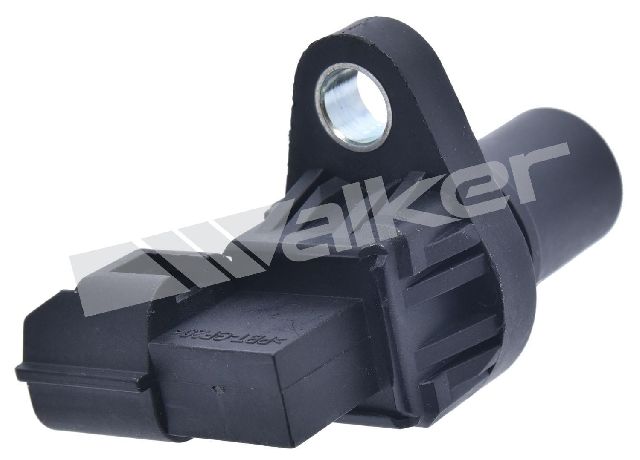
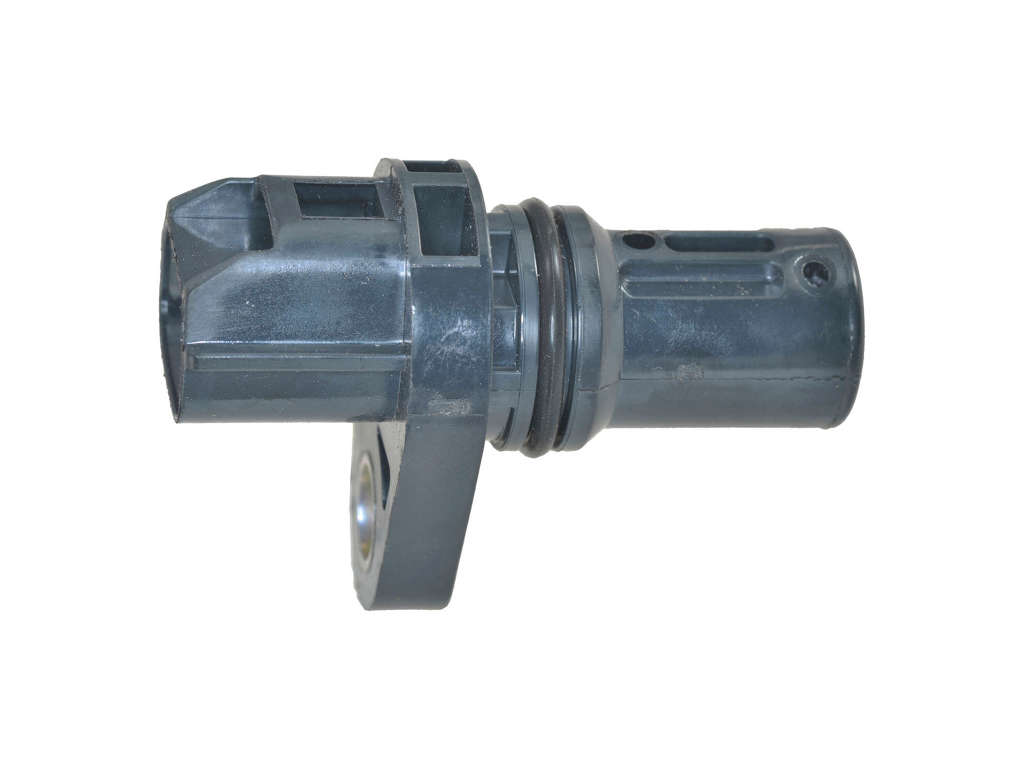
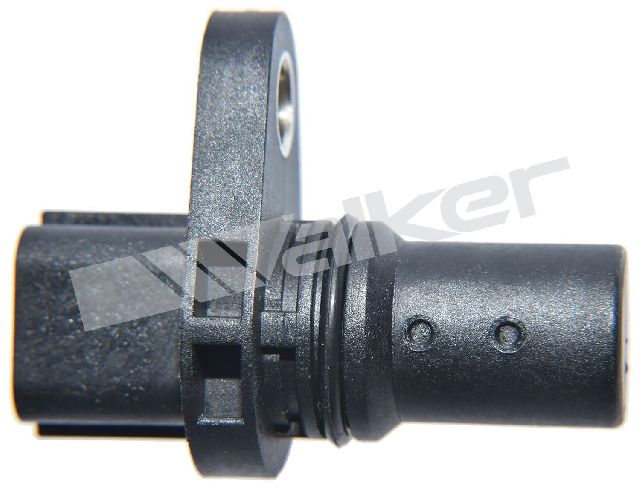
- Camshaft Position Sensor
(OEM #22056AA063)— This is the most frequent cause of P0341. The sensors for Bank 1 and Bank 2 are the same part. This part number supersedes 22056AA060, 22056AA061, and 22056AA062.
Trusted brands: Subaru (OEM), Denso, NTK
OEM price range: $90-$140
Aftermarket price range: $40-$75 - Timing Belt Kit — If the sensor is not the cause, a skipped or stretched timing belt is the next most likely culprit. A full kit including the belt, tensioner, and idlers should be used.
Trusted brands: Aisin, Gates, ContiTech
OEM price range: $300-$450
Aftermarket price range: $200-$350
Related Codes That Often Appear With This One
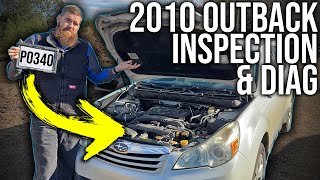
- P0340 — This is the general circuit malfunction code for the same sensor. A sensor that is failing intermittently (P0341) may eventually fail completely and set the P0340 circuit code.
- P0301, P0303 — These are misfire codes for cylinders 1 and 3, which are on Bank 1 (passenger side). An incorrect camshaft signal disrupts ignition and fuel timing, which can directly cause misfires on that bank.
- P0016 — This code indicates a Crankshaft/Camshaft Correlation error. If seen with P0341, it strongly points towards a mechanical timing issue like a skipped timing belt rather than just a sensor failure.
Technical Service Bulletins (TSBs) & Recalls
- 11-137-14: REPROGRAMMING FILE AVAILABILITY FOR DTCS P0341 AND P0346
- 11-100-11R: DIFFICULTY STARTING, ROUGH IDLE DTCS P0301, P0302, P0303, P0304 P0340, P0341, P0345, P0346
- 11-130-13R: DIFFICULTY STARTING, ROUGH IDLE, CAM POSITION OR MISFIRE DTCS P0340, P0341, P0345, P0346...
- 11-124-12R: DIFFICULTY STARTING, ROUGH IDLE, CAM POSITION OR MISFIRE DTCS P0301, P0302, P0303 OR P0304 DTCS P0340, P0341, P0345 OR P0346
Platform-Specific Known Issues
- A P0341 code appearing immediately after a timing belt replacement is a strong indicator that the new belt was installed incorrectly by one or more teeth.
- Owner communities strongly advise against using cheap, unbranded aftermarket camshaft position sensors, as they have a very high failure rate on this platform.
- The TSBs provided (e.g., #11-130-13R, #11-100-11R) which mention ECU reprogramming or adding shims apply to newer Subaru models with different engines (like the FB-series) and are not relevant or applicable to the EJ253 engine in this vehicle.
Mechanic-Grade Diagnostic Values
- Camshaft Position Sensor Internal Resistance — expected: 1-4 kΩ (kilo-ohms). Failure: A reading outside this range, or an open/infinite reading, indicates a failed sensor.
- Camshaft Position Sensor Connector - Power Supply Voltage — expected: Approximately 5V DC with key on, engine off.. Failure: Significantly lower or no voltage suggests a wiring or ECM power supply issue.
- Camshaft Position Sensor Connector - Ground Circuit — expected: Approximately 12V DC (Battery Voltage) when testing between the battery positive terminal and the sensor's ground pin.. Failure: Low or no voltage indicates a poor or open ground connection, which is a known Subaru issue.
- Alternator AC Ripple Voltage — expected: Less than 50 mV (0.050 V) AC at idle.. Failure: Voltage consistently above 50 mV AC indicates failing alternator diodes, which can create electrical noise that interferes with the cam sensor signal.
Wiring & Ground Locations
- Engine Ground (Main) — The primary ECU ground point is on the top of the intake manifold. Additional critical grounds connect the engine block to the chassis.. A poor ground connection at the intake manifold is a known Subaru issue that can cause various strange electrical problems, including erratic sensor readings like P0341. This can be exacerbated by installing phenolic spacers or TGV deletes without adding a dedicated ground strap.
- Camshaft Position Sensor Connector (E23) — On the front of the cylinder head, one on the passenger side (Bank 1) and one on the driver side (Bank 2).. This is the direct connection point for the sensor. The connector or its wiring can become brittle from heat or contaminated with oil from valve cover leaks, causing a poor signal.
Real Owner Repair Stories
- Reddit user on r/MechanicAdvice (2005 Subaru Outback 2.5i (EJ253 engine, same family as the Impreza's)) — High idle, poor acceleration, stalling, and eventually a crank-no-start with P0340 and P0341 codes.
❌ Tried (didn't work) Replacing the camshaft position sensor
✅ What actually fixed it The codes appeared three weeks after a timing belt service. The final fix was re-doing the timing belt job correctly, as it had been installed off by one or more teeth.
OEM Part Supersession History
22056AA060, 22056AA061, 22056AA062→22056AA063— Standard part revision and consolidation by the manufacturer.
Diagnostic Flowchart
Other Known Issues on This Vehicle
Issues unrelated to this code that are worth knowing about as an owner of this generation:
- Head Gasket Failure 🔴 High — Very common between 80,000 and 150,000 miles. The EJ253 is known for external oil and coolant leaks from the multi-layer steel (MLS) gaskets.
- Timing Belt Tensioner Failure 🔴 High — The hydraulic tensioner can weaken or fail near the 105,000-mile service interval, causing a rattling noise from the front of the engine on startup. Failure can lead to a skipped or broken belt, causing catastrophic engine damage.
- Wheel Bearing Failure 🟠 Medium — Front and rear wheel bearings are a common failure item, often starting around 80,000-120,000 miles, causing a loud humming or grinding noise that changes with vehicle speed.
- Catalytic Converter Inefficiency (P0420) 🟠 Medium — This is an extremely common trouble code on higher-mileage Subarus of this era, indicating the front catalytic converter is no longer effective. It often appears after 100,000 miles.
- Excessive Oil Consumption 🟠 Medium — Some owners report noticeable oil consumption starting around 95,000-100,000 miles, requiring frequent oil level checks between changes.
Used vs. New Parts: Buying Guide for This Vehicle
When a used part is the smart pick: A used part is generally not recommended for this repair due to the low cost and high importance of the components. The only exception might be sourcing a wiring harness pigtail from a junkyard if the original connector is broken and a new pigtail is unavailable.
Donor-vehicle mileage cap: roughly under 80000 miles for the part to have meaningful remaining life.
What to inspect on the donor part:
- For a wiring pigtail, ensure the plastic is not brittle or cracked.
- Check for any signs of corrosion on the connector pins.
- Ensure there is at least 4-6 inches of wire attached to the pigtail for splicing.
OEM-only on this vehicle (don't cheap out):
- Camshaft Position Sensor: Aftermarket sensors are widely reported to have a high failure rate on this platform, often causing the code to return shortly after replacement.
- Timing Belt Tensioner: This is a critical component for engine safety. An OEM or Aisin (the OEM supplier) tensioner is strongly recommended over cheaper alternatives.
Aftermarket brands forum-validated for this vehicle:
- Denso or NTK for the Camshaft Position Sensor (if OEM is unavailable).
- Aisin or Gates for a complete Timing Belt Kit.
Brands owners have reported issues with on this vehicle:
- Unbranded, 'white-box' camshaft position sensors from online marketplaces.
- Low-cost, no-name timing belt kits.
Real Owner Stories
Aggregated from forums and TSBs cited above. Mileages and costs reflect what owners reported in those sources.
2008-2011 Subaru Impreza EJ253
Symptoms: The P0341 code appeared immediately after a timing belt replacement.
What fixed it: Correcting the timing belt installation, as it was off by one or more teeth.
Source hint: vehicle_specific_issues
Subaru Outback (Non-Turbo) EJ253
Symptoms: P0341 Camshaft Position Sensor Range/Performance code.
What fixed it: Repairing a skipped timing belt.
Source hint: subaruoutback.org forum thread 'P0341 Camshaft Position Sensor Range/Performance'
2008-2011 Subaru Impreza EJ253 — ~105000 miles
Symptoms: Rattling noise from the front of the engine on startup followed by timing issues.
What fixed it: Full timing belt service including replacement of the hydraulic tensioner which had weakened near the service interval.
Source hint: known_issues: Timing Belt Tensioner Failure
Related OBD-II Codes
Frequently Asked Questions
I see TSB 11-130-13R and 11-100-11R regarding P0341 and ECU reprogramming. Does this apply to my 2008-2011 Impreza 2.5L?
Can I use a cheap aftermarket camshaft sensor to fix the P0341 code on my Impreza?
My cruise control light is flashing along with the Check Engine Light for P0341. Is my cruise control broken?
I just had my timing belt replaced and now I have a P0341 code. What happened?
How can I tell if the sensor is actually bad without buying a new one?
Could my alternator be causing this camshaft sensor code?
Helpful Videos
We Have This Part in Stock



The information in this article is provided for general reference and educational purposes only. Vehicle specifications, procedures, and part compatibility can vary by production date, trim level, and region. Always consult your vehicle's factory service manual and verify part numbers before purchasing or performing repairs. Safety-critical components such as airbags, seat belts, and braking systems should be installed by a qualified professional.
- Subaru Impreza:
- 🎬 Helpful Videos
- 🛍️ Shop This Part
- What's Unique About the 2008-2011 Subaru Impreza
- Symptoms You May Notice
- Most Likely Causes
- Rare But Worth Checking
- Diagnosis Steps
- Parts You'll Likely Need
- Related Codes That Often Appear With This One
- Technical Service Bulletins (TSBs) & Recalls
- Platform-Specific Known Issues
- Mechanic-Grade Diagnostic Values
- Wiring & Ground Locations
- Real Owner Repair Stories
- OEM Part Supersession History
- Diagnostic Flowchart
- Other Known Issues on This Vehicle
- Used vs. New Parts: Buying Guide for This Vehicle
- Real Owner Stories
- 2008-2011 Subaru Impreza EJ253
- Subaru Outback (Non-Turbo) EJ253
- 2008-2011 Subaru Impreza EJ253 — ~105000 miles
- Related OBD-II Codes
- Frequently Asked Questions
- 🎟️ Get 5% Off