

P0341 on 2007-2009 Kia Sorento 3.3L/3.8L V6: Cam Sensor Causes and Fixes
This code usually points to a failing camshaft position sensor on the passenger side of the engine. It's an affordable part (around $25-$75) and is a common DIY fix. However, it can sometimes indicate a more serious timing chain issue, which is a much more expensive repair. Always check for other codes, especially P0016, which strongly suggests a mechanical timing problem.
- P0341 on your Sorento most likely means the passenger-side camshaft position sensor is failing.
- Before buying parts, try swapping the passenger-side and driver-side cam sensors to see if the trouble code follows the sensor.
- If you hear a rattling noise from the engine when you first start it in the morning, the problem could be a more serious timing chain issue requiring professional diagnosis.
- Always check your engine oil level and condition, as low or dirty oil can cause timing-related codes on this engine.
- The correct OEM part number for the sensor is 39318-3C100.
What's Unique About the 2007-2009 Kia Sorento
The Lambda V6 engine in this first-generation Sorento is generally reliable but has a known weakness regarding its timing chain system. Like many engines with timing chains, they can be susceptible to chain stretch or tensioner failure over time, especially with inconsistent oil changes. The hydraulic tensioners can leak down, causing a brief chain rattle on cold starts before oil pressure builds. This slack is often the root cause of a P0341 code when the sensor itself is good, as the cam/crank correlation is physically out of range.
Symptoms You May Notice
- Check Engine Light is on
- Engine is hard to start or takes longer to crank (e.g., 5-10 seconds)
- Rough or uneven idle
- Engine hesitates or stumbles during acceleration
- Noticeable loss of engine power
- Engine may stall unexpectedly at low speeds or when idling
- Rattling noise from the engine for a few seconds on a cold start (indicates potential timing chain issue)
- Erratic tachometer or speedometer behavior in some cases
- Replacing the crankshaft position sensor. While related, a P0341 code specifically points to the camshaft sensor circuit for Bank 1.
- Replacing the spark plugs or ignition coils. While these can cause misfires, they typically won't set a P0341 code on their own.
- Assuming the sensor is bad when the underlying cause is a stretched timing chain. This leads to the code returning shortly after sensor replacement.
Most Likely Causes
- Failing Bank 1 Camshaft Position Sensor 🔴 High Probability Sensors are electronic components that can fail over time due to heat cycles and vibration. This is the most frequent and simplest fix for a P0341 code. Many owners on forums report success with a simple sensor replacement, but also warn against using cheap, no-name aftermarket sensors, recommending OEM or reputable brands like Delphi instead.
How to confirm: Swap the Bank 1 (passenger side) and Bank 2 (driver side) camshaft position sensors. They are identical. If the code changes to P0346 (Camshaft Position Sensor 'A' Circuit Range/Performance Bank 2), the sensor is bad.
Typical fix: Replace the faulty camshaft position sensor. The sensor for Bank 1 is located on the passenger-side valve cover, near the firewall.
Est. part cost: $25-$75 - Wiring or Connector Issue 🟡 Medium Probability The wiring harness in the engine bay is exposed to heat and oil, which can make connectors brittle and wires fragile over time. Oil from a leaking valve cover gasket can also contaminate the connector.
How to confirm: Visually inspect the wiring and connector for the Bank 1 camshaft position sensor. Look for frayed wires, loose pins, or corrosion inside the connector. Use a multimeter to check for proper voltage (typically 5V reference and 12V power) and ground at the connector.
Typical fix: Repair the damaged section of wiring or clean/replace the connector.
Est. part cost: $5-$30 - Stretched Timing Chain or Failed Tensioner ⚪ Low Probability The Lambda V6 uses timing chains that can stretch over high mileage (typically over 100k miles), and the hydraulic tensioners can weaken or leak down. This causes slack in the chain, altering the cam/crank correlation enough to trigger a range/performance code, often accompanied by P0016.
How to confirm: Listen for a distinct rattling or scraping sound from the front of the engine on cold starts that goes away after a few seconds. A mechanic can use an oscilloscope to compare cam and crank sensor waveforms to verify a timing discrepancy, or physically inspect the chain and tensioners by removing the timing cover.
Typical fix: This is a major repair requiring the replacement of the timing chains, guides, and tensioners.
Est. part cost: $400-$800 - Low or Dirty Engine Oil / Failed Oil Control Valve (OCV) ⚪ Low Probability The engine uses oil pressure to operate the Continuous Variable Valve Timing (CVVT) system. If the oil is low or sludge has clogged the passages or the OCV itself, the camshafts may not phase correctly, causing a correlation error. Kia/Hyundai engines are known to be sensitive to oil level and quality.
How to confirm: Check the engine oil level and condition on the dipstick. If it is very low or dark and sludgy, this could be a contributing factor. The OCV can be removed and tested for operation.
Typical fix: Perform an oil and filter change using the correct viscosity oil. If sludge is suspected, an engine flush may be considered. Replace the Bank 1 Oil Control Valve if it is stuck or failing.
Est. part cost: $40-$120
Rare But Worth Checking
- Damaged Camshaft Reluctor Ring: The toothed wheel on the camshaft that the sensor reads can become damaged or slip, but this is very uncommon without other major engine work or failure.
- Failing Powertrain Control Module (PCM): While possible, PCM failure is extremely rare and should only be considered after all other possibilities (sensor, wiring, timing) have been exhaustively ruled out.
Diagnosis Steps
- Check Engine Oil: Verify the engine oil is at the proper level and is not excessively dirty or sludgy. Low or contaminated oil can affect the CVVT system and trigger timing codes.
- Scan for Other Codes: Check for any other pending or active codes. A P0016 code appearing with P0341 is a strong indicator of a mechanical timing problem.
- Inspect Wiring: Carefully inspect the wiring harness and connector for the Bank 1 (passenger side) camshaft position sensor. Check for any signs of damage, melting, or oil contamination from valve cover leaks.
- Swap Sensors: The Bank 1 and Bank 2 camshaft sensors are identical and easily accessible. Swap their positions. Clear the codes and drive the vehicle. If the code returns as P0346 (for Bank 2), the sensor you moved is faulty and needs replacement. This is the most definitive DIY test for the sensor itself.
- Test the Circuit: If the code remains P0341 after swapping, the issue is likely in the Bank 1 circuit. Use a multimeter to check for power, ground, and signal at the sensor connector.
- Listen for Timing Chain Noise: On a cold engine, listen for a brief (2-5 second) rattling or scraping noise from the front of the engine immediately after startup. If this noise is present, a stretched timing chain or bad tensioner is a strong possibility.
- Professional Diagnosis: If the sensor and wiring are good, but the code persists (especially with startup noise or a P0016 code), have a professional mechanic verify the engine's mechanical timing, possibly with an oscilloscope before recommending a teardown.
Parts You'll Likely Need
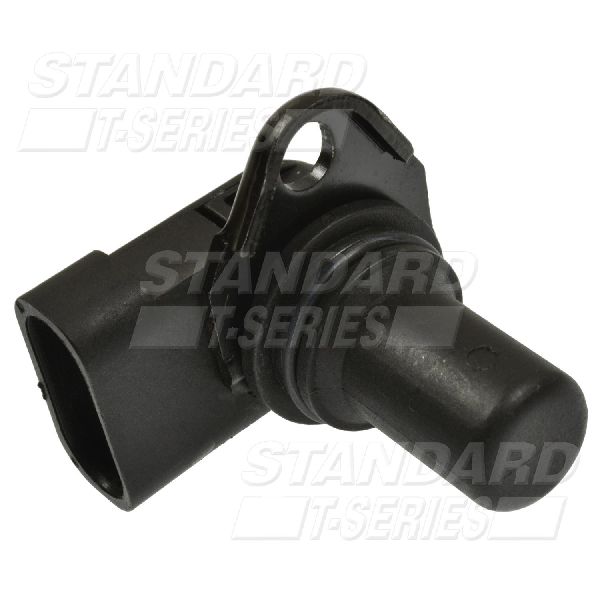
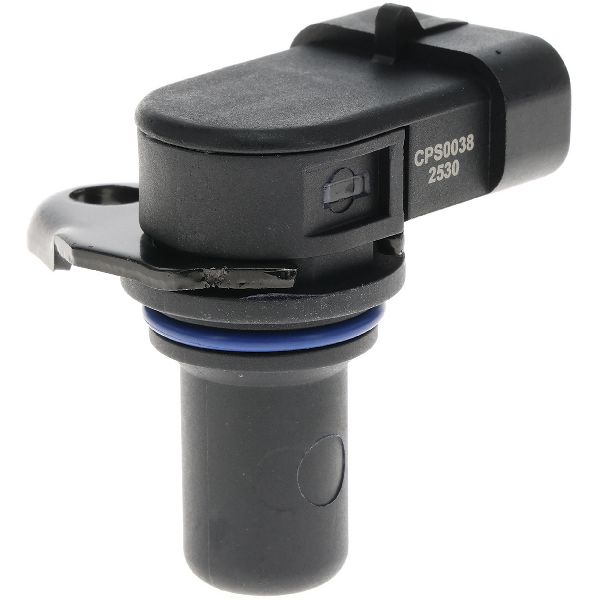
- Camshaft Position Sensor
(OEM #39318-3C100)— This is the most common failure point for a P0341 code. The sensor's electronics fail over time, leading to an erratic signal. It is highly recommended to use an OEM or high-quality aftermarket part.
Trusted brands: Kia/Hyundai (Genuine OEM), Delphi, NGK/NTK, Standard Motor Products (SMP), Beck/Arnley
OEM price range: $60-$115
Aftermarket price range: $25-$75
Related Codes That Often Appear With This One
- P0016 — This code indicates a Crankshaft/Camshaft Correlation error. If the timing chain has stretched or jumped, it's common to see P0016 alongside P0341. This combination strongly points to a mechanical timing issue, not a sensor failure.
- P0346 — This is the equivalent code for Bank 2 (driver's side). Seeing both P0341 and P0346 simultaneously could indicate a systemic issue like low oil pressure, a problem with the crankshaft sensor signal they are both compared against, or a failing PCM.
- P0340 — P0340 indicates a general circuit malfunction (e.g., no signal at all), while P0341 indicates the signal is present but performing poorly. They can appear together if the sensor is failing intermittently.
Technical Service Bulletins (TSBs) & Recalls
- TSB ENG148 (Rev 4, Sep 2015): While for a slightly later Sorento (XMa), it addresses a 'chatter/rattle noise from engine after cold soak' on the same engine family, confirming the issue with timing chain tensioners and outlining a replacement procedure for an improved part.
- TSB SC153 (Rev 3, Nov 2017): Pertains to en
Platform-Specific Known Issues
- The timing chain tensioners on the Lambda V6 can lose hydraulic pressure, especially with age or infrequent oil changes, leading to chain slack on startup that can cause this code.
- Forum users frequently debate the reliability of aftermarket camshaft sensors for this engine. The consensus is to spend more for an OEM sensor to avoid replacing it again shortly after.
- A leaking valve cover gasket can drip oil directly onto the wiring and connectors for various sensors, including the camshaft position sensor, causing connection issues.
Mechanic-Grade Diagnostic Values
- Camshaft Position Sensor (Hall Effect Type) Signal Voltage — expected: A digital square wave, switching between approximately 0V and 5V as the engine is cranked or running.. Failure: No signal, a signal that is stuck high or low, or a waveform that is erratic, noisy, or has dropouts. This is best viewed with an oscilloscope.
- Camshaft Position Sensor Internal Resistance — expected: While Hall effect sensors are not typically tested by resistance, some sources suggest a range of 200 to 900 ohms for similar magnetic sensors. However, voltage and waveform testing is more definitive.. Failure: A reading that is open (infinite resistance) or shorted (zero resistance).
- Sensor Connector Voltage (Key On, Engine Off) — expected: Pin 1: ~5V (Reference Voltage from PCM), Pin 2: ~0V (Ground), Pin 3: ~5V or ~0V (Signal, will switch when running). Pinout may vary, requiring a wiring diagram.. Failure: Missing reference voltage or ground indicates a wiring or PCM issue, not a sensor failure.
Scan Tool Commands That Help
- Kia GDS (Global Diagnostic System): Current Data / Event Data — The dealer-level GDS tool can provide more detailed 'Event Data' than a standard OBD-II scanner. When a P0341 is set, GDS may log a snapshot of engine parameters (RPM, load, temperature, etc.) at the exact moment the fault occurred. This can help differentiate between a startup fault (suggesting timing chain slack) and a running fault (suggesting a wiring or sensor issue).
Wiring & Ground Locations
- Main Engine Ground Strap — Typically runs from the engine block or cylinder head to the vehicle's chassis or firewall. On many V6 engines, a primary ground is located on or near the valve cover, bolting to the chassis.. A poor or corroded engine ground can cause a floating ground reference for all engine sensors, including the camshaft position sensor. This can lead to erratic voltage signals and intermittent codes like P0341, even when the sensor and its dedicated wiring are perfectly fine. Technicians often find these issues after replacing sensors with no success.
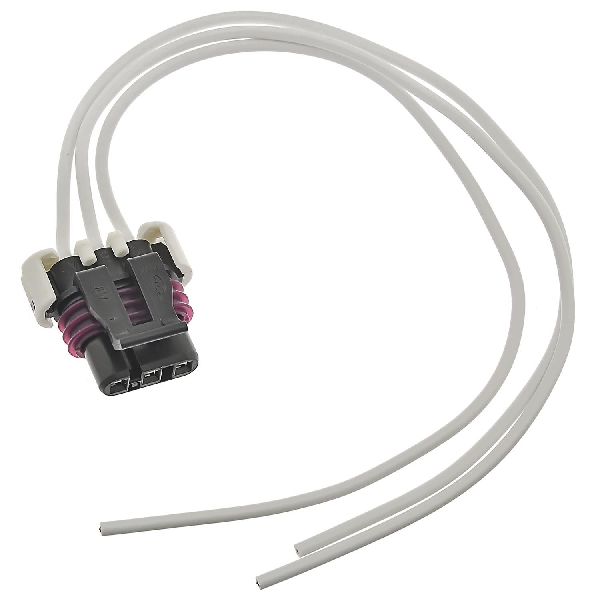
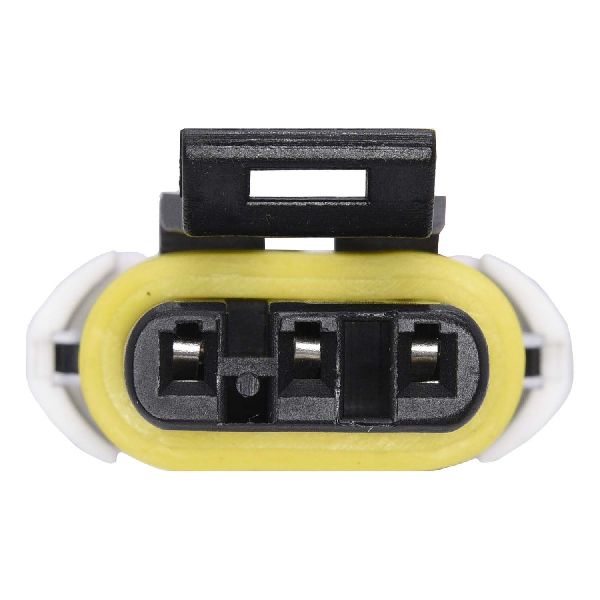
- Camshaft Position Sensor Connector (Bank 1) — On the rear (passenger side) valve cover, near the firewall. It is a 3-pin connector.. This is the direct connection point for the sensor. It is prone to contamination from leaking valve cover gaskets and heat degradation, leading to poor pin contact. The pins are typically for 5V reference, signal, and ground.
Real Owner Repair Stories
- Kia-Forums user post (2008 Kia Sorento 3.8L, ~120,000 miles) — P0341 and P0016 codes appeared together. Engine had a noticeable rattle on cold starts that would disappear after a few seconds. Hard starting and hesitation on acceleration.
❌ Tried (didn't work) Replaced the Bank 1 camshaft position sensor. The code returned within a day., Swapped the Bank 1 and Bank 2 sensors. The code stayed as P0341, ruling out the sensor itself.
✅ What actually fixed it The combination of P0341 and P0016, along with the cold start rattle, strongly pointed to a mechanical timing issue. A mechanic confirmed the timing chain had stretched beyond service limits. The final fix was a full timing chain, tensioner, and guide replacement. The codes did not return after the major service.
OEM Part Supersession History
39318-3C100→N/A, still active— This part number remains the primary OEM part for the specified vehicle range.
Heads up: Be aware of parts listed as compatible that may be for later GDI engines. The sensor 39318-3C100 is specified for the Lambda MPI engine. Aftermarket parts may cross-reference incorrectly; always verify fitment for the 2007-2009 Sorento 3.3L/3.8L. Some listings show 39318-3C300 as an alternative, but 39318-3C100 is the most commonly cited number.
Model Year Variations Within This Range
- 2007-2009: The 2007 model year marked the introduction of the more powerful 3.3L (G6DB) and 3.8L (RS3800) Lambda V6 engines, replacing the older 3.5L engine. The 3.3L and 3.8L engines in this range share the same architecture and camshaft position sensor part number. There are no significant variations within the 2007-2009 model years that would affect the diagnosis of P0341.
Diagnostic Flowchart
Other Known Issues on This Vehicle
Issues unrelated to this code that are worth knowing about as an owner of this generation:
- Cracked Valve Cover Gaskets 🟠 Medium — Common after 80,000-100,000 miles. Often noticed due to oil smell or visible leaks onto the alternator or exhaust.
- Transfer Case Control Module (TCCM) Failure 🟠 Medium — A known weak point for 4WD models, causing flashing 4WD lights or failure to engage. The part is discontinued by Kia, making used or overseas parts the only option.
- Rough/Hard Shifting Transmission 🟠 Medium — Numerous owner complaints about harsh shifts or delayed engagement that are difficult for dealers to replicate or solve.
- ABS Module Electrical Short 🔴 High — Subject to a recall (NHTSA ID: 18V365000). Moisture can enter the ABS module, creating a short circuit risk even when the car is off. (Ref: NHTSA ID: 18V365000)
- Rear Body/Subframe Rust 🔴 High — Common in regions that use road salt. Rust often starts around the rear wheel arches and can affect the rear subframe.
- Faulty Brake Light Switch 🟡 Low — Subject to a recall (NHTSA ID: 13V114000). A faulty switch can prevent brake lights from illuminating and cause issues with cruise control and push-button start. (Ref: NHTSA ID: 13V114000)
Used vs. New Parts: Buying Guide for This Vehicle
When a used part is the smart pick: For this specific repair, obtaining a used part is generally not recommended. The primary failure parts are a low-cost electronic sensor or wear-and-tear mechanical timing components. A used sensor carries an unknown history and a high risk of premature failure. Used timing components are never a viable option.
Donor-vehicle mileage cap: roughly under 30000 miles for the part to have meaningful remaining life.
What to inspect on the donor part:
- If forced to use a junkyard sensor in an emergency, pull it from the lowest-mileage vehicle possible.
- Inspect the used sensor's connector for any signs of corrosion, brittleness, or heat damage.
- Avoid sensors from engines that show signs of severe oil leaks or sludge.
OEM-only on this vehicle (don't cheap out):
- Timing Chain Kit (Chains, Guides, Tensioners)
- Oil Control Valve (OCV)
Aftermarket brands forum-validated for this vehicle:
- NGK/NTK
- Delphi
- Beck/Arnley
Brands owners have reported issues with on this vehicle:
- Unnamed, no-brand 'white box' parts from online marketplaces. Forum consensus strongly suggests these have a high failure rate for this application.
Real Owner Stories
Aggregated from forums and TSBs cited above. Mileages and costs reflect what owners reported in those sources.
2008 Hyundai Sonata 3.3L V6
Symptoms: Recurring P0341 and P0346 codes after replacing sensors, accompanied by erratic gauges and engine stalling.
What fixed it: The source indicates these symptoms point toward a deeper issue than just the sensor, such as a circuit problem or mechanical timing discrepancy.
Source hint: r/AskMechanics - What am I missing when replacing my camshaft position sensors? 2008 Hyundai Sonata 3.3L V6
2007-2009 Kia Sorento Lambda V6 — ~115000 miles
Symptoms: Cold-start rattle and the appearance of P0341 paired with P0016.
What fixed it: Replacement of timing chains, guides, and tensioners due to chain stretch and tensioner failure.
Source hint: Kia-Forums.com - General discussions on Lambda V6 timing issues
Related OBD-II Codes
Frequently Asked Questions
I'm hearing a rattling noise for a few seconds when I start my Sorento cold; is this related to P0341?
Does TSB ENG148 apply to the P0341 code on my 2007-2009 Sorento?
Can I use a cheaper aftermarket camshaft sensor to fix this?
Is there a simple way to test if the sensor itself is bad before buying a new one?
Could an oil leak cause this electronic sensor code?
How does engine oil level affect the P0341 code on the 3.3L/3.8L V6?
Helpful Videos


We Have This Part in Stock


The information in this article is provided for general reference and educational purposes only. Vehicle specifications, procedures, and part compatibility can vary by production date, trim level, and region. Always consult your vehicle's factory service manual and verify part numbers before purchasing or performing repairs. Safety-critical components such as airbags, seat belts, and braking systems should be installed by a qualified professional.
- Kia Sorento:
- 🎬 Helpful Videos
- 🛍️ Shop This Part
- What's Unique About the 2007-2009 Kia Sorento
- Symptoms You May Notice
- Most Likely Causes
- Rare But Worth Checking
- Diagnosis Steps
- Parts You'll Likely Need
- Related Codes That Often Appear With This One
- Technical Service Bulletins (TSBs) & Recalls
- Platform-Specific Known Issues
- Mechanic-Grade Diagnostic Values
- Scan Tool Commands That Help
- Wiring & Ground Locations
- Real Owner Repair Stories
- OEM Part Supersession History
- Model Year Variations Within This Range
- Diagnostic Flowchart
- Other Known Issues on This Vehicle
- Used vs. New Parts: Buying Guide for This Vehicle
- Real Owner Stories
- 2008 Hyundai Sonata 3.3L V6
- 2007-2009 Kia Sorento Lambda V6 — ~115000 miles
- Related OBD-II Codes
- Frequently Asked Questions
- 🎟️ Get 5% Off