

P0341 on 2011-2020 Dodge Grand Caravan 3.6L: Camshaft Sensor Causes and Fixes
On a 2011-2020 Dodge Grand Caravan, code P0341 almost always points to a failing camshaft position sensor on Bank 1 (the rear cylinder head). The part is inexpensive, but access is very difficult, often requiring removal of the upper intake manifold. Using an OEM Mopar sensor is highly recommended to avoid repeat failures. In some cases, this code can be an an early warning for a more serious rocker arm failure.
- P0341 on a 3.6L Grand Caravan points to the camshaft position sensor on the rear cylinder head (Bank 1).
- Symptoms include hard starting, stalling, and rough idle.
- The most likely fix is replacing the sensor, but access is difficult and may require removing the upper intake manifold, making it a 2-3 hour job.
- Always check the engine oil level and condition, as low or dirty oil can cause this code on Pentastar engines.
- Using a genuine Mopar replacement sensor (Part # 5149141AF) is strongly recommended to ensure a reliable, long-term fix.
What's Unique About the 2011-2020 Dodge Grand Caravan
The 3.6L Pentastar engine in the Grand Caravan is mounted transversely (sideways), which places Bank 1 directly against the firewall. This makes the P0341 code particularly challenging because the corresponding camshaft position sensor is in a very tight space. The factory-recommended procedure often involves removing the entire upper intake manifold to gain access, significantly increasing labor time. Additionally, these engines are known to be sensitive to aftermarket sensors, making the use of genuine Mopar parts highly advisable for a lasting repair. A returning P0341 code on a Pentastar can also be an early warning of a failing rocker arm, a known mechanical issue with this engine.
Symptoms You May Notice
- Check Engine Light illuminated
- Engine is difficult to start or has long crank times
- Engine stalls unexpectedly, especially at idle or low speeds
- Rough or unstable idle
- Hesitation or lack of power during acceleration
- Noticeable decrease in fuel economy
- Engine may crank but fail to start
- Replacing the more accessible Bank 2 (front) camshaft position sensor instead of the correct Bank 1 (rear) sensor.
- Replacing the crankshaft position sensor, which can cause similar symptoms but will typically set different codes.
- Repeatedly replacing the camshaft sensor when the root cause is a wiring issue or a mechanical timing problem (e.g., failing rocker arm).
Most Likely Causes
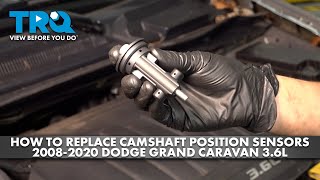
- Failing Bank 1 Camshaft Position Sensor 🔴 High Probability The sensor is a common failure item due to heat cycles and vibration. On the Grand Caravan, this specific sensor is located on the rear cylinder head (Bank 1) against the firewall, making it extremely difficult to access. 🎬 Watch: See exactly where the Bank 1 sensor is hidden.
How to confirm: After checking wiring and oil, the most common diagnostic step is to replace the sensor. Due to the difficult access, swapping it with the more accessible Bank 2 sensor for testing is not practical. An oscilloscope can definitively test the sensor's signal waveform, but this requires specialized equipment.
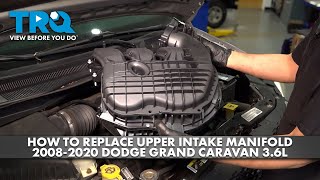
Typical fix: Replace the Bank 1 (rear) camshaft position sensor. It is highly recommended to use a genuine Mopar part (5149141AF) to prevent premature failure of the new sensor. The upper intake manifold must be removed for access, and the intake gaskets should be replaced at the same time. 🎬 See this walkthrough on removing the upper intake manifold.
Est. part cost: $25-$60 - Wiring Harness or Connector Damage 🟡 Medium Probability The wiring harness leading to the rear camshaft sensor is in a hot, tight area. Over time, heat can make the wiring brittle, or vibration can cause chafing against the engine or firewall, leading to an intermittent short or open circuit.
How to confirm: Visually inspect the wiring harness and connector for any signs of melting, chafing, corrosion, or loose pins. Use a multimeter to check for proper voltage (typically 5V reference), ground, and signal continuity at the connector.
Typical fix: Repair the damaged section of the wire and protect it with high-temperature wire loom. Clean corroded connector pins or replace the connector pigtail if necessary.
Est. part cost: $5-$30 - Low or Dirty Engine Oil ⚪ Low Probability The 3.6L Pentastar engine uses oil pressure to operate the Variable Valve Timing (VVT) system. If the oil is low, dirty, or the wrong viscosity, the cam phasers may not respond as commanded by the PCM. This can cause a discrepancy between the camshaft and crankshaft signals that can trigger a performance code like P0341.
How to confirm: Check the engine oil level and condition on the dipstick. If the oil is low, overdue for a change, or appears sludgy, this could be a contributing factor.
Typical fix: Perform an oil and filter change using the manufacturer-specified oil viscosity (typically 5W-20 for most years) and a quality filter.
Est. part cost: $40-$80
Rare But Worth Checking
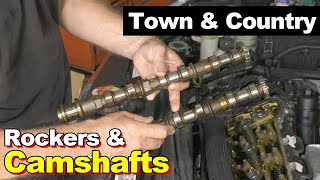
- Timing Chain / Rocker Arm / Phaser Issue: A stretched timing chain, a failing cam phaser, or a failed rocker arm (a very common Pentastar issue) can cause the camshaft timing to be physically out of sync with the crankshaft, triggering P0341. This is a more serious mechanical issue and is often accompanied by a distinct engine ticking or rattling noise ('Pentastar Tick') and may also set codes like P0016.
- Damaged Reluctor Wheel: The reluctor wheel (or tone ring) on the camshaft itself can be damaged or have debris on it, causing an erratic signal. This is rare and would require significant disassembly (valve cover removal) to inspect. On some Pentastars, the reluctor wheel has been known to shift on the camshaft.
- PCM Software Issue: For some earlier models, TSBs were issued for PCM software updates to address overly sensitive logic that could falsely trigger cam sensor codes. A TSB from Nov 2023 (NHTSA ID #10248856) also addresses P0341, suggesting this may still be relevant.
Diagnosis Steps
- Check for other DTCs. If codes related to timing correlation (like P0016) are present, a mechanical timing issue is more likely and requires further investigation.
- Check engine oil level and condition. Ensure the oil is full, clean, and of the correct viscosity (e.g., 5W-20).
- Inspect the Bank 1 camshaft position sensor connector and wiring. This is difficult due to the location against the firewall. Use a mirror and flashlight to look for any visible signs of heat damage, corrosion, or chafing against the engine block or other components.
- If wiring appears intact and oil is good, the most probable cause is the sensor itself.
- Replace the Bank 1 (rear) camshaft position sensor. This typically requires removing the upper intake manifold for access. Remember to also replace the upper and lower intake manifold gaskets.
- After replacement, clear the code and perform a test drive. Some sources recommend a 'cam/crank relearn' procedure with a capable scan tool to ensure the PCM synchronizes with the new sensor correctly, though it is not always required.
- If the code returns, a more in-depth diagnosis is required. This includes using a multimeter to test the wiring harness for an intermittent short/open, using an oscilloscope to analyze the sensor's signal pattern, or removing the valve cover to inspect for mechanical valvetrain issues like failed rocker arms.
Parts You'll Likely Need
- Camshaft Position Sensor (Bank 1 / Rear)
(OEM #5149141AF)— This is the most common component to fail and directly corresponds to the P0341 code on this engine.
Trusted brands: Mopar, NGK/NTK, Delphi, Standard Motor Products
OEM price range: $45-$75
Aftermarket price range: $25-$50 - Upper and Lower Intake Manifold Gaskets — These gaskets are single-use and must be replaced if the intake manifold is removed to access the sensor, which is the standard procedure. Reusing old gaskets will cause vacuum leaks. A common aftermarket set is Fel-Pro MS 97204.
Trusted brands: Mopar, Fel-Pro, Mahle
OEM price range: $30-$50
Aftermarket price range: $15-$30
Related Codes That Often Appear With This One
- P0340 — P0340 indicates a general circuit malfunction for the same sensor, while P0341 points to a performance/range issue. They can appear together if the signal is both failing and erratic.
- P0344 — P0344 indicates an intermittent signal from the same Bank 1 camshaft sensor. It often points to a wiring issue or a sensor that is in the early stages of failure.
- P0016 — This code indicates a 'Crankshaft/Camshaft Correlation' error. If seen with P0341, it strongly suggests a mechanical timing problem, such as a stretched timing chain or failed cam phaser, rather than just a sensor issue.
Technical Service Bulletins (TSBs) & Recalls
- NHTSA ID: 10248856 (TSB #9100212) - Dated Nov 01, 2023. Specifically addresses 'Malfunction Indicator Lamp (MIL) Illumination. Diagnostic Trouble Code (DTC) P0341 – Camshaft Position Sensor Performance – Bank 1 Sensor 1, Set.' This indicates a known issue recognized by the manufacturer that may have a specific diagnostic path or software update.
Platform-Specific Known Issues
- Extremely Difficult Sensor Access: The primary issue for this repair is the difficult location of the Bank 1 sensor against the firewall, which significantly complicates what would otherwise be a simple sensor replacement. Access requires removing the upper intake manifold.
- Owner Experience: A Typical P0341 Repair: A user on the chryslerminivan.net forum described their 2012 Grand Caravan throwing a P0341 code along with stalling at low speeds. After confirming the oil level was good, they undertook the repair. They noted the necessity of removing the upper intake manifold, which took several hours. Upon replacing the rear sensor with a Mopar part and new Fel-Pro intake gaskets, the code was resolved and did not return.
Mechanic-Grade Diagnostic Values
- Camshaft Position Sensor Resistance — expected: 500 to 1,500 Ohms. Failure: A reading outside this range indicates a faulty sensor.
- Sensor Supply Voltage (Key On, Engine Off) — expected: 5 Volts DC at the connector. Failure: No voltage or significantly lower voltage points to a wiring or PCM issue.
- Sensor Signal Waveform (using oscilloscope) — expected: A clean square wave that switches between approximately 0V and 5V as the engine is cranked.. Failure: A missing, noisy, or inconsistent waveform indicates a failing sensor or a problem with the reluctor wheel.
Scan Tool Commands That Help
- wiTECH, Autel MaxiSys, Appcar DiagFCA: Cam Crank Relearn — This function should be performed after replacing a camshaft sensor, crankshaft sensor, or any major timing components. It allows the PCM to relearn the relationship between the cam and crank signals, which can resolve rough running or persistent codes after a repair.
- wiTECH, Autel MaxiSys: Exhaust/Intake Phaser Cleaning — If dirty oil is suspected of causing VVT issues, this function can be used to cycle the cam phaser solenoids to help dislodge dirt or debris from the oil control valves before replacing parts.
Wiring & Ground Locations
- Bank 1 Camshaft Position Sensor Connector — On the rear cylinder head (firewall side), on the end of the valve cover closest to the transmission.. This is the primary connection point for testing. The three wires are typically Pin 1: 5V Supply (F856 circuit), Pin 2: Signal (K44 circuit), and Pin 3: Ground (K900 circuit).
- G302 — A common ground point located at the base of the right 'D' pillar.. While not a primary engine ground, poor body grounds can cause a host of electrical issues. A wiring diagram shows this as a relevant ground for some systems in the vehicle.
- S167 (Splice) — Located in the engine harness at the top rear of the engine.. This is a factory splice point in the harness. Corrosion or failure at this splice could interrupt signals from rear-mounted sensors like the Bank 1 cam sensor.
Real Owner Repair Stories
- MotorCity Mechanic YouTube Channel (Chrysler/Dodge/Jeep with 3.6L Pentastar engine) — Persistent camshaft sensor codes (P0369, similar to P0341 but for Bank 2) after sensor replacement.
❌ Tried (didn't work) Replacing the camshaft position sensor (twice).
✅ What actually fixed it A loose oil gallery plug was found underneath the valve cover. The plug had backed out, causing a loss of oil pressure to the cam phasers. The PCM interpreted the resulting cam timing deviation as a sensor fault. Tightening the plug resolved the code. - Reddit r/MechanicAdvice (2013 Jeep Grand Cherokee 3.6L) — Started with lifter tick, then after a full timing job, developed P0018 and later a P0300 random misfire on Bank 2.
❌ Tried (didn't work) Replacing all cams, lifters, rockers, phasers, actuators, solenoids, and timing components with aftermarket parts., Replacing the Bank 2 exhaust cam a second time., Tightening oil gallery plugs., Quadruple-checking timing alignment against three different service manuals.
✅ What actually fixed it The issue was traced back to a combination of factors, including an incorrectly angled reluctor wheel on an aftermarket camshaft and a leaking oil gallery plug. This highlights the danger of using non-OEM parts for critical timing components and the complexity of diagnosing codes after major repairs.
OEM Part Supersession History
5149141AD, 5149141AE→5149141AF— Standard part revision for improved reliability or manufacturing changes.
Heads up: 5149141AF is the current, correct part and is backward compatible with vehicles that used the older revisions.
Model Year Variations Within This Range
- 2016-2020: For the 2016 model year, the 3.6L Pentastar received a significant update. Changes included a two-stage variable valve lift (VVL) system, a higher compression ratio (11.3:1 vs 10.2:1), cooled EGR, and new ignition coils and injectors. While the P0341 code's primary cause (bad sensor) remains the same, the diagnostic path for secondary causes could be different. For example, issues with the new VVL system could potentially trigger timing-related performance codes.
Diagnostic Flowchart
Other Known Issues on This Vehicle
Issues unrelated to this code that are worth knowing about as an owner of this generation:
- Cracked Oil Filter Housing / Cooler Assembly 🔴 High — Extremely common across all model years. The plastic housing warps or cracks from heat cycles, causing significant oil and/or coolant leaks into the engine valley.
- Rocker Arm / Lifter Failure ('Pentastar Tick') 🔴 High — Widespread issue where needle bearings in the rocker arms fail, causing a distinct ticking noise, misfires, and potential camshaft damage. Onset can be anywhere from 50k to 150k miles. (Ref: A class-action lawsuit was filed regarding this issue. TSB 09-011-25 addresses a related manufacturing issue.)
- TIPM (Totally Integrated Power Module) Failure 🟠 Medium — Common issue causing a wide range of bizarre electrical problems, including no-start conditions (fuel pump relay failure), lights/wipers acting on their own, and power window/lock failure.
- Cooling System Component Failure (Water Pump, Thermostat) 🟠 Medium — The water pump is a known weak point, often failing and causing coolant leaks or overheating. The plastic thermostat housing can also fail, leading to overheating or a P0128 code. (Ref: TSB S2307000002 provides inspection instructions before water pump replacement.)
- Harmonic Balancer Failure 🟡 Low — The rubber element in the harmonic balancer can degrade, causing belt squeaking, shredding, and potentially damaging other belt-driven components like the power steering pump.
Used vs. New Parts: Buying Guide for This Vehicle
When a used part is the smart pick: For this repair, using a used part is not recommended. The camshaft position sensor is an electronic component that is a common failure item due to heat and vibration. The cost of a new, quality aftermarket or OEM sensor is low enough that the risk and labor involved in potentially installing a faulty used part are not worthwhile.
OEM-only on this vehicle (don't cheap out):
- Camshaft Position Sensor
Aftermarket brands forum-validated for this vehicle:
- NGK/NTK
- Delphi
- Standard Motor Products (SMP)
Brands owners have reported issues with on this vehicle:
- Unbranded, low-cost sensors from online marketplaces have a high rate of failure, sometimes immediately or within a few months.
Real Owner Stories
Aggregated from forums and TSBs cited above. Mileages and costs reflect what owners reported in those sources.
2012 Dodge Grand Caravan 3.6L V6
Symptoms: Check engine light with P0341 code and engine stalling at low speeds.
What fixed it: Replacement of the rear (Bank 1) sensor with a Mopar part and installation of new Fel-Pro intake gaskets after removing the upper intake manifold.
Source hint: chryslerminivan.net forum thread titled 'P0341 and P0340 on 2012 T&C' and vehicle_specific_issues
2011 Dodge Grand Caravan 3.6L V6
Symptoms: Recurring P0340 code and engine noise.
What fixed it: The discussion references an early Star Center bulletin regarding engine noise and MIL illumination for related camshaft codes.
Source hint: DodgeForum.com - 2011 DGC recurring P0340 code
3.6L V6 Pentastar (Generic)
Symptoms: Crank-no-start condition and a P0341 code.
What fixed it: In this specific case, replacing the sensor did not fix it, indicating the issue was likely in the wiring, PCM, or mechanical timing.
Source hint: Reddit r/MechanicAdvice - P0341 Issue
Related OBD-II Codes
Frequently Asked Questions
Is there a Technical Service Bulletin for P0341 on my Dodge Grand Caravan?
Where is the Bank 1 Camshaft Position Sensor located on the 3.6L Pentastar engine?
Do I need to remove the intake manifold to fix a P0341 code?
What specific part number should I use for the replacement sensor?
Can low engine oil cause a P0341 code on the 3.6L V6?
Is a 'relearn' procedure necessary after replacing the sensor?
Helpful Videos

Used OEM Parts in Stock
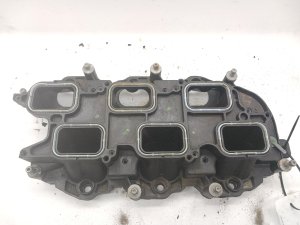

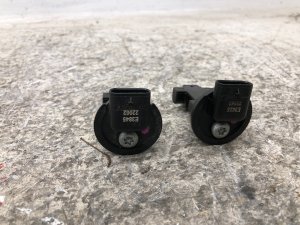
New Aftermarket Parts Available

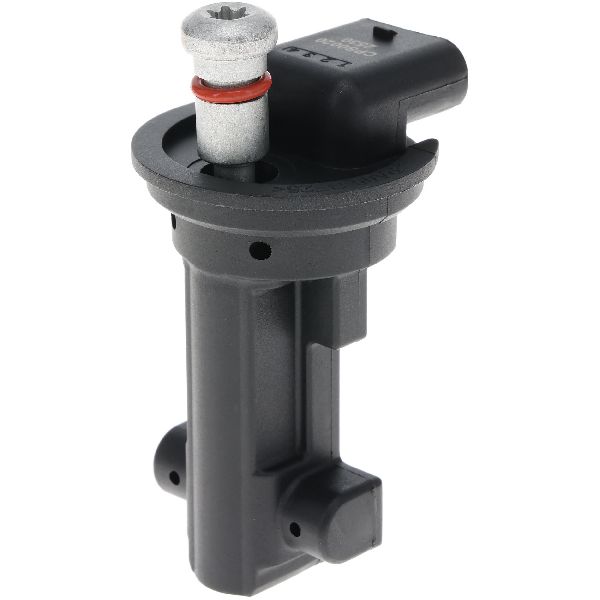
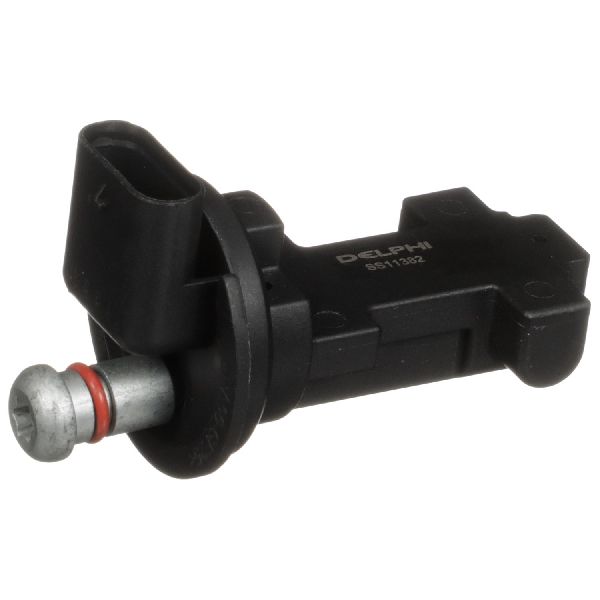

The information in this article is provided for general reference and educational purposes only. Vehicle specifications, procedures, and part compatibility can vary by production date, trim level, and region. Always consult your vehicle's factory service manual and verify part numbers before purchasing or performing repairs. Safety-critical components such as airbags, seat belts, and braking systems should be installed by a qualified professional.
- Dodge Grand Caravan:
- 🎬 Helpful Videos
- 🛍️ Shop This Part
- What's Unique About the 2011-2020 Dodge Grand Caravan
- Symptoms You May Notice
- Most Likely Causes
- Rare But Worth Checking
- Diagnosis Steps
- Parts You'll Likely Need
- Related Codes That Often Appear With This One
- Technical Service Bulletins (TSBs) & Recalls
- Platform-Specific Known Issues
- Mechanic-Grade Diagnostic Values
- Scan Tool Commands That Help
- Wiring & Ground Locations
- Real Owner Repair Stories
- OEM Part Supersession History
- Model Year Variations Within This Range
- Diagnostic Flowchart
- Other Known Issues on This Vehicle
- Used vs. New Parts: Buying Guide for This Vehicle
- Real Owner Stories
- 2012 Dodge Grand Caravan 3.6L V6
- 2011 Dodge Grand Caravan 3.6L V6
- 3.6L V6 Pentastar (Generic)
- Related OBD-II Codes
- Frequently Asked Questions
- 🎟️ Get 5% Off