

P0340 on 2010-2016 Hyundai Genesis Coupe: Camshaft Sensor Circuit Causes and Fixes
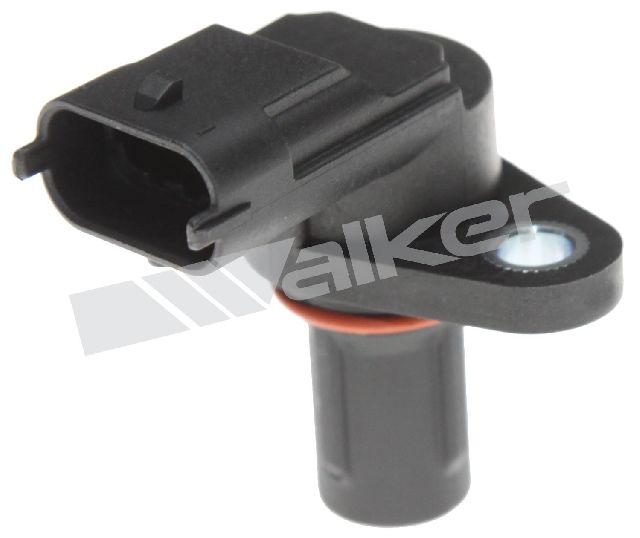
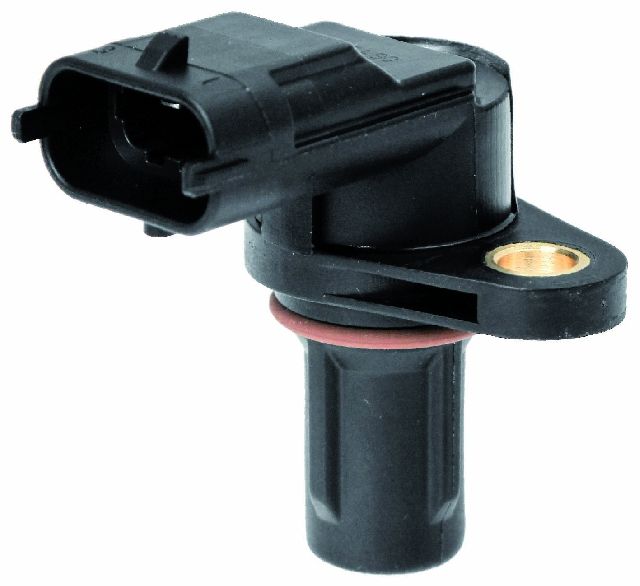
P0340 on a Genesis Coupe most often means the intake camshaft position sensor ('Sensor A') has failed or its wiring is damaged. On the 3.8L V6, this code points specifically to the sensor on Bank 1 (passenger side). Replacing the sensor is a common, affordable DIY fix that often resolves extended cranking and stalling issues. Using an OEM sensor is highly recommended to avoid repeat failures.
- P0340 points to the intake camshaft position sensor circuit on Bank 1 (passenger side for the V6).
- The most likely cause is a failed sensor, which is an easy and inexpensive DIY replacement.
- Before replacing the sensor, always inspect the wiring and connector for damage or oil contamination from a leaky valve cover gasket.
- For the 3.8L V6, you MUST verify the correct part number for the Bank 1 (Right/Passenger) sensor using your VIN to avoid buying the wrong part.
What's Unique About the 2010-2016 Hyundai Genesis Coupe
On the Genesis Coupe, this code is straightforward and rarely points to complex issues. Both the 2.0T Theta and 3.8L Lambda are DOHC (Dual Overhead Cam) engines, meaning they have multiple camshaft sensors. The key is correctly identifying the 'Bank 1 Intake' sensor. For the 3.8L V6, this is the intake sensor on the passenger side. For the 2.0T, there is only one bank, so 'A' refers to the intake sensor. A very common failure point is oil leaking from the valve cover gasket into the sensor's electrical connector, disrupting the signal. Another frequent issue is the sensor itself failing due to heat cycles, leading to the classic 'cranks but won't start' or 'long crank' symptom.
Generation note: This guide covers the entire first generation of the Hyundai Genesis Coupe, which includes the BK1 (2010-2012) and BK2 (2013-2016) model years. While the engines were updated between these versions (the 3.8L V6 gained GDI and the 2.0T was significantly revised), the common causes and diagnostic approach for a P0340 code remain consistent. However, specific part numbers for the sensors differ, and it is crucial to verify with your VIN. For example, some BK2 3.8L models use a different sensor than the BK1s.
Symptoms You May Notice
- Check Engine Light is on.
- Engine is hard to start or has a long crank (cranks for several seconds before starting).
- Engine cranks but won't start at all.
- Engine stalls intermittently, especially at idle or when coming to a stop.
- Rough idle and engine hesitation or stumbling.
- Noticeable loss of engine power and poor acceleration.
- Reduced fuel economy.
- Replacing the wrong sensor. The 3.8L V6 has four camshaft position sensors (intake/exhaust for each bank). P0340 specifically refers to the Bank 1 (passenger side) intake sensor. The 2.0T has two sensors (intake and exhaust). Always confirm the location before replacing.
- Replacing the sensor when the actual fault is a simple wiring issue or oil-fouled connector. 🎬 See this guide on fixing camshaft position sensor circuit malfunctions
- Using a cheap aftermarket sensor that is dead on arrival or fails shortly after installation.
Most Likely Causes
- Faulty Intake Camshaft Position Sensor 🔴 High Probability Like any electronic sensor exposed to constant engine heat cycles, the camshaft position sensor can fail internally over time. It is a very common failure item on these engines. Owners strongly recommend using a genuine Hyundai/Kia sensor, as aftermarket sensors are known to fail quickly or be defective out of the box.
How to confirm: After confirming the wiring is intact, testing the sensor with a multimeter or an oscilloscope is the definitive test. However, given the high failure rate and low cost of the part, many owners and shops replace it as a primary diagnostic step, which usually resolves the code.
Typical fix: Replace the Bank 1 (passenger side on V6) intake camshaft position sensor. It is easily accessible on the valve cover and held by a single 10mm bolt.
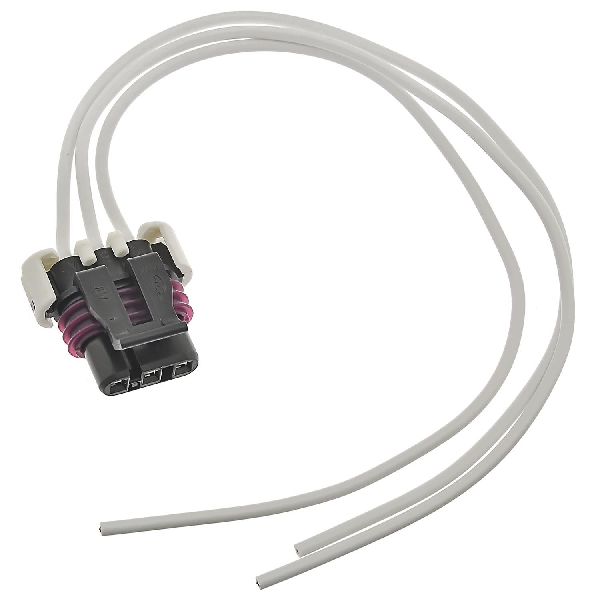
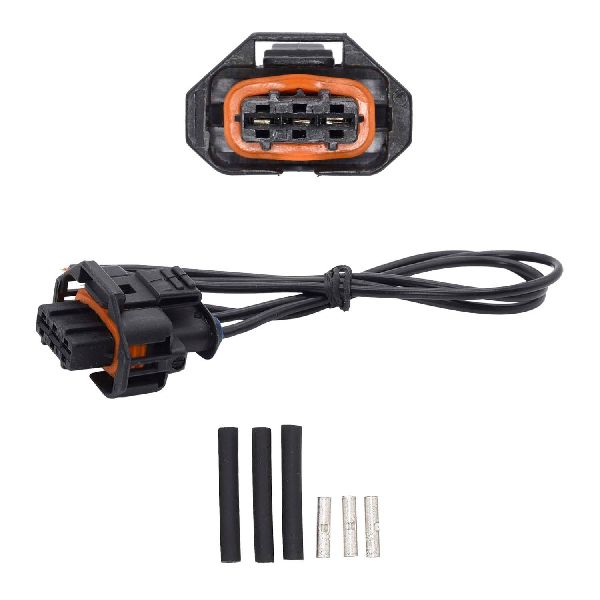
Est. part cost: $40-$90 - Damaged Wiring or Oil-Fouled Connector 🟡 Medium Probability The sensor's wiring harness and plastic connector are located on top of the engine and become brittle from heat. More commonly, oil leaking from the valve cover gasket can seep into the connector, fouling the connection and disrupting the signal. Some owners report the sensor itself leaking oil through its body into the connector.
How to confirm: Visually inspect the wiring harness leading to the sensor for any cracks, fraying, or signs of melting. Unplug the connector and check for oil inside. If oil is present, this is a very likely cause. Wiggle the connector with the engine running to see if it affects idle, which would indicate a poor connection.
Typical fix: If the connector is full of oil, clean it thoroughly with electrical contact cleaner and compressed air. Replace the sensor if it is the source of the leak. Fix the valve cover gasket leak to prevent a repeat failure. If the wiring or connector clip is broken, repair the damaged section or replace the connector pigtail.
Est. part cost: $10-$40 - Stretched Timing Chain ⚪ Low Probability While both the Theta and Lambda engines use timing chains, significant stretching is not a widespread issue but can occur at very high mileage or with poor maintenance (infrequent oil changes). A stretched chain can cause the camshaft and crankshaft correlation to be out of sync, triggering cam/crank correlation codes and sometimes P0340.
How to confirm: This is usually suspected if replacing the sensor and verifying wiring doesn't fix the code, especially on high-mileage engines. You may also hear a rattling noise from the front of the engine on startup. Confirming requires checking live data on a scan tool for cam/crank deviation or physically inspecting the chain, tensioner, and guides.
Typical fix: Replace the timing chain, guides, and tensioners. This is a labor-intensive and expensive job.
Est. part cost: $200-$600
Rare But Worth Checking
- Faulty Crankshaft Position Sensor: In some cases, a failing crankshaft position sensor can cause erratic signals that the ECM misinterprets as a camshaft sensor fault. If you also have codes related to the crankshaft sensor (like P0335), investigate that first. A Reddit user with a 2.0T found that replacing a crank sensor with a broken wire resolved their intermittent P0340.
- Failing Alternator: A failing alternator can produce electrical 'noise' (AC ripple) or unstable voltage, which may interfere with the sensitive signals from the cam and crank sensors, occasionally triggering a P0340 code. This is more likely if you also experience other electrical gremlins.
- Faulty Engine Control Module (ECM): This is extremely rare. The ECM itself could be failing to process the signal correctly. This should only be considered after all other possibilities (sensor, wiring, timing) have been exhaustively ruled out.
Diagnosis Steps
- Read all fault codes with an OBD-II scanner. Note any other codes present, especially timing correlation codes (P0016/P0017) or codes for other sensors.
- Visually inspect the Bank 1 intake camshaft position sensor and its electrical connector. On the 3.8L V6, this is on the passenger side valve cover, the forward-most sensor. On the 2.0T, it is on the top/front of the valve cover on the intake side. Look for loose connections, a broken connector clip, damaged wires, or oil contamination inside the plug.
- If oil is found in the connector, clean it thoroughly with electrical contact cleaner and check if the sensor itself is leaking oil through its body. If wiring is damaged, repair it.
- Clear the codes and attempt to start the engine. If the code immediately returns and the car has a long crank, the sensor is the most likely culprit.
- Replace the sensor. This is the most common fix. It is held by a single 10mm bolt and is easily accessible. It is highly recommended to use a genuine Hyundai/Kia OEM part.
- If a new OEM sensor does not resolve the issue, check for a blown fuse. The sensor circuit is often shared with other sensors, so check fuses labeled 'SENSOR' or 'ECU'.
- Advanced diagnosis: Use a multimeter to verify 5V reference, ground, and a signal at the sensor connector. Use an oscilloscope to check the sensor's square wave signal. If the signal is erratic or absent with a known-good sensor and wiring, investigate mechanical timing (timing chain) or, as a last resort, the ECM.
Parts You'll Likely Need
- Intake Camshaft Position Sensor (2.0T)
(OEM #39350-25010)— This is the most common failure point for P0340 on the 2.0T engine. It is used for both BK1 and BK2 models.
Trusted brands: Hyundai (OEM), Kia (OEM), NTK, Delphi
OEM price range: $60-$90
Aftermarket price range: $25-$50 - Intake Camshaft Position Sensor (3.8L V6, Bank 1)
(OEM #39318-3C100)— This is the most common failure point for P0340 on the 3.8L V6. It is used for both BK1 and BK2 models.
Trusted brands: Hyundai (OEM), Kia (OEM), NTK, Delphi
OEM price range: $70-$110
Aftermarket price range: $30-$60
Related Codes That Often Appear With This One
- P0341 — This code indicates a 'Range/Performance' problem with the same sensor circuit, suggesting an intermittent or weak signal rather than a complete failure, often seen with wiring issues.
- P0365 — This is the equivalent code for the Bank 1 *exhaust* camshaft position sensor ('B' sensor). On a 2.0T, seeing P0340 and P0365 together after engine work could point to a timing issue.
- P0011 / P0014 — These codes relate to camshaft timing being over-advanced or over-retarded on Bank 1. A faulty camshaft position sensor can provide bad data to the CVVT system, leading the ECM to set these timing codes as well.
- P0016 / P0017 — These codes indicate a Crankshaft/Camshaft correlation issue. If you see these alongside P0340, it more strongly suggests a mechanical timing problem like a stretched timing chain, rather than just a sensor failure.
Mechanic-Grade Diagnostic Values
- Camshaft Position Sensor Power Supply Voltage — expected: ~5.0V DC. Failure: 0V or significantly less than 5V indicates an open/short in the power supply wire from the ECM or a blown fuse.
- Camshaft Position Sensor Ground Circuit — expected: Near 0V DC on the ground pin and good continuity to chassis ground.. Failure: Voltage present on the ground pin or high resistance to ground indicates a faulty ground connection, which is a known issue on this chassis.
- Camshaft Position Sensor Signal Voltage (Oscilloscope) — expected: A clean square wave, alternating between 0V and 5V as the engine is cranked or running.. Failure: A missing waveform, a noisy/erratic waveform, or a wave that does not consistently switch between 0V and 5V indicates a faulty sensor or external interference.
Wiring & Ground Locations
- Main ECU Ground — On the chassis frame, near the battery and behind the driver-side headlight.. This is the primary ground point for the Engine Control Unit. A poor connection here can cause unstable voltage and erratic behavior from multiple engine sensors, including the camshaft position sensor.
- Engine Block Ground (2.0T) — On a bolt for the coolant piping on the back of the engine block.. Provides a direct ground path for components on the engine block itself. The Genesis Coupe chassis is known for having voltage drop issues, and ensuring this ground is clean and tight is critical for sensor stability.
- Starter / Bell Housing Ground — On one of the starter-to-transmission bell housing bolts.. A solid ground here is essential for the starter motor. A poor starter ground can introduce significant electrical noise into the vehicle's electrical system during cranking, potentially interfering with the sensitive cam and crank sensor signals.
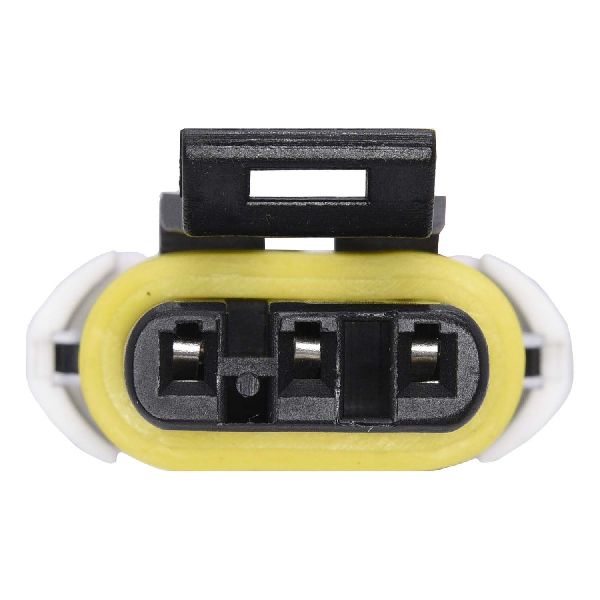
- CMP Sensor Connector Pins — At the sensor connector on the valve cover.. For testing: Pin 1 is the 5V power supply from the ECM, Pin 2 is the signal wire, and Pin 3 is the ground. Knowing this pinout is required for accurate multimeter or oscilloscope diagnosis.
Real Owner Repair Stories
- Reddit user 'RaceKILR' (2011 Genesis Coupe 2.0T, 255k kms) — Intermittent long crank (5 seconds) then start, P0340 code, reduced power.
❌ Tried (didn't work) Replaced the intake camshaft position sensor (which was leaking oil from the connector)., Cleaned oil out of the harness connector with contact cleaner., Verified timing was correct after a recent timing chain job.
✅ What actually fixed it Replacing the crankshaft position sensor, which was found to have a small break in its wire, made the problem intermittent and clearable. The final resolution pointed towards a wiring issue that was hard to track. - Reddit user on r/AskMechanics (2014 Scion FRS (Similar issue pattern)) — Intermittent no-start, multiple attempts to start. Threw codes P0335 (Crank), P0340 (Cam A), and P0345 (Cam B).
❌ Tried (didn't work) Verified battery and alternator were good., Checked wiring, grounds, and sensors visually., Inspected main engine harness for corrosion.
✅ What actually fixed it The starter solenoid was faulty. It would click but not always engage the starter motor's power for rotation. Replacing the starter solenoid resolved the random no-start and the associated cam/crank codes.
"I Checked Everything" — The Actual Cause
- In a case involving multiple cam and crank codes (P0335, P0340, P0345) and intermittent no-start symptoms, all standard electrical checks of the sensors and wiring were clean. The actual root cause was a faulty starter solenoid. The electrical noise and voltage drop during the failed cranking attempts were likely corrupting the cam/crank signals as the ECU was trying to establish engine position, leading it to incorrectly flag the timing sensor circuits.
When the Usual Fixes Don't Work
- While replacing the camshaft position sensor is the most common fix, there are documented cases where this does not solve the problem. In one instance on a 2.0T, an intermittent P0340 with a long crank was only resolved after the owner found and replaced a crankshaft position sensor that had a damaged wire. In another, more unusual case (on a different vehicle but with the same family of codes), the root cause was a faulty starter solenoid creating electrical interference during cranking, which the ECU misinterpreted as a cam sensor circuit fault. These cases highlight that if a new OEM sensor doesn't fix the issue, the diagnostic path must widen to include related sensors (crankshaft) and sources of electrical noise (starter, alternator, grounds).
OEM Part Supersession History
39350-25000→39350-25010— Standard part revision/update by the manufacturer.
Heads up: The new part number (39350-25010) is the correct replacement for the 2.0T engine across all model years.39318-3C300→39318-3C100— Standard part revision/update by the manufacturer.
Heads up: The new part number (39318-3C100) is the correct replacement for the 3.8L V6 engine across all model years.
Model Year Variations Within This Range
- 2013-2016 (BK2) vs 2010-2012 (BK1): The 3.8L V6 engine was significantly updated for the BK2 models, switching from Multi-Port Injection (MPI) to Gasoline Direct Injection (GDI). This involved different heads, pistons, and the addition of a High-Pressure Fuel Pump (HPFP).
- 2013-2016 (BK2) 3.8L V6: The driver's side exhaust camshaft has an extra lobe specifically to drive the High-Pressure Fuel Pump (HPFP). This means BK1 and BK2 3.8L camshafts are not interchangeable, which is a critical detail for any internal engine work.
Diagnostic Flowchart
Real Owner Stories
Aggregated from forums and TSBs cited above. Mileages and costs reflect what owners reported in those sources.
2011 Genesis Coupe 2.0T — 158450 miles
Symptoms: Cranks for about 5 seconds before starting, reduced power, permanent P0340 code initially, intermittent after replacing crank sensor.
What fixed it: The user did not report a final fix; the problem became intermittent after replacing the crankshaft position sensor. A commenter suggested it's likely a wiring issue.
Source hint: r/genesiscoupe - P0340 Camshaft position circuit
2014 Hyundai Genesis Coupe 2.0T
Symptoms: Codes P0340 and P0365 appear after an engine rebuild. The car takes longer than it should to start but runs fine with full power once started.
What fixed it: No definitive fix reported; replacing the camshaft position sensors did not resolve the codes returning.
Source hint: CarKiller - P0340 and P0365 on 2014 Hyundai Genesis Coupe 2.0T with rebuilt engine
Related OBD-II Codes
Frequently Asked Questions
Where is the Bank 1 intake camshaft position sensor located on my Genesis Coupe?
Should I buy an aftermarket camshaft position sensor for my Genesis Coupe to save money?
I found oil inside the camshaft position sensor connector. Is this normal?
I replaced the camshaft position sensor on my 2.0T but P0340 came right back. What else could it be?
Can a stretched timing chain cause a P0340 code on the 3.8L Lambda V6 or 2.0T Theta?
Helpful Videos
We Have This Part in Stock


The information in this article is provided for general reference and educational purposes only. Vehicle specifications, procedures, and part compatibility can vary by production date, trim level, and region. Always consult your vehicle's factory service manual and verify part numbers before purchasing or performing repairs. Safety-critical components such as airbags, seat belts, and braking systems should be installed by a qualified professional.
- Hyundai Genesis Coupe:
- 🎬 Helpful Videos
- 🛍️ Shop This Part
- What's Unique About the 2010-2016 Hyundai Genesis Coupe
- Symptoms You May Notice
- Most Likely Causes
- Rare But Worth Checking
- Diagnosis Steps
- Parts You'll Likely Need
- Related Codes That Often Appear With This One
- Mechanic-Grade Diagnostic Values
- Wiring & Ground Locations
- Real Owner Repair Stories
- "I Checked Everything" — The Actual Cause
- When the Usual Fixes Don't Work
- OEM Part Supersession History
- Model Year Variations Within This Range
- Diagnostic Flowchart
- Real Owner Stories
- 2011 Genesis Coupe 2.0T — 158450 miles
- 2014 Hyundai Genesis Coupe 2.0T
- Related OBD-II Codes
- Frequently Asked Questions
- 🎟️ Get 5% Off