

P0339 on 2007-2017 Jeep Compass 2.4L: Crank Sensor Intermittent Causes and Fixes
On a 2007-2017 Jeep Compass, code P0339 is almost always caused by a failing crankshaft position sensor or its heat-damaged wiring. This can cause dangerous engine stalling. Expect to pay $20-$60 for an aftermarket sensor or $55-$90 for an OEM Mopar part (P/N 05033307AE), which is highly recommended for reliability.
- P0339 on a Jeep Compass is a serious safety issue due to the high risk of the engine stalling while driving.
- The two most likely causes are a failed crankshaft position sensor or heat-damaged wiring near the exhaust manifold. Inspect the wiring first.
- Using an OEM Mopar replacement sensor (Part #05033307AE) is strongly advised to avoid repeat failures common with aftermarket parts.
- The repair is DIY-friendly (difficulty 3/5) and is best accessed from underneath the vehicle.
- After replacing the sensor, a 'crank relearn' procedure may be needed to sync it with the PCM and prevent misfire codes.
What's Unique About the 2007-2017 Jeep Compass

On the 2.4L World engine in the first-generation Jeep Compass and its platform mates (Jeep Patriot, Dodge Caliber), the crankshaft position sensor's wiring is routed very close to the exhaust manifold. This design makes the wiring harness highly susceptible to melting and heat damage, which is a very common cause for the intermittent signal that triggers P0339. The failure is so common that many owners consider the sensor a routine maintenance item. Additionally, some 2016 models were subject to a recall (S89 / NHTSA 16V-907) for improperly manufactured sensor connectors that could cause stalling.
Symptoms You May Notice
- Sudden and unexpected engine stalling, sometimes restarting after it cools down.
- Engine cranks but refuses to start.
- Hard starting, requiring multiple attempts.
- Check Engine Light is on, may flash during acceleration.
- Rough, unstable idle or engine misfires.
- Hesitation or loss of power during acceleration.
- Tachometer needle drops to zero or behaves erratically while driving.
- Loss of power steering assist, as reported in NHTSA ODI #11507266 when the engine stalls or loses power.
- Replacing the camshaft position sensor. While related to timing, P0339 specifically points to the crankshaft sensor circuit.
- Replacing ignition coils or spark plugs to fix a misfire without first addressing the P0339 code, which is the likely root cause of the timing-related misfire.
- Replacing the PCM. While a faulty PCM can be the cause, it is very rare and should only be considered after the sensor and wiring have been definitively ruled out.
Most Likely Causes

- Failing Crankshaft Position Sensor 🔴 High Probability The sensor is located in a high-heat area at the rear of the engine block, near the exhaust manifold, leading to electronic failure over time due to constant heat cycles and vibration. The failure is so common on this platform it is considered a weak point.
How to confirm: Use a scan tool to monitor RPMs while cranking; a reading of zero or an erratic signal points to the CKP circuit. If possible, use an oscilloscope to check for a clean 0-5V square wave pattern from the signal wire. Often, diagnosis is made by replacing the sensor after confirming the wiring is intact, as the part is a known high-failure item.
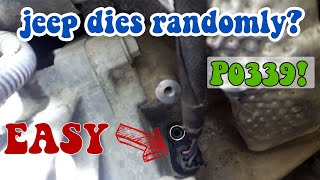
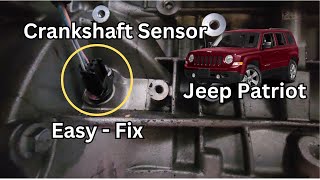
Typical fix: Replace the crankshaft position sensor. It is highly recommended to use an OEM Mopar sensor (Part #05033307AE), as aftermarket sensors are widely reported to fail 🎬 See why using the right sensor is critical for this fix. prematurely or be dead-on-arrival.
Est. part cost: $55-$90 for OEM, $20-$60 for aftermarket - Damaged Wiring Harness or Connector 🔴 High Probability The sensor's wiring is routed very close to the exhaust manifold, making it extremely vulnerable to melting, brittleness, and shorting from high heat. The plastic loom degrades, allowing wires to chafe against the hot engine block.
How to confirm: Perform a thorough visual inspection of the wiring harness leading from the crankshaft sensor up toward the main harness. Look for any signs of melted plastic loom, exposed copper wires, or damage near the exhaust. Wiggle the harness with the engine running (if possible) to see if it induces a stall or code.
Typical fix: Repair the damaged section of wiring using heat-shrink butt connectors and protect the new wiring with high-temperature wire loom. If the connector itself is damaged, replace it with a new pigtail connector. Some owners have successfully resolved the issue by simply securing the harness away from the engine block with zip ties.
Est. part cost: $15-$30 for a pigtail connector and loom
Rare But Worth Checking
- Outdated PCM Software: Jeep has released Technical Service Bulletins (TSBs) for similar models that address overly sensitive diagnostic logic for this code. If a new OEM sensor and confirmed good wiring don't fix the issue, a software update at a dealership might be the solution. Manufacturer TSB Bulletin #18-075-20 notes that customers may experience concerns with P0339 and P0335, as well as issues when using adaptive cruise control.
- Damaged Tone Ring: The crankshaft position sensor reads a toothed wheel (tone or reluctor ring) on the crankshaft. While rare, a bent tooth, debris, or excessive crankshaft end play can cause an erratic signal. This usually requires more intensive diagnostics, like using an oscilloscope or physical inspection.
- Poor Connection at Sensor: Some owners have reported that even with a new sensor and good harness, the code persisted until they ensured the connector was fully and firmly seated. One owner's solution was to connect the harness to the sensor *before* bolting the sensor to the engine block to ensure a solid connection.
Diagnosis Steps
- Scan the PCM for any other stored trouble codes. Note them and the freeze frame data, which shows engine conditions when the fault occurred.
- Perform a thorough visual inspection of the crankshaft position sensor's wiring harness and connector, located on the rear of the engine block near the exhaust. Look carefully for any signs of melting, chafing, or corrosion. Trace the harness as far up as you can see.
- If the engine runs, try wiggling the wiring harness (use caution around hot and moving parts) to see if you can induce a stall or cause the code to reappear.
- Using a scan tool with live data, monitor the engine RPM signal while cranking the engine. A consistent reading of 0 RPM, or a signal that drops out while the engine is turning, points strongly to a fault in the CKP sensor circuit.
- If the wiring appears intact, the most likely cause is a failed sensor. Replace the crankshaft position sensor with an OEM Mopar part (05033307AE).
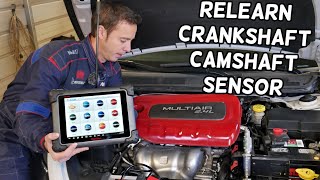
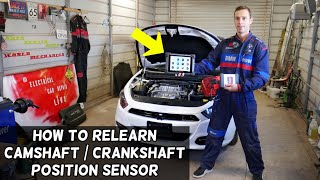
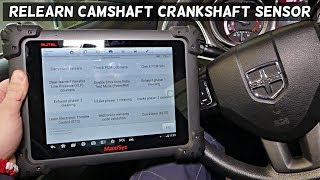
- After replacement, clear the codes. A 'crankshaft position variation relearn' procedure may be necessary. For some vehicles, this can be done via a drive cycle: accelerate to 60 mph, then coast down to 50 mph without using the brakes, and repeat three times. If this doesn't work, a capable scan tool is needed to perform the relearn 🎬 Watch: How to calibrate and relearn your new crankshaft sensor. and clear a potential P0315 code.
- If the problem persists with a new OEM sensor and known-good wiring, investigate the possibility of a PCM software update by contacting a dealership or equipped independent shop.
Parts You'll Likely Need

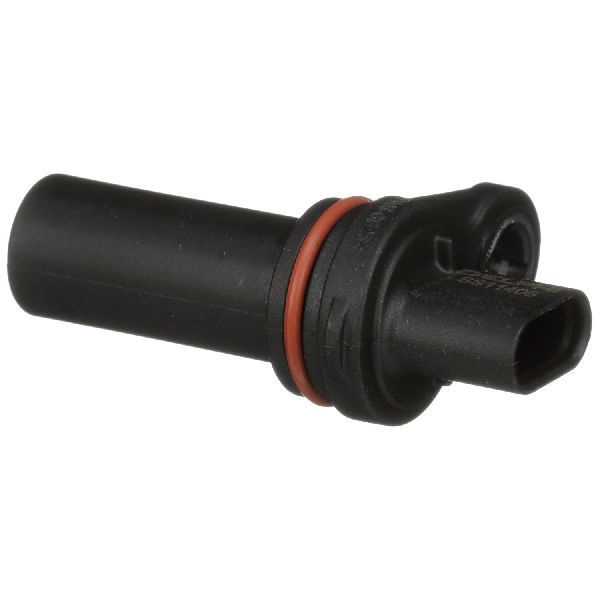
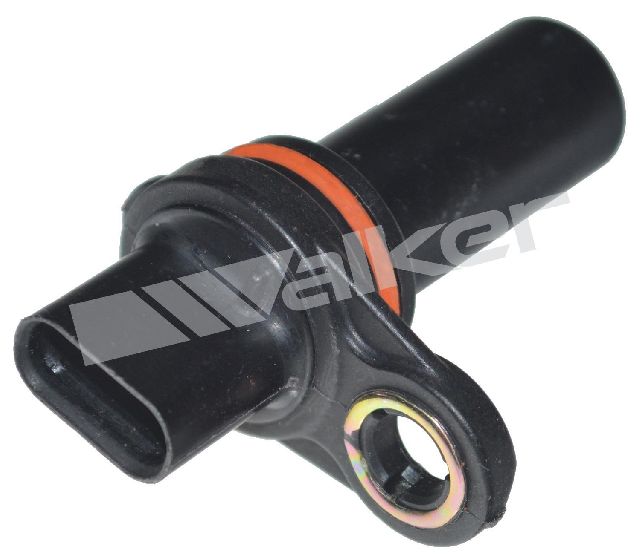
- Crankshaft Position Sensor
(OEM #05033307AE)— This sensor is the most common point of failure for code P0339 due to its location and susceptibility to heat and vibration. Part number 05033307AE supersedes previous versions like 5033307AA, AB, AC, and AD.
Trusted brands: Mopar (OEM), NGK/NTK, Delphi, Standard Motor Products
OEM price range: $55-$90
Aftermarket price range: $20-$60 - Crankshaft Position Sensor Connector Pigtail — Needed if the original connector or wiring is found to be melted, corroded, or damaged from heat exposure near the exhaust manifold.
Trusted brands: Dorman, Mopar
OEM price range: $25-$40
Aftermarket price range: $15-$30
Related Codes That Often Appear With This One
- P0335 — P0335 indicates a complete failure of the crankshaft sensor circuit, while P0339 indicates an intermittent failure. It's common for the intermittent P0339 to eventually become the hard fault P0335 as the component degrades further.
- P0300, P0301, etc. — These are misfire codes. If the PCM loses the crankshaft signal, it cannot time the ignition spark correctly, leading to random or specific cylinder misfires. This can sometimes occur after replacing the CKP sensor if a relearn procedure is not completed.
- P0340 / P0344 — These codes relate to the camshaft position sensor. Since the crank and cam sensors work together, a fault in the critical crank sensor signal can sometimes confuse the PCM and lead it to flag a code for the cam sensor as well.
- P0315 — This code for "Crankshaft Position System Variation Not Learned" can appear after replacing the crankshaft sensor. It means a relearn procedure is required, which can often be completed by a specific drive cycle.
Technical Service Bulletins (TSBs) & Recalls

- Recall S89 / NHTSA 16V-907: Addresses faulty crankshaft/camshaft sensor connectors on some 2016 models manufactured between May and July 2016.
- TSB Bulletin #18-075-20: Addresses diagnostic trouble codes including P0339 (Crankshaft Position Sensor Intermittent) and P0335, which may be accompanied by issues with adaptive cruise control.
Platform-Specific Known Issues
- Recall S89 / NHTSA 16V-907 was issued for some 2016 models (built from May 8, 2016 to July 12, 2016) due to an improperly manufactured electrical connector for the crankshaft and camshaft sensors, which could cause an intermittent connection and lead to stalling. The recall procedure involved replacing the connectors and terminals.
Mechanic-Grade Diagnostic Values

- Crankshaft Position Sensor (CKP) Connector Voltage — expected: With key on, engine off: Pin 1 (5V Supply) should have 4.5-5.5V. Pin 2 (Signal) may show ~5V. Pin 3 (Ground) should have continuity to ground.. Failure: Missing 5V supply or a bad ground points to a wiring or PCM issue, not the sensor itself.
- Live Data Scan Tool - Engine RPM (while cranking) — expected: A steady reading between 150-300 RPM.. Failure: A reading of 0 RPM, or a value that jumps erratically or drops out while the engine is audibly cranking, indicates a loss of signal from the CKP circuit.
- Oscilloscope Pattern - CKP Signal Wire — expected: A clean digital square wave pattern that switches between approximately 0V and 5V as the engine rotates.. Failure: A missing pattern, a pattern with dropouts, or a wave that does not pull down close to 0V indicates a failing sensor or wiring issue.
Scan Tool Commands That Help
- Chrysler wiTECH: LEARN ADAPTIVE NUMERATOR / Clear Mis-fire TLC — This function is required after replacing the crankshaft position sensor to clear code P0315 (Crankshaft Position System Variation Not Learned) and calibrate the PCM to the new sensor's signal profile to prevent misfire detection issues. It forces the PCM to relearn the subtle variations of the crankshaft tone ring.
Wiring & Ground Locations
- CKP Sensor Connector (at sensor) — On the rear of the engine block, near the exhaust manifold, often accessible from underneath the vehicle.. This is the primary point of failure due to heat damage. The three pins are: Pin 1 (5V Supply), Pin 2 (Signal), and Pin 3 (Sensor Ground). All voltage and signal tests start here.
- PCM Connector C2 (at Powertrain Control Module) — The PCM is located in the center rear of the engine compartment. C2 is one of the large multi-pin connectors.. Allows for continuity testing of the harness. The CKP Signal wire goes to Pin 32, the 5V Supply is from Pin 29, and the Sensor Ground is at Pin 31. This helps isolate a wiring fault from a PCM fault.
- Engine Ground Strap — A braided metal strap connecting the engine block or transmission housing to the vehicle's frame rail/chassis, often near a motor mount.. A corroded or broken main engine ground can cause intermittent and bizarre electrical issues, including erratic sensor signals. While not a direct cause of P0339, a poor ground can mimic sensor failure and should be inspected.
Real Owner Repair Stories
- Jeep Patriot forum user (2015 Jeep Patriot 2.0L (same platform/engine family)) — Stalling, code P0339.
❌ Tried (didn't work) Initial diagnosis pointed to the sensor.
✅ What actually fixed it The problem was a melted wiring harness for the crankshaft position sensor. The video shows replacing the sensor and implies the wiring was the root cause of the intermittent signal. - Dodge Caliber forum user (Dodge Caliber (same platform/engine family)) — Persistent P0339 and stalling, especially when the engine was hot.
❌ Tried (didn't work) Replacing the crankshaft position sensor multiple times with aftermarket parts.
✅ What actually fixed it A thorough inspection of the wiring harness revealed it had been rubbing against the A/C compressor pulley, wearing through the protective loom and causing the signal wire to short intermittently. Repairing and rerouting the harness away from the pulley permanently solved the problem. - Mechanic diagnostic video (Chrysler/Dodge/Jeep vehicle) — Crank-no-start condition with CKP codes.
❌ Tried (didn't work) Replacing the sensor without a full diagnosis.
✅ What actually fixed it The final diagnosis after a new sensor didn't fix the issue was the need for a 'Cam/Crank Relearn' procedure using a professional scan tool. The P0315 code was present, preventing proper operation until the relearn was performed. - NHTSA ODI #11196503 — An owner reported that their engine would shut off and slowly stop moving. The car was diagnosed with P0335 and P0339, but the owner continued to have issues within the same week of having the sensor replaced.
- NHTSA ODI #11120914 — An owner described their engine dying while driving, forcing them to coast to a stop on the shoulder. The car would not restart for about 10 minutes, and subsequent scans showed codes P0339 and P0335.
OEM Part Supersession History
5033307AA, 5033307AB, 5033307AC, 5033307AD→05033307AE— Standard part revision and improvement over time.
Heads up: There are no known incompatibilities. The latest part number (05033307AE) is the correct service replacement for all previous versions on this platform.
Model Year Variations Within This Range
- 2016 (May 8, 2016 - July 12, 2016 build dates): Subject to Recall S89 / NHTSA 16V-907 for improperly manufactured electrical connectors for both the crankshaft and camshaft position sensors. The fix was to replace the faulty connectors and terminals.
Diagnostic Flowchart
Other Known Issues on This Vehicle
Issues unrelated to this code that are worth knowing about as an owner of this generation:
- Front and Rear Subframe Rust 🔴 High — Very common, especially in salt-belt regions. Can become structurally unsafe, with reports of the frame crumbling or breaking. Some 2007 models had a 10-year extended warranty for this, but it has since expired.
- CVT Transmission Failure 🔴 High — Common across many model years, particularly 2007-2012. Symptoms include overheating (especially on the highway), whining noises, shuddering, and sudden loss of power. Failure is often due to overheating or internal belt breakage.
- Electronic Throttle Body Failure 🟠 Medium — Reported across multiple model years, causing the vehicle to enter 'limp mode' with the electronic throttle control (lightning bolt) light illuminated. Can result in sudden loss of acceleration. (Ref: TSB #09-003-20 REV. C for 2020 models.)
- Suspension Component Wear 🟠 Medium — Frequent failure of front control arms and bushings is reported, leading to noise and accelerated tire wear. This is often exacerbated by subframe rust issues.
Used vs. New Parts: Buying Guide for This Vehicle
When a used part is the smart pick: Almost never for the sensor itself. A used wiring harness pigtail from a low-mileage, collision-damaged vehicle can be a viable option if the original connector is melted and the used part is in pristine condition (pliable, not brittle).
Donor-vehicle mileage cap: roughly under 80000 miles for the part to have meaningful remaining life.
What to inspect on the donor part:
- For a wiring pigtail, ensure the plastic loom is not cracked, brittle, or showing signs of heat exposure.
- Wires should be flexible with no visible nicks or previous repairs.
- The connector locking tab must be intact and functional.
OEM-only on this vehicle (don't cheap out):
- Crankshaft Position Sensor. Forum and mechanic consensus is overwhelming that aftermarket sensors for this specific application have an extremely high rate of premature failure or are dead-on-arrival.
Aftermarket brands forum-validated for this vehicle:
- NGK/NTK is widely regarded as a high-quality alternative and is believed to be an OEM supplier for many Mopar electronics.
- Delphi is also a reputable OE-tier supplier for sensors.
Brands owners have reported issues with on this vehicle:
- Generic 'white box' parts and many store brands are frequently reported by owners to fail quickly, sometimes within days or weeks, causing the P0339 code to return.
Real Owner Stories
Aggregated from forums and TSBs cited above. Mileages and costs reflect what owners reported in those sources.
2015 Jeep Compass
Symptoms: Car completely shuts off while driving.
What fixed it: The owner was advised that the problem was the crankshaft sensor and implies that replacing it is the correct fix after mechanics failed to diagnose it.
Source hint: Reddit r/JeepCompass
2007-2017 Jeep Compass 2.4L World
Symptoms: Persistent stalling issue, which occurred when the engine was hot.
What fixed it: After multiple failed sensor replacements, the owner discovered the crank and cam sensor wires were chafing against the hot engine. Securing them away with zip ties provided a permanent fix.
Source hint: Jeeps.net Forum (https://www.jeeps.net/threads/p0339-cam-and-crankshaft-sensor-problems.4789/page-3)
2016 Jeep Compass
Symptoms: Vehicle experienced a loss of power steering assist and code P0339 was illuminated.
What fixed it: The vehicle was taken to an independent mechanic for diagnosis after the owner self-inspected and found the crankshaft sensor code. (Ref: NHTSA ODI #11507266)
Related OBD-II Codes
Frequently Asked Questions
Why is it so important to use an OEM Mopar crankshaft sensor on my Jeep Compass?
I replaced the crankshaft sensor, but the P0339 code and stalling came back. What should I check next?
Does the recall for crankshaft sensor connectors apply to my 2014 Jeep Compass?
Do I need a special tool to perform the crankshaft position relearn after replacing the sensor?
My wife's Dodge Caliber has the same stalling issue. Is it the same problem?
I saw a forum post about using zip ties to fix P0339. Is that a real solution?
Helpful Videos

We Have This Part in Stock



The information in this article is provided for general reference and educational purposes only. Vehicle specifications, procedures, and part compatibility can vary by production date, trim level, and region. Always consult your vehicle's factory service manual and verify part numbers before purchasing or performing repairs. Safety-critical components such as airbags, seat belts, and braking systems should be installed by a qualified professional.
- Jeep Compass:
- 🎬 Helpful Videos
- 🛍️ Shop This Part
- What's Unique About the 2007-2017 Jeep Compass
- Symptoms You May Notice
- Most Likely Causes
- Rare But Worth Checking
- Diagnosis Steps
- Parts You'll Likely Need
- Related Codes That Often Appear With This One
- Technical Service Bulletins (TSBs) & Recalls
- Platform-Specific Known Issues
- Mechanic-Grade Diagnostic Values
- Scan Tool Commands That Help
- Wiring & Ground Locations
- Real Owner Repair Stories
- OEM Part Supersession History
- Model Year Variations Within This Range
- Diagnostic Flowchart
- Other Known Issues on This Vehicle
- Used vs. New Parts: Buying Guide for This Vehicle
- Real Owner Stories
- 2015 Jeep Compass
- 2007-2017 Jeep Compass 2.4L World
- 2016 Jeep Compass
- Related OBD-II Codes
- Frequently Asked Questions
- 🎟️ Get 5% Off