

OBD-II Code P0315: Crankshaft Position System Variation Not Learned
What P0315 means, why it triggers, and how to fix it
- The #1 cause of P0315 is skipping the mandatory 'crankshaft variation relearn' procedure after replacing the battery, PCM, or crankshaft sensor.
- Driving with P0315 disables the engine's misfire monitor, which allows unburned fuel to destroy a $1,500 catalytic converter within 1 to 6 months.
- Clearing this code permanently requires a $150+ bi-directional scan tool to command the relearn procedure; a basic $20 code reader will not work.
- For 2020-2024 Ford F-Series trucks, P0315 is a known software bug fixed by a free dealer PCM update under Technical Service Bulletin 23-2082.
What Does P0315 Mean?

Your car's Powertrain Control Module (PCM) has not completed the learning process required to monitor the engine for misfires. This process maps the unique imperfections on the crankshaft's toothed reluctor wheel to track its exact position and speed. Without this profile, the computer cannot accurately control engine timing or detect misfires.
Technical definition: Crankshaft Position System Variation Not Learned. The Powertrain Control Module (PCM) has not stored the compensating values for the Crankshaft Position (CKP) sensor system. The PCM measures differences between reference points on the spinning crankshaft and compares them to an ideal value; missing this learned profile triggers the code.
🎬 Watch: A quick breakdown of P0315 causes and definitions.Can I Drive With P0315?
Yes, But With Caution. You can drive for short trips, like to a repair shop, but avoid highways. If the engine stalls, runs rough, or the check engine light flashes, stop driving immediately to prevent engine damage. Driving with an unlearned crankshaft profile disables the misfire detection system, allowing unburned fuel to overheat and destroy the catalytic converter—an $800-$2500 repair.
Common Causes

- Crankshaft Variation 'Relearn' Procedure Skipped (Very Common) — This is the #1 cause. The relearn procedure is mandatory after replacing the battery, the PCM, the crankshaft sensor, or after major engine repairs. The computer's memory clears and requires recalibration.
- Powertrain Control Module (PCM) Software Glitch (Common) — A software bug prevents the computer from learning the variation. This is a widely documented issue on 2020-2024 Ford F-Series trucks and certain GM models, resolved exclusively with a dealer software update. 🎬 See how to perform a Ford crankshaft relearn procedure.
- Faulty Crankshaft Position (CKP) Sensor (Common) — The sensor reading the crankshaft's speed and position fails due to heat and vibration, sending erratic signals to the computer and preventing the learn procedure from completing.
- Incompatible Aftermarket CKP Sensor (Common) — Non-OEM crankshaft sensors often have slightly different magnetic properties or signal outputs. This prevents the PCM from successfully completing the relearn procedure, even if the sensor is brand new.
- Wiring or Connector Damage (Less Common) — The wiring harness or electrical connector for the crankshaft position sensor becomes damaged, corroded, or loose, disrupting the signal to the computer.
- Worn Timing Components or Damaged Reluctor Wheel (Less Common) — A stretched timing chain or a damaged, bent, or debris-covered reluctor wheel alters the crankshaft signal, making it impossible for the PCM to learn the correct pattern.
- Low Battery Voltage During Cranking (Uncommon) — If battery voltage drops below 11.5V during engine cranking, the PCM loses its learned memory for the crankshaft variation. This frequently triggers the code after a jump-start.
Symptoms
- Check Engine Light is On — The check engine light illuminates solidly, or flashes if a severe misfire is actively occurring.
- Rough Idle and Engine Misfires — The engine shakes, runs unevenly, or misfires at idle or under load due to incorrect ignition and fuel timing.
- Engine Stalling — The engine stalls unexpectedly right after starting or while driving at low speeds, creating a safety hazard in traffic.
- Reduced Engine Power and Acceleration — The vehicle feels sluggish and hesitates during acceleration because the computer defaults to a safe, inefficient timing map.
- Hard to Start or Won't Start — The engine cranks for an extended period before starting, or fails to start entirely because the computer cannot time the spark.
Diagnostic Flowchart
Tap your situation to follow the diagnostic path that matches what you're seeing on this code.
Common Fixes & Costs
- Perform Crankshaft Variation Relearn Procedure — Parts: $0, Labor: $100-$200, ~1 hr book time (Professional)
- Update Powertrain Control Module (PCM) Software — Parts: $0, Labor: $150-$250, ~1 hr book time (Professional)
- Replace Crankshaft Position (CKP) Sensor — Parts: $50-$150, Labor: $220-$450, ~1.5 hr book time (Intermediate)
- Repair CKP Sensor Wiring or Connector — Parts: $10-$50, Labor: $100-$250, ~1.5 hr book time (Intermediate)
- Replace Damaged Reluctor Wheel/Flexplate — Parts: $100-$400, Labor: $800-$1500+, ~8 hr book time (Professional)
Used vs. New Parts: Buying Guide
When a used part is worth it: Buying a used crankshaft position sensor is never recommended. The part is inexpensive new, and it is a critical electronic component that degrades with heat. The labor to replace it is often more than the part cost.
Donor-vehicle mileage cap: roughly under 20000 miles for the part to have meaningful remaining life.
Donor quality checklist:
- Only consider a used sensor from a very low-mileage, late-model vehicle that was wrecked.
- Ensure the part number matches exactly.
- Avoid sensors from vehicles with high mileage or unknown history.
Decision logic:
- If The part is a crankshaft position sensor → Buy a new OEM or high-quality aftermarket part. The risk of premature failure with a used sensor is too high.
- If Budget is the absolute primary concern and the vehicle has very high mileage → A used sensor is a last resort, but understand it will likely fail quickly, requiring repeat labor.
- If An aftermarket new sensor has already failed the relearn procedure → Buy a new OEM sensor. Do not try a used sensor as a solution.
Warranty tradeoff: Used sensors typically have a 30-day warranty. New aftermarket sensors offer 1-year to limited lifetime warranties. A new OEM sensor is the most reliable choice.
Worst-case if a used part fails: $200-$400 if a used sensor fails after installation, requiring repeat labor costs.
What Happens If You Wait — Timeline
- 0-1 month: Check Engine Light is on. The misfire monitor is disabled. The car fails an emissions test. (MPG impact: 0-5%% · Added cost: $0)
- 1-3 months: Occasional rough idle, hesitation, or stalling occurs. The disabled misfire monitor allows unburned fuel to enter the exhaust, stressing the catalytic converter. (MPG impact: 5-10%% · Added cost: $25-$75 in wasted fuel)
- 3-6 months: Rough idle and stalling become frequent. The catalytic converter overheats from unburned fuel, causing its internal substrate to crack and melt. (MPG impact: 10-15%% · Added cost: $800-$2500 (catalytic converter replacement is now required))
- 6+ months: Severe performance issues are constant. The catalytic converter clogs completely, creating excessive exhaust backpressure that causes internal engine damage. (MPG impact: 15-25%+% · Added cost: $2500+ (risk of engine damage in addition to a destroyed catalytic converter))
Cost of Not Fixing It
- 0-1 month: Noticeable rough idle, potential stalling, and a 5-15% drop in fuel economy. The misfire monitor is disabled, increasing emissions. (Added cost: Negligible)
- 1-6 months: Driving with an unlearned profile allows unburned fuel to enter the exhaust, which overheats and destroys the catalytic converter. (Added cost: $800-$2500)
- 6+ months: Continued stalling becomes a safety hazard in traffic. Severe timing inaccuracy contributes to long-term mechanical engine stress. (Added cost: Potential for higher costs if stalling leads to an accident or engine failure.)
Diagnosis Steps
- Check for Other Trouble Codes
Use an OBD-II scanner to read all stored codes. Codes related to the crankshaft sensor (P0335) or camshaft correlation (P0016) must be fixed first, as they guarantee the P0315 relearn will fail.
Tools: OBD-II Scan Tool (Beginner) - Attempt the 'Crankshaft Variation Relearn' Procedure
Connect a bi-directional scan tool with this specific function. Follow the on-screen instructions precisely. If this completes successfully and the code clears, the repair is finished.
Tools: Bi-directional Scan Tool (Intermediate) - Check for PCM Software Updates
If the relearn fails or you drive a modern Ford/GM truck, check for Technical Service Bulletins (TSBs). A dealership must install available Powertrain Control Module (PCM) software updates to fix known bugs.
Tools: Dealer-level Scan Tool, Internet Access (Professional) - Visually Inspect the CKP Sensor and Wiring
Locate the crankshaft position sensor near the main crankshaft pulley or bell housing. Inspect for cracks, corrosion, melted plastic, or loose connections on the sensor and wiring harness.
Tools: Flashlight (Beginner) - [PRO TIP] Test CKP Sensor Circuit with a Multimeter
Disconnect the CKP sensor. For a 3-wire Hall-effect sensor, turn the key to 'ON'. Verify 5V reference voltage on one pin and a solid ground on another. For a 2-wire magnetic sensor, verify resistance is within the manufacturer's spec (typically 500-1,200 Ohms).
Tools: Multimeter, Vehicle-specific Repair Manual (Advanced) - [PRO TIP] Analyze Live Data PIDs
Monitor Engine RPM (PID 0x0C) and Engine Coolant Temperature (PID 0x05) while cranking. A stable RPM reading (200-300 RPM during crank) with no dropouts confirms the sensor is fundamentally working. Coolant temp must be above 170°F for the relearn to initiate.
Tools: OBD-II Scan Tool with Live Data (Advanced) - [PRO TIP] Analyze the CKP Signal with an Oscilloscope
Connect an oscilloscope to the CKP sensor's signal wire. While cranking, verify a consistent square wave (Hall-effect) or AC sine wave (magnetic). Dropouts or noise indicate a faulty sensor or damaged reluctor wheel.
Tools: Oscilloscope, Vehicle-specific Repair Manual (Professional) - Inspect the Reluctor Wheel
Remove the CKP sensor and visually inspect the teeth on the reluctor wheel for damage, debris, or missing teeth. Slowly turn the engine by hand using a socket on the crankshaft pulley to view the entire wheel.
Tools: Socket Set, Breaker Bar, Flashlight, Borescope (Advanced) - Check Timing Chain/Belt Condition
Excessive slack in the timing chain causes the crank and cam signals to go out of sync, preventing the relearn from completing. Verify proper tension according to the manufacturer's procedure.
Tools: Basic Hand Tools, Vehicle-specific Repair Manual (Advanced)
When This Code Triggers (Freeze-Frame Conditions)
- Engine Coolant Temp: 175-210°F (The engine must be at full operating temperature for the relearn procedure to initiate.)
- RPM: 1500-4000 RPM (The code sets during a specific drive cycle or scan tool test involving steady RPMs or sharp acceleration.)
- Engine Load: 20-50% (The test runs under light to moderate load, such as cruising at a steady speed.)
- Vehicle Speed: 45-55 mph (Manufacturer drive cycles require cruising at highway speeds for several minutes to trigger the learning process.)
Related Codes
- P0335 — Indicates a complete loss of signal or a circuit fault. P0315 means a signal is present, but the PCM hasn't learned its profile. You must fix P0335 before addressing P0315.
- P0300 — Because the PCM hasn't learned the crank profile, it cannot detect which specific cylinder is misfiring, setting a general P0300 code instead of a specific cylinder code.
- P0016 — Indicates a mechanical timing issue like a stretched timing chain. This physical misalignment guarantees the P0315 relearn will fail. P0016 must be repaired first.
- P0336 - P0339 — These point to specific faults within the crankshaft position sensor circuit. They indicate poor signal quality, which prevents the PCM from learning the variation.
Climate & Environmental Factors
- Extreme Cold: Low temperatures cause a weak battery's voltage to drop below 11.5V during cranking, which is insufficient for the PCM to retain its learned memory, triggering P0315 after a cold start.
- High Heat & Humidity: Prolonged exposure to high under-hood temperatures accelerates the degradation of plastic sensor housings and wiring insulation, causing intermittent signal faults that prevent the relearn procedure from completing.
- High Altitude: Lower air density at altitude requires more precise engine timing. A vehicle running acceptably with an unlearned profile at sea level will exhibit severe rough idle and hesitation at higher elevations.
How to Talk to a Mechanic About This Code
Say this: "I have a P0315 code and I'd like to schedule a diagnostic. I understand the most common fix is a 'crankshaft variation relearn' procedure. Can you please attempt the relearn first before recommending any part replacements?"
This signals you know a simple, low-cost procedure is the most likely solution. It prevents a shop from immediately quoting a sensor replacement.
Avoid saying:
- 'Just fix whatever's wrong'
- 'My check engine light is on, can you look at it?'
- 'Whatever you recommend'
Questions to ask before authorizing the repair:
- If the relearn procedure fails, what is your next diagnostic step?
- If you recommend replacing the sensor, does your quote include the mandatory relearn procedure that must be done afterward?
- Are you planning to use an OEM sensor? I've read that aftermarket ones cause this code to return.
- What is your warranty on this repair?
Where to Take It: Dealer vs Independent vs Chain
- Dealer:
Recommended. The dealer is the best choice if your vehicle is a modern Ford/GM/Chrysler truck due to common software updates, or if it's under warranty.
Best for: Vehicles under warranty (powertrain or emissions), Modern Ford, GM, or Chrysler vehicles with known software TSBs for P0315, Complex cases where other shops have failed
Downsides: Highest labor rate, typically 1.5-2x an independent shop, Less willing to perform only the relearn without a full diagnostic fee (Typical cost: +50% vs. baseline) - Independent Shop:
Best Fit. For most out-of-warranty cars, a well-vetted independent shop performs the relearn or sensor replacement for a much lower cost than the dealer.
Best for: Most out-of-warranty vehicles, Cost-conscious owners
Downsides: Quality and equipment vary widely. You MUST call first to confirm they have a bi-directional scanner capable of a 'crankshaft variation relearn'. (Typical cost: +0% vs. baseline) - Chain Shop:
Avoid. This code requires a specific software procedure, not just a part swap. Chain shops are not equipped for this level of diagnostics.
Best for: Simple jobs like oil changes, tires, and brakes.
Downsides: Technician skill varies dramatically; high pressure to upsell parts., Unlikely to have the specific bi-directional scan tool required for the relearn procedure. (Typical cost: -10% vs. baseline)
When to Walk Away From the Repair
If the estimated repair cost exceeds 40-50% of the car's private-party value, seriously consider selling or trading it in rather than repairing it.
- Car worth $4000, fix is $450: Fix it. The repair cost is low relative to the car's value.
- Car worth $12000, fix is $1800: Fix it. This is well below the threshold.
- Car worth $3000, fix is $1500: Walk away. The repair cost is 50% of the car's value. Sell as a 'mechanic special' or trade it in.
What Scan Tool You Need for This Code

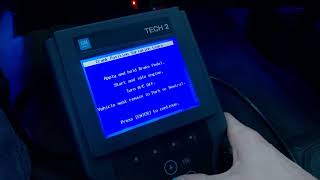
Minimum: A bi-directional scan tool with the specific function for 'Crankshaft Variation Relearn' (or 'CASE Relearn' on GM vehicles).
A basic $20-$100 code reader only reads and clears the P0315 code; it CANNOT perform the relearn procedure. The fix for P0315 is a command, not just a reading.
Budget: Autel MaxiAP AP200 / Thinkcar Thinkdiag (~$60-120) — These are the cheapest options that may offer the crank relearn function as an add-on. Vehicle compatibility is NOT guaranteed; check with the manufacturer before buying.
Mid-range: Foxwell NT510 Elite / CGSULIT SC530 (~$150-250) — These brand-specific scanners offer reliable bi-directional control, including the crankshaft relearn procedure for a specific manufacturer (e.g., GM, Ford, Honda).
Professional: Autel MaxiCOM MK808S / XTOOL D7 (~$450-600) — These full-featured, all-make bidirectional tools provide reliable access to the crank relearn procedure for nearly all compatible vehicles.
Rent vs buy: You cannot rent the required tool. Auto parts store 'Loan-A-Tool' programs offer basic code readers, not bi-directional scanners. Buying a mid-range tool is often cheaper than paying a shop for one hour of labor.
How to Clear the Code After You Fix It
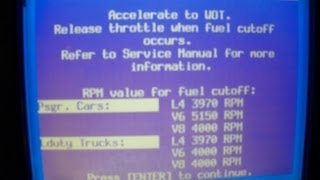
- Perform the specific crankshaft variation relearn procedure with a bi-directional scan tool.
- Use the scan tool to clear the P0315 code from the PCM's memory.
- Turn the ignition off for at least 30 seconds to allow the module to power down completely.
Drive cycle (~20 minutes): A specific drive cycle confirms the fix. A common GM cycle involves: 1) Cold start and idle for 2 minutes. 2) Accelerate to 55 mph and hold for 10 minutes. 3) Decelerate to 45 mph without brakes and hold for 1 minute. 4) Perform four 25-second decelerations. 5) Accelerate back to 55 mph for 2 minutes.
Readiness monitors affected: Misfire Monitor, Comprehensive Component Monitor
Before emissions retest: drive at least 50 miles to fully set monitors.
Watch out for:
- Disconnecting the battery will not clear this code permanently and erases learned memory, making the problem worse.
- The code returns immediately if the relearn procedure is not performed successfully after a repair.
- A 'Permanent DTC' remains even after clearing the code, requiring a full drive cycle to extinguish.
Will This Fail Emissions / State Inspection?
Yes — this code typically fails an OBD-II emissions inspection.
- California: An illuminated Check Engine Light results in an automatic failure. The P0315 code directly relates to the misfire monitor, which will also fail the test.
- New York: The NYS DMV emissions inspection includes an OBD-II scan. Any active diagnostic trouble code, including P0315, causes an automatic failure.
- Texas: In the 17 Texas counties requiring emissions testing, a vehicle with code P0315 fails the OBD-II portion of the test.
Most Commonly Affected Vehicles

- Ford F-150 / F-Series Super Duty (2004-2024) — Extremely common software issue on 2020-2024 6.7L Power Stroke engines. TSB 23-2082 and SSM 53232 direct dealers to update PCM/TCM software as the primary fix. For 2011-2014 F-150s, it appears frequently after a battery replacement.
- Chevrolet / GM Silverado, Equinox, Envoy, Tahoe (2002-2024) — Triggered if the 'CASE Relearn' procedure is skipped after sensor or engine work. On high-mileage 2010-2017 Equinox models with the 2.4L engine, this code often points to a stretched timing chain.
- Dodge / Ram / Chrysler Ram 1500, Pacifica, Grand Caravan (2004-2022) — Occurs when a technician skips the relearn procedure after replacing the sensor or battery. On Pacifica Hybrids, the relearn requires the dealer wiTECH tool due to hybrid powertrain logic.
- Jeep Grand Cherokee (2014-2021) — Triggered by an ECM update performed without completing the mandatory crank relearn procedure, or after replacing the sensor.
- Hyundai Genesis, Sonata (2015-2020) — Known issue on 3.8L engines addressed by TSB 15-FL-005, requiring inspection and replacement of the CKP sensor and drive plate if misfires (P0300) are present.
- Nissan Altima, Maxima, Frontier (2013-2019) — Appears after a simple battery replacement alongside a P0340 camshaft sensor code. The loss of power corrupts the learned values, requiring a relearn procedure.
- Subaru Impreza, Forester, Outback (2010-2024) — Occurs if the sensor is replaced and the relearn procedure is skipped. The 2012-2016 Impreza had a recall including a PCM reprogram that triggers this if not completed correctly.
- Honda Accord, CR-V (2003-2024) — Appears after a CKP sensor or PCM is replaced without performing the subsequent relearn procedure.
Manufacturer-Specific Notes
- Ford: On 2020-2024 F-Series trucks, P0315 is a known software bug. TSB 23-2082 and SSM 53232 instruct dealers to update the PCM and TCM software as the primary fix, not replace parts.
- General Motors (GM): GM refers to the relearn procedure as a 'CASE Relearn.' It is absolutely required after common repairs, and failure to perform it is the top cause of P0315 on Chevy and GMC vehicles.
- Chrysler / Dodge / Jeep: The 'Crankshaft/Camshaft Variation Relearn' procedure is critical after a sensor replacement or battery disconnect. Pacifica Hybrids require the wiTECH 2.0 tool to initiate the relearn.
- Hyundai: For the Genesis 3.8L, TSB 15-FL-005 addresses P0315 accompanied by P0300. The procedure involves checking misfire patterns and often requires replacing the reluctor wheel itself.
Real Owner Stories
2021 Ford F-250 6.7L Power Stroke
Check Engine Light came on with code P0315 at 30,000 miles. No noticeable driving issues or symptoms.
Outcome: The dealership identified TSB 23-2082, specifying a software bug as the root cause. They reprogrammed the PCM and TCM. The repair took under an hour and was covered under warranty for $0.
Lesson: For modern Ford trucks, P0315 is a software glitch. Check for TSBs before replacing parts, as the fix is a no-cost warranty software update.
2013 Ford Mustang GT 5.0L at 150K miles
Car threw P0315 and P0300 codes at wide-open throttle. The owner had already replaced plugs and coils.
Outcome: The owner used a borescope and discovered a scratch on a cylinder wall. The physical engine damage prevented the relearn from completing successfully. The ultimate fix was an engine replacement.
Lesson: If a P0315 code repeatedly fails to clear with a relearn procedure alongside a P0300 misfire code, it indicates a deeper mechanical engine problem.
2009 Chevy Malibu at 110K miles
Car would crank but not start. The only code present was P0315.
Outcome: The new sensor needed calibration, requiring a special scan tool. The vehicle was towed to a shop for a 'CASE Relearn', which resolved the no-start issue.
Lesson: Replacing the crankshaft sensor is only half the job. Skipping the mandatory relearn procedure leaves you with the same code and symptoms.
2015 Mustang GT after new clutch/flywheel
After installing a performance clutch and flywheel, the car had a P0300 misfire code.
Outcome: The owner was stuck in a loop. The solution required a dealer-level scan tool to force the relearn procedure despite the active code.
Lesson: Major drivetrain modifications trigger P0315. Consumer-grade tuners cannot handle the specific sequence required to clear the code and perform the relearn.
How to Prevent This Code From Triggering
- Use only OEM or top-tier aftermarket CKP sensors (At time of replacement) — Cheaper aftermarket sensors have different magnetic properties that the PCM cannot learn, causing the P0315 code to persist.
- Maintain a healthy, fully charged battery (Monthly check) — Low battery voltage (dropping below 11.5V during cranking) causes the PCM to lose its learned crankshaft variation memory.
- Check for PCM software updates during routine service (Annually or when serviced) — On modern Fords, P0315 is caused by a software glitch. A simple update at the dealership prevents the code from appearing.
- Inspect sensor wiring during under-hood maintenance (Every oil change) — The CKP sensor wiring is exposed to intense heat. Securing cracked or melting wires prevents signal interruption.
Frequently Asked Questions
What does 'Crankshaft Position System Variation Not Learned' actually mean?
It means your car's computer hasn't memorized the exact pattern of the crankshaft as it spins. This memory is essential for the computer to precisely time the engine and detect misfires.
What are the most common misdiagnosis mistakes for P0315?
The biggest mistake is replacing the crankshaft sensor without first attempting the relearn procedure. Many times, the sensor is fine and the PCM just needs recalibration. Always fix timing correlation codes like P0016 first, as they guarantee the P0315 relearn will fail.
I replaced the sensor and did a relearn, but the P0315 code came back. What now?
This happens when using incompatible aftermarket sensors with signal properties the PCM cannot adapt to. Install an OEM sensor to resolve this. If it still fails, inspect the reluctor wheel for damage or check for PCM software updates.
Can I fix P0315 myself?
If it just needs a relearn, you need a professional-level bi-directional scan tool. If the sensor is bad, DIY replacement is possible, but the relearn procedure is still required afterward.
Will P0315 clear itself?
No, P0315 will not clear on its own. It requires a specific 'Crankshaft Position System Variation Learn' procedure to be completed successfully using a capable scan tool.
How much does it cost to fix code P0315?
A relearn procedure at a shop costs $100-$200. If the crankshaft sensor needs replacement, expect to pay $220 to $450 for parts and labor.
Will my car fail an emissions test with a P0315 code?
Yes. An active Check Engine Light is an automatic failure, and this code disables the misfire monitoring system, which is a critical emissions component.
What's the difference between P0315 and P0335?
P0315 means the computer has a signal from the sensor but hasn't calibrated itself to it. P0335 means the computer is getting no signal at all, indicating a dead sensor or broken wire.
Key Takeaways
- The #1 cause of P0315 is skipping the mandatory 'crankshaft variation relearn' procedure after replacing the battery, PCM, or crankshaft sensor.
- Driving with P0315 disables the engine's misfire monitor, which allows unburned fuel to destroy a $1,500 catalytic converter within 1 to 6 months.
- Clearing this code permanently requires a $150+ bi-directional scan tool to command the relearn procedure; a basic $20 code reader will not work.
- For 2020-2024 Ford F-Series trucks, P0315 is a known software bug fixed by a free dealer PCM update under Technical Service Bulletin 23-2082.
Helpful Videos

The information in this article is provided for general reference and educational purposes only. Vehicle specifications, procedures, and part compatibility can vary by production date, trim level, and region. Always consult your vehicle's factory service manual and verify part numbers before purchasing or performing repairs. Safety-critical components such as airbags, seat belts, and braking systems should be installed by a qualified professional.
- 🎬 Helpful Videos
- What Does P0315 Mean?
- Can I Drive With P0315?
- Common Causes
- Symptoms
- Diagnostic Flowchart
- Common Fixes & Costs
- Used vs. New Parts: Buying Guide
- What Happens If You Wait — Timeline
- Cost of Not Fixing It
- Diagnosis Steps
- When This Code Triggers (Freeze-Frame Conditions)
- Related Codes
- Climate & Environmental Factors
- How to Talk to a Mechanic About This Code
- Where to Take It: Dealer vs Independent vs Chain
- When to Walk Away From the Repair
- What Scan Tool You Need for This Code
- How to Clear the Code After You Fix It
- Will This Fail Emissions / State Inspection?
- Most Commonly Affected Vehicles
- Manufacturer-Specific Notes
- Real Owner Stories
- 2021 Ford F-250 6.7L Power Stroke
- 2013 Ford Mustang GT 5.0L at 150K miles
- 2009 Chevy Malibu at 110K miles
- 2015 Mustang GT after new clutch/flywheel
- How to Prevent This Code From Triggering
- Frequently Asked Questions
- What does 'Crankshaft Position System Variation Not Learned' actually mean?
- What are the most common misdiagnosis mistakes for P0315?
- I replaced the sensor and did a relearn, but the P0315 code came back. What now?
- Can I fix P0315 myself?
- Will P0315 clear itself?
- How much does it cost to fix code P0315?
- Will my car fail an emissions test with a P0315 code?
- What's the difference between P0315 and P0335?
- Key Takeaways
- 🎟️ Get 5% Off