

P0335 on 2005-2010 Scion tC: Crank Sensor Causes and Fixes
On a 2005-2010 Scion tC, code P0335 is most often a failed crankshaft position sensor. However, a known issue covered by a Technical Service Bulletin (TSB S-SB-0025-12) points to a faulty intake camshaft gear, especially if the code appears at idle on a warm engine. A new sensor costs $25-$75, while the cam gear repair is significantly more involved. Before replacing parts, check for a weak battery, which is another known cause of false P0335 codes on Toyotas.
- P0335 on a Scion tC means the engine computer has lost the signal from the crankshaft position sensor.
- Symptoms are severe, including no-start or stalling while driving.
- Before replacing the crankshaft sensor, check the freeze frame data. If the code set when the engine was warm and at idle, the problem may be a faulty intake camshaft gear, per TSB S-SB-0025-12.
- The most common fix is replacing the crankshaft position sensor, which is a relatively inexpensive and accessible part.
- Always inspect the wiring for damage or oil contamination before replacing parts.
What's Unique About the 2005-2010 Scion tC

While a bad crankshaft sensor is a common cause for P0335 on any car, the 2AZ-FE engine in this Scion tC has a specific, documented issue. Toyota issued a Technical Service Bulletin (S-SB-0025-12) indicating that an intermittent P0335 code, particularly when the engine is warm and at idle, can be caused by a faulty intake camshaft gear assembly. This is a crucial detail that can lead to misdiagnosis if a technician only focuses on the crankshaft sensor itself. This TSB also applies to many other Toyota vehicles using the same engine. Manufacturer Bulletin #S-SB-0025-12 specifically notes that vehicles equipped with the 2AZ-FE engine may exhibit an intermittent MIL "ON" condition with DTC P0335 stored, and the intake camshaft gear assembly was subsequently improved to prevent this condition.
Symptoms You May Notice
- Engine will not start (cranks but won't fire)
- Long crank time before the engine starts
- Engine stalls unexpectedly, sometimes when coming to a stop
- Rough, unstable idle, may dip below 500 RPM and recover
- Hesitation or loss of power during acceleration
- Check Engine Light is on
- Reduced fuel economy
- Engine misfires
- Replacing the crankshaft position sensor when the actual cause is the intake camshaft gear assembly, as described in TSB S-SB-0025-12. This is especially likely if the code only appears when the engine is warm and at idle.
- Replacing parts without first checking the battery. A weak battery is a known cause of false P0335 codes on Toyota vehicles.
Most Likely Causes

- Failed Crankshaft Position Sensor 🔴 High Probability Sensors can fail over time due to heat cycles and vibration. Oil leaks from the timing cover or front main seal can also contaminate the sensor and its connector, accelerating failure. It is located near the crankshaft pulley and exposed to road grime and heat.
How to confirm: Check for an RPM signal on a scan tool while cranking the engine. If it reads zero, the sensor or its circuit is faulty. You can also test the sensor's internal resistance with a multimeter; it should be within the factory specified range (approx. 985 – 1,600 ohms cold for this engine). A reading outside this range or an open circuit indicates a bad sensor.
Typical fix: Replace the crankshaft position sensor. The sensor is located on the front of the engine, near the crankshaft pulley, and is held by a single 10mm bolt. Using an OEM brand like Denso is highly recommended to avoid compatibility issues.
Est. part cost: $25-$75 - Faulty Intake Camshaft Gear Assembly 🟡 Medium Probability A specific design issue prompted Toyota to release TSB S-SB-0025-12. The bulletin states that an intermittent P0335 can be stored when the engine is at operating temperature and at idle due to a problem within the gear assembly. This part was updated by Toyota to correct the flaw.
How to confirm: Using a scan tool, check the freeze frame data for when the P0335 code was set. If the coolant temperature was high (approx. 185°F or more) and the engine RPM was low (under 1000 RPM), this TSB applies. This diagnosis should be performed after confirming the CKP sensor and its wiring are good.
Typical fix: Replace the intake camshaft timing gear assembly with the updated part (P/N 13050-28021). This is a more involved repair as it requires accessing the timing components.
Est. part cost: $150-$250 - Damaged Wiring or Connector ⚪ Low Probability The wiring harness runs near the front of the engine and can be susceptible to heat damage, abrasion, or contamination from oil leaks. Corrosion can also form in the connector pins.
How to confirm: Visually inspect the wiring harness from the sensor to the ECM for any breaks, melted sections, or corrosion. Check for a secure connection at the sensor's plug. Wiggle the harness with the engine running to see if it induces a stall or triggers the code. A multimeter can be used to check for continuity and for shorts to ground between the sensor connector and the ECM pins.
Typical fix: Repair the damaged section of wire or replace the connector pigtail.
Est. part cost: $10-$30 - Weak or Low Voltage Battery ⚪ Low Probability Toyota issued a Technical Service Tip (T-TT-0010-10 Rev) stating that low battery voltage during cranking can cause inconsistent engine speed readings, potentially triggering a false P0335 code.
How to confirm: Test the battery voltage with a multimeter. A healthy battery should read ~12.6V with the engine off. Check for readings below 12.2V or a significant voltage drop during cranking.
Typical fix: Charge or replace the vehicle's battery.
Est. part cost: $100-$250
Rare But Worth Checking
- Stretched or Jumped Timing Chain: This is a more serious mechanical issue. If P0335 is accompanied by camshaft position codes (like P0012, P0016), it could indicate a timing problem. The engine may crank unusually fast and smoothly with no compression, or may not start at all. A loose timing chain is a known issue on high-mileage 2AZ-FE engines.
- Damaged Reluctor Ring: The sensor reads teeth from a reluctor ring (or sensor plate). If this ring is cracked, has broken/bent teeth, or is covered in debris, it will send an erratic signal. This can sometimes happen during other engine repairs if care is not taken.
- Failed Engine Control Module (ECM): This is very rare. The ECM should only be considered after all other possibilities, including the sensor, wiring, and camshaft gear, have been ruled out.
Diagnosis Steps
- Read the code and check freeze frame data with a scan tool. Note the engine RPM, coolant temperature, and battery voltage when the code was set.
- Check battery health. Test the battery voltage at rest and while cranking. A weak battery can cause a false code.
- Visually inspect the crankshaft position sensor, its connector, and wiring for any obvious damage, oil saturation, or loose connections.
- Use the scan tool's live data function to monitor Engine RPM while cranking. If the RPM reading is zero or erratic, the ECM is not receiving a valid signal.
- If the RPM is zero, disconnect the sensor and test its resistance using a multimeter. Compare the reading to the manufacturer's specification (approx. 985 – 1,600 ohms when cold).
- If the sensor tests good, check the wiring harness for continuity, shorts to ground, and proper voltage from the ECM. Wiggle the harness to check for intermittent faults.
- If the sensor and wiring are confirmed to be good, and the freeze frame data matches the conditions in TSB S-SB-0025-12 (warm engine, idle speed), the intake camshaft gear assembly is the likely culprit.
- For advanced diagnosis, use an oscilloscope to view the sensor's output waveform to check for a clean, consistent signal. Compare the CKP (NE) and CMP (G2) sensor signals to verify timing correlation.
Parts You'll Likely Need

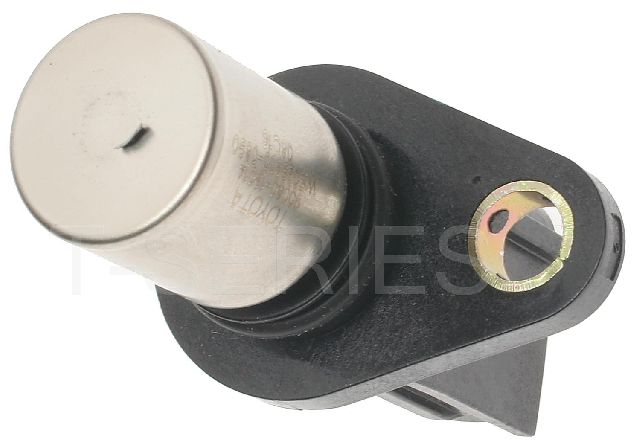
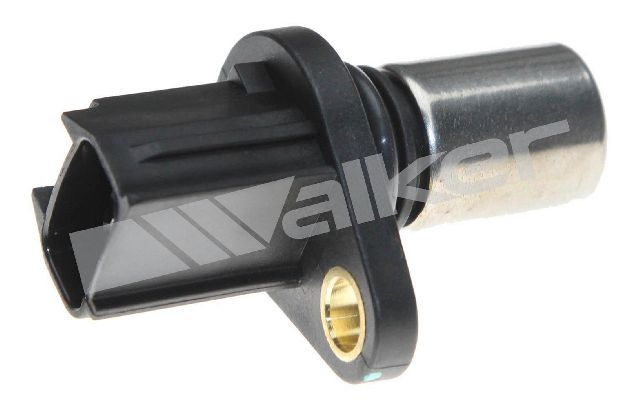
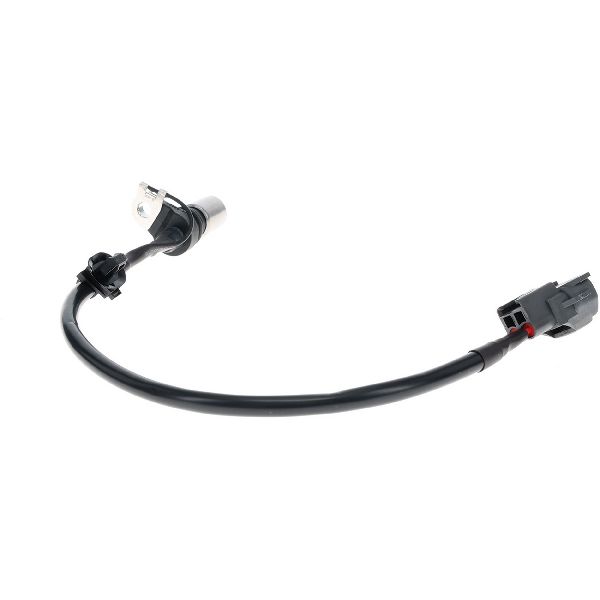
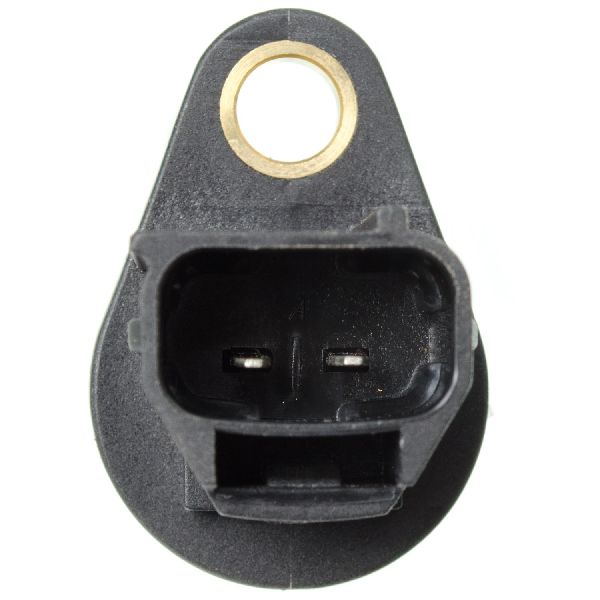
- Crankshaft Position Sensor
(OEM #90919-05047)— This is the most common failure point for the P0335 code.
Trusted brands: Denso (OEM), NGK/NTK, Hitachi
OEM price range: $90-$140
Aftermarket price range: $25-$75 - Intake Camshaft Timing Gear Assembly
(OEM #13050-28020)— This is a known issue on the 2AZ-FE engine that causes an intermittent P0335 code, as documented in TSB S-SB-0025-12. The original part number was 13050-0H010.
Trusted brands: Toyota (OEM)
OEM price range: $150-$250
Aftermarket price range: $100-$180
Related Codes That Often Appear With This One
- P0339 — This code for 'Crankshaft Position Sensor 'A' Circuit Intermittent' often appears with P0335, indicating the signal is dropping out rather than being completely gone. The TSB for the cam gear issue also references this code.
- P0012 — 'Camshaft Position 'A' - Timing Over-Retarded'. If seen with P0335, this strongly suggests a mechanical timing issue, such as a jumped timing chain, rather than just a sensor failure.
- P0340 — 'Camshaft Position Sensor 'A' Circuit'. A low battery voltage condition can sometimes trigger both P0335 and P0340 simultaneously.
Technical Service Bulletins (TSBs) & Recalls
- S-SB-0025-12 (NHTSA ID: 10134008): Addresses an intermittent P0335 code caused by the intake camshaft gear assembly on 2AZ-FE engines. The bulletin notes the intake camshaft gear assembly has been improved to help prevent this condition.
- T-TT-0010-10 Rev: A Toyota Technical Tip bulletin that warns of false P0335 codes being set due to low battery voltage during engine cranking.
Platform-Specific Known Issues
- S-SB-0025-12
- T-TT-0010-10 Rev
Mechanic-Grade Diagnostic Values

- Crankshaft Position Sensor (CKP) Resistance — expected: 985 to 1,600 Ω when Cold (-10 to 50°C / 14 to 122°F). Failure: A reading outside this range, or an open/infinite resistance, indicates a failed sensor.
- Crankshaft Position Sensor (CKP) Resistance — expected: 1,265 to 1,890 Ω when Hot (50 to 100°C / 122 to 212°F). Failure: A reading outside this range. A common failure mode is the sensor going open circuit (infinite resistance) only when hot.
- Oscilloscope CKP vs CMP Signal — expected: A clean, repeating pattern of 34 pulses per revolution from the CKP (NE) sensor, correlated with the CMP (G2) sensor signal.. Failure: Missing pulses, noise, or an inconsistent pattern indicates a problem with the sensor, wiring, or reluctor wheel.
Scan Tool Commands That Help
- Toyota Techstream: Freeze Frame Data (FFD) Review — Crucial for diagnosing the cam gear issue per TSB S-SB-0025-12. Check if the code was stored with Coolant Temperature >= 185°F and Engine RPM < 1000 RPM.
- Toyota Techstream: Data List > Primary > Engine SPD — To verify if the ECM is receiving an engine speed signal while cranking. If the value remains at 0 RPM while the engine is turning, it points directly to an issue in the CKP sensor circuit.
Wiring & Ground Locations

- B22 — The crankshaft position sensor connector itself, on the front of the engine near the crankshaft pulley.. This is the primary connection point to test the sensor's resistance and inspect for corrosion or damage.
- B30 (ECM Connector) — The main engine control module connector, typically located in the engine bay or behind the glove box.. Used for continuity and short-to-ground tests on the wiring harness between the sensor and the ECM.
- EH — Engine ground point on the intake side of the cylinder block.. A poor engine ground can introduce noise and cause issues with various sensors, including the CKP sensor.
- EG — Engine ground point on the left side of the cylinder head.. Ensures the cylinder head and associated sensors are properly grounded to the chassis.
Real Owner Repair Stories
- ScionLife.com user 'Perplex' (2005 Scion tC, 98k miles, with Dezod S1 Turbo and AEM F/IC piggyback ECU.) — Cranks but won't start, or starts with starting fluid and then dies. Codes P0335 and P0340 present.
❌ Tried (didn't work) Replacing the Camshaft Position Sensor., Replacing the fuel pump., Resetting the AEM F/IC by disconnecting the battery.
✅ What actually fixed it The issue was determined to be related to the aftermarket AEM F/IC wiring harness. Bypassing the piggyback ECU still resulted in a start-and-stall condition, but the root cause was identified as a fault in the custom wiring harness, a common issue with piggyback fuel/ignition controllers if not installed perfectly.
OEM Part Supersession History
13050-0H010, 13050-28020→13050-28021— Improved design to resolve the intermittent P0335 issue described in TSB S-SB-0025-12.
Heads up: The newer part 13050-28021 replaces the older versions and should be used for all repairs.
Model Year Variations Within This Range
- 2007-onward: While not directly related to P0335 causes, 2AZ-FE engines from 2007-onward had a redesigned piston/ring assembly that made them significantly more prone to excessive oil consumption. A low oil level can lead to other mechanical failures, including timing component wear, which could indirectly lead to timing-related codes.
Diagnostic Flowchart
Real Owner Stories
Aggregated from forums and TSBs cited above. Mileages and costs reflect what owners reported in those sources.
2006 Scion xA
Symptoms: Experienced a recurring P0335 code that persisted even after the dealership replaced the crankshaft position sensor.
What fixed it: Chased the issue by replacing multiple sensors and seals; a cracked reluctor wheel was suspected as the underlying mechanical cause.
Source hint: ScionLife.com: "The flipping P0335 (Crankshaft Position Sensor) CEL is back!"
2009 Scion tC — 193000 miles
Symptoms: Engine stalled while driving and resulted in a crank-no-start condition, throwing both P0335 and P0012 codes.
What fixed it: Diagnosed as a significant mechanical timing issue, suspected to be a jumped or broken timing chain due to the combination of the two codes.
Source hint: Reddit.com (r/MechanicAdvice): "Codes P0335 and P0012 came up on my 2009 Scion tc"
Scion tC (Turbocharged)
Symptoms: Experienced stalling and a bouncy idle when coming to a stop, accompanied by the P0335 code.
What fixed it: Determined that the failing CKP sensor signal was disrupting the engine's fuel and timing calculations.
Source hint: ScionLife.com: "P0335 (CKP Sensor Malfunction)"
Scion tC
Symptoms: Check engine light came on with a P0335 code and the engine would crank but not start.
What fixed it: Replaced the crankshaft sensor, but the engine still wouldn't start. Required further diagnosis to check for fuel, spark, and verifying the RPM signal on a scan tool during cranking.
Source hint: 2CarPros Forum: "Code P0335, Crank No Start?"
Related OBD-II Codes
Frequently Asked Questions
Does TSB S-SB-0025-12 apply to my 2005-2010 Scion tC for code P0335?
Can a weak battery cause a false P0335 code on this vehicle?
What is the correct resistance specification for the 2AZ-FE crankshaft position sensor?
What brand of replacement crankshaft position sensor is recommended for the Scion tC?
My tC stalls when coming to a stop and has a rough idle. Is this related to P0335?
We Have This Part in Stock


The information in this article is provided for general reference and educational purposes only. Vehicle specifications, procedures, and part compatibility can vary by production date, trim level, and region. Always consult your vehicle's factory service manual and verify part numbers before purchasing or performing repairs. Safety-critical components such as airbags, seat belts, and braking systems should be installed by a qualified professional.
- Scion tC:
- 🛍️ Shop This Part
- What's Unique About the 2005-2010 Scion tC
- Symptoms You May Notice
- Most Likely Causes
- Rare But Worth Checking
- Diagnosis Steps
- Parts You'll Likely Need
- Related Codes That Often Appear With This One
- Technical Service Bulletins (TSBs) & Recalls
- Platform-Specific Known Issues
- Mechanic-Grade Diagnostic Values
- Scan Tool Commands That Help
- Wiring & Ground Locations
- Real Owner Repair Stories
- OEM Part Supersession History
- Model Year Variations Within This Range
- Diagnostic Flowchart
- Real Owner Stories
- 2006 Scion xA
- 2009 Scion tC — 193000 miles
- Scion tC (Turbocharged)
- Scion tC
- Related OBD-II Codes
- Frequently Asked Questions
- 🎟️ Get 5% Off