

P0335 on 2003-2011 Saab 9-3: Crankshaft Sensor Failure Causes and Fixes
On a 2003-2011 Saab 9-3, code P0335 is almost always caused by a failed crankshaft position sensor. A classic symptom is the engine stalling when hot and refusing to restart until it cools. Replacing the sensor, ideally with an OEM Bosch part, is the typical fix. The failure is so common that many owners preemptively replace it to avoid being stranded.
- P0335 on a Saab 9-3 means the crankshaft position sensor signal is lost.
- The most common symptom is the engine stalling when hot and not restarting until it cools down for 30+ minutes.
- The fix is almost always a new crankshaft position sensor. Using the OEM Bosch brand is critical for a reliable, long-lasting repair.
- The repair is DIY-friendly on the 2.0T engine, taking less than an hour, though access is tight. It is much more difficult on the 2.8T V6, requiring exhaust removal.
- Ensure you buy the correct sensor, as the part is different for the 2.0T (B207) and 2.8T V6 (B284) engines.
What's Unique About the 2003-2011 Saab 9-3
The most characteristic failure on the Saab 9-3 is heat-related. The original crankshaft position sensor is known to fail when the engine bay gets hot, causing the car to stall unexpectedly. It often won't restart until the engine has cooled down for 30-60 minutes, which allows the sensor's internal electronics to cool and temporarily function again. While the sensor itself is a common failure point on many cars, this specific, repeatable symptom of stalling when hot and restarting when cool is a hallmark of this issue on the 9-3, confirmed across numerous owner forums.
Symptoms You May Notice
- Engine stalls when warm or hot, often at idle or when coming to a stop.
- Engine cranks but will not start, especially after a hot stall.
- Intermittent no-start condition that resolves after the car cools down.
- Check Engine Light is on.
- Tachometer needle drops to zero or does not move while cranking.
- Rough idling or engine misfires.
- Hesitation or bucking during acceleration.
- Messages in the Saab Information Display (SID) regarding TCM and TCS/ESP may appear.
- Replacing ignition coils or spark plugs when a no-start or misfire is caused by a lack of crank signal.
- Replacing the fuel pump, assuming the stall is due to a fuel delivery issue, when it's actually a heat-soaked CPS. A key difference is that a bad CPS will typically prevent the fuel pump from priming on a no-start, whereas a bad fuel pump will not affect the crank signal.
- Replacing the Direct Ignition Cassette (on older Saabs) or individual coil packs.
Most Likely Causes
- Failed Crankshaft Position Sensor (CPS) 🔴 High Probability The sensor is susceptible to failure from repeated heat cycles in the engine bay, leading to internal electronic breakdown. This causes the common symptom of stalling when hot as internal resistance increases and the signal is lost. Owner forums overwhelmingly confirm that using cheap, unbranded aftermarket sensors often leads to premature failure, making the OEM Bosch part the only recommended replacement.
How to confirm: Use a scan tool to monitor engine RPM while cranking. If the RPM reads 0 despite the engine turning over, the CPS or its circuit is faulty. Another test is to check the resistance between the two signal pins of the sensor connector; a healthy sensor should read between 770 and 950 ohms when at room temperature. A reading far outside this range, especially when hot, indicates a bad sensor. A third test is to measure AC voltage across the sensor's two pins while cranking; a small fluctuating voltage (0.2V - 2.0V AC) should be present.
Typical fix: Replace the crankshaft position sensor. It is highly recommended to use an OEM-quality part from Bosch to prevent premature failure and being stranded again. After replacement, clear the P0335 code with a scanner. 🎬 See how a new sensor fixes rough idle and hesitation issues.
Est. part cost: $40-$80 - Damaged Wiring or Connector 🟡 Medium Probability The wiring harness runs in a hot, tight area of the engine bay near the starter and exhaust components. Over time, the protective loom can become brittle, and wires can be damaged by heat, oil, or abrasion. The connector itself can also become contaminated with oil or develop corroded pins.
How to confirm: Visually inspect the wiring leading to the CPS for any signs of cracking, melting, or chafing. Check the connector for corrosion, backed-out pins, or a loose fit. Wiggle the harness while the engine is running (if possible) to see if it induces a stall.
Typical fix: Repair the damaged section of wire or replace the connector pigtail. Ensure the repair is sealed against moisture and heat. Clean any corrosion from the connector pins with electrical contact cleaner.
Est. part cost: $10-$30
Rare But Worth Checking
- Failed Engine Control Module (ECM): This is very rare. Before condemning the ECM, you must exhaustively prove that the sensor, wiring, and all connections between the sensor and the ECM are in perfect condition. This should be the absolute last diagnostic step.
- Damaged Reluctor Wheel: The sensor reads teeth on a reluctor wheel. While extremely uncommon, damage to these teeth (e.g., from debris in the bellhousing or accidental impact during clutch/transmission work) could cause a signal loss. This would typically require significant engine or transmission work to inspect.
Diagnosis Steps
- Connect an OBD-II scanner and confirm P0335 is the active code. Note any other codes.
- Use the scanner's live data function to monitor 'Engine RPM' while cranking the engine. If it stays at 0, the ECM is not receiving a signal. A healthy engine should show approximately 220 RPM during cranking.
- Perform a visual inspection. On the 2.0T B207 engine, locate the sensor on the rear of the engine block, just above the starter motor. It is held by a single 10mm bolt. Access is tight. On the 2.8T B284 V6, the sensor is in a more difficult location on the lower part of the engine, requiring removal of a heat shield and possibly the catalytic converter for access.
- Inspect the sensor's electrical connector and the visible portion of the wiring for damage, corrosion, or oil contamination.
- If the wiring looks good, the crankshaft position sensor itself is the most likely culprit and should be replaced, preferably with a Bosch unit.
- If a new sensor does not fix the issue, perform a continuity test on the wiring harness between the sensor connector and the ECM to rule out a hidden break in a wire.
- As a final, unlikely step, the ECM's driver circuit for the CPS could be at fault, which may require professional diagnosis or ECM repair.
Parts You'll Likely Need
- Crankshaft Position Sensor (2.0T B207 Engine)
(OEM #12789959)— This is the most common failure part for code P0335 on the 4-cylinder engine. The Bosch equivalent part number is 0261210229.
Trusted brands: Bosch (OEM)
OEM price range: $60-$80
Aftermarket price range: $20-$60 - Crankshaft Position Sensor (2.8T V6 B284 Engine)
(OEM #12615626, 12582652)— This is the failure part for the V6 engine. Note that it is a different part from the 2.0T. The Bosch equivalent is a common replacement.
Trusted brands: Bosch (OEM), ACDelco
OEM price range: $50-$70
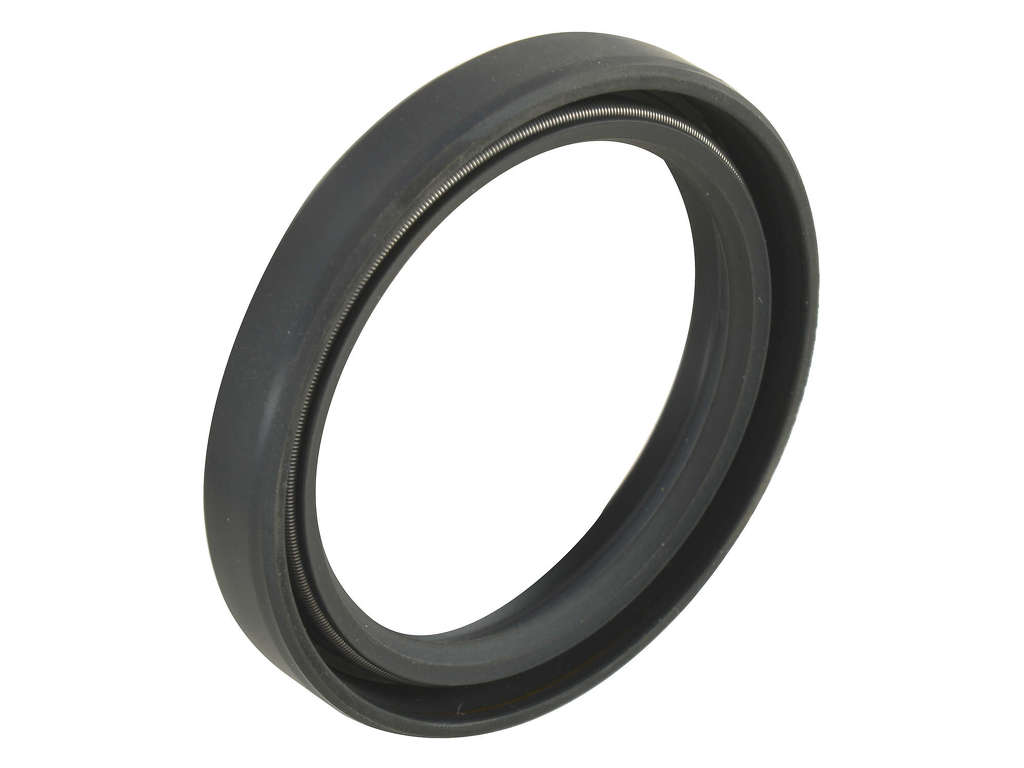
Aftermarket price range: $35-$55 - O-ring for Sensor — The sensor is sealed to the block with an O-ring which should be replaced with the sensor to prevent oil leaks. New sensors typically include one.
OEM price range: $2-$5
Aftermarket price range: $1-$3
Technical Service Bulletins (TSBs) & Recalls
- No official Technical Service Bulletins (TSBs) from Saab or GM have been found specifically for the P0335 code on this platform. The issue is widely documented in forums and repair guides as a common wear-and-tear failure.
Platform-Specific Known Issues
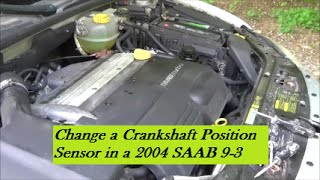
- 2.0T B207 Sensor Location and Access: The sensor is located on the back of the engine block, above the starter. Access is very tight from above or below. 🎬 Watch this walkthrough for tips on accessing the sensor from above. Some DIY guides suggest removing the starter motor for better access, which adds complexity. A helpful tip is to disconnect the main cooling fan electrical connector to create more room for your arm to reach the sensor from above.
- 2.8T V6 B284 Sensor Location and Access: On the V6 engine, the sensor is significantly harder to access. It is located on the lower part of the engine, and replacement requires removing a heat shield and the front catalytic converter/downpipe to gain clearance. This makes the job much more involved and may require a professional if you are not comfortable removing exhaust components.
Mechanic-Grade Diagnostic Values
- Engine RPM during cranking (Live Data) — expected: ~220 RPM (at 20°C with a good battery). Failure: Reads 0 RPM, or a value significantly lower than expected (e.g., below 200 RPM).
- Crankshaft Position Sensor AC Voltage Output — expected: 0.2V - 2.0V AC (fluctuating while cranking). Failure: No AC voltage is generated while the engine is cranking.
- Crankshaft Position Sensor Resistance — expected: 770 - 950 Ohms (at room temperature). Failure: Resistance is infinite (open circuit) or significantly outside the specified range, especially when tested hot.
Hidden / Shadow Codes Worth Checking
- P0335 00: A sub-code visible in the Saab Tech2/WIS system indicating a Crankshaft Position Sensor Circuit Open/Short. It is specifically linked to symptoms like 'Engine dies while running/idling' and 'Message in SID regarding TCM and TCS/ESP'. (see via A dealer-level scan tool like the GM Tech2 with Saab software.)
Scan Tool Commands That Help
- Tech2 / Professional Scan Tool: Live Data: Engine RPM — This is the primary and most effective diagnostic step. If the engine is physically cranking but the scan tool shows 0 RPM, it confirms the ECM is not receiving a signal from the CPS or its circuit.
- Tech2 / Professional Scan Tool: Live Data: Crankshaft Position Active Counter — In advanced diagnostics for newer GM platforms (logic may apply here), observing this counter can help differentiate a sensor/wiring fault from an ECM fault. If the counter does not increment during specific test conditions when it should, it may point towards a faulty ECM.
Wiring & Ground Locations
- G2 — On the side of the left-hand structural member (shock tower area) in the engine bay, by the main connector bracket.. This is a primary chassis ground point for the engine bay electrical system. A poor connection here can cause a host of intermittent electrical issues, including problems with sensor signals returning to the ECM.
- G7 / G25 — This is a main engine/drivetrain ground. Depending on the year and engine, the main battery ground cable connects to the starter motor's lower retaining bolt (G7) or directly to the left-hand engine mounting (G25).. The crankshaft position sensor is mounted to the engine block. A weak or corroded main engine ground can create a voltage potential difference between the engine block and the chassis, disrupting the low-voltage signal from the sensor and potentially causing a P0335 code.
Real Owner Repair Stories
- Reddit user u/doncoco2137 in r/saab (2004 Saab 9-3 1.8i (B207 base)) — Cranks strongly but will not start at all, no sputter or catch. Live data showed RPM rising to only ~180 RPM and staying flat during cranking.
❌ Tried (didn't work) The owner suspected the crankshaft position sensor based on the symptoms and abnormal RPM reading.
✅ What actually fixed it The fuel pump was the actual cause of the no-start condition.
When the Usual Fixes Don't Work
- While a failed CPS is the overwhelming cause of P0335 with hot-stall/no-start symptoms, it is not the only possibility. In one documented case, a 2004 9-3 exhibited classic P0335 symptoms, including an abnormal RPM reading on a scanner (~180 RPM during crank). After extensive diagnosis, the final repair was a new fuel pump, which resolved the no-start condition. This highlights the importance of verifying fuel pressure and listening for the fuel pump to prime, even when symptoms strongly suggest the crankshaft sensor.
OEM Part Supersession History
12789959 (Saab)→N/A, still current— N/A
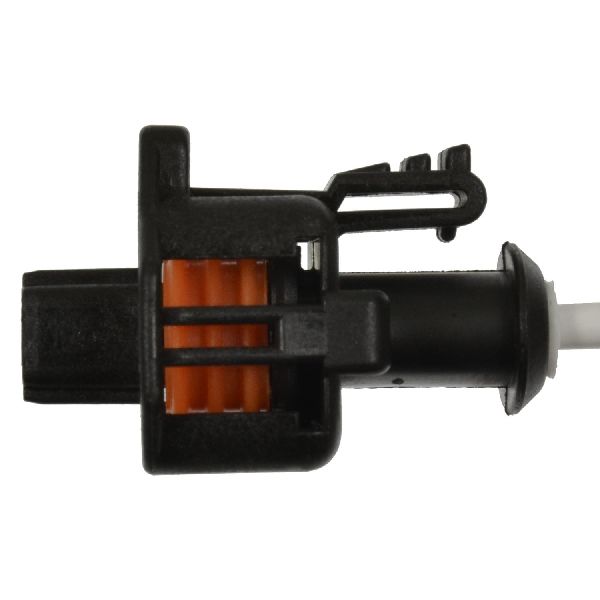
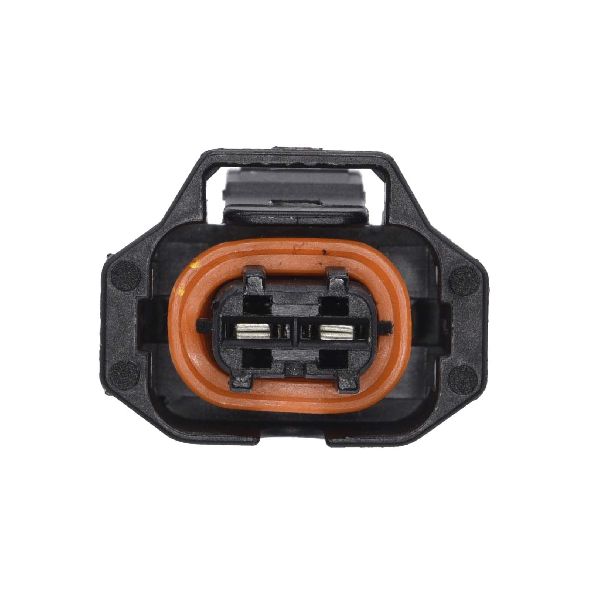
Heads up: The correct OEM equivalent part from Bosch is part number 0261210229. Be cautious of other Bosch part numbers like 0261210269, which may be listed for 'Saab' but are intended for older models or different GM applications and may have a different (3-pin) connector, making them incompatible with the 2-pin harness on the B207 engine.
Model Year Variations Within This Range
- 2003-2006: The main battery ground cable routing differs slightly across the model years. For example, 2003 models specifically mention a 25mm² cable to ground point G25 (engine mount) and a 16mm² cable to G2 (chassis). Later models may route the main ground to the starter motor bolt. While not a direct cause, knowing the correct ground path is crucial for diagnosing electrical issues.
Diagnostic Flowchart
Real Owner Stories
Aggregated from forums and TSBs cited above. Mileages and costs reflect what owners reported in those sources.
2008 Saab 9-3
Symptoms: Car would run fine, then die when pulling into a parking space. Check engine light comes on. Car would start again after a few seconds. Code P0335 was present.
What fixed it: Replaced the crank position sensor.
Cost: $15-$15
Source hint: Reddit
Saab 9-3
Symptoms: Experienced the classic hot-no-start symptom where the car would intermittently fail to start.
What fixed it: Replaced the Crankshaft Position Sensor (CPS) after testing confirmed resistance was outside the 770-950 ohm range.
Source hint: SaabCentral Forums: Thread 'Intermittant starting problem, crankshaft sensor or DIC?'
2001 Saab 9-3
Symptoms: Engine would not crank or start when hot.
What fixed it: Replaced the bad crankshaft position sensor (CPS) with a Bosch replacement.
Source hint: Reddit r/saab: Thread 'Need help! 2001 9-3 won't crank when hot'
Saab 9-3
Symptoms: A cheap aftermarket crankshaft position sensor failed prematurely.
What fixed it: Replaced the failed aftermarket unit with a Bosch (OE supplier) genuine Saab part to ensure reliability.
Source hint: Reddit r/saab: Thread 'Brand suggestion for a CPS ?'
Related OBD-II Codes
Frequently Asked Questions
Are there any official Saab or GM TSBs for the P0335 code on my 2003-2011 9-3?
Why does my Saab 9-3 only stall and refuse to start when the engine is hot?
What brand of Crankshaft Position Sensor should I buy for my B207 or B284 engine?
How hard is it to replace the CPS on the 2.0T B207 engine?
Is replacing the CPS on the 2.8T V6 B284 engine a DIY job?
How can I test if the Crankshaft Position Sensor is bad using a multimeter?
Why does my tachometer stay at zero when I try to start my Saab?
Helpful Videos

We Have This Part in Stock


The information in this article is provided for general reference and educational purposes only. Vehicle specifications, procedures, and part compatibility can vary by production date, trim level, and region. Always consult your vehicle's factory service manual and verify part numbers before purchasing or performing repairs. Safety-critical components such as airbags, seat belts, and braking systems should be installed by a qualified professional.
- Saab 9-3:
- 🎬 Helpful Videos
- 🛍️ Shop This Part
- What's Unique About the 2003-2011 Saab 9-3
- Symptoms You May Notice
- Most Likely Causes
- Rare But Worth Checking
- Diagnosis Steps
- Parts You'll Likely Need
- Technical Service Bulletins (TSBs) & Recalls
- Platform-Specific Known Issues
- Mechanic-Grade Diagnostic Values
- Hidden / Shadow Codes Worth Checking
- Scan Tool Commands That Help
- Wiring & Ground Locations
- Real Owner Repair Stories
- When the Usual Fixes Don't Work
- OEM Part Supersession History
- Model Year Variations Within This Range
- Diagnostic Flowchart
- Real Owner Stories
- 2008 Saab 9-3
- Saab 9-3
- 2001 Saab 9-3
- Saab 9-3
- Related OBD-II Codes
- Frequently Asked Questions
- 🎟️ Get 5% Off