

P0335 on 2011-2017 Ford F-150: Crank Sensor Causes, Locations, and Fixes
P0335 on a 2011-2017 F-150 almost always means the crankshaft position sensor (CKP) has failed. This is a critical part that can cause a no-start or stalling. The replacement difficulty varies greatly by engine, and a special 'relearn' procedure with a scan tool is required after replacement. Before diving in on 2011-2014 models, always check Fuse 27 first.
- P0335 means your truck's computer has lost the signal from the crankshaft sensor, which can cause a no-start or sudden stall.
- On 2011-2014 models, always check the fuel pump fuse (Fuse 27) for melting before assuming the crank sensor is bad.
- The sensor location and repair difficulty vary drastically between the 3.5L EcoBoost and 5.0L V8 engines.
- After replacing the sensor, a 'crank relearn' procedure using a Ford-compatible scan tool is not optional; it is required for the engine to run correctly.
- Due to the potential for a sudden stall, it is unsafe to drive the vehicle until this issue is repaired.
What's Unique About the 2011-2017 Ford F-150

The key challenge with P0335 on this F-150 platform is the extreme difference in repair difficulty depending on the engine. On the 3.5L EcoBoost, the sensor is notoriously buried behind a turbo and heat shields, making it a tough job. For both the 5.0L and 3.5L, a mandatory 'Misfire Monitor Neutral Profile Correction' (crank relearn) procedure is required after replacement, which cannot be skipped and needs a Ford-specific scan tool like FORScan. A common misdiagnosis on 2011-2014 models is a melted fuel pump fuse (Fuse 27) that also causes a crank-no-start condition and can be fixed with a relocation kit, part number EL3Z-14293-A.
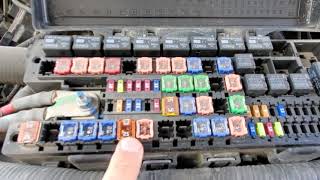
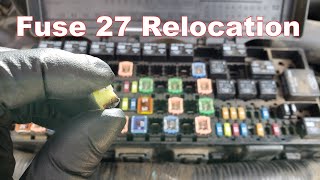
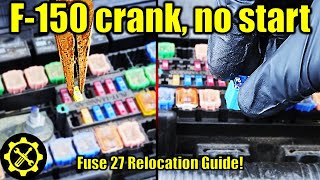
🎬 Watch: Step-by-step guide to installing the Fuse 27 relocation kit.Generation note: Yes, this range covers two F-150 generations. The 12th generation (2011-2014) and the 13th generation (2015-2017) have different crankshaft position sensor locations for both the 3.5L and 5.0L engines, significantly impacting the repair procedure. The part numbers for the sensor itself can also differ between generations.
Symptoms You May Notice
- Engine cranks but will not start.
- Tachometer needle does not move at all during cranking.
- Sudden engine stalling, often when coming to a stop.
- Rough or unstable idle.
- Reduced engine power and poor acceleration.
- Illuminated Check Engine Light.
- On 2009-2014 models, a crank-no-start condition is frequently caused by a melted fuel pump relay fuse (Fuse 27) in the under-hood fuse box. This should be the first thing you check on these years. The fix is a fuse relocation kit, Ford part number EL3Z-14293-A.
Most Likely Causes

- Failed Crankshaft Position Sensor (CKP) 🔴 High Probability The sensor is located in a high-heat area on both engines, leading to electronic failure over time. The plastic housing can also become brittle and break during removal. Owner forums frequently cite failures of aftermarket sensors, recommending the OEM Motorcraft part for longevity.
How to confirm: With a scan tool, check for an RPM signal while cranking the engine. No RPM signal strongly points to a bad CKP sensor or wiring. You can also test the sensor's resistance or check for a 5-volt reference signal at the connector with a multimeter.
Typical fix: Replace the crankshaft position sensor and perform the mandatory crank relearn procedure. A helpful tip is to use a small piece of masking tape to hold the bolt in the new sensor during installation to prevent it from falling into the bellhousing.
Est. part cost: $25-$70 - Damaged Wiring or Connector 🟡 Medium Probability On the 3.5L EcoBoost, the harness is routed near the hot turbocharger and exhaust components, leading to melting. On both engines, the sensor's low mounting point exposes it to road debris, oil, and corrosion that can damage the connector pins.
How to confirm: Visually inspect the wiring harness leading to the sensor for any signs of melting, chafing, or corrosion on the connector pins. Wiggle the connector while the engine is running (if possible) to see if it causes a stall. Check for continuity on each wire from the sensor connector to the PCM.
Typical fix: Repair the damaged section of the wiring harness or replace the connector pigtail. The common pigtail connector is Motorcraft part WPT-986 (Ford P/N: 1U2Z-14S411-BPA). Ensure the harness is properly secured away from heat sources with zip ties.
Est. part cost: $20-$45
Rare But Worth Checking
- Damaged Reluctor Wheel: The reluctor wheel (or tone ring) is a toothed ring on the crankshaft that the sensor reads. While very rare, damage to this wheel from internal engine problems, debris entering the bellhousing, or previous incorrect repairs can cause a P0335 code. This is a major engine-out or transmission-out repair.
- Faulty Powertrain Control Module (PCM): It is possible for the PCM itself to fail, but this is extremely unlikely and should be considered a last resort. All other possibilities, especially the sensor and wiring, should be exhaustively ruled out before considering PCM replacement.
Diagnosis Steps
- Check for Common Misdiagnoses (2011-2014 models): Before any other step, inspect Fuse 27 in the under-hood fuse box for signs of melting or damage. If it's bad, replace it with the Ford fuse relocation kit (P/N: EL3Z-14293-A).
- Scan Tool Data: Connect a scan tool (like FORScan) and monitor the Engine RPM (PID) while cranking the engine. If the RPM reads 0, it confirms the PCM is not seeing a signal from the crank sensor.
- Visual Inspection: Visually inspect the crankshaft position sensor connector (a 2-pin connector) and its wiring harness. Look for obvious signs of damage, such as melted plastic near the turbo on EcoBoost models, frayed wires, or corrosion in the connector.
- Test the Circuit: If the wiring looks good, disconnect the sensor and check for a 5V reference signal on one pin and ground on the other with the key on. You can also perform a continuity test on the harness between the sensor connector and the PCM.
- Replace the Sensor: If the sensor is determined to be faulty, replace it. The retaining bolt is typically a 7mm or 8mm. Torque the new bolt to 89 in-lbs (approximately 10 Nm).
- Perform Crank Relearn: 🎬 Watch: How to perform the mandatory FORScan crank relearn procedure. This is a mandatory final step. Use a compatible scan tool (like FORScan or a professional-grade tool) to perform the 'Misfire Monitor Neutral Profile Correction' procedure. The engine must be at operating temperature. The tool will instruct you to rev and hold the engine to complete the calibration.
Parts You'll Likely Need
- Crankshaft Position Sensor (2011-2014 5.0L & 3.5L)
(OEM #BR3Z-6C315-B (Motorcraft DY-1153))— This sensor is the primary cause of code P0335 due to failure from heat and age. Note: DY-1153 is also listed as an oxygen sensor by some vendors, causing confusion, but the Ford part number BR3Z-6C315-B is correct for the crank sensor.
Trusted brands: Motorcraft, Hitachi, Delphi, Denso
OEM price range: $40-$70
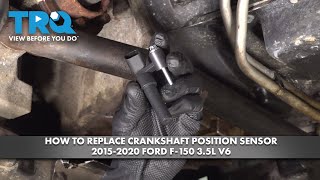
Aftermarket price range: $25-$50 - Crankshaft Position Sensor (2015-2017 5.0L & 🎬 See this walkthrough for replacing the sensor on 3.5L models.3.5L)
(OEM #FL3Z-6C315-A (Motorcraft DY-1210))— The 13th generation F-150 uses a different sensor design. Failure is for the same reasons of heat and age.
Trusted brands: Motorcraft, Standard Motor Products
OEM price range: $35-$60
Aftermarket price range: $20-$40 - Fuse 27 Relocation Kit (2009-2014)
(OEM #EL3Z-14293-A)— Required to fix the common crank-no-start issue caused by the original fuel pump fuse overheating in the fuse box, which is often misdiagnosed as a P0335-related failure.
Trusted brands: Ford
OEM price range: $20-$30
Aftermarket price range: $15-$25
Related Codes That Often Appear With This One
- P0339 — This code for 'Crankshaft Position Sensor 'A' Circuit Intermittent' often accompanies P0335, indicating the signal isn't just missing, but is dropping in and out, often due to a failing sensor or loose connection.
- P0315 — This code for 'Crankshaft Position System Variation Not Learned' will appear if the sensor is replaced but the mandatory relearn procedure is not performed with a proper scan tool.
Technical Service Bulletins (TSBs) & Recalls
- TSB 13-6-15: For some 2011-2014 5.0L engines, misfire codes could be triggered due to sealing issues with the crank sensor. The fix was to install a new O-ring on the sensor, not necessarily replace the entire sensor, highlighting the sensitivity of this component.
- TSB 15-0142: This TSB is for a harsh 5-4 downshift on 2015 F-150s and involves reprogramming the PCM. While not a direct fix for P0335, any PCM reprogramming will reset adaptive learning, which relates to the same systems involved in the crank relearn procedure.
Platform-Specific Known Issues

- Sensor Location (3.5L EcoBoost 2011-2014): The sensor is extremely difficult to access, located on the driver's side behind the turbocharger and a heat shield. Access is gained through the driver's side wheel well after removing the liner. A 7mm bolt holds the sensor.
- Sensor Location (5.0L 2011-2014): The sensor is on the front passenger side of the engine block, near the harmonic balancer, held by two 8mm bolts. It is much more accessible than on the EcoBoost.
- Sensor Location (3.5L EcoBoost 2015-2017): The sensor is located on the driver's side where the engine meets the transmission. Access is from underneath and requires removing a 10mm bracket to gain clearance. The sensor itself uses a 7mm bolt.
- Sensor Location (5.0L 2015-2017): The sensor is on the rear passenger side of the engine block. Access requires removing the passenger front wheel and inner fender liner to reach it from the side.
- Mandatory Relearn Procedure: After replacement, a 'Misfire Monitor Neutral Profile Correction' must be performed with a scan tool. Skipping this step will likely result in a P0315 code and potential drivability issues.
Mechanic-Grade Diagnostic Values
- Crankshaft Position Sensor (CKP) Resistance — expected: 985 to 1,600 Ω when cold (14 to 122°F), 1,265 to 1,890 Ω when hot (122 to 212°F). Note: These are general values; aftermarket sensors may vary.. Failure: A reading of open circuit (infinite resistance) or a value significantly outside the specified range indicates a failed sensor.
- CKP Sensor Signal (Live Data) — expected: Scan tool should show a non-zero RPM reading while the engine is cranking or running.. Failure: An RPM reading of 0 while cranking confirms the PCM is not receiving a signal from the CKP sensor or its circuit.
Scan Tool Commands That Help

- Ford IDS, FORScan, or equivalent professional scan tool: Misfire Monitor Neutral Profile Correction — This procedure is mandatory after replacing the PCM, crankshaft position sensor, or performing major engine/transmission repairs. It relearns the slight variations in the crankshaft reluctor wheel to ensure accurate misfire detection. Failure to perform this will often set a P0315 code and can cause false misfire flags.
Wiring & Ground Locations

- PCM Connector C175E (2011-2014 5.0L) — The PCM is on the passenger side firewall. C175E is the 'Engine' connector, typically in the middle.. The CKP sensor wires terminate here. For the 5.0L, the CKP+ (Signal) is often Pin 47 (Gray/Yellow wire) and CKP- (Signal Return/Ground) is Pin 48 (Violet/Orange wire). Verify with a vehicle-specific diagram before probing.
- G100 / G101 / G102 — These are primary engine compartment grounds, typically located on the right front or rear of the engine compartment, near the battery.. A poor engine ground can cause a voltage differential between the sensor and the PCM, leading to erratic signals and codes like P0335. Ensure these connections are clean, tight, and free of corrosion.
- Firewall to Engine Block Ground Strap — A braided metal strap connecting the firewall (body) to the rear of the engine block, often on the passenger side.. This is a critical ground path for the PCM and various sensors. If this strap is broken, loose, or corroded, it can cause a host of phantom electrical issues, including sensor circuit malfunctions.
Real Owner Repair Stories
- ClubLexus Forum User (Lexus (demonstrates a universal principle)) — Car would not start, single click sound. VSC light came on, and a P0335 code was stored.
❌ Tried (didn't work) Initially suspected a weak main vehicle battery, but it tested good.
✅ What actually fixed it The battery in the key fob was weak. After replacing the key fob battery and clearing the code, the car started and ran normally without the P0335 code returning. This highlights how low voltage in security system components can sometimes create false, unrelated trouble codes. - Ford Truck Enthusiasts Forum User (Ford Diesel Truck (demonstrates a universal principle)) — P0335 code present.
❌ Tried (didn't work) Initial diagnosis focused on the sensor and wiring.
✅ What actually fixed it The issue was resolved by replacing both vehicle batteries. Old or weak batteries were unable to provide stable voltage during cranking, causing the CKP sensor signal to be unreliable and triggering the code.
Diagnostic Flowchart
Real Owner Stories
Aggregated from forums and TSBs cited above. Mileages and costs reflect what owners reported in those sources.
2015 F-150 5.0L — 166000 miles
Symptoms: Stalled intermittently when coming to a complete stop, would restart fine. Got progressively worse until it was undrivable. Would start fine cold, but stall as soon as it warmed up. Did not recall having a check engine code.
What fixed it: Replaced the crankshaft position sensor.
Cost: $30
Source hint: F150Forum.com (2016 F150 Lariat 5.0 w/ Rough Idle & Stalls - Page 52)
2011-2017 F-150 5.0L
Symptoms: Would start fine when cold, but stall within 30 seconds of idling once warmed up. Initially no CEL, but eventually a persistent P0335 code. Also experienced 'crank no start' where the engine turns over but does not fire.
What fixed it: Replaced the crankshaft position sensor.
Source hint: AliExpress (User Review)
Related OBD-II Codes
Frequently Asked Questions
Is there a specific TSB for the 5.0L engine related to the crankshaft position sensor?
My 2011-2014 F-150 cranks but won't start. Should I replace the crank sensor right away?
Where is the crankshaft position sensor located on the 3.5L EcoBoost?
Do I need to do anything special after installing a new crank sensor on my F-150?
What replacement connector do I need if my EcoBoost's crank sensor wiring melted?
Why does my tachometer stay at zero when trying to start my F-150?
Helpful Videos
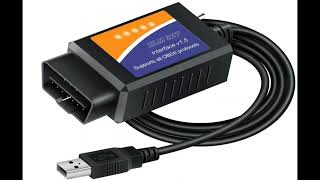
Used OEM Parts in Stock


New Aftermarket Parts Available

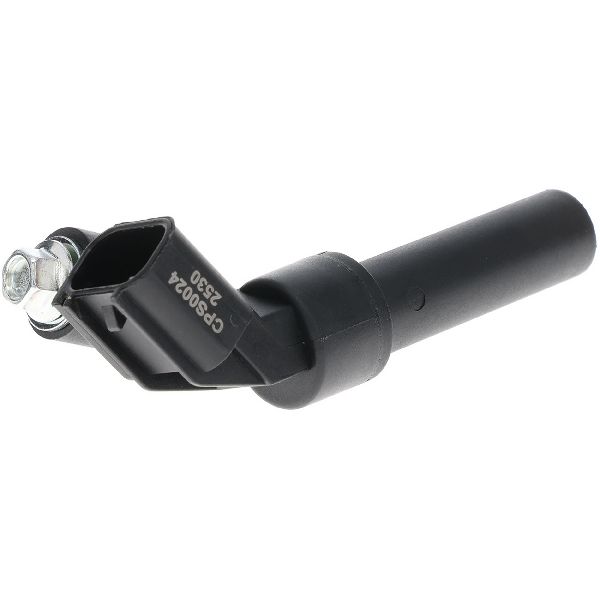
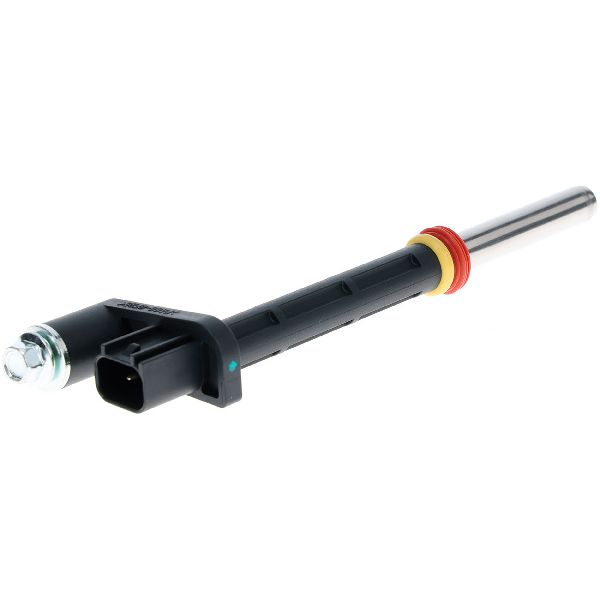
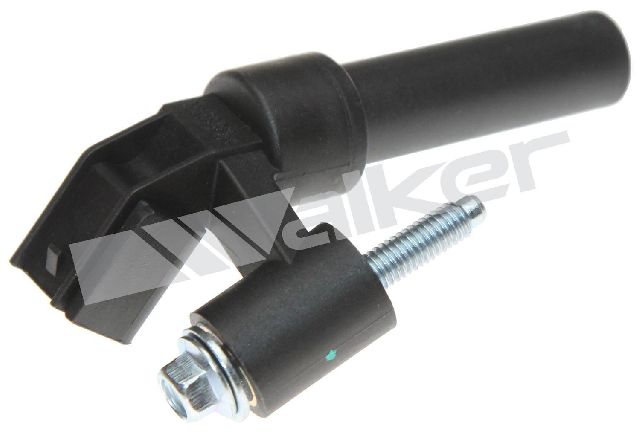

The information in this article is provided for general reference and educational purposes only. Vehicle specifications, procedures, and part compatibility can vary by production date, trim level, and region. Always consult your vehicle's factory service manual and verify part numbers before purchasing or performing repairs. Safety-critical components such as airbags, seat belts, and braking systems should be installed by a qualified professional.
- Ford F-150:
- 🎬 Helpful Videos
- 🛍️ Shop This Part
- What's Unique About the 2011-2017 Ford F-150
- Symptoms You May Notice
- Most Likely Causes
- Rare But Worth Checking
- Diagnosis Steps
- Parts You'll Likely Need
- Related Codes That Often Appear With This One
- Technical Service Bulletins (TSBs) & Recalls
- Platform-Specific Known Issues
- Mechanic-Grade Diagnostic Values
- Scan Tool Commands That Help
- Wiring & Ground Locations
- Real Owner Repair Stories
- Diagnostic Flowchart
- Real Owner Stories
- 2015 F-150 5.0L — 166000 miles
- 2011-2017 F-150 5.0L
- Related OBD-II Codes
- Frequently Asked Questions
- 🎟️ Get 5% Off