

P0308 on 1999-2004 Audi A6 4.2L V8: Cylinder 8 Misfire Causes and Fixes
On a 1999-2004 Audi A6 4.2L V8, code P0308 is most often caused by a failed ignition coil or a worn spark plug in cylinder 8. It's also common for a leaking valve cover gasket to cause oil to pool in the spark plug well, ruining the ignition coil. Expect to pay $40-$80 for a quality aftermarket coil and $10-$20 for a spark plug.
- P0308 on this Audi A6 is a misfire on the rearmost cylinder on the driver's side.
- The most likely cause is a bad ignition coil, often damaged by oil from a leaking valve cover gasket.
- Always check for oil in the spark plug tube when you remove the ignition coil; this will tell you if the valve cover gasket also needs to be replaced.
- A flashing Check Engine Light means stop driving immediately to prevent catalytic converter damage.
- The easiest way to confirm a bad coil is to swap it with a neighboring cylinder and see if the misfire code follows it.
What's Unique About the 1999-2004 Audi A6
The 4.2L V8 40-valve engine (engine codes ART, AWN) in the C5-generation A6 is known for ignition component failures as it ages. The plastic ignition coil connectors become extremely brittle from heat cycles and can break during service, causing poor connections. More frequently, the valve cover gaskets harden and leak oil directly into the spark plug tubes. This oil saturation is a very common cause of ignition coil failure, leading to misfire codes like P0308. While the primary failure is the coil, the root cause is often the gasket.
Symptoms You May Notice
- Flashing or solid Check Engine Light
- Rough or shaking engine idle
- Noticeable loss of power, especially under acceleration
- Hesitation or stumbling when accelerating
- Increased fuel consumption
- Potential fuel smell from the exhaust
- Engine shuddering under load, especially uphill
- Replacing only the spark plug when the actual cause is an oil-fouled ignition coil from a bad valve cover gasket. The new plug will soon fail as well if the root cause isn't addressed.
- Replacing ignition components when the issue is a seized intake manifold runner flap, which can mimic ignition-related misfires under certain load conditions.
Most Likely Causes
- Failed Ignition Coil 🔴 High Probability These coils are a known failure point due to age, heat, and very commonly, oil contamination from leaking valve cover gaskets. The rear cylinders, like #8, are often exposed to more heat.
How to confirm: Swap the ignition coil from cylinder 8 with an adjacent cylinder (e.g., cylinder 7). Clear the codes and drive the car. If the code changes to P0307, the coil is bad. Cylinder 8 is the rearmost cylinder on the driver's side.
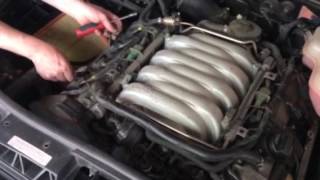
Typical fix: Replace the failed ignition coil. It is often recommended to replace all 8 coils and spark plugs 🎬 Watch: Step-by-step guide to replacing coils and spark plugs. at the same time for preventative maintenance, especially on a high-mileage vehicle.
Est. part cost: $40-$80 per coil - Worn or Fouled Spark Plug 🔴 High Probability
How to confirm: After ruling out the ignition coil, remove the spark plug from cylinder 8. Inspect it for wear, carbon buildup, or oil fouling. Oil on the plug is a clear sign of a leaking valve cover gasket. You can also swap it with another cylinder's plug to see if the misfire moves.
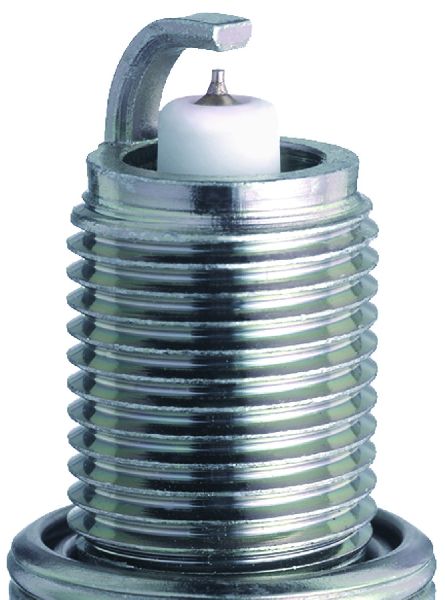
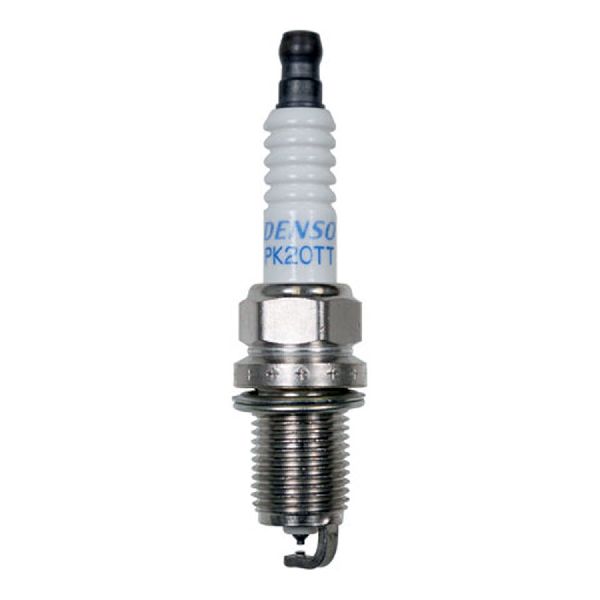
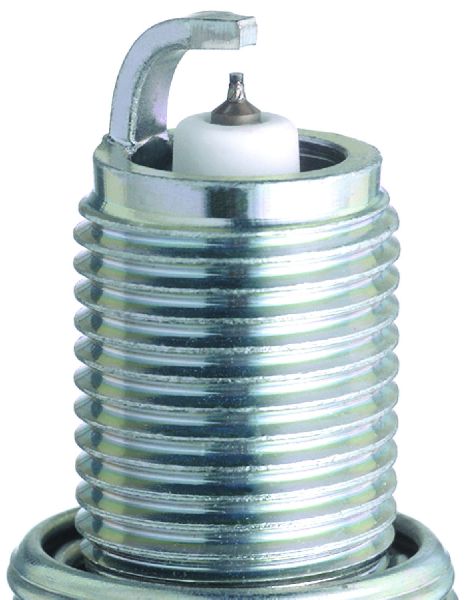
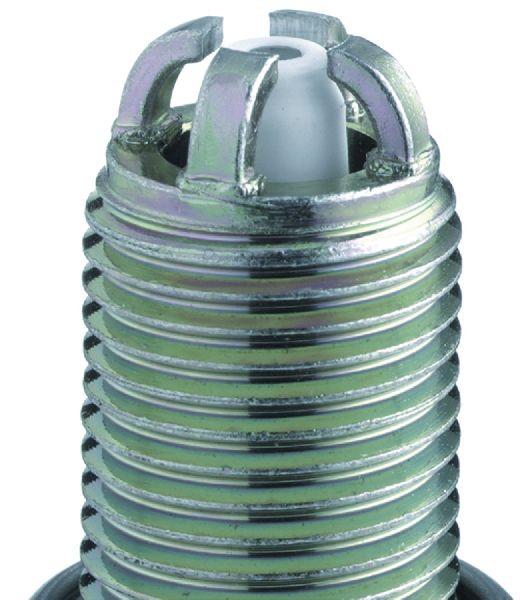
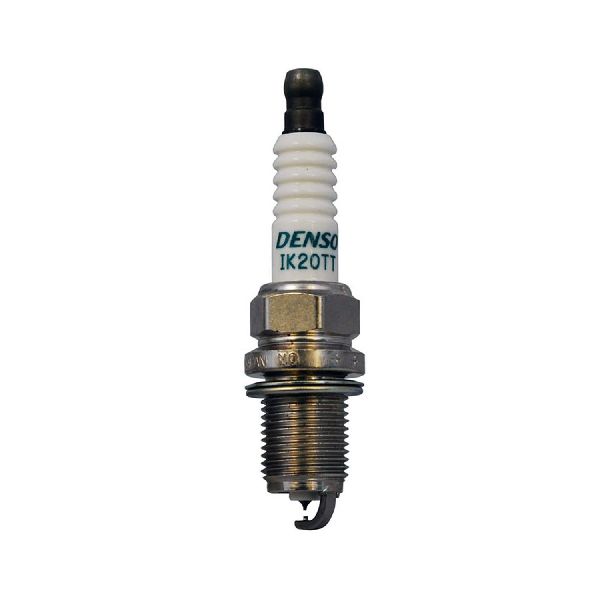
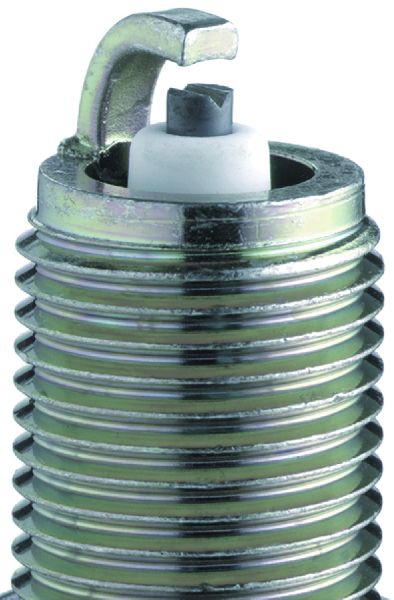
Typical fix: Replace the spark plug. It is best practice to replace all 8 spark plugs as a set. Ensure they are gapped correctly if required. NGK and Bosch are common OEM suppliers.
Est. part cost: $10-$20 per plug - Leaking Valve Cover Gasket 🟡 Medium Probability The rubber gaskets and spark plug tube seals harden over time with engine heat cycles and fail, allowing oil to seep into the spark plug tubes, which shorts out the ignition coil.
How to confirm: When you remove the ignition coil from cylinder 8, look for liquid oil in the spark plug tube and on the coil boot. This is a definitive sign of a leaking gasket.
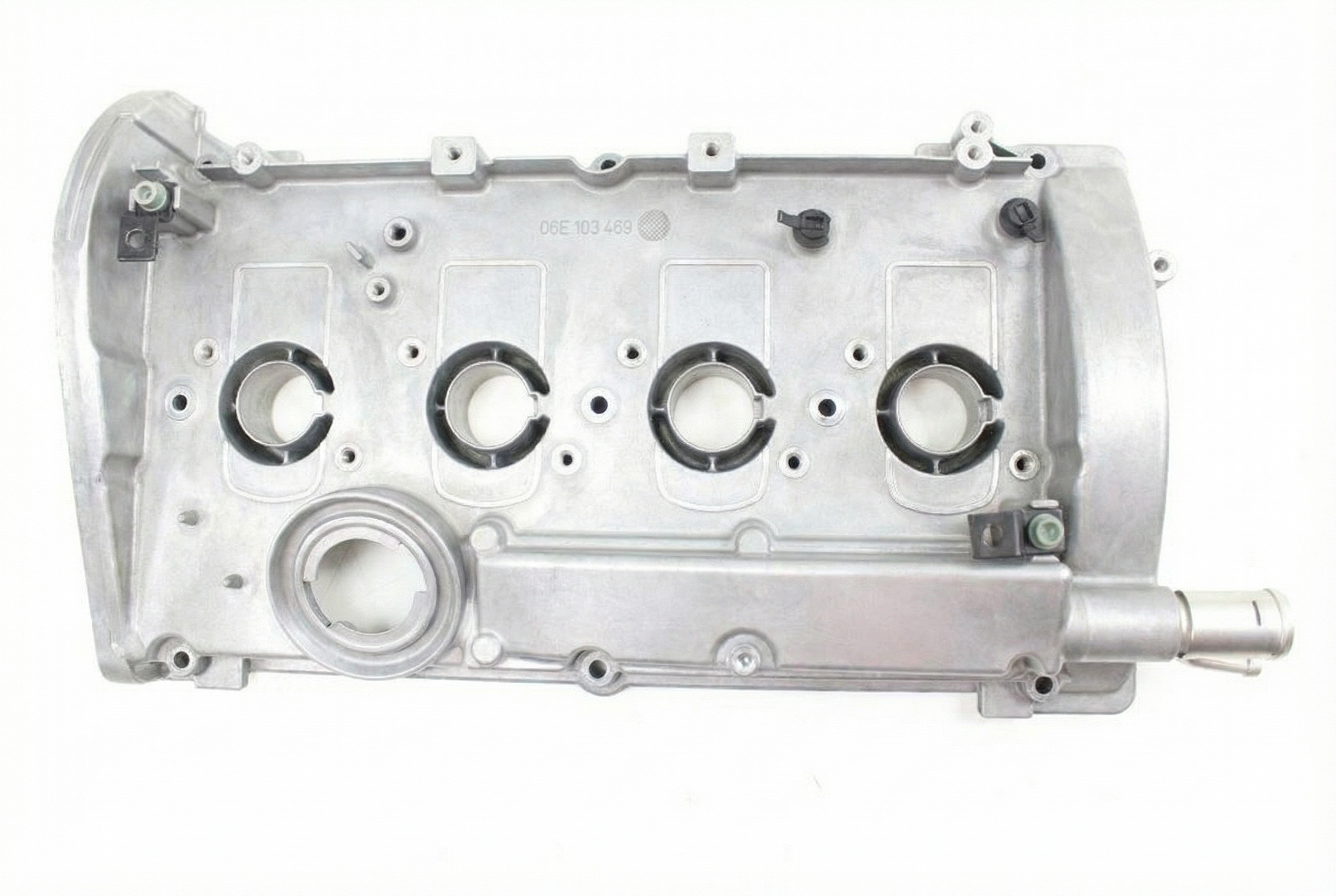
Typical fix: Replace the valve cover gasket set for the corresponding bank (Bank 2, driver's side). The kit must include the main perimeter gasket and the four spark plug tube seals. It's also wise to apply a small dab of RTV sealant at the sharp corners where the timing chain cover meets the head.
Est. part cost: $50-$100 for a bank 2 gasket kit - Faulty Fuel Injector ⚪ Low Probability
How to confirm: If ignition components are good, the fuel injector is the next suspect. A mechanic can perform a fuel injector balance test. A DIY method is to listen to the injector with a mechanic's stethoscope; it should make a consistent clicking sound. You can also swap injectors between cylinders, but this is a more labor-intensive job that requires removing the fuel rail.
Typical fix: Replace the faulty fuel injector. It's sometimes recommended to have all injectors professionally cleaned and flow-tested at the same time.
Est. part cost: $70-$150 per injector
Rare But Worth Checking
- Seized Intake Manifold Runner Flap: A forum user on AudiForums reported a persistent P0308 that was only resolved after freeing a seized variable intake manifold runner flap for that cylinder bank. This can be investigated if all ignition and fuel causes have been ruled out. The flaps can get stuck due to carbon buildup. Diagnosis involves removing the manifold actuators and manually checking if the flaps move freely.
- Low Compression: If ignition and fuel systems are confirmed to be working, a mechanical issue could be the cause. This can be due to a burnt valve, worn piston rings, or a timing issue. A compression test is needed to diagnose this. Results should be compared across all cylinders.
- Broken Ignition Coil Connector: The plastic locking tabs on the coil's electrical connector can break, leading to a loose connection and intermittent misfires. Inspect the connector for damage when replacing the coil. Connector housings (Part No. 4D0971994) or pigtail repair kits are available.
- Vacuum Leak: A leak in a vacuum hose or the intake manifold gasket near cylinder 8 can lean out the air/fuel mixture and cause a misfire. A smoke test is the most effective way to find the source of a vacuum leak.
Diagnosis Steps
- Read the DTCs with an OBD-II scanner to confirm P0308 and check for any other codes. 🎬 See how a mechanic diagnoses a persistent Audi misfire. Note the freeze frame data if available.
- Perform the 'Coil Swap Test': 🎬 Watch: How to perform a coil swap to identify failures. Turn off the engine. Locate cylinder 8 (rearmost on the driver's side). Swap its ignition coil with the one from cylinder 7 (the one in front of it). While the coil is out, inspect the electrical connector for broken tabs or corrosion.
- Clear the codes and start the engine. Let it run until the Check Engine Light reappears.
- Scan the codes again. If the code is now P0307, the ignition coil is faulty and needs replacement.
- Inspect for Oil: If the code remains P0308, turn off the engine and remove the coil from cylinder 8 again. Look down the spark plug tube with a flashlight for any pooled oil. If oil is present, the valve cover gasket has failed and must be replaced.
- Inspect/Swap the Spark Plug: If there is no oil and the coil is good, remove the spark plug from cylinder 8. Check its condition for wear, deposits, or damage. If it looks worn or fouled, replace it. You can also swap it with cylinder 7's plug to see if the misfire moves.
- Check the Fuel Injector: If the misfire is still on cylinder 8, the problem may be fuel-related. Listen to the injector with a mechanic's stethoscope for a steady clicking noise. Check the wiring and connector for damage. A more advanced test involves swapping injectors, but this is labor-intensive.
- Check for Vacuum Leaks: Perform a visual inspection of all vacuum hoses connected to the intake manifold. For hard-to-find leaks, a smoke test is the most reliable method.
- Check for Mechanical Faults: If all else fails, perform a compression test on cylinder 8 to check for internal engine problems like a bad valve or worn rings. A healthy cylinder should have compression that is within 10-15% of the other cylinders.
Parts You'll Likely Need
- Ignition Coil
(OEM #06B905115R (supersedes 06B905115E))— This is the most common failure part for a single-cylinder misfire on this engine.
Trusted brands: Bosch, Hitachi, NGK
OEM price range: $60-$90
Aftermarket price range: $40-$70 - Spark Plug
(OEM #101905615A (or NGK PFR6Q))— A necessary maintenance item that can cause misfires when worn. Always replaced when diagnosing a misfire.
Trusted brands: Bosch, NGK
OEM price range: $15-$25
Aftermarket price range: $10-$18 - Valve Cover Gasket Set (Bank 2 / Driver's Side)
(OEM #077198025A)— This is the root cause of many ignition coil failures due to oil leaks into the spark plug wells. The part number is for a kit that services both sides.
Trusted brands: Victor Reinz, Elring
OEM price range: $120-$160 (for full kit)
Aftermarket price range: $60-$100 (for full kit)
Related Codes That Often Appear With This One
- P0300 — If multiple cylinders are misfiring due to a systemic issue like a large vacuum leak, low fuel pressure, or stuck intake runners, a P0300 (Random/Multiple Cylinder Misfire) may accompany P0308.
- P0305, P0306, P0307 — Misfire codes on other cylinders in the same bank (Bank 2) could point to a shared problem like a clogged catalytic converter, a bad O2 sensor for that bank, or a timing issue on that bank.
- P0174 or P0175 — A vacuum leak large enough to cause a misfire on cylinder 8 might also be detected by the ECU as a general lean condition for that entire engine bank (Bank 2), triggering a P0174 (System Too Lean Bank 2) code.
Technical Service Bulletins (TSBs) & Recalls
- While no TSB is specific to only P0308, several address misfire conditions (P0300-P0308) on V8 models. TSB 2010632 and 2069038 mention software updates for the ECM to correct misfire detection logic on some platforms, though these are generally for newer models. Additionally, Manufacturer TSB Bulletin #A01166020322224 for related VAG models explains how to update the ECM software to correct an issue that causes DTCs P0300 through P0308. The diagnostic principles for checking coils, plugs, and injectors remain the standard procedure.
Platform-Specific Known Issues
- The plastic clips on the ignition coil electrical connectors become very brittle with age and often break when being disconnected, which can cause a poor connection if not secured.
- Oil from leaking valve cover gaskets frequently pools in the spark plug tubes, destroying the ignition coils. This is arguably the most common root cause for misfires on this engine.
- The rearmost valve cover bolts on both banks can be difficult to access, sometimes requiring access through the wheel well or modification of the heat shields.
Mechanic-Grade Diagnostic Values
- Ignition Coil Primary Resistance — expected: approx. 0.4 to 0.6 Ω. Failure: A reading outside this range indicates a faulty coil.
- Ignition Coil Spark Plug Connector Resistance — expected: approx. 2 kΩ. Failure: A reading significantly different from 2 kΩ suggests a bad spark plug connector/boot.
- Fuel Pressure — expected: approx. 4.0 Bar (58 PSI). Failure: Low fuel pressure can cause lean misfires, while high pressure can cause rich misfires.
- Ignition Coil Connector Voltage (Pin 1 to Ground) — expected: Battery Voltage (approx. 12V) with ignition on.. Failure: No voltage indicates a problem with the power supply wiring or the Motronic ECM power supply relay (J271).
Hidden / Shadow Codes Worth Checking
- VCDS Measuring Blocks 015 & 016: These blocks in VCDS (VAG-COM Diagnostic System) show the live misfire count for each individual cylinder. Block 015 displays counters for cylinders 4, 5, and 6. Block 016 displays counters for cylinders 7, 8, and higher. Watching the counter for cylinder 8 increase can confirm the misfire in real-time. (see via Ross-Tech VCDS or other advanced VAG-specific scan tool.)
Wiring & Ground Locations
- Main Engine-to-Body Ground — Runs from the right side engine mount to a stud on the frame rail.. A corroded or loose main ground can cause a host of electrical issues, including weak spark and intermittent misfires across all cylinders. While not specific to cylinder 8, it's a foundational check.
- Secondary Engine Ground — A ground braid running from the left cylinder head (Bank 2) to the ABS module bracket.. This ground is specific to the cylinder bank where cylinder 8 is located. Corrosion or breakage of this strap can lead to poor ignition performance and misfires specifically on Bank 2 (cylinders 5-8).
- Ground Point 12 — In the engine compartment on the left (driver's) side.. This is a primary chassis ground point for components on the driver's side of the engine bay. Ensuring it is clean and tight is crucial for the proper function of the ignition system components for Bank 2.
- Ignition Coil Connector Pinout (4-pin) — Connector at each ignition coil.. For testing, Pin 1 is power from the ECM relay, Pin 2 is the trigger signal from the ECM, Pin 3 is signal ground, and Pin 4 is power ground. Verifying power, ground, and signal at the connector is essential for diagnosing a wiring or ECU driver issue.
Real Owner Repair Stories
- AudiForums user 'Ebenezer' (2000 Audi A6 4.2L V8 with 135,000 miles) — Flashing CEL, shuddering, and shaking under load, especially uphill. Initially showed P0301, P0303, and P0308.
❌ Tried (didn't work) Replacing the fuel filter., Replacing all 8 spark plugs., Replacing all 8 ignition coils (this fixed P0301 and P0303, but P0308 remained)., Having all 8 fuel injectors professionally cleaned and balanced., Running the engine with the MAF sensor disconnected.
✅ What actually fixed it The variable intake manifold runner flap for the driver's side bank was completely seized. The user removed the manifold cover, un-seized the plastic flap pivot, lubricated it, and reassembled. This finally resolved the P0308 code.
OEM Part Supersession History
06B905115E→06B905115R (and other letters like L, M, Q)— Standard design and material revisions over time to improve reliability and performance.
Heads up: While many revisions are interchangeable, some aftermarket conversion kits for an 'ICM delete' require specific coil types (e.g., from a 2.0T or RS6) and will not work with the stock 06B905115-series coils.
Model Year Variations Within This Range
- 1999-2001 (approx.): Models with the ART engine code utilize two external Ignition Control Modules (ICMs), also known as Power Output Stages, to fire the ignition coils. One ICM controls each bank of four cylinders. A failure of the Bank 2 ICM can cause misfires on cylinders 5-8.
- 2001-2004 (approx.): Models with the later AWN engine code have an updated ignition system that does not use external ICMs. The ignition drivers are integrated into the ignition coils themselves. This simplifies the system but means the coil itself is the only component to test, aside from wiring.
Diagnostic Flowchart
Real Owner Stories
Aggregated from forums and TSBs cited above. Mileages and costs reflect what owners reported in those sources.
2000 Audi A6 4.2L V8
Symptoms: While driving up a steep hill, the vehicle attempted to downshift under load. The Check Engine Light started to flash, indicating a misfire, and then stayed solidly lit.
What fixed it: After replacing the ignition coils, spark plugs, and cleaning the fuel injectors without success, the final culprit was discovered to be a seized intake manifold runner flap.
Source hint: AudiForums.com thread titled '2000 A6 4.2 Misfire P0308 C5'
Related OBD-II Codes
Frequently Asked Questions
Why is cylinder 8 specifically prone to misfires on my 4.2L V8?
Are there any TSBs for misfires on the 1999-2004 Audi A6 4.2L?
I'm replacing the ignition coil on cylinder 8, but the electrical connector clip broke. Is this normal?
How do I know if a leaking valve cover gasket is causing my P0308 code?
Are the rear valve cover bolts difficult to remove on the C5 A6 4.2L?
I replaced the coil, plug, and injector on cylinder 8, but the misfire remains. What else could it be?
Helpful Videos
Used OEM Parts in Stock



New Aftermarket Parts Available

The information in this article is provided for general reference and educational purposes only. Vehicle specifications, procedures, and part compatibility can vary by production date, trim level, and region. Always consult your vehicle's factory service manual and verify part numbers before purchasing or performing repairs. Safety-critical components such as airbags, seat belts, and braking systems should be installed by a qualified professional.
- Audi A6:
- 🎬 Helpful Videos
- 🛍️ Shop This Part
- What's Unique About the 1999-2004 Audi A6
- Symptoms You May Notice
- Most Likely Causes
- Rare But Worth Checking
- Diagnosis Steps
- Parts You'll Likely Need
- Related Codes That Often Appear With This One
- Technical Service Bulletins (TSBs) & Recalls
- Platform-Specific Known Issues
- Mechanic-Grade Diagnostic Values
- Hidden / Shadow Codes Worth Checking
- Wiring & Ground Locations
- Real Owner Repair Stories
- OEM Part Supersession History
- Model Year Variations Within This Range
- Diagnostic Flowchart
- Real Owner Stories
- 2000 Audi A6 4.2L V8
- Related OBD-II Codes
- Frequently Asked Questions
- 🎟️ Get 5% Off