

P0306 on 2012-2018 Audi A6 3.0T: Cylinder 6 Misfire Causes and Fixes
P0306 indicates a misfire in cylinder 6. On the Audi A6 3.0T, this is most often caused by a failed ignition coil or a worn spark plug. Replacing a single coil and all six spark plugs is a common and effective fix, with DIY parts costing around $200-$350. If the issue persists, carbon buildup, a faulty fuel injector, or a leaking supercharger intercooler are the next most likely culprits.
- P0306 on your Audi A6 means cylinder 6 is misfiring.
- Start your diagnosis with the cheapest and easiest fix: swap the cylinder 6 ignition coil with another cylinder to see if the misfire code follows it.
- If the coil is good, inspect and likely replace all six spark plugs, especially if they have over 50,000 miles on them.
- If plugs and coils don't solve the issue, the cause could be more specific to the 3.0T engine, such as carbon buildup, a failed PCV valve, or a leaking supercharger intercooler.
- Do not ignore a flashing check engine light, as this can lead to very expensive catalytic converter damage in a short amount of time.
What's Unique About the 2012-2018 Audi A6

While the primary causes for P0306—ignition coils and spark plugs—are common to most gasoline engines, the Audi 3.0T Supercharged V6 has specific vulnerabilities. As a direct-injection engine, it is prone to carbon buildup on intake valves, which can restrict airflow and cause misfires, particularly under load. Additionally, this engine can experience failures of the PCV valve and, less commonly, leaks from the supercharger's intercoolers, which can foul spark plugs or introduce coolant into the combustion chamber, leading to misfires specifically in cylinders 3 and 6.
Symptoms You May Notice
- Rough or vibrating idle
- Engine hesitation or stumbling during acceleration
- Reduced engine power and sluggish performance
- Flashing Check Engine Light (especially under load)
- Decreased fuel economy
- Smell of fuel from the exhaust
- Noticeable smell of burning oil or sweet-smelling coolant from the engine bay.
- Replacing oxygen (O2) sensors. O2 sensor codes can sometimes appear alongside misfire codes, but they are usually a symptom of the misfire (due to unburned fuel), not the cause.
Most Likely Causes

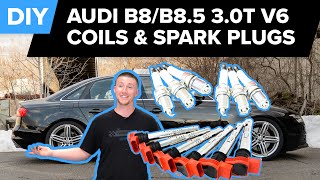
- Faulty Ignition Coil 🔴 High Probability Ignition coils are a very common failure item on many modern Audi engines due to high heat and electrical stress. The original black-top Bosch coils are known to fail and are often replaced with the newer red-top Eldor or Bosch versions.
How to confirm: Swap the ignition coil from cylinder 6 with another cylinder (e.g., cylinder 4 on the same bank). Clear the codes and drive. If the code changes to P0304, the ignition coil is faulty.
Typical fix: Replace the failed ignition coil. It is highly recommended to replace all six coils at the same time, especially if they are original or older revisions, to prevent future failures.
Est. part cost: $35-$70 per coil for OEM brands. - Worn or Fouled Spark Plug 🔴 High Probability The service interval for spark plugs on the 3.0T engine is typically every 55,000 miles, but can be shorter on tuned vehicles. Plugs can also be fouled by oil from a failing PCV system or coolant from a leaking intercooler, which are known issues on this platform.
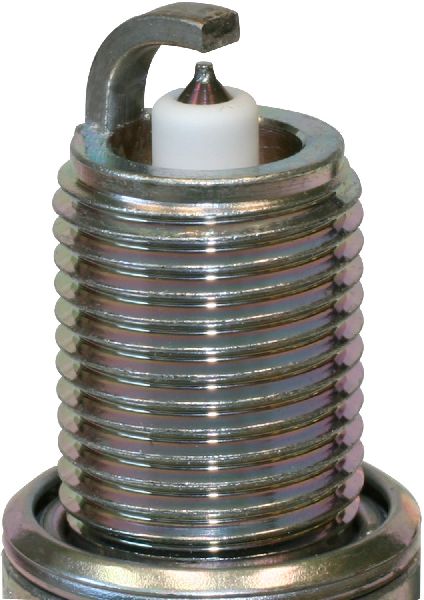
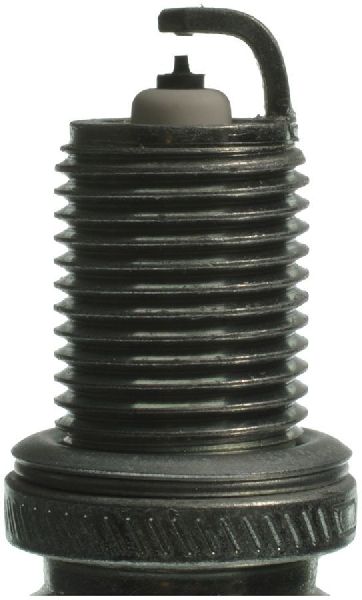
How to confirm: After confirming the coil is good, remove the spark plug from cylinder 6. Inspect it for wear (worn electrode), carbon deposits, oil (black, sooty), or coolant fouling (white, crystalline deposits). Compare it to a plug from a healthy cylinder.
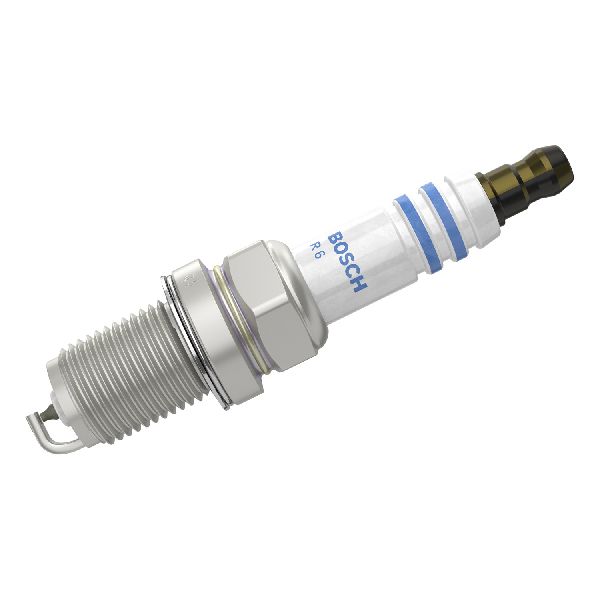
Typical fix: Replace the spark plug. It is best practice to replace all six spark plugs as a set. Use only OEM-spec brands like NGK or Bosch to avoid further issues.
Est. part cost: $15-$30 per plug - Carbon Buildup on Intake Valves 🟡 Medium Probability As a direct-injection engine, fuel is sprayed directly into the cylinder, so it does not wash over and clean the intake valves. Oil vapor from the PCV system bakes onto the hot valves, restricting airflow and causing misfires, often becoming noticeable after 60,000-80,000 miles.
How to confirm: This requires visual inspection of the intake ports and valves using a borescope. The supercharger must be removed for access, making this a significant diagnostic step.
Typical fix: The intake valves need to be cleaned, typically through walnut shell blasting. This is a labor-intensive job with shop costs ranging from $800-$1,900.
Est. part cost: $70-$100 for cleaning materials and required gaskets for DIY. - Faulty Fuel Injector ⚪ Low Probability While less common than on the 2.0T engine, fuel injectors on the 3.0T can fail, sometimes sticking open and fouling the spark plug with excess fuel. This can be a cause after coils and plugs have been ruled out.
How to confirm: This is more difficult to diagnose. A professional may need to perform a fuel injector balance test. Swapping injectors between cylinders is possible but is labor-intensive as it requires removing the fuel rail.
Typical fix: Replace the faulty fuel injector. It's recommended to replace the seals on all injectors if the fuel rail is removed.
Est. part cost: $100-$200 per injector
Rare But Worth Checking
- Failed PCV Valve (Crankcase Vent Valve): A failed PCV valve is a very common issue on the 3.0T engine that causes excessive oil consumption. This can lead to oil fouling the spark plug in cylinder 6, causing a misfire. The valve is located under the supercharger, making replacement a 4-6 hour job with shop costs often exceeding $1,500-$2,500.
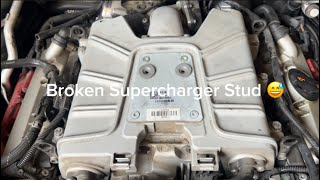
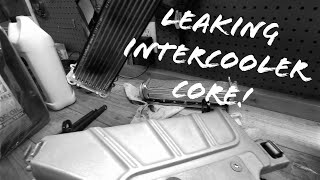
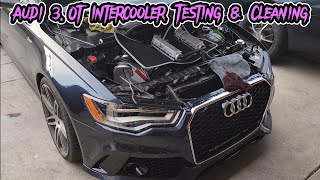
- Leaking Supercharger Intercooler: The liquid-to-air intercoolers located under the supercharger can develop leaks. Coolant can drip into the intake ports, most commonly affecting cylinders 3 and 6 due to their location, causing misfires. A slow loss of coolant with no visible external leak is a key symptom.
- Low Engine Compression: In rare cases on high-mileage engines, a mechanical issue like a worn piston ring, scored cylinder walls, or a problem with a valve or valve seat could cause low compression and a persistent misfire. A compression test is the definitive way to confirm this after all other causes are ruled out.
Diagnosis Steps

- Read the fault codes with an OBD-II scanner (like VCDS for VW/Audi) and note any other codes present, especially P130A or P052E.
- Identify cylinder 6 (driver's side, rear-most cylinder). The driver's side bank is cylinders 4-5-6, front to back.
- Swap the ignition coil from cylinder 6 with cylinder 4 (driver's side, front-most cylinder).
- Clear the codes, start the engine, and go for a short drive to see if the misfire returns.
- Re-scan for codes. If the code is now P0304, the ignition coil is bad and needs replacement.
- If the code remains P0306, the coil is likely good. Proceed to inspect the spark plug.
- Remove the spark plug from cylinder 6. Check for excessive wear, cracking, or fouling from oil (black, sooty) or coolant (white, crystalline). A sweet smell from the spark plug hole may indicate a coolant leak.
- If the plug is worn or fouled, replace all six spark plugs. Using OEM-spec plugs (NGK, Bosch) is highly recommended.
- If the plug and coil are good, the issue may be a fuel injector, carbon buildup, or a rarer issue. Check coolant level; a slow decrease points towards a leaking intercooler.
- A borescope inspection of the intake valves for carbon buildup is the next step, but requires removing the supercharger.
- If the cause is still not found, consult a professional to test the fuel injectors and perform an engine compression and leak-down test.
Parts You'll Likely Need
- Ignition Coil
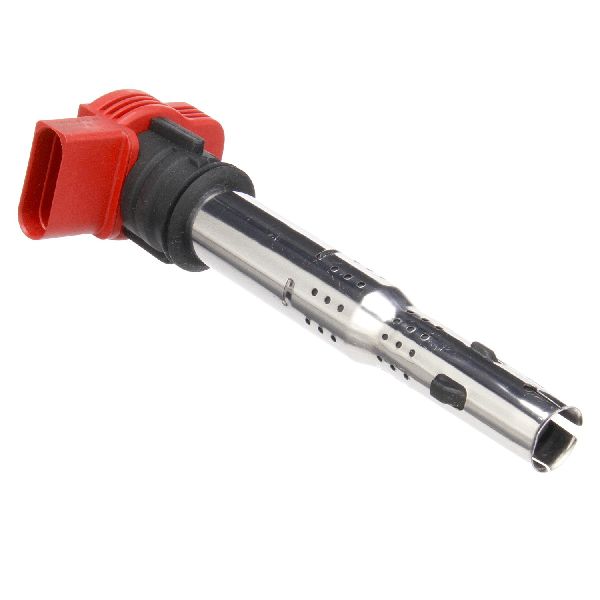
(OEM #06E905115G (latest revision, often red top))— This is the most common cause of a single-cylinder misfire on the 3.0T engine. The original coils are a known failure point.
Trusted brands: Eldor (OEM), Bosch, NGK
OEM price range: $40-$70
Aftermarket price range: $30-$50 - Spark Plug
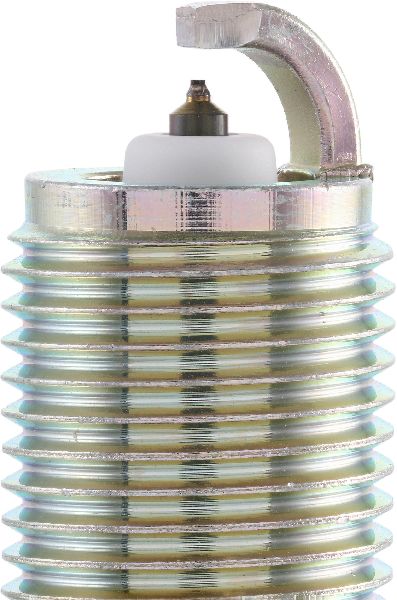
(OEM #06E905611 (verify by VIN))— Spark plugs are a regular maintenance item and can become worn or fouled, leading to misfires.
Trusted brands: NGK (e.g., PFR8S8EG), Bosch
OEM price range: $20-$30
Aftermarket price range: $15-$25 - PCV Valve / Oil Separator
(OEM #06E103547AC (latest revision))— A known high-failure point that causes oil consumption and can foul spark plugs. It's located under the supercharger, so it's often replaced preventatively during other repairs in that area.
Trusted brands: Audi Genuine
OEM price range: $180-$250
Aftermarket price range: $120-$180
Related Codes That Often Appear With This One
- P0300 — This code for 'Random/Multiple Cylinder Misfire' may appear if the misfire is intermittent or affecting other cylinders as well.
- P0301-P0305 — Misfire codes for other cylinders. If you see codes for cylinders 3 and 6 together, a leaking supercharger intercooler is a strong possibility.
- P130A — This Audi-specific code means 'Cylinder Disabling'. The ECM sets this code and shuts off the fuel injector to a cylinder that is misfiring excessively to protect the catalytic converter from damage. This code is a direct result of the P0306 fault.
- P052E — This code indicates a malfunction in the PCV valve performance. If seen with P0306, it strongly suggests the PCV system is faulty and may be causing oil fouling on the spark plug.
Technical Service Bulletins (TSBs) & Recalls
- 01138920337681: Notes that a cylinder misfire fault (P0301-P0306) can be stored in the ECM along with DTC P130A.
Platform-Specific Known Issues
- An official Technical Service Bulletin (TSB #01138920337681) notes that a cylinder misfire fault (P0301-P0306) may be stored along with DTC P130A (Cylinder Disabling). This action is the ECU protecting the catalytic converter from unburned fuel.
Mechanic-Grade Diagnostic Values
- Ignition Coil Primary Resistance — expected: 0.4 - 2.0 Ohms. Failure: A reading of 0 (short) or infinite/OL (open circuit).
- Ignition Coil Secondary Resistance — expected: 6,000 - 10,000 Ohms (6-10 kOhms). Failure: A reading significantly outside this range, or infinite/OL, indicates a faulty coil.
- Fuel Injector Resistance — expected: 12 - 17 Ohms (for high-impedance injectors). Failure: A reading significantly different from the other injectors, or a reading of 0 or infinite/OL. Consistency across all injectors is key.
- VCDS Misfire Counter (Live Data) — expected: 0 at idle and under load on a healthy engine.. Failure: The counter for cylinder 6 increases, confirming an active misfire.
Hidden / Shadow Codes Worth Checking
- Mode $06 Data: While not a 'shadow code', Mode $06 data can provide raw misfire counts per cylinder from the most recent drive cycle before they are high enough to trigger a P0306 code. This can help identify intermittent misfires. (see via Most advanced OBD-II scanners (not just basic code readers) can access Mode $06 test results.)
Scan Tool Commands That Help
- VCDS (VAG-COM) or equivalent Audi/VW diagnostic tool: Advanced Measuring Values (for UDS modules) — Use this to search for and monitor the live misfire counter for each cylinder. For the C7 A6, which uses the UDS protocol, you search for values by name (e.g., 'misfire') rather than using older 'Measuring Block' group numbers. This is the most effective way to confirm if a fix has worked or to see which cylinder is misfiring in real-time.
Wiring & Ground Locations

- Engine Ground Strap — Primary strap connects the engine block to the vehicle body/chassis, often near a motor mount or on the side of the block.. A poor engine ground can cause a weak or inconsistent spark across all cylinders, potentially leading to misfires. While it usually causes multiple/random misfires (P0300), it can sometimes manifest on a single cylinder first.
- Ignition Coil Ground — The ignition coils are grounded through the wiring harness back to the ECM, which is then grounded to the chassis. There is also a ground point on the right side of the engine compartment, near the alternator.. A specific grounding issue in the harness for the cylinder 4-5-6 bank could affect cylinder 6. The red plastic conduits that protect this wiring (PNs 06E971821F, 06E971822D) can become brittle and fail, exposing wires to heat and potential damage.
- Ground Point 600 — On the right cylinder head.. This is a primary ground point for sensors and components on the right side of the engine (Bank 1, cylinders 1-2-3), but ensuring all major engine grounds are clean and tight is crucial when diagnosing electrical faults like misfires.
Real Owner Repair Stories
- AudiWorld Forums user (2014 Audi A6 3.0T) — Persistent misfire on cylinder 2 (P0302), EPC and Check Engine lights.
❌ Tried (didn't work) Swapping ignition coils and spark plugs, Replacing multiple fuel injectors (prior to this event), Dealer diagnostics could not reproduce the problem initially
✅ What actually fixed it After a compression test showed a leak, the dealer pulled the cylinder head and found a burnt valve stem. The final repair was replacing the entire passenger side cylinder head. - Reddit user AshtonTS (2015 Audi S4 (3.0T Engine), Stage 2 tune) — Cylinder 3 misfire (P0303), rapid coolant loss with no visible external leaks.
❌ Tried (didn't work) Replacing spark plug twice (misfire would return on the same cylinder), Replacing OEM ignition coils
✅ What actually fixed it The supercharger's internal intercoolers were leaking coolant directly into the intake runners for cylinders 3 and 6. Replacing both intercooler cores resolved the coolant loss and the misfire. - YouTube channel 'LegitStreetCars' (2013 Audi Q7 3.0T) — Active misfire, mixing of oil and coolant.
❌ Tried (didn't work) Swapping coils and plugs did not resolve the issue.
✅ What actually fixed it The root cause of the misfire and steam from the exhaust was a cracked plastic coolant crossover pipe located under the supercharger, which was leaking coolant into the engine. This was a separate issue from a failed PCV valve that was causing oil and coolant to mix.
"I Checked Everything" — The Actual Cause
- A standard smoke test for vacuum leaks will not identify the most elusive causes of misfires on this engine. A leaking supercharger intercooler, which drips coolant internally, requires a coolant system pressure test to diagnose. Similarly, a burnt exhaust valve or worn piston rings causing low compression would be missed by a smoke test and require a compression and/or leak-down test to discover.
When the Usual Fixes Don't Work
- While ignition coils and spark plugs are the most frequent culprits for a P0306, there are documented cases where these fixes do not work. In one instance involving a 2014 A6, after replacing injectors, coils, and plugs, the persistent misfire was ultimately traced to a burnt valve stem, which required replacing the cylinder head. This highlights the importance of performing a compression and leak-down test if the common ignition and fuel system repairs fail to resolve the issue.
OEM Part Supersession History
Various black-top ignition coils (e.g., 06E905115E)→06E905115G (often red-top)— The original ignition coils had a higher failure rate. Newer revisions from Bosch and Eldor are more robust and resistant to heat-related failure.Earlier versions of PCV valve (e.g., 06E103547P, 06E103547F)→06E103547AC (verify by VIN)— Updated versions feature a lower pressure regulating valve to help reduce the common oil consumption issues of the 3.0T engine.
Model Year Variations Within This Range
- 2012-2015 vs 2016-2018: The 3.0T engine was updated around 2016 to the 'CREC' version, which features a supercharger with an electromagnetic clutch. Earlier versions (e.g., 'CGXB') have a clutchless supercharger. This changes some repair procedures. For example, an Audi technician noted that replacing the PCV valve on a CREC engine requires removing the fuel rails, while on the older engine, it may only require removing one of the lower intake manifolds.
Diagnostic Flowchart
Other Known Issues on This Vehicle
Issues unrelated to this code that are worth knowing about as an owner of this generation:
- Thermostat and Water Pump Failure 🔴 High — Very common failure item, often occurring between 60,000 and 100,000 miles. The plastic housing can crack, leading to coolant leaks and potential overheating. (Ref: Early C7 models had service actions for thermostat issues.)
- PCV Valve (Oil Separator) Failure 🔴 High — Extremely common, typically failing between 60,000-80,000 miles. Leads to excessive oil consumption, rough idle, and can foul spark plugs.
- Active Engine Mount Failure 🟠 Medium — Fluid-filled electronic mounts frequently fail, even at lower mileages (40k-80k miles), causing significant vibration at idle.
- Timing Chain Tensioner Wear 🔴 High — More prevalent on earlier 3.0T engines, but can still occur. Symptoms include a metallic rattle on cold starts. If the tensioner fails, it can lead to catastrophic engine damage.
- S-Tronic (DSG) Mechatronic Unit Failure 🔴 High — The transmission's control unit can fail, causing jerky shifting, inability to select gears, and requiring an expensive replacement. (Ref: TSB #TSB-37-13-10 addresses potential mechatronic malfunctions.)
Used vs. New Parts: Buying Guide for This Vehicle
When a used part is the smart pick: Used parts can be a cost-effective option for major, expensive components that rarely fail, such as the engine block, cylinder head, or the supercharger housing itself (not the internal intercoolers or electronics). If a cylinder head is needed due to a burnt valve, a low-mileage used unit can be significantly cheaper than new.
Donor-vehicle mileage cap: roughly under 80000 miles for the part to have meaningful remaining life.
What to inspect on the donor part:
- For a supercharger, check the intake ports for signs of pink, crusty residue, which indicates leaking internal intercoolers.
- For any engine component, check for heavy, baked-on oil or thick sludge, which could indicate poor maintenance or a severe PCV issue.
- Verify the donor vehicle's mileage and ask for any available service history.
OEM-only on this vehicle (don't cheap out):
- PCV Valve / Oil Separator
- Thermostat
- Water Pump
- Fuel Injectors
Aftermarket brands forum-validated for this vehicle:
- Bosch or NGK for spark plugs.
- Eldor or Bosch for ignition coils.
- APR is a known performance brand for ignition coils, but may not be necessary for a stock vehicle.
Brands owners have reported issues with on this vehicle:
- Unbranded, no-name ignition coils and spark plugs from online marketplaces. These often have a high failure rate and can cause persistent issues on this engine.
Real Owner Stories
Aggregated from forums and TSBs cited above. Mileages and costs reflect what owners reported in those sources.
2017 Audi A6 3.0T
Symptoms: Disabling cylinder 6.
What fixed it: The owner was investigating the issue which involved codes P0306 and P130A.
Source hint: Ross-Tech forum thread titled '2017-audi-a6-3-0t-disabling-cylinder-6.37255/'
2012-2018 Audi A6 3.0T
Symptoms: Cylinder 6 misfire and cylinder disabling.
What fixed it: Diagnosis of P0306 and P130A codes.
Source hint: Audizine forum thread 'Cylinder 6 misfire-P0306-and-P130A'
2012-2018 Audi A6 3.0T
Symptoms: Misfires on cylinders 4, 5, and 6.
What fixed it: Troubleshooting misfires on the driver's side bank of the 3.0T engine.
Source hint: AudiWorld forum thread '4-5-6-cyl-misfire-3-0t-2897495/'
Related OBD-II Codes
Frequently Asked Questions
My Audi A6 is showing P0306 and P130A; what does the second code mean?
Which cylinder is cylinder 6 on the 3.0T Supercharged engine?
Should I replace my original black-top Bosch ignition coils?
How often should I change the spark plugs on my 2012-2018 Audi A6 3.0T?
Can carbon buildup cause a P0306 code on this vehicle?
I smell something sweet in the engine bay along with my misfire; what is that?
Helpful Videos


Used OEM Parts in Stock


New Aftermarket Parts Available


The information in this article is provided for general reference and educational purposes only. Vehicle specifications, procedures, and part compatibility can vary by production date, trim level, and region. Always consult your vehicle's factory service manual and verify part numbers before purchasing or performing repairs. Safety-critical components such as airbags, seat belts, and braking systems should be installed by a qualified professional.
- Audi A6:
- 🎬 Helpful Videos
- 🛍️ Shop This Part
- What's Unique About the 2012-2018 Audi A6
- Symptoms You May Notice
- Most Likely Causes
- Rare But Worth Checking
- Diagnosis Steps
- Parts You'll Likely Need
- Related Codes That Often Appear With This One
- Technical Service Bulletins (TSBs) & Recalls
- Platform-Specific Known Issues
- Mechanic-Grade Diagnostic Values
- Hidden / Shadow Codes Worth Checking
- Scan Tool Commands That Help
- Wiring & Ground Locations
- Real Owner Repair Stories
- "I Checked Everything" — The Actual Cause
- When the Usual Fixes Don't Work
- OEM Part Supersession History
- Model Year Variations Within This Range
- Diagnostic Flowchart
- Other Known Issues on This Vehicle
- Used vs. New Parts: Buying Guide for This Vehicle
- Real Owner Stories
- 2017 Audi A6 3.0T
- 2012-2018 Audi A6 3.0T
- 2012-2018 Audi A6 3.0T
- Related OBD-II Codes
- Frequently Asked Questions
- 🎟️ Get 5% Off