

P0304 on 2003-2009 Toyota 4Runner 4.0L V6: Cylinder 4 Misfire Causes and Fixes
The P0304 code on a 4th Gen 4Runner indicates a misfire in cylinder 4. The most common cause is a failed ignition coil, followed by a worn spark plug. A simple coil swap between cylinders can quickly diagnose the problem. Expect to pay around $60-$90 for an OEM Denso ignition coil. If the issue persists, suspect a fuel injector or, on early models (2003-2005), a potential head gasket issue.
- P0304 on a 2003-2009 4Runner is a misfire on cylinder 4, the middle cylinder on the driver's side.
- The most likely cause is a bad ignition coil. Perform a 'coil swap' to diagnose it for free before buying parts.
- If the coil is good, check the spark plug. If plugs are old, replace all six with quality Iridium plugs from Denso or NGK.
- Do not ignore a flashing check engine light, as this can quickly lead to expensive catalytic converter damage.
- For best results and longevity, use OEM Denso ignition coils and high-quality spark plugs.
What's Unique About the 2003-2009 Toyota 4Runner
The 1GR-FE engine in the 4th generation 4Runner is known for its durability and longevity, often exceeding 250,000 miles with regular maintenance. For a single-cylinder misfire like P0304, the issue is almost always a component of the 'coil-on-plug' ignition system. This design makes diagnosis straightforward, as coils can be swapped between cylinders to isolate the fault. While generally reliable, ignition coil failures are common after 100,000 miles. Early models (2003-2005) are also known for a higher incidence of head gasket failures, which can manifest as a misfire on a rear cylinder like #4 or #6.
Symptoms You May Notice
- Rough idle or engine shaking, especially on a cold start
- Hesitation or stumbling during acceleration
- Noticeable loss of engine power
- Flashing or solid Check Engine Light
- Smell of unburnt fuel from the exhaust
- Decreased fuel economy
- A 'ffft, ffft, ffft' sound from the exhaust at idle
- Multiple dashboard warning lights illuminating simultaneously alongside the engine shaking (as noted in NHTSA ODI #11665224)
- Replacing spark plugs and coils when the actual issue is a leaking fuel injector. If the misfire remains on cylinder 4 after swapping ignition parts, the injector should be the next component investigated.
- Assuming a major mechanical failure before thoroughly testing the ignition and fuel systems. Always follow the diagnostic hierarchy: coil, plug, injector, then mechanical.
- Replacing only one spark plug or coil. While it may fix the immediate issue, it's best practice to replace plugs in a full set. Coils can be replaced individually, but if one has failed and others are original at high mileage, more failures may be imminent.
Most Likely Causes
- Faulty Ignition Coil 🔴 High Probability Ignition coils are a common wear item on the 1GR-FE, with failures often reported after 100,000 miles. Heat cycles and vibration eventually lead to internal failure.
How to confirm: Swap the ignition coil from cylinder 4 with another easily accessible cylinder (e.g., cylinder 2 or 6 on the same bank). Clear the codes and drive. If the code changes to P0302 or P0306, the ignition coil is the culprit. This is the definitive DIY diagnostic step. 🎬 Watch: How to diagnose and swap a faulty ignition coil
Typical fix: Replace the faulty ignition coil. It is highly recommended to use OEM Denso coils for best reliability and longevity. Aftermarket coils can have a shorter lifespan.
Est. part cost: $60-$90 for a single OEM Denso coil. - Worn or Fouled Spark Plug 🟡 Medium Probability Spark plugs are a regular maintenance item with a finite lifespan. If they haven't been replaced according to the 30,000-mile (copper) or 100,000-mile (iridium) service interval, they can wear out, foul, or the gap can become incorrect, causing a weak spark and leading to a misfire.
How to confirm: After confirming the ignition coil is good, remove and inspect the spark plug in cylinder 4. Look for heavy carbon buildup, oil fouling, coolant residue (a sign of head gasket issues), or a worn-down electrode. Compare it to a plug from a cylinder that is firing correctly. Ensure the correct dual-electrode plugs are being used, as incorrect single-electrode plugs can cause issues.
Typical fix: Replace the spark plug. It is best practice to replace all six spark plugs at the same time 🎬 See this walkthrough for changing your coil packs and plugs to ensure even performance. Use high-quality Iridium plugs from Denso (SK20R11) or NGK (IFR6T11) as specified for the engine.
Est. part cost: $10-$20 per plug - Clogged or Faulty Fuel Injector ⚪ Low Probability While less common than ignition issues, fuel injectors can become clogged with deposits or fail electrically, especially at higher mileage. Some forum discussions suggest the rear cylinders may run hotter, potentially contributing to injector failure over time.
How to confirm: If the coil and plug are good, the injector is the next suspect. A DIY method is to listen to the injector with a mechanic's stethoscope; it should make a consistent clicking sound. The most definitive test is to swap the fuel injector from cylinder 4 with another cylinder, but this is labor-intensive as it requires removing the intake manifold. 🎬 Watch: Step-by-step guide for replacing a faulty fuel injector Professionals can perform a flow test on the injectors.
Typical fix: Replace the faulty fuel injector. It's often recommended to have all injectors professionally cleaned and tested or replaced as a set, especially on high-mileage vehicles.
Est. part cost: $100-$150 per OEM injector, or around $150-$200 to have a full set cleaned and serviced.
Rare But Worth Checking
- Blown Head Gasket: Early 1GR-FE engines (2003-mid 2005, with build dates before 11/05) had a head gasket design prone to failure. A failure can allow coolant to leak into the cylinder, causing a misfire that is often most noticeable on a cold start and may smooth out as the engine warms. Cylinders 4 and 6 are commonly affected. Symptoms include coolant loss with no visible leak, white smoke from the exhaust, and a gurgling sound from the dashboard heater core. This is a major and expensive repair.
- Low Cylinder Compression: Mechanical engine damage, such as a burnt valve or damaged piston/rings, can cause a loss of compression and a persistent misfire. This is uncommon on well-maintained engines but can be confirmed with a compression test followed by a leak-down test to pinpoint the source of the pressure loss.
- Damaged Wiring or Connector: The wiring harnesses for ignition coils and fuel injectors can become brittle over time. Check the connector and wiring to cylinder 4's coil and injector for any signs of damage, corrosion, or rodent activity, which is a known issue. Manufacturer service bulletins such as TSB #T-TT-0462-17 and TSB #T-SB-0072-19 note that corrosion or water in the ECM connector can lead to low fuel pressure and DTCs including P0304.
Diagnosis Steps
- Confirm the code is P0304 using an OBD-II scanner.
- Identify cylinder 4. On the 1GR-FE V6, the passenger side bank is cylinders 1-3-5 (front to back) and the driver's side is 2-4-6 (front to back). Cylinder 4 is the middle cylinder on the driver's side.
- Swap the ignition coil from cylinder 4 with the coil from cylinder 2 (front cylinder, driver's side). This is the easiest swap.
- Clear the trouble codes with the scanner and drive the vehicle until the check engine light returns.
- If the code changes to P0302, the ignition coil is faulty. Replace the bad coil (now in the #2 position).
- If the code remains P0304, the coil is likely good. The next step is the spark plug. Put the coils back in their original positions.
- Remove the spark plugs from cylinders 4 and 2. Inspect the plug from cylinder 4 for fouling, wear, or damage. Swap the plugs between the two cylinders.
- Clear codes and drive. If the code changes to P0302, the spark plug is faulty. Replace all six spark plugs for best results.
- If the code remains P0304, the issue is not the coil or plug. The next most likely cause is the fuel injector. Inspect the wiring and connector for the fuel injector on cylinder 4 for any visible damage.
- At this point, diagnosis becomes more complex. Options are to swap the fuel injector (requires intake manifold removal) or take the vehicle to a professional for injector testing and/or a compression/leak-down test to check for mechanical issues or a blown head gasket.
Parts You'll Likely Need
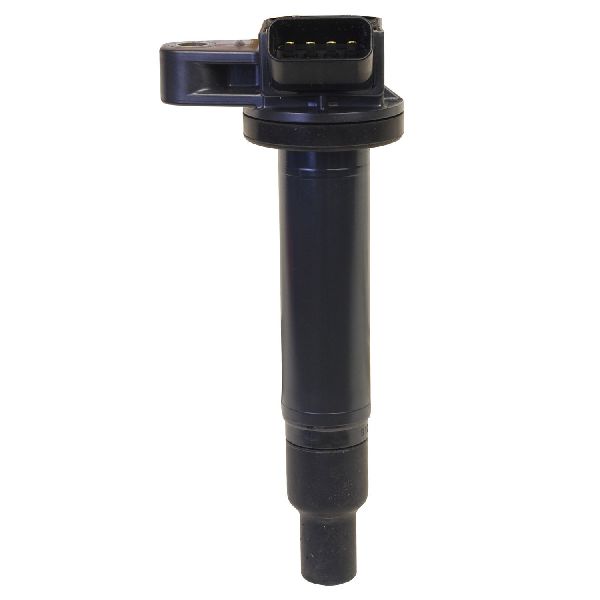
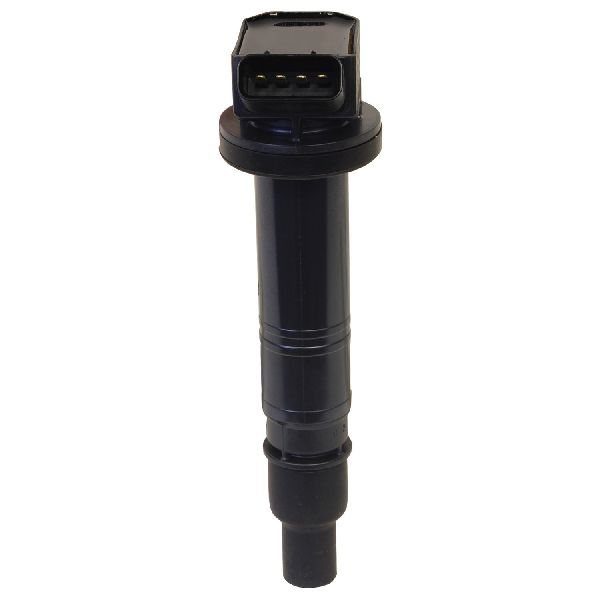
- Ignition Coil
(OEM #90919-02248 (Superseded by 90919-A2001, 90919-02260))— This is the most common cause of a single-cylinder misfire on the 1GR-FE engine.
Trusted brands: Denso (OEM), NGK
OEM price range: $70-$90
Aftermarket price range: $40-$70 - Iridium Spark Plug
(OEM #90919-01233 (Denso SK20R11))— Worn spark plugs are the second most common cause. They are a standard maintenance item that can cause misfires if neglected.
Trusted brands: Denso (SK20R11), NGK (IFR6T11)
OEM price range: $15-$20
Aftermarket price range: $10-$15 - Fuel Injector
(OEM #23209-39075)— A less common but possible cause if ignition components are confirmed to be good. Can fail electrically or become clogged.
Trusted brands: Denso (OEM)
OEM price range: $120-$150
Aftermarket price range: $50-$100
Technical Service Bulletins (TSBs) & Recalls
- While TSB EG018-06 is sometimes mentioned in forums in relation to engine issues, it pertains to Toyota's recommendation for using ILSAC GF-4 5W-20 or 0W-20 oil in 2006+ models for better fuel economy and is not directly related to misfires or head gasket failures.
- TSB #T-SB-0148-19: This bulletin provides a standardized repair procedure for addressing misfire codes P0301 through P0306 across several Toyota models.
- TSB #T-TT-0462-17 & TSB #T-SB-0072-19: These documents highlight that water intrusion or corrosion in the A43 ECM connector can cause drivability concerns, low fuel pressure, and a variety of codes including P0304.
Platform-Specific Known Issues
- Early production models (2003-mid 2005) used a head gasket design that was more susceptible to failure, which can manifest as a P0304 or P0306 misfire code. Toyota introduced an updated head gasket part in later models (build dates after November 2005).
Mechanic-Grade Diagnostic Values
- Fuel Injector Resistance — expected: 11.6 to 12.4 Ω at 20°C (68°F). Failure: A reading outside this range indicates a faulty injector.
- Fuel Pressure — expected: 281 to 287 kPa (40.8 to 41.7 psi). Failure: Pressure significantly below this range can cause lean misfires.
- Ignition Coil Power Supply — expected: Battery positive voltage (approx. 12V) at the positive terminal of the ignition coil connector with the ignition switch ON.. Failure: No voltage indicates a problem in the power supply circuit, not the coil itself.
- Crankshaft Position Sensor Resistance (Cold) — expected: 1,630 to 2,740 Ω. Failure: Resistance outside this range can cause misfire detection issues.
Hidden / Shadow Codes Worth Checking
- Mode $06: While not a hidden code, Mode $06 data on a capable scanner provides access to the raw misfire counts per cylinder for the current and last 10 driving cycles. This is more sensitive than the check engine light and can show intermittent misfires on cylinder 4 (and others) before they are frequent enough to set a P0304 code. Look for Test ID $A2 through $AB, Component ID $01 through $0C (for up to 12 cylinders). Cylinder 4 would be Component ID $04. (see via Advanced OBD-II scanner or software like Toyota Techstream.)
Scan Tool Commands That Help
- Toyota Techstream: Misfire Monitor (under Engine and ECT -> Monitor) — This screen provides a more accurate, real-time misfire count than the standard Data List. The Data List may not accurately count misfires under load, whereas the Monitor screen shows current misfire rate and historical counts, which is crucial for diagnosing intermittent issues.
- Toyota Techstream: Active Test: Control the Injector Cut — This bidirectional test allows you to manually shut off the fuel injector for each cylinder one by one while the engine is idling. When you cut fuel to a good cylinder, the engine RPM will drop noticeably. If you cut fuel to cylinder 4 and there is little or no change in RPM, it confirms that cylinder 4 was not contributing power, pointing to a problem with that cylinder (spark, fuel, or compression).
- Toyota Techstream: Active Test: Check the Cylinder Compression — This is a quick, non-invasive way to get a relative compression reading. The test cranks the engine with fuel and spark disabled and measures the speed variation of the crankshaft for each cylinder. While not a substitute for a mechanical compression test, it can quickly identify a cylinder with significantly lower compression than the others.
Wiring & Ground Locations
- ECM Connector C30, Pin 27 — The Engine Control Module (ECM) is located behind the right side of the dashboard. Connector C30 is a white connector.. This pin sends the IGT4 (Ignition Timing) signal from the ECM to the igniter for cylinder 4. A break or short in this wire would prevent the coil from firing.
- Engine Ground (Battery Negative to Block) — A large ground cable runs from the battery negative terminal to a bolt on the engine block, located below the driver's side exhaust manifold, often sharing a bolt with a heat shield.. A corroded or loose main engine ground can cause a weak spark across all cylinders, but can sometimes manifest as an intermittent misfire on a single cylinder due to voltage drop and electrical noise.
- Ignition Coil Connector (Cylinder 4) — On top of the valve cover, connected to the middle ignition coil on the driver's side.. The 4-pin connector supplies power, ground, the IGT (trigger) signal from the ECM, and sends an IGF (ignition confirmation) signal back. The pins are: 1 (+B - Power), 2 (IGT4 - Trigger), 3 (IGF - Confirmation), 4 (GND - Ground). Checking for 12V at Pin 1 and a signal at Pin 2 are key diagnostic steps.
Real Owner Repair Stories
- t4r.org forum user (2004 Toyota 4Runner V6) — P0304, P0306, and P0300 codes. Rough idle, especially on cold start, with gradual coolant loss and white smoke from exhaust.
❌ Tried (didn't work) Replaced spark plugs, Swapped ignition coils
✅ What actually fixed it The vehicle had the known head gasket failure common to early 1GR-FE engines. A chemical block test confirmed combustion gases in the coolant. The final repair was replacing the head gaskets with the updated multi-layer steel (MLS) version. - NHTSA ODI #11623185: An owner reported a loss of power and a diagnosis of codes P0300, P0302, P0303, and P0304, requiring the replacement of several engine components to restore functionality.
OEM Part Supersession History
90919-02248→90919-02260, 90919-A2001, 90919-A2006— Standard part evolution for improved reliability or manufacturing changes. The newer part numbers are direct replacements.
Model Year Variations Within This Range
- 2003-2004 vs 2005-2009: Besides the well-documented head gasket change in mid-2005, there were other minor sensor and wiring changes. For example, some forum users report differences in cam sensor wiring between 03-04 and 05-09 models, which is critical information for anyone considering an engine swap. However, for a P0304 diagnosis, the primary components (coils, injectors, plugs) remained largely the same.
- 2009+: Starting in the 2010 model year (5th Gen 4Runner), the 1GR-FE was updated to Dual VVT-i. This version features redesigned cylinder heads, roller rocker arms with hydraulic lash adjusters, and a higher compression ratio. While the fundamental causes of a P0304 misfire are similar, parts like cylinder heads and valvetrain components are not interchangeable with the 2003-2009 single VVT-i engine.
Diagnostic Flowchart
Other Known Issues on This Vehicle
Issues unrelated to this code that are worth knowing about as an owner of this generation:
- Premature Frame Rust 🔴 High — Very common, especially in regions that use road salt. Can lead to structural failure and render the vehicle unsafe. Subject of class-action lawsuits. (Ref: No official recall for the 4Runner, though similar Toyota trucks were covered under warranty enhancement programs.)
- Head Gasket Failure (Early V6) 🔴 High — Affects 2003-2005 1GR-FE engines, typically manifesting after 100k miles. An expensive repair if not caught early.
- Seized Brake Calipers 🟠 Medium — Common, particularly the front calipers. Pistons can seize, leading to uneven pad wear, dragging brakes, and overheating.
- Cracked Exhaust Manifolds 🟠 Medium — Can occur at higher mileage, causing an exhaust leak (ticking noise when cold). Repair is expensive because the catalytic converter is often integrated with the manifold.
- Cracked Dashboard 🟡 Low — Extremely common on vehicles exposed to sun and heat. The dash develops long, spiderweb cracks. A cosmetic issue, but unsightly. (Ref: A limited service campaign (LSC) was issued but has since expired.)
- A/C Compressor Relay Failure 🟡 Low — A very common cause for sudden loss of A/C. The A/C light may flash. It is a very simple and inexpensive relay replacement.
Used vs. New Parts: Buying Guide for This Vehicle
When a used part is the smart pick: Used parts can be a smart choice for wiring connectors, pigtails, or a complete engine wiring harness if the original is damaged by rodents or heat. A used OEM Denso ignition coil from a low-mileage donor vehicle is often a better choice than a cheap, new, unbranded aftermarket coil.
Donor-vehicle mileage cap: roughly under 120000 miles for the part to have meaningful remaining life.
What to inspect on the donor part:
- For ignition coils, look for the 'DENSO' and 'Made in Japan' markings. Avoid parts with cracked plastic housings or corrosion on the terminals.
- For wiring, inspect for brittleness, cracking in the insulation, and ensure connector locking tabs are intact.
- Check the donor vehicle's history if possible to avoid parts from flood or severe accident vehicles.
OEM-only on this vehicle (don't cheap out):
- Head Gasket: Always use the updated OEM multi-layer steel (MLS) gasket for the repair to be permanent.
- Fuel Injectors: While used injectors can be purchased, they should be sent to a professional service for cleaning, flow-testing, and new seals before installation. Buying new OEM Denso injectors is the most reliable option.
Aftermarket brands forum-validated for this vehicle:
- Ignition Coils: Denso (OEM), NGK
- Spark Plugs: Denso (SK20R11), NGK (IFR6T11)
Brands owners have reported issues with on this vehicle:
- Unbranded or 'white-box' ignition coils and sensors from online marketplaces. Forum users frequently report premature failure, poor fitment, and performance issues with these parts compared to OEM or reputable OEM-supplier brands.
Real Owner Stories
Aggregated from forums and TSBs cited above. Mileages and costs reflect what owners reported in those sources.
2003-2009 Toyota 4Runner 4.0L V6 — ~100000 miles
Symptoms: P0304 code triggered; owner diagnosed the issue down to a specific fuel injector.
What fixed it: The owner had the fuel injector set professionally serviced/cleaned.
Source hint: T4R.org - 'P0304 code' (https://www.toyota-4runner.org/3rd-gen-t4rs/257321-p0304-code.html)
2005-2015 Toyota Tacoma 4.0L V6 — ~120000 miles
Symptoms: Misfire codes occurring specifically on the rear cylinders of the 1GR-FE engine.
What fixed it: Discussion regarding heat-related failure of fuel injectors on the rear cylinders.
Source hint: TacomaWorld - '1GR-FE's, Fuel Injectors... Discoveries...' (https://www.tacomaworld.com/threads/1gr-fes-fuel-injectors-discoveries.542)
Related OBD-II Codes
Frequently Asked Questions
Where is cylinder 4 located on my 2003-2009 4Runner 4.0L V6?
Does TSB EG018-06 explain why my 4Runner is misfiring?
I have an early 2005 4Runner; is my P0304 code related to a known head gasket issue?
Which specific spark plugs should I use for my 1GR-FE engine to avoid misfires?
Should I use aftermarket ignition coils to fix my P0304 code?
Can a 'ffft, ffft, ffft' sound from my exhaust be related to the P0304 code?
Helpful Videos
Used OEM Parts in Stock

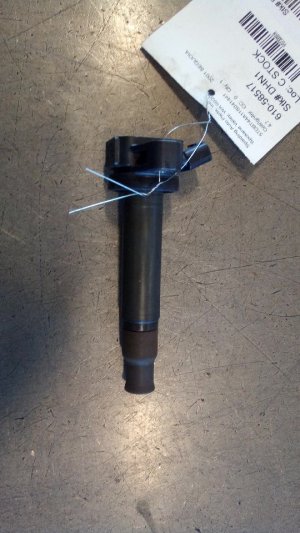
New Aftermarket Parts Available


The information in this article is provided for general reference and educational purposes only. Vehicle specifications, procedures, and part compatibility can vary by production date, trim level, and region. Always consult your vehicle's factory service manual and verify part numbers before purchasing or performing repairs. Safety-critical components such as airbags, seat belts, and braking systems should be installed by a qualified professional.
- Toyota 4Runner:
- 🎬 Helpful Videos
- 🛍️ Shop This Part
- What's Unique About the 2003-2009 Toyota 4Runner
- Symptoms You May Notice
- Most Likely Causes
- Rare But Worth Checking
- Diagnosis Steps
- Parts You'll Likely Need
- Technical Service Bulletins (TSBs) & Recalls
- Platform-Specific Known Issues
- Mechanic-Grade Diagnostic Values
- Hidden / Shadow Codes Worth Checking
- Scan Tool Commands That Help
- Wiring & Ground Locations
- Real Owner Repair Stories
- OEM Part Supersession History
- Model Year Variations Within This Range
- Diagnostic Flowchart
- Other Known Issues on This Vehicle
- Used vs. New Parts: Buying Guide for This Vehicle
- Real Owner Stories
- 2003-2009 Toyota 4Runner 4.0L V6 — ~100000 miles
- 2005-2015 Toyota Tacoma 4.0L V6 — ~120000 miles
- Related OBD-II Codes
- Frequently Asked Questions
- 🎟️ Get 5% Off