

P0304 on 2008-2015 Scion xB 2.4L: Cylinder 4 Misfire Causes and Fixes
P0304 on a Scion xB with the 2.4L engine is most often a failed ignition coil or a worn spark plug on cylinder 4. A simple coil swap is the first diagnostic step. Expect to pay $30-$70 for a quality aftermarket coil (like Denso) and around $10-$15 for an iridium spark plug. Due to a known engine defect, oil-fouled spark plugs are a very common cause for this code on the 2AZ-FE engine.
- P0304 means cylinder 4 (closest to the driver's side) is misfiring.
- The most likely cause is a bad ignition coil or a worn/fouled spark plug.
- Always diagnose by swapping the coil from cylinder 4 to another cylinder to see if the misfire code follows.
- Be aware of the 2AZ-FE engine's notorious oil consumption issue, which can foul spark plugs and cause this code. Check the old spark plug for signs of oil.
- Do not drive with a flashing check engine light, as you risk destroying your catalytic converter.
What's Unique About the 2004-2015 Scion xB
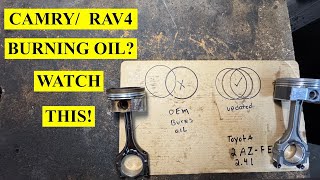
The Scion xB specified uses two different engines across the 2004-2015 model years. This guide applies ONLY to the second-generation xB (2008-2015) equipped with the 2.4L 2AZ-FE engine. The most significant issue with this engine is a known factory defect causing excessive oil consumption due to faulty piston rings. This oil burning can foul the spark plug in cylinder 4, leading directly to a P0304 misfire code. While ignition components are the most common failure point, this underlying engine issue is critical context for any 2AZ-FE misfire diagnosis and was the subject of Toyota's Warranty Enhancement Program ZE7.
🎬 See why the 2.4L engine burns oil and how it affects you.Generation note: The user-provided year range (2004-2015) covers two generations of the Scion xB. However, the specified 2AZ-FE 2.4L engine was only used in the second generation (2008-2015). The first generation (2004-2006) used a 1.5L 1NZ-FE engine, and this guide does not apply to it.
Symptoms You May Notice
- Rough or shaking idle.
- Hesitation or stumbling during acceleration.
- Flashing or solid Check Engine Light.
- Noticeable loss of power.
- Decreased fuel economy.
- Smell of unburned fuel from the exhaust.
- Engine jerking at stops or during gear shifts.
- Replacing only the spark plug without checking for oil fouling. If the plug is oil-fouled, the new plug will also fail quickly if the underlying oil consumption issue isn't acknowledged.
- Using cheap, non-OEM ignition coils. Forum users frequently report that cheap aftermarket coils on Amazon or eBay fail quickly, leading to the code returning. Sticking with Denso or NGK is highly recommended.
Most Likely Causes
- Failed Ignition Coil 🔴 High Probability Coil-on-plug ignition coils are a common failure item on many modern engines as they age. The 2AZ-FE is no exception, with many owner reports of coil failure. Owners on forums strongly recommend using OEM Denso coils over cheaper aftermarket alternatives, which are reported to fail prematurely.
How to confirm: Swap the ignition coil from cylinder 4 with another cylinder (e.g., cylinder 2 or 3). Clear the codes and drive the vehicle. If the code changes to P0302 or P0303, the ignition coil is faulty. This is the universally recommended first diagnostic step.
Typical fix: Replace the faulty ignition coil. It is highly recommended to use OEM (Denso) or high-quality aftermarket coils (like NGK), as owners report frequent issues with cheaper, unbranded alternatives.
Est. part cost: $30 - $90 - Worn or Fouled Spark Plug 🔴 High Probability Spark plugs are a regular maintenance item. More importantly, the 2AZ-FE's tendency to burn oil can foul the spark plugs, causing a misfire long before the plug's normal service interval is up. Technical Service Bulletins explicitly state that a P030# code can be a direct result of the oil consumption issue.
How to confirm: After confirming the ignition coil is good, remove the spark plug from cylinder 4. Inspect it for wear, carbon buildup, or oil fouling. A wet, oily appearance strongly suggests the engine's oil consumption issue is the root cause.
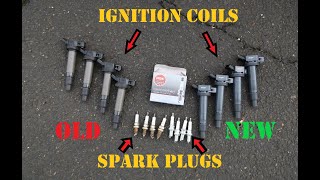
Typical fix: Replace the spark plug. If oil fouling is present, all four plugs should be replaced. 🎬 Watch: This 20-minute walkthrough shows you how to replace plugs and coils. Use the recommended Iridium-tip plugs (Denso SK20R11 or NGK IFR6T11). This is a temporary fix if the underlying oil consumption issue is not addressed.
Est. part cost: $10 - $20 per plug - Clogged or Failed Fuel Injector 🟡 Medium Probability
How to confirm: If an ignition coil and spark plug swap do not resolve the issue, the fuel injector is the next likely culprit. A professional can test the injector's flow rate, or a skilled DIYer can swap the injector from cylinder 4 with another cylinder to see if the misfire code follows. This is more involved than a coil swap as it requires depressurizing and opening the fuel rail.
Typical fix: Replace the faulty fuel injector. It is best practice to replace them as a balanced set to ensure even fuel delivery. Using remanufactured OEM Denso injectors is a common cost-effective repair.
Est. part cost: $50 - $150 for a single remanufactured OEM injector - Leaking Intake Manifold Gasket ⚪ Low Probability The intake manifold gasket can become brittle with age and heat cycles, causing a vacuum leak. If the leak is isolated near the runner for cylinder 4, it can lean out the air/fuel mixture enough to cause a misfire.
How to confirm: With the engine running, spray brake cleaner or a propane torch (unlit) around the intake manifold runner for cylinder 4. If the engine's idle speed changes noticeably, a vacuum leak is present.
Typical fix: Replace the intake manifold gasket. This is a relatively inexpensive part but requires some labor to access.
Est. part cost: $20 - $40
Rare But Worth Checking
- Low Engine Compression (Piston Ring Failure): This is the most severe potential cause, directly related to the 2AZ-FE's known oil consumption issue. Defective piston rings (specifically, insufficient oil drain-back holes in the pistons) fail to seal the cylinder, causing both oil consumption and a loss of compression, which results in a misfire. A compression test is required to confirm this. The official fix involves replacing the pistons and piston rings.
- Failed Head Gasket: A failed head gasket can allow coolant to leak into the cylinder, which will steam clean the spark plug and cause a misfire. This can be diagnosed by checking for coolant loss, white smoke from the exhaust, or by using a block tester to check for combustion gases in the cooling system.
- Damaged Ignition Coil Wiring Harness: In some cases, the plastic engine cover can rub against the wiring harness for the ignition coils, eventually chafing through the insulation and causing an intermittent short. An owner on a Reddit forum mentioned this as a possible cause to investigate.
Diagnosis Steps
- Read the code with an OBD-II scanner to confirm P0304 is the primary code. 🎬 Watch: A helpful guide on diagnosing and fixing P0304 misfire codes.
- Check if the Check Engine Light is flashing. If so, avoid driving the vehicle to prevent catalytic converter damage.
- Locate cylinder 4. On the 2AZ-FE, the cylinders are numbered 1-2-3-4 from the passenger side (drive belt side) to the driver's side (transmission side). Cylinder 4 is the one closest to the driver.
- Swap the ignition coil from cylinder 4 to cylinder 3. Clear the codes and run the engine to see if the misfire code changes to P0303. If it does, the coil is bad.
- If the code remains P0304, swap the spark plug from cylinder 4 to cylinder 2. Clear the codes and run the engine. If the code changes to P0302, the spark plug was the issue.
- While the spark plug is out, inspect it. Is it black and sooty (rich), white and blistered (lean), or wet with oil? An oil-fouled plug points to the engine's known oil consumption problem.
- If ignition components are good, check the fuel injector on cylinder 4. Listen for a clicking sound with a mechanic's stethoscope or, if you are more advanced, swap it with another cylinder's injector.
- Check for vacuum leaks around the intake manifold gasket, especially near the runner for cylinder 4, using starter fluid or a smoke machine.
- If all else fails, perform an engine compression test. A significantly lower reading in cylinder 4 points to a serious mechanical issue like piston rings or a valve problem. This is a known issue with the 2AZ-FE engine.
Parts You'll Likely Need
- Ignition Coil
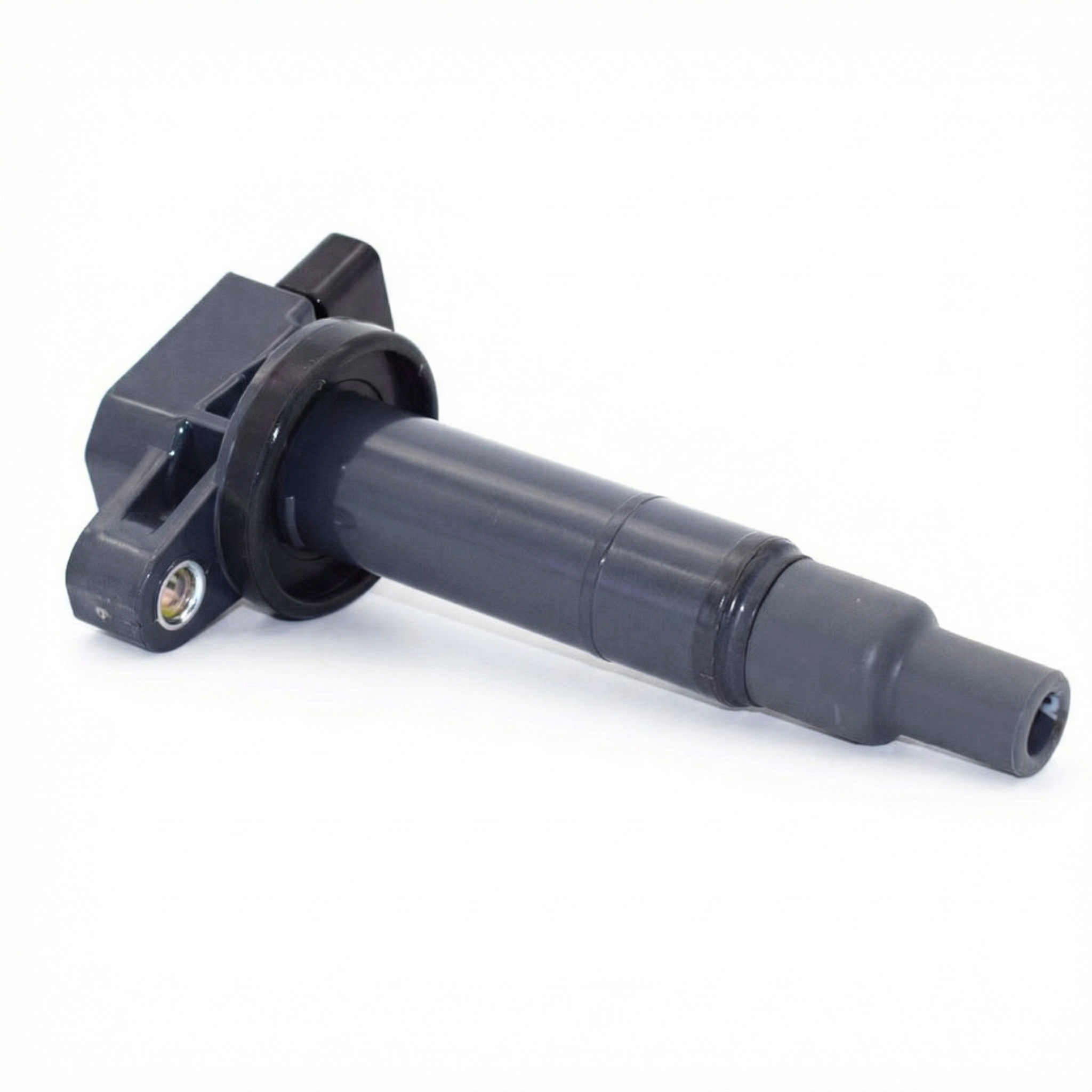
(OEM #90919-A2006 (supersedes 90919-02248))— This is the most common electrical component to fail and cause a single-cylinder misfire on the 2AZ-FE engine. The original part number was 90919-02248, which has been superseded.
Trusted brands: Denso (OEM), NGK
OEM price range: $70-$100
Aftermarket price range: $30-$70 - Iridium Spark Plug
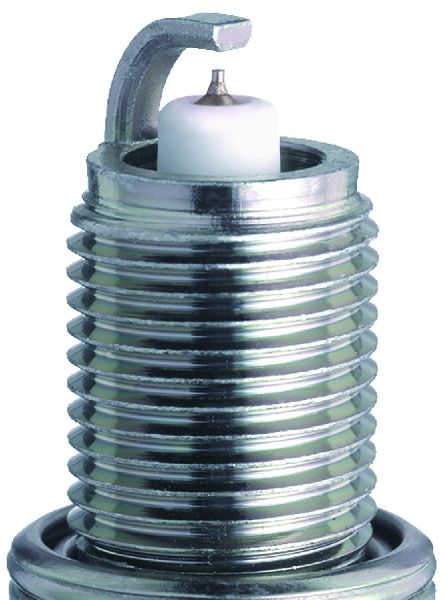
(OEM #Denso SK20R11 / NGK IFR6T11)— Spark plugs are a standard wear item and are often the cause of a misfire. They can also become fouled by oil due to the 2AZ-FE's common oil consumption issue. Denso and NGK are the OEM suppliers.
Trusted brands: Denso, NGK
OEM price range: $15-$20
Aftermarket price range: $10-$15 - Fuel Injector
(OEM #23250-0H030 / 23209-28080)— Less common than ignition parts, but a clogged or failed injector can cause a persistent P0304.
Trusted brands: Denso (OEM)
OEM price range: $150-$250
Related Codes That Often Appear With This One
- P0300 — If the cause of the misfire (like a large vacuum leak or major fuel delivery issue) begins to affect other cylinders, a P0300 (Random/Multiple Cylinder Misfire) code may appear alongside P0304.
- P0301, P0302, P0303 — If other cylinder-specific misfire codes are present, it points towards a systemic problem like a failing fuel pump, clogged catalytic converter, or a significant vacuum leak affecting the entire engine. It could also indicate multiple failing coils or fouled plugs.
Technical Service Bulletins (TSBs) & Recalls
- S-SB-0031-14 / S-SB-0094-11: Details the inspection and repair procedure for excessive engine oil consumption on the 2AZ-FE engine, involving the replacement of the piston and ring assembly.
- Warranty Enhancement Program (ZE7): Extended the warranty coverage for the oil consumption issue, though this program has since expired.
Platform-Specific Known Issues
- The 2AZ-FE engine in 2008-2015 Scion xB models is widely known for excessive oil consumption caused by defective piston rings. Toyota/Scion issued a Technical Service Bulletin (S-SB-0031-14) and a Warranty Enhancement Program (ZE7) to address this. While the warranty program is expired, the underlying issue persists and is a very common cause of oil-fouled spark plugs, leading to misfire codes.
- The TSB and warranty extension covered a specific test where a dealer would verify oil consumption of more than 1 quart per 1,100-1,300 miles to qualify for a repair, which involved replacing the pistons and rings.
Mechanic-Grade Diagnostic Values
- Ignition Coil Primary Resistance — expected: 985 – 1,600 Ω (cold) or 1,265 – 1,890 Ω (hot). Failure: A resistance reading outside of the specified range indicates a faulty coil.
- Fuel Injector Resistance — expected: 11.6 to 12.4 Ω at 20°C (68°F). Failure: Resistance outside this range indicates a failed injector. However, an injector can have correct resistance but still be clogged.
- Fuel Pressure — expected: 304 to 343 kPa (44 to 50 psi) at idle. Failure: Low pressure could indicate a weak fuel pump or clogged filter. High pressure could point to a faulty pressure regulator.
- Short-Term Fuel Trim (STFT) & Long-Term Fuel Trim (LTFT) — expected: Ideally between -10% and +10% at steady RPM.. Failure: Consistently high positive trims (>+10%) on Bank 1 suggest a vacuum leak or under-reporting MAF sensor. High negative trims suggest an over-rich condition, possibly from a leaking injector.
- Ignition Confirmation Signal (IGF1) Voltage at ECM — expected: Pulse generation during idle, 4.5 to 5.5V with ignition ON, engine OFF.. Failure: An absent or incorrect voltage signal can indicate a break in the wiring between the coil and the ECM or a failed igniter within the coil assembly.
Hidden / Shadow Codes Worth Checking
- Mode 6, TID $0A-$0D, CID $01-$0C: Toyota ECUs store misfire counts for each cylinder that can be accessed via Mode 6 data, even if a CEL is not yet triggered. TID $0A, $0B, $0C, and $0D correspond to cylinders 1, 2, 3, and 4 respectively. The Component ID (CID) shows misfire counts for different driving cycles (e.g., last 10 cycles, current cycle). A high count for cylinder 4 (TID $0D) confirms the misfire location. (see via Advanced OBD-II scanner or software like Toyota Techstream that can display Mode 6 data.)
Scan Tool Commands That Help
- Toyota Techstream: Active Test: Fuel Cut — This function allows a technician to individually disable the fuel injector for each cylinder. To diagnose a P0304, you can cut fuel to cylinder 4. If there is no change in the engine's idle roughness, it confirms that cylinder 4 was not contributing, pointing to a problem with that cylinder's ignition, fuel, or compression.
- Toyota Techstream: Data List / Misfire — The Misfire data list provides real-time misfire counts per cylinder. This is more intuitive than raw Mode 6 data and is the preferred method for tracking down intermittent misfires under specific load or RPM conditions.
Wiring & Ground Locations
- ECM Pin B30-81 (IGF1) — At the Engine Control Module (ECM) connector.. This is the Ignition Confirmation signal pin from the ignition coils. A break in the wiring between the coils and this pin can prevent the ECM from confirming ignition, potentially leading to misfire codes or a no-spark condition. The expected voltage is 4.5 to 5.5V with the key on, engine off.
- ECM Pin for IGT4 — At the Engine Control Module (ECM) connector.. IGT4 is the trigger signal from the ECM to the ignition coil for cylinder 4. Using an oscilloscope, a technician can back-probe this pin to verify the ECM is sending the command to fire the coil. Absence of this signal points to an ECM or wiring issue rather than a bad coil.
Real Owner Repair Stories
- ScionLife.com user 'RicanXB' (2012 Scion xB, 87,000 miles) — P0304 and P0303 misfire codes.
❌ Tried (didn't work) Replaced spark plugs, Swapped ignition coils
✅ What actually fixed it The user performed a compression test and found antifreeze spraying from cylinder #4, indicating a failed head gasket was the root cause of the misfire. - Reddit user 'SiberianSpForces' (2010 Scion xB, 169,000 miles) — Intermittent P0304, jerking/hesitation at specific speeds (45-50mph).
❌ Tried (didn't work) Replaced spark plugs (gapped from .032 to .044).
✅ What actually fixed it Swapping the ignition coil from cylinder 4 to cylinder 3 caused the code to change to P0303, confirming a bad ignition coil was the cause. The owner ultimately traded the vehicle in before replacing the part. - ScionLife.com user 'MCoolU' (2006 Scion (model not specified, but likely xA/xB with similar engine architecture)) — Loud helicopter sound, shaking, P0304. Spark plug and coil were found 'fried' and threads were damaged.
❌ Tried (didn't work) Replaced spark plug (after repairing threads), Replaced ignition coil, Swapped fuel injector from cylinder 3 to 4
✅ What actually fixed it The thread was left unresolved, but the next planned step was a compression test, indicating a suspected severe mechanical failure beyond common bolt-on parts. This highlights a scenario where the misfire causes catastrophic plug/coil failure.
OEM Part Supersession History
90919-02248→90919-02260, 90919-A2001, 90919-A2006— Standard component revision and consolidation over time. Later part numbers are generally considered more reliable.
Heads up: While multiple part numbers supersede the original, 90919-A2006 is the most commonly referenced current replacement for the Scion xB 2.4L. Always verify fitment with VIN, as some supersessions were for different applications (e.g., US-built vs Japan-built Camrys).
Model Year Variations Within This Range
- 2008-2015: While the 2AZ-FE engine was used throughout the second generation, there is anecdotal evidence and TSBs that suggest minor revisions were made over the years. However, the primary cause of the oil consumption issue (piston/ring design) was not definitively corrected on the production line until the engine was phased out. A 2015 Tech Tip (T-TT-0361-15) was issued to help technicians identify different piston types during repairs related to the ZE7 warranty enhancement, indicating variations exist but not specifying a production year cutoff for the faulty design.
Diagnostic Flowchart
Real Owner Stories
Aggregated from forums and TSBs cited above. Mileages and costs reflect what owners reported in those sources.
2008 Scion xB 2.4L
Symptoms: Trouble starting randomly with a P0304 code.
What fixed it: Replaced spark plugs, ignition coil #4, and fuel injectors.
Source hint: Scionlife.com forums thread titled 'Trouble starting randomly 2008 xB'
2010 Scion xB 2.4L
Symptoms: Intermittent P0304 code accompanied by engine jerking and hesitation.
What fixed it: Worked through spark plugs and a coil swap, and investigated possible wiring damage caused by the engine cover.
Source hint: Reddit r/ScionxB thread titled 'Intermittent P0304'
2011 Scion xB 2.4L
Symptoms: Cylinder 4 misfire code (P0304).
What fixed it: Successfully diagnosed a bad ignition coil by swapping it with cylinder 3, then replaced the faulty coil.
Source hint: 2carpros.com thread '2011 Scion xB Code P0304 Cylinder Four Misfire'
2012 Scion xB 2.4L
Symptoms: Misfire code moved from cylinder 1 to another cylinder after swapping parts.
What fixed it: Replaced ignition coils, stressing the importance of using quality OEM (Denso) coils over cheap alternatives to avoid repeat failures.
Source hint: Reddit r/ScionxB thread titled '2012 Scion xB misfire code moved from P301 to...'
Related OBD-II Codes
Frequently Asked Questions
Is the P0304 code related to the known oil consumption issue on my 2008-2015 Scion xB?
Will the Warranty Enhancement Program (ZE7) cover the repair for my oil-fouled spark plugs?
Which ignition coils should I buy for my Scion xB to fix a P0304?
How do I know if my Scion xB qualifies for the oil consumption TSB (S-SB-0031-14)?
Where is cylinder 4 located on the 2.4L 2AZ-FE engine?
What spark plugs are recommended for the 2.4L Scion xB?
Helpful Videos

Used OEM Parts in Stock


New Aftermarket Parts Available



The information in this article is provided for general reference and educational purposes only. Vehicle specifications, procedures, and part compatibility can vary by production date, trim level, and region. Always consult your vehicle's factory service manual and verify part numbers before purchasing or performing repairs. Safety-critical components such as airbags, seat belts, and braking systems should be installed by a qualified professional.
- Scion xB:
- 🎬 Helpful Videos
- 🛍️ Shop This Part
- What's Unique About the 2004-2015 Scion xB
- Symptoms You May Notice
- Most Likely Causes
- Rare But Worth Checking
- Diagnosis Steps
- Parts You'll Likely Need
- Related Codes That Often Appear With This One
- Technical Service Bulletins (TSBs) & Recalls
- Platform-Specific Known Issues
- Mechanic-Grade Diagnostic Values
- Hidden / Shadow Codes Worth Checking
- Scan Tool Commands That Help
- Wiring & Ground Locations
- Real Owner Repair Stories
- OEM Part Supersession History
- Model Year Variations Within This Range
- Diagnostic Flowchart
- Real Owner Stories
- 2008 Scion xB 2.4L
- 2010 Scion xB 2.4L
- 2011 Scion xB 2.4L
- 2012 Scion xB 2.4L
- Related OBD-II Codes
- Frequently Asked Questions
- 🎟️ Get 5% Off