

P0304 on 2015-2019 Ford Edge: Misfire Causes and Critical Engine Warnings
P0304 indicates a misfire in cylinder 4. While it could be a simple fix like a spark plug or ignition coil (~$50-$150), on the 2.0L EcoBoost engine this code is a notorious early warning for coolant leaking into the cylinder, a major engine failure requiring a long block replacement that can cost over $7,000. This issue is the subject of multiple Ford TSBs and a class-action lawsuit.
- P0304 is a misfire in cylinder 4. On a 2015-2019 Ford Edge, the urgency and cost of the fix depend entirely on the engine.
- For the 2.0L EcoBoost engine, immediately check your coolant level. A low level combined with a P0304 code is a strong indicator of a serious, known engine defect requiring engine replacement.
- Do not repeatedly replace spark plugs and coils on a 2.0L EcoBoost with this code without ruling out a coolant leak first. You could be wasting money while ignoring a critical engine failure.
- For the 2.7L V6 and 3.5L V6 engines, the cause is more likely a standard ignition or fuel system part, such as an ignition coil, spark plug, or fuel injector.
- Due to the potential for catastrophic engine failure, professional diagnosis with a pressure test and borescope is highly recommended, especially for the 2.0L engine.
What's Unique About the 2015-2019 Ford EDGE

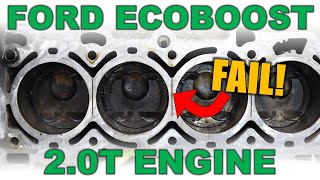
For the 2015-2019 Ford Edge, a P0304 code carries significantly different weight depending on the engine. On the 3.5L V6 or 2.7L V6, it's typically a standard ignition or fuel issue. However, on the common 2.0L EcoBoost I4 engine, this code is a well-documented and critical symptom of coolant intrusion into the cylinders. This is due to a design flaw in the engine block where coolant can seep past the seals between cylinders. This often leads to catastrophic engine failure, a fact supported by numerous owner complaints, a class-action lawsuit, and Ford's own Technical Service Bulletins (TSBs).
Diagnostic Flowchart

Tap your situation to follow the diagnostic path that matches what you're seeing on this vehicle.
Symptoms You May Notice
- Check Engine Light is on or flashing
- Rough or shaky idle, especially on a cold start
- Noticeable loss of engine power and poor acceleration
- Engine hesitation or stumbling
- For 2.0L EcoBoost: Unexplained loss of engine coolant with no visible leaks
- For 2.0L EcoBoost: White smoke from the exhaust, especially on startup, with a sweet smell
- For 2.0L EcoBoost: 'Waterfall' or gurgling sound from the dashboard area due to air in the cooling system
- Vehicle overheating (ODI #11515903)
- Replacing only the spark plug and ignition coil without checking for coolant. As one owner reported, this may not solve the problem if the underlying cause is a coolant leak, leading to the check engine light returning. (ODI #11515903) This is a common but temporary fix that masks the root cause.
Most Likely Causes

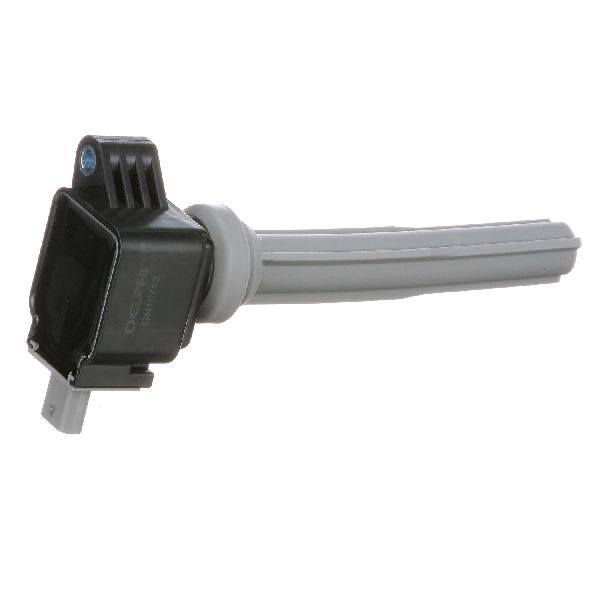
- Faulty Ignition Coil 🔴 High Probability Coil-on-plug systems are common failure points on most modern vehicles due to constant exposure to high heat and vibration.
How to confirm: Swap the ignition coil from cylinder 4 with another cylinder (e.g., cylinder 3). Clear the codes and run the engine. If the misfire code changes to P0303, the coil is bad. 🎬 See how to quickly find the real cause of your misfire.
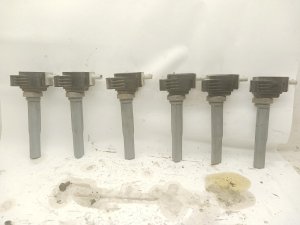
Typical fix: Replace the faulty ignition coil. It is often recommended to replace all coils if they are the same age.
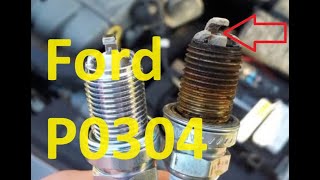
Est. part cost: $40-$90 - Worn or Fouled Spark Plug 🔴 High Probability Spark plugs are a regular maintenance item. On the 2.0L EcoBoost, a plug can become fouled by coolant from the engine defect, appearing steam-cleaned or wet.
How to confirm: Remove the spark plug from cylinder 4. Inspect for wear, carbon fouling, oil, or coolant contamination. A coolant-fouled plug will appear unusually clean or wet and may have a sweet smell. Check the gap; for the 2.0L EcoBoost it should be 0.027-0.031 inches.
Typical fix: Replace the spark plug. If replacing one, it is best practice to replace all of them.
Est. part cost: $10-$25 per plug - Internal Engine Failure (Coolant Intrusion) 🟡 Medium Probability Specific to the 2.0L EcoBoost engine, a flaw in the engine block design allows coolant to leak into the cylinders. Ford has issued multiple TSBs, with the latest being 22-2229, acknowledging this issue which can present with codes P0301-P0304. This defect is also the subject of a class-action lawsuit (Miller, et al. v. Ford Motor Company). Multiple NHTSA complaints for P0304 on this vehicle resulted in engine replacement recommendations. (ODI #11378511, #11477036)
How to confirm: Perform a cooling system pressure test; the system should not lose pressure over several hours. Use a borescope to visually inspect inside the cylinder for coolant. Check for white, sweet-smelling exhaust smoke. (ODI #11677487)
Typical fix: The only permanent fix is to replace the engine long block assembly with an updated part, as per Ford's TSB 22-2229.
Est. part cost: $4000-$8000+ - Faulty Fuel Injector ⚪ Low Probability
How to confirm: Listen to the injector with a mechanic's stethoscope for a consistent clicking sound. Compare it to an adjacent injector. You can also measure its resistance with a multimeter or swap it with another cylinder's injector to see if the misfire follows.
Typical fix: Replace the faulty fuel injector and its seals. It's often recommended to replace all injectors on a GDI engine at the same time.
Est. part cost: $70-$150
Rare But Worth Checking
- Leaking Head Gasket: While less common than the block design flaw on the 2.0L, a failed head gasket can produce identical symptoms of coolant intrusion and misfires on any of the available engines. However, on the 2.0L, the block issue is statistically more likely.
- Low Compression: Mechanical engine damage such as a burnt valve or worn piston rings can cause a persistent misfire that won't be fixed by replacing ignition or fuel parts. A compression test is needed to diagnose this.
- Burnt ECU Coil Driver: In some cases, particularly on the 3.5L V6, a shorted ignition coil can damage the driver circuit within the Engine Control Unit (ECU), causing a persistent misfire on one cylinder even after the coil is replaced.
Diagnosis Steps
- Identify the engine in your Ford Edge (2.0L I4, 2.7L V6, or 3.5L V6). The following steps are especially critical for the 2.0L EcoBoost.
- Check for other stored trouble codes to see if the misfire is isolated or part of a larger problem.
- For 2.0L EcoBoost: Check the engine coolant level in the overflow reservoir. If it is low without any visible external leaks, this is a major red flag for coolant intrusion.
- Locate cylinder 4. On the 2.0L I4, cylinders are numbered 1-2-3-4 from passenger side (belt side) to driver side (transmission side); cylinder 4 is on the far driver's side. On the V6 engines, Bank 1 (cylinders 1-2-3) is against the firewall, and Bank 2 (cylinders 4-5-6) is by the radiator. Cylinder 4 is the front-most cylinder on the radiator side.
- Swap the ignition coil from cylinder 4 with the coil from cylinder 3. Clear the codes and run the engine. If the code changes to P0303, the ignition coil is faulty and needs replacement.
- If the code remains P0304, remove the spark plug from cylinder 4. Inspect it for excessive wear, damage, or fouling. A steam-cleaned or wet plug indicates a coolant leak.
- If coolant is suspected (especially on a 2.0L), the next step is a cooling system pressure test. A professional shop will pressurize the system and let it sit for several hours to see if it holds pressure. A leak indicates a breach.
- A definitive diagnosis of coolant intrusion requires a borescope inspection to look for coolant inside the cylinder. This is the procedure recommended by Ford's TSBs.
- If no coolant is found, proceed with testing the fuel injector (listening for clicks, resistance check) and checking for engine compression to rule out mechanical issues.
Parts You'll Likely Need
- Ignition Coil
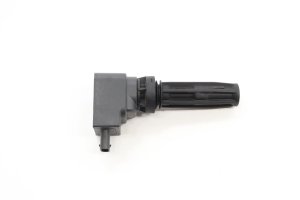
(OEM #CM5Z-12029-K)— A common failure point for misfires. It's the first logical part to test by swapping.
Trusted brands: Motorcraft, NGK, Bosch
OEM price range: $60-$90
Aftermarket price range: $40-$70 - Spark Plug
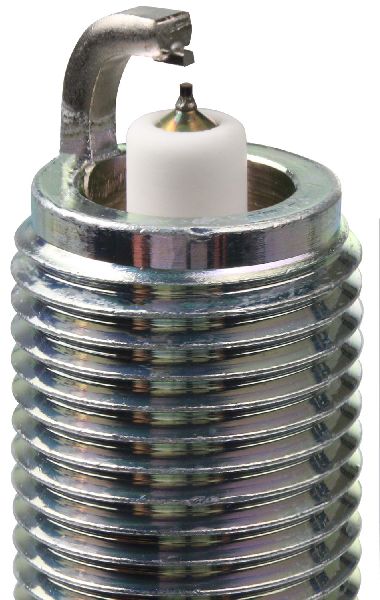
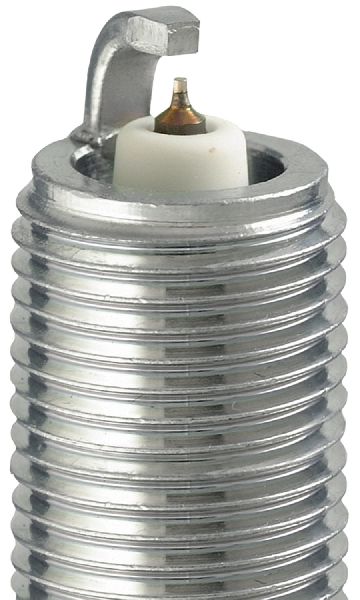
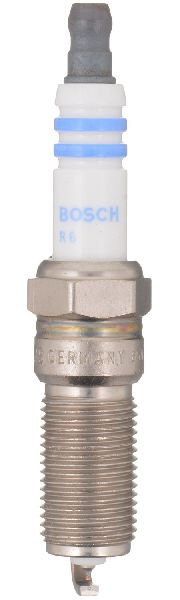
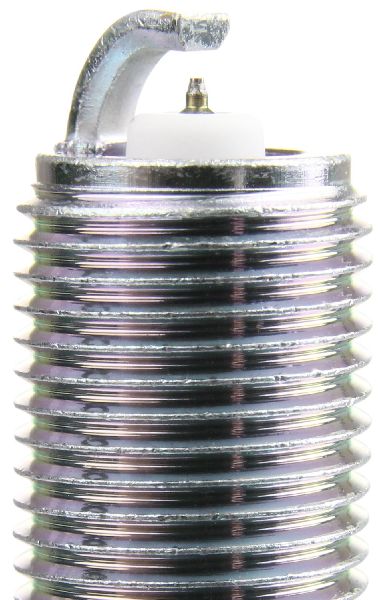
(OEM #Motorcraft SP-537 (CYFS-12Y-PCT) for 2.0L EcoBoost)— A standard maintenance item that can cause misfires when worn or fouled. It's also a key diagnostic indicator if contaminated with coolant.
Trusted brands: Motorcraft, NGK (LTR6IX-11), Denso
OEM price range: $15-$25
Aftermarket price range: $8-$18 - Engine Long Block Assembly
(OEM #J2GZ-6006-E (example of updated part number))— This is the official Ford-recommended repair for the P0304 code when caused by coolant intrusion on the 2.0L EcoBoost engine, as documented in TSB 22-2229.
Trusted brands: Ford (OEM)
OEM price range: $4000-$6000
Aftermarket price range: N/A
Related Codes That Often Appear With This One
- P0300 — Stands for 'Random/Multiple Cylinder Misfire Detected'. If the coolant intrusion or other issue begins to affect other cylinders, this code will appear alongside the specific cylinder code.
- P0301, P0302, P0303 — These are misfire codes for cylinders 1, 2, and 3. On the 2.0L EcoBoost, the coolant leak often occurs between cylinders, so it's common to see misfires on adjacent cylinders. One NHTSA complaint cited P0302, P0303, and P0304 together. (ODI #11477036)
- P0316 — Indicates 'Misfire Detected on Startup (First 1000 Revolutions)'. This is often seen with coolant intrusion, as the coolant pools in the cylinder overnight and causes a misfire immediately upon starting. TSB 22-2229 explicitly lists this code.
Technical Service Bulletins (TSBs) & Recalls

- TSB 22-2229: Supersedes previous TSBs. Outlines diagnosis and long block replacement for 2.0L EcoBoost coolant intrusion.
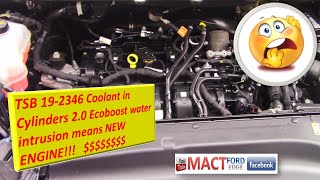
- TSB 19-2346: An earlier version of the bulletin for the same coolant intrusion issue.
- TSB 19-2208: An even earlier version, superseded by 19-2346.
- SSM 47204: Special Service Message from Ford acknowledging the runs rough condition with P030x codes may be due to coolant intrusion. (ODI #SSM 47204)
Platform-Specific Known Issues
- A known design defect in some 2015-2018 Ford Edge models with the 2.0L EcoBoost engine can cause coolant to leak into the cylinders, leading to misfires and eventual engine failure. Ford has issued Technical Service Bulletin (TSB) 22-2229 (which supersedes earlier versions) that specifically addresses this issue, noting that DTCs P0301-P0304 can be symptoms. The prescribed fix is a complete engine long block replacement.
- NHTSA owner complaints confirm this is a real-world problem. One owner with a P0304 code was quoted $6,800 for a long block replacement (ODI #11378511). Another with multiple misfire codes including P0304 had a mechanic confirm a coolant leak into the cylinder with a borescope, requiring an entire engine replacement (ODI #11477036).
Mechanic-Grade Diagnostic Values
- Fuel Injector Resistance (3.5L V6 Port Injection) — expected: 11-14 Ohms, typically around 12.5 Ohms. Failure: A significantly higher reading (e.g., 35 Ohms) or an open circuit (infinite resistance) indicates a bad injector coil.
- Fuel Injector Resistance (2.0L EcoBoost GDI) — expected: 1 to 2 Ohms. Failure: Readings outside this very low range suggest a faulty injector. Do not back-probe the connector with the engine running, as this can damage the PCM.
- Spark Plug Gap (2.0L EcoBoost) — expected: 0.027-0.031 inches (0.7-0.8 mm). Failure: An incorrect gap can cause weak spark and misfires. A plug that is unusually clean or wet indicates coolant contamination, regardless of the gap.
- Injector Pulse Width (at idle) — expected: Typically 0.8 ms to 2.5 ms, varies with engine temp and load. Failure: An injector with a pulse width significantly different from the others on the same bank can indicate a clog or leak. Requires a scan tool with live data capabilities.
Hidden / Shadow Codes Worth Checking
- Mode $06 Data: This is not a specific code, but a diagnostic mode that provides access to raw data from the PCM's self-tests. For misfires, you can view the misfire count for each cylinder (e.g., Test ID $A2, Component ID $04 for cylinder 4) in the current and last 10 driving cycles. This allows a technician to see if cylinder 4 is accumulating misfire counts even if they haven't yet reached the threshold to set the P0304 code. (see via An advanced OBD-II scan tool or software like FORScan that can access Mode $06 test results.)
Scan Tool Commands That Help
- Ford IDS, FORScan, or other professional scan tool: Power Balance Test — This is a critical diagnostic step. The command allows the technician to shut off fuel to each cylinder one by one while monitoring the RPM drop. If shutting off cylinder 4 causes little or no change in engine RPM, it confirms that cylinder is the one not contributing power (misfiring). A large RPM drop on other cylinders confirms they are working correctly.
Wiring & Ground Locations

- G103 / G104 (example designators) — On the front of the vehicle, near the core support/bumper area. Two grounds are easily accessible once the front bumper cover is removed.. These grounds are part of the main engine wiring harness. A corroded or loose ground here can cause erratic voltage to sensors and the PCM, potentially leading to misdiagnosed misfires or other electrical issues.
- Main Engine Block Ground — Bolted to the side of the engine block. On some models, the battery and battery tray must be removed for access.. This is the primary ground for the engine itself. A poor connection here can affect the ignition system, as the spark plugs rely on a solid ground path through the cylinder head and block to complete the circuit.
- Ignition Coil Connector (Cylinder 4) — The electrical connector on top of the ignition coil for cylinder 4. The connector itself is available as a pigtail for repairs (e.g., Motorcraft WPT-1133).. The pins inside this connector can become corroded or the wires can break from heat and vibration, causing an intermittent connection to the coil. A pinout test can verify power, ground, and the signal from the PCM.
Real Owner Repair Stories
- Ford Edge Forum user (2015 Ford Edge SE 2.0L EcoBoost, 150,000 miles) — Started with a misfire on cylinder 1 (P0301), white smoke on startup, and a sweet smell of coolant.
❌ Tried (didn't work) Initial diagnosis
✅ What actually fixed it The owner took it to a dealer who performed a cooling system pressure test and confirmed it was leaking into the #1 combustion chamber. The quoted fix was a complete long block replacement for $6,100. This story illustrates the classic coolant intrusion failure mode. - Reddit user r/MechanicAdvice (2017 Ford Edge) — Persistent cylinder 4 misfire, had been 'fixed' three times in one month by replacing plugs and coils.
❌ Tried (didn't work) Replacing spark plug, Replacing ignition coil
✅ What actually fixed it A professional mechanic on the forum immediately identified the symptoms and engine (2.0L EcoBoost) as being consistent with the head gasket/coolant intrusion issue covered by a TSB. The actual fix is an engine replacement, not repeated ignition component swaps.
"I Checked Everything" — The Actual Cause
- For the 2.0L EcoBoost, a common diagnostic dead-end occurs when a technician follows standard misfire procedure. They may check for vacuum leaks (smoke test), test fuel pressure, and swap spark plugs/coils, finding everything to be 'good'. The misfire persists because the root cause is not a vacuum leak or a simple component failure. The actual problem is a slow, internal coolant leak into the cylinder, which can only be reliably diagnosed with a cooling system pressure test held over several hours and confirmed with a borescope inspection inside the cylinder—steps often taken only after the common, easier checks fail.
OEM Part Supersession History
N/A (Original Engine Block)→J2GZ-6006-E (or similar updated long block assembly)— The original engine block design for the Gen 2 2.0L EcoBoost had a small open slot between the cylinders to aid cooling. This design reduced the surface area for the head gasket, making it prone to failure and allowing coolant to intrude into the cylinders. The updated long block features a revised block casting that eliminates this slot, providing a more robust sealing surface.
Heads up: When replacing the engine due to coolant intrusion, it is critical to use the updated long block specified in TSB 22-2229 to permanently resolve the issue.
Model Year Variations Within This Range
- 2015-2018 Edge (and some 2019): The 2.0L EcoBoost engine used in these model years is the second-generation 'twin-scroll' version. This specific generation is prone to the coolant intrusion issue due to a flaw in the engine block design. Ford began using an updated block design in mid-2019 for the 2020 model year, which resolves this problem. Therefore, a P0304 on a 2017 Edge 2.0L has a much higher probability of being a catastrophic engine issue than the same code on a 2014 (first-gen engine) or a 2021 (updated engine) model.
Helpful Videos

Used OEM Parts in Stock



New Aftermarket Parts Available


The information in this article is provided for general reference and educational purposes only. Vehicle specifications, procedures, and part compatibility can vary by production date, trim level, and region. Always consult your vehicle's factory service manual and verify part numbers before purchasing or performing repairs. Safety-critical components such as airbags, seat belts, and braking systems should be installed by a qualified professional.
- Ford EDGE:
- 🎬 Helpful Videos
- 🛍️ Shop This Part
- What's Unique About the 2015-2019 Ford EDGE
- Diagnostic Flowchart
- Symptoms You May Notice
- Most Likely Causes
- Rare But Worth Checking
- Diagnosis Steps
- Parts You'll Likely Need
- Related Codes That Often Appear With This One
- Technical Service Bulletins (TSBs) & Recalls
- Platform-Specific Known Issues
- Mechanic-Grade Diagnostic Values
- Hidden / Shadow Codes Worth Checking
- Scan Tool Commands That Help
- Wiring & Ground Locations
- Real Owner Repair Stories
- "I Checked Everything" — The Actual Cause
- OEM Part Supersession History
- Model Year Variations Within This Range
- 🎟️ Get 5% Off