

P0303 on 2020-2025 Hyundai Palisade: Cylinder 3 Misfire Causes and Fixes
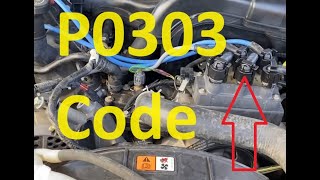
P0303 on a Hyundai Palisade indicates a misfire in cylinder 3. The most common cause is a faulty ignition coil, followed by a worn spark plug. A DIY-friendly diagnosis involves swapping the cylinder 3 coil with another to see if the code follows. Expect to pay $40-$100 for an ignition coil and $15-$25 for a spark plug. Accessing cylinder 3 requires removing the upper intake manifold.
- P0303 specifically means cylinder 3 is misfiring.
- The most likely culprit is a bad ignition coil, which is a straightforward DIY replacement.
- Always diagnose before buying parts by swapping the cylinder 3 coil with another one to see if the misfire code moves to the new cylinder.
- If the check engine light is flashing, stop driving immediately to prevent expensive damage to the catalytic converter.
- When replacing spark plugs, it is best practice to replace all six at once with high-quality Iridium plugs.
What's Unique About the 2020-2025 Hyundai Palisade

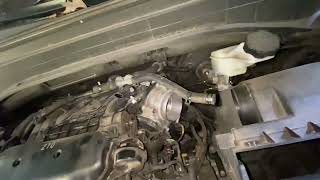
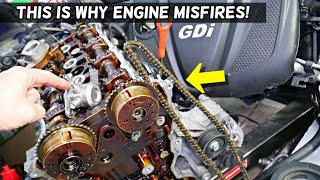
The Lambda II 3.8L is a Gasoline Direct Injection (GDI) engine. While the primary causes for a P0303 misfire are standard ignition components, GDI engines are inherently more susceptible to carbon buildup on intake valves over time, which can disrupt airflow and cause misfires. This happens because fuel is injected directly into the cylinder, so it no longer washes over the intake valves to clean them. 🎬 Watch: Why GDI engines misfire and how to fix them. Additionally, the fuel injectors are located directly in the combustion chamber, making them a more complex, though less frequent, point of failure compared to older port-injection systems.
Symptoms You May Notice
- Rough or shaky idle
- Hesitation or stumbling during acceleration
- Reduced engine power
- Flashing or solid Check Engine Light
- Decreased fuel economy
- Engine stalling
- Smell of unburnt gasoline from the exhaust
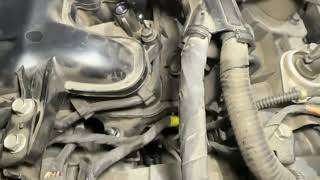
- Replacing oxygen sensors. While a faulty O2 sensor can cause issues, it will typically set its own specific code and affect multiple cylinders (often setting a P0300), not just a single one like P0303. 🎬 See this breakdown of common causes for a P0303 code.
Most Likely Causes

- Faulty Ignition Coil 🔴 High Probability Coil-on-plug systems are a common failure point on most modern engines as they age, including the Lambda 3.8L V6. Heat cycles and vibration eventually lead to internal failure, causing a weak or no-spark condition.
How to confirm: Swap the ignition coil from cylinder 3 with another cylinder (e.g., cylinder 1). Cylinder 3 is on the rear bank (closest to the firewall), second from the left (passenger side). Clear the codes and drive the vehicle. If the code changes to P0301, the ignition coil is confirmed to be faulty.
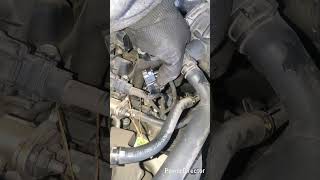
Typical fix: Replace the faulty ignition coil. Accessing the rear bank requires removing the upper intake manifold. 🎬 Watch: Step-by-step guide to removing the manifold and replacing plugs. It is often recommended to replace all six coils at the same time for preventative maintenance, especially on higher mileage vehicles.
Est. part cost: $40-$100 - Worn or Fouled Spark Plug 🟡 Medium Probability Spark plugs are a regular maintenance item with a finite lifespan. An overdue tune-up is a common reason for misfires. The OEM-specified Iridium plugs have a long life but will eventually wear out.
How to confirm: After ruling out the ignition coil, remove the spark plug from cylinder 3. Inspect it for wear (worn electrode), carbon fouling (black, sooty deposits), oil contamination, or a cracked insulator. The gap should also be checked against OEM specifications.
Typical fix: Replace the spark plug. It is best practice to replace all six spark plugs simultaneously with OEM-spec Iridium plugs to ensure consistent performance. This job also requires removing the intake manifold to access the rear bank of cylinders.
Est. part cost: $15-$25 per plug - Clogged or Faulty Fuel Injector ⚪ Low Probability As a GDI engine, the injector tips are exposed to combustion chamber heat and pressure, making them susceptible to carbon buildup over time. Some Hyundai models have had TSBs related to fuel injectors causing misfires, and while not specific to the Palisade 3.8L, the issue is known on Hyundai GDI platforms.
How to confirm: This is more advanced. A professional can perform a fuel injector balance test. A DIY method involves listening to the injector with a mechanic's stethoscope to ensure it's clicking. Swapping injectors is possible but requires removing the intake manifold and fuel rail.
Typical fix: Professionally clean or replace the faulty fuel injector. This is a labor-intensive job as the intake manifold must be removed for access.
Est. part cost: $100-$200 - Carbon Buildup on Intake Valves ⚪ Low Probability This is a systemic issue with GDI engines like the Lambda II 3.8L. Oil vapor from the PCV system bakes onto the back of the intake valves. Over 60,000-100,000 miles, this can restrict airflow into the cylinder, causing turbulence and leading to misfires.
How to confirm: This can only be confirmed by visual inspection using a borescope or by removing the intake manifold. Since the intake manifold must be removed to service cylinder 3's coil or plug, it's a good opportunity to inspect the intake ports for buildup.
Typical fix: The intake valves need to be cleaned, typically through walnut blasting, which is a professional service. Some shops may use chemical cleaning methods. This is often done as a preventative measure on higher-mileage GDI engines.
Est. part cost: $0 (if done during other repairs), $400-$800 for a professional cleaning service.
Rare But Worth Checking
- Intake Manifold Gasket Leak: A vacuum leak near the cylinder 3 intake runner can lean out the air/fuel mixture and cause a misfire. This might be accompanied by a lean code (P0171/P0174). Since the intake manifold must be removed for a cylinder 3 coil/plug change, it is critical to replace the gaskets at the same time to prevent this issue.
- Low Engine Compression: This is a more serious mechanical issue, such as a burnt valve, worn piston rings, or even rod bearing failure, which has been noted on some Lambda engines. A compression test is needed to diagnose this and would typically require professional repair.
Diagnosis Steps

- Read the code with an OBD-II scanner to confirm P0303 is present and note any other codes.
- Check if the Check Engine Light is flashing. If so, avoid driving to prevent catalytic converter damage.
- Locate cylinder 3 on the 3.8L V6 engine. The front bank (closest to the radiator) contains cylinders 2, 4, and 6 (from passenger to driver side). The rear bank (closest to the firewall) contains cylinders 1, 3, and 5 (passenger to driver). Cylinder 3 is the middle cylinder on the rear bank.
- To access cylinder 3, the upper intake manifold must be removed. This is a multi-step process involving disconnecting various hoses, sensors, and bolts.
- Once the manifold is off, swap the ignition coil from cylinder 3 with the coil from cylinder 1 (the easiest to access on the same bank).
- Temporarily reinstall the intake manifold (or at least ensure a seal for a brief test run), clear the codes with the scanner, and start the engine. Let it run or drive it briefly until the Check Engine Light returns.
- Re-scan for codes. If the code is now P0301 ('Cylinder 1 Misfire Detected'), the ignition coil is the faulty part.
- If the code remains P0303, the coil is likely good. The next step is to inspect the spark plug. Remove the coil again and take out the spark plug from cylinder 3.
- Examine the spark plug for heavy carbon deposits, oil fouling, or a worn electrode. Compare it to a plug from a different cylinder.
- If the spark plug is visibly bad, replace it. It's highly recommended to replace all six at once, along with the intake manifold gaskets.
- While the intake manifold is off, inspect the intake ports for signs of heavy carbon buildup, a known issue on GDI engines.
- If the coil, plug, and valves appear to be in good condition, the issue may be with the fuel injector or a more complex mechanical problem, which may require professional diagnosis.
Parts You'll Likely Need

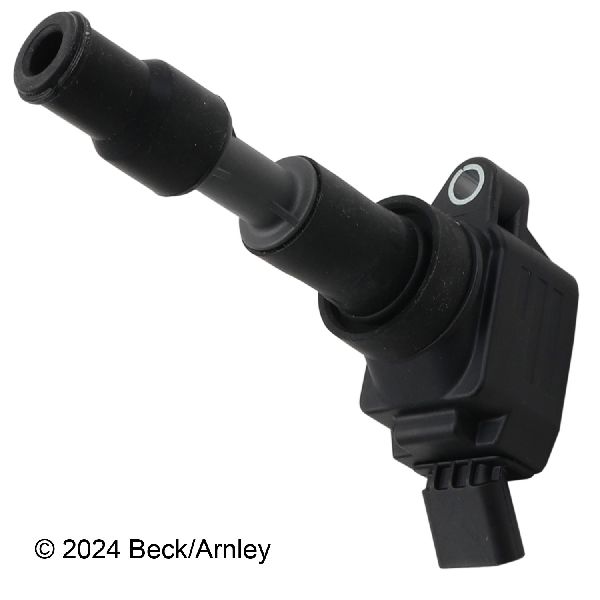
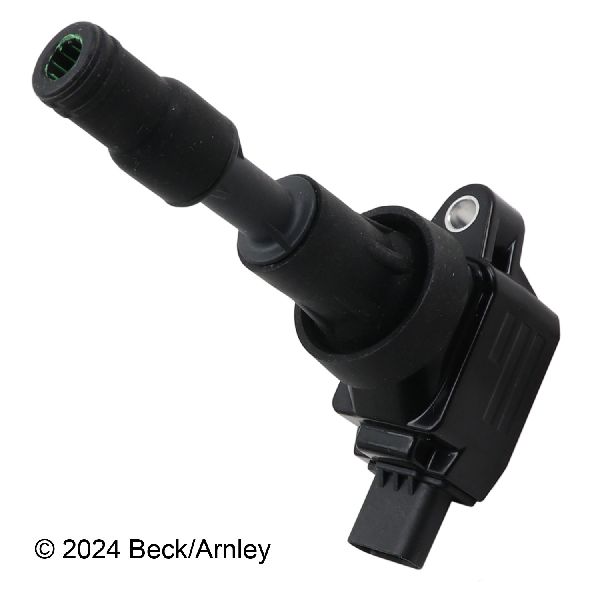
- Ignition Coil
(OEM #27310-3L030)— This is the most frequent cause of a single-cylinder misfire on modern engines.
Trusted brands: Hyundai (OEM), Delphi, NGK, Denso, Beck/Arnley
OEM price range: $90-$140
Aftermarket price range: $40-$80 - Spark Plug
(OEM #18849-11070)— Spark plugs are a wearable maintenance item and a common cause of misfires if they are old or fouled.
Trusted brands: NGK (OEM supplier, model SILZKR7B11), Denso, Bosch
OEM price range: $25-$35
Aftermarket price range: $15-$25 - Intake Manifold Gasket Set
(OEM #28411-3L000 (Upper), 29215-3L000 (Lower))— These must be replaced whenever the intake manifold is removed to access the rear cylinders, to prevent vacuum leaks.
Trusted brands: Hyundai (OEM), Fel-Pro, Mahle
OEM price range: $40-$60 (set)
Aftermarket price range: $20-$40 (set)
Related Codes That Often Appear With This One
- P0300 — If the misfire is intermittent or affects other cylinders, a P0300 (Random/Multiple Cylinder Misfire) may be stored alongside P0303. This could point to a systemic issue like a vacuum leak, low fuel pressure, or severe carbon buildup.
- P0301, P0302, P0304, P0305, P0306 — If other cylinder-specific misfire codes are present, it points towards a problem affecting the entire engine, such as low fuel pressure, a major vacuum leak, or a timing issue, rather than a component specific to cylinder 3.
Technical Service Bulletins (TSBs) & Recalls
- TSB 22-FL-002H: While officially for 2.5L non-turbo engines, a Hyundai service manager on a forum noted that faulty fuel injectors from the same supplier can cause misfires on other engines, and this TSB's diagnostic logic could be relevant.
- TSB ENG228: Mentioned for other Genesis models with the Lambda engine, this TSB provides a software update to address overly sensitive misfire detection, particularly on cold starts. It may be relevant if no mechanical faults are found.
Platform-Specific Known Issues
- A recall (NHTSA ID: 22V-633) was issued for 2020-2022 Palisades regarding a tow hitch wiring harness that could short and cause a fire. While not directly related to a misfire, it's an important electrical issue to be aware of.
Mechanic-Grade Diagnostic Values
- GDI Fuel Injector Resistance — expected: ~1.9 - 2.2 ohms. Failure: A reading significantly outside this range, or a notable difference between the cylinder 3 injector and others, points to a failing injector.
- Engine Compression Ratio (Static) — expected: 13.0:1. Failure: A compression test showing one cylinder significantly lower than the others indicates a mechanical engine problem (e.g., rings, valves, head gasket).
- GDI Fuel Pressure Leak-Down Test (Key-Off) — expected: Fuel pressure should hold steady after the engine is turned off.. Failure: If the fuel rail pressure drops after engine shutdown, it indicates a potential leak. If a P0303 code is present, this strongly suggests an internally leaking fuel injector in cylinder 3.
Hidden / Shadow Codes Worth Checking
- Mode 6, Test ID $A2-$A7: This refers to the onboard misfire counts for each cylinder (Cylinder 1 is $A2, Cylinder 2 is $A3, etc.). A technician can view these counts on a professional scan tool. (see via Using a professional scan tool that supports Mode 6 data, a technician can monitor the misfire count for cylinder 3 (Test ID $A4) to see if it is incrementing, even if the check engine light is not currently on.)
Scan Tool Commands That Help
- Hyundai GDS (Global Diagnostic System): Fuel Pressure Data Analysis — This function is used to diagnose a potentially leaking GDI fuel injector. The technician starts the engine, monitors fuel pressure, then shuts the engine off. If the pressure drops, it indicates a leak, which could be the cause of the P0303 misfire.
- Hyundai GDS (Global Diagnostic System) or equivalent pro-level scanner: Cylinder Power Balance Test — This bidirectional test deactivates one cylinder at a time and measures the corresponding drop in engine RPM. If deactivating cylinder 3 causes little or no change in RPM compared to other cylinders, it confirms that cylinder 3 is not contributing power, verifying the misfire.
Wiring & Ground Locations
- ECM Connector Pin 2 — At the main Engine Control Module (ECM).. Pin 2 on one of the ECM connectors is the control signal for the cylinder 3 injector (High side). A technician can back-probe this pin to check for the correct signal from the ECM, helping to rule out a wiring or ECM driver issue.
- Injector Driver Box (IDB) — Typically located in the engine bay, separate from the main ECM.. The Lambda II 3.8L GDI engine uses a separate Injector Driver Box to control the high-voltage GDI injectors. A failure in the IDB or the wiring between the IDB and the cylinder 3 injector could cause a misfire, even if the ECM and injector itself are good.
- Engine Ground Straps — Key ground points are typically from the engine block to the chassis frame rail and from the battery negative terminal to the chassis.. A poor engine ground can cause erratic behavior in the ignition system, leading to weak spark and intermittent misfires on one or more cylinders. Verifying clean, tight ground connections is a crucial step in diagnosing electrical-related misfires.
Real Owner Repair Stories
- YouTube video by 'Autogeeks TotalCarCare' (2016 Hyundai Genesis with 3.8L Lambda GDI V6 (same engine family)) — Vehicle had a misfire and was taken to a dealership which performed an incorrect repair.
❌ Tried (didn't work) An incorrect repair was performed by a dealership, though the specifics were not detailed.
✅ What actually fixed it The root cause was a leaking fuel injector seal on the middle cylinder of one bank. The technician noted the dealership likely did not grease the new seal, causing it to rip upon installation. Replacing the injector and properly seating the new seal resolved the issue.
OEM Part Supersession History
35310-3L200→35310-3L210— Unknown, likely an internal revision for reliability or manufacturing improvement.
Heads up: The parts are interchangeable. 35310-3L210 is the current replacement for the original part number.
Model Year Variations Within This Range
- 2020-2025: The core powertrain, a 3.8L Lambda II GDI V6 with an 8-speed automatic, has remained mechanically unchanged throughout the 2020-2025 model years, including the 2023 facelift. Therefore, the causes and diagnostic procedures for a P0303 code are consistent across this entire range.
- 2023-2025: The 2023 model year introduced a facelift with revised exterior styling, a new dashboard design with a larger standard 12-inch screen, and an updated steering wheel. These changes are cosmetic and electronic and do not affect the diagnosis of an engine misfire code like P0303.
Diagnostic Flowchart

Other Known Issues on This Vehicle
Issues unrelated to this code that are worth knowing about as an owner of this generation:
- Excessive Oil Consumption 🔴 High — Commonly reported starting around 15,000-60,000 miles. Many owners report consuming 1+ quart per 1,000 miles. (Ref: No official recall, but dealers follow a multi-step oil consumption test procedure that may lead to combustion chamber cleaning or engine replacement under warranty.)
- Wind/Whistling Noise from Driver's Side Window/Mirror 🟡 Low — Very common on 2020-2021 models, noticeable at highway speeds. (Ref: TSB 19-BD-010H and Service Campaign T5P (21-01-003H) were issued to address the problem by adding foam pads and replacing moldings.)
- Transmission Hesitation or Failure 🟠 Medium — Some owners report stuttering, hesitation on acceleration, or complete transmission failure, sometimes requiring replacement under warranty. (Ref: Recalls exist for specific transmission-related components like the oil pump on some model years, but not for widespread shift quality issues. TCM software updates may be available.)
- Tow Hitch Wiring Fire Risk 🔴 High — Affects 2020-2022 models equipped with a tow hitch. Debris and moisture can cause a short circuit. (Ref: NHTSA Recall 22V-633. Remedy involves installing a new fuse and wire extension kit.)
- Faulty Seat Belt Buckles 🔴 High — Widespread issue affecting 2020-2025 models where buckles may not latch or may unlatch unexpectedly. (Ref: NHTSA Recall 25V607000 (Hyundai Recall 283). Dealers will replace the faulty buckle assemblies.)
Used vs. New Parts: Buying Guide for This Vehicle
When a used part is the smart pick: For this repair, using used parts is generally not recommended due to the nature of the common failures. However, if a major mechanical component like the engine block or cylinder head were required, a low-mileage used unit from a reputable salvage yard would be a cost-effective option compared to new.
Donor-vehicle mileage cap: roughly under 60000 miles for the part to have meaningful remaining life.
What to inspect on the donor part:
- For a major component like an engine, check for service history if available.
- Look for evidence of a frontal collision on the donor vehicle, which is less likely to have caused engine stress than a rollover or side impact.
- Inspect for external oil leaks, coolant stains, or corrosion around the engine.
- Ask for a warranty from the salvage yard, even if it's only 30-90 days.
OEM-only on this vehicle (don't cheap out):
- Fuel Injectors: While aftermarket injectors exist, the precise nature of GDI systems makes OEM injectors the safest bet to avoid flow rate mismatches and further issues. The seals are especially critical.
- Intake Manifold Gaskets: The cost savings are minimal, and a failed aftermarket gasket will require re-doing the entire labor-intensive job. Use OEM or high-quality brands like Fel-Pro or Mahle.
Aftermarket brands forum-validated for this vehicle:
- Ignition Coils: NGK, Denso, and Delphi are reputable OEM suppliers and offer high-quality aftermarket alternatives.
- Spark Plugs: NGK is the OEM supplier (model SILZKR7B11) and is the recommended choice.
Brands owners have reported issues with on this vehicle:
- Unbranded, 'white-box' ignition coils and fuel injectors from online marketplaces. These often have high failure rates and may not meet the performance specifications of the GDI system, leading to persistent issues.
Real Owner Stories
Aggregated from forums and TSBs cited above. Mileages and costs reflect what owners reported in those sources.
2020-2025 Hyundai Palisade 3.8L V6 — ~37500 miles
Symptoms: Oil consumption of 1+ quart per 1,000 miles, which can lead to fouling and misfires.
What fixed it: Dealers follow a multi-step oil consumption test procedure that may lead to combustion chamber cleaning or engine replacement.
Source hint: Known Issues section citing reports from 15,000-60,000 miles
2020-2025 Hyundai Palisade 3.8L V6
Symptoms: Misfires on various Hyundai GDI engines.
What fixed it: Diagnosis and potential replacement of fuel injectors following the logic of TSB 22-FL-002H.
Source hint: reddit.com/r/Hyundai: A user claiming to be a Hyundai Service Manager
Related OBD-II Codes
Frequently Asked Questions
Where is cylinder 3 located on my 2020-2025 Hyundai Palisade 3.8L V6?
Does TSB 22-FL-002H apply to my Palisade's P0303 misfire?
Is there a software update for misfire detection on the Lambda II 3.8L engine?
Why is the labor for replacing a cylinder 3 spark plug or coil so high on this vehicle?
Could the tow hitch recall (NHTSA ID: 22V-633) be causing my P0303 code?
Should I replace all the coils if only cylinder 3 is failing?
Helpful Videos
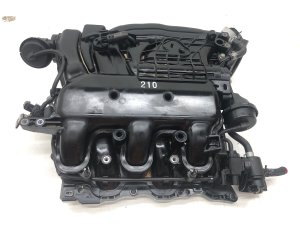
Used OEM Parts in Stock



New Aftermarket Parts Available


The information in this article is provided for general reference and educational purposes only. Vehicle specifications, procedures, and part compatibility can vary by production date, trim level, and region. Always consult your vehicle's factory service manual and verify part numbers before purchasing or performing repairs. Safety-critical components such as airbags, seat belts, and braking systems should be installed by a qualified professional.
- Hyundai Palisade:
- 🎬 Helpful Videos
- 🛍️ Shop This Part
- What's Unique About the 2020-2025 Hyundai Palisade
- Symptoms You May Notice
- Most Likely Causes
- Rare But Worth Checking
- Diagnosis Steps
- Parts You'll Likely Need
- Related Codes That Often Appear With This One
- Technical Service Bulletins (TSBs) & Recalls
- Platform-Specific Known Issues
- Mechanic-Grade Diagnostic Values
- Hidden / Shadow Codes Worth Checking
- Scan Tool Commands That Help
- Wiring & Ground Locations
- Real Owner Repair Stories
- OEM Part Supersession History
- Model Year Variations Within This Range
- Diagnostic Flowchart
- Other Known Issues on This Vehicle
- Used vs. New Parts: Buying Guide for This Vehicle
- Real Owner Stories
- 2020-2025 Hyundai Palisade 3.8L V6 — ~37500 miles
- 2020-2025 Hyundai Palisade 3.8L V6
- Related OBD-II Codes
- Frequently Asked Questions
- 🎟️ Get 5% Off