

P0303 on 2012-2018 Ford Focus: Cylinder 3 Misfire Causes and Fixes
For a 2012-2018 Ford Focus, P0303 almost always means a bad ignition coil or a worn-out spark plug on cylinder 3. The most common fix is to replace the ignition coil, which is a simple 15-minute DIY job costing between $25 and $75 for the part. Swapping the coil from cylinder 3 to another cylinder to see if the code follows is the definitive diagnostic step.
- P0303 on a 2012-2018 Focus means cylinder #3 is misfiring.
- The most likely cause by far is a bad ignition coil, followed by a worn spark plug.
- Diagnose the problem for free by swapping the ignition coil from cylinder 3 to an adjacent cylinder (like #2). If the code follows the coil (changing to P0302), you've found the bad part.
- This is a very DIY-friendly repair that usually takes less than 30 minutes and requires minimal tools.
- If your check engine light is flashing, stop driving immediately to prevent expensive damage to your catalytic converter.
What's Unique About the 2012-2018 Ford Focus
The 2.0L GDI engine in the third-generation Ford Focus uses a coil-on-plug ignition system, and like many modern engines, the ignition coils are a frequent failure point due to constant exposure to heat and vibration. While these GDI (Gasoline Direct Injection) engines can be susceptible to carbon buildup on intake valves and fuel injectors, ignition system faults are far more common for a single-cylinder misfire like P0303 and should always be your first check.
Symptoms You May Notice
- Rough or shaky idle
- Hesitation or stumbling during acceleration
- Noticeable loss of power
- Flashing or solid check engine light
- Reduced fuel economy
- Smell of raw fuel from the exhaust
- Engine sounds different, sometimes described as a 'Subaru rumble' due to the uneven firing.
- Replacing oxygen sensors. O2 sensors will report the effects of a misfire (like a rich or lean condition) but are almost never the cause of a single-cylinder misfire code.
- Ignoring the Canister Purge Valve. While the CPV recall more often causes random misfires (P0300) or EVAP codes, its failure can cause widespread drivability issues that could be mistaken for a single-cylinder problem, especially if it's intermittent.
Most Likely Causes
- Failed Ignition Coil on Cylinder 3 🔴 High Probability The coil-on-plug design exposes the coils to significant heat and vibration, leading to eventual failure. This is the most common cause of a single-cylinder misfire on this engine.
How to confirm: Swap the ignition coil from cylinder 3 with another cylinder (e.g., cylinder 2). Clear the codes and run the engine. If the code changes to P0302, the ignition coil is faulty. This is the most effective initial diagnostic step.
Typical fix: Replace the failed ignition coil. It is a simple DIY job requiring only an 8mm socket. Many owners replace all four coils if they are original to prevent future failures.
Est. part cost: $25-$75 - Worn or Fouled Spark Plug in Cylinder 3 🟡 Medium Probability The 2.0L GDI engine is sensitive to spark plug condition. A worn electrode, incorrect gap, or fouling from carbon or oil can easily cause a misfire. Ford specifies a 100,000-mile service interval, but issues can arise sooner.
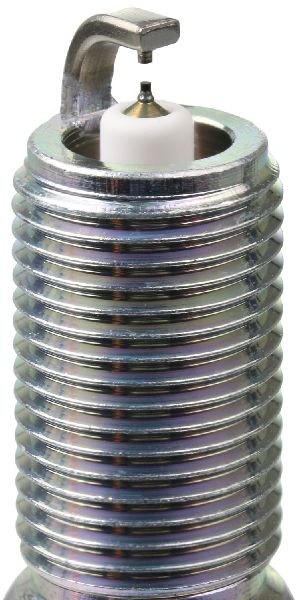
How to confirm: After confirming the coil is good, swap the spark plug from cylinder 3 with another cylinder (e.g., cylinder 1). If the code changes to P0301, the spark plug is bad. Visually inspect the plug for wear, damage, or fouling. The correct gap for the OEM Iridium plug is typically 0.035 inches, though some sources state a range of .034 - .036 in.
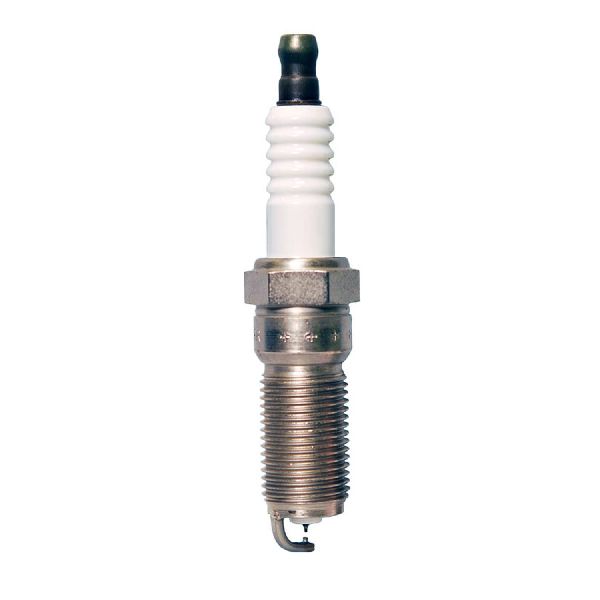
Typical fix: Replace the spark plug. It is highly recommended to replace all four spark plugs at the same time with high-quality Iridium plugs (e.g., Motorcraft, NGK) to ensure consistent performance. Torque spec is 11 ft-lbs (133 in-lbs).
Est. part cost: $40-$80 for a set of four - Clogged or Faulty Fuel Injector ⚪ Low Probability As a GDI engine, the injector tips are inside the combustion chamber and can become clogged with carbon deposits over time, which disrupts the fuel spray pattern.
How to confirm: This is harder to diagnose. A professional may need to perform a fuel injector balance test. You can also test the injector's resistance with a multimeter or swap it with another cylinder, but this is a more involved job.
Typical fix: Clean or replace the fuel injector for cylinder 3. Sometimes a professional fuel system cleaning service can resolve the issue. If replacing, new Teflon seals are required.
Est. part cost: $70-$150 for an OEM injector
Rare But Worth Checking
- Low Engine Compression: If ignition and fuel components check out, a mechanical issue could be the cause. This could be a leaking valve, worn piston rings, or a leaking head gasket. A compression test followed by a cylinder leak-down test is needed to diagnose this. A sweet smell from the exhaust or milky-looking oil could indicate a head gasket failure.
- Wiring Harness Fault: The wiring or connector for the ignition coil or fuel injector on cylinder 3 could be damaged or have a poor connection. Visually inspect the harness for any signs of cracking, melting, or corrosion, especially where it might chafe against other components.
- Intake Valve Carbon Buildup: A known issue with GDI engines is that fuel doesn't wash over the intake valves, allowing carbon from the PCV system to bake onto them. Over 60,000-100,000 miles, this can restrict airflow to a specific cylinder, causing a misfire. This typically requires professional cleaning via walnut blasting.
Diagnosis Steps
- Read the code using an OBD-II scanner to confirm P0303 and check for any other codes.
- Identify cylinder 3. On the 2.0L Focus, the cylinders are numbered 1-2-3-4 from left to right when facing the engine from the front of the car (passenger side to driver side). Cylinder 3 is the third one from the passenger side. The firing order is 1-3-4-2.
- Perform an 'ignition coil swap test'. Swap the ignition coil from cylinder 3 with the coil from cylinder 2. Use an 8mm socket to remove the single bolt holding each coil.
- Clear the codes with the scanner, start the engine, and let it run for a minute or take a short drive. Re-scan for codes.
- If the code has changed to P0302 (Cylinder 2 Misfire), you have confirmed the ignition coil is the problem. Replace it.
- If the code remains P0303, the coil is likely good. Move the coil back to its original position.
- Perform a 'spark plug swap test'. Using a 5/8" spark plug socket, swap the spark plug from cylinder 3 with the plug from cylinder 1.
- Clear the codes and re-scan. If the code changes to P0301, the spark plug is bad. It's best practice to replace all four plugs at once.
- If the code is still P0303, the problem is likely related to the fuel system (injector, wiring) or a mechanical engine issue. Visually inspect the wiring and connector for the cylinder 3 fuel injector and ignition coil.
- If the cause is still not found, consider professional diagnosis, which may include using a noid light to check the fuel injector signal, performing a fuel injector balance test, or an engine compression test.
Parts You'll Likely Need
- Ignition Coil
(OEM #CM5Z-12029-F)— This is the most frequent cause of a single-cylinder misfire on the 2.0L Focus engine due to wear from heat and vibration.
Trusted brands: Motorcraft, NGK, Delphi, Bosch, Standard Motor Products (SMP)
OEM price range: $50-$90
Aftermarket price range: $25-$60 - Spark Plugs (Set of 4)
(OEM #CYFS-12Y-PC (SP-535))— Worn or fouled spark plugs are the second most common cause of misfires. They are a regular maintenance item and should be replaced as a set.
Trusted brands: Motorcraft, NGK (Iridium IX), Denso (Iridium)
OEM price range: $60-$90
Aftermarket price range: $40-$70
Related Codes That Often Appear With This One
- P0300 — If the misfire is intermittent or affects other cylinders, a P0300 (Random Misfire) code may appear alongside P0303.
- P0316 — This code means 'Misfire Detected on Startup (First 1000 Revolutions)'. It often appears with P030x codes, especially for issues related to cold starts, as noted in Ford TSBs for the Focus platform. [SSM 46539]
- P1450 — This code, 'Unable to Bleed Up Fuel Tank Vacuum,' is often caused by a faulty canister purge valve. This was a very common issue on the 2012-2018 Focus and was subject to a recall (18S32 / 18V-735). While it usually causes a P0300 random misfire, it's a known platform issue that can affect drivability and should be checked.
Technical Service Bulletins (TSBs) & Recalls
- SSM 46539: Mentions P0303 among other misfire codes for 2015-2017 Focus ST vehicles related to perceived misfires after a cold start.
- TSB 18-2093: Specifically for the Focus ST, this addresses cold-start random misfires (P0300, P0316) with a PCM reprogram and specific spark plug checks, highlighting the platform's ignition sensitivity.
- TSB 15-0034: Notes that certain 2012-2014 Focus vehicles may exhibit codes P1450, P0456, and others along with inaccurate fuel gauge readings, pointing towards the EVAP system issues that were later part of a recall.
Platform-Specific Known Issues
- Canister Purge Valve Recall: Many 2012-2018 Focus models with the 2.0L GDI engine were recalled for a faulty canister purge valve (NHTSA Recall 18V-735, Ford 18S32). A stuck valve can cause stalling, a rough idle, and various misfire codes (P0300, P1450). The remedy involves a PCM software update and, if necessary, replacement of the valve and related components. A follow-up recall (19V-515) was issued because some vehicles may not have received the software update correctly.
- Cold Start Misfires (Focus ST): While this guide is for the standard 2.0L GDI, the related Focus ST model had a known issue with cold start misfires (P0300, P0316) addressed by TSB SSM 46539, which involved checking spark plug gaps and potentially reprogramming the PCM. This highlights the platform's sensitivity to ignition components, especially on cold starts.
- VCT Solenoid Location: On the 2.0L GDI engine, the Variable Camshaft
Mechanic-Grade Diagnostic Values
- Ignition Coil Primary Resistance — expected: 0.52 - 0.64 Ohms. Failure: A reading of OL (Open Loop/infinite resistance) or a value significantly outside the expected range.
- GDI Fuel Injector Resistance — expected: 10 - 16 Ohms. Failure: An open circuit (infinite resistance), short circuit (near 0 Ohms), or a reading that deviates significantly from the other injectors.
- Low-Pressure Fuel System Pressure — expected: 55 - 75 PSI. Failure: Pressure below this range suggests a weak in-tank fuel pump or clogged filter, which can starve the high-pressure pump.
- High-Pressure Fuel System Pressure (at idle) — expected: 400 - 800 PSI. Failure: Pressure that is erratic, does not respond to engine RPM, or is significantly below commanded pressure can indicate a failing High-Pressure Fuel Pump (HPFP) or Fuel Rail Pressure (FRP) sensor.
Scan Tool Commands That Help
- Ford IDS / FORScan: Power Balance Test — This function allows a technician to disable one cylinder at a time to observe the RPM drop. If disabling cylinder 3 causes little or no change in engine RPM, it confirms that cylinder is not contributing power, helping to isolate the misfire.
- Ford IDS / FORScan: Misfire Monitor Neutral Profile Correction — This is a relearn procedure used after major engine repairs or if the PCM is falsely detecting misfires. It recalibrates the crankshaft position sensor profile so the PCM can accurately detect misfire events. It should be performed if P0303 persists after all mechanical, fuel, and ignition causes have been ruled out.
Wiring & Ground Locations
- G103 — Located on the left rear of the engine.. This is a primary engine ground. A poor connection here can cause erratic behavior in various engine sensors and actuators, including the ignition coils and fuel injectors.
- G108 / G109 — Located on the left rear and left center rear of the engine compartment.. These are chassis grounds in the engine bay. A loose or corroded connection at these points can create intermittent electrical issues for the powertrain control system.
- S137 — A splice in the engine control sensor wiring harness, in the breakout to coil-on-plug #2.. While listed near cylinder 2, corrosion or damage at a harness splice like this can affect signals to other coils or sensors, potentially causing a misfire on a nearby cylinder like #3.
Real Owner Repair Stories
- YouTube user 'Nonemechanic101' (2012 Ford Focus S.E.) — Excessive jerkiness, delay when hitting the gas pedal, improper shifting, feeling like it wanted to go to neutral and reverse at the same time.
❌ Tried (didn't work) The user's symptoms were not typical of a simple misfire, suggesting a deeper electronic issue.
✅ What actually fixed it The user performed a PCM reset procedure by disconnecting the battery and shorting the positive and negative battery cables (while disconnected from the battery) to drain all residual power from the modules. This cleared the adaptive learning and resolved the severe drivability issues.
OEM Part Supersession History
CM5G-12029-F→CM5Z-12029-F— Part revision and improvement by the manufacturer.Motorcraft SP-535→Motorcraft SP-535X— Updated part from the manufacturer.
Model Year Variations Within This Range
- 2015-2018: The Ford Focus received a mid-cycle facelift in 2015, which included revised styling and interior updates. While the primary 2.0L GDI engine remained the same, a 1.0L EcoBoost three-cylinder engine became an option, which uses different ignition components. The SYNC 3 infotainment system was also introduced in 2016.
- 2012-2014: A specific TSB (ASI-44460) mentioned CAN bus wiring shorts under the front passenger seat on 2012-2014 models, which could cause various electronic issues, though not directly linked to P0303.
Diagnostic Flowchart
Other Known Issues on This Vehicle
Issues unrelated to this code that are worth knowing about as an owner of this generation:
- DPS6 PowerShift Transmission Failure 🔴 High — Extremely common on non-ST automatic models. Issues include shuddering, hesitation, and complete failure of the clutch packs or Transmission Control Module (TCM). (Ref: Multiple TSBs and a class-action lawsuit settlement exist for this issue.)
- Canister Purge Valve (CPV) Malfunction 🔴 High — Very widespread on 2.0L models, causing stalling, rough idle, difficulty starting after refueling, and potential fuel tank deformation. (Ref: Ford Recall 18S32 / NHTSA 18V-735)
- Collapsing Passenger-Side Engine Mount 🟠 Medium — A very common failure item. The hydraulic mount collapses, causing severe vibration at idle and clunking noises. (Ref: null)
- Power Steering Failure 🔴 High — Commonly reported issue where the electronic power steering assist fails suddenly, making the vehicle very difficult to steer. (Ref: TSB 14-0079 (for 2012-2014 models))
- Inaccurate Fuel Gauge / DTE 🟡 Low — Often related to the faulty Canister Purge Valve issue, but also addressed in separate TSBs. (Ref: TSB 16-0062, TSB 15-0034)
Used vs. New Parts: Buying Guide for This Vehicle
When a used part is the smart pick: For an ignition coil, a used part from a low-mileage (under 50,000 miles) wrecked vehicle can be a cost-effective choice. Since it's an easy-to-access external part, the risk is low if it doesn't work.
Donor-vehicle mileage cap: roughly under 50000 miles for the part to have meaningful remaining life.
What to inspect on the donor part:
- Check for any cracks in the plastic housing of the ignition coil.
- Ensure the rubber boot is pliable and not brittle or swollen.
- Look for corrosion on the electrical connector pins.
- Verify the donor vehicle's mileage if possible.
OEM-only on this vehicle (don't cheap out):
- Spark Plugs: These are a wear item and should always be purchased new. The cost savings are minimal and the risk of using a worn or incorrect plug is high.
- Fuel Injectors: While more expensive, OEM or top-tier OE-supplier injectors are recommended for GDI systems due to the high pressures and precise spray patterns required. Remanufactured units can be a gamble.
Aftermarket brands forum-validated for this vehicle:
- Ignition Coils: NGK, Bosch, Delphi, and Denso are reputable OE suppliers with a track record of quality.
- Spark Plugs: Motorcraft (OEM), NGK, and Denso are the preferred choices for Iridium plugs on this engine.
Brands owners have reported issues with on this vehicle:
- Avoid unbranded, no-name ignition coils and fuel injectors from online marketplaces. While cheap, they have a very high failure rate and often do not meet OE specifications for resistance and performance, leading to repeat repairs.
Real Owner Stories
Aggregated from forums and TSBs cited above. Mileages and costs reflect what owners reported in those sources.
2015-2017 Ford Focus ST 2.0L
Symptoms: Perceived misfires specifically after a cold start.
What fixed it: Checking spark plug gaps and reprogramming the PCM as per TSB SSM 46539.
Source hint: SSM 46539
Ford Focus ST 2.0L
Symptoms: P0303 code and a 'Subaru sound' coming from the engine.
What fixed it: Swapping the coil pack to another cylinder was the primary diagnostic step recommended to identify the failure.
Source hint: Reddit r/FocusST thread titled 'Need help with p0303'
2012-2014 Ford Focus 2.0L
Symptoms: Inaccurate fuel gauge readings and codes related to the EVAP system.
What fixed it: Addressed under TSB 15-0034 which points toward EVAP system issues later covered by a recall.
Source hint: TSB 15-0034
Related OBD-II Codes
Frequently Asked Questions
Where is cylinder 3 located on my 2012-2018 Ford Focus 2.0L engine?
Could the P0303 code be related to the Ford canister purge valve recall?
What is the correct spark plug gap and torque for the 2.0L GDI engine?
My Focus sounds like a 'Subaru' while idling with the P0303 code; is this normal?
Does TSB 18-2093 apply to my standard 2.0L Focus?
What tools do I need to swap the ignition coils to test for a failure?
Helpful Videos
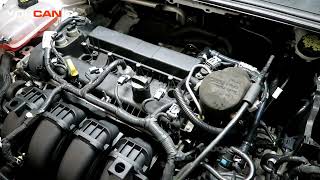
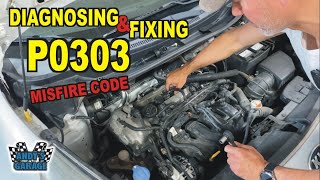
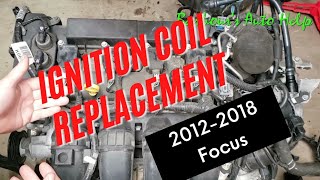
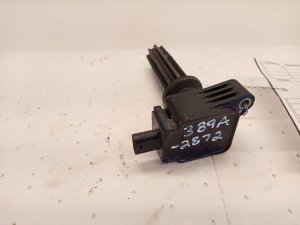
Used OEM Parts in Stock

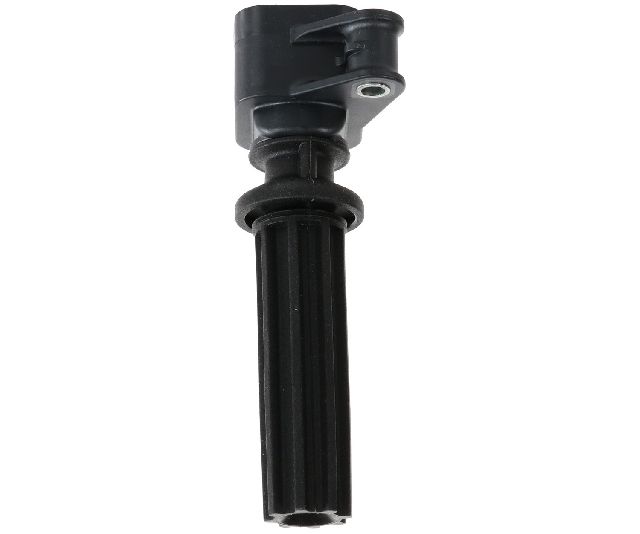
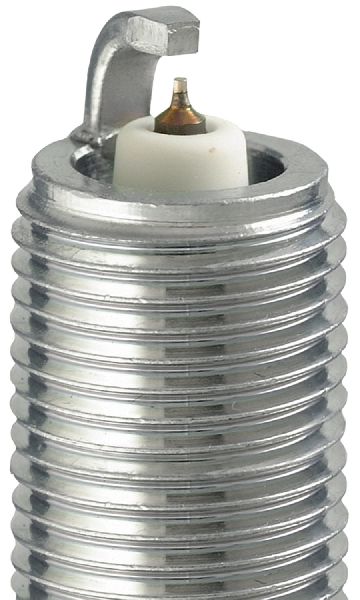
New Aftermarket Parts Available


The information in this article is provided for general reference and educational purposes only. Vehicle specifications, procedures, and part compatibility can vary by production date, trim level, and region. Always consult your vehicle's factory service manual and verify part numbers before purchasing or performing repairs. Safety-critical components such as airbags, seat belts, and braking systems should be installed by a qualified professional.
- Ford Focus:
- 🎬 Helpful Videos
- 🛍️ Shop This Part
- What's Unique About the 2012-2018 Ford Focus
- Symptoms You May Notice
- Most Likely Causes
- Rare But Worth Checking
- Diagnosis Steps
- Parts You'll Likely Need
- Related Codes That Often Appear With This One
- Technical Service Bulletins (TSBs) & Recalls
- Platform-Specific Known Issues
- Mechanic-Grade Diagnostic Values
- Scan Tool Commands That Help
- Wiring & Ground Locations
- Real Owner Repair Stories
- OEM Part Supersession History
- Model Year Variations Within This Range
- Diagnostic Flowchart
- Other Known Issues on This Vehicle
- Used vs. New Parts: Buying Guide for This Vehicle
- Real Owner Stories
- 2015-2017 Ford Focus ST 2.0L
- Ford Focus ST 2.0L
- 2012-2014 Ford Focus 2.0L
- Related OBD-II Codes
- Frequently Asked Questions
- 🎟️ Get 5% Off