

P0303 on 2011-2019 Ford Explorer 3.5L V6: Cylinder 3 Misfire Causes and Fixes
P0303 indicates a misfire on cylinder 3. On the 3.5L V6 Explorer, this cylinder is on the rear bank by the firewall, making access difficult. The most common cause is a failed ignition coil or a worn spark plug, but the repair requires removing the upper intake manifold, increasing labor time and cost significantly.
- P0303 is a misfire on cylinder 3, located on the difficult-to-access rear bank (firewall side) of the engine.
- The most likely cause is a bad ignition coil or a worn spark plug.
- Repair requires removing the upper intake manifold, making it a more complex and time-consuming job than a misfire on the front bank.
- Always replace the intake manifold gaskets when performing this repair to prevent future vacuum leaks.
- If the check engine light is flashing, stop driving immediately to prevent expensive damage to the catalytic converter.
What's Unique About the 2011-2019 Ford Explorer

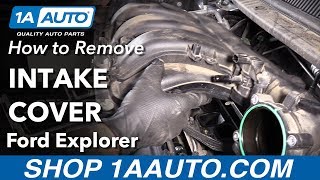
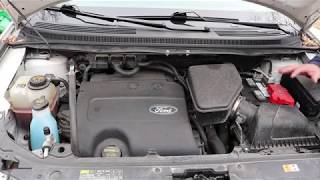
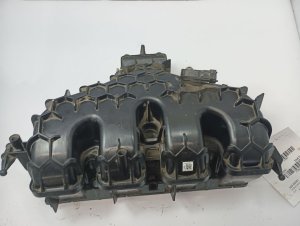
The key challenge with a P0303 code on this specific Explorer is the location of cylinder 3. Unlike cylinders 4, 5, and 6 on the easily accessible front bank, the rear bank (cylinders 1, 2, and 3) is tucked under the upper intake manifold. This means that a simple task like replacing an ignition coil or spark plug becomes a more involved job that requires removing the manifold 🎬 Watch this step-by-step guide on removing the intake manifold., which adds significant labor time and complexity to the repair. This design is common across many Ford and Lincoln vehicles that use the transverse 3.5L and 3.7L Cyclone engines.
Symptoms You May Notice
- Rough or shaking idle
- Engine hesitation or stumbling during acceleration
- Noticeable loss of power
- Flashing or solid Check Engine Light
- Decreased fuel economy
- Fuel smell from the exhaust
- Replacing only the spark plug without replacing the aging ignition coil, leading to a repeat failure.
- Replacing front bank (4, 5, 6) ignition components when the code is for a rear bank cylinder.
- Assuming a vacuum leak is the primary cause without first checking the ignition system components for the specific cylinder.
- Mistaking the cylinder numbering (1-2-3 rear, 4-5-6 front) and servicing the wrong cylinder.
Most Likely Causes

- Failing Ignition Coil 🔴 High Probability The coil-on-plug ignition system is a common wear item due to constant heat cycles. The rear bank coils, like cylinder 3, may experience even more heat soak due to their location near the firewall with less airflow, potentially leading to a higher failure rate. Cracks in the coil's epoxy are a visual indicator of failure.
How to confirm: Because cylinder 3 is hard to access, the standard 'swap test' is impractical without first removing the intake manifold. The most common diagnostic approach is to replace the coil and spark plug for cylinder 3 once the intake is removed. If you were to swap it, you would move the coil from cylinder 3 to cylinder 1 (also on the rear bank), clear the codes, and see if the fault moves to P0301.
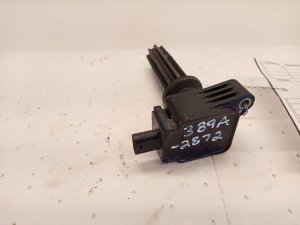
Typical fix: Replace the ignition coil on cylinder 3. It is highly recommended to replace the spark plug at the same time. Many owners and mechanics recommend replacing all three rear bank coils and plugs (1, 2, and 3) and the intake gaskets once the manifold is off to avoid repeat labor.
Est. part cost: $30-$70 - Worn or Fouled Spark Plug 🔴 High Probability Spark plugs are a routine maintenance item. The manufacturer recommends a service interval of up to 100,000 miles. Plugs past this life can have a wide gap or carbon fouling, leading to a weak or inconsistent spark.
How to confirm: Visually inspect the spark plug after removal. Look for a worn-down electrode, heavy carbon deposits, oil fouling, or cracks in the porcelain insulator. Given the labor to access cylinder 3, it's best to replace it regardless of appearance.
Typical fix: Replace the spark plug for cylinder 3. Best practice is to replace all six spark plugs at the same time, especially if they are near the end of their service life. Always use new intake manifold gaskets upon reassembly.
Est. part cost: $8-$20 per plug - Clogged or Faulty Fuel Injector 🟡 Medium Probability
How to confirm: If a new coil and spark plug do not fix the misfire on cylinder 3, the fuel injector is the next likely culprit. A professional can perform a fuel injector balance test. A DIY method involves listening to the injector with a mechanic's stethoscope to ensure it's clicking. A faulty injector can cause the PCM to add fuel (positive long-term fuel trim) on that bank to compensate for the lean condition.
Typical fix: Replace the fuel injector for cylinder 3. This also requires removing the intake manifold and the fuel rail, making it a good 'while you're in there' job if the budget allows.
Est. part cost: $50-$120 - Stuck EVAP Purge Valve ⚪ Low Probability The EVAP purge valve is a known failure point on many Ford vehicles of this era. When it sticks open, it creates a vacuum leak that can cause misfires, often at idle or after refueling.
How to confirm: A stuck purge valve will often, but not always, trigger an EVAP system code (like P0456) along with the misfire codes. You can test it by unplugging it and blowing through it; no air should pass when it's de-energized. It's located in the engine bay and is relatively easy to access.
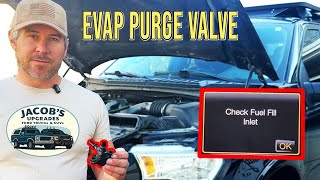
Typical fix: Replace the EVAP purge canister valve. 🎬 Watch a quick walkthrough on replacing the Ford purge valve.
Est. part cost: $30-$60
Rare But Worth Checking
- Low Engine Compression: If ignition and fuel system components are confirmed to be good, a mechanical issue could be the cause. This could be due to a worn piston ring, a bad valve, or a head gasket leak. A compression test and/or a cylinder leak-down test is needed to diagnose this. One owner reported a P0303 that persisted after ignition and fuel part swaps; a compression test showed cylinder 3 at 150 PSI while others were 165-175 PSI, indicating a mechanical engine problem. NHTSA ODI #11554574 describes a case where a diagnosis revealed a very clean number 3 plug, which likely indicated a leak of coolant from the head gasket.
- Damaged Ignition Coil Wiring or Connector: The wiring harness or the plastic connector for the ignition coil can become brittle from heat and fail, causing an intermittent connection. Inspect the connector for cracks and the wiring for any signs of damage when replacing the coil.
- Leaking Intake Manifold Gaskets: If the intake manifold gaskets are not replaced when serviced, or if they fail, they can cause a vacuum leak. While this often leads to a random misfire code (P0300) or misfires on multiple cylinders on that bank (P0301, P0302, P0303), it can sometimes manifest as a single cylinder misfire if the leak is isolated.
Diagnosis Steps

- Confirm the P0303 code using an OBD-II scanner.
- Acknowledge that cylinder 3 is on the rear bank (driver's side, near firewall) and will require removing the upper intake manifold for access.
- Gather necessary tools, a new upper intake manifold gasket set, a new ignition coil, and a new spark plug for cylinder 3. It is highly advisable to purchase parts for all three rear cylinders (1, 2, 3).
- Disconnect the battery. Remove the engine cover, air intake tube, and various hoses and electrical connectors attached to the upper intake manifold.
- Unbolt and carefully remove the upper intake manifold. It's crucial to cover the open lower intake ports with clean rags to prevent debris from falling into the engine.
- With the manifold removed, you now have access to the rear ignition coils (cylinders 1, 2, and 3).
- Locate cylinder 3 (driver's side). Disconnect the electrical connector and unbolt the ignition coil.
- Remove the old ignition coil and spark plug.
- Install the new spark plug, torquing it to specification (typically around 133 in-lbs or 15 Nm for this engine). Apply a small amount of dielectric grease to the boot of the new ignition coil and install it.
- Reassemble the intake manifold using new gaskets. Torque the manifold bolts in the correct sequence to the manufacturer's specification to prevent leaks.
- Reconnect all hoses and electrical connectors.
- Reconnect the battery, clear the trouble codes with the scanner, and start the engine to check for a smooth idle and to ensure the P0303 code does not return.
Parts You'll Likely Need

- Ignition Coil
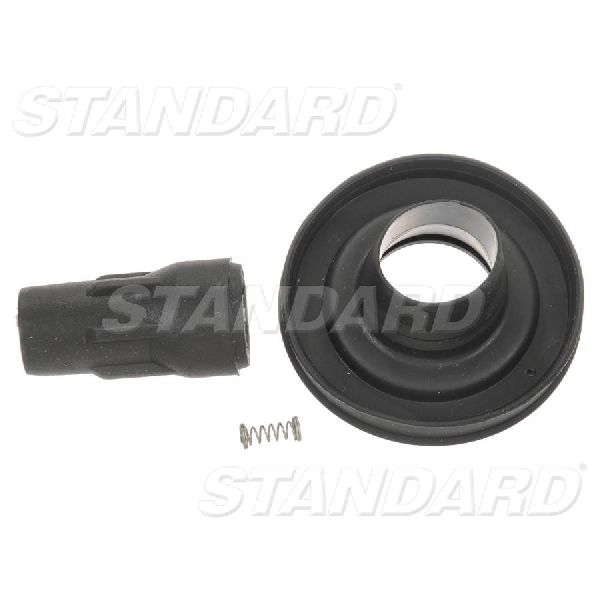
(OEM #DG549)— This is the most common failure part for a single-cylinder misfire on the 3.5L V6.
Trusted brands: Motorcraft, NGK, Denso, Standard Motor Products (UF646)
OEM price range: $45-$70
Aftermarket price range: $25-$50 - Spark Plug
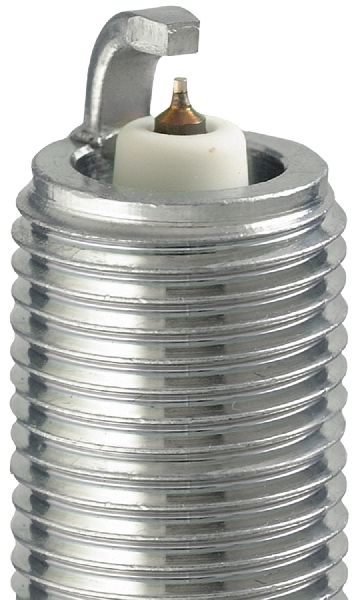
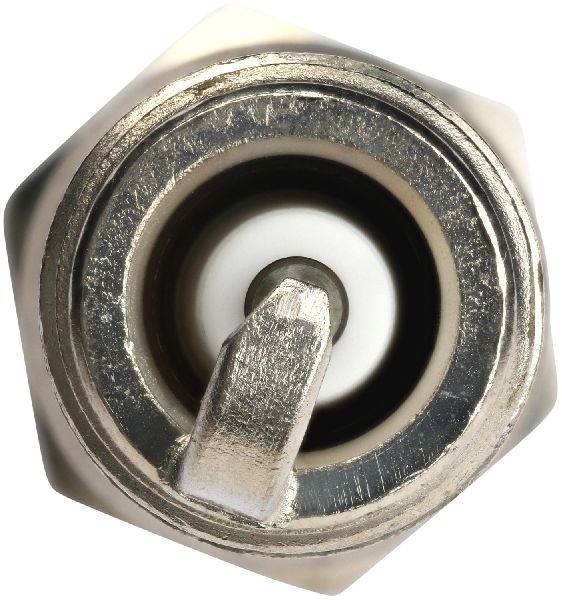
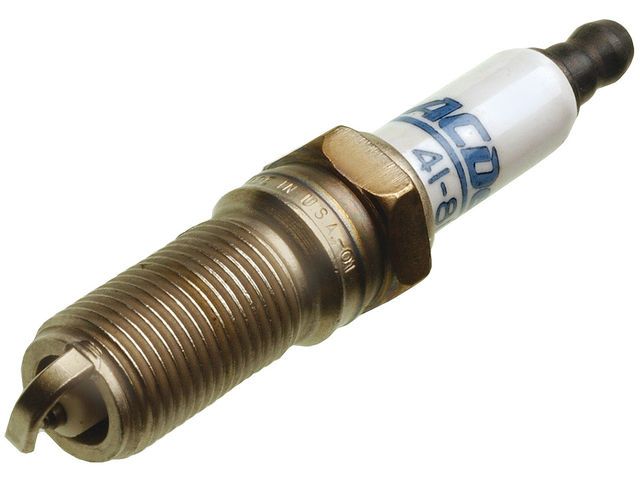
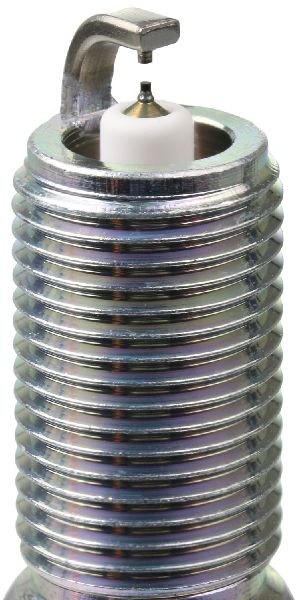
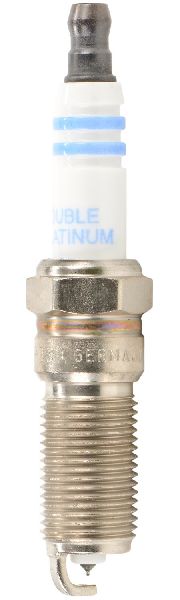
(OEM #SP-580 (replaces SP-534))— A worn spark plug is a primary cause of misfires and should always be replaced when accessing a difficult-to-reach cylinder. The OEM recommended part is an Iridium plug.
Trusted brands: Motorcraft, NGK, Bosch
OEM price range: $12-$20
Aftermarket price range: $8-$15 - Upper Intake Manifold Gasket Set
(OEM #AA5Z-9439-A or 7T4Z-9439-E)— These gaskets are single-use and must be replaced anytime the intake manifold is removed to prevent vacuum leaks.
Related Codes That Often Appear With This One
- P0300 — If the misfire is intermittent or affects other cylinders, a P0300 (Random Misfire) may appear alongside P0303.
- P0301, P0302 — Since these cylinders are also on the rear bank, a condition affecting the whole bank (like a vacuum leak from the intake manifold gasket) could cause multiple misfires on that side.
- P0420, P0430 — If the misfire is ignored for too long, unburnt fuel can overheat and destroy the catalytic converter, leading to a catalyst efficiency code for the corresponding bank (Bank 1 for P0303 would be P0430).
Platform-Specific Known Issues
- The primary issue is the difficult access to the rear bank of cylinders (1, 2, 3), which requires removal of the upper intake manifold to service ignition coils or spark plugs.
- The 3.5L Cyclone engine family is known for an internal, timing-chain-driven water pump. Failure can cause coolant to mix with engine oil, leading to catastrophic engine damage. This is a major, expensive repair often costing over $2,000.
Technical Service Bulletins (TSBs) & Recalls
- Bulletin #SSM 53971: Notes that vehicles may exhibit an engine misfire condition with diagnostic trouble codes P0301, P0302, P0303 and/or P0304 set in the PCM, which may be due to the spark plugs and/or ignition coils.
- Bulletin #TSB 24-2384: Reports that certain Explorer vehicles equipped with a 2.3L EcoBoost engine may exhibit an engine misfire condition with DTCs P0301, P0302, P0303 and/or P0304 set in the powertrain control module.
Mechanic-Grade Diagnostic Values
- Ignition Coil Primary Resistance — expected: ~0.5 Ohms. Failure: A significantly different value, an open circuit (infinite resistance), or a short (near-zero resistance).
- Ignition Coil Secondary Resistance — expected: ~5.95k Ohms. Failure: A value significantly higher or lower than the specification, indicating a winding failure.
- Fuel Injector Resistance (High Impedance) — expected: 11 - 18 Ohms. Failure: An open circuit (infinite resistance) or a short circuit (near-zero resistance). Resistance can change with temperature, so testing when cold and hot may be necessary.
- Low-Pressure Fuel System Pressure (KOEO or Idle) — expected: 40 - 60 PSI. Failure: Pressure significantly below this range indicates a weak in-tank fuel pump or clogged filter.
Hidden / Shadow Codes Worth Checking
- Mode $06, Test ID $53 (TID $53): This is not a trouble code but a specific monitor within the PCM that tracks the raw misfire count for each cylinder during the current and previous 10 driving cycles. It can reveal intermittent misfires before they are severe enough to set a P0303 code. The specific cylinder is identified by the Component ID (CID), where CID $03 corresponds to cylinder 3. (see via Requires an advanced OBD-II scanner or software (like FORScan) that can display Mode $06 test results.)
Scan Tool Commands That Help
- Ford IDS, FORScan, or other professional-grade scanner: Power Balance Test — This is a primary diagnostic function for a Ford technician. The test allows the user to command the PCM to shut off fuel to each cylinder one by one and measures the corresponding drop in RPM. If disabling cylinder 3 causes little or no change in RPM, it confirms that cylinder is not contributing power, definitively pinpointing the misfire without swapping any parts.
- Ford IDS, FORScan, or other professional-grade scanner: Misfire Monitor Neutral Profile Correction — This procedure MUST be performed after major engine or transmission repairs, or replacement of the PCM or crankshaft position sensor. It relearns the crankshaft position sensor's profile of minor rotational variations. Failure to perform this relearn can cause the PCM to incorrectly interpret these variations as misfires and set false codes like P0303.
Wiring & Ground Locations
- Main Engine Ground Strap — On the 3.5L transverse platform, a critical ground strap is located on the transmission case, below the brake booster, connecting the engine/transaxle assembly to the chassis.. A loose, corroded, or broken main ground can cause a myriad of electrical issues, including erratic sensor data and weak ignition spark, which can manifest as a difficult-to-diagnose misfire.
- G104 — Located on the right side of the engine compartment.. This is a common ground point for various engine bay components. Ensuring it is clean and tight is a good practice when diagnosing any electrical fault, including a persistent misfire.
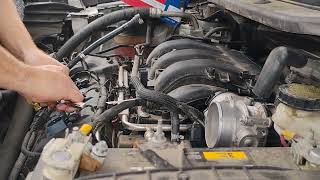
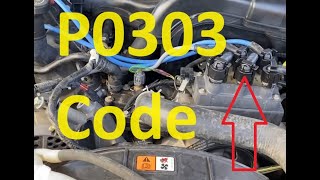
- Cylinder 3 Ignition Coil Connector — Plugged into the top of the ignition coil for cylinder 3, located on the rear bank (firewall side), driver's side.. The connector itself or its wiring is a direct point of failure. The red locking tabs are known to become brittle and break, leading to a poor connection. A short in the harness can also destroy the ignition coil and potentially the PCM ignition driver.
- PCM Connector C175E — This is one of the main connectors at the Powertrain Control Module (PCM).. The control wire (trigger signal) for the cylinder 3 ignition coil runs from this connector to the coil. A continuity test between the correct pin at this connector and the signal wire at the coil connector can rule out a wiring break.
Real Owner Repair Stories
- NHTSA ODI #11667283 — An owner reported the warning light illuminated and an independent mechanic diagnosed the vehicle with DTC P0303 (Misfire in cylinder #3). The failure was later confirmed by a dealer.
- YouTube channel 'World Mechanics' (Ford Edge with same 3.5L V6 engine family) — Persistent misfire on one cylinder, engine shaking.
❌ Tried (didn't work) Replacing spark plug, Replacing ignition coil, Checking fuel injector, Verifying compression
✅ What actually fixed it The ignition coil failure had back-fed and destroyed the ignition driver circuit inside the Powertrain Control Module (PCM). The final fix was to send the PCM to a specialized repair service (like Circuit Board Medics) to have the internal driver replaced and the board repaired. - YouTube channel 'Ford Boss Me' (2011-2019 Ford Explorer with 3.5L V6) — Multiple misfire codes (P0300, P0301, P0304, P0306) plus an EVAP code (P0456).
❌ Tried (didn't work) Initial assumption was ignition components or a major vacuum leak.
✅ What actually fixed it The root cause for all the misfires was a faulty EVAP Purge Valve that was stuck open, creating a constant vacuum leak. Replacing the purge valve and clearing the codes resolved all misfire and EVAP issues. - YouTube Reel from a mechanic (2012 F-150 3.5L EcoBoost (similar coil/wiring design), 285,000 miles) — Severe cylinder 3 misfire, burned/melted ignition coil.
❌ Tried (didn't work) Replacing only the coil would have resulted in immediate failure.
✅ What actually fixed it A cascading failure occurred. The wiring harness had rubbed through and shorted, which burned up the ignition coil. The short also back-fed and destroyed the PCM. The complete repair required replacing the wiring harness, the PCM, and the ignition coil.
"I Checked Everything" — The Actual Cause
- A common scenario is a persistent, lean-related misfire (often affecting multiple cylinders but sometimes isolating to one) where a smoke test of the intake manifold shows no leaks. The actual cause is often a faulty EVAP Purge Valve stuck open. This introduces unmetered air from the fuel tank into the intake manifold, leaning out the mixture and causing misfires, but the leak is upstream of where a smoke test is typically performed.
When the Usual Fixes Don't Work
- While the vast majority of P0303 codes are fixed by replacing the ignition coil and/or spark plug, there are documented cases where the problem was more complex. In one instance, after all ignition and fuel components were verified as good, the root cause was a failed ignition driver inside the PCM, requiring the computer to be repaired or replaced. In another case, multiple misfire codes were traced back to a stuck-open EVAP purge valve, a component not directly related to the ignition system of a specific cylinder.
OEM Part Supersession History
SP-534 (Motorcraft CYFS12YT3)→SP-580 (Motorcraft CYFS12YT4)— Standard part number revision and update. The SP-580 is the current recommended OEM iridium plug for this application.
Heads up: The earlier SP-528 plugs, which were superseded by the SP-534, were known to have issues with cracked insulators. The SP-534 and SP-580 are considered reliable.BL3Z-12029-A, BL3Z-12029-B→BL3Z-12029-C (Motorcraft DG-549)— Standard part number revision for the ignition coil.
Diagnostic Flowchart

Other Known Issues on This Vehicle
Issues unrelated to this code that are worth knowing about as an owner of this generation:
- Internal Timing-Chain-Driven Water Pump Failure 🔴 High — Common after 80,000-120,000 miles. Failure can cause coolant to mix with engine oil, leading to catastrophic engine failure if not caught early. Repair is very labor-intensive and expensive ($2000+).
- Exhaust Fumes / Carbon Monoxide in Cabin 🔴 High — Widespread issue affecting 2011-2017 models, leading to a major NHTSA investigation. Caused by unsealed seams, body plugs, or issues with the rear liftgate seal, often noticed during hard acceleration. (Ref: TSB 16-0166, TSB 17-0044)
- Power Transfer Unit (PTU) Failure 🟠 Medium — The PTU (transfer case) on AWD models is prone to overheating and fluid breakdown, as it has no drain plug and is often neglected. This can lead to seal leaks and eventual gear failure, requiring a costly replacement.
- Electronic Power Steering Rack Failure 🟠 Medium — The electronic power steering (EPAS) rack can fail, leading to a loss of power assist, grinding noises, or stiff steering. It is an expensive component to replace. (Ref: Multiple recalls were issued for related steering components, but the rack itself remains a common failure point.)
- Electronic Throttle Body Malfunction 🟠 Medium — Can cause the vehicle to suddenly lose power and enter 'limp mode,' often displaying a wrench icon on the dash. This was a very common issue on earlier 5th-gen models. (Ref: P2111, P2112 are common codes.)
Used vs. New Parts: Buying Guide for This Vehicle
When a used part is the smart pick: For this repair, sourcing a used part is generally not recommended for the primary failure components (coils, plugs) due to the high labor cost to access the rear bank. However, a used upper intake manifold from a reputable salvage yard could be a cost-effective option if the original was cracked or damaged during removal.
Donor-vehicle mileage cap: roughly under 60000 miles for the part to have meaningful remaining life.
What to inspect on the donor part:
- For an intake manifold, check for cracks, especially around bolt holes and seams.
- Ensure all threaded inserts are intact and not stripped.
- Verify the part is from the same engine (3.5L NA Cyclone), not an EcoBoost model.
OEM-only on this vehicle (don't cheap out):
- Ignition Coils: Forum consensus is overwhelmingly in favor of using only genuine Motorcraft (DG-549) coils. The labor to access cylinder 3 is too high to risk premature failure of a cheaper alternative.
- Intake Manifold Gaskets: Always use new, high-quality gaskets. Never reuse old gaskets.
Aftermarket brands forum-validated for this vehicle:
- Spark Plugs: NGK and Denso are widely accepted high-quality alternatives to Motorcraft.
- Gaskets: Fel-Pro is a well-regarded brand for intake gaskets.
Brands owners have reported issues with on this vehicle:
- Generic 'no-name' ignition coil sets from online marketplaces.
- Store-brand coils (e.g., from AutoZone, O'Reilly) have numerous anecdotal reports of early failure, leading to repeat repairs. One user reported multiple failures from the brand SKP.
Real Owner Stories
Aggregated from forums and TSBs cited above. Mileages and costs reflect what owners reported in those sources.
2017 Ford Explorer 3.5L V6
Symptoms: Owner performed a diagnostic process including swapping parts and eventually a compression test to identify the fault.
What fixed it: The diagnostic process revealed a mechanical fault through a compression test.
Source hint: Reddit r/AskMechanics thread titled 'engine code p0303 ford explorer 2017'
2011 Ford Explorer XLT 3.5L V6 TiVCT
Symptoms: Engine misfire codes P0201, P0301, and P0316.
What fixed it: Confirmed cylinder layout and firing order to address rear bank misfire issues.
Source hint: ExplorerForum.com thread '2011 explorer xlt 3.5l v6 tivct engine misfire p0201 p0301 p0316'
Related OBD-II Codes
Frequently Asked Questions
Where is cylinder 3 located on my 2011-2019 Ford Explorer 3.5L V6?
Can I perform a simple 'coil swap' to test the P0303 code on this vehicle?
Why is the P0303 code common on the rear bank of the Cyclone 3.5L engine?
Should I replace all the spark plugs if I only have a misfire on cylinder 3?
Could my P0303 code be related to the internal water pump issue on the 3.5L Explorer?
Is there a specific part I should check if I also smell fuel or have a misfire after refueling?
Helpful Videos


Used OEM Parts in Stock




New Aftermarket Parts Available

The information in this article is provided for general reference and educational purposes only. Vehicle specifications, procedures, and part compatibility can vary by production date, trim level, and region. Always consult your vehicle's factory service manual and verify part numbers before purchasing or performing repairs. Safety-critical components such as airbags, seat belts, and braking systems should be installed by a qualified professional.
- Ford Explorer:
- 🎬 Helpful Videos
- 🛍️ Shop This Part
- What's Unique About the 2011-2019 Ford Explorer
- Symptoms You May Notice
- Most Likely Causes
- Rare But Worth Checking
- Diagnosis Steps
- Parts You'll Likely Need
- Related Codes That Often Appear With This One
- Platform-Specific Known Issues
- Technical Service Bulletins (TSBs) & Recalls
- Mechanic-Grade Diagnostic Values
- Hidden / Shadow Codes Worth Checking
- Scan Tool Commands That Help
- Wiring & Ground Locations
- Real Owner Repair Stories
- "I Checked Everything" — The Actual Cause
- When the Usual Fixes Don't Work
- OEM Part Supersession History
- Diagnostic Flowchart
- Other Known Issues on This Vehicle
- Used vs. New Parts: Buying Guide for This Vehicle
- Real Owner Stories
- 2017 Ford Explorer 3.5L V6
- 2011 Ford Explorer XLT 3.5L V6 TiVCT
- Related OBD-II Codes
- Frequently Asked Questions
- 🎟️ Get 5% Off