

P0303 on 2013-2022 Buick Encore 1.4L: Cylinder 3 Misfire Causes and Fixes
P0303 on a Buick Encore 1.4L Turbo most often means a failed ignition coil pack or a worn spark plug in cylinder 3. Replacing the entire coil pack assembly and all four spark plugs is the most common and effective fix. A deeper, underlying cause on this engine is a failed PCV system, which should also be inspected. DIY parts cost between $70 and $200.
- P0303 is a misfire on cylinder 3. On the Encore 1.4L, this is most commonly caused by a bad spark plug or a failed ignition coil pack.
- Always replace spark plugs and the ignition coil pack together to prevent premature failure of the new part.
- A whistling noise from the engine or strong suction at the oil cap are tell-tale signs of the common PCV system failure, which requires a new valve cover.
- If you replace the valve cover, you must verify the check valve in the intake manifold is still present to prevent an immediate repeat failure.
- Do not drive if the Check Engine Light is flashing, as this can quickly damage your catalytic converter.
What's Unique About the 2013-2022 Buick Encore

The 1.4L Turbo engine (LUV/LUJ) in the Buick Encore and its platform mates (Chevy Cruze, Sonic, Trax) is infamous for a specific PCV system failure that causes misfires. A non-serviceable check valve inside the intake manifold fails, allowing turbo boost pressure into the crankcase. This pressure then ruptures the PCV diaphragm located in the valve cover, creating a large vacuum leak that leads to lean conditions (P0171), airflow codes (P1101), and misfires. While P0303 points to a specific cylinder, this underlying PCV issue is a very common root cause for all misfire codes on this platform and must be checked.
Symptoms You May Notice
- Rough or shaking idle
- Engine hesitation or stumbling during acceleration.
- Flashing Check Engine Light, especially under load (like going uphill).
- Reduced engine power.
- Poor fuel economy.
- A 'Service StabiliTrak' message may appear on the dash along with the misfire.
- Audible whistling or hissing from the engine bay at idle (indicates PCV failure).
- Replacing only the spark plug when the ignition coil pack is also weak or damaged.
- Replacing the valve cover (for the PCV issue) without checking for and addressing the missing/failed intake manifold check valve, leading to a repeat failure of the new valve cover.
- Replacing oxygen sensors that are correctly reporting a lean condition (P0171) caused by the PCV vacuum leak, but are not the root of the problem.
Most Likely Causes

- Failed Ignition Coil Pack 🔴 High Probability The 1.4L engine uses a single cassette-style coil pack that fires all four cylinders. Constant heat and vibration cause it to develop cracks or internal shorts, leading to misfires in one or more cylinders. Oil leaks from the valve cover gasket can also saturate the coil boots and cause premature failure.
How to confirm: Inspect the coil pack for cracks in the plastic housing, burn marks (arcing), or white, corroded residue on the contact springs inside the boots. A definitive test is to swap the coil pack with a known good one. Since it's a single unit, replacement is often the most practical diagnostic step.
Typical fix: Replace the entire ignition coil pack assembly. 🎬 Watch: How to replace the coil pack and fix misfires. It is best practice to replace all four spark plugs at the same time to ensure a complete repair.
Est. part cost: $50-$150 - Worn or Fouled Spark Plugs 🔴 High Probability Turbocharged engines place high demand on spark plugs, leading to faster wear. Using incorrect plugs or an improper gap can cause misfires under boost. Internal porcelain insulators can also crack, causing an intermittent misfire.
How to confirm: Remove the spark plug from cylinder 3 and inspect it. Look for a wet, fuel-fouled appearance, heavy black carbon buildup, a cracked porcelain insulator, or a worn-down electrode. A simple test is to swap the spark plug from cylinder 3 with another cylinder (e.g., cylinder 1). Clear the codes and drive. If the code changes to P0301, the spark plug is the culprit.
Typical fix: Replace all four spark plugs with the correct OEM-spec plugs (ACDelco Iridium 41-121). The correct gap is 0.028" (0.7mm); Iridium plugs are pre-gapped and should not be adjusted.
Est. part cost: $30-$60 - Failed PCV System (Valve Cover & Intake Manifold Check Valve) 🟡 Medium Probability A torn PCV diaphragm in the valve cover is an extremely common failure on LUV engines. The root cause is often a failed non-return check valve inside the intake manifold, which allows boost pressure to enter the crankcase and destroy the diaphragm.
How to confirm: With the engine running, listen for a distinct whistling or squealing noise from the top of the engine. Another key test: try to remove the oil filler cap while the engine is idling. If strong suction holds it down, the PCV diaphragm is torn and there is a massive vacuum leak.
Typical fix: Replace the entire valve cover assembly, 🎬 See this step-by-step guide for replacing the valve cover. which includes a new PCV diaphragm. CRITICAL: Before installing the new cover, you must address the failed intake manifold check valve. Options are: 1) Replace the entire intake manifold (expensive), or 2) Install an aftermarket external check valve kit which bypasses the internal valve and is a more permanent, serviceable solution. 🎬 Watch: How to install the permanent PCV fix kit. Failure to address the intake check valve will cause the new valve cover to fail again quickly.
Est. part cost: $80-$200 (Valve Cover), $75 (Aftermarket PCV Kit) - Faulty Fuel Injector ⚪ Low Probability
How to confirm: Use a mechanic's stethoscope or a long screwdriver to listen to the injector on cylinder 3. It should have a consistent, rhythmic clicking sound. A more advanced test is to swap the fuel injector with another cylinder and see if the misfire code follows. This is more labor-intensive than swapping a spark plug.
Typical fix: Replace the faulty fuel injector and its seals.
Est. part cost: $40-$90
Rare But Worth Checking
- Low Engine Compression: Though less common, internal engine damage can cause a persistent misfire. TSB 19-NA-090 and AERA reports specifically call out broken piston ring lands as a cause for misfires (P0300) and oil consumption on this engine. Diagnosis requires a compression test followed by a cylinder leak-down test to confirm if compression is being lost into the crankcase. If the cylinder wall is not scored, the repair involves replacing all four pistons and rings.
Diagnosis Steps

- Read the code with an OBD-II scanner to confirm P0303 and check for any other codes like P0171 or P1101, which strongly suggest a PCV issue.
- Locate cylinder 3. On the 1.4L engine, the cylinders are numbered 1-2-3-4 from the passenger side (belt side) to the driver side (transmission side). Cylinder 3 is the second from the driver's side.
- Check for the common PCV system failure: listen for a whistling noise at idle or check for strong suction at the oil fill cap. If present, the valve cover and likely the intake check valve are bad.
- If PCV seems okay, swap the spark plug from cylinder 3 with cylinder 1. Clear the codes and drive the vehicle. If the code changes to P0301, the spark plug is bad. Always clear codes after each component swap.
- If the code remains P0303, the next most likely cause is the ignition coil pack. Remove the coil pack and inspect it for cracks, corrosion on the springs, or oil saturation. Replacement is the most straightforward test.
- While the coil and plugs are out, check for oil in the spark plug tubes, which indicates a leaking valve cover gasket that needs to be replaced.
- If ignition and PCV issues are ruled out, proceed to check the fuel injector for cylinder 3 by listening for its clicking operation or swapping it with another cylinder.
- If all else fails, perform an engine compression test and a cylinder leak-down test to rule out mechanical issues like bad valves or piston rings, as detailed in TSB 19-NA-090.
Parts You'll Likely Need

- Ignition Coil Pack
(OEM #55579072 (Supersedes 25198623))— This is one of the most frequent failure points for a specific cylinder misfire on the 1.4L engine.
Trusted brands: ACDelco, Delphi, NGK, GWA Auto Parts (D521C)
OEM price range: $100-$150
Aftermarket price range: $50-$100 - Spark Plugs (Set of 4)
(OEM #ACDelco 41-121 (Iridium))— Worn or fouled spark plugs are a primary cause of misfires and should always be replaced with the coil pack.
Trusted brands: ACDelco, NGK
OEM price range: $40-$60
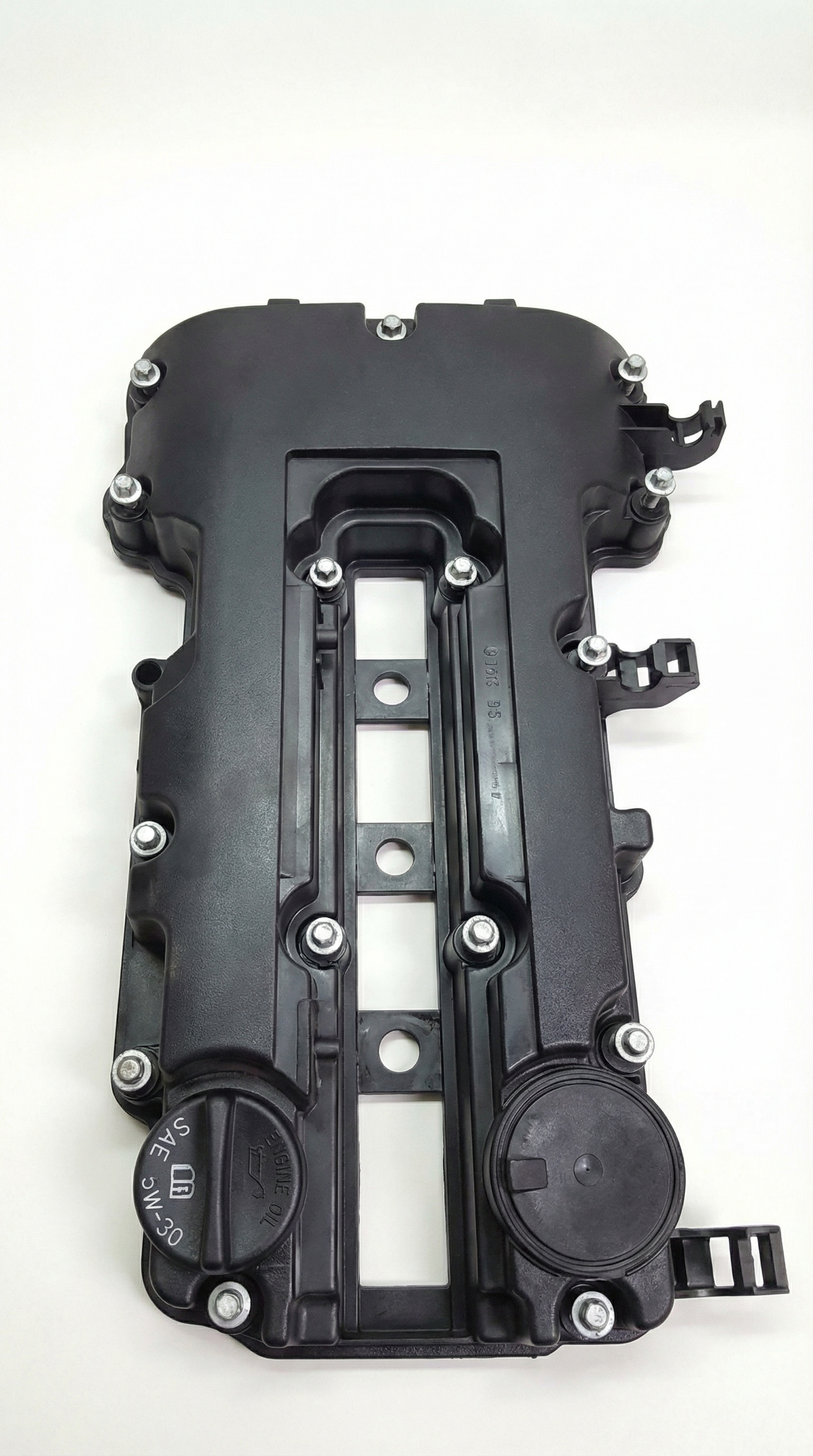
Aftermarket price range: $30-$50 - Valve Cover with Integrated PCV Valve
(OEM #25205331 (Current), 25198874, 55573746 (Older))— Fixes the extremely common PCV diaphragm failure, which causes a large vacuum leak and subsequent misfires.
Trusted brands: ACDelco, Dorman (p/n 264-968)
OEM price range: $150-$200
Aftermarket price range: $80-$130 - Aftermarket PCV Intake Check Valve Kit
(OEM #N/A)— A permanent fix for the failed, non-serviceable check valve inside the intake manifold of LUV engines, preventing repeat failure of the valve cover PCV diaphragm.
Related Codes That Often Appear With This One
- P0300 — If the cause of the misfire, like a major vacuum leak or failing coil pack, begins to affect other cylinders intermittently, a P0300 (Random/Multiple Cylinder Misfire) code may appear alongside P0303.
- P0171 — This 'System Too Lean' code is a classic symptom of the failed PCV diaphragm in the valve cover. The torn diaphragm creates a large, unmetered vacuum leak, causing the engine to run lean.
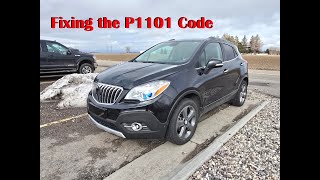
- P1101 — This 'Intake Air Flow System Performance' code often accompanies P0171 and misfire codes. The massive vacuum leak from a bad PCV system causes the airflow measured by the MAF sensor to not match what the ECM expects based on other sensor readings.
Technical Service Bulletins (TSBs) & Recalls
- 19-NA-090: This TSB details that a persistent misfire with low compression can be caused by a broken piston ring land. It advises performing a compression test followed by a cylinder leakage test. If excessive leakage into the crankcase is found, the pistons must be inspected. The bulletin notes that if the cylinder wall is not scored badly enough to be felt with a fingernail, the engine should not be replaced; instead, all four pistons and rings should be replaced.
- Bulletin #PIP5038B: While issued for other models in the Buick lineup, this manufacturer bulletin notes that technicians may find a Malfunction Indicator Lamp on with codes P0300 through P0306, as well as ignition coil circuit codes P0351 through P0356, and should follow published service information diagnostics.
Platform-Specific Known Issues

- PCV System Design Flaw: The 1.4L LUV/LE2 engine has a two-stage PCV failure pattern. A check valve in the intake manifold fails, which then causes the diaphragm in the valve cover to rupture from exposure to boost pressure. Replacing only the valve cover without addressing the intake manifold check valve will lead to a repeat failure.
- Cracked Spark Plug Insulators: TSB #21-NA-255 was issued for some later models with the LE2 engine regarding internal spark plug insulators breaking, causing a misfire. This is a known defect, not just wear and tear.
Mechanic-Grade Diagnostic Values
- Fuel Injector Coil Resistance (LUV Engine) — expected: Approx. 12 ohms. Failure: A reading significantly higher or lower than 12 ohms, or an open circuit (infinite resistance), indicates a failed injector coil.
- Fuel Pressure (LUV Engine) — expected: Approx. 43.5 PSI / 3 Bar. Failure: Low fuel pressure can cause lean conditions and misfires across all cylinders, not just one. This value is the test pressure for the injector flow rate.
- Ignition Coil Pack Mounting Bolt Torque — expected: 71 inch-pounds (in-lbs). Failure: Over-tightening can crack the plastic housing of the coil pack, leading to premature failure. Under-tightening can lead to a poor ground connection.
Hidden / Shadow Codes Worth Checking
- Mode 6, Test ID $A2-$A7: This is not a hidden code, but a data stream accessible via advanced OBD-II scanners. It provides raw misfire counts for each cylinder (Cylinder 1 is $A2, Cylinder 2 is $A3, etc.). Cylinder 3 is Test ID $A4. This allows a technician to see the exact number of misfire events detected by the ECM, even if they aren't frequent enough to set a P0303 code yet. (see via An OBD-II scan tool that supports Mode 6 data viewing.)
Scan Tool Commands That Help
- GM GDS2 (Global Diagnostic System 2): Cylinder Power Balance Test — This is a primary diagnostic function to confirm a misfire on a specific cylinder. The tool commands the ECM to sequentially disable the fuel injector to each cylinder. A good cylinder will cause a noticeable drop in engine RPM when disabled; a misfiring cylinder will cause little to no RPM drop, confirming it was not contributing power.
Wiring & Ground Locations
- F23UA (Underhood Fuse Block) — Located in the main fuse block in the engine compartment.. This 15A fuse supplies power to the ignition coil module AND all four fuel injectors. A poor connection or intermittent fault at this single fuse can cause misfires that may seem isolated to one cylinder at first.
- G102 — Located on the lower right rear of the engine block.. This is a primary ground point for the engine block itself. A loose or corroded connection here can create grounding issues for components bolted to the engine, including the ignition coil module, potentially causing weak spark and misfires.
- Engine Harness Chafe Point — On the left side of the engine, where the harness may contact a ground stud.. GM TSB 18-NA-114 warns that the engine harness can rub through on a ground stud in this area, causing chafed or cut wires. This could affect the wiring for the cylinder 3 ignition coil control or fuel injector control, leading to a persistent P0303.
- ECM Connector J2, Pin 32 — On the main Engine Control Module (ECM).. This pin is the specific control circuit for the cylinder 3 fuel injector (on LUV engines). A technician can use this for advanced testing, like checking for a control signal from the ECM with a noid light or oscilloscope. The wire is typically Light Green with a Black stripe.
"I Checked Everything" — The Actual Cause
- The classic scenario for the 1.4L LUV engine involves the internal PCV check valve located inside the intake manifold. A standard smoke test of the intake tract may show no leaks. The actual problem is that under boost, the failed check valve allows pressurized air into the crankcase. This pressure then blows out the weak diaphragm in the valve cover, creating a massive, unmetered vacuum leak *from* the crankcase *into* the intake manifold at idle. The root cause isn't a vacuum leak that a smoke test would find, but a boost leak into the wrong system that then *causes* a vacuum leak.
OEM Part Supersession History
25198874, 55573746, 25198877→25205331 (or 25203036)— The original valve covers for the LUV engine contained a PCV diaphragm prone to rupture. Later versions featured an updated design for improved durability.
Heads up: These part numbers are for the LUV (Gen 1) engine only and are not compatible with the LE2 (Gen 2) engine, which uses a different aluminum valve cover.Bosch 0280158205 / GM 55565970→N/A— This is the standard Multi-Port Fuel Injector for the LUV engine.
Heads up: This is a port injector and is NOT compatible with the 2016.5+ LE2 engine, which uses a completely different Spark Ignited Direct Injection (SIDI) system and injector (e.g., GM 55577403).
Model Year Variations Within This Range
- 2013-2016 (LUV Engine, VIN 'B'): This is the Gen 1 engine with a cast-iron block, multi-port fuel injection (MPFI), and a single cassette-style ignition coil pack. It is highly susceptible to the PCV check valve/valve cover diaphragm failure causing misfires with P0171/P1101. The 8th digit of the VIN is typically 'B'.
- 2016.5-2022 (LE2 Engine, VIN 'M'): This is the Gen 2 engine with an aluminum block, Spark Ignited Direct Injection (SIDI), and individual coil-on-plug ignition. The PCV system was redesigned and is less prone to the specific diaphragm rupture seen in the LUV engine. Misfire diagnosis is more focused on individual coils, direct injectors, and potential carbon buildup on intake valves. The 8th digit of the VIN is typically 'M'.
Diagnostic Flowchart
Real Owner Stories
Aggregated from forums and TSBs cited above. Mileages and costs reflect what owners reported in those sources.
2014 Buick Encore 1.4L Turbo
Symptoms: Recurring misfire on one cylinder with a charred coil pack spring and spark plug.
What fixed it: Replaced the ignition coil pack and spark plug.
Source hint: Reddit r/MechanicAdvice: 2014 Buick Encore misfire
2013 Buick Encore 1.4L Turbo
Symptoms: Code P0303 misfire.
What fixed it: Replaced the coil pack after finding one of the booted connectors had separated and was heavily corroded.
Source hint: Buick Forum: 2014 Regal GS Code P0303
Chevrolet Cruze 1.4L Turbo
Symptoms: Persistent cylinder 3 misfire that did not resolve after basic tune-up parts were thrown at it.
What fixed it: Replaced the spark plug, fuel injector, and ignition coil pack, but the cylinder was still not firing, illustrating that the issue can sometimes be more complex (e.g., wiring or compression).
Source hint: Reddit r/cruze: p0303 cylinder 3 misfire.
Buick Owner Report
Symptoms: An owner reported issues with acceleration and inclines accompanied by a check engine light. Diagnostics revealed codes P0300, P0302, and P0303 stored, indicating misfires on cylinders 2 and 3.
What fixed it: The vehicle required all spark plugs and coils to be replaced (NHTSA ODI #10818536).
Related OBD-II Codes
Frequently Asked Questions
Why does my Buick Encore show a 'Service StabiliTrak' message along with the P0303 code?
I hear a whistling noise from my engine and have a P0303 code. What does this mean?
Can I just replace the valve cover to fix the PCV whistling issue on my Encore?
What spark plugs should I use for the 1.4L Turbo Encore, and what is the gap?
Is there a known issue with spark plugs breaking on the LE2 engine?
Does TSB 19-NA-090 apply to my 1.4L Encore?
Helpful Videos

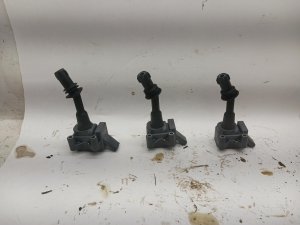
Used OEM Parts in Stock
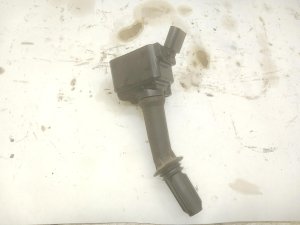
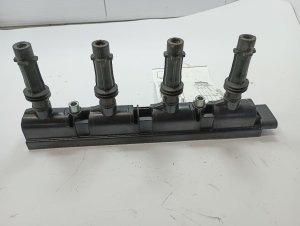
New Aftermarket Parts Available


The information in this article is provided for general reference and educational purposes only. Vehicle specifications, procedures, and part compatibility can vary by production date, trim level, and region. Always consult your vehicle's factory service manual and verify part numbers before purchasing or performing repairs. Safety-critical components such as airbags, seat belts, and braking systems should be installed by a qualified professional.
- Buick Encore:
- 🎬 Helpful Videos
- 🛍️ Shop This Part
- What's Unique About the 2013-2022 Buick Encore
- Symptoms You May Notice
- Most Likely Causes
- Rare But Worth Checking
- Diagnosis Steps
- Parts You'll Likely Need
- Related Codes That Often Appear With This One
- Technical Service Bulletins (TSBs) & Recalls
- Platform-Specific Known Issues
- Mechanic-Grade Diagnostic Values
- Hidden / Shadow Codes Worth Checking
- Scan Tool Commands That Help
- Wiring & Ground Locations
- "I Checked Everything" — The Actual Cause
- OEM Part Supersession History
- Model Year Variations Within This Range
- Diagnostic Flowchart
- Real Owner Stories
- 2014 Buick Encore 1.4L Turbo
- 2013 Buick Encore 1.4L Turbo
- Chevrolet Cruze 1.4L Turbo
- Buick Owner Report
- Related OBD-II Codes
- Frequently Asked Questions
- 🎟️ Get 5% Off