

P0302 on 2005-2012 Porsche Boxster: Cylinder 2 Misfire Causes and Fixes
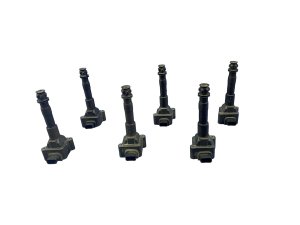
Code P0302 on a 2005-2012 Porsche Boxster means cylinder 2 is misfiring. The most common cause is a failed ignition coil or a worn spark plug. Swapping the coil from cylinder 2 with another cylinder is a quick way to diagnose the problem. A set of six coils and plugs can cost between $300 and $600 for parts.
- P0302 is a misfire on cylinder 2, the middle cylinder on the passenger side.
- Start your diagnosis by swapping the ignition coil from cylinder 2 to another cylinder to see if the misfire follows.
- If coils and plugs are good, investigate the Air-Oil Separator (AOS), especially if you see smoke on startup.
- Be aware that 2005-2008 Boxster S models (987.1) have a known risk of cylinder bore scoring, a serious issue that can cause this code.
- Always replace spark plugs and ignition coils in full sets for best results.
What's Unique About the 2005-2012 Porsche Boxster
The 2005-2012 Boxster spans two distinct generations, the 987.1 (2005-2008) with the M96/M97 engine and the 987.2 (2009-2012) with the 9A1 engine. While common ignition faults cause P0302 on both, the 987.1 models are susceptible to more serious issues. A failing Air-Oil Separator (AOS) is a frequent problem that can foul spark plugs and cause misfires. More critically, the M97 engine in 987.1 'S' models has a known vulnerability to cylinder bore scoring, a severe mechanical issue that can manifest as a persistent misfire code.
Generation note: This range covers two generations: the 987.1 (2005-2008) and the 987.2 (2009-2012). The 987.1 uses the M96/M97 engine, which is known to be at higher risk for issues like Air-Oil Separator (AOS) failure, IMS bearing problems (early 2005 models), and cylinder bore scoring. The 987.2 uses the updated 9A1 engine, which is generally considered more robust as it eliminated the IMS bearing design, though some cases of bore scoring are still reported.
Symptoms You May Notice
- Rough or unstable idle
- Hesitation or stumbling during acceleration
- Noticeable loss of engine power
- Flashing or solid Check Engine Light
- Increased fuel consumption
- Smell of unburned fuel from the exhaust
- Replacing only the spark plug when the ignition coil was the actual cause.
- Replacing ignition components when a failing Air-Oil Separator (AOS) is fouling the plugs with oil.
- Assuming a vacuum leak is the cause for a single-cylinder misfire, which is more often an ignition or fuel issue specific to that cylinder.
Most Likely Causes
- Faulty Ignition Coil 🔴 High Probability Ignition coils on the 987 platform are a very common failure item. Their location near the exhaust exposes them to extreme heat cycles and vibration, causing the internal electronics and external housings to fail over time, leading to a weak or absent spark. The original coils were prone to cracking and have been superseded by improved versions.
How to confirm: Swap the ignition coil from cylinder 2 with the coil from another cylinder (e.g., cylinder 1 or 3 on the same bank). Clear the codes and drive the car. If the misfire code changes to the cylinder you moved the coil to (e.g., P0301 or P0303), the coil is bad.
Typical fix: Replace the faulty ignition coil. It is highly recommended to replace all six coils at the same time 🎬 Watch: Step-by-step guide to replacing your spark plugs and coils., as they tend to fail around the same age. Also replace spark plugs if they are due.
Est. part cost: $40-$80 per coil - Worn or Fouled Spark Plug 🔴 High Probability Spark plugs are a regular maintenance item with a replacement interval of around 40,000 miles. If they are old, the electrode can wear down, increasing the gap and making it harder to produce a strong spark. They can also become fouled with oil from a failing AOS or carbon deposits, preventing a proper spark.
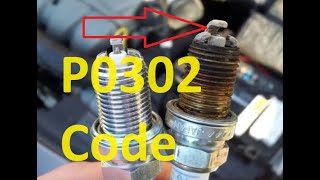
How to confirm: After confirming the coil is good, remove the spark plug from cylinder 2. Inspect it for wear (worn electrode), damage, or deposits (black and sooty, or oily). A healthy plug should be light tan or grey. Compare it to a plug from a healthy cylinder.
Typical fix: Replace the spark plug in cylinder 2. It is best practice to replace all six spark plugs as a set to ensure even performance and avoid future misfires.
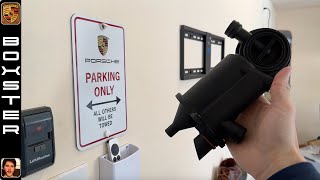
Est. part cost: $10-$25 per plug - Failing Air-Oil Separator (AOS) 🟡 Medium Probability The AOS is a known high-failure rate component on 987.1 models. Its internal diaphragm can tear, causing excessive vacuum in the engine crankcase. This pulls a large amount of oil into the intake manifold, which can foul spark plugs (especially on Bank 1, cylinders 1-2-3), disrupt the air-fuel ratio, and cause misfires.
How to confirm: Look for symptoms like a large puff of blue-white smoke on startup, a high-pitched whistling or squealing sound from the engine at idle, or a very strong vacuum at the oil filler cap (making it difficult to remove with the engine running). A mechanic can perform a vacuum test to confirm.
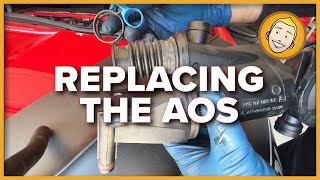
Typical fix: Replace the Air-Oil Separator and potentially the associated vent hoses. This is a more involved DIY job 🎬 See this walkthrough for replacing the Air-Oil Separator (AOS). due to its location, but manageable.
Est. part cost: $100-$200 - Clogged or Faulty Fuel Injector ⚪ Low Probability
How to confirm: If the ignition components are good, you can swap the fuel injector from cylinder 2 with another cylinder. If the misfire code follows the injector, the injector is the problem. This is a more advanced diagnostic step that requires disassembling the fuel rail.
Typical fix: Replace the faulty fuel injector. It's often recommended to have all injectors professionally cleaned and flow-tested at the same time.
Est. part cost: $150-$300 per injector
Rare But Worth Checking
- Cylinder Bore Scoring: This is a severe and expensive mechanical failure, most prevalent on 987.1 'S' models with the 3.4L M97 engine. It involves the piston scraping against the cylinder wall, causing loss of compression and excessive oil consumption. Symptoms include a rhythmic ticking or knocking noise from the engine and a sooty exhaust tip on the side of the failing cylinder(s). Diagnosis requires a professional borescope inspection through the spark plug hole. 🎬 Watch: How to perform a DIY bore scoring inspection. While less common, it has also been reported on 987.2 9A1 engines.
- Vacuum Leak: A vacuum leak from a cracked hose or failed intake manifold gasket can introduce unmetered air, leaning out the air-fuel mixture and causing misfires. While this usually triggers multiple or random misfire codes (P0300), a leak isolated near the intake runner for cylinder 2 could potentially cause a single-cylinder misfire.
- Variocam Solenoid/Actuator Failure: A failing Variocam solenoid can cause incorrect camshaft timing on one bank, leading to misfires across all three cylinders on that bank (e.g., P0301, P0302, P0303). While less likely to cause an isolated P0302, it's a known issue on these engines.
Diagnosis Steps
- Read the code with an OBD-II scanner and confirm P0302 is present. Note if the check engine light is steady or flashing, and check for any other stored codes.
- Swap the ignition coil from cylinder 2 with the coil from cylinder 1. Clear the codes and drive the vehicle to see if the misfire moves to cylinder 1 (code P0301). If it does, the coil is faulty.
- If the misfire remains on cylinder 2, swap the spark plug from cylinder 2 with cylinder 1. If the code changes to P0301, the spark plug was the issue.
- If ignition components are good, inspect for signs of a failing Air-Oil Separator (AOS): significant blue-white smoke on startup, a high-pitched engine squeal, or excessive vacuum at the oil cap.
- Perform a compression test on cylinder 2 to check for mechanical engine health issues like worn piston rings or valve problems.
- Check the fuel injector on cylinder 2. This may require professional assistance to test flow rates or swap its position with another injector.
- If all else fails, especially on a 987.1 S model, a professional borescope inspection of cylinder 2 is necessary to rule out cylinder bore scoring.
Parts You'll Likely Need
- Ignition Coil
(OEM #9A1-602-104-06 (for 987.2), 997-602-104-04 (for 987.1))— This is the most frequent cause of a single-cylinder misfire on the 987 platform. They are exposed to significant heat and vibration, leading to eventual failure.
Trusted brands: Bosch, Beru (OEM)
OEM price range: $60-$90
Aftermarket price range: $40-$70 - Spark Plug
(OEM #Bosch FGR5NQE04 (example))— As a standard wear item, an old or fouled spark plug is a common and simple fix for a misfire.
Trusted brands: Bosch, NGK
OEM price range: $15-$25
Aftermarket price range: $10-$20 - Air-Oil Separator (AOS)
(OEM #996-107-026-02 (for 987.1))— A common failure point on M96/M97 engines that leads to oil entering the intake, causing smoke, rough running, and misfires.
Trusted brands: Porsche (OEM), URO Parts
OEM price range: $150-$200
Aftermarket price range: $80-$120
Related Codes That Often Appear With This One
- P0300 — If the cause (like a large vacuum leak, failing AOS, or fuel pressure issue) affects multiple cylinders, a P0300 (Random/Multiple Cylinder Misfire) may appear alongside P0302.
- P0301, P0303 — Misfires on adjacent cylinders on the same bank (Bank 1) can occur if the root cause, such as a failing AOS, a bank-specific vacuum leak, or a Variocam issue, is affecting the entire bank.
- P0352 — This code specifically indicates a fault in the ignition coil primary or secondary circuit for cylinder 2, pointing directly to a bad coil or wiring issue.
Platform-Specific Known Issues
- title: Cylinder Bore Scoring
Mechanic-Grade Diagnostic Values
- Ignition Coil Primary Resistance — expected: 0.3 - 0.7 Ohms at 20°C (68°F). Failure: A reading outside this range indicates a faulty coil. However, coils can test good when cold and still fail under heat and load.
- Spark Plug Connector Resistance — expected: Approximately 2.0 kOhms. Failure: A significantly different reading suggests a bad connector, which is integrated with the coil boot.
- VarioCam Solenoid Resistance (987 Models) — expected: 10.7 - 12.7 Ohms. Failure: Readings outside this range suggest a faulty solenoid. Note that earlier 986 models had a spec of 13-15 Ohms.
- Long-Term Fuel Trim, Cruise (FRA) — expected: Close to 1.0. Failure: Values significantly above 1.0 indicate the DME is adding fuel to correct a lean condition (e.g., vacuum leak). Values below 1.0 indicate the DME is removing fuel to correct a rich condition.
- Long-Term Fuel Trim, Idle (RKAT) — expected: Close to 0%. Failure: Positive percentages indicate adding fuel (lean), negative percentages indicate removing fuel (rich). Idle trims are very sensitive to vacuum leaks.
- Mass Airflow (MAF) Sensor at Idle — expected: Approximately 15 kg/h for a Boxster engine. Failure: Incorrect readings at idle, especially if long-term fuel trims at idle (RKAT) are high or low while cruise trims (FRA) are normal, can point to a failing MAF sensor.
Hidden / Shadow Codes Worth Checking
- Mode 6 Misfire Counters: The DME continuously counts misfires on each cylinder. These counters can be viewed before they reach the threshold required to set a P030x trouble code and illuminate the Check Engine Light. This is extremely useful for diagnosing intermittent or developing misfires. (see via A Porsche-specific scan tool like PIWIS or Durametric is required. Navigate to 'Actual Values' or 'Live Data' for the DME module and select the misfire counters for each cylinder.)
- Persistent/Uncleared Faults: In some cases, a generic OBD-II scanner may fail to completely clear fault codes from the Porsche DME. The code may appear to be gone but will return upon the next drive cycle because the underlying fault memory was not fully erased. (see via This is diagnosed when a fault code persistently returns after being cleared with a generic tool. Using a Durametric or PIWIS tool to clear the codes is often successful and resolves the issue.)
Scan Tool Commands That Help
- PIWIS or Durametric: Misfire Counter Monitoring — Use this in live data to confirm which cylinder is misfiring and how frequently, especially if the misfire is intermittent and does not always trigger a CEL.
- PIWIS or Durametric: VarioCam Solenoid Activation — When suspecting a timing-related issue causing misfires on a whole bank (P0301, P0302, P0303). Activating the solenoid for Bank 1 should cause a noticeable change in engine idle or make it stumble. If there's no change, the solenoid or its circuit is suspect.
- PIWIS or Durametric: Fuel Injector Activation Test — After ruling out ignition components, this test can be used to listen for the click of each individual injector, helping to identify one that is silent (stuck closed) or has a weak sound.
Wiring & Ground Locations
- DME Connector IV, Pin 4 — On the main engine computer (DME), which is located in the rear trunk behind the carpeted panel on the left side.. This specific pin is the trigger signal wire for the ignition coil on cylinder 2. It can be used for advanced electrical diagnostics to check for a signal from the DME to the coil.
- Engine-to-Chassis Ground Strap — There is a primary ground strap near the front of the passenger side cylinder head, connecting the engine to the chassis. Another is located underneath the engine.. A corroded or loose ground strap can cause a weak spark, intermittent electrical issues, and random misfires that are difficult to diagnose. Ensuring all grounds are clean and tight is a crucial, often overlooked, step.
- Ground Point 5 (Electronics Ground) — General electronics ground point for the vehicle.. A fault at this central ground could potentially cause issues with the DME or ignition system.
Real Owner Repair Stories
- RennTech.org user 'bglz42' (2001 Boxster S (986 generation, but the diagnostic principle is highly relevant)) — Rough running and a blinking CEL with code P0302 immediately after performing other maintenance (O2 sensor change).
❌ Tried (didn't work) Swapping the cylinder 2 ignition coil for a brand new one did not fix the misfire.
✅ What actually fixed it The generic OBD-II scanner being used was not fully clearing the fault code from the DME. After clearing the codes with a Porsche-specific Durametric tool, the codes did not return and the car ran perfectly. The issue was a 'ghost' code that the basic scanner couldn't erase. - Pelican Parts Forums user 'rjgreenawald' (1999 Boxster (986 generation, but demonstrates a key mechanical failure mode)) — Rough idle after warming up, with multiple misfire codes on Bank 1 (P0301, P0302, P0303) and VarioCam position codes (P1340, P1531).
❌ Tried (didn't work) Replacing spark plugs., Swapping ignition coils from one bank to the other; the misfires remained on Bank 1.
✅ What actually fixed it The VarioCam actuator for Bank 1 had failed internally. A plastic chain ramp broke off, causing the intake camshaft timing to slip. This resulted in misfires across all cylinders on that bank. The fix was to replace the entire VarioCam actuator.
Documented NHTSA Reports
While primarily reported on the related Cayman platform, NHTSA ODI #11443174 describes a scenario where P0302 appeared simultaneously with misfires on cylinders 1 and 3 (P0301, P0303). This specific case was linked to a fuel system failure where the fuel rail system pressure was too low (P0087), demonstrating that a P0302 can be part of a broader fueling issue.
OEM Part Supersession History
997-602-104-00, 997-602-104-02→997-602-104-04, 997-602-104-05 (and others)— The original ignition coils for the 987.1 M96/M97 engine were prone to cracking due to heat and vibration. Later versions feature improved epoxy and steel sleeves around the bolt holes to prevent cracking when tightened.
Heads up: While all are for the 987.1, it is always recommended to replace in full sets with the latest available part number to ensure consistent performance. The 987.2 (9A1 engine) uses a completely different coil, part number 9A1-602-104-06 or similar.
Model Year Variations Within This Range
- 2005-2008 (987.1): These models use the M96/M97 engine. Some early models may still have serviceable spark plug tubes which can leak oil into the spark plug wells, fouling the plug and coil. This was a very common issue on the preceding 986 model.
- 2009-2012 (987.2): These models use the more robust 9A1 direct-injection engine. They do not have the separate spark plug tubes of the earlier engines, reducing one potential source of oil leaks into the plug wells. The ignition coils are a different part number (9A1-602-104-xx) and are not interchangeable with 987.1 coils.
- 2005-2012 (All 987): The VarioCam solenoid on all 987 models is located externally on the camshaft cover, making it significantly easier to access and replace compared to the 986 Boxster, where it was located inside the cover.
Diagnostic Flowchart
Other Known Issues on This Vehicle
Issues unrelated to this code that are worth knowing about as an owner of this generation:
- Intermediate Shaft (IMS) Bearing Failure 🔴 High — Primarily affects M96/M97 engines from 1997-2008. The failure rate is highest (~8-10%) on 2000-2005 models with the single-row bearing. 2006-2008 models have a much more robust bearing (<1% failure rate). 9A1 engines (2009+) do not have an IMS bearing.
- Air-Oil Separator (AOS) Failure 🟠 Medium — A very common failure item on M96/M97 engines (987.1). Often fails every 50k-60k miles, causing massive oil smoke, rough running, and can lead to engine damage if ignored.
- Water Pump Failure 🟠 Medium — The water pump, particularly those with plastic impellers, is a known weak point. Failure can occur around 50k-70k miles, leading to overheating if not addressed promptly. It's often replaced preventatively.
- Cracked Coolant Expansion Tank 🟡 Low — The plastic coolant tank can become brittle with age and heat cycles, leading to cracks and coolant leaks. This is a common issue on higher-mileage or older 987 models.
- Shifter Cable Failure 🟡 Low — On manual transmission cars, the plastic ends of the shifter cables can become brittle and break, leaving the driver unable to select gears. This is a common point of failure.
Used vs. New Parts: Buying Guide for This Vehicle
When a used part is the smart pick: For a P0302 repair, using used parts is generally not recommended for the primary failure items. The only potential exception might be a fuel injector if it is sourced from a low-mileage, reputable dismantler and professionally cleaned/flow-tested before installation. Used structural or cosmetic parts are fine, but not wear-and-tear electronic components.
Donor-vehicle mileage cap: roughly under 50000 miles for the part to have meaningful remaining life.
What to inspect on the donor part:
- For an injector: Ask for vehicle history to ensure it's not from a high-mileage or poorly maintained car.
- For any part: Check for visible signs of damage, corrosion, or heat stress.
- Verify part numbers meticulously, especially for running changes during the model years.
OEM-only on this vehicle (don't cheap out):
- Air-Oil Separator (AOS): Aftermarket AOS units for Porsches are notoriously unreliable. The diaphragm quality is critical to maintaining correct crankcase vacuum, and failed aftermarket units can cause the same problems as the original failed part, sometimes within a few months.
Aftermarket brands forum-validated for this vehicle:
- Ignition Coils: Beru is the Original Equipment Manufacturer (OEM) and is an excellent choice. Bosch is also an OEM supplier and a trusted alternative. NGK is another reputable brand for ignition components.
- Spark Plugs: Bosch or NGK are the standard recommendations and often the OEM choice.
Brands owners have reported issues with on this vehicle:
- Avoid unbranded, white-box ignition coils and sensors from online marketplaces. The failure rate is very high, and the labor involved in replacing them on a Boxster makes it not worth the initial cost savings.
Real Owner Stories
Aggregated from forums and TSBs cited above. Mileages and costs reflect what owners reported in those sources.
2001 Boxster S — 38000 miles
Symptoms: Started and immediately began running rough and blinking CEL came on. Generic OBD II reader showed zero codes after an initial clear, but the car continued to run poorly.
What fixed it: Used a Durametric scanner to identify and completely clear P0300 and P0302 codes that a generic reader could not fully resolve.
Source hint: RennTech.org
Porsche Owner Report — NHTSA ODI #11443174
Symptoms: Multiple misfire codes detected including P0301, P0302, and P0303, occurring alongside a fuel rail system pressure too low fault (P0087).
What fixed it: Diagnostic records indicated the misfires were secondary to a fuel rail pressure failure, requiring attention to the high-pressure fuel system rather than just ignition components.
Related OBD-II Codes
Frequently Asked Questions
Why are the ignition coils on my 987 Boxster failing so frequently?
Can a failing Air-Oil Separator (AOS) cause a P0302 code on my 2006 Boxster?
Is it necessary to replace all six coils if only cylinder 2 is misfiring?
What are the signs of a failing AOS besides a misfire code?
If I swap the coil and plug and P0302 persists, what is the next step for a 987.1 S model?
Helpful Videos
We Have This Part in Stock

The information in this article is provided for general reference and educational purposes only. Vehicle specifications, procedures, and part compatibility can vary by production date, trim level, and region. Always consult your vehicle's factory service manual and verify part numbers before purchasing or performing repairs. Safety-critical components such as airbags, seat belts, and braking systems should be installed by a qualified professional.
- Porsche Boxster:
- 🎬 Helpful Videos
- 🛍️ Shop This Part
- What's Unique About the 2005-2012 Porsche Boxster
- Symptoms You May Notice
- Most Likely Causes
- Rare But Worth Checking
- Diagnosis Steps
- Parts You'll Likely Need
- Related Codes That Often Appear With This One
- Platform-Specific Known Issues
- Mechanic-Grade Diagnostic Values
- Hidden / Shadow Codes Worth Checking
- Scan Tool Commands That Help
- Wiring & Ground Locations
- Real Owner Repair Stories
- Documented NHTSA Reports
- OEM Part Supersession History
- Model Year Variations Within This Range
- Diagnostic Flowchart
- Other Known Issues on This Vehicle
- Used vs. New Parts: Buying Guide for This Vehicle
- Real Owner Stories
- 2001 Boxster S — 38000 miles
- Porsche Owner Report — NHTSA ODI #11443174
- Related OBD-II Codes
- Frequently Asked Questions
- 🎟️ Get 5% Off