

P0301 on 2001-2007 Toyota Highlander V6: Cylinder 1 Misfire Causes and Fixes
P0301 means your Highlander has a misfire in Cylinder 1. This is almost always a bad ignition coil or a worn spark plug. The fix is straightforward, but Cylinder 1 is on the difficult-to-access rear bank, requiring removal of the intake manifold.
- P0301 points to a misfire in Cylinder 1, which is on the rear bank near the firewall.
- The most likely cause is a bad ignition coil, followed by a worn spark plug.
- Diagnosis involves swapping the Cylinder 1 coil with a coil from the front bank to see if the misfire code follows it.
- Due to the difficult access which requires removing the intake manifold, it is standard practice to replace all three rear ignition coils, spark plugs, and the intake gaskets at the same time.
- Driving with a flashing check engine light can quickly destroy your catalytic converter, leading to a much more expensive repair.
What's Unique About the 2001-2007 Toyota Highlander

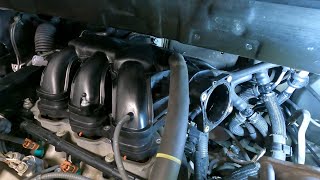
The defining challenge for a P0301 code on this Highlander is the physical location of Cylinder 1. It's part of the rear bank of cylinders (Bank 1) tucked against the firewall. Unlike the easily accessible front cylinders (2, 4, 6), servicing Cylinder 1 requires removing the upper intake manifold (plenum) and throttle body. This turns a simple part swap into a more involved job, increasing labor time and cost significantly for professional repairs and posing a greater challenge for DIY mechanics. This design is shared with many other Toyota and Lexus vehicles using the same V6 engines.
Symptoms You May Notice
- Rough or shaky engine idle
- Engine hesitation or stumbling during acceleration
- Noticeable loss of power
- Solid or flashing Check Engine Light
- Smell of gasoline from the exhaust
- Difficulty starting the engine
- Reduced fuel economy 🎬 Watch: A breakdown of P0301 causes and common fixes.
- Replacing only the front bank spark plugs and coils, as the rear bank is often neglected due to difficult access.
- Replacing oxygen (O2) or air/fuel (A/F) sensors, which are unlikely to cause a single-cylinder misfire. A bad sensor would typically cause a bank-wide or random misfire code (P0300, P0303, P0305).
- Assuming the engine is sludged. While the 1MZ-FE had a reputation for oil sludging, this was more prevalent in early (pre-2002) models and often due to poor maintenance. It's less likely to be the direct cause of a single cylinder misfire.
Most Likely Causes

- Faulty Ignition Coil 🔴 High Probability Coil-on-plug ignition systems are a common failure point due to constant heat cycles and vibration. The rear bank coils, like the one for Cylinder 1, may experience more heat soak due to their confined location near the firewall, potentially leading to a higher failure rate.
How to confirm: Swap the ignition coil from Cylinder 1 with one from an easily accessible front cylinder (e.g., Cylinder 2 or 4). Clear the codes and drive the vehicle. If the code changes to P0302 or P0304, the ignition coil is confirmed to be faulty.
Typical fix: Replace the faulty ignition coil. It is highly recommended to replace all three rear coils and spark plugs at the same time due to the significant labor involved in accessing them. This is a common 'while you're in there' job.
Est. part cost: $35-$70 per coil - Worn or Fouled Spark Plug 🔴 High Probability Spark plugs are a routine maintenance item with a finite lifespan. If they haven't been replaced according to the service interval (typically 90k-120k miles for iridium plugs), they are a likely cause. Often, a previous owner may have only replaced the easy-to-reach front plugs, leaving the original, worn plugs in the rear bank.
How to confirm: After confirming the coil is good, inspect the spark plug once it's accessible. Look for wear on the electrode (excessive gap), carbon fouling, oil deposits, or physical damage. Do not adjust the gap on iridium plugs; if the gap is out of spec, replace the plug.
Typical fix: Replace the spark plug. Use OEM-spec Iridium plugs from Denso or NGK for maximum longevity. It is critical to replace all three rear plugs while the intake manifold is off to avoid repeating the labor. 🎬 See how to replace rear spark plugs without removing the manifold.
Est. part cost: $10-$20 per plug - Faulty Fuel Injector 🟡 Medium Probability
How to confirm: If the misfire remains on Cylinder 1 after swapping the coil and plug, the injector is the next suspect. A DIY method involves listening to the injector with a mechanic's stethoscope or a long screwdriver to ensure it's clicking in rhythm with the others. A professional can perform a fuel injector balance test or resistance check.
Typical fix: Replace the faulty fuel injector. This also requires removing the intake manifold for access, so it's another part to consider replacing 'while you're in there' if the vehicle has high mileage.
Est. part cost: $70-$150 per injector - Vacuum Leak ⚪ Low Probability The intake manifold plenum gaskets become brittle over time due to heat and age, causing a vacuum leak. A leak specific to the Cylinder 1 runner could cause a P0301, though often a plenum leak will affect all three rear cylinders.
How to confirm: With the engine running, spray short bursts of brake cleaner or a propane torch (unlit) around the intake manifold gaskets. If the engine RPM changes, a leak is present. A professional smoke test is the most definitive method for finding hard-to-reach leaks.
Typical fix: Replace the intake manifold gaskets. These are single-use and must be replaced anytime the manifold is removed for other repairs, such as for the coils or spark plugs.
Rare But Worth Checking
- Low Engine Compression: This indicates a serious internal engine problem like a burnt valve, worn piston rings, or a failed head gasket. If ignition and fuel system checks don't solve the misfire, a compression test is necessary to rule this out.
- Clogged or Faulty PCV Valve: A stuck PCV valve can alter crankcase pressure and lead to oil being forced into the combustion chamber, fouling the spark plug over time. This is a cheap and easy part to replace as preventative maintenance.
Diagnosis Steps

- Read the code with an OBD-II scanner and confirm it is P0301. Note any other codes present and review freeze-frame data.
- To test the ignition coil, swap the Cylinder 1 coil (rear bank, passenger side) with the Cylinder 2 coil (front bank, passenger side). This requires only removing the front engine cover, not the intake manifold.
- Clear the codes and drive the vehicle until the Check Engine Light returns.
- If the code is now P0302, the ignition coil is bad and needs replacement.
- If the code remains P0301, the coil is likely good. The next step requires accessing the rear bank.
- Major Step: Remove the upper intake manifold (plenum) to access the rear bank. This involves disconnecting various hoses, sensors, and the throttle body. Label all connections.
- Inspect the Cylinder 1 spark plug for wear, damage, or fouling. Replace it with a new, correctly gapped plug.
- Proactive Maintenance: While the intake manifold is off, it is strongly recommended to replace all three rear spark plugs (1, 3, 5) and all three rear ignition coils to prevent future failures and avoid repeating this labor-intensive job. Also, replace the intake plenum gaskets as they are not reusable.
- If the misfire persists after replacing the coil and plug, the issue is likely a fuel injector or, less commonly, a mechanical problem.
- Test the Cylinder 1 fuel injector for proper operation by listening for a clicking sound or performing a resistance test.
- If all else fails, perform an engine compression test on Cylinder 1 to check for mechanical engine health, such as a bad valve or piston rings.
Parts You'll Likely Need

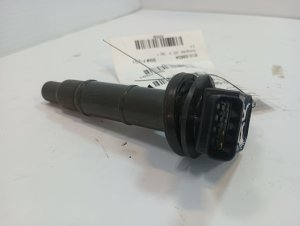
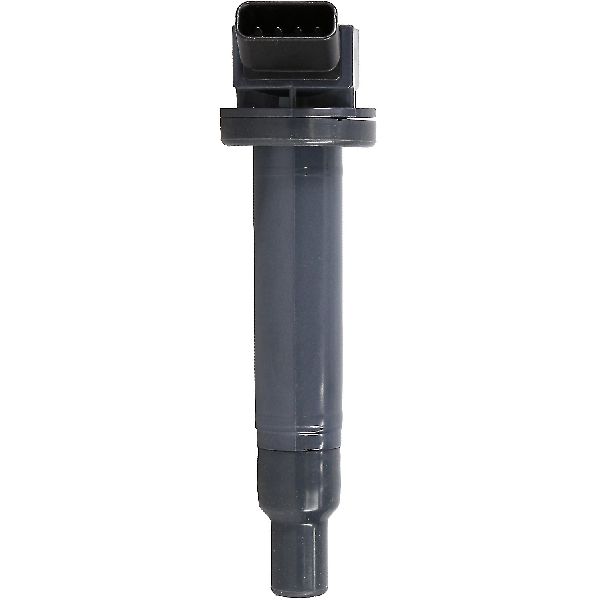
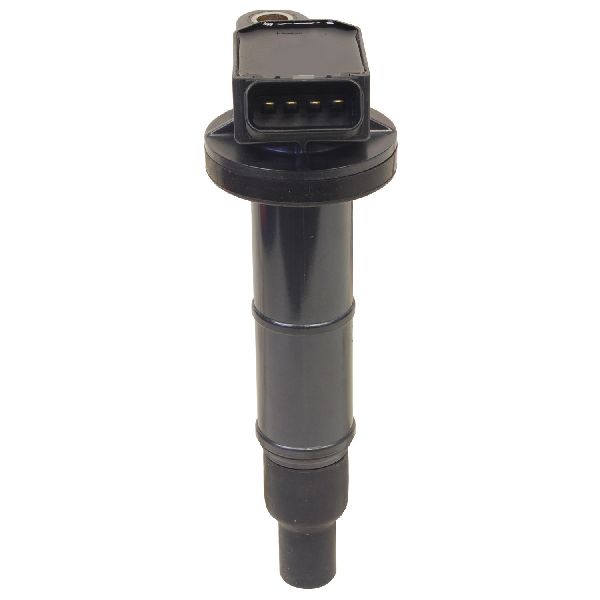
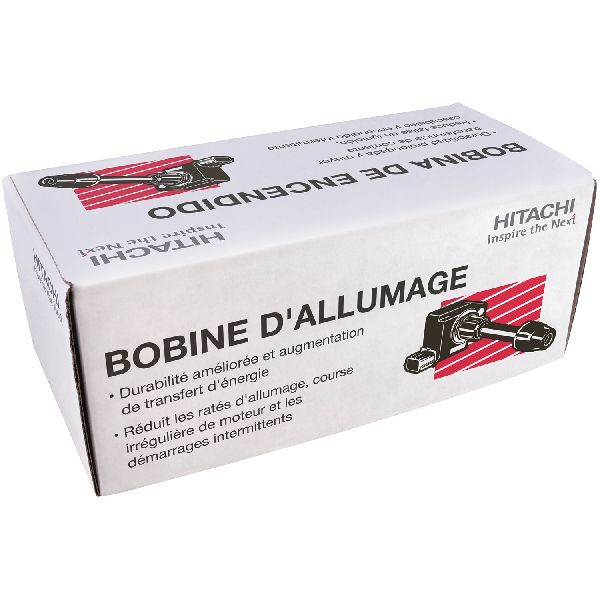
- Ignition Coil (Bank 1 / Rear)
(OEM #90919-02234 (1MZ-FE), 90919-A2001 / 90919-02248 (3MZ-FE))— This is the most frequent cause of a P0301 misfire. Cylinder 1 is on the rear bank.
Trusted brands: Denso, NGK, Toyota OE
OEM price range: $60-$90
Aftermarket price range: $35-$60 - Iridium Spark Plug
(OEM #Denso SK20R11 / NGK IFR6A11)— A worn spark plug is the second most common cause. It should always be replaced when servicing the coil, especially on the rear bank.
Trusted brands: Denso, NGK
OEM price range: $15-$25
Aftermarket price range: $10-$18 - Intake Manifold Gasket Set (Plenum Gaskets)
(OEM #17176-20020)— These gaskets are single-use and must be replaced whenever the intake manifold is removed to access the rear cylinders.
Trusted brands: Toyota OE, Fel-Pro, Mahle
OEM price range: $25-$40
Aftermarket price range: $15-$30
Related Codes That Often Appear With This One
- P0300 — If multiple cylinders are misfiring randomly, P0300 (Random/Multiple Cylinder Misfire) will appear alongside the specific cylinder codes.
- P0303, P0305 — If the cause is a vacuum leak from the intake manifold gasket, it may affect all cylinders on the rear bank (Bank 1), triggering codes for cylinders 1, 3, and 5.
- P0171, P0174 — If a significant vacuum leak is the root cause, the engine may run lean, triggering 'System Too Lean' codes for Bank 1 (P0171) and/or Bank 2 (P0174).
Platform-Specific Known Issues
- The primary issue is the labor-intensive process of removing the upper intake manifold to access any components on the rear bank of cylinders (1, 3, 5)
Technical Service Bulletins (TSBs) & Recalls
- TSB Bulletin #T-SB-0148-19 notes that certain Highlander models may exhibit a MIL ON condition with DTCs P0301, P0302, P0303, and P0304.
Mechanic-Grade Diagnostic Values
- Ignition Coil Primary Resistance (1MZ-FE) — expected: 0.70 - 0.94 Ohms. Failure: A reading outside this range indicates a faulty coil.
- Ignition Coil Secondary Resistance (1MZ-FE) — expected: 10,800 - 14,900 Ohms. Failure: A reading outside this range indicates a faulty coil.
- Fuel Injector Resistance (3MZ-FE) — expected: 13.4 - 14.2 Ohms at 68°F (20°C). Failure: A reading outside this range indicates a faulty injector.
- Fuel Pressure (3MZ-FE) — expected: 44 - 50 psi (304 - 343 kPa). Failure: Low pressure may indicate a weak fuel pump or clogged filter; high pressure may indicate a faulty regulator.
- Residual Fuel Pressure (3MZ-FE) — expected: 21 psi (147 kPa) or more after 5 minutes. Failure: A rapid drop in pressure can indicate a leaking injector or faulty fuel pump check valve.
- Engine Compression (3MZ-FE) — expected: 145 psi or more (Standard: 189 psi). Failure: Low compression indicates a mechanical engine problem. The minimum pressure should be 102 psi, and the difference between cylinders should not exceed 15 psi.
Scan Tool Commands That Help
- Toyota Techstream: Active Test - Misfire — Allows the technician to monitor misfire counts per cylinder in real-time, which is useful for confirming if a repair was successful or to see if the misfire is intermittent under specific load conditions.
- Toyota Techstream: Active Test - Control the Fuel Pump Speed — Can be used to verify fuel pump operation without needing to physically access the pump or relays. This helps in diagnosing a fuel delivery issue that could be causing a misfire.
Wiring & Ground Locations
- EC — Surge tank (Intake Manifold) RH (Right Hand side).. A poor ground at this location on the 1MZ-FE can affect sensor readings and potentially ignition performance, as it's a primary engine ground point.
- ED — Rear side of the surge tank (Intake Manifold).. Similar to ground point EC, this ground on the 1MZ-FE is critical for the components mounted on or near the intake manifold, which includes the rear bank ignition coils and injectors.
- EC1 — Connector located under the Engine Room J/B No. 2, connecting the Engine Wire and Engine Room Main Wire.. Corrosion or a loose connection at this main junction for the engine wiring harness could cause intermittent power or signal issues to the ignition coils or injectors.
Real Owner Repair Stories
- BobIsTheOilGuy forum user (1997 Toyota Avalon with 1MZ-FE engine, 136,500 miles) — Minor oil consumption (1 qt/2000 miles) and a misfire code (cylinder not specified, but common with PCV issues).
❌ Tried (didn't work) The user was investigating the PCV system as a potential cause for oil consumption and related misfires.
✅ What actually fixed it Replacing the original, slightly stuck PCV valve. The user noted fresh oil was found in the old valve and hose, indicating blow-by was occurring, which can lead to spark plug fouling and misfires. - ClubLexus forum user (Lexus RX300 (uses 1MZ-FE engine)) — Check Engine Light with multiple misfire codes including P0301.
❌ Tried (didn't work) Changing spark plugs did not resolve the issue and may have stressed the already failing coils.
✅ What actually fixed it Replacing the faulty ignition coils. One user noted that a coil failed immediately after a spark plug change, suggesting the new plugs exposed the weakness in the old coil. - NHTSA ODI #11534554 describes an owner who took their vehicle to a service department where diagnostics found codes P0300, P0301, P0302, P0303, and P0306, along with engine stalling (P1603).
- NHTSA ODI #11701620 reports a case where misfire codes P0300 and P0301 persisted even after new spark plugs and ignition coils were installed.
OEM Part Supersession History
90080-19016→90919-02234— Standard part update/improvement for the 1MZ-FE engine.90919-02248→90919-02260— Standard part update/improvement for the 3MZ-FE and other Toyota engines.
Heads up: Part 90919-02248 is also listed as being superseded by 90919-A2001 and 90919-C2002 in some aftermarket catalogs, but 90919-02260 is the most common official Toyota replacement.
Model Year Variations Within This Range
- 2001-2003 (1MZ-FE) vs 2004-2007 (3MZ-FE): The 3MZ-FE (3.3L) has a larger bore, a plastic intake manifold (vs. aluminum on 1MZ-FE), a larger throttle body, and a more advanced flat-type knock sensor which improved ignition timing control. While the P0301 diagnosis is similar, the specific part numbers for coils and injectors are different.
- 2001-2003 (1MZ-FE): The 1MZ-FE engine in the Highlander is the VVT-i version. Earlier non-VVT-i versions of this engine used a different ignition system with waste spark (one coil for two cylinders) and are not relevant to this vehicle, but it's a point of confusion when searching for general 1MZ-FE information.
Diagnostic Flowchart
Other Known Issues on This Vehicle
Issues unrelated to this code that are worth knowing about as an owner of this generation:
- Engine Oil Sludge (1MZ-FE) 🔴 High — Common on 2001-2003 models, especially if oil change intervals were extended. Caused by a combination of engine heat and a PCV system design that was less effective at separating oil vapor. Toyota later improved the valve cover baffle design in the 3MZ-FE to mitigate this. (Ref: No active TSB, but was the subject of a class-action lawsuit in the early 2000s.)
- Stripped Head Bolts / Blown Head Gasket 🔴 High — A known issue where the rear bank's head bolts can pull the threads from the aluminum block, causing the head gasket to fail and leading to overheating. This is a very expensive repair.
- EVAP System Faults (Charcoal Canister/VSV) 🟠 Medium — Very common across this generation. Often presents as codes like P0441, P0442, P0446. The charcoal canister assembly is expensive, but often the failure is just a single vacuum switching valve (VSV) on the canister, which is much cheaper to replace.
- Transmission Failure (U140E/F) 🔴 High — Some early models (2001-2003) experienced issues with harsh shifting or outright transmission failure. Regular fluid changes are critical.
- VVTi Oil Line Rupture (3MZ-FE) 🔴 High — The original rubber section of the VVT-i oil feed line for Bank 1 (rear bank) was prone to rupturing, which can cause a catastrophic loss of oil and engine seizure in seconds. Toyota issued a recall to replace it with an all-metal line. (Ref: Recall - Toyota Safety Recall CSC-10043895-3882)
Used vs. New Parts: Buying Guide for This Vehicle
When a used part is the smart pick: Used parts are generally not recommended for this repair due to the high labor cost of accessing the rear bank. The risk of a used ignition coil or fuel injector failing shortly after installation outweighs the small cost savings. If a used part must be considered (e.g., for budget reasons), it should only be for easily accessible front-bank components for testing purposes.
Donor-vehicle mileage cap: roughly under 80000 miles for the part to have meaningful remaining life.
What to inspect on the donor part:
- For ignition coils, check for cracks in the plastic housing or corrosion on the electrical connector.
- For fuel injectors, ensure the O-rings are intact and there is no visible rust or damage to the nozzle.
- Ask for the donor vehicle's VIN to check its service history if possible.
- Avoid parts from vehicles that show signs of overheating or engine sludge.
OEM-only on this vehicle (don't cheap out):
- Intake Manifold Gaskets: The cost is low and the risk of a vacuum leak from a cheap aftermarket gasket is too high given the labor involved.
- PCV Valve: OEM valves are calibrated specifically for the engine's crankcase pressure dynamics; aftermarket versions can sometimes cause oil consumption issues.
Aftermarket brands forum-validated for this vehicle:
- Denso (often the OEM supplier)
- NGK
- Standard Motor Products (SMP)
Brands owners have reported issues with on this vehicle:
- Unbranded, no-name ignition coils and injectors from online marketplaces. Forum discussions frequently mention these parts failing within months, forcing a repeat of the entire labor-intensive repair.
Real Owner Stories
Aggregated from forums and TSBs cited above. Mileages and costs reflect what owners reported in those sources.
2000 Lexus RX300 1MZ-FE
Symptoms: Multiple rear bank misfires occurred after the vehicle sat for two years, showing how failures can cascade across the bank.
What fixed it: The owner addressed multiple misfires on the rear bank (Cylinders 1 and 3).
Source hint: ClubLexus - RX - 1st Gen (1999-2003) - P0300 and P0301 & P0303
2001-2007 Toyota Highlander V6
Symptoms: P0301 code present, requiring access to the difficult rear cylinder bank.
What fixed it: Replacement of the fuel injector on Cylinder 1, which required removing the intake manifold.
Source hint: YouTube - PeanutButterMan - 'P0301 Lexus/Toyota Fuel Injector Replacement'
2001-2007 Toyota Highlander V6
Symptoms: Rough idle and misfire codes; previous owners often only replaced the easy-to-reach front plugs.
What fixed it: Replacing all three rear coils, plugs, and the plenum gasket at once to avoid repeating the labor-intensive intake removal.
Source hint: Toyota Nation (toyotanation.com)
Related OBD-II Codes
Frequently Asked Questions
Why is Cylinder 1 more prone to failure on the 1MZ-FE and 3MZ-FE engines?
Can I just replace the Cylinder 1 spark plug without removing the intake manifold?
Which spark plugs should I use for my 3.3L V6 Highlander to fix a P0301?
Is there a way to test the Cylinder 1 ignition coil without taking the whole engine apart?
What else should I replace while the intake manifold is off for a P0301 repair?
Could a vacuum leak cause a P0301 on my Highlander?
Helpful Videos

Used OEM Parts in Stock




New Aftermarket Parts Available


The information in this article is provided for general reference and educational purposes only. Vehicle specifications, procedures, and part compatibility can vary by production date, trim level, and region. Always consult your vehicle's factory service manual and verify part numbers before purchasing or performing repairs. Safety-critical components such as airbags, seat belts, and braking systems should be installed by a qualified professional.
- Toyota Highlander:
- 🎬 Helpful Videos
- 🛍️ Shop This Part
- What's Unique About the 2001-2007 Toyota Highlander
- Symptoms You May Notice
- Most Likely Causes
- Rare But Worth Checking
- Diagnosis Steps
- Parts You'll Likely Need
- Related Codes That Often Appear With This One
- Platform-Specific Known Issues
- Technical Service Bulletins (TSBs) & Recalls
- Mechanic-Grade Diagnostic Values
- Scan Tool Commands That Help
- Wiring & Ground Locations
- Real Owner Repair Stories
- OEM Part Supersession History
- Model Year Variations Within This Range
- Diagnostic Flowchart
- Other Known Issues on This Vehicle
- Used vs. New Parts: Buying Guide for This Vehicle
- Real Owner Stories
- 2000 Lexus RX300 1MZ-FE
- 2001-2007 Toyota Highlander V6
- 2001-2007 Toyota Highlander V6
- Related OBD-II Codes
- Frequently Asked Questions
- 🎟️ Get 5% Off