

P0301 on 2016-2020 Kia Sorento 3.3L V6: Misfire Causes and Fixes
P0301 means cylinder 1 is misfiring. On the 2016-2020 Sorento 3.3L V6, this is often a bad ignition coil or spark plug. However, be aware of more serious issues like fuel injector problems or internal engine damage, as reported by some owners. A compression test is highly recommended if basic fixes fail.
- P0301 on your Sorento V6 means cylinder 1 is misfiring. This cylinder is on the rear bank against the firewall, making it difficult to access.
- The most likely causes are a bad ignition coil or a worn spark plug. A DIY-friendly first step is to swap the coil with another cylinder to see if the code follows.
- Accessing cylinder 1 requires removing the intake manifold, so plan to replace the intake gaskets and consider replacing all three rear coils and plugs at the same time.
- Be aware that this code can, in some cases, be a symptom of serious internal engine damage. If replacing the coil and plug doesn't fix the issue, a professional compression test is highly recommended.
What's Unique About the 2016-2020 Kia Sorento
While misfires are common on all vehicles, the Lambda II 3.3L GDI engine in the Sorento has specific vulnerabilities. As a Gasoline Direct Injection (GDI) engine, it is prone to carbon buildup on the intake valves, which can restrict airflow and cause misfires. More critically, NHTSA complaints for this platform show that a P0301 code can sometimes be an early symptom of severe mechanical engine problems, including piston ring damage and loss of compression, ultimately requiring a full engine replacement. [NHTSA ODI #11685959, #11455353] Some owners have also experienced P0301 as a symptom of head gasket failure, a known issue on some 3.3L engines that can lead to overheating and coolant loss.
Symptoms You May Notice
- Rough or shaking idle
- Engine hesitation or stumbling during acceleration
- Noticeable loss of power
- Flashing Check Engine Light (indicates severe misfire)
- Solid (non-flashing) Check Engine Light
- Increased fuel consumption
- Smell of gasoline from the exhaust
- Hard starting
- Replacing only spark plugs when an ignition coil is also bad. It's common for a failing coil to damage a new plug or for an old plug to overwork and damage a new coil.
- Replacing oxygen sensors. While a faulty O2 sensor can cause fuel trim issues, it is very unlikely to cause a single-cylinder misfire like P0301.
- Assuming the misfire is only a simple tune-up item without performing a compression test, leading to wasted money on parts when the engine has a serious mechanical fault.
Most Likely Causes
- Faulty Ignition Coil 🔴 High Probability Ignition coils are a common failure item on many modern engines as they age. Heat and vibration contribute to their eventual breakdown.
How to confirm: The easiest way to confirm a bad coil is to swap the ignition coil from cylinder 1 with another cylinder (e.g., cylinder 3, which is also on the rear bank). Clear the codes and drive the vehicle. If the code changes to P0303, the ignition coil is the culprit. This is a standard diagnostic step recommended by many owners in forums.
Typical fix: Replace the faulty ignition coil. Because accessing the rear bank requires removing the upper intake manifold, many owners and mechanics choose to replace all three rear coils and all six spark plugs at the same time to avoid duplicate labor in the near future.
Est. part cost: $40-$80 per coil - Worn or Fouled Spark Plug 🔴 High Probability Spark plugs are a regular maintenance item with a finite lifespan. If they are past their service interval (typically 60,000-100,000 miles for iridium plugs), they can fail to produce a strong enough spark, causing a misfire. Oil leaking from a faulty valve cover gasket can also foul the plug.
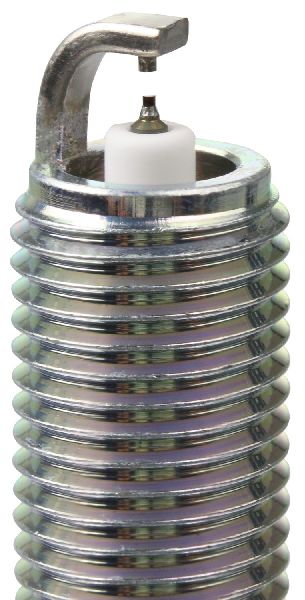
How to confirm: After removing the ignition coil, remove the spark plug from cylinder 1. Inspect it for wear (rounded electrode), oil fouling, or heavy carbon deposits. The electrode should be intact and the ceramic insulator should be clean. Compare it to a new plug.
Typical fix: Replace the spark plug. It is highly recommended to replace all six spark plugs at the same time to ensure even performance and because the rear three are labor-intensive to access.
Est. part cost: $10-$25 per plug - Clogged or Faulty Fuel Injector 🟡 Medium Probability GDI injectors operate under very high pressure and are located inside the combustion chamber. They can become clogged with carbon or fail electronically, leading to an improper fuel spray pattern or, in some cases, getting stuck open and dumping excess fuel. This can wash oil from the cylinder walls, accelerating wear.
How to confirm: This is more difficult for a DIYer. A professional can perform a fuel injector balance test using a bi-directional scan tool. A simpler, though less definitive, method is to listen to the injector with a mechanic's stethoscope; it should have a regular, rhythmic clicking sound. A stuck-open injector often results in a strong smell of raw fuel from the exhaust.
Typical fix: Replace the faulty fuel injector. Due to the labor involved, some mechanics recommend replacing all three injectors on the same bank (or all six) at once. This is a complex job requiring removal of the intake manifold and fuel rail.
Est. part cost: $70-$150 per injector - Intake Valve Carbon Buildup 🟡 Medium Probability As a GDI engine, fuel is injected directly into the cylinder, so it doesn't wash over the intake valves like in port-injected engines. Oil vapor from the PCV system bakes onto the hot valves, creating carbon deposits. Over time, this buildup can restrict airflow into the cylinder, causing misfires, especially at idle or during cold starts.
How to confirm: Requires visual inspection of the intake valves, which involves removing the upper intake manifold. This is typically diagnosed by a professional after ruling out ignition and fuel delivery issues. A borescope can be used to inspect the valves without full manifold removal.
Typical fix: The intake valves need to be physically cleaned, most effectively through media blasting (walnut shells are common). Chemical cleaning solutions exist but are often less effective for heavy buildup. This service is often recommended any time the intake manifold is removed for other repairs on higher-mileage GDI engines.
Est. part cost: $0 (if using manual cleaning tools) - $50 (for chemical cleaners). Professional walnut blasting service typically costs $400-$800.
Rare But Worth Checking
- Internal Engine Damage / Low Compression: While rare for most vehicles, NHTSA complaints show this is a notable issue for this platform. Codes P0301 and other misfires have been linked to loss of compression from piston ring failure or cylinder wall scoring, often preceded by excessive oil consumption. [NHTSA ODI #11685959, #11455353] If basic ignition and fuel fixes don't resolve the issue, a compression test and a cylinder leak-down test are critical next steps.
- Vacuum Leak: A leak in a vacuum hose or a failed intake manifold gasket can introduce unmetered air, leaning out the air/fuel mixture and causing a misfire. A leak specific to the cylinder 1 runner on the intake manifold could cause a solitary P0301. More often, this would be accompanied by other codes like P0300 (random misfire) or lean codes (P0171/P0174).
- Faulty PCV Valve: A stuck-open Positive Crankcase Ventilation (PCV) valve can act as a vacuum leak and also allows excessive oil vapor into the intake manifold, contributing to carbon buildup and potentially fouling spark plugs. It's an inexpensive part that is often replaced as preventative maintenance.
Diagnosis Steps
- Read the trouble codes with an OBD-II scanner. Note any other pending or active codes and freeze frame data.
- If the Check Engine Light is flashing, do not drive the vehicle to prevent catalytic converter damage.
- Start with the simplest and most common causes. Swap the ignition coil from cylinder 1 with another cylinder (e.g., cylinder 2 on the front bank, which is easier to access). Clear the codes and run the engine. If the code changes to P0302, you have confirmed a bad ignition coil.
- If the code remains P0301, inspect the spark plug in cylinder 1. Look for wear, damage, or fouling. Check for oil in the spark plug tube, which indicates a leaking valve cover gasket. Replace plugs if necessary.
- If the coil and plug are good, suspect the fuel injector. This is more complex and may require professional diagnosis with a scan tool that can perform an injector balance test.
- CRITICAL STEP: If ignition and fuel injector checks are inconclusive, perform a compression test and a cylinder leak-down test. This will check for mechanical engine problems like bad piston rings, cylinder walls, or valves. This step is crucial on this platform due to documented engine failures. [NHTSA ODI #11455353, #11685959]
- While the intake manifold is off for other service, inspect the intake valves for carbon buildup, a common issue on GDI engines.
Parts You'll Likely Need
- Ignition Coil
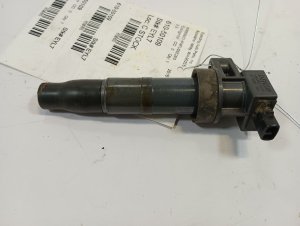
(OEM #27301-3L000)— This is one of the most common failure points for a single-cylinder misfire. The OEM part number for the 2016-2020 3.3L V6 is 27301-3L000.
Trusted brands: Denso, NGK, Delphi, Genuine Hyundai/Kia
OEM price range: $60-$90
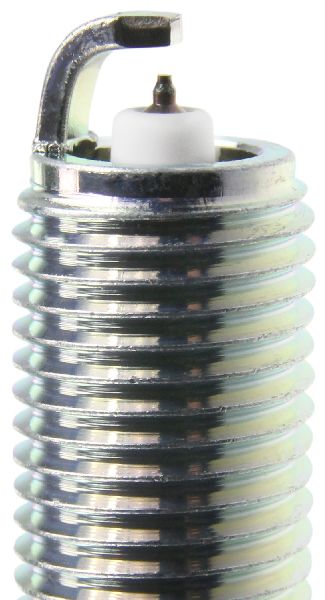
Aftermarket price range: $40-$70 - Spark Plug
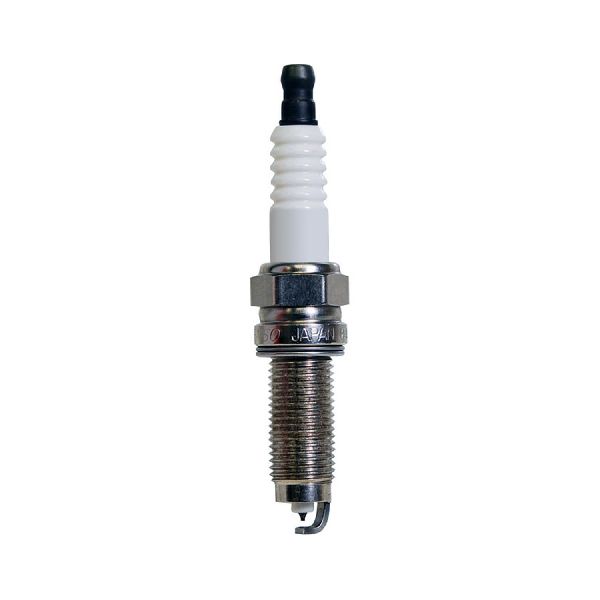
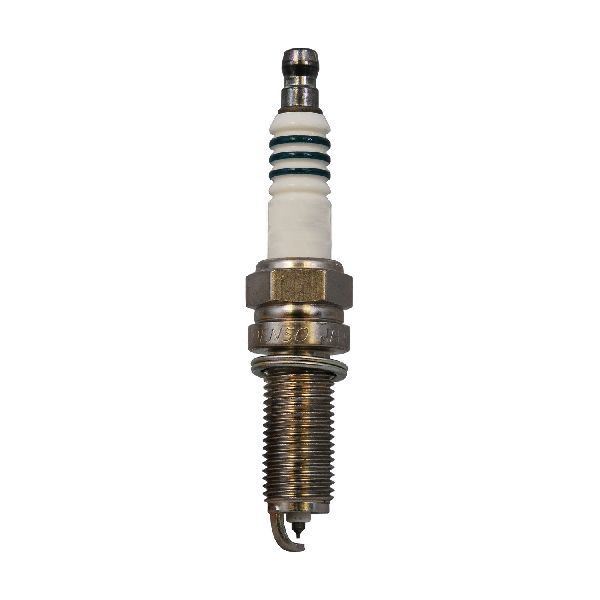
(OEM #18849-09085)— Spark plugs are a routine maintenance item and a frequent cause of misfires when worn. The OEM plugs are typically NGK Iridium.
Trusted brands: NGK, Denso
OEM price range: $15-$25
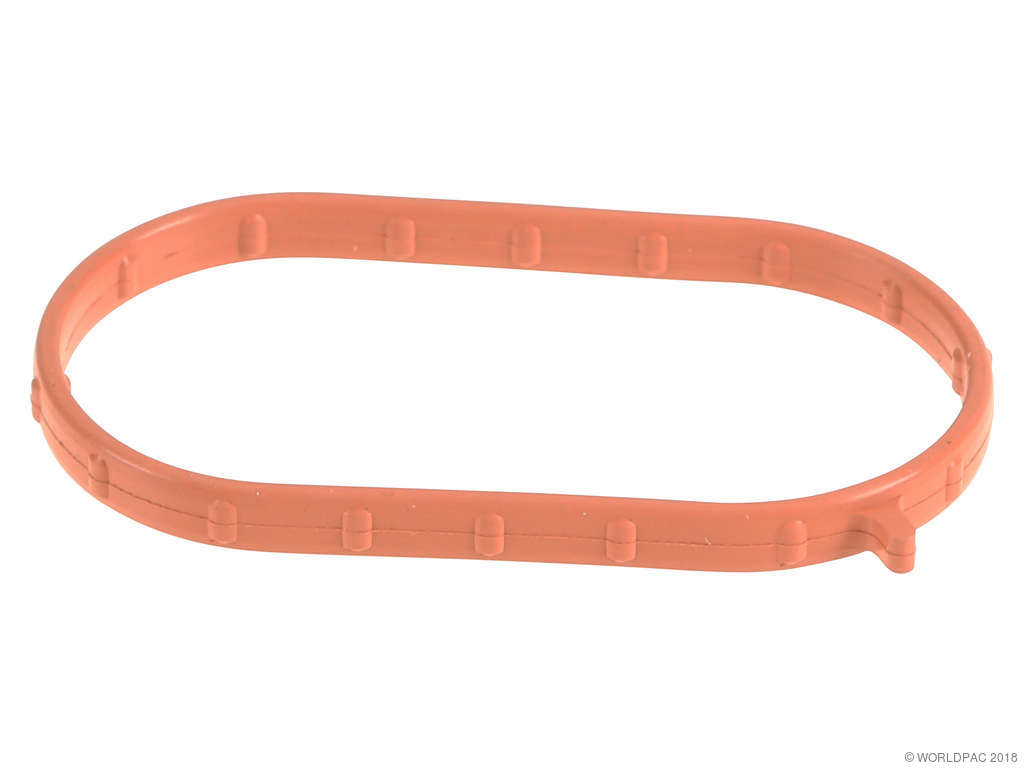
Aftermarket price range: $10-$20 - Upper and Lower Intake Manifold Gaskets
(OEM #Upper: 28411-3L000, Lower: 29215-3L000 (Verify with VIN))— These must be replaced when removing the intake manifold to access the rear bank of cylinders for spark plug or ignition coil service. Reusing old gaskets can cause vacuum leaks.
Trusted brands: Fel-Pro (e.g., MS 98024 for upper set), Mahle, Genuine Kia
OEM price range: $40-$60
Aftermarket price range: $20-$40
Related Codes That Often Appear With This One
- P0300 — If the underlying issue, like a vacuum leak or low fuel pressure, affects multiple cylinders, you may see a P0300 (Random Misfire) code alongside P0301.
- P0302, P0303, P0304, P0305, P0306 — If other cylinder-specific misfire codes are present, it points to a more widespread problem. For example, P0301, P0303, and P0305 together would indicate an issue with Bank 1.
- P0087 — This code indicates 'Fuel Rail/System Pressure - Too Low'. Some owners have reported this code along with multiple misfire codes, suggesting a failing high-pressure fuel pump (HPFP) or sensor could be the root cause. [NHTSA ODI #11513767, #11499800]
- P0172 — This code for 'System Too Rich (Bank 1)' can appear if a fuel injector on Bank 1 (cylinders 1, 3, 5) is stuck open, dumping too much fuel.
Platform-Specific Known Issues
- Engine Failure Risk: Multiple NHTSA complaints document that P0301 can be a precursor to catastrophic engine failure due to internal mechanical issues like piston ring damage, leading to a complete engine replacement. [NHTSA ODI #11685959, #11455353]
- Difficult Rear Cylinder Access: Cylinder 1 is on the rear bank, requiring the removal of the upper intake manifold to access the ignition coil and spark plug. This significantly increases the labor time and complexity compared to the front three cylinders.
- GDI Carbon Buildup: The Lambda II 3.3L GDI engine is known to suffer from carbon accumulation on intake valves, which can cause misfires and performance issues over time.
Mechanic-Grade Diagnostic Values
- High-Pressure Fuel Rail Pressure (GDI) — expected: Up to 200 bar (approx. 2900 PSI) under load.. Failure: A code P0088 (Fuel Rail/System Pressure Too High) may set if pressure exceeds 4000 PSI, potentially indicating a faulty high-pressure fuel pump (HPFP) or sensor. A code P0087 (Too Low) can also cause misfires. [NHTSA ODI #11513767, #11499800]
- Ignition Coil Primary/Secondary Resistance — expected: Specific OEM values are not readily published. The most effective test is swapping the coil with a known-good cylinder and seeing if the misfire code follows.. Failure: If the misfire code moves to the new cylinder (e.g., P0301 becomes P0303 after swapping coils 1 and 3), the coil is bad.
- Fuel Injector Resistance — expected: While a specific Ohm value is not published, all injectors should have very similar resistance readings. A significant deviation or an open circuit indicates a failed injector.. Failure: An injector reading that is much higher, lower, or shows an open loop (OL) compared to the other five injectors.
Scan Tool Commands That Help
- Kia GDS or advanced aftermarket (Autel, Snap-on): Power Balance Test — To identify which cylinder is not contributing power, confirming the location of the misfire. The scan tool momentarily cuts fuel to each cylinder and measures the corresponding drop in RPM. A cylinder with a misfire will show little to no RPM drop.
- Kia GDS or advanced aftermarket (Autel, Snap-on): Misfire Counter Data — To view the raw number of misfire events per cylinder in real-time. This is more sensitive than a stored DTC and can help confirm if a repair was successful or if the misfire is intermittent.
- Kia GDS or advanced aftermarket (Autel, Snap-on): Fuel Injector Balance Test — To command each injector to fire for a set period and measure the resulting pressure drop in the fuel rail. This helps identify a clogged or weak injector that isn't flowing enough fuel.
Wiring & Ground Locations
- Engine Control Module (ECM/PCM) Connector — Typically located in the engine bay, often near the battery or firewall.. If swapping parts doesn't work, a technician may need to test for continuity and voltage at the ECM pins for the cylinder 1 ignition coil and fuel injector to rule out a wiring harness or ECM driver issue. A wiring diagram specific to the vehicle's VIN is required for accurate pin identification.
- Main Powertrain Ground — There are multiple grounds. Key locations are from the engine block/transmission to the chassis and from the battery negative terminal to the chassis.. A poor or corroded main engine ground can cause a wide range of electrical issues, including weak spark and erratic sensor readings that can lead to misfires. A Kia TSB notes that a poor ground can cause single or multiple DTCs and may not be obvious at idle.
Real Owner Repair Stories
- Reddit user in r/kia (Kia (model not specified, but symptoms and fix are universal)) — P0301, hard start, rough idle, lack of power.
❌ Tried (didn't work) Initial diagnosis pointed to spark plug, injector, coil, or gasket leak.
✅ What actually fixed it Replacing all ignition coils resolved the P0301 code and all symptoms. The user noted that the wiring harness clips on the coils were difficult to detach without breaking.
Model Year Variations Within This Range
- 2019-2020: For the 2019 model year, the 3.3L V6 was paired with a new eight-speed automatic transmission, replacing the six-speed from 2016-2018 models. This does not directly affect the cause of P0301 but is a significant powertrain change within the generation.
- 2019-2020: The High-Pressure Fuel Pump (HPFP) on 2019-2020 Sorento 3.3L models is subject to a warranty extension (WTY034) to 15 years/180,000 miles due to a defect that can cause rough running, hesitation, and DTC P0088.
Diagnostic Flowchart
Other Known Issues on This Vehicle
Issues unrelated to this code that are worth knowing about as an owner of this generation:
- Excessive Oil Consumption 🔴 High — Commonly reported on both 2.4L and 3.3L engines, often starting after 60,000-80,000 miles. Some owners report burning over 1 quart per 1,000 miles. (Ref: No official recall, but dealers perform oil consumption tests to determine warranty eligibility for engine repair/replacement.)
- Crankshaft Failure (2017 models) 🔴 High — Specific to a batch of 2017 Sorentos with the 3.3L V6 where the crankshaft was not properly heat-treated, leading to potential fracture. (Ref: NHTSA Recall 17V-224)
- Head Gasket / Head Bolt Failure 🔴 High — Affects some 3.3L V6 engines, causing coolant loss, overheating, and potential engine block damage. Symptoms include a sweet smell from the exhaust or vents. (Ref: Kia issued a warranty extension (WTY039) for some affected models/years to 15 years/180,000 miles for this specific failure.)
- High-Pressure Fuel Pipe Leak 🔴 High — A leak could develop at the connection to the high-pressure fuel pump, creating a fire risk. This was particularly noted on vehicles that had prior engine replacement work done. (Ref: NHTSA Recall 18V-363)
- Faulty Accelerator Pedal Assembly (2016 models) 🟠 Medium — An improperly soldered component could cause a loss of acceleration, forcing the vehicle into limp mode. (Ref: NHTSA Recall SC115 (15V-031))
Used vs. New Parts: Buying Guide for This Vehicle
When a used part is the smart pick: For this repair, used parts are generally not recommended due to the high-labor nature of the job. However, a low-mileage used upper intake manifold could be a cost-effective replacement if the original is cracked or damaged during service.
Donor-vehicle mileage cap: roughly under 80000 miles for the part to have meaningful remaining life.
What to inspect on the donor part:
- For an intake manifold, check for cracks, warping, and intact mounting points.
- Ensure all threaded inserts are clean and not stripped.
- Verify the donor vehicle was not in a front-end collision or engine fire.
OEM-only on this vehicle (don't cheap out):
- High-Pressure Fuel Pump (HPFP)
- High-Pressure Fuel Lines (often one-time use)
- Fuel Injectors (due to GDI pressures and risk of leaks)
- Engine Control Module (ECM/PCM)
Aftermarket brands forum-validated for this vehicle:
- Denso or NGK for spark plugs
- Bosch is often a reliable source for fuel and ignition components
Brands owners have reported issues with on this vehicle:
- Unknown, no-name brands for ignition coils and fuel injectors from online marketplaces are a significant risk. Failure of these components can lead to engine damage or require repeating the labor-intensive repair.
Real Owner Stories
Aggregated from forums and TSBs cited above. Mileages and costs reflect what owners reported in those sources.
2017 Kia Sorento V6
Symptoms: Multiple misfire codes on Bank 1 (P0301, P0303, P0305).
What fixed it: Replacement of the rear spark plugs and coils, which required removing the intake manifold and replacing the associated gaskets.
Source hint: Kia-Forums.com - 2017 Sorento V6 Misfire P0301, P0303, P0305
2018 Hyundai Santa Fe 3.3L V6
Symptoms: Misfire caused by a stuck-open fuel injector that was cleaning the intake valve with excess fuel.
What fixed it: Replacement of the failed GDI fuel injectors, involving intake manifold removal.
Source hint: YouTube - 3.3L Hyundai/Kia GDI Injector Misfire: Full Diagnosis & STEP-BY-STEP Repair
2016-2020 Kia Sorento 3.3L GDI V6
Symptoms: P0301 code appearing as a precursor to catastrophic internal mechanical failure.
What fixed it: Complete engine replacement due to internal mechanical issues like piston ring damage.
Source hint: NHTSA ODI #11685959, #11455353
Related OBD-II Codes
Frequently Asked Questions
Why is the labor for replacing a cylinder 1 spark plug so much higher on my 3.3L Sorento than on other cars?
Can I just swap the ignition coil to test if it's bad on my 2016-2020 Sorento?
Is it true that a P0301 code could mean I need a whole new engine?
My Sorento has a flashing Check Engine Light; is it safe to drive to the mechanic?
Why does my GDI engine have carbon buildup on the valves but my older Kia didn't?
Should I replace all the spark plugs if only cylinder 1 is misfiring?
Helpful Videos
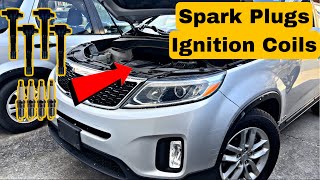
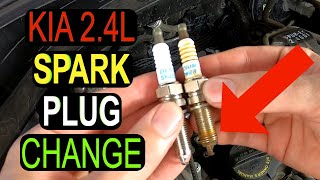
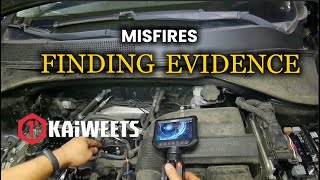
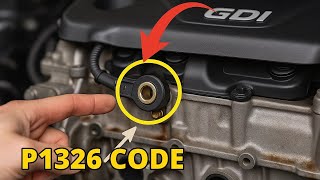
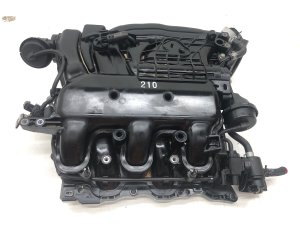
Used OEM Parts in Stock



New Aftermarket Parts Available


The information in this article is provided for general reference and educational purposes only. Vehicle specifications, procedures, and part compatibility can vary by production date, trim level, and region. Always consult your vehicle's factory service manual and verify part numbers before purchasing or performing repairs. Safety-critical components such as airbags, seat belts, and braking systems should be installed by a qualified professional.
- Kia Sorento:
- 🎬 Helpful Videos
- 🛍️ Shop This Part
- What's Unique About the 2016-2020 Kia Sorento
- Symptoms You May Notice
- Most Likely Causes
- Rare But Worth Checking
- Diagnosis Steps
- Parts You'll Likely Need
- Related Codes That Often Appear With This One
- Platform-Specific Known Issues
- Mechanic-Grade Diagnostic Values
- Scan Tool Commands That Help
- Wiring & Ground Locations
- Real Owner Repair Stories
- Model Year Variations Within This Range
- Diagnostic Flowchart
- Other Known Issues on This Vehicle
- Used vs. New Parts: Buying Guide for This Vehicle
- Real Owner Stories
- 2017 Kia Sorento V6
- 2018 Hyundai Santa Fe 3.3L V6
- 2016-2020 Kia Sorento 3.3L GDI V6
- Related OBD-II Codes
- Frequently Asked Questions
- 🎟️ Get 5% Off