

P0301 on 2011-2019 Ford Explorer 3.5L V6: Cylinder 1 Misfire Causes and Fixes
A P0301 code on a 2011-2019 Ford Explorer means cylinder 1 is misfiring. The most common cause is a failed ignition coil or a worn-out spark plug. Replacing a single ignition coil costs around $30-$75 for the part and is a straightforward DIY fix for the front cylinders, but more complex for the rear.
- P0301 means a misfire in cylinder 1, which is on the rear bank (near the firewall) on the passenger side.
- The most likely culprits are a bad ignition coil or a worn-out spark plug.
- Fixing a P0301 requires removing the upper intake manifold, making it a more complex job than a misfire on the front cylinders.
- Due to the labor involved, it is highly recommended to replace all three rear ignition coils and all six spark plugs at the same time.
- Do not drive with a flashing check engine light, as this indicates a severe misfire that can quickly destroy your catalytic converter.
What's Unique About the 2011-2019 Ford Explorer
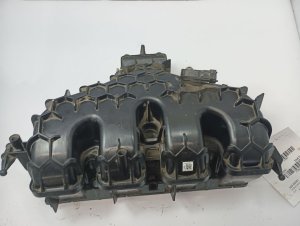
The 3.5L Cyclone V6 is a reliable engine, but like many modern V6 engines, accessing the rear bank of cylinders (1, 2, and 3) is complex. This requires removing the upper intake manifold to reach the ignition coils and spark plugs. While a P0304, P0305, or P0306 on the front bank is an easy fix, a P0301, P0302, or P0303 becomes a more involved job that can intimidate some DIYers. This job involves disconnecting the throttle body, various sensors, and vacuum lines before unbolting the manifold itself. It is critical to replace the intake gaskets during this procedure to prevent future vacuum leaks.
Symptoms You May Notice
- Rough or shaky idle
- Hesitation or stumbling during acceleration
- Noticeable loss of engine power
- Flashing or solid Check Engine Light
- Reduced fuel economy
- Engine vibration
- Replacing only the spark plug when the ignition coil is the actual cause.
- Replacing a fuel injector before confirming the ignition system is working correctly.
- Assuming a rough idle is a misfire when it could be a separate issue like a dirty throttle body or a vacuum leak affecting all cylinders.
Most Likely Causes
- Faulty Ignition Coil 🔴 High Probability Coil-on-plug systems are a common failure point on many modern vehicles as they age. Heat cycles and vibration eventually lead to internal failure. This is the most cited cause in owner forums for a single-cylinder misfire.
How to confirm: The easiest way to confirm a bad coil is to swap the ignition coil from cylinder 1 with another cylinder (e.g., cylinder 4 on the front bank). Clear the codes and drive the vehicle. If the code changes to P0304, the coil is faulty.
Typical fix: Replace the faulty ignition coil. Since accessing the rear bank is labor-intensive, many owners and technicians choose to replace all three rear coils and all six spark plugs at the same time to avoid future labor costs.
Est. part cost: $30 - $75 per coil - Worn or Fouled Spark Plug 🔴 High Probability Spark plugs are a regular maintenance item. Plugs that have exceeded their service life (typically around 100,000 miles for platinum/iridium plugs) can have a worn electrode, leading to a weak spark and misfires.
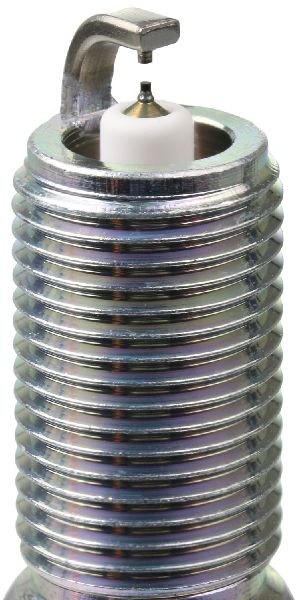
How to confirm: After removing the ignition coil, remove the spark plug from cylinder 1. Inspect it for wear, carbon fouling, oil, or damage to the ceramic insulator. A significantly wide gap is a clear sign of wear. Sometimes a new plug can be faulty out of the box.
Typical fix: Replace the spark plug. It is highly recommended to replace all six spark plugs at once to ensure even performance and avoid future misfires, especially since the intake manifold must be removed.
Est. part cost: $8 - $20 per plug - Faulty Fuel Injector 🟡 Medium Probability Fuel injectors can become clogged with deposits over time, preventing them from delivering the correct amount of fuel. This becomes more likely on higher-mileage vehicles.
How to confirm: After ruling out the spark plug and ignition coil, the fuel injector is the next logical component. A professional can perform a fuel injector balance test. A DIY method involves listening to the injector with a mechanic's stethoscope to ensure it's clicking, or swapping it with another cylinder's injector (a more involved job). Some owners have success using a quality fuel system cleaner like Techron Concentrate Plus before attempting replacement.
Typical fix: Replace the faulty fuel injector. This also requires removing the intake manifold and fuel rail.
Est. part cost: $50 - $150 per injector - Leaking Intake Manifold Gasket ⚪ Low Probability The gaskets that seal the upper and lower intake manifolds can degrade over time, causing a vacuum leak that leans out the air/fuel mixture for a specific cylinder or bank. Since the manifold must be removed for a P0301 fix, these gaskets are often replaced preventatively.
How to confirm: With the engine running, spray a small amount of brake cleaner or a propane torch (unlit) around the intake manifold sealing surfaces. If the engine RPM changes, a leak is present. A smoke test is a more definitive method.
Typical fix: Replace the intake manifold gaskets. Since the manifold must be removed to access cylinder 1's coil and plug, it's wise to replace these gaskets during that job. They are not designed for reuse.
Est. part cost: $20 - $60 for a gasket set
Rare But Worth Checking
- Faulty Purge Valve: A stuck-open canister purge valve can create a vacuum leak that affects the air-fuel mixture, sometimes causing random or specific cylinder misfires. This issue often appears with an EVAP code like P0456. A faulty valve can often be diagnosed by blowing through it; if air passes, it's bad.
- Low Engine Compression: Internal engine problems like a burnt valve, worn piston rings, or a damaged cylinder head can cause a loss of compression, leading to a persistent misfire. A compression test is needed to diagnose this. This should be suspected if new plugs, coils, and injectors do not solve the P0301 code.
- Faulty Powertrain Control Module (PCM): In very rare cases, the driver circuit within the PCM that controls the ignition coil or fuel injector can fail. This should only be considered after all other possibilities have been exhausted.
Diagnosis Steps
- Read the trouble codes with an OBD-II scanner to confirm P0301 and check for any other codes.
- Determine the location of cylinder 1. On the 3.5L V6 Explorer, it is the cylinder on the rear bank (near the firewall) closest to the passenger side.
- To access cylinder 1, you must remove the upper intake manifold. This involves disconnecting the air intake snorkel, throttle body connections, various vacuum lines, and electrical connectors before unbolting the manifold itself.
- Once the manifold is off, swap the ignition coil from cylinder 1 with the coil from cylinder 4 (front bank, passenger side).
- Pro Tip: Since the intake manifold is removed, this is the perfect time to replace the upper and lower intake manifold gaskets. They are single-use and a common source of future vacuum leaks.
- Reassemble the intake manifold enough to run the engine safely. Clear the codes and run the engine until the check engine light returns.
- If the code is now P0304, the ignition coil is bad and needs replacement.
- If the code remains P0301, the issue is likely the spark plug or fuel injector. Disassemble again and replace the spark plug in cylinder 1. It is highly recommended to replace all six plugs at this time.
- If the misfire persists on cylinder 1 after a new coil and plug, the next step is to inspect the fuel injector and its wiring. Consider running a bottle of high-quality fuel injector cleaner through the system first.
- If ignition and fuel systems are confirmed to be working, check for vacuum leaks using a smoke machine.
- As a final step for persistent issues, perform a compression test on cylinder 1 to rule out mechanical engine problems.
Parts You'll Likely Need
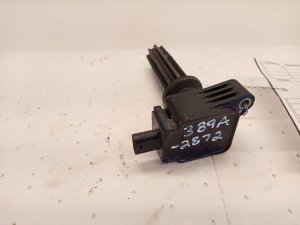
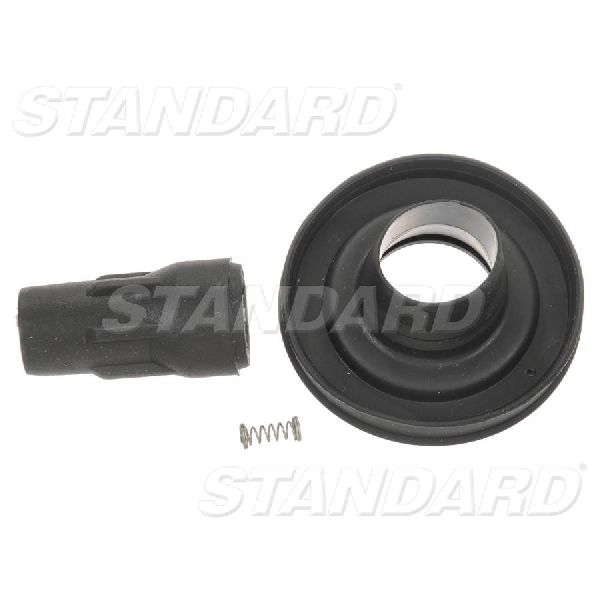
- Ignition Coil
(OEM #DG520)— This is the most frequent cause of a single-cylinder misfire on the 3.5L V6 engine.
Trusted brands: Motorcraft, NGK, Denso, Delphi
OEM price range: $60-$90
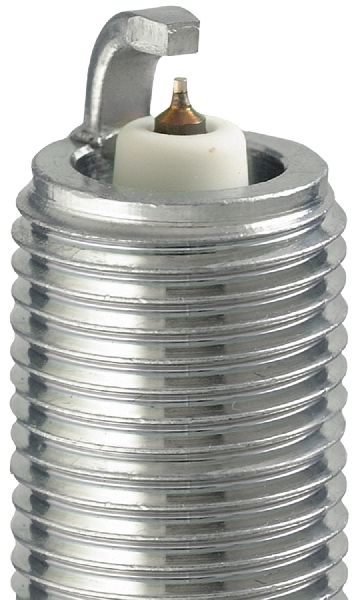
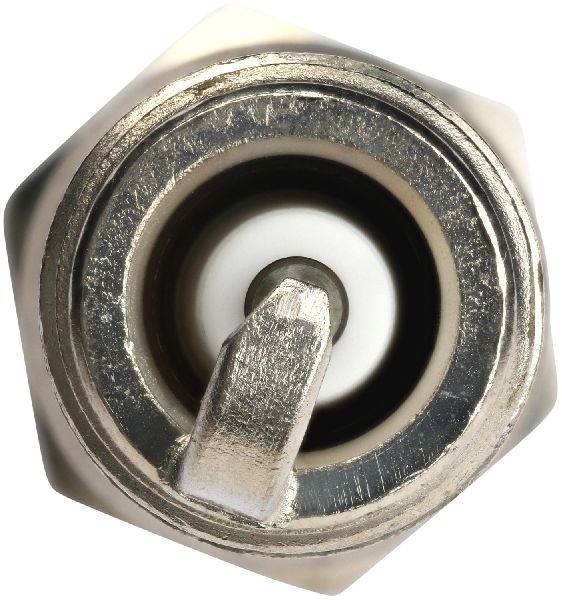
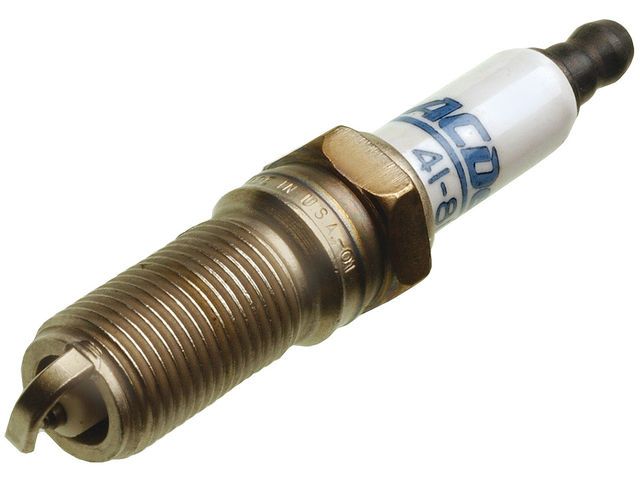
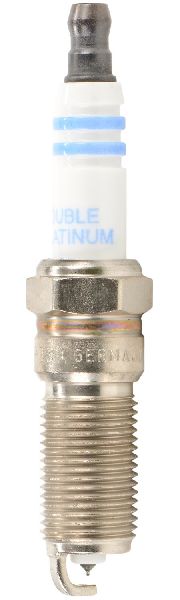
Aftermarket price range: $30-$75 - Spark Plug
(OEM #SP-520 / CYFS-12Y-T / SP-520-X)— Spark plugs are a maintenance item and a common cause of misfires. They should be replaced as a set, especially when performing the labor to access the rear bank.
Trusted brands: Motorcraft, NGK, Autolite
OEM price range: $12-$20
Aftermarket price range: $8-$15 - Upper Intake Manifold Gasket Set
(OEM #AA5Z-9439-BA (Lower), AT4Z-9H486-A (Upper Plenum))— These gaskets must be replaced whenever the intake manifold is removed to prevent vacuum leaks. They are not designed to be reused.
Trusted brands: Motorcraft, Fel-Pro, Mahle, Victor Reinz
OEM price range: $40-$70
Aftermarket price range: $20-$50
Related Codes That Often Appear With This One
- P0300 — This is a 'Random Misfire' code. It can appear alongside P0301 if the misfire is intermittent or beginning to affect other cylinders.
- P0302, P0303 — If the cause is a vacuum leak from the intake manifold gasket, it may affect all cylinders on that bank, leading to multiple misfire codes for the rear cylinders.
- P0456 — A 'Small EVAP Leak' code can sometimes be caused by a faulty purge valve, which can also contribute to misfire conditions. One owner reported P0301, P0304, P0306, and P0456 all being caused by a bad purge valve.
Mechanic-Grade Diagnostic Values
- Fuel Pressure (Key On, Engine Off) — expected: 400 kPa (58 psi). Failure: Pressure is significantly lower, or bleeds off rapidly after the pump primes. Rapid bleed-down can indicate a faulty fuel pressure regulator or check valve.
- Fuel Pressure (Engine Running at Idle) — expected: 400 kPa (58 psi). Failure: Pressure is significantly below specification or fluctuates wildly.
- Fuel Injector Resistance — expected: Approximately 12-15 Ohms (check against other injectors on the engine). Failure: A reading that is an open circuit (infinite resistance) or has significantly high resistance (e.g., over 20 Ohms) compared to other injectors indicates a faulty injector.
Hidden / Shadow Codes Worth Checking
- Mode $06, Test ID $A2-$AC: Misfire Monitor data for each cylinder. The PCM tracks the number of misfire events per cylinder during specific drive cycles, even if the count is not high enough to set a P030x code and turn on the Check Engine Light. (see via Use a capable scan tool or software like FORScan to access Mode $06 data. A non-zero value for Cylinder 1 (Test ID $A2) indicates it has experienced misfires, helping to confirm an intermittent issue.)
Scan Tool Commands That Help
- Ford IDS, FORScan, high-end bidirectional scanners: Power Balance Test (or Cylinder Contribution Test) — This is a primary diagnostic step for an active misfire. The tool deactivates each cylinder one by one and graphs the resulting drop in engine RPM. If disabling cylinder 1 causes little or no change in RPM compared to the other cylinders, it confirms cylinder 1 is not contributing power.
Wiring & Ground Locations
- PCM Connector C175E, Pin 26 — At the Powertrain Control Module (PCM), which is typically located in the engine bay near the firewall or battery.. This is the control circuit pin for the cylinder 1 ignition coil. The wire is typically Dark Blue/Light Green. Testing for a signal here can help determine if the PCM is commanding the coil to fire, isolating the problem to the PCM, wiring, or the coil itself.
- Engine Harness Ground Strap — On the front side of the engine, secured by an 8mm bolt.. A loose or corroded main engine ground can cause a weak spark or erratic behavior from various sensors and actuators, including ignition coils. Ensuring this ground is clean and tight is a crucial step in diagnosing electrical issues like a misfire.
Real Owner Repair Stories
- Ford Edge Forum user (2011 Ford Edge 3.5L (same engine family), 113,000 miles) — Hesitation over 4,000 RPM, flashing check engine light, rough running under load.
❌ Tried (didn't work) Replaced all 6 spark plugs with Motorcraft parts, Replaced all 6 ignition coils, Replaced cylinder 1 fuel injector, Performed a compression test (all cylinders were good), Swapped the new coil/plug from cylinder 1 to cylinder 4 (code remained P0301)
✅ What actually fixed it The issue persisted after replacing all common components. A Ford Master Technician advised the Powertrain Control Module (PCM) was the next likely culprit. The owner ordered a refurbished PCM, which was the presumed final fix. - Ford Boss Me YouTube Channel (2018 Ford Explorer 3.7L (Police Interceptor, similar engine family)) — Sudden sluggish performance, misfiring, and Check Engine Light.
❌ Tried (didn't work) Initial diagnosis pointed towards a standard ignition or fuel misfire on cylinders 1, 4, and 6.
✅ What actually fixed it The vehicle had codes P0300, P0301, P0304, P0306, and P0456 (EVAP Leak). The technician identified that the combination of multiple misfires and the EVAP code pointed to a single component. The final fix was replacing the EVAP canister purge valve, which resolved all codes.
"I Checked Everything" — The Actual Cause
- A persistent misfire accompanied by an EVAP code (like P0456) may not be caused by a vacuum leak that a smoke test would find. A mechanically stuck-open EVAP purge valve can introduce unmetered air into the intake manifold, leaning out the mixture and causing misfires. The valve itself is the leak, but it's an internal, functional failure rather than a cracked hose.
When the Usual Fixes Don't Work
- While the most common causes are ignition coils and spark plugs, there are documented cases where a P0301 (sometimes with other misfire codes) was ultimately caused by a faulty EVAP purge valve, especially if an EVAP code like P0456 is also present. In another rare case, after all ignition and fuel components for cylinder 1 were replaced without success, the root cause was determined to be a failed ignition driver within the PCM itself.
OEM Part Supersession History
DG520 (Motorcraft)→7T4Z-12029-F (Ford)— Part number consolidation and potential minor revisions over the vehicle's production run.
Heads up: These part numbers are generally interchangeable for the specified application. Always verify fitment with VIN.BR3Z-9F593-B (Ford)→0280158191 (Bosch cross-reference)— Original equipment manufacturer part number cross-reference.
Heads up: This fuel injector is used across a wide range of Ford 3.5L and 3.7L Cyclone engines. Ensure the part is specified for your exact model year.
Model Year Variations Within This Range
- 2011-2019: The core 3.5L NA V6 engine and its ignition/fuel systems remained fundamentally consistent throughout the 5th generation. A major vehicle refresh occurred in 2016, but it did not significantly alter the diagnostic approach for a P0301 on this specific powertrain.
Diagnostic Flowchart
Other Known Issues on This Vehicle
Issues unrelated to this code that are worth knowing about as an owner of this generation:
- Internal Water Pump Failure 🔴 High — Common around 100,000-140,000 miles. Failure can cause coolant to mix with engine oil, leading to catastrophic engine damage.
- Power Steering (EPAS) Failure 🔴 High — Affects early-generation models (2011-2013) most. Can result in a sudden loss of power steering assist. (Ref: Recall 14S06)
- Timing Chain Stretch (Primarily EcoBoost) 🟠 Medium — More common on the 3.5L EcoBoost variant, but can occur on the naturally aspirated engine. Often presents as a startup rattle or code P0016. (Ref: TSB 15-0131 (for F-150 EcoBoost, but relevant))
- Exhaust Odor In Cabin 🟡 Low — Some owners report smelling exhaust fumes inside the cabin, which may be due to unsealed gaps in the rear of the vehicle. (Ref: TSB 21-2338 (addresses this issue))
- Power Transfer Unit (PTU) Failure 🟠 Medium — The PTU fluid can overheat and leak, leading to failure, often before 100,000 miles. Ford claimed it was a 'lifetime' fluid, but regular changes are recommended by owners.
- Throttle Body Failure 🟠 Medium — Can cause the vehicle to enter 'limp mode' with sudden power loss, often triggering codes P2111 and P2112. (Ref: Ford offered an extended warranty for this part on some models.)
Used vs. New Parts: Buying Guide for This Vehicle
When a used part is the smart pick: For this repair, using used parts is generally not recommended for the primary failure items (coils, plugs, injectors, gaskets). However, a large, non-wear component like a used intake manifold from a low-mileage donor could be a cost-effective choice if the original was damaged during repair.
Donor-vehicle mileage cap: roughly under 60000 miles for the part to have meaningful remaining life.
What to inspect on the donor part:
- For an ignition coil, inspect the plastic housing for cracks or heat damage and ensure connector pins are clean and straight.
- For a fuel injector, check that the nozzle (pintle) and filter basket are free of visible debris or rust.
- Check the donor vehicle's VIN to ensure it did not have open recalls related to the part you are purchasing.
OEM-only on this vehicle (don't cheap out):
- Powertrain Control Module (PCM) — Aftermarket or improperly programmed used units can cause significant issues. Stick with OEM or a highly reputable remanufacturer that programs to your VIN.
- Intake Manifold Gaskets — These are single-use parts and should always be purchased new to ensure a proper seal.
Aftermarket brands forum-validated for this vehicle:
- Ignition Coils: Motorcraft, NGK, Denso, Delphi
- Spark Plugs: Motorcraft, NGK, Autolite
- Gaskets: Fel-Pro, Mahle, Victor Reinz
Brands owners have reported issues with on this vehicle:
- Unnamed, 'white-box' ignition coils and fuel injectors from online marketplaces. These frequently have high failure rates and may not meet OEM specifications, causing persistent performance issues.
Real Owner Stories
Aggregated from forums and TSBs cited above. Mileages and costs reflect what owners reported in those sources.
Ford Explorer 3.5L V6
Symptoms: Owner troubleshooted a P0301 code on cylinder 1, progressing through diagnostic steps for plugs and wires.
What fixed it: Troubleshooting ignition components (plugs/wires).
Source hint: https://www.ford-trucks.com/forums/321873-code-p301-on-cylinder-1-please-help.html
Related OBD-II Codes
Frequently Asked Questions
Where is cylinder 1 located on my 2011-2019 Ford Explorer 3.5L V6?
Why is the labor so intensive for a P0301 code on this specific engine?
Should I replace the intake manifold gaskets when fixing a P0301 misfire?
Is there a TSB for timing chain issues that might relate to engine codes on my Explorer?
Can I just swap parts to test if my ignition coil is bad?
Is there a recall for power steering issues on early 2011-2013 Explorers?
Helpful Videos
Used OEM Parts in Stock




New Aftermarket Parts Available

The information in this article is provided for general reference and educational purposes only. Vehicle specifications, procedures, and part compatibility can vary by production date, trim level, and region. Always consult your vehicle's factory service manual and verify part numbers before purchasing or performing repairs. Safety-critical components such as airbags, seat belts, and braking systems should be installed by a qualified professional.
- Ford Explorer:
- 🎬 Helpful Videos
- 🛍️ Shop This Part
- What's Unique About the 2011-2019 Ford Explorer
- Symptoms You May Notice
- Most Likely Causes
- Rare But Worth Checking
- Diagnosis Steps
- Parts You'll Likely Need
- Related Codes That Often Appear With This One
- Mechanic-Grade Diagnostic Values
- Hidden / Shadow Codes Worth Checking
- Scan Tool Commands That Help
- Wiring & Ground Locations
- Real Owner Repair Stories
- "I Checked Everything" — The Actual Cause
- When the Usual Fixes Don't Work
- OEM Part Supersession History
- Model Year Variations Within This Range
- Diagnostic Flowchart
- Other Known Issues on This Vehicle
- Used vs. New Parts: Buying Guide for This Vehicle
- Real Owner Stories
- Ford Explorer 3.5L V6
- Related OBD-II Codes
- Frequently Asked Questions
- 🎟️ Get 5% Off