

P0301 on 2011-2017 Chrysler 200 3.6L: Cylinder 1 Misfire Causes and Fixes
P0301 indicates a misfire in cylinder 1. On the 3.6L Pentastar, this is most often caused by a bad ignition coil or spark plug. However, on 2011-2013 models, it can be a sign of a more serious cylinder head failure, and on all years, a ticking noise with the misfire may point to rocker arm/lifter issues.
- P0301 on a Chrysler 200 3.6L is a cylinder 1 misfire, most commonly caused by a bad ignition coil or spark plug.
- A simple diagnostic step is to swap the coil and then the spark plug from cylinder 1 to another cylinder to see if the misfire code follows.
- Be alert for a rhythmic ticking sound. On this engine, it's a strong indicator of a failing rocker arm, which is a more serious repair that can cause a P0301 code.
- If you own a 2011-2013 model, be aware of the potential for a factory cylinder head defect, which was covered by an extended warranty.
- Do not ignore a flashing check engine light, as it signals a severe misfire that can quickly destroy your expensive catalytic converter.
What's Unique About the 2011-2017 Chrysler 200
While P0301 is a generic misfire code, its diagnosis on the 3.6L Pentastar V6 requires special attention. Early models (2011-2013) were known to have a left-bank cylinder head defect that could cause misfires, particularly in cylinders 2, 4, and 6. This issue was covered by an extended warranty (10 years/150,000 miles, code X56) and detailed in TSB 09-002-14. Additionally, the entire Pentastar family is prone to rocker arm and lifter failures, which often present as a ticking noise followed by a misfire code like P0301.
Generation note: This range covers two generations of the Chrysler 200: the first (JS) from 2011-2014 and the second (UF) from 2015-2017. The most significant difference is the known left cylinder head issue on the 3.6L Pentastar engine in models built on or before July 25, 2012, which was addressed with a revised part. This was covered by Chrysler's extended warranty X56. Owners of these earlier models should be particularly aware of this potential cause, even though P0301 is for the right bank. The second generation is also known for significant issues with its 9-speed automatic transmission. For the 2016 model year, the 3.6L Pentastar engine was significantly updated with a two-stage variable valve lift (VVL) system, new fuel injectors, new ignition coils, and a higher compression ratio of 11.3:1.
Symptoms You May Notice
- Rough or shaky engine idle
- Hesitation or stumbling during acceleration
- Noticeable loss of engine power
- Flashing or solid Check Engine Light
- Smell of unburned fuel from the exhaust
- A distinct ticking or tapping sound from the engine, often called the 'Pentastar Tick'
- Replacing only the spark plug when the ignition coil is the actual point of failure.
- Replacing fuel injectors before confirming the ignition system is working correctly.
- Assuming a simple tune-up will fix the issue on an early model (2011-2013) when the underlying cause could be the cylinder head or rocker arms.
- Mistaking a rocker arm tick for a simple lifter noise without inspecting the camshaft for damage.
Most Likely Causes
- Faulty Ignition Coil 🔴 High Probability
How to confirm: The easiest way to confirm a bad coil is to swap the ignition coil from cylinder 1 with another cylinder on the same bank (e.g., cylinder 3). Cylinder 1 is the front-most cylinder on the passenger (right) side of the engine; the right bank cylinders are 1-3-5 from front to back. Clear the codes and drive the car. If the code changes to P0303, the coil is the culprit.
Typical fix: Replace the faulty ignition coil. It is often recommended to replace the spark plug at the same time.
Est. part cost: $30-$70 - Worn or Fouled Spark Plug 🔴 High Probability Oil leaking into the spark plug tube from a failed valve cover gasket can also cause the plug and coil to fail.
How to confirm: Remove the spark plug from cylinder 1 and inspect it for wear, carbon buildup, or oil fouling. A worn electrode or cracked insulator will cause a weak or inconsistent spark. Compare it to a plug from another cylinder.
Typical fix: Replace the spark plug. It is best practice to replace all six spark plugs at the same time if they are near the end of their service life (typically 100,000 miles for iridium plugs).
Est. part cost: $10-$25 per plug - Failed Rocker Arm / Lifter 🟡 Medium Probability The 3.6L Pentastar engine is known for issues with rocker arm bearings wearing out, causing the arm to become loose and score the camshaft lobe. This often creates a distinct 'Pentastar Tick' before leading to a misfire.
How to confirm: Listen for a loud, rhythmic ticking sound from the top of the engine, which may be more pronounced on one side. A mechanic will need to remove the valve cover to visually inspect the rocker arms and camshaft lobes for wear, scoring, or excessive play.
Typical fix: Requires replacement of the failed rocker arms and any associated damaged lifters or camshafts. This is a labor-intensive job. The updated Mopar rocker arm part number is 5184296AH.
Est. part cost: $100-$500 for parts, depending on camshaft damage - Faulty Fuel Injector ⚪ Low Probability
How to confirm: After ruling out spark issues, the fuel injector is the next suspect. A good injector should have a resistance of approximately 12-13 Ohms. A failing injector may read significantly higher, such as 24 Ohms or more. You can test the injector's resistance with a multimeter or use a 'noid light' to confirm it's receiving a pulse from the PCM.
Typical fix: Replace the faulty fuel injector in cylinder 1.
Est. part cost: $50-$120
Rare But Worth Checking
- Left Cylinder Head Failure (2011-2013 Models): This was a well-documented issue on early Pentastar engines where excessive wear on valve guides and seats on the left cylinder head (cylinders 2, 4, 6) would cause misfires (P0302, P0304, P0306) and a ticking noise. Chrysler issued TSB 09-002-14 and extended the warranty to 10 years/150,000 miles (code X56). While P0301 is on the right bank, any major misfire on these years should prompt an investigation into overall engine health.
- Low Engine Compression: If spark and fuel systems are confirmed to be working, a compression test is necessary. A result of 0 PSI, as noted by one owner on 2CarPros after replacing plugs, coils, and injectors, points to a serious mechanical problem like a burnt valve, damaged piston, or a blown head gasket. A compression test on a healthy 3.6L Pentastar should show around 150 PSI.
Diagnosis Steps
- Read the code with an OBD-II scanner and note any other codes present, like P0300 or P219A.
- Listen for a distinct ticking noise from the engine, which strongly indicates a rocker arm/camshaft issue.
- Swap the ignition coil from cylinder 1 (front, passenger side) with cylinder 3 (middle, passenger side).
- Clear the codes and test drive. If the code returns as P0303, the ignition coil is bad. Replace it.
- If the code remains P0301, swap the spark plug from cylinder 1 with cylinder 3. Clear codes and test drive. If the code changes to P0303, the spark plug was the issue. Replace all plugs if they are old.
- If the misfire is still on cylinder 1, inspect the wiring and connector for the ignition coil and fuel injector for any damage or corrosion.
- Test the fuel injector on cylinder 1. Check its resistance with a multimeter; a good injector should read around 12-13 Ohms. A significantly higher reading indicates a failure.
- If all ignition and fuel components check out, perform an engine compression test. A healthy cylinder should have around 150 PSI. A significant loss of compression in cylinder 1 indicates a mechanical engine problem.
- If compression is low, a cylinder leak-down test can further pinpoint the source of the compression loss (e.g., valves, piston rings, head gasket). A technician may also use a borescope to visually inspect for coolant.
- If a ticking noise is present and other tests are inconclusive, remove the valve cover for the right bank (cylinders 1-3-5) and inspect the rocker arms and camshaft lobes for wear and damage.
Parts You'll Likely Need
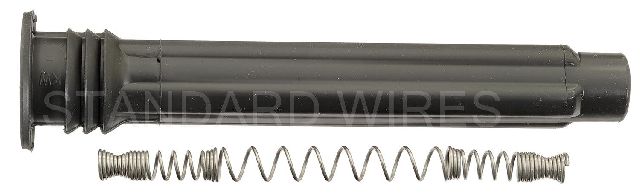
- Ignition Coil
(OEM #5149168AJ)— This is one of the most common failure points for a single-cylinder misfire. The original part (5149168AH) has been superseded by 5149168AI and then 5149168AJ.
Trusted brands: Mopar, NGK, Delphi
OEM price range: $50-$80
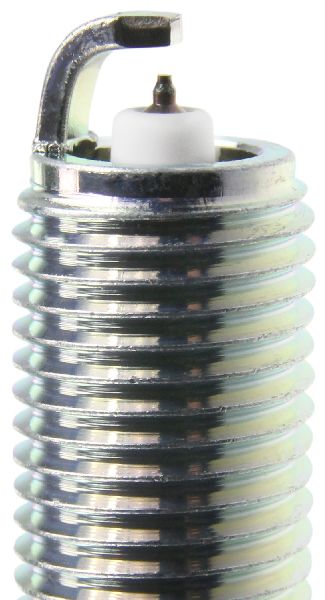
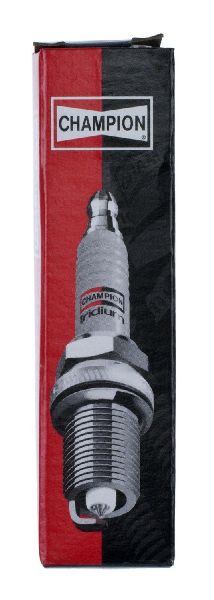
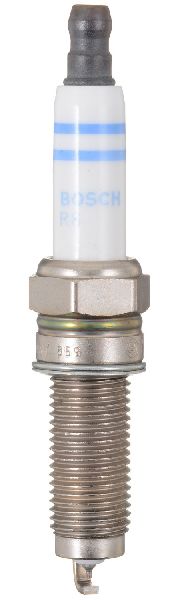
Aftermarket price range: $30-$60 - Spark Plug
(OEM #SP142582AC (Iridium))— Spark plugs are a routine maintenance item that wear out over time, leading to a weak or nonexistent spark. Oil or fuel fouling can also cause them to fail prematurely.
Trusted brands: Mopar, NGK, Champion
OEM price range: $15-$25
Aftermarket price range: $10-$20 - Rocker Arm
(OEM #5184296AH)— Due to the known 'Pentastar Tick' issue, where rocker arm bearings fail, replacing the affected rocker arms is a common major repair. The part number 5184296AH is the latest revision with an improved rotating roller axle design.
Trusted brands: Mopar, Melling
OEM price range: $20-$40 per arm
Aftermarket price range: $10-$25 per arm
Related Codes That Often Appear With This One
- P0300 — If the condition causing the P0301 is severe or intermittent, or if other cylinders are also misfiring (common with rocker arm or fuel delivery issues), a P0300 (Random/Multiple Cylinder Misfire) code may also be stored.
- P0302, P0303, P0304, P0305, P0306 — If the root cause is systemic (e.g., vacuum leak, low fuel pressure, or rocker arm/cylinder head issues affecting multiple cylinders), you may see misfire codes for other specific cylinders as well.
- P219A — This code indicates an Air-Fuel Ratio Imbalance on Bank 1. It can be triggered alongside a P0301 if the misfire is caused by a faulty fuel injector or a significant vacuum leak affecting that bank. One owner's final fix for both codes was a faulty fuel injector.
Technical Service Bulletins (TSBs) & Recalls
- TSB 09-002-14 (Rev. B): Details the diagnosis and repair for the left cylinder head issue on 2011-2013 models, involving a cylinder leakage test. It specifically lists codes P0300, P0302, P0304, and P0306.
- Warranty Bulletin D-14-12 (X56): Announces the 10-year/150,000-mile extended warranty for the left cylinder head on select 2011-2013 vehicles equipped with the 3.6L engine.
Platform-Specific Known Issues
- 2011-2013 Left Cylinder Head Defect: Early 3.6L Pentastar engines had a design flaw in the left cylinder head (cylinders 2, 4, 6) causing premature valve seat/guide wear and misfires. Chrysler acknowledged this with TSB 09-002-14 and offered a 10-year/150,000-mile extended warranty (X56). While P0301 is on the right bank, awareness of this major issue is critical for owners of these early model years as it points to potential valvetrain vulnerabilities.
Mechanic-Grade Diagnostic Values
- Fuel Injector Resistance — expected: 12-13 Ohms. Failure: A significantly higher reading, such as 24-44 Ohms, or an open circuit (infinite resistance).
- Ignition Coil Primary Resistance — expected: ~0.46 Ohms. Failure: A reading significantly higher or lower than the specification.
- Ignition Coil Secondary Resistance — expected: ~15.70 kOhms. Failure: A reading significantly higher or lower than the specification.
- Fuel Pressure at Rail (Engine Idling) — expected: ~39 psi (269 kPa) with vacuum line disconnected from regulator.. Failure: Pressure significantly below specification indicates a weak fuel pump or clogged filter.
- Engine Compression (Cranking) — expected: ~150 PSI per cylinder. Failure: Significantly lower pressure, or a variance of more than 15-20% between cylinders, indicates a mechanical engine problem (valves, rings, head gasket).
Hidden / Shadow Codes Worth Checking
- Live Misfire Count (Mode $06): Before a P0301 code is permanently stored and the Check Engine Light is illuminated, the PCM tracks misfire events for each cylinder. A professional scan tool can access this live data (often under Mode $06 test results or manufacturer-specific live data) to see if cylinder 1 is accumulating misfire counts, even intermittently. (see via Professional-grade scan tool (like Chrysler's wiTECH) or advanced consumer tools with Mode $06 and live data capability.)
Scan Tool Commands That Help
- wiTECH or equivalent professional scanner: Actuator Tests (e.g., Fuel Injector Kill) — To isolate the misfire cause. A technician can command the PCM to disable the fuel injector for cylinder 1. If the engine's idle quality does not change, it confirms that cylinder 1 was not contributing power, pointing to a problem with that specific cylinder.
- Any OBD-II Scanner: Clear/Reset Codes — This is a critical step after swapping components like ignition coils or spark plugs between cylinders. After swapping parts between cylinder 1 and 3, clearing the codes and running the engine will show if the fault code 'moves' to P0303, confirming the swapped component was the problem.
Wiring & Ground Locations
- G105 — Right side of the engine compartment.. A poor ground at this location can cause intermittent electrical issues for various engine components, potentially affecting ignition coil or fuel injector performance.
- G200 — Left end of the dashboard, typically behind the driver's side kick panel.. This is a major interior ground point. While less likely to cause a single cylinder misfire, a fault here can lead to erratic behavior from the PCM and other modules.
- Cylinder 1 Fuel Injector Connector — On the fuel rail, at the front-most cylinder on the passenger (right) side of the engine.. The two pins on this connector are where resistance and voltage pulse (with a noid light) are tested. The wires are a common point for rodent damage or heat-related brittleness.
Real Owner Repair Stories
- YouTube user 'Dodge/Jeep/Chrysler 3.6L Code P0301 P219a (FIXED)' (Vehicle with 3.6L Pentastar Engine) — P0301 and P219A codes, car shaking.
❌ Tried (didn't work) Swapping ignition coil from cylinder 1 to another cylinder.
✅ What actually fixed it The fuel injector for cylinder 1 was faulty. The old injector measured a fluctuating resistance of 28-44 Ohms, while the new replacement measured a steady 12.5 Ohms. Replacing the injector resolved both codes. - YouTube user 'Jeep Wrangler P0301 Cylinder 1 Misfire Troubleshooting & Fix!' (2020 Jeep Wrangler Rubicon with 3.6L Pentastar (59,000 miles)) — P0301 code, rough idle on cold start.
❌ Tried (didn't work) Swapping ignition coil, Swapping spark plug, Swapping fuel injector
✅ What actually fixed it A blown head gasket. After all common parts swaps failed to move the misfire from cylinder 1, a borescope inspection revealed traces of coolant in the cylinder. A coolant system pressure test confirmed it was leaking into cylinder 1 from the head gasket. The fix required replacing the cylinder head gasket and related seals. - Multiple forums and YouTube mechanic channels (Various Chrysler/Dodge/Jeep models with 3.6L Pentastar) — Loud, rhythmic 'ticking' sound from the top of the engine, followed by a misfire code like P0301.
❌ Tried (didn't work) Changing oil viscosity (sometimes temporarily quiets the noise but doesn't fix the cause)., Replacing only spark plugs and coils.
✅ What actually fixed it Replacement of failed rocker arms and their associated hydraulic lifters. In cases where the ticking was ignored, the seized rocker arm roller scored the camshaft, requiring camshaft replacement as well. Using the latest revised Mopar part (5184296AH) or a quality aftermarket equivalent like Melling was critical for a lasting repair.
"I Checked Everything" — The Actual Cause
- In a documented case on a 3.6L Pentastar, a persistent P0301 that was not resolved by swapping ignition or fuel parts was ultimately caused by a blown head gasket leaking coolant into the cylinder. A standard smoke test, which checks for vacuum leaks in the intake system, would not have detected this internal engine fault. The diagnosis required a compression test, cylinder leak-down test, and finally a borescope inspection to find the coolant.
When the Usual Fixes Don't Work
- While the vast majority of P0301 codes are fixed with a simple ignition coil or spark plug, a significant number of owners have found this does not resolve the issue. One owner documented a case where swapping the coil, plug, and injector all failed to fix the misfire on cylinder 1. The root cause was only found when a dealer technician used a borescope and discovered a coolant leak from a failed head gasket, a much more serious mechanical repair. Another common scenario is the misfire being accompanied by the 'Pentastar Tick,' where the actual failure is a worn rocker arm bearing, a repair that a simple tune-up will not fix.
OEM Part Supersession History
5149168AH→5149168AJ— Standard revision and improvement by the manufacturer.
Heads up: The original part was superseded by 5149168AI, which was then superseded by the current part, 5149168AJ. They are interchangeable, but the latest version should always be used.Multiple older revisions (e.g., 5184296AD, AE, AF, AG)→5184296AH— The original rocker arm design used a staked pin for the roller that was prone to failure. The updated 'AH' version features a more durable rotating roller axle design to prevent seizing.
Heads up: While older versions will physically fit, they are known to be defective and should not be used. Only the 'AH' revision or a quality aftermarket equivalent should be installed to permanently fix the 'Pentastar Tick'.
Model Year Variations Within This Range
- 2011-2015: These first-generation Pentastar engines used a 10.2:1 compression ratio and are more commonly associated with the early cylinder head and rocker arm issues.
- 2016-2017: These models received the updated Pentastar V6, featuring a two-stage variable valve lift (VVL) system, cooled EGR, a higher 11.3:1 compression ratio, and different ignition coils and fuel injectors. While still susceptible to rocker arm issues, the parts may differ from earlier years.
Diagnostic Flowchart
Other Known Issues on This Vehicle
Issues unrelated to this code that are worth knowing about as an owner of this generation:
- Cracked Oil Filter Housing/Cooler Assembly 🔴 High — Extremely common across all 3.6L Pentastar applications. The plastic housing becomes brittle from heat cycles and cracks, causing significant oil and/or coolant leaks. (Ref: No official recall has been issued, despite widespread failure.)
- Harsh Shifting / Failure of 9-Speed ZF Transmission (2015-2017 models) 🔴 High — Very common on the second-generation (UF) Chrysler 200. Symptoms include lurching between gears, hesitation, and sudden shifts to neutral. (Ref: Multiple software updates and recalls (e.g., NHTSA 16V-529) were issued to address the problems, with mixed success.)
- Engine Stalling While Driving 🔴 High — Reported on both generations, but a formal NHTSA investigation was opened for 2011-2013 models stalling at low speeds due to a defective Powertrain Control Module (PCM).
Used vs. New Parts: Buying Guide for This Vehicle
When a used part is the smart pick: For this repair, used parts are generally not recommended, with the exception of major structural components like a valve cover or intake manifold if they were damaged during repair. Electronic and mechanical wear items should be purchased new.
Donor-vehicle mileage cap: roughly under 80000 miles for the part to have meaningful remaining life.
What to inspect on the donor part:
- For a structural part like a valve cover, ensure there are no cracks or warped surfaces.
- Avoid any donor vehicle that shows signs of oil sludge or poor maintenance.
OEM-only on this vehicle (don't cheap out):
- Rocker Arms and Lifters: This is the most critical area. Due to the high failure rate of the original design, only the latest OEM revision (5184296AH) or a top-tier aftermarket brand known for quality valvetrain components (like Melling) should be used. Using cheap, unbranded parts is a well-documented path to repeat failure.
Aftermarket brands forum-validated for this vehicle:
- Ignition Coils: NGK, Delphi, MSD
- Fuel Injectors: Bosch (OEM supplier, part 0280158233)
- Rocker Arms / Lifters: Melling
Brands owners have reported issues with on this vehicle:
- Unbranded ignition coils, rocker arms, or lifters from online marketplaces like eBay or Amazon have been reported by mechanics to fail prematurely, causing the same problem to return.
Real Owner Stories
Aggregated from forums and TSBs cited above. Mileages and costs reflect what owners reported in those sources.
2016 Chrysler 200C 3.6L
Symptoms: Persistent P0301 code even after replacing the ignition coil and spark plug.
What fixed it: The community suggested swapping the fuel injector and checking for a proper signal after spark-related fixes failed.
Source hint: Car Talk Community - P0301 after coil/plug change
2015 Chrysler 200 3.6L
Symptoms: Cylinder 1 misfire code P0301; owner replaced the plug, coil, and injector but the issue persisted.
What fixed it: A compression test revealed 0 PSI in cylinder 1, indicating a severe internal mechanical failure like a burnt valve or damaged piston.
Source hint: 2CarPros - 0 PSI Compression on Cylinder 1
2017 Jeep Grand Cherokee 3.6L
Symptoms: P0301 misfire that was only felt during cold starts.
What fixed it: The source highlights the intermittent nature of the problem on the 3.6L Pentastar platform.
Source hint: Reddit r/MechanicAdvice - P0301 on 2017 Grand Cherokee
2012 Jeep Wrangler 3.6L
Symptoms: Multiple misfire codes (P0300, P0301, P0303, P0305) popping up.
What fixed it: Valvetrain issues were identified as the likely cause, even when initial compression tests appeared good.
Source hint: Jeep Wrangler Forum - P0301 and other misfires
Related OBD-II Codes
Frequently Asked Questions
Does the 10-year/150,000-mile extended warranty for the cylinder head apply to my P0301 code on a 2012 Chrysler 200?
I hear a rhythmic ticking sound from my 3.6L Pentastar engine along with the P0301 code. What is this?
Which cylinder is Cylinder 1 on the Chrysler 200 3.6L engine?
What is the specific resistance I should look for when testing the fuel injector for P0301?
Is there a specific part number for the updated rocker arms to fix the 'Pentastar Tick'?
Can a leaking valve cover gasket cause a P0301 misfire on this vehicle?
Helpful Videos
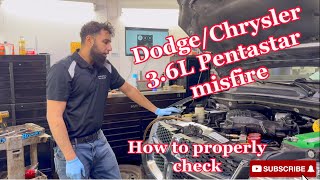
Used OEM Parts in Stock


New Aftermarket Parts Available


The information in this article is provided for general reference and educational purposes only. Vehicle specifications, procedures, and part compatibility can vary by production date, trim level, and region. Always consult your vehicle's factory service manual and verify part numbers before purchasing or performing repairs. Safety-critical components such as airbags, seat belts, and braking systems should be installed by a qualified professional.
- Chrysler 200:
- 🎬 Helpful Videos
- 🛍️ Shop This Part
- What's Unique About the 2011-2017 Chrysler 200
- Symptoms You May Notice
- Most Likely Causes
- Rare But Worth Checking
- Diagnosis Steps
- Parts You'll Likely Need
- Related Codes That Often Appear With This One
- Technical Service Bulletins (TSBs) & Recalls
- Platform-Specific Known Issues
- Mechanic-Grade Diagnostic Values
- Hidden / Shadow Codes Worth Checking
- Scan Tool Commands That Help
- Wiring & Ground Locations
- Real Owner Repair Stories
- "I Checked Everything" — The Actual Cause
- When the Usual Fixes Don't Work
- OEM Part Supersession History
- Model Year Variations Within This Range
- Diagnostic Flowchart
- Other Known Issues on This Vehicle
- Used vs. New Parts: Buying Guide for This Vehicle
- Real Owner Stories
- 2016 Chrysler 200C 3.6L
- 2015 Chrysler 200 3.6L
- 2017 Jeep Grand Cherokee 3.6L
- 2012 Jeep Wrangler 3.6L
- Related OBD-II Codes
- Frequently Asked Questions
- 🎟️ Get 5% Off