

P0301 on 2011-2016 Chevrolet Cruze 1.4L Turbo: Cylinder 1 Misfire Causes and Fixes
P0301 on a 1.4L Turbo Cruze is most often caused by a failed ignition coil pack or worn spark plugs. However, a failed PCV system integrated into the valve cover is a very common underlying issue that leads to misfires, often accompanied by a P0171 lean code. Replacing the coil pack and spark plugs is the first step, with costs ranging from $80 to $200 for parts. Always inspect the PCV system for hissing sounds or vacuum leaks.
- P0301 means cylinder 1 is misfiring. On the 1.4L Turbo Cruze, immediately suspect the ignition coil pack and spark plugs.
- If you also have a P0171 (System Too Lean) code, the root cause is very likely a failed PCV system (torn diaphragm in the valve cover or bad check valve in the intake manifold).
- A flashing check engine light is a critical warning. Stop driving immediately to prevent destroying your catalytic converter, which is an expensive repair.
- Always replace spark plugs when you replace the ignition coil pack to ensure longevity of the new part.
- Diagnosis is straightforward: start by swapping spark plugs between cylinders. If the code doesn't move, the coil pack is the next most likely culprit.
What's Unique About the 2011-2016 Chevrolet Cruze

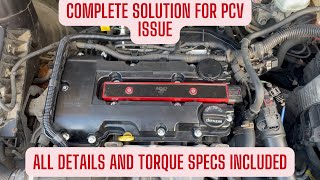
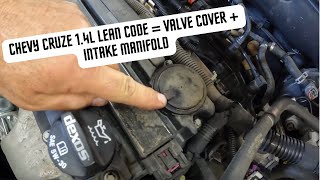
The first-generation Cruze with the 1.4L Turbo engine is highly susceptible to several specific issues that cause misfires. The most notorious is the failure of the Positive Crankcase Ventilation (PCV) system. A rubber diaphragm inside the valve cover can tear, or a small orange check valve inside the intake manifold can get sucked into the engine, creating a significant vacuum leak. This leak is a primary suspect for any misfire on this engine and often triggers a P0171 (System Too Lean) code alongside P0301.
Generation note: The 2011-2016 model years primarily cover the first generation of the Chevrolet Cruze. A redesigned second generation began in 2016. Some 2016 models are first-generation carryovers sold as the "Cruze Limited." This guide specifically applies to the first-generation 1.4L LUJ/LUV Turbo engine found in the Cruze, Sonic, Encore, and Trax.
Symptoms You May Notice
- Rough or shaking idle
- Hesitation or stumbling during acceleration
- Flashing or solid Check Engine Light
- Noticeable loss of engine power
- "Service StabiliTrak" or "Service Traction Control" message on the dash.
- Smell of unburned fuel from the exhaust
- Audible hissing or whistling sound from the engine bay at idle, indicating a PCV vacuum leak.
- High-pitched chirping sound from the serpentine belt area at idle, indicating a failed crankshaft seal due to high crankcase pressure from a bad PCV system.
- Replacing oxygen (O2) sensors when a P0171 code is present. The lean code is usually a symptom of the PCV vacuum leak, not a faulty sensor.
- Replacing the Mass Airflow (MAF) sensor. The MAF sensor is rarely the cause of misfires on this platform, even if lean codes are present.
- Repeatedly replacing only the ignition coil without addressing an underlying issue like a leaking thermostat housing connector, which will cause the new coil to fail again.
Most Likely Causes

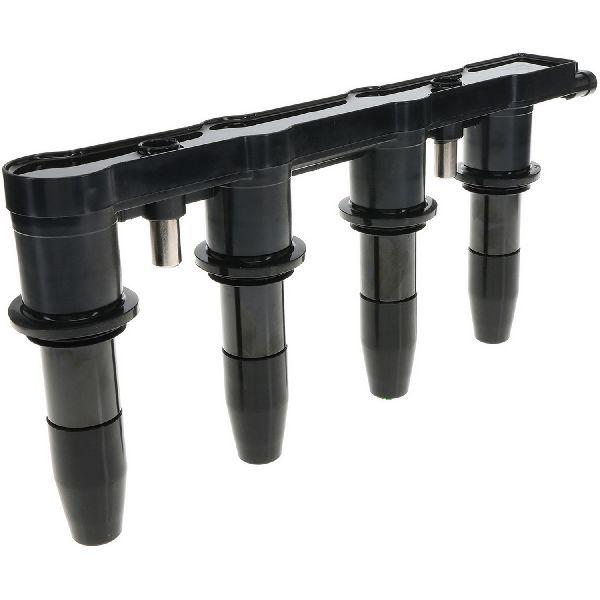
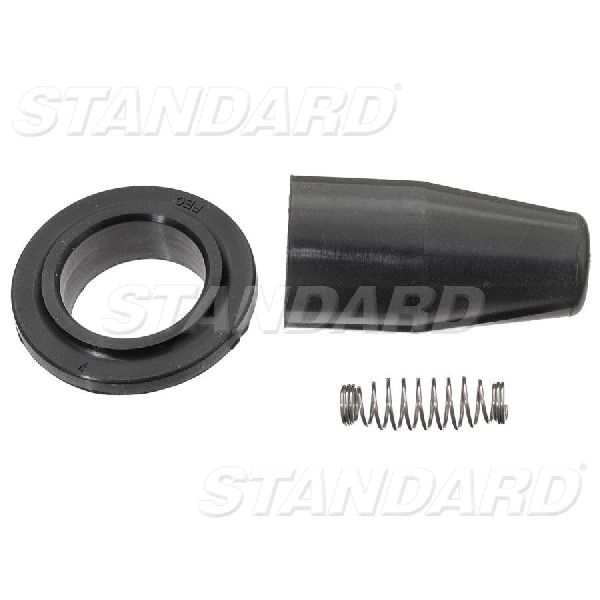
- Failed Ignition Coil Pack 🔴 High Probability The coil-on-plug cassette design is a common failure item on the 1.4L Turbo engine due to heat and vibration. Oil leaks from the valve cover gasket can also seep into the spark plug wells and damage the coil boots, causing premature failure.
How to confirm: Since the coil pack is a single unit, you cannot swap coils between cylinders for diagnosis. After confirming the spark plug is good, the next logical step is to replace the entire coil pack. Inspect the coil boot for cylinder 1 for any signs of damage, oil contamination, corrosion, or white residue from electrical arcing. A weak or non-existent spark when tested also confirms failure.
Typical fix: Replace the entire ignition coil pack assembly. It is highly recommended to replace all four spark plugs at the same time. Use a quality OEM or aftermarket brand, as cheap coils are known to fail quickly.
Est. part cost: $60-$150 - Worn or Fouled Spark Plugs 🔴 High Probability
How to confirm: Remove the spark plug from cylinder 1 and inspect it for wear, carbon fouling, or oil contamination. A simple diagnostic test is to swap the spark plug from cylinder 1 with the one from cylinder 2. If the code changes to P0302, the spark plug is the culprit. Also, ensure the plugs are gapped correctly (typically to .028 inches); incorrect gapping is a known cause of misfires even with new plugs.
Typical fix: Replace all four spark plugs. Use the correct Iridium-type plugs specified for the engine, such as ACDelco or NGK.
Est. part cost: $20-$60 - Failed PCV System (Valve Cover or Intake Manifold) 🟡 Medium Probability This is a well-documented design flaw on the 1.4L LUJ/LUV engine. A rubber diaphragm in the valve cover tears, or a check valve in the intake manifold dislodges, creating a large vacuum leak that leads to lean conditions and misfires. GM extended warranty coverage for this issue on some vehicles.
How to confirm: Listen for a distinct hissing or whistling sound from the small hole on the PCV diaphragm housing on the valve cover at idle. Another test is to check for strong vacuum at the oil fill cap while the engine is running (the cap will be hard to remove). To check the intake manifold, remove the PCV hose and look into the manifold's port for a small orange or black check valve; if it's missing, the intake has failed internally.
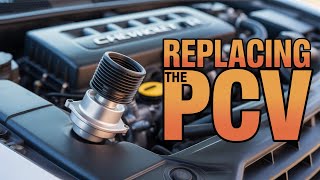
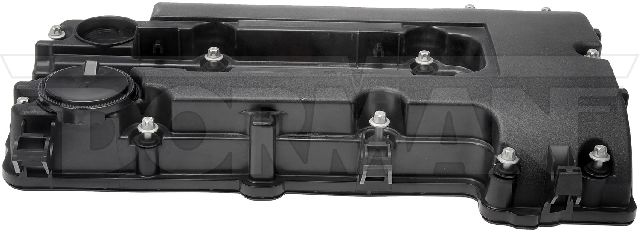
Typical fix: The most common repair is to replace the entire valve cover assembly, which contains the integrated PCV diaphragm. If the intake manifold check valve is missing, the official fix is replacing the intake manifold, 🎬 Watch: Full walkthrough for replacing the intake manifold and PCV hose. though aftermarket external check valve kits exist.
Est. part cost: $60-$200 - Faulty Fuel Injector ⚪ Low Probability
How to confirm: After ruling out spark-related issues, the fuel injector is the next component to check. You can test the injector's resistance with a multimeter or listen for a clicking sound with a mechanic's stethoscope to confirm it's operating. Swapping the injector with another cylinder is a definitive test but requires more disassembly.
Typical fix: Replace the faulty fuel injector and its seals. It is often recommended to replace all injectors as a set if they are high mileage.
Est. part cost: $40-$100
Rare But Worth Checking
- Low Engine Compression (Cracked Piston): GM issued Technical Service Bulletin PIP5490D (and later updates) regarding damaged or cracked pistons on these engines, which cause low compression and misfires, particularly on cylinder 1. If spark and fuel systems are confirmed good, a compression test is necessary. A result of 100 PSI or less, especially when other cylinders are near 200 PSI, points to a cracked piston. In some cases, GM released an ECM calibration to help reduce this possibility.
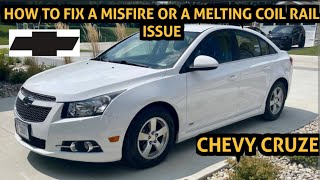
- Leaking Thermostat Housing Connector: Some aftermarket thermostat housings can leak coolant into the temperature sensor's electrical connector. This coolant can wick down the wiring harness to the ignition coil connector and short out the circuit for cylinder 1, causing the coil to overheat and melt directly above that cylinder. 🎬 See how a leaking thermostat housing can melt your ignition coil. The fix requires replacing the thermostat housing with an OEM part, cleaning the connector, and replacing the damaged coil.
- Damaged Ignition Coil Wiring/Pigtail: The wiring or connector pigtail for the ignition coil can become brittle and break, causing a poor connection and a misfire. One owner found a broken wire inside the connector insulation, which was only visible upon close inspection. Replacing the pigtail connector fixed the P0301 and P0351 codes.
Diagnosis Steps

- Read the codes with an OBD-II scanner and note if any other codes, like P0171 or P0351, are present.
- Determine if the Check Engine Light is solid or flashing. A flashing light indicates a severe misfire requiring you to stop driving immediately to prevent catalytic converter damage.
- Inspect the spark plug in cylinder 1. Look for wear, damage, or fouling. Swap it with the plug from cylinder 2, clear the codes, and see if the misfire moves to P0302. If it does, replace all four spark plugs, ensuring they are gapped correctly.
- If the code remains P0301, inspect the ignition coil pack. Check for cracks, oil contamination in the boot, or corrosion. Check the wiring pigtail for damage. If suspect, replace the entire coil pack.
- If ignition components are good, inspect the PCV system. With the engine running, listen for a loud hissing from the valve cover and check for strong vacuum at the oil fill cap. Remove the PCV hose from the intake manifold and visually inspect the port for the orange check valve.
- If no obvious cause is found, check the fuel injector on cylinder 1. Listen for its operation and check its wiring.
- If all else fails, perform an engine compression test. A significant loss of compression in cylinder 1 compared to others (e.g., 100 PSI vs. 200+ PSI) strongly suggests internal mechanical problems like a cracked piston, which is a known issue.
Parts You'll Likely Need
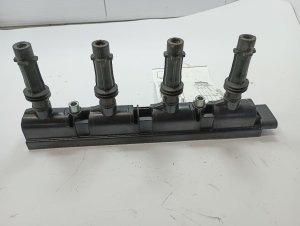
- Ignition Coil Pack
(OEM #25198623 (supersedes 55579072, 25195107))— This is one of the most common failure points causing a P0301 misfire. It is a single cassette-style unit that must be replaced entirely.
Trusted brands: ACDelco, Delphi, NGK
OEM price range: $100-$150
Aftermarket price range: $60-$100 - Iridium Spark Plugs (Set of 4)
(OEM #25193473 (ACDelco 41-103))— Worn or incorrectly gapped spark plugs are a primary cause of misfires. They are a routine maintenance item and should always be replaced with the coil pack.
Trusted brands: ACDelco, NGK
OEM price range: $40-$60
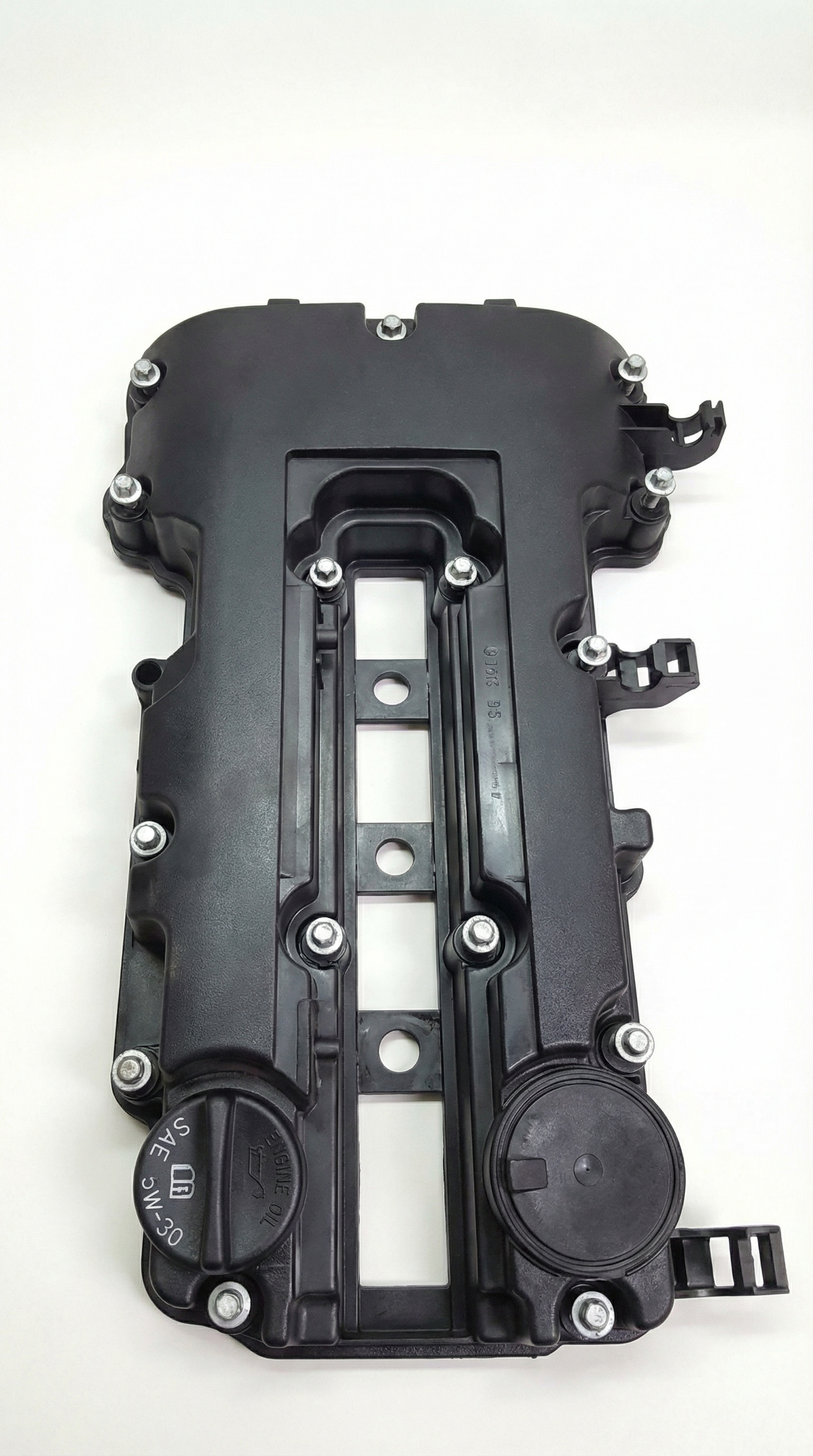
Aftermarket price range: $20-$40 - Valve Cover Assembly
(OEM #25198874 (supersedes 55573746))— The integrated PCV diaphragm fails, creating a vacuum leak that causes misfires and lean codes (P0171). The entire cover must be replaced.
Trusted brands: ACDelco, Dorman
OEM price range: $120-$200
Aftermarket price range: $60-$120
Related Codes That Often Appear With This One
- P0300 — If the underlying cause, like a major PCV vacuum leak, affects all cylinders, a random misfire code may appear with the single-cylinder misfire code.
- P0171 — This 'System Too Lean' code is very common with P0301 on the 1.4L Turbo. It strongly indicates the misfire is caused by a vacuum leak, most likely from the PCV system in the valve cover or a missing check valve in the intake manifold.
- P0351 — This code points to a fault in the ignition coil 'A' (Cylinder 1) circuit. It directly implicates the ignition coil pack or its wiring connector as the source of the problem and often appears alongside P0301.
Technical Service Bulletins (TSBs) & Recalls
- PIP5490D / 19-NA-090: Addresses rough running and P0300-P0304 codes caused by low compression from damaged pistons. Recommends compression and leak-down tests, followed by piston replacement if necessary.
- Bulletin #PIP3333C: Notes that vehicles may have an intermittent engine misfire and a Service Engine Soon Malfunction Indicator Lamp with codes P0300, P0301, and/or P0304. Technicians are advised to follow published Service Information diagnostics first to isolate the cause.
Platform-Specific Known Issues

- PCV System Failure: The PCV system on the 1.4L Turbo is a known weak point. The valve cover diaphragm tears and the intake manifold check valve fails, causing vacuum leaks that lead to misfires and lean codes.
- Cracked Pistons: GM has a TSB related to cracked pistons on this engine, which can cause low compression and persistent misfires. An ECM calibration was released to help prevent this.
Mechanic-Grade Diagnostic Values
- Engine Compression — expected: A healthy 1.4L Turbo engine should have compression readings around 200-210 PSI per cylinder.. Failure: A reading of 100 PSI or less, especially when other cylinders are normal, is a strong indicator of a cracked piston or other major mechanical failure.
- Fuel Injector Resistance — expected: Approximately 12 Ohms.. Failure: A reading significantly different from 12 Ohms indicates a faulty injector coil.
- Ignition Coil Primary Resistance — expected: ~1.0 Ohm.. Failure: A reading significantly higher or lower than 1.0 Ohm suggests a fault in the coil's primary windings.
- Ignition Coil Secondary Resistance — expected: ~12,000 - 13,000 Ohms (12-13 kOhms).. Failure: Readings outside this range indicate a failure in the secondary windings, resulting in a weak or no spark.
- Valve Cover Bolt Torque — expected: 71 in-lbs (approximately 8 Nm).. Failure: Improper torque can lead to oil leaks or a cracked valve cover, compromising the PCV system.
Scan Tool Commands That Help
- GDS2 (GM Global Diagnostic System 2): Cylinder Power Balance Test — This test helps identify which cylinder is not contributing power, confirming the location of the misfire without needing to swap parts. It's a primary step in professional diagnosis.
- GDS2 or high-end bidirectional scanner: Crankshaft Position Variation Learn — This procedure is required after replacing the crankshaft position sensor, ECM, or performing major engine work. Failure to perform the relearn can cause false misfire codes or a persistent P0315 code.
Wiring & Ground Locations
- G107 — On the lower left rear of the engine block. A wiring diagram shows a breakout to G107 near the ignition coil #1 harness.. This is a primary engine ground. A loose or corroded connection here can cause erratic sensor readings and unexplained electrical issues, including misfires or problems with the ignition system control.
- G105 — Under the battery tray on the frame rail.. This is another critical engine and chassis ground. A poor connection here, sometimes due to paint or weld slag from the factory, can cause a host of issues that mimic component failure.
- Ignition Coil Connector (X1 at K20 ECM) — The main connector for the Engine Control Module (ECM). For the 1.4L LUV, Pin 50 is the control for the Exhaust Camshaft Position Sensor, which is related to overall engine timing and misfire detection.. A fault in the wiring between the sensors and the ECM can cause misfire codes. The issue may not be the component itself but the wiring to it.
Real Owner Repair Stories
- YouTube channel "Just a Dude" (2014 Chevrolet Cruze) — Random misfire on cylinder 1 (P0301), new ignition coils were melting specifically over cylinder 1.
❌ Tried (didn't work) Replacing the ignition coil pack (the new one also melted)., Thinking the new coil was faulty.
✅ What actually fixed it The aftermarket thermostat housing had failed, leaking coolant into the coolant temperature sensor connector. The coolant wicked down the wiring harness to the ignition coil connector, shorting the circuit for cylinder 1 and causing it to overheat and melt. The fix was to replace the thermostat housing with an OEM part, clean the connectors thoroughly, and install another new coil pack. - YouTube channel "2018 Chevy Cruze cracked piston..." (2018 Chevrolet Cruze 1.4L Turbo with 56k miles (Note: This is a Gen 2 Cruze but the piston issue is relevant to the engine family)) — Bad misfire on cylinder 1 (P0301), smoke puffs from oil cap/dipstick tube indicating excessive blow-by.
❌ Tried (didn't work) Swapping ignition coils., Swapping spark plugs., Swapping fuel injectors.
✅ What actually fixed it A compression test revealed cylinder 1 was at 100 PSI while others were 200-210 PSI. The vehicle was taken to a dealership where it was confirmed cylinder 1 had a cracked piston, requiring engine repair. - NHTSA ODI #11325284 — An owner reported a P0301 code where the StabiliTrak light would flash intermittently. After taking the vehicle to a mechanic for diagnostics, the issue was investigated as an engine-related fault.
OEM Part Supersession History
55573746→25198874, 25198877— Revisions to the PCV system design within the valve cover to improve durability and address common failure points of the diaphragm.
Heads up: While later designs are generally better, aftermarket options like aluminum valve covers may use proprietary gaskets that are not compatible with OEM gaskets.55579072, 25195107→25198623— Internal revisions to the ignition coil pack for improved reliability and heat resistance.
Model Year Variations Within This Range
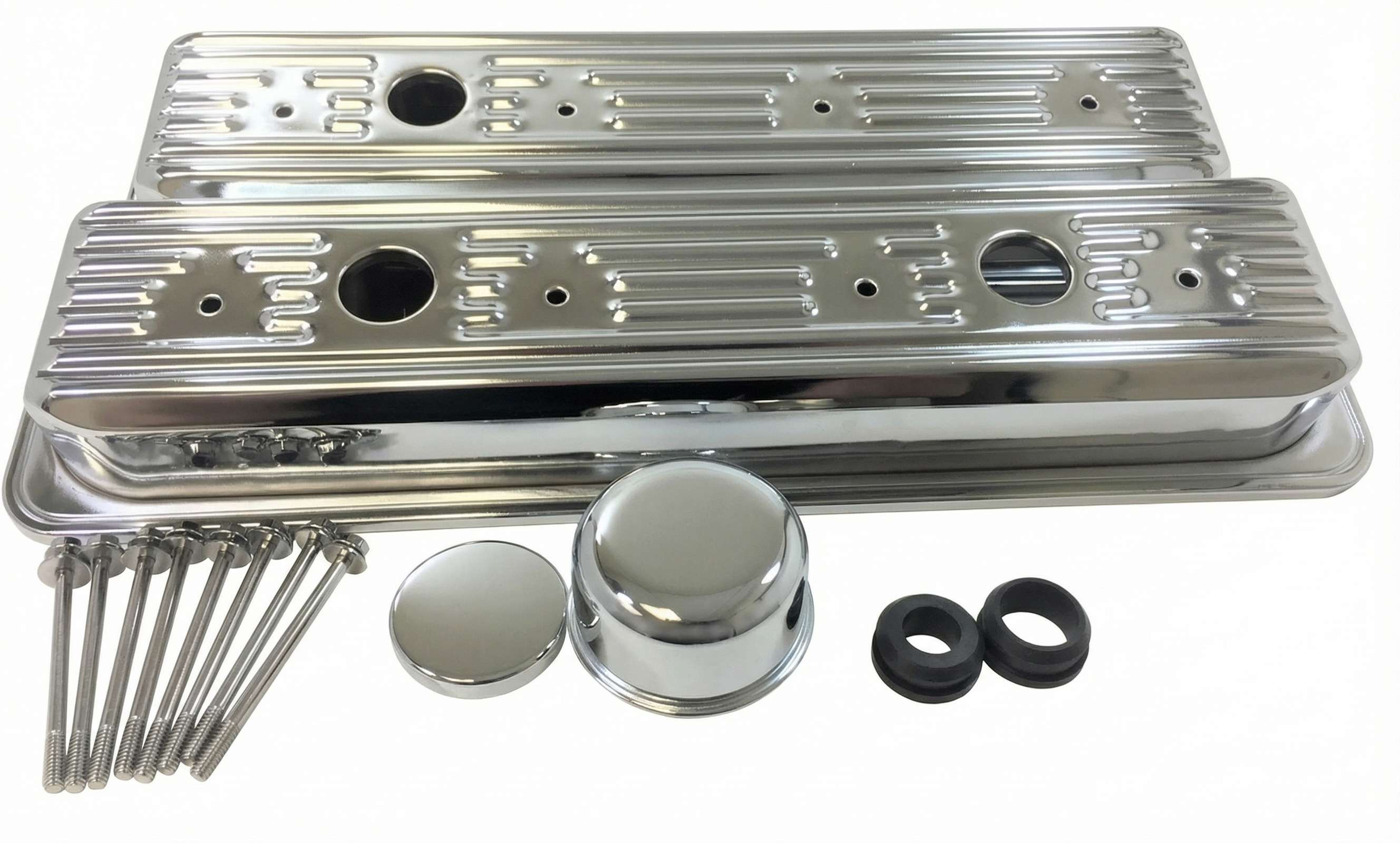
- 2011-2020: The 1.4L Turbo engine came in two main variants, LUJ and LUV. They are largely similar, but the LUV is a modification of the LUJ with a different block configuration. Both share the same common failure points like the PCV system and cracked pistons. The LUJ/LUV has a cast iron block, while the later LE2 engine (in the 2nd Gen Cruze) moved to an aluminum block.
Diagnostic Flowchart
Real Owner Stories
Aggregated from forums and TSBs cited above. Mileages and costs reflect what owners reported in those sources.
2012 Chevrolet Cruze 1.4L Turbo — ~186000 miles
Symptoms: Flashing check engine light with code P0301. Replacing the spark plugs and coil pack did not resolve the issue.
What fixed it: Diagnosed with 0 PSI compression in cylinder 1, indicating a severe internal engine failure like a burnt valve or cracked piston.
Source hint: Reddit: r/cruze - Cylinder 1 Misfire, 0 Compression, P0301
2014 Chevrolet Cruze 1.4L Turbo
Symptoms: Rough idle and multiple misfire codes ranging from P0301 to P0304 after previous repairs.
What fixed it: Replaced the valve cover due to a failed integrated PCV valve, which is a primary cause for rough idling on this engine.
Source hint: Reddit: r/Cartalk - 2014 Chevy Cruze Rough Idle After Repairs
2014 Chevrolet Cruze 1.4 LT
Symptoms: Service StabiliTrak message, traction control warning, and a blinking check engine light with codes P0301 and P0300.
What fixed it: Regapped brand new spark plugs to .028 inches, as they were incorrectly gapped from the factory.
Source hint: CruzeTalk Forum - 2014 1.4 LT service stabilitrak, traction control and check engine light blinking
Chevrolet Cruze 1.4L Turbo
Symptoms: Brand new ignition coil packs were repeatedly melting directly over cylinder 1.
What fixed it: Replaced a leaking aftermarket thermostat housing with an OEM unit and installed a new coil. The leak was allowing coolant to short the coil wiring.
Source hint: YouTube - CHEVY CRUZE MISFIRE FIX - MELTING COIL RAIL ON CYLINDER 1 SOLVED
2017 Chevrolet Cruze
Symptoms: P0301 misfire, rough idle, and a 'Service Stabilitrak' message appearing on the dash.
What fixed it: Dealer diagnosed a cracked piston just outside of the powertrain warranty, requiring engine repair or replacement.
Source hint: CarComplaints.com - 2017 Chevrolet Cruze Cracked Piston
Related OBD-II Codes
Frequently Asked Questions
Does TSB PIP5490D apply to my 1.4L Cruze with a P0301 code?
Why is my Cruze showing a 'Service StabiliTrak' message along with the P0301 code?
I hear a loud hissing sound from my engine and have a P0301. What does this mean?
What is the correct spark plug gap for the 1.4L Turbo Cruze to prevent misfires?
Can a coolant leak cause a P0301 misfire on cylinder 1?
How do I check if my intake manifold PCV check valve is missing?
Helpful Videos
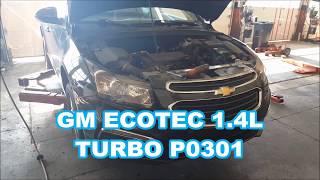
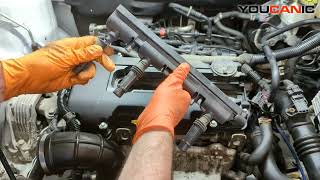

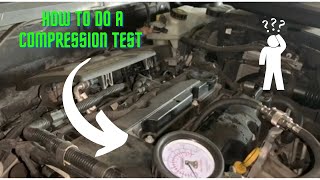
Used OEM Parts in Stock

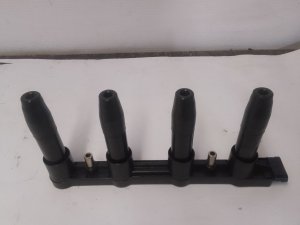
New Aftermarket Parts Available



The information in this article is provided for general reference and educational purposes only. Vehicle specifications, procedures, and part compatibility can vary by production date, trim level, and region. Always consult your vehicle's factory service manual and verify part numbers before purchasing or performing repairs. Safety-critical components such as airbags, seat belts, and braking systems should be installed by a qualified professional.
- Chevrolet Cruze:
- 🎬 Helpful Videos
- 🛍️ Shop This Part
- What's Unique About the 2011-2016 Chevrolet Cruze
- Symptoms You May Notice
- Most Likely Causes
- Rare But Worth Checking
- Diagnosis Steps
- Parts You'll Likely Need
- Related Codes That Often Appear With This One
- Technical Service Bulletins (TSBs) & Recalls
- Platform-Specific Known Issues
- Mechanic-Grade Diagnostic Values
- Scan Tool Commands That Help
- Wiring & Ground Locations
- Real Owner Repair Stories
- OEM Part Supersession History
- Model Year Variations Within This Range
- Diagnostic Flowchart
- Real Owner Stories
- 2012 Chevrolet Cruze 1.4L Turbo — ~186000 miles
- 2014 Chevrolet Cruze 1.4L Turbo
- 2014 Chevrolet Cruze 1.4 LT
- Chevrolet Cruze 1.4L Turbo
- 2017 Chevrolet Cruze
- Related OBD-II Codes
- Frequently Asked Questions
- 🎟️ Get 5% Off