

P0300 on 2009-2013 Subaru Forester: Random Misfire Causes and Fixes for the EJ25 Engine
On a 2009-2013 Subaru Forester with the EJ25 engine, a P0300 code is most often caused by a faulty ignition system. The top suspects are a cracked central ignition coil pack, worn spark plug wires, and oil-fouled spark plugs from leaking valve cover gaskets. A full ignition system refresh (plugs, wires, coil) is the most common fix and costs between $150 and $300 for parts. Less common causes include vacuum leaks or a faulty EGR valve.
- First, confirm which engine your Forester has. If it's a non-turbo from 2011-2013, you have the FB25 engine, and this guide's specific ignition parts (coil pack, wires) will not apply.
- For the EJ25 engine, P0300 is overwhelmingly an ignition system problem. Plan to inspect and likely replace the spark plugs, wires, and the central ignition coil.
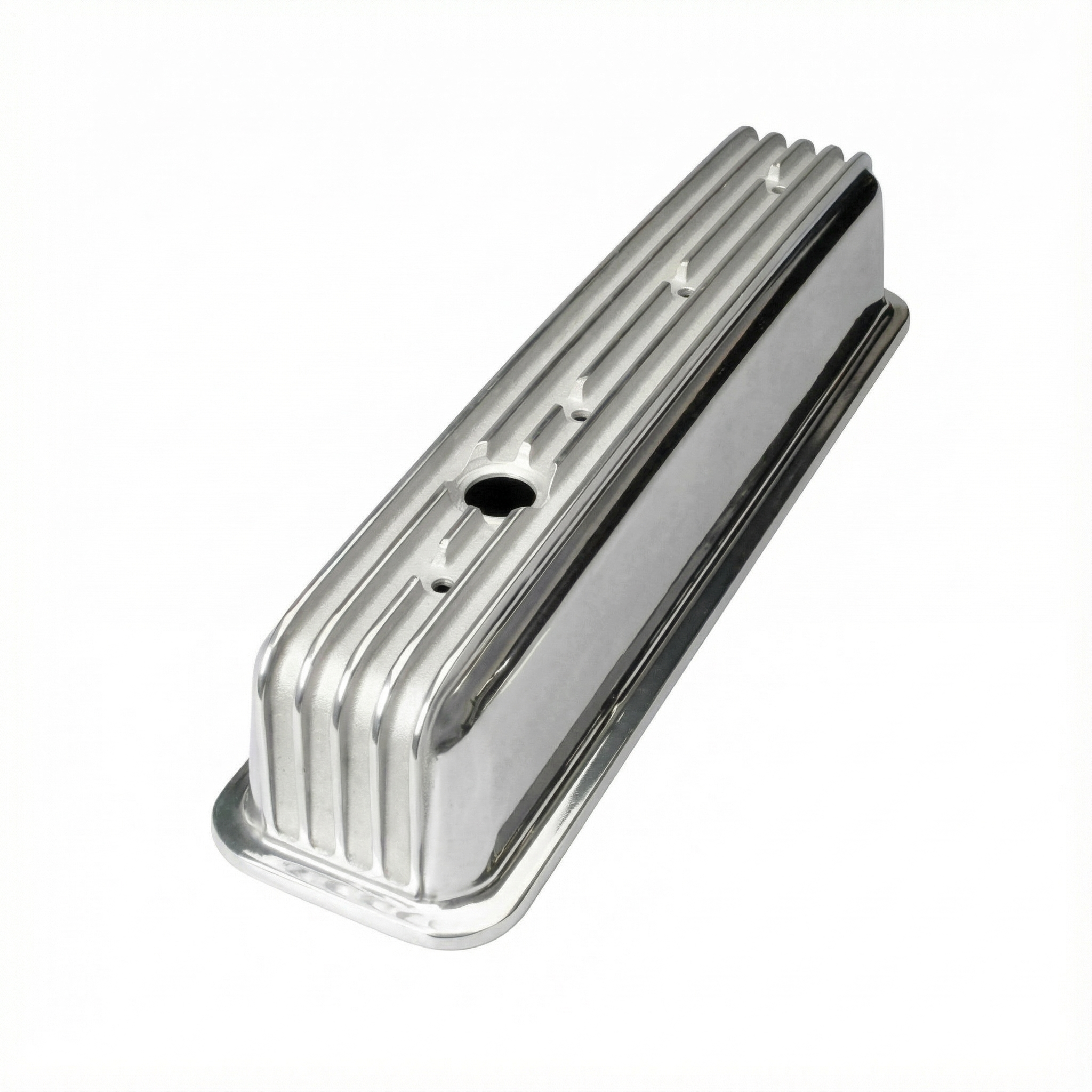
- When replacing spark plugs, always check for oil in the wells. If oil is present, you must replace the valve cover gaskets and tube seals, or the misfire will return.
- A flashing Check Engine Light is a serious warning. Avoid driving the vehicle to prevent expensive damage to the catalytic converter.
What's Unique About the 2009-2013 Subaru Forester
The 2009-2013 Forester uses two different engines, which is critical for diagnosis. The prompt specifies the EJ25 engine, which was used in the non-turbo models for 2009-2010 (specifically the EJ253 variant) and the turbo (XT) models for the entire 2009-2013 range (EJ255 variant). This EJ25 engine uses a single, central ignition coil pack with long spark plug wires, as opposed to the coil-on-plug system found in the FB25 engine used in 2011-2013 non-turbo models. This single coil pack design makes it a common failure point that can cause random misfires across all cylinders. Additionally, the SOHC EJ25 engine is well-known for its single-layer head gaskets that weep oil and valve cover gaskets that leak oil into the spark plug tubes, fouling the plugs and causing misfires.
Generation note: While this vehicle range (2009-2013) is all the third-generation (SH) Forester, there is a critical engine change. Non-turbo models from 2009-2010 use the EJ253 SOHC engine with a single coil pack and spark plug wires. Non-turbo models from 2011-2013 use the newer FB25 DOHC engine with a timing chain and individual coil-on-plug ignition. This guide focuses on the EJ25 engine as specified, which is found in 2009-2010 non-turbo models and all 2009-2013 turbo (XT) models.
Symptoms You May Notice
- Flashing or solid Check Engine Light.
- Blinking Cruise Control light and solid Traction Control light (common Subaru behavior with a CEL).
- Rough, shaking, or vibrating idle.
- Engine hesitation or stumbling during acceleration.
- Noticeable loss of power.
- Difficulty starting the engine, requiring longer than normal cranking.
- Smell of raw fuel from the exhaust.
- Decreased fuel economy. 🎬 Watch: A mechanic explains common causes for the P0300 code.
- Replacing only the spark plugs without addressing oil leaks from the valve cover gaskets. The new plugs will quickly become fouled with oil and the misfire will return.
- Replacing oxygen (O2) sensors. While a bad front A/F sensor can be a cause, it's less common than ignition issues. A rear O2 sensor will not cause a misfire and is more often a symptom of the misfire itself (detecting unburnt fuel).
- Replacing the Mass Airflow (MAF) sensor. Unless the sensor is extremely dirty or has failed (which would likely set other codes), it's not a primary cause for random misfires on this vehicle.
Most Likely Causes
- Worn or Fouled Spark Plugs 🔴 High Probability The EJ25 engine is known for leaking valve cover gaskets, which allows oil to seep into the spark plug tubes and foul the spark plugs, causing a weak or nonexistent spark. This prevents proper ignition and is a very frequent source of misfires on this platform.
How to confirm: Remove the spark plugs and inspect them. Look for heavy carbon buildup, a worn-down electrode, or a wet, glossy black appearance which indicates oil contamination. Oil pooled in the spark plug well is a clear sign of a leaking tube seal.
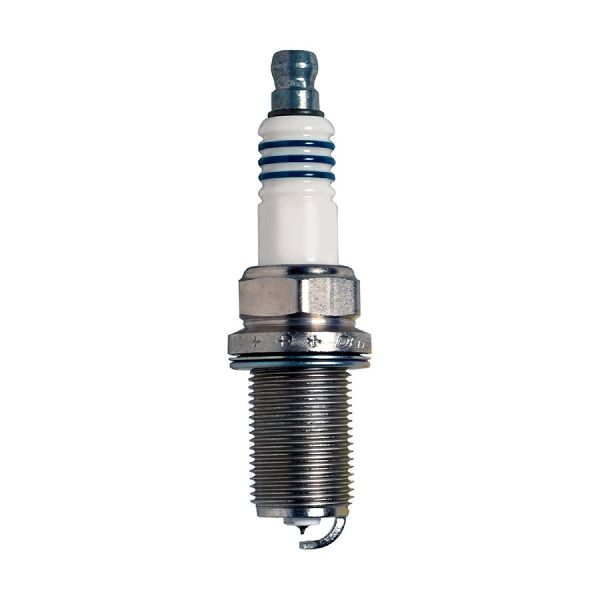
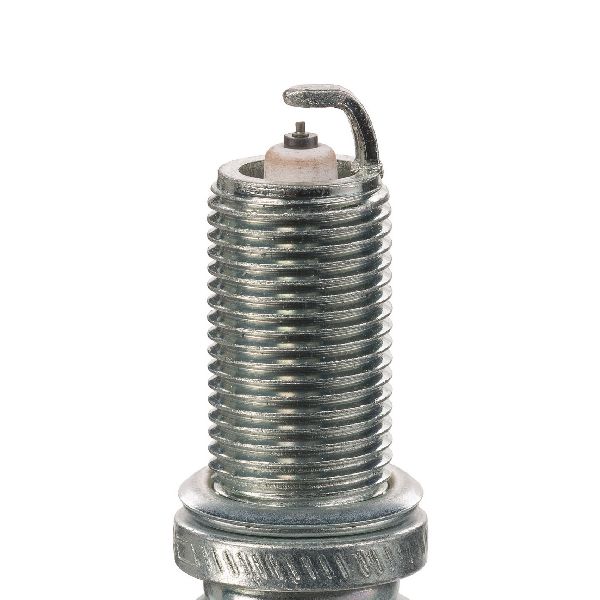
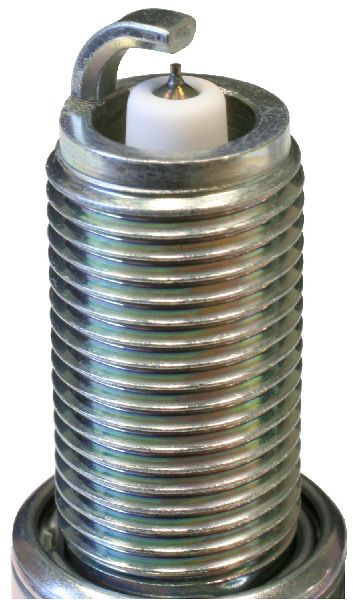
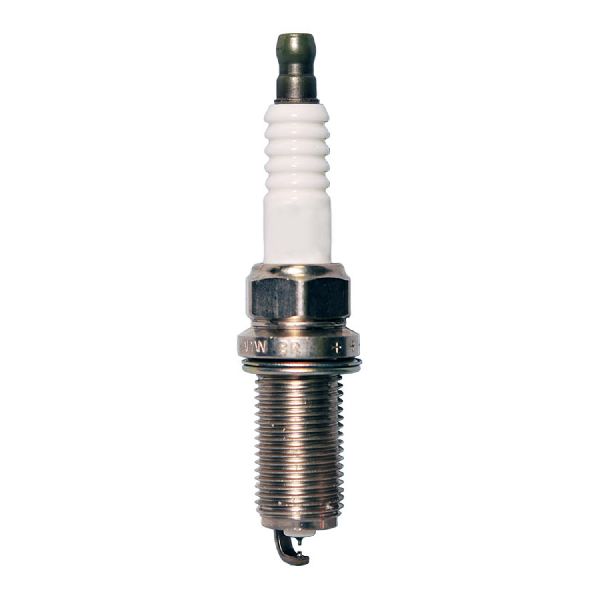
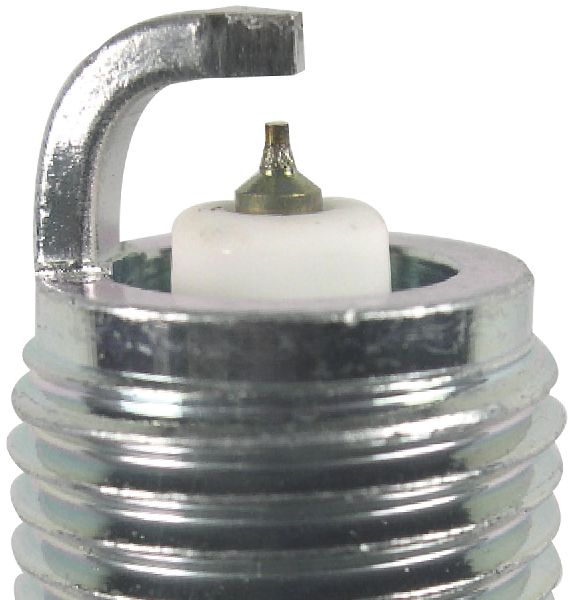
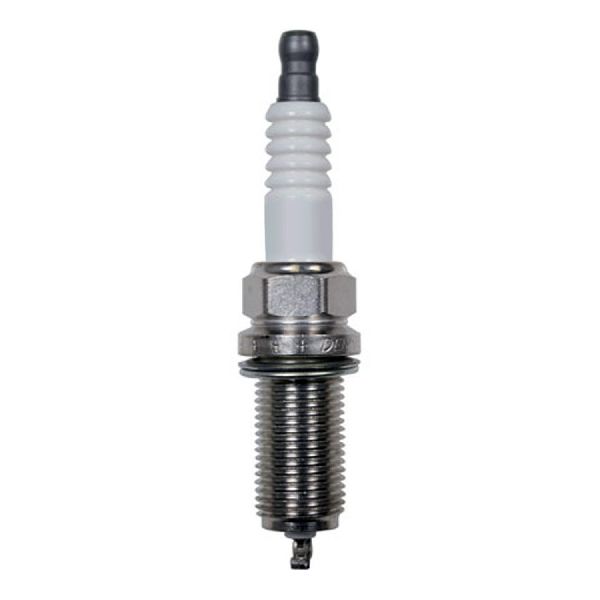
Typical fix: Replace all four spark plugs with the correct NGK Iridium plugs. If oil was present, the valve cover gaskets and spark plug tube seals must also be replaced to prevent a recurrence. This is a 'while you're in there' job.
Est. part cost: $40-$80 - Failed Ignition Coil Pack 🔴 High Probability The EJ25 uses a single waste-spark coil pack to fire all four cylinders. Over time, the plastic housing can develop hairline cracks due to heat cycles, allowing moisture in and causing spark to arc to ground instead of going to the plugs. This is a very common failure point that can cause random misfires.
How to confirm: With the engine running in a dark environment, mist the coil pack with water from a spray bottle and look for visible blue sparks arcing from the coil body to a metal ground. A visual inspection may also reveal cracks in the housing. A technician can use an oscilloscope to confirm if the coil is receiving trigger signals from the ECU but is failing to produce a spark.
Typical fix: Replace the ignition coil pack. The OEM part number for the 2009-2010 non-turbo EJ253 is 22433AA640, which supersedes older numbers like 22433AA480 and 22433AA540. The part for the turbo EJ255 may differ.
Est. part cost: $70-$190 - Deteriorated Spark Plug Wires 🟡 Medium Probability The long spark plug wires on the EJ25 engine are exposed to significant heat and can degrade over time. Oil leaks from the valve cover gaskets can also saturate the boots, causing them to swell and fail, leading to a weak or misdirected spark.
How to confirm: Inspect the wires for any visible cracks, brittleness, or swelling. Check their resistance with a multimeter; it should be within the manufacturer's specification (typically under 25k ohms per foot). You can also check for arcing in the dark, similar to the coil pack test.
Typical fix: Replace the complete set of spark plug wires. It is best practice to replace plugs, wires, and the coil pack at the same time for a complete ignition system overhaul.
Est. part cost: $50-$100 - Vacuum Leak 🟡 Medium Probability
How to confirm: A mechanic can perform a smoke test, which involves filling the intake system with smoke to see where it leaks out. Common leak points include the PCV hoses, the accordion-style intake hose between the airbox and throttle body, and intake manifold gaskets. Sometimes a leak can be found by carefully spraying water on suspected areas while the engine is idling and listening for a change in engine RPM.
Typical fix: Replace the leaking hose or gasket. The PCV valve itself is an inexpensive part to replace and can get stuck, causing pressure issues.
Est. part cost: $10-$150 - Faulty EGR Valve ⚪ Low Probability An EGR valve that is stuck open due to carbon buildup can disrupt the air-fuel mixture at idle and low speeds, causing misfires. One owner on a Reddit forum reported this as the specific solution to their P0300 issue on a 2013 Forester after many other parts were replaced.
How to confirm: The valve can be removed and inspected to see if it is clogged with carbon or stuck. A technician can also command the valve open and closed with a scan tool to check its operation. Symptoms of a stuck-open EGR valve include a very rough idle and potential stalling.
Typical fix: Clean the carbon buildup from the valve and its passages or replace the EGR valve entirely.
Est. part cost: $100-$250
Rare But Worth Checking
- Low Fuel Pressure: A failing fuel pump or clogged fuel filter can starve the engine of fuel, causing a lean condition and random misfires. This affects all cylinders simultaneously.
- Clogged or Dirty Fuel Injectors: While one bad injector would cause a single-cylinder misfire (e.g., P0301), multiple dirty or failing injectors can lead to a random P0300 code, especially on higher mileage vehicles.
- Mechanical Engine Failure: This is the worst-case scenario. Issues like a jumped timing belt, low compression from worn piston rings or valves, or a failing head gasket can all cause misfires. A compression test and a cylinder leak-down test are needed to diagnose these problems.
- Faulty Front Oxygen (A/F) Sensor: A failing front air/fuel ratio sensor can send incorrect data to the ECU, causing it to create an improper air-fuel mixture across all cylinders, which can lead to random misfires. This will often be accompanied by fuel trim codes.
Diagnosis Steps
- Read all stored fault codes with an OBD-II scanner. Note if P0300 is alone or accompanied by specific cylinder codes (P0301-P0304).
- Visually inspect the ignition coil pack for cracks in the plastic housing. In a dark garage, mist the coil with water and look for arcing.
- Inspect the spark plug wires for any signs of damage, arcing (white dust), or oil saturation.
- Remove the ignition wires and spark plugs. Check the spark plug wells for pooled oil. An oily plug is a strong indicator of leaking valve cover/tube seals.
- Inspect the condition of the spark plugs for wear, fouling, or damage. Replace with NGK Iridium plugs if in doubt.
- If the ignition system appears to be in good condition, check for vacuum leaks. Listen for hissing sounds around the engine bay or use a smoke machine for a definitive diagnosis. Pay close attention to the large intake hose.
- Test fuel pressure to ensure the fuel pump and filter are functioning correctly.
- Inspect and test the EGR valve for proper operation and to see if it's clogged with carbon.
- If all other tests are inconclusive, perform an engine compression test and a cylinder leak-down test to rule out mechanical issues like bad valves, piston rings, or head gaskets.
Parts You'll Likely Need
- Ignition Coil Pack
- Spark Plugs
- Spark Plug Wires
- Valve Cover Gasket Kit (with tube seals)
Related Codes That Often Appear With This One
- P0301, P0302, P0303, P0304 — P0300 often appears alongside specific cylinder misfire codes. If you see P0300 with P0302 and P0304, for example, it might point to the side of the ignition coil that fires those two cylinders, as the EJ25 uses a waste-spark system.
- P0420 — Catalyst System Efficiency Below Threshold. A long-term misfire allows unburnt fuel into the exhaust, which can overheat and damage the catalytic converter, eventually triggering this code.
Technical Service Bulletins (TSBs) & Recalls
- Engine Oil Consumption: This TSB addresses excessive oil consumption in certain 2.5L FB and 2.0L FB engines (starting in 2011 models). It outlines the procedure for an oil consumption test and, if failed, the replacement of the engine short block. While not directly for the 2009-2010 EJ25 engine, it's highly relevant for 2011-2013 non-turbo models and a major issue for the platform generation.
Platform-Specific Known Issues
- Engine Change Mid-Generation: As noted, non-turbo models switched from the EJ25 (single coil pack) to the FB25 (coil-on-plug) engine in 2011. It is crucial to identify which engine your Forester has before ordering parts.
- Valve Cover and Tube Seal Leaks: The EJ25 boxer engine design makes it highly prone to leaking valve cover gaskets. This allows oil to pool in the spark plug tubes, saturating the spark plugs and wires, which is a leading cause of P0300 on this platform.
Mechanic-Grade Diagnostic Values
- Fuel Pressure — expected: Approximately 46 psi. Failure: Significantly lower pressure indicates a weak fuel pump or clogged filter.
- Spark Plug Wire Resistance — expected: Under 25,000 ohms per foot. Failure: Higher resistance or an open circuit (OL) indicates a bad wire.
Wiring & Ground Locations
- Main Engine Ground Strap — Connects from the top of the intake manifold to the chassis.. The ECU gets its primary ground reference from the intake manifold. A poor connection here can cause erratic sensor readings and phantom electrical issues, including misfires. This is a known weak point on Subarus.
- Alternator Ground — The alternator grounds through its mounting bracket to the engine block.. A poor ground at the alternator can cause unstable voltage and electrical noise, which can interfere with ignition system components and the crankshaft position sensor, potentially leading to misfire detection.
- GB-1 Ground — Located at the right front of the engine compartment.. This is a primary ground distribution point for various components in the engine bay. Corrosion or looseness here can cause widespread electrical problems.
Real Owner Repair Stories
- Reddit user WickedGoodBeehrs on r/SubaruForester (2013 2.5X Forester Limited 4-speed auto) — Hard to start, rough idle, solid CEL, blinking cruise control, P0300 code.
❌ Tried (didn't work) Oil change, Fuel injector cleaner, New battery, New spark plugs, Cleaning MAF sensor, CAM sensor shim kit, New MAF sensor, New throttle body, Smoke test (passed)
✅ What actually fixed it A faulty EGR valve was the ultimate cause. Replacing the valve resolved all symptoms. - YouTube channel 'greg's garage' (Vehicle year not specified, but applicable to P0300 diagnosis) — P0300 check engine light.
❌ Tried (didn't work) Replacing cam sensor
✅ What actually fixed it The user noticed browned wires at the cam sensor connector. After unplugging, inspecting, and reconnecting the plug, the contact was re-established, and the code did not return. The root cause was suspected to be a poor connection or partially broken wire in the sensor's pigtail.
"I Checked Everything" — The Actual Cause
- In a documented case on Reddit, a 2013 Forester passed a smoke test, ruling out vacuum leaks. After replacing numerous parts including the MAF and throttle body, the actual cause was found to be a faulty EGR valve that was sticking open, causing the random misfire.
OEM Part Supersession History
22433AA480, 22433AA540→22433AA640— Part revision and consolidation by Subaru.
Heads up: Some sources indicate 22433AA640 was later superseded by 22433AA542 for some applications, highlighting the importance of verifying the part number with a VIN at a dealership.
Model Year Variations Within This Range
- 2009-2010 (Non-Turbo), 2009-2013 (Turbo): These models use the EJ25 engine with a single ignition coil and spark plug wires, which is the focus of this guide. The ignition coil part number is typically 22433AA640.
- 2011-2013 (Non-Turbo): These models use the newer FB25 engine, which features a coil-on-plug ignition system. The causes and diagnostic procedures for a P0300 on these engines are significantly different and not covered by this guide's focus on the EJ25's central coil pack.
Diagnostic Flowchart
Other Known Issues on This Vehicle
Issues unrelated to this code that are worth knowing about as an owner of this generation:
- Head Gasket Failure (External Leak) 🔴 High — Very common on SOHC EJ25 engines, typically between 80,000 and 150,000 miles. It manifests as an external oil or coolant leak from where the cylinder head meets the block.
- Excessive Oil Consumption 🟠 Medium — Primarily affects the 2011-2013 non-turbo models with the newer FB25 engine due to piston ring design. Can also affect EJ25 engines from worn rings or valve seals at high mileage. (Ref: TSB 02-157-14R (for FB engines))
- Leaking Valve Cover & Spark Plug Tube Seals 🟠 Medium — Extremely common on all EJ25 engines. Gaskets harden over time, allowing oil to leak externally and, more critically, into the spark plug tubes, causing misfires.
- Catalytic Converter Failure 🟠 Medium — Reports of premature catalytic converter failure are common for this generation, often triggering a P0420 code. This can be caused by long-term misfires or other engine running issues.
- Takata Airbag Inflator Recall 🔴 High — Widespread recall affecting most 2009-2013 Forester models. The inflators can rupture during deployment, projecting metal fragments. (Ref: NHTSA Recalls 15V323, 16V358, etc.)
Used vs. New Parts: Buying Guide for This Vehicle
When a used part is the smart pick: Used parts can be a cost-effective option for major mechanical components that don't typically wear out, such as an intake manifold, engine brackets, or certain sensors from a low-mileage donor. A used EGR valve could also be a viable option if it can be inspected for carbon buildup.
Donor-vehicle mileage cap: roughly under 80000 miles for the part to have meaningful remaining life.
What to inspect on the donor part:
- Check for low mileage on the donor vehicle's odometer if possible.
- Inspect for physical damage, heavy corrosion, or signs of being stored outdoors for a long time.
- For electrical components, check that connectors are intact and not cracked or filled with dirt/water.
OEM-only on this vehicle (don't cheap out):
- Ignition Coil Pack: Aftermarket coils for this platform are notoriously unreliable. Given the labor to access it, using a genuine Subaru (or OEM supplier like Diamond) part is strongly recommended.
- Front Air/Fuel (Oxygen) Sensor: Subarus are very sensitive to the A/F sensor. Using a non-OEM sensor can cause persistent fuel trim issues even if it doesn't fail outright. Stick with Denso or NTK if not buying directly from Subaru.
- PCV Valve: This is an inexpensive but critical part. An OEM valve ensures correct flow rates, whereas aftermarket versions can be inconsistent.
Aftermarket brands forum-validated for this vehicle:
- Spark Plugs: NGK and Denso are the OEM suppliers and are the only recommended brands.
- Ignition Wires: NGK makes high-quality wire sets that are a reliable alternative to OEM.
- General Ignition Components: Bosch and Delphi are reputable brands for ignition components, though OEM is often preferred for the coil itself.
Brands owners have reported issues with on this vehicle:
- No-name or 'white box' ignition coils and sensors from online marketplaces. The failure rate is extremely high, and they often cause more diagnostic headaches.
Real Owner Stories
Aggregated from forums and TSBs cited above. Mileages and costs reflect what owners reported in those sources.
2013 Subaru Forester
Symptoms: The owner was chasing a P0300 code and had already replaced the spark plugs, battery, and MAF sensor without success.
What fixed it: Replacing the faulty EGR valve.
Source hint: r/SubaruForester - 'Anyone ever had a P0300 code thrown?'
2009-2013 Subaru Forester EJ25
Symptoms: Persistent external oil and/or coolant weep from the engine due to the single-layer gasket design.
What fixed it: Replacing the head gaskets with multi-layer steel (MLS) gaskets.
Source hint: r/subaru - 'Are the head gasket issues on the 2.5 engines as bad as everyone says?'
Related OBD-II Codes
Frequently Asked Questions
Does TSB 02-157-14R apply to my 2010 Forester with the EJ25 engine?
Why is my Cruise Control light blinking and Traction Control light on along with the P0300 code?
Which spark plugs should I use for my 2009-2013 Forester to prevent misfires?
How do I know if my P0300 is caused by the engine's valve cover gaskets?
Is there a difference in the ignition system between a 2010 and a 2011 Forester?
Can a faulty EGR valve cause a P0300 on a 2013 Forester?
Helpful Videos
Used OEM Parts in Stock

New Aftermarket Parts Available

The information in this article is provided for general reference and educational purposes only. Vehicle specifications, procedures, and part compatibility can vary by production date, trim level, and region. Always consult your vehicle's factory service manual and verify part numbers before purchasing or performing repairs. Safety-critical components such as airbags, seat belts, and braking systems should be installed by a qualified professional.
- Subaru Forester:
- 🎬 Helpful Videos
- 🛍️ Shop This Part
- What's Unique About the 2009-2013 Subaru Forester
- Symptoms You May Notice
- Most Likely Causes
- Rare But Worth Checking
- Diagnosis Steps
- Parts You'll Likely Need
- Related Codes That Often Appear With This One
- Technical Service Bulletins (TSBs) & Recalls
- Platform-Specific Known Issues
- Mechanic-Grade Diagnostic Values
- Wiring & Ground Locations
- Real Owner Repair Stories
- "I Checked Everything" — The Actual Cause
- OEM Part Supersession History
- Model Year Variations Within This Range
- Diagnostic Flowchart
- Other Known Issues on This Vehicle
- Used vs. New Parts: Buying Guide for This Vehicle
- Real Owner Stories
- 2013 Subaru Forester
- 2009-2013 Subaru Forester EJ25
- Related OBD-II Codes
- Frequently Asked Questions
- 🎟️ Get 5% Off