

P0300 on 2017-2020 Subaru BRZ: Random Misfire Causes and Fixes
For a 2017-2020 BRZ, especially with an automatic transmission, a P0300 code during warm-up is very likely a software issue that a Subaru dealer can fix with an update per TSB #11-193-19. This also affects the identical Toyota 86 (TSB T-SB-0156-19 Rev). Otherwise, the most common causes are worn spark plugs (due at 60k miles) or a failing ignition coil.
- For 2017-2020 BRZ models with automatic transmissions, your first step should be to contact a Subaru dealer about TSB #11-193-19, as a software update is the most likely fix for P0300 during warm-up.
- Do not ignore a flashing check engine light. It signals a severe misfire that can quickly damage your catalytic converter.
- Outside of the software issue, the most common hardware culprits are worn spark plugs (due at 60,000 miles) and failing ignition coils.
- A simple 'coil swap' is an effective DIY method to determine if an ignition coil is faulty.
What's Unique About the 2017-2020 Subaru BRZ
The 2017-2020 Subaru BRZ and its twin, the Toyota 86, have a well-documented and specific issue causing a P0300 code. The factory engine computer software can be overly sensitive and misinterpret slight air-fuel variations between cylinders during warm-up, triggering a misfire code when no mechanical fault exists. This is so common that Subaru issued Technical Service Bulletin #11-193-19 (and Toyota issued T-SB-0156-19 Rev for the 86) to resolve it with a simple software update at the dealership.
Symptoms You May Notice
- Check Engine Light is on or flashing
- Rough or unstable idle, especially during warm-up
- Engine hesitation or stumbling during acceleration
- Reduced engine power
- Poor fuel economy
- Stalling at low RPM
- Replacing ignition coils or spark plugs when the actual issue is the ECM software calibration covered by TSB 11-193-19, especially on automatic transmission models that only show the code during a cold start.
Most Likely Causes
- Engine Control Module (ECM) Software Calibration 🔴 High Probability A specific TSB (#11-193-19) was released for 2017-2020 models with automatic transmissions to correct overly sensitive misfire detection logic during warm-up. The bulletin states the update is to "stabilize engine RPM and combustion during warm-up due to slight differences in the air-fuel ratio between cylinders causing DTC P0300 to set." The identical Toyota 86 has TSB T-SB-0156-19 Rev for the same fix.
How to confirm: The issue primarily occurs on 2017-2020 models with automatic transmissions, and the P0300 code often appears during a cold start or engine warm-up with no other symptoms. A Subaru dealership can verify if TSB 11-193-19 applies by checking your VIN and the ECM's current Calibration Identification (CID). The new logic was implemented in production starting with VIN L8751145.
Typical fix: A Subaru dealership reprograms the ECM with updated software. This is typically covered under the 8-year/80,000-mile federal emissions warranty.
Est. part cost: $0 - Worn or Fouled Spark Plugs 🟡 Medium Probability The FA20D engine has a recommended spark plug service interval of 60,000 miles. As plugs wear, the spark gap widens, requiring more energy to fire, which can lead to misfires under load. This is a common maintenance item that directly causes misfires if neglected.
How to confirm: Check service records to see when the spark plugs were last replaced. If over 60,000 miles, they are due for service. A visual inspection of a removed plug can show electrode wear, carbon fouling, or oil contamination.
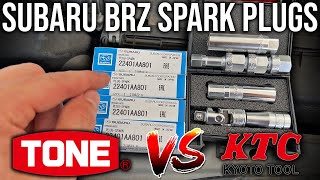
Typical fix: Replace all four spark plugs. Due to the boxer engine layout, access is challenging and often requires universal joints, multiple extensions, and patience. Some mechanics even slightly lift the engine for better access. 🎬 Watch: How to change spark plugs without lifting the engine.
Est. part cost: $60-$120 - Failing Ignition Coil(s) 🟡 Medium Probability Ignition coils are subject to high heat and can fail over time. While a single coil failure usually triggers a specific cylinder code (e.g., P0301), an intermittently failing coil or multiple weak coils can cause a random P0300.
How to confirm: Use a scan tool to monitor live misfire data for each cylinder. If one cylinder shows a higher count, swap its ignition coil with a known good cylinder. Clear the codes and drive the vehicle. If the misfire code changes to the cylinder you moved the coil to (e.g., P0301 becomes P0303), the coil is bad.
Typical fix: Replace the faulty ignition coil. It is often recommended to replace them as a full set if they are original and high-mileage, as others may fail soon.
Est. part cost: $50-$100 per coil - Vacuum Leak ⚪ Low Probability Vacuum hoses can become brittle and crack over time, allowing unmetered air into the intake manifold, which leans out the air-fuel mixture and can cause misfires across all cylinders.
How to confirm: Visually inspect all vacuum hoses connected to the intake manifold for cracks or disconnections. A professional smoke test is the most effective method to find small, hard-to-see leaks.
Typical fix: Replace the leaking hose or gasket.
Est. part cost: $10-$50
Rare But Worth Checking
- Dirty or Failing Fuel Injectors: The FA20D uses both port and direct injection. Carbon buildup on direct injectors or a clog in a port injector can disrupt fuel flow, leading to lean misfires. A failing direct injector seal is another known, though uncommon, failure point that can cause similar symptoms.
- Low Fuel Pressure: A weak high-pressure fuel pump (HPFP) or low-pressure in-tank pump can starve the engine of fuel, causing misfires across all cylinders, especially under high demand. The 2018-2019 BRZ was subject to a recall for the low-pressure pump.
- Weak or Failing Battery: Some owners have reported that a weak battery can cause an erroneous P0300 code during startup. The voltage drop during cranking may be misinterpreted by the ECU. 🎬 Watch: A helpful breakdown of common P0300 causes and fixes. A dealer resolved this for one owner by replacing the battery and performing the TSB reflash.
- Internal Engine Mechanical Issues: While rare on these later models, issues like a weak valve spring, low compression, or improper valve clearance could cause a misfire. This was a more significant concern on recalled 2013 models.
Diagnosis Steps
- Check for Technical Service Bulletins (TSBs): If you have a 2017-2020 BRZ with an automatic transmission and the code appears on cold starts, the first step is to check with a Subaru dealer about TSB #11-193-19. For Toyota 86 owners, reference TSB T-SB-0156-19 Rev.
- Scan for Other Codes: Use an OBD-II scanner to see if any other codes are present. A specific cylinder code (P0301-P0304) can help narrow the search.
- Check Battery Health: If the issue only occurs on startup, have the battery load tested. A weak battery has been anecdotally linked to erroneous P0300 codes.
- Inspect Ignition System: Check the maintenance history for spark plugs. If they are near or over the 60,000-mile service interval, plan to replace them. Remove and inspect the ignition coils for any visible damage or carbon tracking.
- Perform Coil Swap: If you can identify a cylinder with a higher misfire count using a scan tool's live data, swap its ignition coil with a different cylinder. If the misfire follows the coil, you've found the faulty part.
- Check for Vacuum Leaks: Visually inspect all vacuum hoses. For a definitive diagnosis, a smoke test on the intake system is the most reliable method to find leaks.
- Check Fuel System: Use a scan tool to monitor short-term and long-term fuel trims. High positive numbers can indicate a vacuum leak or a fuel delivery problem. A fuel pressure test can confirm the health of the fuel pump.
- Seek Professional Diagnosis: For deeper issues like fuel injector testing, checking for carbon buildup on intake valves, or diagnosing internal mechanical problems, professional tools and expertise are required.
Parts You'll Likely Need
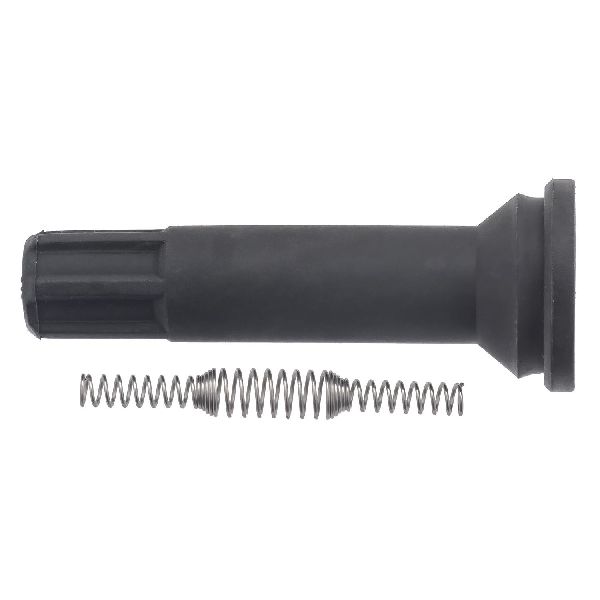
- Ignition Coil
(OEM #22433AA730)— Heat and vibration can cause ignition coils to fail over time, leading to weak spark and misfires. The connector design was updated for 2015+ models to improve reliability.
Trusted brands: Denso (673-1314), NGK (48944)
OEM price range: $90-$120
Aftermarket price range: $50-$80 - Spark Plug
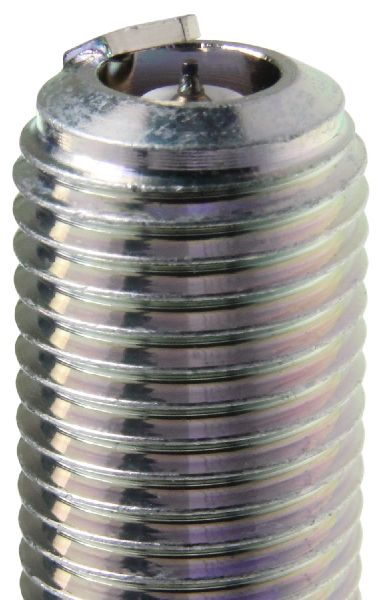
(OEM #22401AA801)— Spark plugs are a routine maintenance item with a 60,000-mile replacement interval. Worn plugs are a very common cause of misfires.
Trusted brands: NGK (ILKAR8H6), Denso (DXE24HR-C11)
OEM price range: $25-$35 per plug
Aftermarket price range: $15-$25 per plug
Related Codes That Often Appear With This One
- P0301, P0302, P0303, P0304 — If the random misfire becomes consistent in one cylinder, the ECM will log a specific cylinder misfire code alongside P0300. This can help isolate the problem to a specific coil, plug, or injector.
Technical Service Bulletins (TSBs) & Recalls
- 11-193-19 (Subaru): Announces availability of ECM reprogramming files to "stabilize engine RPM and combustion during warm-up due to slight differences in the air-fuel ratio between cylinders causing DTC P0300 to set." Applies to 2017-2020 BRZ models with automatic transmission.
- T-SB-0156-19 Rev (Toyota): The equivalent bulletin for the 2017-2020 Toyota 86, addressing the same cold start P0300 issue for automatic transmission models.
Platform-Specific Known Issues
- A significant number of 2017-2020 BRZ models (especially with automatic transmissions) may trigger a P0300 code during warm-up due to sensitive ECM logic. This is addressed by Subaru TSB #11-193-19, which involves a software update.
- The platform twin, the Toyota 86, is affected by the exact same issue, which is covered by Toyota TSB T-SB-0156-19 Rev.
Mechanic-Grade Diagnostic Values
- Ignition Coil Primary Resistance — expected: ~0.5 Ohms. Failure: A reading significantly higher or lower than the specification, or an open circuit (infinite resistance).
- Ignition Coil Secondary Resistance — expected: ~6.0 K-Ohms. Failure: A reading significantly outside the expected range.
- Port Fuel Injector Coil Resistance — expected: High-impedance, typically 8.5 Ohms or higher. All injectors should measure within 0.5 Ohms of each other.. Failure: An injector with a resistance reading that is significantly different from the others (e.g., more than 0.5 Ohms deviation) or shows an open/short circuit.
Hidden / Shadow Codes Worth Checking
- Mode 6 Misfire Data ($A2-$AB): The ECU tracks misfire counts for each cylinder even if they don't reach the threshold to set a P030x code. This data can reveal which cylinder(s) are contributing most to a P0300, helping to guide diagnosis toward a specific coil, plug, or injector. (see via A scan tool capable of reading Mode 6 data is required. The specific Test ID (TID) and Component ID (CID) for misfire counts (e.g., TID $53, CID $01-$04) can be accessed to view the raw counts for the current and previous 10 driving cycles.)
Wiring & Ground Locations
- Direct Injection (DI) Driver Module Ground — The DI driver module itself is typically mounted on the engine. It grounds through its mounting bolts to the chassis/engine.. A loose DI driver module can cause an intermittent or poor ground, leading to erratic injector performance and random misfires. Forum users have reported that simply verifying the mounting bolts are tight (spec is around 86 in-lb) can resolve mysterious P0300 codes.
- Main Engine Ground Straps — There are three primary ground straps: one on each side of the engine near the bottom, connecting to the frame rails, and a third at the top-rear of the engine/transmission, connecting to the transmission tunnel.. A corroded or loose engine ground can cause unstable voltage to the ignition coils and injectors, leading to weak spark or inconsistent fuel delivery and resulting in random misfires. This is especially critical during high-load situations.
- Cowl Side Panel Grounds (D1, D4) — Located on the left (D1) and right (D4) cowl side panels, typically behind the kick panels inside the cabin.. These are major grounding points for the instrument panel wiring harness, which communicates with the ECU. While less likely to be the primary cause, a poor ground here can contribute to various electrical gremlins that could be misinterpreted by the ECU.
Real Owner Repair Stories
- Reddit user RetsuKaiho (2017 Subaru BRZ with 15,000 miles) — Check engine light with code P0300, no other noticeable driving issues.
❌ Tried (didn't work) Initial diagnosis pointed towards a mechanical misfire.
✅ What actually fixed it The Subaru dealership performed a software update (ECU reflash), stating the issue was not part-related. This aligns with TSB 11-193-19. - Reddit user RandomIDs (2017 Subaru BRZ) — P0300 code.
✅ What actually fixed it The dealership performed the ECU reflash (TSB) and also replaced the battery, which failed a stress test. The dealer theorized that a voltage drop during startup was misinterpreted by the ECU as a misfire. The combination of the reflash and new battery solved the problem. - ft86club.com user MirthScout (Scion FR-S (Toyota 86 twin)) — P0300 and P0301, running rough and stalling at low RPM.
❌ Tried (didn't work) Replacing the ignition coil on cylinder 1., Spark plugs had been replaced one month prior.
✅ What actually fixed it After extensive diagnosis, the dealer, with guidance from Toyota, determined the cause was a weak/damaged exhaust valve spring on cylinder 1, requiring engine teardown to repair.
"I Checked Everything" — The Actual Cause
- In cases where a smoke test reveals no vacuum leaks, a persistent P0300 could be caused by a failing Direct Injector (DI) seal. This allows unmetered air to enter the combustion chamber directly, leaning out the mixture in that cylinder. It won't be detected by a conventional intake smoke test. Symptoms often include a distinct 'popping' sound from the intake, rough idle, and misfires that may not resolve with new plugs or coils.
When the Usual Fixes Don't Work
- While the TSB for an ECU reflash is a very common fix, particularly for automatic models with cold-start misfires, it is not a universal solution. Multiple owners, especially those with modified vehicles or higher mileage, have reported the P0300 code persisting after the reflash. In these cases, the root cause was often found to be mechanical, such as failing direct injector seals, significant carbon buildup on intake valves, or even internal engine issues like a weak valve spring. One owner of a 2017 BRZ reported that a combination of the ECU reflash AND a new battery was required to finally solve the code, as the dealer found the original battery was failing a load test and likely causing a voltage drop on startup that the ECU misinterpreted as a misfire.
Model Year Variations Within This Range
- 2017-2020 (Manual Transmission Only): For the 2017 model year refresh, manual transmission cars received engine updates including a new aluminum intake manifold, revised valves, camshafts, and a higher-flow exhaust manifold, resulting in a power bump to 205 hp. Automatic transmission models retained the previous 200 hp engine configuration. Manual models also received a shorter final drive ratio (4.3:1 vs 4.1:1), improving acceleration. These engine differences could subtly affect diagnostic characteristics compared to the automatic models.
- 2018-2020: The head unit was updated to include Apple CarPlay and Android Auto. This has no bearing on the P0300 code but is a key difference within the specified year range. Otherwise, mechanical components related to this code are identical from 2017-2020.
Diagnostic Flowchart
Other Known Issues on This Vehicle
Issues unrelated to this code that are worth knowing about as an owner of this generation:
- High-Pressure Fuel Pump 'Crickets' 🟡 Low — Very common across all model years. It's a chirping noise from the HPFP, especially when the engine is warm. It is widely considered harmless. (Ref: A TSB existed for early models to replace the pump, but the noise often returned. It is not a safety or reliability issue.)
- Tail Light Gasket Leak 🟠 Medium — Extremely common on 2013-2020 models. The OEM foam gasket fails, allowing water and condensation into the tail light housings, which can damage electronics. (Ref: No TSB or recall, but a robust aftermarket solution (Gasket Ninja) is well-documented in owner forums.)
- Throw-Out Bearing Noise 🟠 Medium — Common on manual transmission models. The bearing can become noisy (squeaking or rattling) when the clutch pedal is depressed. Failure can make shifting difficult.
- Direct Injection Carbon Buildup 🟠 Medium — Inevitable over time, typically becoming noticeable every 60,000-100,000 miles. Can cause misfires, rough idle, and power loss if not cleaned. (Ref: No TSB, this is a known characteristic of most direct-injection engines.)
- Valve Spring Failure (Early Models) 🔴 High — Primarily affected 2013 models. A valve spring could fracture, potentially causing engine stall or catastrophic failure. (Ref: Recall #18V724000 was issued for 2013 models. This is not a concern for the 2017-2020 year range but is a significant part of the platform's history.)
- Low-Pressure Fuel Pump Failure 🔴 High — Affects certain 2018-2019 BRZ models. The in-tank fuel pump can fail, leading to engine stalling. (Ref: Recall #20V218000 was issued by Subaru for affected VINs.)
Used vs. New Parts: Buying Guide for This Vehicle
When a used part is the smart pick: For a P0300 repair, sourcing a used ignition coil from a reputable salvage yard can be a cost-effective diagnostic step. If swapping a suspect coil with a used one resolves a cylinder-specific misfire, it confirms the diagnosis without the cost of a new part. Used engine covers or minor brackets are also perfectly acceptable.
Donor-vehicle mileage cap: roughly under 60000 miles for the part to have meaningful remaining life.
What to inspect on the donor part:
- For ignition coils, check for any cracks in the plastic housing or corrosion on the electrical connector pins.
- Ensure the rubber boot is pliable and free of tears or carbon tracking.
- Ask for the donor vehicle's VIN to verify mileage and check for any reported accident history; avoid parts from flood or fire-damaged cars.
OEM-only on this vehicle (don't cheap out):
- Spark Plugs: These are a wear item and should always be purchased new.
- Fuel Injector Seals: Given the low cost of the seals and the high labor involved in replacement, always use new OEM or high-quality aftermarket seals.
- PCV Valve: This is an inexpensive but critical emissions component; the risk of a faulty used part is not worth the minimal savings.
Aftermarket brands forum-validated for this vehicle:
- Ignition Coils: Denso, NGK, and MSD are well-regarded brands that meet or exceed OEM specifications.
- Spark Plugs: NGK (ILKAR8H6) and Denso (DXE24HR-C11) are the OEM suppliers and the most recommended choice.
- Fuel Injectors (if needed): Injector Dynamics (ID) is a highly respected brand in the FT86 community for performance applications.
Brands owners have reported issues with on this vehicle:
- Unbranded, no-name ignition coils and sensors from online marketplaces. These often have high failure rates and can cause more diagnostic headaches than they solve.
Real Owner Stories
Aggregated from forums and TSBs cited above. Mileages and costs reflect what owners reported in those sources.
2017-2020 Subaru BRZ (Automatic Transmission)
Symptoms: The Check Engine Light triggered specifically during the engine warm-up phase due to slight differences in the air-fuel ratio between cylinders.
What fixed it: A Subaru dealership reprogrammed the ECM with updated software to stabilize engine RPM and combustion during warm-up.
Cost: $0-$0
Source hint: Subaru TSB #11-193-19
2017-2020 Toyota 86 (Automatic Transmission)
Symptoms: Random misfire code P0300 appearing during cold starts or warm-up with no other noticeable driving symptoms.
What fixed it: ECM reprogramming using updated calibration files as specified in the manufacturer bulletin.
Cost: $0-$0
Source hint: Toyota TSB T-SB-0156-19 Rev
Related OBD-II Codes
Frequently Asked Questions
Does Subaru TSB #11-193-19 apply to my 2017-2020 BRZ with a manual transmission?
Will the ECM reprogramming for the P0300 code be covered under warranty?
I own a Toyota 86, not a BRZ. Is there a similar fix for my P0300 code?
How often should I change the spark plugs on my FA20D engine to prevent misfires?
My BRZ is throwing a P0300 code only during cold starts. Could this be the battery?
Is the 'cricket' chirping noise from my engine related to the P0300 misfire code?
Helpful Videos
We Have This Part in Stock



The information in this article is provided for general reference and educational purposes only. Vehicle specifications, procedures, and part compatibility can vary by production date, trim level, and region. Always consult your vehicle's factory service manual and verify part numbers before purchasing or performing repairs. Safety-critical components such as airbags, seat belts, and braking systems should be installed by a qualified professional.
- Subaru BRZ:
- 🎬 Helpful Videos
- 🛍️ Shop This Part
- What's Unique About the 2017-2020 Subaru BRZ
- Symptoms You May Notice
- Most Likely Causes
- Rare But Worth Checking
- Diagnosis Steps
- Parts You'll Likely Need
- Related Codes That Often Appear With This One
- Technical Service Bulletins (TSBs) & Recalls
- Platform-Specific Known Issues
- Mechanic-Grade Diagnostic Values
- Hidden / Shadow Codes Worth Checking
- Wiring & Ground Locations
- Real Owner Repair Stories
- "I Checked Everything" — The Actual Cause
- When the Usual Fixes Don't Work
- Model Year Variations Within This Range
- Diagnostic Flowchart
- Other Known Issues on This Vehicle
- Used vs. New Parts: Buying Guide for This Vehicle
- Real Owner Stories
- 2017-2020 Subaru BRZ (Automatic Transmission)
- 2017-2020 Toyota 86 (Automatic Transmission)
- Related OBD-II Codes
- Frequently Asked Questions
- 🎟️ Get 5% Off