

P0300 on 2016-2018 Honda Civic 1.5L Turbo: Random Misfire Causes and Fixes
On a 2016-2018 Civic 1.5T, a P0300 code is most often caused by faulty fuel injectors or a software issue related to fuel dilution in the engine oil. Check with a Honda dealer for applicable software updates under warranty extension (TSB A19-033) first. This is often free under a 6-year/unlimited-mile warranty extension. If the issue persists, expect to replace the fuel injectors with the updated part (16010-59B-315) for ~$450-$700 (parts).
- Before starting any repairs for P0300, contact a Honda dealer with your VIN to check for crucial software updates covered by a warranty extension.
- If software updates don't fix the issue, the most likely culprit is a set of faulty fuel injectors.
- A flashing check engine light signals a severe misfire that can quickly damage the catalytic converter; avoid driving the vehicle if this occurs.
- Due to the fuel dilution issue, it is wise to check your oil level regularly and consider shorter oil change intervals, especially if you take frequent short trips.
What's Unique About the 2016-2018 Honda Civic

For the 10th generation Civic with the 1.5L Turbo (L15B7) engine, P0300 is not a typical random misfire. It is strongly linked to two well-documented platform issues: fuel dilution and faulty fuel injectors. Early versions of this direct-injection engine could allow gasoline to mix with the engine oil, especially on short trips in cold weather, which fouls spark plugs and causes misfires. Separately, the fuel injectors themselves are a known high-failure item, often leaking fuel and leading to rich conditions and misfires. Honda has issued multiple Technical Service Bulletins (TSBs), chiefly A19-033, and a warranty extension to address these specific problems by updating engine and A/C control software. The same issues are also prevalent in other Honda models using this engine, like the CR-V and Accord.
Symptoms You May Notice

- Flashing or solid Check Engine Light
- Rough or unstable idle
- Engine hesitation or stumbling during acceleration
- Noticeable loss of power
- Reduced fuel economy
- Strong smell of gasoline from the oil dipstick or in the cabin.
- Engine oil level is over the full mark on the dipstick.
- A 'whirling noise' from the engine compartment, as specifically mentioned in TSB A19-033.
- Replacing only spark plugs when faulty fuel injectors are the root cause. The new plugs will quickly become fouled again by excess fuel.
- Replacing a single ignition coil when the issue is fuel-related (injectors, oil dilution) and affecting all cylinders.
- Ignoring the TSBs. Failing to check for the free software update and warranty extension before paying for other repairs.
- Replacing oxygen sensors, which are unlikely to cause a random misfire code on their own but may be flagged due to the rich condition created by other failing parts.
Most Likely Causes

- Faulty Fuel Injectors 🔴 High Probability Leaking fuel injectors are a widely documented failure on the L15B7 engine. They can get stuck open or fail electronically, causing a rich condition (often triggering P0172), fouling spark plugs, and contributing to the oil dilution problem. Many owners report that even after the TSB software fix, the P0300 code returned and was only resolved by replacing the injectors.
How to confirm: A mechanic can perform a fuel injector balance test. A DIY method is to check spark plugs; a plug that is black and sooty or smells strongly of fuel points to a leaking injector in that cylinder. Often, if one injector fails, the others are not far behind. In many forum-documented cases, replacing the injectors was the final step that solved the problem after plugs and coils failed to.
Typical fix: Replace all four fuel injectors as a set with the updated OEM part. Honda has released an updated part number (16010-59B-315) which supersedes the original (16010-59B-305).
Est. part cost: $420-$650 - ECU Software Calibration (Oil Dilution) 🔴 High Probability The original engine and climate control software on these models did not allow the engine to warm up quickly enough in certain conditions (short trips, cold weather), leading to fuel contaminating the engine oil. This fuel-thinned oil provides poor lubrication and can cause misfires. Honda's fix involves updating the A/C control unit software to increase engine load, helping it warm up faster.
How to confirm: Contact a Honda dealership and provide your vehicle's VIN. They can confirm if TSB A19-033 applies and if the update has already been performed. This fix is covered under a 6-year, unlimited mileage warranty extension. A high oil level that smells of gas is also a strong indicator.
Typical fix: The dealership will perform a software update for the engine control module (PGM-FI) and replace the A/C control unit per TSB A19-033. An oil change is also part of the procedure.
Est. part cost: $0 (if covered by warranty) - Worn or Fouled Spark Plugs 🟡 Medium Probability Spark plugs are a standard maintenance item, but their life can be shortened significantly by the oil dilution and leaking injector issues common to this engine. TSB A19-033 specifically includes spark plug inspection as a diagnostic step.
How to confirm: Remove and inspect the spark plugs. Look for black, sooty deposits (from a rich condition), wetness (from fuel or oil), or excessive wear on the electrode. The TSB provides images for comparison.
Typical fix: Replace all four spark plugs. It is critical to use the correct OEM-spec Iridium plugs from brands like NGK or Denso. This is often done alongside injector replacement.
Est. part cost: $60-$100 - Intake Valve Carbon Buildup ⚪ Low Probability As a Gasoline Direct Injection (GDI) engine, fuel is injected directly into the cylinder, so it never washes over the intake valves. Oil vapors from the PCV system can bake onto the valves, forming hard carbon deposits that disrupt airflow and cause misfires, typically after 40,000-60,000 miles.
How to confirm: This requires a technician to use a borescope to visually inspect the intake valves after removing the intake manifold.
Typical fix: The intake valves must be cleaned mechanically, most commonly through a process called walnut blasting.
Est. part cost: $0 (service only)
Rare But Worth Checking
- Weak Ignition Coil: While less common than plugs or injectors on this platform, a failing ignition coil can cause misfires. This is more likely to produce a single-cylinder misfire code (e.g., P0301) but can contribute to a P0300 if multiple coils are weak or the ECU cannot isolate the fault.
- Low Fuel Pressure: A weak high-pressure fuel pump or clogged filter can starve the engine for fuel, leading to lean misfires across all cylinders. This should be investigated if injectors and ignition components check out.
- Head Gasket Leak: A class-action lawsuit has been filed concerning head gasket leaks on some 1.5T engines, which can allow coolant into the cylinders and cause misfires. While less common than injectors or oil dilution for this code, it is a known severe potential cause, particularly on the related Honda Accord 1.5T.
Diagnosis Steps
- Check your vehicle's VIN with a Honda dealer to see if TSB A19-033 and the associated warranty extension are open for your car. This should always be the first step as the fix may be free.
- Check the engine oil level and smell. If the level is above the full mark and smells strongly of gasoline, the oil dilution issue is present.
- Scan for other DTCs. Codes like P0172 strongly point towards the fuel-related issue described in the TSBs.
- Remove and inspect all four spark plugs. Look for signs of heavy carbon fouling, fuel saturation, or oil contamination, which point to either leaking injectors or severe oil dilution.
- If a specific cylinder is suspected (e.g., a P0302 is also present), swap its ignition coil with a known good cylinder and see if the misfire code follows (e.g., P0302 moves to P0303). If it does, the coil is bad.
- If plugs and coils are good and the TSB has been performed, the fuel injectors are the next most likely cause. A professional injector balance test is recommended, but given the high failure rate, many owners and shops proceed with replacement as the next logical step.
- For higher mileage vehicles (60,000+ miles), consider a borescope inspection of the intake valves for carbon buildup.
- As a final step, a mechanic can perform a compression test and cylinder leak-down test to rule out internal engine mechanical problems like a head gasket leak or piston ring issues.
Parts You'll Likely Need

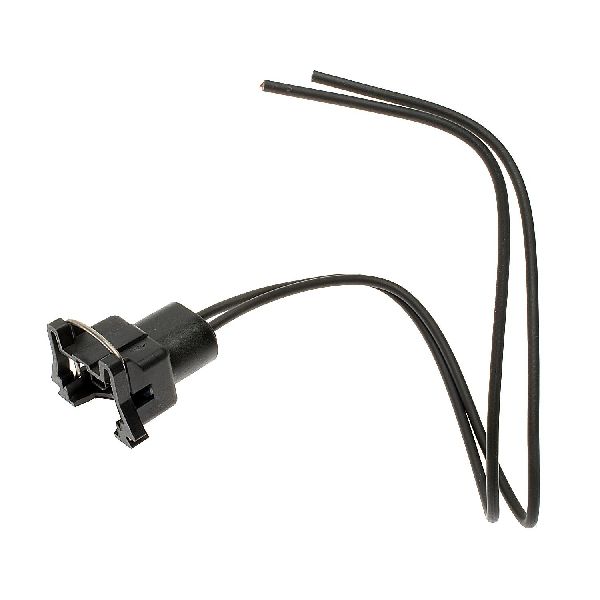
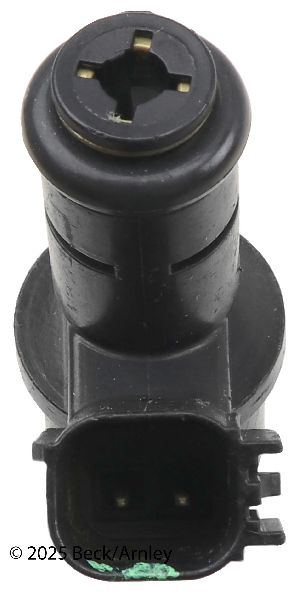
- Fuel Injector Set
(OEM #16010-59B-315)— Faulty/leaking injectors are a primary, well-documented cause of misfires and oil dilution on the 1.5T engine. They are typically replaced as a set of four. This part number supersedes 16010-59B-305.
Trusted brands: Honda (OEM)
OEM price range: $420-$650
Aftermarket price range: $300-$500 - Spark Plugs
(OEM #12290-59B-003)— These are often fouled by excess fuel from leaking injectors or oil dilution. They are a critical tune-up part and the first thing to inspect. TSB A19-033 includes their inspection and potential replacement.
Trusted brands: NGK, Denso
OEM price range: $80
Related Codes That Often Appear With This One
- P0172 — Stands for 'System Too Rich.' This code is explicitly mentioned in TSB A19-033 and is frequently seen with P0300 because leaking fuel injectors or the oil dilution issue cause too much fuel to enter the combustion chamber.
- P0301, P0302, P0303, P0304 — These codes indicate a misfire on a specific cylinder. A random misfire (P0300) may eventually become more frequent on certain cylinders, triggering one of these codes and helping to pinpoint a failing component like a specific injector or coil. All are mentioned in the relevant TSBs.
Technical Service Bulletins (TSBs) & Recalls

- TSB A19-033 (Supersedes A19-012 & A18-137): This is the primary TSB for the 2016-18 Civic. It outlines the warranty extension (6 years/unlimited mileage) and the corrective action for DTCs P0300-P0304 and P0172. The fix involves a PGM-FI (engine) software update, replacing the A/C control unit to help the engine warm up faster, and an oil change. It also mentions a potential 'whirling noise' from the engine as a related symptom.
- TSB A18-137: A precursor to A19-033, this TSB also addressed the drivability issues and misfire/rich codes for certain 2016-18 Civics, initially focusing on cold-weather states before being expanded.
- TSB 19-032 / 19-038: These bulletins are for the sister platform, the 2017-18 Honda CR-V, and address the exact same oil dilution, misfire, and rich condition issues, demonstrating the problem is with the L15B7 engine family, not just the Civic.
- TSB Bulletin #ONLD4D07082019_2: Notes that Civic vehicles equipped with the 1.5 liter turbocharged engine may experience driveability issues resulting in DTCs P0300, P0301, P0302, and P0303.
- TSB Bulletin #A19-012: This bulletin, later replaced by A19-033, specifically associated P0300 through P0304 and P0172 with a "Whirling Noise from Engine" and the need for A/C Control Unit replacement.
Platform-Specific Known Issues
- Fuel/Oil Dilution: The primary issue where unburned fuel contaminates engine oil due to software logic and short-trip/cold weather driving. Addressed by TSB A19-033.
- Leaking Fuel Injectors: A very common hardware failure point that causes rich conditions, misfires, and contributes to oil dilution. Often requires replacement even after the software update.
Mechanic-Grade Diagnostic Values
- Fuel Injector Resistance — expected: 10-13 Ohms. Failure: A reading outside of this range indicates a faulty injector.
- High Pressure Fuel Pump Boost Pressure (Standard L15B7) — expected: 16.5 psi. Failure: Significantly lower pressure under load can indicate a weak high-pressure fuel pump (HPFP), leading to lean misfires.
- High Pressure Fuel Pump Boost Pressure (Si L15B7) — expected: 20.3 psi. Failure: Significantly lower pressure under load can indicate a weak high-pressure fuel pump (HPFP), leading to lean misfires.
Hidden / Shadow Codes Worth Checking
- Mode 6 Misfire Counters: The ECU tracks misfires per cylinder even if they aren't frequent enough to set a specific P0301-P0304 code. Viewing Mode $06 data with an advanced scan tool can show which cylinder(s) are contributing to the P0300 count, helping to isolate a weak coil or failing injector. (see via Advanced OBD-II scan tool with Mode $06 functionality or the Honda HDS (Honda Diagnostic System) software.)
Scan Tool Commands That Help
- Honda HDS (or equivalent professional scan tool): Injector Coding / Relearn — This procedure is required after replacing fuel injectors. Each injector has a unique flow characteristic code that must be programmed into the ECU to ensure accurate fuel delivery and prevent performance issues or new misfires.
- Honda HDS (or equivalent professional scan tool): Misfire Counter Data — Use the live data list to view the misfire cycle counter for each cylinder. This allows a technician to see which specific cylinders are misfiring in real-time, even if only a general P0300 code is set. This is crucial for pinpointing the source of a random misfire.
Wiring & Ground Locations
- G101 — Typically located on or near the thermostat housing on the cylinder head, or on the driver's side of the intake manifold.. This is a primary power and logic ground for the PCM/ECU and multiple engine sensors. A loose or corroded G101 can cause erratic sensor readings, weak spark, and incorrect injector function, leading to random misfires that are difficult to diagnose.
- ECU Connector C (Pins C5, C6, C7, C8) — At the main Powertrain Control Module (PCM), which is typically located in the engine bay.. These are the specific control pins for the fuel injectors (Injector 1-4). A technician can use these pins to test for signal continuity and voltage from the ECU to the injector harness, ruling out a wiring break or ECU driver failure.
- Chassis to Transmission Ground — A heavy gauge wire running from the transmission case to the vehicle's chassis, often near the driver's side frame rail.. This is a main ground path for the entire engine and transmission assembly. A poor connection here can create widespread electrical issues, including misfires, by affecting the ground reference for coils and injectors.
Real Owner Repair Stories
- Reddit user in /r/civic (10th Gen 1.5T Civic Touring) — Stuttering when accelerating, misfires when pushed hard, strong fuel smell, and bouncing RPMs. A misfire code would set and then clear, re-triggering when the car went into limp mode.
❌ Tried (didn't work) Replacing all four spark plugs, Replacing all four ignition coils, Using a fuel injector cleaner additive
✅ What actually fixed it The issue was diagnosed by a Honda dealer as faulty fuel injectors. Replacing the fuel injectors was the necessary repair. - NHTSA ODI #11628310 — An owner reported multiple dashboard warnings including "Emissions System Problem" and "Power Steering Issue." Scanning revealed codes P0300, P0301, P0302, P0303, and P0304. Despite changing spark plugs and coils—where one set showed signs of rust—the misfires persisted.
OEM Part Supersession History
16010-59B-305→16010-59B-315— The original fuel injectors were prone to leaking and failure, contributing to the oil dilution and misfire issues. The -315 part is the updated revision to address these problems.30520-59B-013→30520-59B-023— The ignition coil part was updated. Part updates often address reliability or performance improvements.
Heads up: The older part number will still work, but the newer -023 part is the recommended replacement.
Model Year Variations Within This Range
- 2016-2018: All 2016-2018 1.5T Civics were potentially affected by the oil dilution issue. The primary variation is whether the vehicle has had the corrective software update from TSB A19-033 performed. Vehicles without the update are significantly more likely to experience P0300 due to this root cause.
Diagnostic Flowchart
Real Owner Stories
Aggregated from forums and TSBs cited above. Mileages and costs reflect what owners reported in those sources.
2017 Honda Civic Si 1.5L Turbo — 122000 miles
Symptoms: Experienced a P0172 (Bank 1 too rich) code and multiple dashboard warning lights. An independent shop failed to diagnose it.
What fixed it: A Honda dealer replaced the fuel injectors, which resolved all issues.
Cost: $1900-$2000
Source hint: Reddit (r/CivicSi) thread titled 'Mechanic says injectors are bad'
Honda Civic 1.5L Turbo — 73000 miles
Symptoms: Required fuel injector replacement; noted that the job involves significant labor reaching the intake manifold.
What fixed it: Quoted for fuel injector replacement ($669 for OEM parts, plus labor and diagnostics).
Cost: $1600-$1600
Source hint: Reddit (r/CivicSi) thread titled 'Fuel Injector replacement $1600?'
Honda Civic 1.5L Turbo
Symptoms: P030x codes returning even after replacing spark plugs and ignition coils.
What fixed it: Replacing the fuel injectors was the definitive fix, especially after the TSB software update had already been performed.
Source hint: CivicX.com Forum thread titled 'General P030x Owner Experiences'
Related OBD-II Codes
Frequently Asked Questions
Does TSB A19-033 apply to my 2016-2018 Civic 1.5T?
Why does my oil dipstick smell strongly of gasoline?
I already had the TSB A19-033 software update done, but P0300 came back. What's next?
What is the updated part number for the fuel injectors on the L15B7 engine?
What is the 'whirling noise' coming from my engine compartment?
Can carbon buildup cause a P0300 on my Civic?
We Have This Part in Stock


The information in this article is provided for general reference and educational purposes only. Vehicle specifications, procedures, and part compatibility can vary by production date, trim level, and region. Always consult your vehicle's factory service manual and verify part numbers before purchasing or performing repairs. Safety-critical components such as airbags, seat belts, and braking systems should be installed by a qualified professional.
- Honda Civic:
- 🛍️ Shop This Part
- What's Unique About the 2016-2018 Honda Civic
- Symptoms You May Notice
- Most Likely Causes
- Rare But Worth Checking
- Diagnosis Steps
- Parts You'll Likely Need
- Related Codes That Often Appear With This One
- Technical Service Bulletins (TSBs) & Recalls
- Platform-Specific Known Issues
- Mechanic-Grade Diagnostic Values
- Hidden / Shadow Codes Worth Checking
- Scan Tool Commands That Help
- Wiring & Ground Locations
- Real Owner Repair Stories
- OEM Part Supersession History
- Model Year Variations Within This Range
- Diagnostic Flowchart
- Real Owner Stories
- 2017 Honda Civic Si 1.5L Turbo — 122000 miles
- Honda Civic 1.5L Turbo — 73000 miles
- Honda Civic 1.5L Turbo
- Related OBD-II Codes
- Frequently Asked Questions
- 🎟️ Get 5% Off