

P0300 on 2017-2019 Ford Escape 1.5L/2.0L EcoBoost: Misfire Causes & Coolant Intrusion Fixes
On these EcoBoost engines, P0300 is a major warning sign for coolant leaking into the cylinders due to a known engine block design flaw. Check for unexplained coolant loss immediately. If coolant intrusion is the cause, the fix is a partial or full engine replacement with a redesigned block, which is a very expensive repair. Ford has acknowledged this with multiple TSBs and a limited extended warranty program.
- For a 2017-2019 Escape with an EcoBoost engine, P0300 is a serious code that points strongly to a known coolant intrusion engine defect.
- Your first diagnostic step should be to check the coolant level. Unexplained coolant loss is a critical symptom.
- Do not simply replace spark plugs and coils without ruling out the coolant issue, as this is a common and costly misdiagnosis.
- The official fix for coolant intrusion is an expensive engine replacement, as documented in Ford TSBs 19-2346 and 20-2100.
What's Unique About the 2017-2019 Ford Escape

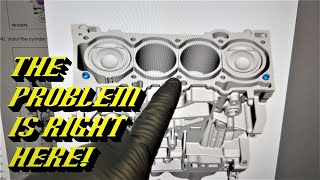
For the 2017-2019 Escape with a 1.5L or 2.0L EcoBoost engine, P0300 is not a typical ignition problem. It is strongly linked to a serious, documented design defect in the 'open-deck' engine block. The casting has a thin channel or 'slit' for coolant to pass between the cylinders; this area lacks structural support and can develop micro-cracks over time, allowing coolant to seep directly into the combustion chamber. This issue, known as 'coolant intrusion,' is the subject of multiple Ford Technical Service Bulletins (TSBs) and class-action lawsuits, and often leads to catastrophic engine failure. While standard causes like spark plugs can trigger the code, the high probability of coolant intrusion must be the first consideration on this specific platform.
Symptoms You May Notice

- Check Engine Light is on or flashing
- Rough or shaky idle
- Engine hesitation or stumbling during acceleration
- Noticeable loss of engine power
- Poor fuel economy
- White, sweet-smelling smoke from the exhaust (a key sign of coolant burn)
- Unexplained, steady drop in the engine coolant level in the reservoir with no visible external leaks
- Gurgling sound from the engine area after shutting off the vehicle
- An odd chemical smell accompanying engine sputtering, as noted in NHTSA ODI #11698129
- Replacing only the spark plugs and ignition coils without checking for coolant loss. Many owners do this first, only for the P0300 code to return because the underlying issue was coolant intrusion fouling the new plugs.
- Replacing oxygen (O2) sensors. While a faulty O2 sensor can affect the air-fuel mixture, it is not a primary or common cause of a P0300 code on this vehicle.
- Assuming a bad head gasket. While the symptoms are identical, the failure on these specific EcoBoost engines is typically a crack in the engine block itself, not a failure of the gasket between the block and the cylinder head.
Most Likely Causes

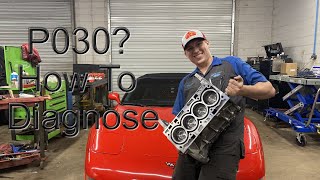
- Engine Coolant Intrusion into Cylinders 🔴 High Probability A design flaw in the 'open-deck' engine block casting creates a weak point between the cylinders. Over time, this can lead to cracks or corrosion that allow coolant to leak directly into the combustion chamber. Ford has acknowledged this with TSBs 19-2346 (for 2.0L, later superseded by 22-2229) and TSB 20-2100 (for 1.5L). 🎬 Watch: How to diagnose 1.5L misfires and coolant loss Manufacturer Bulletin #SSM 47204 specifically notes that the 2.0L EcoBoost may exhibit a runs rough condition with P0300 due to coolant intrusion caused by corrosion on the engine block. Ford also initiated Customer Satisfaction Program 21N12, extending the warranty for this specific issue on some 1.5L models to 7 years or 84,000 miles.
How to confirm: Check for a consistently dropping coolant level without any visible external leaks. A professional should perform a cooling system pressure test (which may need to be held for several hours to show a drop) and then use a borescope to visually inspect the cylinders for coolant, which may look like a 'steam-cleaned' piston or visible liquid. NHTSA ODI #11698129 describes a case where a mechanic found a cylinder to be wet after removing a spark plug, confirming the intrusion.
Typical fix: For the 1.5L engine, Ford specifies replacing the engine short block with a redesigned part (TSB 20-2100). For the 2.0L engine, the fix is a complete long block engine assembly replacement (TSB 19-2346). The replacement blocks have a revised casting to prevent the failure from reoccurring.
Est. part cost: $3000-$7000 - Worn or Fouled Spark Plugs 🟡 Medium Probability Direct-injection engines can be hard on spark plugs. If the plugs are original or past their service interval, they are a common cause for misfires. Coolant or oil fouling can also ruin them.
How to confirm: Remove the spark plugs and inspect them for wear on the electrode, carbon tracking, or fouling from oil or coolant. A coolant-fouled plug may appear unusually clean or have white, chalky deposits. The service interval is typically 60,000-100,000 miles, but they can fail sooner.
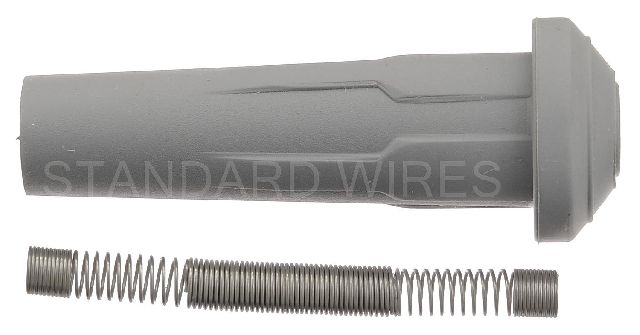
Typical fix: Replace all four spark plugs. It is recommended to also replace the ignition coil boots at the same time. Use OEM-spec plugs (e.g., Motorcraft SP-537 for 2.0L).
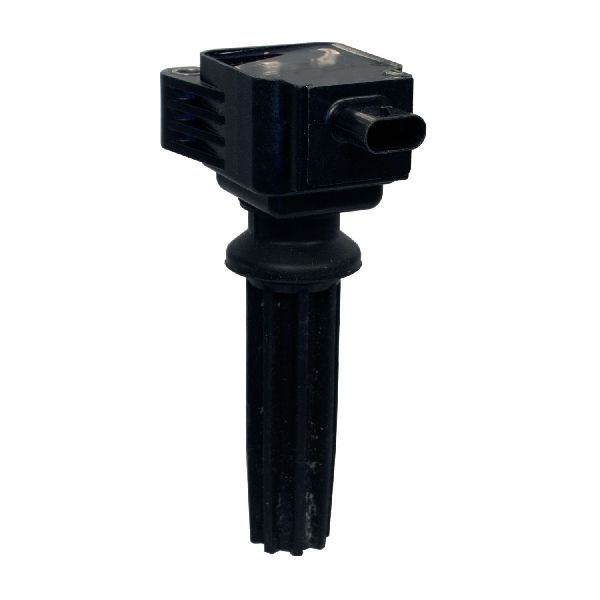
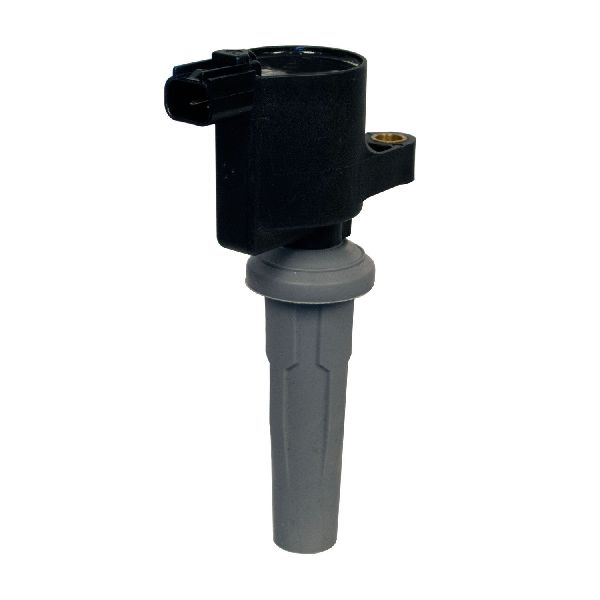
Est. part cost: $40-$100 - Failed Ignition Coils ⚪ Low Probability
How to confirm: A mechanic can use a scan tool to view misfire data (Mode $06) to see if the random misfires are more heavily weighted on one or two cylinders. Swapping the suspected coil with a known good one and seeing if the misfire follows the coil can confirm the failure.
Typical fix: Replace the faulty ignition coil(s). It is often recommended to replace them as a set if they are original and high-mileage.
Est. part cost: $50-$120 per coil
Rare But Worth Checking
- Intake Manifold Bolt Issues: According to Manufacturer Bulletin #TSB 17-0028, an intake manifold bolt may back out, causing damage to the charge air cooler and resulting in low coolant, white exhaust smoke, and P0300 codes.
- Leaking Fuel Injectors: A leaking or clogged fuel injector can disrupt the air/fuel ratio enough to cause a misfire across multiple cylinders.
- Vacuum Leak: A significant leak from a cracked hose (like a PCV line) or failed intake manifold gasket can lean out the air/fuel mixture and cause random misfires.
- Low Fuel Pressure: A failing high-pressure fuel pump or a faulty fuel pressure sensor can starve the engine for fuel under load, causing misfires.
- Stuck Purge Valve: A canister purge valve stuck open can create a vacuum leak, disrupting the air-fuel ratio and causing random misfires, sometimes particularly noticeable after refueling.
Diagnosis Steps

- Check the engine coolant level in the reservoir. If it is low, and there are no visible external leaks, suspect coolant intrusion. This is the most important first step for this vehicle.
- Scan for other DTCs. Codes like P0316 or any specific cylinder misfire (P0301-P0304) can provide valuable clues. NHTSA ODI #11698129 notes that P0300, P0301, and P0316 often appear together when a cylinder is compromised.
- If coolant loss is suspected, have a professional perform a cooling system pressure test (for several hours) and a chemical block test (to detect exhaust gases in the coolant). A borescope inspection of the cylinders is the definitive diagnostic step.
- If coolant intrusion is ruled out, proceed with standard misfire diagnosis.
- Inspect the spark plugs for wear, damage, or fouling (especially coolant fouling, which looks like a white, chalky deposit or a steam-cleaned appearance).
- Test the ignition coils. This can be done by swapping a suspected coil with one from a cylinder that is not misfiring.
- Check for vacuum leaks using a smoke machine. Pay attention to all hoses connected to the intake manifold.
- Test fuel pressure to ensure the fuel pump and high-pressure pump are operating within specification.
Parts You'll Likely Need

- Engine Short Block Assembly (1.5L)
(OEM #DS7Z-6009-G)— This is the official Ford-recommended repair for coolant intrusion on the 1.5L EcoBoost engine per TSB 20-2100. 🎬 Watch a professional 1.5L short block replacement walkthrough
Trusted brands: Motorcraft
OEM price range: $3000-$4000 - Engine Long Block Assembly (2.0L)
(OEM #Varies by VIN, requires updated block design.)— This is the official Ford-recommended repair for coolant intrusion on the 2.0L EcoBoost engine per TSB 19-2346.
Trusted brands: Motorcraft
OEM price range: $5000-$7000
Aftermarket price range: $3000-$5000 - Spark Plugs (2.0L)
(OEM #Motorcraft SP-537 (CYFS-12Y-2))— Worn or coolant-fouled spark plugs are a common cause of misfires and should be replaced if coolant intrusion is ruled out, or as part of the engine replacement job.
Trusted brands: Motorcraft, NGK
OEM price range: $60-$100
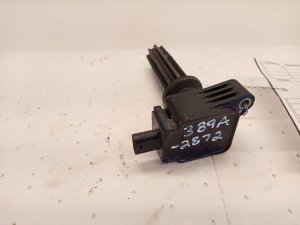
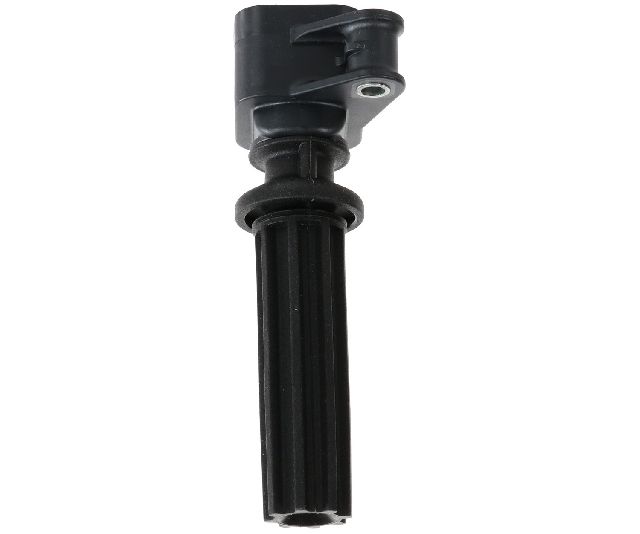
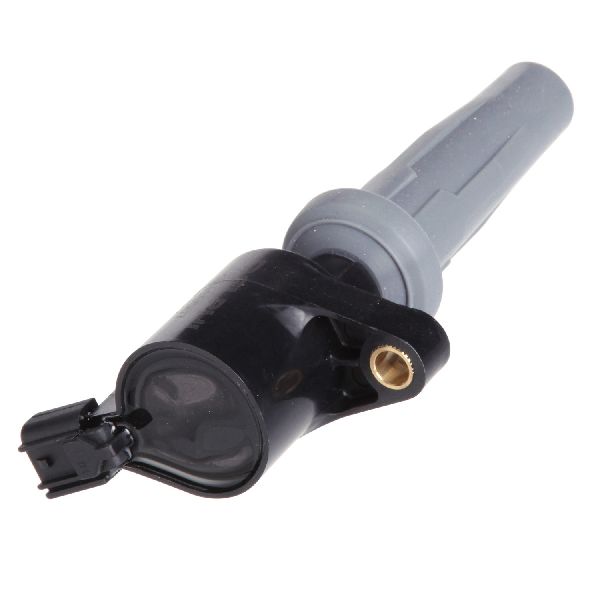
Aftermarket price range: $40-$70 - Ignition Coil — A failed ignition coil can cause misfires. While less common than coolant intrusion on this platform, it is a possible cause.
Trusted brands: Motorcraft, Bosch, Delphi
OEM price range: $80-$120
Aftermarket price range: $40-$80
Related Codes That Often Appear With This One
- P0301, P0302, P0303, P0304 — These codes pinpoint a misfire to a specific cylinder. They often appear with P0300 as the PCM detects both specific and random misfire events, especially in coolant intrusion cases where one or two cylinders are more affected.
- P0316 — This code means 'Misfire Detected on Startup (First 1000 Revolutions)'. It is very common with coolant intrusion, as coolant that has leaked into a cylinder overnight will cause an immediate misfire on a cold start.
- P0217, P1285, P1299 — These are engine or cylinder head over-temperature codes. They are frequently logged alongside misfire codes when coolant intrusion is the cause, as the loss of coolant leads to overheating. Manufacturer Bulletin #TSB 17-0028 specifically links P0217 and P1299 to low coolant conditions.
Technical Service Bulletins (TSBs) & Recalls
- TSB 19-2346 (2.0L - Superseded)
- TSB 22-2229 (2.0L - Current)
- TSB 20-2100 (1.5L)
- Customer Satisfaction Program 21N12 (1.5L)
- Bulletin #TSB 17-0028 (Intake Manifold Bolt/Charge Air Cooler Damage)
- Bulletin #SSM 47204 (2.0L Engine Block Corrosion/Coolant Intrusion)
Platform-Specific Known Issues
- A known design defect in the 1.5L and 2.0L EcoBoost engine blocks can cause coolant to leak into the cylinders.
Mechanic-Grade Diagnostic Values
- High-Pressure Fuel Rail Pressure (at idle) — expected: ~700-1500 PSI. Failure: Significant drops under load, especially if they coincide with misfire events. One owner noted pressure dropping to 500 PSI during misfires when it should have been ~1900 PSI.
- Low-Side Fuel Pressure (from in-tank pump) — expected: 55-72 PSI. Failure: Readings significantly outside this range, or a sensor reading that is erratic or doesn't correlate with desired pressure.
- Ignition Coil Primary Resistance — expected: 0.4 to 0.7 ohms. Failure: A reading of zero indicates a short; a significantly higher reading indicates an open circuit.
- Ignition Coil Secondary Resistance — expected: 5,000 to 8,000 ohms (5k-8k Ω). Failure: Readings significantly outside this range suggest a faulty coil.
Hidden / Shadow Codes Worth Checking
- Mode $06, Test ID $A2-$AF: This is not a DTC, but a system monitor that tracks misfire counts for each individual cylinder. These counts can identify a cylinder that is misfiring intermittently but not frequently enough to set a specific P030x code. It is extremely useful for narrowing down a P0300. (see via Requires a scan tool capable of reading Mode $06 data.)
Scan Tool Commands That Help
- Ford IDS (or equivalent high-level scanner like FORScan): Misfire Monitor Neutral Profile Correction — This procedure MUST be performed after replacing a PCM, crankshaft sensor, or performing major engine repairs like a short block or long block replacement. Failure to perform this relearn will often cause persistent P0300, P0301-P0304 codes because the PCM has not learned the new crankshaft position sensor profile.
- Ford IDS: Power Balance Test — This is a live diagnostic test that shows the RPM contribution of each cylinder in real-time. A cylinder that shows a significant RPM drop compared to others is the source of the misfire. It helps pinpoint the issue when only a general P0300 code is present.
- Ford IDS: Relative Compression Test — This is a quick, non-invasive way to check for mechanical engine issues. It measures the electrical draw on the starter motor as it cranks the engine, identifying cylinders with lower compression without needing to remove spark plugs for a manual test.
Wiring & Ground Locations
- Low-Pressure Fuel Sensor — On the fuel line coming up the firewall on the driver's side, before the high-pressure fuel pump.. A faulty low-pressure fuel sensor can provide incorrect data to the PCM, leading to improper commands for the high-pressure pump, which can cause fuel starvation and random misfires.
- Vapor Canister Purge Valve — Mounted on the front of the engine, with hoses connecting to the intake system.. If this valve sticks open, it creates a constant vacuum leak of fuel vapors into the intake manifold, disrupting the air/fuel ratio and causing random misfires that can be difficult to diagnose with a smoke test if the EVAP system isn't properly tested.
Real Owner Repair Stories
- YouTube user 'Fix Dish' (2018 Ford Escape 1.5L EcoBoost, 122,000 miles) — Constant P0300, P0301, and P0304 codes that would appear intermittently, especially under light load going uphill. The issue persisted for 8,000 miles after an engine short block replacement.
❌ Tried (didn't work) Engine short block replaced (due to coolant intrusion), New fuel injectors, New spark plugs, New ignition coils
✅ What actually fixed it The 'Misfire Monitor Neutral Profile Correction' procedure was performed by a Ford dealer using the IDS scan tool. The technician explained that anytime the crank trigger wheel is removed or disturbed (as it is during a short block replacement), this relearn is mandatory or the PCM will not correctly interpret crankshaft position, leading to false misfire codes. - NHTSA ODI #11612824 — An owner reported the vehicle was towed to a mechanic who diagnosed random misfire codes (P0300) and found antifreeze (coolant) in cylinder #3, noting this should be covered under the extended warranty.
- NHTSA ODI #11354494 — An owner reported that a dealership mechanic tested the vehicle for transmission issues but found a P0300 code instead.
"I Checked Everything" — The Actual Cause
- In some cases, a P0300 that appears after refueling can be caused by a faulty or stuck-open EVAP purge valve. This acts as a vacuum leak, but it may not be caught by a standard smoke test unless the test is specifically configured to include and actuate the EVAP system. The valve fails open, allows unmetered fuel vapor into the intake, and causes random misfires.
OEM Part Supersession History
e.g., CJ5Z-6010-B (example for early blocks)→DS7Z-6009-G, DS7Z-6009-J, and other newer revisions— The original 1.5L EcoBoost short block had a design flaw with an open-deck and thin walls between cylinders. The revised short blocks (specified in TSBs like 20-2100) feature a redesigned, more robust block casting to prevent the cracks that lead to coolant intrusion.
Heads up: Using an old-stock, original-design block for a repair will almost certainly lead to a repeat failure of coolant intrusion.
Model Year Variations Within This Range
- 2017: For the 2017 model year, the 1.6L EcoBoost was replaced by the new 1.5L EcoBoost engine. While both engines have reputations for coolant-related problems, the specific block design flaw leading to coolant intrusion and P0300 is most famously associated with the 1.5L and 2.0L engines in the 2017-2019 range.
- 2017-2019: There were no major mechanical changes to the 1.5L or 2.0L engines within this specific date range, however, Ford did issue running updates to the engine block design. TSB 20-2100 specifies it applies to 1.5L Escapes built on or before April 8, 2019, implying vehicles built after this date may have received the updated block from the factory.
Diagnostic Flowchart
Real Owner Stories
Aggregated from forums and TSBs cited above. Mileages and costs reflect what owners reported in those sources.
2019 Ford Escape
Symptoms: Check engine light was on, slight vibration in the car. Diagnostic tool showed 'cylinder 2 misfire detected' (P0302). Disconnecting the #2 coil pack made no change in the engine's running condition.
What fixed it: Dealership diagnosed a coolant leak inside the cylinder requiring major repair; changing the coil and plugs did not resolve the issue.
Source hint: YouTube comment 'Fix It All'
2017 Ford Escape
Symptoms: Diagnosed with the known coolant intrusion issue requiring an engine replacement after the dealer quoted $9,000 for a long block.
What fixed it: Short block replacement (owner successfully sued Ford in small claims court for the repair cost).
Cost: $7000-$9000
Source hint: Reddit: I Successfully Sued Ford in Small Claims Court in Colorado over the Coolant Intrusion Issue
2017 Ford Escape 2.0L
Symptoms: Diagnosed with coolant intrusion. The dealer and warranty company initially wanted to perform a head gasket repair.
What fixed it: Full engine replacement (long block) after the owner educated the dealer and warranty company about the TSB requirements.
Source hint: Reddit: 2017 Escape 2.0 - Cost of Engine Replacement due to Coolant Intrusion and Dealer Education
Ford Escape 2.0L EcoBoost
Symptoms: Rough idle when cold accompanied by specific cylinder misfire codes (P0301/P0302).
What fixed it: Diagnosed with coolant intrusion based on TSB 22-2133 and TSB 22-2229.
Source hint: FordEscape.org: Rough Idle When Cold - P0301/2 Code - coolant intrusion - TSB 22-2133 & TSB 22-2229 - 2.0L Ecoboost
Related OBD-II Codes
Frequently Asked Questions
Is the coolant intrusion issue covered under warranty for my 1.5L Escape?
What is the recommended fix if my 2.0L EcoBoost has coolant leaking into the cylinders?
Why does my Escape have a rough idle and a dropping coolant level with no puddles underneath?
Can I just replace the head gasket to fix the coolant leak on my 2017 Escape?
What spark plugs should I use if I need to replace them on my 2.0L Escape?
How can a mechanic confirm if my P0300 code is caused by coolant intrusion?
Helpful Videos

Used OEM Parts in Stock


New Aftermarket Parts Available

The information in this article is provided for general reference and educational purposes only. Vehicle specifications, procedures, and part compatibility can vary by production date, trim level, and region. Always consult your vehicle's factory service manual and verify part numbers before purchasing or performing repairs. Safety-critical components such as airbags, seat belts, and braking systems should be installed by a qualified professional.
- Ford Escape:
- 🎬 Helpful Videos
- 🛍️ Shop This Part
- What's Unique About the 2017-2019 Ford Escape
- Symptoms You May Notice
- Most Likely Causes
- Rare But Worth Checking
- Diagnosis Steps
- Parts You'll Likely Need
- Related Codes That Often Appear With This One
- Technical Service Bulletins (TSBs) & Recalls
- Platform-Specific Known Issues
- Mechanic-Grade Diagnostic Values
- Hidden / Shadow Codes Worth Checking
- Scan Tool Commands That Help
- Wiring & Ground Locations
- Real Owner Repair Stories
- "I Checked Everything" — The Actual Cause
- OEM Part Supersession History
- Model Year Variations Within This Range
- Diagnostic Flowchart
- Real Owner Stories
- 2019 Ford Escape
- 2017 Ford Escape
- 2017 Ford Escape 2.0L
- Ford Escape 2.0L EcoBoost
- Related OBD-II Codes
- Frequently Asked Questions
- 🎟️ Get 5% Off