

P0300 on 2008-2017 Buick Enclave: Random Misfire Causes and Fixes
P0300 on a Buick Enclave most often points to worn spark plugs and failing ignition coils. However, a notorious and expensive potential cause, especially on 2008-2012 models, is a stretched timing chain. A basic tune-up with plugs and coils can cost $400-$950, while a timing chain job can exceed $2,000.
- P0300 on a Buick Enclave is a serious code that should be addressed immediately to prevent damage to the catalytic converters.
- Always start diagnosis with the basics: worn spark plugs and failing ignition coils are the most common culprits.
- Be aware of the notorious timing chain issue, especially on 2008-2012 models. If you see codes P0008 or P0017 alongside P0300, the timing chain is the likely cause.
- Due to the labor involved in removing the intake manifold, always replace all three rear ignition coils and all six spark plugs at the same time.
- If misfires only happen on cold starts, suspect carbon buildup on the intake valves, a common issue for this direct-injection engine.
What's Unique About the 2008-2017 Buick Enclave

The first-generation Enclave's 3.6L V6 engine, particularly the earlier LLT version (2008-2012), is infamous for premature timing chain stretching. This issue was so prevalent on 2009 models that GM issued Special Coverage Adjustment #14329, extending the warranty for this specific failure. The problem is often exacerbated by GM's original long oil change intervals and a fixed-orifice PCV system in the driver-side valve cover that is prone to clogging. Seeing P0300 with timing-related codes like P0008 or P0017 is a near-certain indicator of this issue. Additionally, as these are direct-injection engines, they are prone to carbon buildup on intake valves, which can cause cold-start misfires and trigger a P0300 code.
Symptoms You May Notice
- Rough or shaky idle
- Hesitation or stumbling during acceleration
- Noticeable loss of engine power
- Flashing or solid Check Engine Light
- Decreased fuel economy
- Engine stalling
- Smell of gasoline from the exhaust
- Replacing oxygen (O2) sensors. While a bad O2 sensor can cause fuel mixture issues leading to a misfire, it is rarely the root cause of a P0300 code.
- Replacing only one spark plug or coil when multiple are old or failing, leading to the code returning.
- Replacing the catalytic converter. A misfire can destroy a converter, but the converter itself is not the cause of the misfire.
Most Likely Causes

- Worn or Fouled Spark Plugs 🔴 High Probability Spark plugs are a standard wear item with a 100,000-mile service interval that is often not met. Accessing the rear bank (cylinders 1, 3, 5) is labor-intensive as it requires removing the intake manifold, so they are often neglected.
How to confirm: Inspect the spark plugs for wear (worn electrode), fouling (black, oily, or white deposits), and an incorrect gap. A misfire that was previously random may settle on one cylinder (e.g., P0301), allowing you to swap the plug to see if the misfire follows.
Typical fix: Replace all six spark plugs. It is highly recommended to use the specified ACDelco Iridium plugs (e.g., 41-109 for LLT, 41-123 for LFX). Since the intake manifold must be removed, it's wise to replace the rear ignition coils and intake gaskets at the same time.
Est. part cost: $60-$150 - Failing Ignition Coils 🔴 High Probability Heat and age cause the coil-on-plug units to fail. The rear bank coils are under the intake manifold and experience more heat-soak, leading to a higher failure rate. TSB PIP5038 specifically addresses misfires from heat-stressed coils on these vehicles.
How to confirm: Use a scan tool to identify which cylinders have the highest misfire counts. Swap a suspected bad coil with a coil from a known good cylinder. If the misfire code moves to the new cylinder (e.g. P0301 becomes P0302), the coil is faulty. Resistance tests can be inconclusive; a coil can test good but still fail under load.
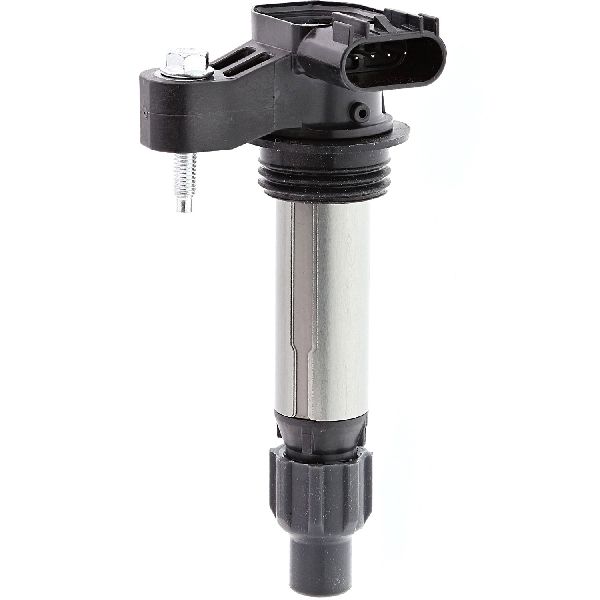
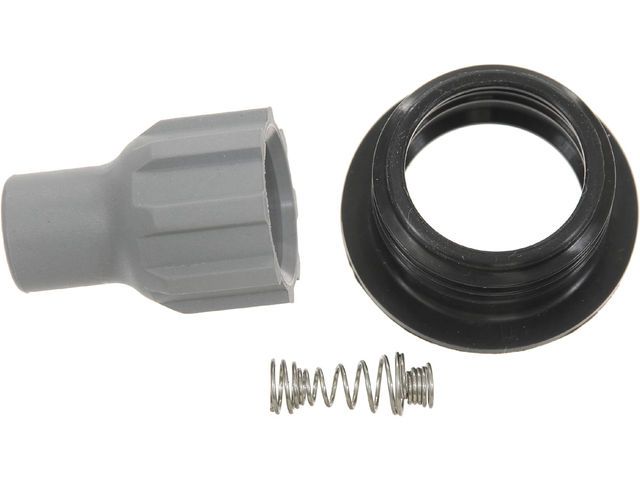
Typical fix: Replace the faulty ignition coil (OEM part is ACDelco 12632479). Given the labor to access the rear bank, it is common practice to replace all three rear coils and all six spark plugs if one fails.
Est. part cost: $40-$100 per coil - Stretched Timing Chains 🔴 High Probability A widely documented design flaw in early 3.6L V6 engines, especially the LLT (2008-2012). GM acknowledged this with Special Coverage Adjustment 14329 for 2009 models. Extended oil change intervals recommended by the original oil life monitor contributed to premature chain wear.
How to confirm: Check for accompanying codes like P0008, P0017, P0018, or P0019. These codes are strong indicators of a timing chain issue. A rattling noise from the engine for a few seconds on startup is another classic symptom. A mechanic can measure chain deflection (stretch) with a scan tool.
Typical fix: This is a major and expensive repair that involves replacing the primary and secondary timing chains, tensioners, and guides. It is not a typical DIY job and can cost $2000-$3500 at a shop. Using a quality OEM kit is critical.
Est. part cost: $300-$700 for a full kit - Intake Valve Carbon Buildup 🟡 Medium Probability As a direct-injection engine, fuel is sprayed directly into the cylinder, not over the intake valves. This allows oil vapors from the PCV system to bake onto the hot valves, restricting airflow and causing misfires, especially on cold starts.
How to confirm: This requires removing the intake manifold and inspecting the intake ports and valves with a borescope. Misfires that are worse on a cold start and improve as the engine warms are a classic symptom.
Typical fix: The valves must be manually cleaned. The most effective method is walnut shell blasting, which is a professional service costing $500-$1000. Some owners install an oil catch can on the PCV system to reduce future buildup.
Est. part cost: $20-$40 for gaskets, but labor is high
Rare But Worth Checking
- Clogged or Dirty Fuel Injectors: While less common than ignition or timing issues, injectors can become clogged over time, leading to a lean misfire. This can be difficult to diagnose without professional tools like an injector balance tester.
- Low Fuel Pressure: A weak fuel pump or clogged filter can starve the engine for fuel, causing misfires across all cylinders, especially under load. Requires a fuel pressure test to confirm.
- Vacuum Leak: A leak from a cracked PCV tube/orifice or a bad intake manifold gasket can introduce unmetered air, leaning out the air-fuel mixture and causing misfires. A smoke test is the best way to find a leak.
- Engine Block Porosity: A rare but documented issue where a pinhole in the engine block allows coolant to leak into a cylinder, causing a cold-start misfire that disappears when warm. GM issued TSB #18-NA-115 for this condition, which often requires engine replacement.
Diagnosis Steps
- Read all stored DTCs with an OBD-II scanner. Pay close attention to any accompanying codes, especially timing-related ones (P0008, P0017) or lean codes (P0171, P0174). Manufacturer Bulletin #PIP5628G notes that P0300 through P0308 may also appear with P050D.
- Use the scanner's live data function to view misfire counts for each cylinder 🎬 See how a pro uses a scan tool to diagnose a P0300 misfire. (Mode $06). This can help you see if the 'random' misfire is actually more frequent on certain cylinders.
- If misfires are worst on cold starts and diminish as the engine warms, suspect intake valve carbon buildup (on GDI engines) or the rare block porosity issue (TSB 18-NA-115).
- Inspect the ignition system. Start with the spark plugs and ignition coils. Check for visible damage, wear, or fouling. Swap coils between a misfiring and a non-misfiring cylinder to see if the problem follows the coil.
- If timing codes are present, assume the timing chain is the primary suspect and proceed with professional diagnosis. Listen for a startup rattle.
- Check for vacuum leaks using a smoke tester. Pay attention to the intake manifold gaskets and PCV hoses/orifices.
- Check fuel pressure to rule out a weak fuel pump or clogged filter.
- If all else fails, consider the possibility of faulty fuel injectors or a mechanical engine issue like low compression.
Parts You'll Likely Need
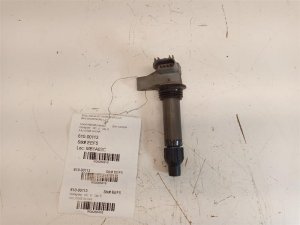
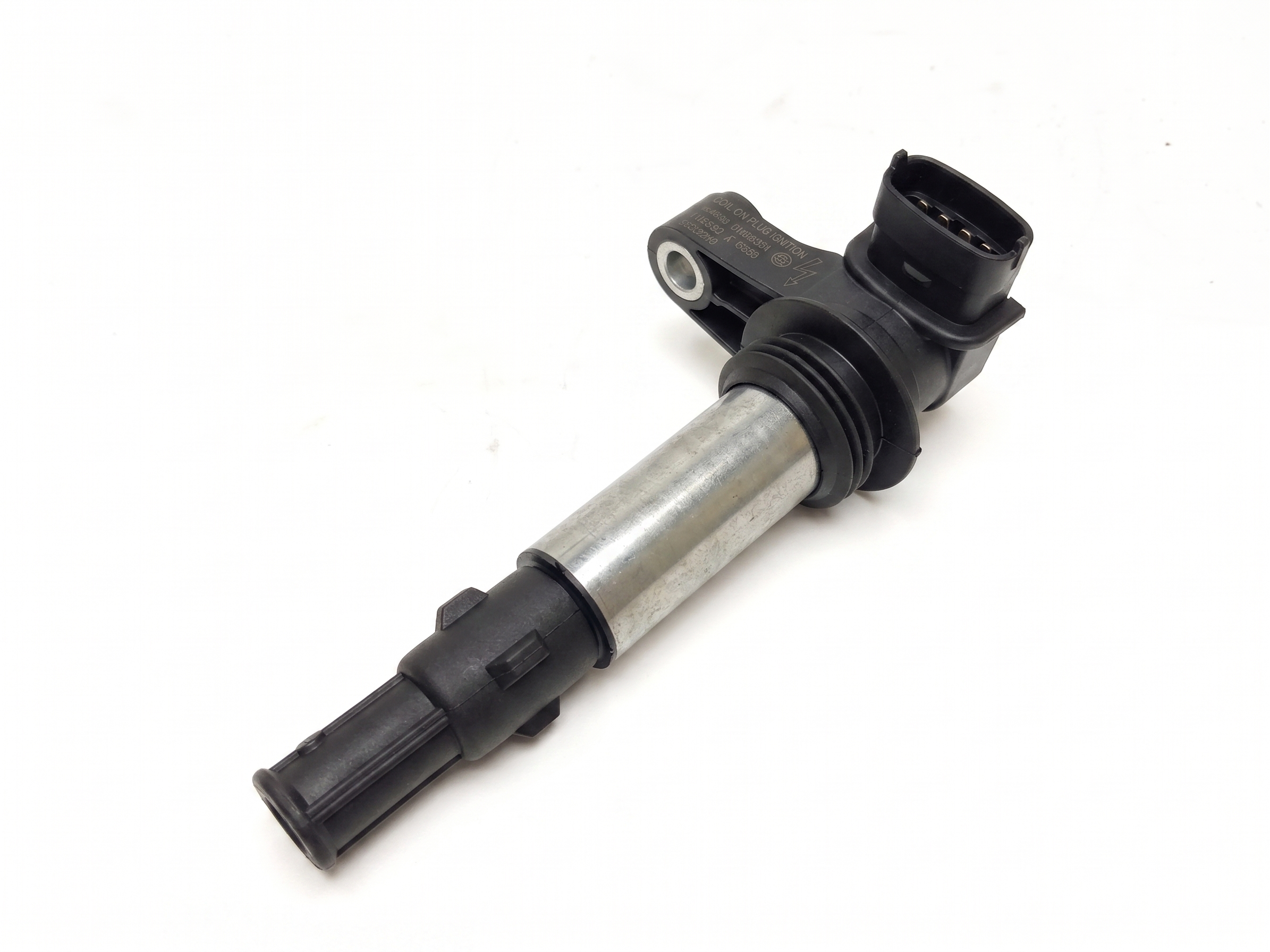
- Ignition Coil
(OEM #12632479 (D515C))— A primary cause of misfires on this engine due to failure from heat and age. TSB PIP5038 confirms this is a known issue.
Trusted brands: ACDelco, Delphi, NGK, Denso
OEM price range: $80-$100
Aftermarket price range: $40-$70 - Iridium Spark Plug
(OEM #ACDelco 41-109 (LLT) / 41-123 (LFX))— Standard wear item. Neglect is common due to difficult rear bank access. Using the correct Iridium plug is critical.
Trusted brands: ACDelco, NGK
OEM price range: $10-$20 per plug
Aftermarket price range: $8-$15 per plug - Engine Timing Chain Kit
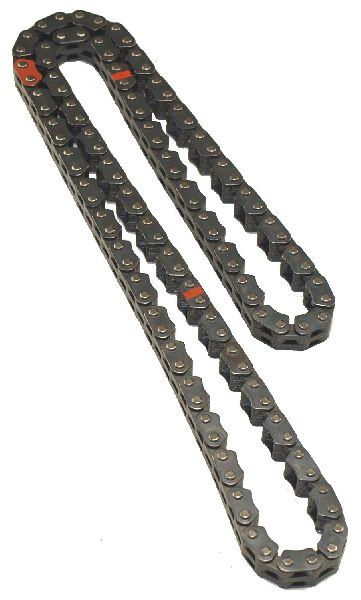
(OEM #12713649 (ACDelco example))— Required for the notorious stretched timing chain failure, especially on LLT engines. A complete kit including chains, guides, and tensioners is necessary.
Trusted brands: ACDelco (GM Genuine), Cloyes
OEM price range: $450-$600
Aftermarket price range: $250-$400
Related Codes That Often Appear With This One
- P0301-P0306 — If the random misfire begins to occur more frequently on a specific cylinder, the ECM will log a cylinder-specific code (e.g., P0301 for Cylinder 1).
- P0008, P0017 — These codes indicate a correlation error between the crankshaft and camshafts. On this engine, seeing these codes with P0300 is a very strong indicator of a stretched timing chain.
- P0171, P0174 — These 'System Too Lean' codes can be caused by a large vacuum leak or a dirty MAF sensor, which can also cause random misfires by upsetting the air-fuel ratio.
Technical Service Bulletins (TSBs) & Recalls
- Cold Start Misfire and/or Rough Idle – DTC P0300 May Be Set: This bulletin (which supersedes PIP4959G) addresses a rare but documented cause of cold-start misfires: engine block porosity. A pinhole leak between the coolant passage and cylinder allows coolant to enter, causing a misfire that often disappears when the engine warms up. Diagnosis requires a borescope or cylinder head removal to spot the defect. Manufacturer Bulletin #18-NA-115 provides specific inspection and correction information for this cold start misfire condition.
- Premature Timing Chain Wear: GM issued this special coverage for certain 2009 Buick Enclave models (among others) extending the warranty for stretched timing chains to 10 years or 120,000 miles. This was a direct acknowledgment of the design flaw in early LLT engines. While expired for most vehicles now, it's a key piece of evidence for diagnosing P0300 with P0008/P0017.
- Engine Misfire And/Or P0300: This TSB addresses engine shudder and misfire codes (P0300-P0306) on early models, including the 2009 Enclave, caused by heat-stressed ignition coils. The recommended fix in some cases was to replace all six ignition coils.
- Diagnostic Information for Misfire: Manufacturer Bulletin #PIP5628G provides preliminary information to aid in diagnosing vehicles that present with a misfire and DTC Codes P0300 - P0308 and/or P050D.
Platform-Specific Known Issues

- Premature Timing Chain Wear: A widespread and well-documented problem on the 3.6L V6 (especially LLT engines) that leads to P0300 and timing correlation codes. GM issued Special Coverage Adjustment #11340C to address this, extending the warranty for some owners.
- Carbon Buildup on Intake Valves: Inherent to the direct-injection design, this causes cold start misfires and requires periodic, labor-intensive cleaning.
- Difficult Rear Bank Access: Servicing the spark plugs and ignition coils for cylinders 1, 3, and 5 requires removing the entire upper intake manifold, significantly increasing labor time and cost for a basic tune-up.
Mechanic-Grade Diagnostic Values
- Fuel Injector Resistance (2008-2012 LLT Engine) — expected: 11.8 - 12.6 Ohms. Failure: A reading of 0 ohms (short), OL (open), or significant deviation indicates a failed injector.
- Fuel Injector Resistance (2013-2017 LFX Engine) — expected: 1.2 - 1.8 Ohms. Failure: A reading outside this narrow range indicates a fault. Note: Using LLT specs on an LFX engine will lead to misdiagnosis.
- Low-Pressure Fuel System (In-tank pump) — expected: 55-60 PSI at idle. Failure: Pressure that is low, erratic, or drops significantly under load points to a failing in-tank pump.
- High-Pressure Fuel System (Engine-mounted pump) — expected: 500 - 600 PSI at idle; 2,000 - 2,800+ PSI under load. Failure: Scan tool data showing 'Actual' pressure failing to meet 'Desired' pressure, especially under load, points to a failing HPFP.
- Ignition Coil Secondary Resistance — expected: 6,000 - 10,000 Ohms (6k-10k Ω). Failure: A reading outside this range suggests a faulty coil, but passing this test does not guarantee the coil is good, as it can fail under heat and load.
- Long Term Fuel Trim (LTFT) at idle — expected: -5% to +5%. Failure: Consistently high positive values (e.g., > +15%) at idle that decrease as RPMs rise strongly suggest a vacuum leak from sources like an intake gasket.
Hidden / Shadow Codes Worth Checking
- Mode $06 Misfire Counters (Test ID $A2-$AD): The ECM tracks misfire events for each cylinder even if they aren't frequent enough to set a specific P030x code. This data is invaluable for identifying the primary offending cylinders when only a general P0300 is present. (see via A professional-level scan tool or an advanced OBD-II app that can access Mode $06 test results.)
Scan Tool Commands That Help

- Tech2 / GDS2: Misfire Graph — This function provides a real-time graphical representation of misfire counts per cylinder, making it easy to visually identify which cylinders are problematic while the engine is running.
- Tech2 / GDS2: Cylinder Power Balance — This test deactivates one cylinder at a time and measures the corresponding drop in engine RPM. A cylinder that produces little or no RPM drop when deactivated is not contributing power, confirming a misfire or mechanical issue.
- Tech2 / GDS2: Fuel Trim Reset — After repairing a vacuum leak or fuel delivery issue that caused high fuel trims, this function resets the learned long-term fuel trim values to zero, allowing the ECM to relearn the correct fuel strategy immediately.
Wiring & Ground Locations
- G110 — Right front of the engine, mounted to the cylinder head.. This is a primary engine ground. A loose or corroded connection here can cause erratic behavior in sensors and actuators, including the ignition system, potentially leading to random misfires.
- G113 — Left side of the engine, at the engine-to-transmission stud.. Another critical engine ground point. Poor contact at this location can affect the Engine Control Module (ECM) and Transmission Control Module (TCM) grounding, leading to a variety of difficult-to-diagnose electrical issues, including misfires.
- Injector Harness (TSB #PIP4924D) — The harness section running over the cylinder heads and around the intake manifold.. This harness is known to chafe against ignition coil studs and the cylinder head, causing intermittent shorts or opens in the injector control circuits. This can cause misfires that appear random.
Real Owner Repair Stories
- chevy talk forum user 'gchemist' (2008 GM 3.6L (pre-direct injection, similar PCV design)) — High oil consumption, potential for timing chain issues.
❌ Tried (didn't work) Not specified, but the focus was on preventative diagnosis.
✅ What actually fixed it The user identified that the fixed PCV orifice, integrated into the driver-side valve cover, was almost completely clogged with sludge after 156,000 miles. Cleaning or replacing this valve cover to restore proper crankcase ventilation is critical to prevent seal failure and oil consumption issues that can contribute to misfires. - NHTSA ODI #11022515 — An owner reported having to replace timing chains, all spark plugs, and three ignition coils after a PFI system diagnosis test showed codes P0017 and P0300 stored, indicating correlation and misfire issues.
- NHTSA ODI #10818536 — A driver experienced shuddering on acceleration and inclines with the check engine light on. Stored codes included P0300, P0302, and P0303, identifying misfires on cylinders 2 and 3, which required replacing all spark plugs and coils.
"I Checked Everything" — The Actual Cause
- A common scenario on the 3.6L V6 is a P0300 with lean codes (P0171/P0174) where a smoke test reveals no leaks. The actual cause is often a clogged fixed PCV orifice inside the driver-side (rear) valve cover. This restriction increases crankcase pressure, forcing unmetered air and oil vapor into the intake through other paths, creating a lean condition and oil fouling that a smoke test cannot detect. The fix is to replace or thoroughly clean the valve cover and its integrated orifice.
OEM Part Supersession History
ACDelco 41-992→ACDelco 41-109 (and others)— Design improvement. Newer versions feature a finer-wire iridium electrode for more focused spark and potentially longer life.
Heads up: The original part number 12622561 is also serviced by 41-109.GM 12638530 (Fuel Injector, LLT)→GM 12669384— Standard part evolution for improved reliability.
Heads up: This part is for the high-impedance LLT engine (~12 Ohms) only and is NOT compatible with the 2013+ LFX engine, which uses a low-impedance injector (~1.5 Ohms).
Model Year Variations Within This Range
- 2008-2012 (LLT Engine): Uses high-impedance fuel injectors (~12 Ohms) and is significantly more prone to timing chain stretch. The intake manifold is aluminum.
- 2013-2017 (LFX Engine): Uses low-impedance fuel injectors (~1.5 Ohms), a composite intake manifold, and an improved timing chain design. Using the wrong injector resistance specification during testing will lead to a misdiagnosis.
Diagnostic Flowchart
Real Owner Stories
Aggregated from forums and TSBs cited above. Mileages and costs reflect what owners reported in those sources.
2009 Buick Enclave 3.6L V6 — 70000 miles
Symptoms: P0300-P0306 misfire codes setting within the first 60 seconds of startup.
What fixed it: Suspected intake valve carbon buildup; another user noted a bulletin recommending replacement of all coils and the ECM.
Source hint: ScannerDanner Forum: 2009 buick enclave p0300 - p0306 misfire codes
2008 GMC Acadia 3.6L V6
Symptoms: Violent P0300 misfire and a persistent engine rattle after clearing codes.
What fixed it: Diagnosed and resolved as a stretched timing chain after swapping plugs and coils yielded no success.
Source hint: YouTube: GMC Acadia P0300 Misfire & Timing Chain Rattle - DIAGNOSED & RESOLVED
2009 Buick Enclave 3.6L V6
Symptoms: Persistent P0300 misfire codes.
What fixed it: Timing chain replacement, ignition coil and spark plug replacement, or carbon cleaning services.
Source hint: Enclave Forum: Multiple discussions on P0300
Related OBD-II Codes
Frequently Asked Questions
Does the timing chain warranty extension apply to my Buick Enclave?
Why is a spark plug replacement so expensive on the 3.6L V6 Enclave?
My Enclave misfires on cold starts but gets better when it warms up. What causes this?
Which spark plugs and ignition coils should I use for my Enclave?
Does TSB PIP5038 apply to my P0300 code?
Helpful Videos
Used OEM Parts in Stock
New Aftermarket Parts Available


The information in this article is provided for general reference and educational purposes only. Vehicle specifications, procedures, and part compatibility can vary by production date, trim level, and region. Always consult your vehicle's factory service manual and verify part numbers before purchasing or performing repairs. Safety-critical components such as airbags, seat belts, and braking systems should be installed by a qualified professional.
- Buick Enclave:
- 🎬 Helpful Videos
- 🛍️ Shop This Part
- What's Unique About the 2008-2017 Buick Enclave
- Symptoms You May Notice
- Most Likely Causes
- Rare But Worth Checking
- Diagnosis Steps
- Parts You'll Likely Need
- Related Codes That Often Appear With This One
- Technical Service Bulletins (TSBs) & Recalls
- Platform-Specific Known Issues
- Mechanic-Grade Diagnostic Values
- Hidden / Shadow Codes Worth Checking
- Scan Tool Commands That Help
- Wiring & Ground Locations
- Real Owner Repair Stories
- "I Checked Everything" — The Actual Cause
- OEM Part Supersession History
- Model Year Variations Within This Range
- Diagnostic Flowchart
- Real Owner Stories
- 2009 Buick Enclave 3.6L V6 — 70000 miles
- 2008 GMC Acadia 3.6L V6
- 2009 Buick Enclave 3.6L V6
- Related OBD-II Codes
- Frequently Asked Questions
- 🎟️ Get 5% Off