

P0299 on 2013-2022 Buick Encore 1.4L: Turbo Underboost Causes and Fixes
P0299 on a Buick Encore with the 1.4L engine most often means the turbocharger assembly is failing or there's a serious PCV system issue. A complete turbo replacement is the most common fix, but always check for a failed PCV valve in the valve cover or a bad check valve in the intake manifold first, as these are the root cause of many turbo failures.
- P0299 on a 1.4L Encore is very serious and often points to a failing turbocharger.
- ALWAYS diagnose the PCV system (valve cover and intake manifold check valve) before and during a turbo replacement. Failing to fix a bad PCV system will likely cause the new turbo to fail.
- If your Encore is a 2017-2018 model, check with a GM dealer about Special Coverage N232395330, as the turbo replacement may be covered.
- When replacing the turbo, you must also replace the oil feed and return lines to ensure the new part is properly lubricated.
- Do not ignore symptoms like power loss or whining noises. Prompt diagnosis can prevent a failing turbo from causing more expensive damage to the catalytic converter or engine.
What's Unique About the 2013-2022 Buick Encore

The 1.4L LUV engine used in the first-generation Encore and its platform mates (Chevy Cruze, Sonic, Trax) is notorious for P0299 due to systemic design weaknesses. Many failures are a direct consequence of a flawed PCV system. A non-return check valve inside the plastic intake manifold frequently fails, allowing boost pressure to enter the crankcase. This, along with a failure-prone diaphragm in the valve cover, can pressurize the crankcase, forcing oil past the turbo's seals, leading to rapid bearing and seal failure. Because of this, simply replacing the turbo without addressing the underlying PCV issue often results in the new turbo failing quickly.
Generation note: This guide covers the first-generation Buick Encore (2013-2022) equipped with the 1.4L LUV engine. The second-generation Encore GX, introduced in 2020, uses different engines (1.2L or 1.3L) and this guide does not apply to it. The 1.4L LUV engine can be identified by the 8th digit of the VIN, which should be a 'B'.
Symptoms You May Notice

- Significant loss of engine power and poor acceleration.
- Check Engine Light is on
- A high-pitched whining or 'siren' sound from the engine bay that changes with RPM
- Sluggish performance, especially when trying to accelerate or go up hills
- Excessive exhaust smoke (blue or gray) if the turbo seals have failed and are burning oil.
- Rattling noise from the turbo area, which could indicate a loose wastegate actuator rod.
- Hissing sound from the engine bay, indicating a vacuum or boost leak.
- Replacing only the turbocharger without inspecting and fixing the PCV system in the valve cover and intake manifold. A bad PCV system is a leading cause of turbo failure on this engine, and the new turbo will likely fail again if the root cause isn't fixed.
- Replacing O2 sensors or the catalytic converter in response to other codes (like P0171 or P0420) that appear alongside P0299, without first diagnosing the underboost condition. The underboost and its root cause (PCV/turbo failure) are often the source of these other codes.
Most Likely Causes

- Failed Turbocharger Assembly 🔴 High Probability The original turbos on the 1.4L LUV engine have a high failure rate. Common failure points are cracks developing in the integrated exhaust manifold near the wastegate, wear in the wastegate actuator linkage causing loss of preload, and bearing failure from oil contamination/starvation often caused by PCV issues. GM has issued TSBs like PI1366 and a special coverage extension (N232395330) for some 2017-18 models acknowledging these turbo problems. Manufacturer Bulletin #PIP5829A also notes that P0299 may be accompanied by a cold start rattle noise from the engine compartment.
How to confirm: After ruling out leaks, inspect the turbo. Check for excessive play in the turbine shaft (in-and-out or side-to-side). Check if the wastegate actuator arm is disconnected, seized, or has excessive play at the pivot point, which can cause a rattle. A visual inspection may reveal cracks in the exhaust housing, although small cracks are common and not always the sole cause of the code.
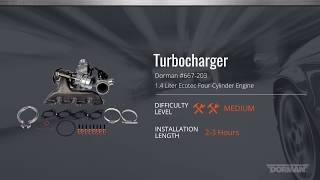
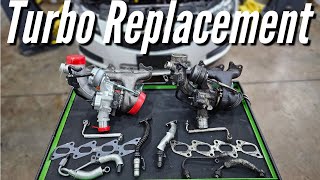
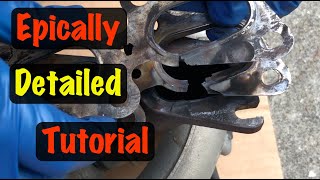
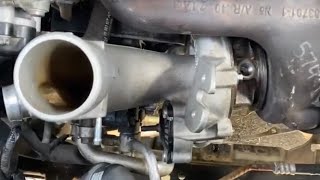
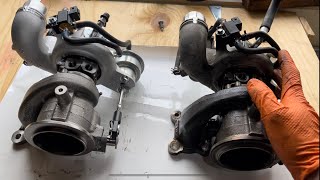
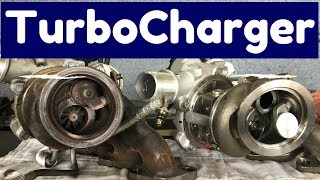
Typical fix: Replacement of the entire turbocharger assembly 🎬 See this detailed walkthrough for replacing the turbo and oil lines. (which includes the exhaust manifold). It is critical to also replace the oil feed and return lines and coolant lines to prevent contamination and failure of the new turbo. OEM part numbers include 25201063 (supersedes 25198550, 25199832) and 55565353.
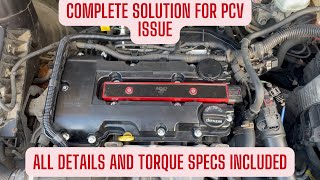
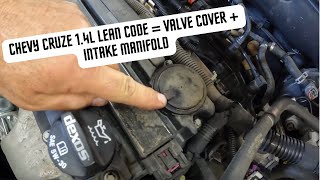
Est. part cost: $400-$1150 for the part, depending on OEM or aftermarket. - PCV System Failure (Intake Manifold Check Valve) 🔴 High Probability A small, non-return check valve inside the plastic intake manifold is known to fail, become dislodged, or go missing entirely. This creates a significant internal boost leak, where pressurized air from the manifold is sent directly back into the turbo inlet through the PCV system, preventing the engine from building boost. This is a primary cause of P0299.
How to confirm: Remove the PCV hose from the driver's side of the intake manifold. Look inside the port on the manifold; a small orange or black check valve nipple should be visible. If it's missing, damaged, or loose, it has failed. This failure often won't be found with a typical smoke test because it's an internal leak path.
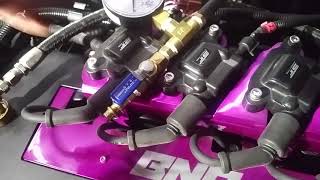
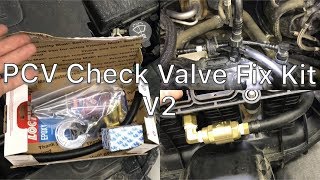
Typical fix: The official GM fix is to replace the entire intake manifold 🎬 Watch: Step-by-step guide to replacing the intake manifold and valve cover. (OEM P/N 55577314, Dorman P/N 615-380). A popular, more permanent, and cost-effective alternative is to install an aftermarket external PCV check valve kit from vendors like CruzeKits.com, which bypasses the faulty internal design.
Est. part cost: $150-$250 for a new manifold, $75-$90 for an external check valve kit. - PCV System Failure (Valve Cover Diaphragm) 🟡 Medium Probability A rubber diaphragm inside the valve cover is another key part of the PCV system that frequently tears. When it ruptures, it creates a massive unmetered air (vacuum) leak, which often triggers a P0171 (System Too Lean) code alongside P0299 and can contribute to the underboost condition by disrupting crankcase pressure.
How to confirm: With the engine running at idle, a hissing sound may be heard from the valve cover. Trying to remove the oil cap will reveal very strong suction holding it down. The ultimate failure of this diaphragm can also cause a loud chirping noise from the front crankshaft seal as air is sucked past it.
Typical fix: Replacement of the entire valve cover assembly. The diaphragm is not sold separately by GM. A common OEM part number is 25198874, which was superseded by 25205241.
Est. part cost: $60-$150 - Boost/Vacuum Leaks 🟡 Medium Probability The charge air system uses plastic and rubber components that can crack, split, or have loose clamps over time due to heat and pressure cycles. Common leak points are the intercooler inlet/outlet connections and the throttle body connection.
How to confirm: Perform a visual inspection of all hoses from the turbo to the intercooler and to the throttle body. A smoke test is the most effective way to find leaks in the charge air system that are not visually obvious. 🎬 Watch: How to perform a boost leak test on this engine.
Typical fix: Replace the cracked hose or tighten the loose clamp.
Est. part cost: $20-$100 - Failed Turbocharger Bypass Valve (Diverter Valve) ⚪ Low Probability This solenoid valve recirculates boost pressure when the throttle is closed. If it sticks open or fails to close properly, it will continuously bleed off boost, preventing the system from reaching its target pressure.
How to confirm: The valve can be tested with a vacuum pump or commanded with a bi-directional scan tool. A technician noted that the solenoid can still 'click' during an actuation test but fail to retract and seal properly, requiring physical inspection. It is located on the turbocharger assembly.
Typical fix: Replace the bypass valve solenoid.
Est. part cost: $40-$80
Rare But Worth Checking
- Clogged Catalytic Converter: If a failing turbo has been leaking oil into the exhaust, it can clog the catalytic converter. This creates excessive backpressure, preventing the turbo from spooling up correctly. This is often a secondary failure caused by the primary P0299 issue, and can be very expensive to fix.
- Ice in Charge Air Cooler (Intercooler): In extremely cold weather (below 0°F/-18°C), moisture from the PCV system and ambient air can freeze inside the intercooler, creating a blockage that causes a P0299 code. GM has issued multiple TSBs related to this, such as PIP5025H, 18-NA-069, and PIP5812C, which may involve reprogramming the ECM, cleaning the wastegate regulator solenoid, or installing a grille cover.
Diagnosis Steps

- Scan the ECM for any other stored trouble codes. Codes like P0171 or P1101 strongly point towards a PCV or vacuum leak issue.
- Perform a PCV system health check. With the engine running, check for a hissing sound from the valve cover and strong vacuum at the oil cap (torn diaphragm). Remove the PCV hose from the intake manifold and visually confirm the presence of the orange/black check valve inside the port.
- Visually inspect all charge air cooler hoses and connections between the turbo, intercooler, and throttle body for cracks, loose clamps, or signs of oil spray indicating a leak.
- If no obvious leaks are found, perform a low-pressure smoke test (around 15 PSI) on the entire intake and charge air system to pinpoint hard-to-see leaks.
- Inspect the turbocharger wastegate. Ensure the actuator rod is connected and the retaining clip is present. Try to move the wastegate lever by hand (when cool); it should move smoothly without binding and have minimal play at the pivot. Excessive play indicates wear and loss of preload.
- With a scan tool, monitor desired vs. actual boost pressure during a test drive under load. A large, consistent gap confirms the underboost condition.
Parts You'll Likely Need
- Turbocharger Assembly
(OEM #25201063)— This is the most common failure part for P0299 on this engine, due to wastegate issues or internal bearing failure often caused by PCV problems.
Trusted brands: ACDelco, MHI (Original Manufacturer)
OEM price range: $700-$900
Aftermarket price range: $400-$600 - Engine Valve Cover
(OEM #25198874)— The integrated PCV diaphragm frequently ruptures, causing a major vacuum leak that can trigger P0299 and other codes. It must be replaced as an assembly.
Trusted brands: ACDelco, Dorman
OEM price range: $100-$150
Aftermarket price range: $60-$90 - Intake Manifold
(OEM #25200449)— The internal PCV check valve fails, creating a boost leak. The official repair is replacing the manifold. Aftermarket check valve kits are an alternative.
Trusted brands: ACDelco
OEM price range: $150-$250
Aftermarket price range: $100-$180 - Turbocharger Oil Feed Pipe
(OEM #55592600)— This part is considered a mandatory replacement when installing a new turbocharger to ensure proper oil supply and prevent immediate failure of the new unit.
Trusted brands: ACDelco
OEM price range: $50-$80
Aftermarket price range: $30-$50
Related Codes That Often Appear With This One
- P0171 — System Too Lean. This often appears with P0299 because a torn PCV diaphragm in the valve cover or a major boost leak allows unmetered air into the engine, creating a lean air/fuel mixture.
- P1101 — Intake Air Flow System Performance. This GM-specific code is often set along with PCV issues or boost leaks, as the ECM detects an airflow reading that is inconsistent with other sensors.
- P0420 — Catalyst System Efficiency Below Threshold. A failing turbo can leak oil into the exhaust, contaminating and damaging the catalytic converter, leading to this code.
Technical Service Bulletins (TSBs) & Recalls
- PI1366: Addresses P0299 caused by loss of turbocharger wastegate preload due to wear in the actuator rod linkage.
- N232395330: A GM Special Coverage program for certain 2017-2018 models that extends the warranty for turbocharger replacement to 10 years or 120,000 miles if P0299 is present.
- PIP5025H / 18-NA-069 / 22-NA-002: A series of related bulletins addressing P0299 in extreme cold weather due to ice formation in the Charge Air Cooler (CAC), recommending potential ECM reprogramming or grille cover installation.
- PIP5495N: A GM bulletin warning technicians against misdiagnosing P0299 and replacing turbos when the actual fault lies with smaller components like PCV valves or boost leaks.
- Bulletin #PIP5829A: Relates to the diagnosis of a MIL illuminated with DTC P0299 and/or a cold start rattle noise from the engine compartment.
Platform-Specific Known Issues
- {'title': 'PCV System Cascade Failure', 'description': 'The most unique issue for this platform is the failure cascade. The intake manifold check valve fails, which pressurizes the crankcase, which then ruptures the valve cover diaphragm, which then forces oil past the turbo seals, destroying the turbo. Fixing one part without checking the others is a common mistake.'}
- {'title': 'Wastegate Linkage Wear', 'description': 'The pivot point for the wastegate actuator arm on the turbocharger is a known wear item. As it wears, it develops slop, which prevents the wastegate from closing fully and maintaining preload, directly causing a P0299 underboost code. GM addresses this in TSB PI1366.'}
Mechanic-Grade Diagnostic Values
- MAP Sensor Signal Voltage (Key On, Engine Off) — expected: ~4.0 - 4.9 Volts. Failure: Voltage significantly lower than expected suggests a sensor or wiring issue.
- MAP Sensor Signal Voltage (Engine at Idle) — expected: ~1.0 - 2.0 Volts. Failure: Voltage significantly higher than this at idle can indicate a vacuum leak or a faulty sensor.
- MAP Sensor Peak Boost Reading (Scan Tool) — expected: Should closely track desired boost, rising well above 150 kPa on acceleration.. Failure: Peak readings stuck around 120-133 kPa (approx. 3-5 PSI) indicate the system is only making wastegate spring pressure, suggesting a control-side problem.
- Wastegate Regulator Solenoid Coil Resistance — expected: 32 ± 2 ohms. Failure: A reading outside this range, or an open circuit, indicates a faulty solenoid. An aftermarket part measuring 28 ohms was reported to cause issues.
- Long-Term Fuel Trims (at idle) — expected: Within ±5%. Failure: High positive fuel trims (e.g., > +10%) strongly suggest an unmetered air/vacuum leak, often related to the PCV system failures that cause P0299.
Scan Tool Commands That Help
- GDS2 (GM Global Diagnostic System): Turbocharger Boost Control Test — This bidirectional test allows a technician to command the wastegate regulator solenoid and bypass valve to check their mechanical and electrical operation without a test drive, helping to isolate a faulty component.
- GDS2 (GM Global Diagnostic System): Desired vs. Actual Boost Pressure PID Monitoring — This is the primary data to monitor during a test drive to confirm the underboost condition. A large, sustained difference between the desired and actual values (e.g., Desired: 137 kPa, Actual: 35 kPa) proves the ECM is detecting a fault.
Wiring & Ground Locations
- MAP Sensor Connector — On the intake manifold, near the throttle body.. A poor connection, oil contamination from PCV issues, or damaged wiring at this 3-pin connector will cause incorrect boost pressure readings, directly leading to code P0299. The pins are typically +5V Reference, Ground, and Signal.
- G103 — At the rear of the engine compartment on the cowl, above the brake booster.. This is a major ground point for the Engine Control Module (ECM). A loose or corroded connection here can cause a wide range of erratic sensor readings and communication issues, potentially affecting the MAP sensor's ground reference and causing false readings.
Real Owner Repair Stories
- Reddit user comment in r/cruze (2019 Buick Encore, 40,000 km (25,000 miles)) — P0299, low power, grey smoke on acceleration, fuel trims at +12.5%.
❌ Tried (didn't work) Initial check showed wastegate actuator was fine and PCV diaphragm in valve cover was not torn., Installing an aftermarket PCV fix kit (Cruze Kit) fixed the fuel trims but P0299 returned., Cleaning the MAP sensor., Pressure testing the system to 15 PSI, which it held, seemingly ruling out boost leaks.
✅ What actually fixed it The internal flap of the intake manifold check valve had failed and was loose, even though the orange 'nub' was still visible in the port. This is a critical distinction, as a visual check for the nub alone was insufficient. Replacing the intake manifold was the implied final fix after all other tests passed. - Reddit user comment in r/cruze (Chevrolet Cruze (shares 1.4L LUV engine)) — P0299 code present.
❌ Tried (didn't work) Initially suspecting the turbocharger itself.
✅ What actually fixed it The intake manifold was found to be split on the underside, causing a massive boost leak that was not immediately obvious. The user repaired it with JB Weld and a hose clamp as a temporary fix, which resolved the code. This highlights that leaks can occur in non-obvious places on the manifold itself. - NHTSA ODI #11592997 — An owner reported that their mechanic's diagnostic check revealed a DTC-P0299 code for a faulty turbocharger at approximately 70,000 miles, and was advised to seek repairs under Special Coverage N-232395330.
- NHTSA ODI #11715060 — An owner described their vehicle becoming sluggish and hesitating to take off from a stop when the P0299 code appears, noting the car exhibits the same symptoms as those covered under the manufacturer's turbocharger recall.
- NHTSA ODI #11584659 — A report describes the vehicle as sluggish on hills and struggling to keep up in traffic, with high RPMs and a P0299 code indicating turbo underboost at 112,000 miles.
- NHTSA ODI #11505585 — An owner reported receiving a P0299 code and a P0420 code approximately 20,000 miles after a used turbocharger was installed due to new parts being on backorder.
"I Checked Everything" — The Actual Cause
- A common scenario is passing a smoke test but still having P0299. This is often caused by the internal intake manifold check valve failing. Since the leak path is from the intake manifold directly back to the turbo inlet pipe, a smoke test pressurizing the system from the throttle body may not reveal it.
- A technician reported a case where all standard tests, including smoke test and visual inspections, passed. The issue was a faulty turbocharger bypass solenoid that would 'click' when commanded by a scan tool, suggesting it was working, but it was not physically retracting properly to seal off the bypass circuit, causing an intermittent boost leak under load. Physical removal and inspection of the solenoid was required to find the fault.
OEM Part Supersession History
25198874→25205241— Likely an updated design to improve the durability of the internal PCV diaphragm.25198550, 25199832→25201063— Revisions to the turbocharger assembly, possibly to address wastegate cracking or actuator wear issues.
Model Year Variations Within This Range
- 2017-2018: General Motors issued a special coverage program (N232395330) for some 2017-2018 Buick Encore models (along with Chevy Trax and Sonic) that extends the warranty for turbocharger failure to 10 years or 120,000 miles. This indicates a higher-than-normal failure rate for these specific years.
Diagnostic Flowchart
Related OBD-II Codes
Frequently Asked Questions
Is the turbocharger failure on my 2017-2018 Buick Encore covered under an extended warranty?
Why does my 1.4L LUV engine have a hissing sound and a P0299 code?
I have a P0299 code and a rattling noise from the turbo area. What does this mean?
Can a bad PCV valve cause a P0299 underboost code on the Encore?
How can I permanently fix the missing intake manifold check valve?
Why did my Encore get a P0299 code during extreme cold weather?
Helpful Videos
Used OEM Parts in Stock
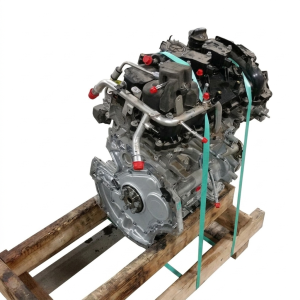
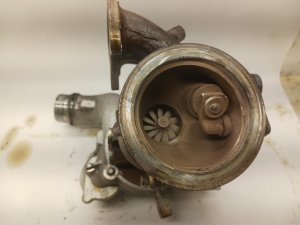
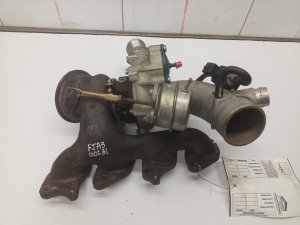
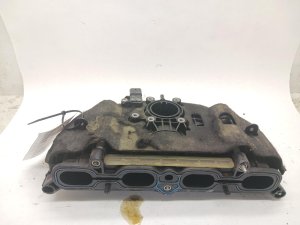
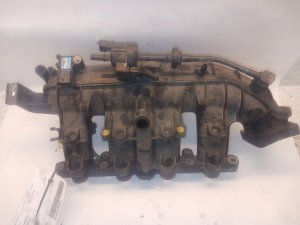
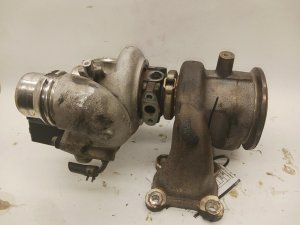
New Aftermarket Parts Available
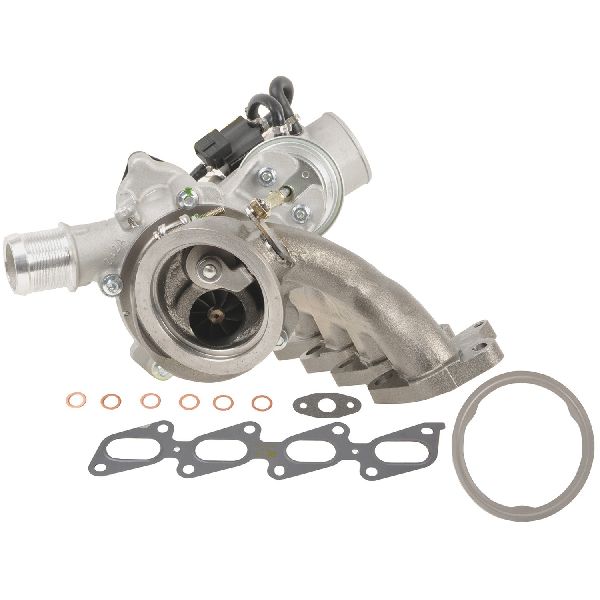

The information in this article is provided for general reference and educational purposes only. Vehicle specifications, procedures, and part compatibility can vary by production date, trim level, and region. Always consult your vehicle's factory service manual and verify part numbers before purchasing or performing repairs. Safety-critical components such as airbags, seat belts, and braking systems should be installed by a qualified professional.
- Buick Encore:
- 🎬 Helpful Videos
- 🛍️ Shop This Part
- What's Unique About the 2013-2022 Buick Encore
- Symptoms You May Notice
- Most Likely Causes
- Rare But Worth Checking
- Diagnosis Steps
- Parts You'll Likely Need
- Related Codes That Often Appear With This One
- Technical Service Bulletins (TSBs) & Recalls
- Platform-Specific Known Issues
- Mechanic-Grade Diagnostic Values
- Scan Tool Commands That Help
- Wiring & Ground Locations
- Real Owner Repair Stories
- "I Checked Everything" — The Actual Cause
- OEM Part Supersession History
- Model Year Variations Within This Range
- Diagnostic Flowchart
- Related OBD-II Codes
- Frequently Asked Questions
- 🎟️ Get 5% Off