

P0265 on 2003-2005 Ford Excursion 6.0L: Injector Circuit High Causes & Fixes
P0265 on a 6.0L Power Stroke is most often caused by a failing Fuel Injection Control Module (FICM), a chafed injector wiring harness, or a bad #2 fuel injector. Start by testing the FICM voltage with a scan tool; it should hold a steady 48V with the key on and not drop below 45V when cranking. If voltage is good, suspect a wiring short or a failed injector solenoid.
- P0265 on a 6.0L Power Stroke is an electrical fault in the cylinder #2 injector circuit, most often a short circuit.
- Do not immediately replace the injector. The most common cause is a failing Fuel Injection Control Module (FICM). Test the FICM's voltage output before buying any parts.
- If the FICM voltage is good, thoroughly inspect the injector wiring harness for chafing and shorts to ground, a known weak point on this engine.
- Only after ruling out the FICM and wiring should you suspect a failed fuel injector.
- Ensure your vehicle's batteries and charging system are healthy, as low voltage can damage the FICM.
What's Unique About the 2003-2005 Ford Excursion
The 6.0L Power Stroke engine is infamous for issues with its Fuel Injection Control Module (FICM). Unlike many other vehicles where an injector circuit code points directly to the injector, on the 6.0L, the FICM is a high-probability cause. The FICM's internal power supply is a common failure point, but a 'Circuit High' code often points to a failure on the logic side of the module. Additionally, the injector wiring harness is known to chafe against engine components like valve cover bolts, creating shorts that also trigger this code.
Symptoms You May Notice
- Check Engine Light is on
- Rough or uneven idle
- Noticeable engine misfire, sometimes felt as a bucking or jerking.
- Loss of power and poor acceleration
- Engine may stumble or hesitate
- Hard starting, especially when the engine is cold.
- Increased fuel consumption
- Black smoke from the exhaust under load.
- No or weak injector 'buzz' sound from the engine when the key is first turned on.
- Replacing the fuel injector when the actual problem is the FICM or a chafed wiring harness.
- Replacing the FICM power supply when the issue is on the logic board, which can happen with 'Circuit High' codes.
- Replacing the PCM when the FICM is the true cause of the fault.
Most Likely Causes
- Failing Fuel Injection Control Module (FICM) 🔴 High Probability The 6.0L FICM is a notoriously high-failure item due to its location on the driver's side valve cover, where it's exposed to intense heat and vibration. While the power supply side (which steps up voltage to 48V) is the most common part to fail, 'Circuit High' codes like P0265 often point to a failure of the internal logic board that controls the individual injector drivers. Weak batteries or a failing alternator can also overwork and kill a FICM.
How to confirm: Use a scan tool to monitor FICM main power (FICM_MPWR). With the Key On, Engine Off (KOEO), it should be 48 volts. While cranking, it must not drop below 45 volts. If voltage is good, the FICM's internal logic driver for cylinder #2 may have failed. This is a common scenario for 'Circuit High' codes. An injector buzz test will often fail for cylinder #2, sounding silent or different from the others.
Typical fix: Replace the FICM or have it repaired by a specialist. Many owners opt for upgraded aftermarket units (e.g., from Bullet Proof Diesel) with more robust power supplies and logic boards. A replacement FICM must be programmed to the vehicle.
Est. part cost: $250-$1000 - Chafed Injector Wiring Harness 🟡 Medium Probability The harness routing can cause it to rub against sharp edges on the valve covers, intake manifold bolts, alternator bracket, or other engine components, eventually wearing through the insulation and causing a short to ground. This is a very common and well-documented issue on the 6.0L platform.
How to confirm: Visually inspect the entire injector harness, paying close attention to where it passes over and around the driver's side valve cover and near the FICM itself. Perform a 'wiggle test' by moving the harness with the engine running to see if it affects the misfire. Disconnect the harness and check for continuity to ground on the wires for the #2 injector. The test should be performed at the FICM connector (C1388B) to check the entire circuit.
Typical fix: Repair the damaged section of wire with solder and heat-shrink tubing, then protect it with a quality wire loom. If damage is extensive, replace the entire injector harness (Motorcraft 5C3Z-9D930-A).
Est. part cost: $150-$300 - Failed Cylinder #2 Fuel Injector 🟡 Medium Probability The internal solenoid coils of the HEUI injector can short out over time due to heat cycles and high operating pressures. A specific failure mode noted in forums is the small nut on the injector's electrical post coming loose, causing connection issues or shorting.
How to confirm: After ruling out the FICM and harness, test the injector. Disconnect the injector connector and measure the resistance of the injector's coils. A healthy injector will have a resistance between 0.4 and 0.6 ohms per coil. A reading of zero or very low resistance indicates a shorted coil. This test should be done from the FICM connector first to test the entire circuit, then at the injector itself to isolate the component.
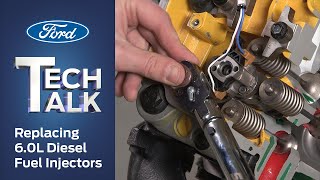
Typical fix: Replace the failed fuel injector. 🎬 Watch: Step-by-step guide to replacing a 6.0L Power Stroke injector. It is highly recommended to replace the stand pipes and dummy plugs at the same time, especially on 2004.25 and later models. Also replace all injector O-rings and seals.
Est. part cost: $200-$350
Rare But Worth Checking
- Faulty Powertrain Control Module (PCM): This is very rare. The PCM sends command signals to the FICM, but it does not directly control the high-voltage injector circuits. Before condemning the PCM, all other possibilities (FICM, wiring, injector) must be exhaustively ruled out. One forum user considered a spare PCM after replacing nearly every other component.
- Poor FICM Relay or Ground Connection: A faulty FICM power relay can cause intermittent power loss to the module, leading to various codes. Check the relay (located in the under-hood fuse box) and ensure the FICM has a clean, tight ground connection. Key ground points are G100 and G101 in the engine bay.
Diagnosis Steps
- Connect a scan tool and verify that P0265 is present. Note any other codes, especially P0266, P0302, or P0611.
- Monitor the 'FICM_MPWR' PID on the scan tool. With the Key On, Engine Off (KOEO), voltage should be a stable 48V. While cranking the engine, the voltage should not dip below 45V. If it does, the FICM power supply is faulty and is the most likely cause.
- If FICM voltage is stable, perform an injector 'buzz test' using the scan tool. Listen for an audible click from each injector. If cylinder #2 is silent or sounds different from the others, it confirms a fault in that circuit.
- If the buzz test fails for cylinder #2, turn off the vehicle and disconnect the batteries.
- Thoroughly inspect the injector wiring harness for any signs of chafing, melting, or damage. Pay close attention to the harness section near the alternator, the driver's side valve cover bolts, and where it might rub against the intake manifold.
- If the harness appears okay, disconnect the main FICM connectors (X1, X2, X3) and the injector pass-through connector on the valve cover. Check for continuity to ground on the four wires corresponding to injector #2. If continuity to ground is found, the harness is shorted.
- If the harness tests good, test the injector itself. Measure the resistance across its terminals (pins 1&2 and 3&4). A reading significantly outside the 0.4-0.6 ohm range indicates a failed injector. A shorted coil will read near zero ohms.
- If the FICM voltage is good, the harness is good, and the injector resistance is within spec, the problem is most likely an internal failure on the logic side of the FICM. This is a common cause for isolated 'Circuit High' codes when other tests pass.
- In very rare cases, if a replacement FICM does not solve the issue, the PCM could be at fault.
Parts You'll Likely Need
- Fuel Injection Control Module (FICM)
(OEM #4C3Z-12B599-ABRM (Motorcraft Reman))— This is the most common failure point on the 6.0L Power Stroke that causes injector circuit codes. The internal power supply or logic board fails due to heat and vibration.
Trusted brands: Motorcraft, Dorman, Bullet Proof Diesel, Circuit Board Medics
OEM price range: $700-$1000
Aftermarket price range: $250-$800 - Fuel Injector
(OEM #4C3Z-9E527-BRM)— The injector's internal solenoid can short out, causing the high current fault. Note: This part number is for late 2004-2005 models. Early 2003-2004 models (built before 9/22/2003) use part number 3C3Z-9E527-ECRM.
Trusted brands: Motorcraft, Bosch, Alliant Power
OEM price range: $250-$350
Aftermarket price range: $150-$250 - Injector Wiring Harness
(OEM #5C3Z-9D930-A)
Related Codes That Often Appear With This One
- P0266 — P0266 ('Cylinder 2 Contribution/Balance') often appears with P0265 because the electrical fault prevents the injector from delivering fuel, causing the cylinder to contribute less power than the others.
- P0302 — P0302 ('Cylinder 2 Misfire Detected') is a direct result of the P0265 fault, as the injector circuit problem prevents proper firing, leading to a misfire.
- P0611 — P0611 ('FICM Performance') can be set alongside P0265 if the root cause is a failing FICM, either on the power supply or logic side.
- U0105 — U0105 ('Lost Communication With FICM') can occur if the FICM is failing or has a bad power/ground connection, sometimes appearing with injector circuit codes.
Technical Service Bulletins (TSBs) & Recalls
- TSB 10-12-6: Addresses rough running, hard/no start, and various injector circuit codes (including P0611). It outlines the diagnostic procedure for determining if the FICM's power supply (DC-DC converter) or main logic board has failed.
- TSB 09-8-3: While not directly for P0265, this is a critical TSB for 6.0L owners. It addresses coolant loss, overheating, and white smoke, providing diagnostic steps for the EGR cooler and oil cooler. A restricted oil cooler is the root cause of many major 6.0L failures.
- TSB 08-2-7: Discusses how poor fuel quality or injector issues can lead to coking (carbon buildup) in the EGR system, turbo, and other components, causing a variety of symptoms.
Platform-Specific Known Issues
- The 6.0L Power Stroke has two different fuel injectors depending on the build date. The changeover occurred on or around September 22, 2003. It is critical to verify the correct part number for your specific vehicle's VIN before ordering.
- Weak batteries or a failing alternator can cause low system voltage, which puts extra strain on the FICM and can lead to its premature failure. Always ensure the charging system and batteries are in good health before diagnosing FICM issues.
- The #2 cylinder is on the driver's side, second from the front. Accessing the injector requires removing the air filter assembly and the driver's side valve cover.
Mechanic-Grade Diagnostic Values
- Injector Coil Resistance — expected: 0.4 - 0.6 ohms at ambient temperature, per coil.. Failure: A reading near zero ohms indicates a short. A reading significantly higher or open indicates a failed coil. Some sources state up to 0.7 ohms is acceptable when accounting for harness resistance.
- FICM Main Power (FICM_MPWR) - Cranking — expected: Should not drop below 45V.. Failure: Voltage dropping below 45V while the engine is cranking indicates a failing FICM power supply.
- FICM Main Power (FICM_MPWR) - KOEO — expected: 47-49V, stable.. Failure: Voltage below 47V, or unstable voltage, points to a weak FICM power supply, low battery voltage, or a bad alternator.
- FICM Logic Power (FICM_LPWR) — expected: Should be stable battery voltage (12.6V+).. Failure: Voltage below 7V will set a fault. Low voltage can be caused by bad batteries or poor connections.
Scan Tool Commands That Help
- Ford IDS (or equivalent high-end scanner): Injector Electrical Self-Test (Buzz Test) — This is a primary diagnostic step after checking FICM voltage. It commands the FICM to cycle each injector solenoid. A silent or audibly different buzz from cylinder #2 confirms a fault in that specific circuit (wiring, injector, or FICM driver).
- Ford IDS (or equivalent high-end scanner): Cylinder Contribution Test (Power Balance) — Used to identify which cylinder is not contributing power. For P0265, it will almost always show a significant power deficit from cylinder #2, confirming the impact of the electrical fault.
Wiring & Ground Locations
- C1388B (X2) — The middle of the three large electrical connectors on the Fuel Injection Control Module (FICM), located on the driver's side valve cover.. This connector specifically carries the control signals for injectors 2, 3, 5, and 8. Testing for shorts or opens on the pins for cylinder #2 at this connector is a key diagnostic step to isolate the harness from the FICM.
- G100 / G101 — Fastened to the body in the engine bay, often near the passenger side firewall or power steering reservoir area.. These are primary harness grounding points for the PCM and other critical engine electronics. A poor connection here can cause erratic behavior and voltage issues for the entire engine management system, including the FICM.
- Main Engine Block Ground — A large gauge cable running from the negative battery terminal directly to the engine block.. This is the primary return path for the high current required by the starter and alternator. A corroded or loose connection here can cause system-wide low voltage, overworking and eventually destroying the FICM.
- Braided Firewall Ground Strap — A braided metal strap connecting the back of the engine (often near a cylinder head) to the vehicle's firewall on the passenger side.. This strap bonds the engine block to the vehicle's body/cab, ensuring a stable ground reference for all electronics. A broken or corroded strap can lead to intermittent and hard-to-diagnose electrical issues.
Real Owner Repair Stories
- iATN (International Automotive Technicians Network) Forum Post (2005 Ford E-450 Super Duty with 6.0L) — Running rough, Check Engine Light on with codes P0262 (Cylinder 1 Injector Circuit High) and P0265 (Cylinder 2 Injector Circuit High).
❌ Tried (didn't work) Standard pinpoint tests using an ohmmeter passed, leading the test procedure to incorrectly recommend replacing the FICM., The technician noted that in the past, replacing the FICM based on this test did not fix the problem.
✅ What actually fixed it The technician used an oscilloscope to analyze the injector current waveforms. The waveform for the known-good injectors showed a proper current ramp, while the waveforms for cylinders 1 and 2 were misshapen, indicating the injector coils were internally shorted. The standard ohmmeter test was not sensitive enough to detect the failure under load. Replacing the #1 and #2 injectors resolved the issue.
OEM Part Supersession History
4C3Z-9E527-BRM→4C3Z-9E527-ARM, CN5019RM— Standard part number evolution from original production to remanufactured units. The -ARM suffix typically denotes a Ford-authorized remanufactured part.
Heads up: This part number is for engines built on or after 9/22/2003. It is not directly compatible with early 2003 engines, which use a different injector design.
Model Year Variations Within This Range
- 2003 - early 2004 (built before 9/22/2003): These engines use a different fuel injector (Part # 3C3Z-9E527-ECRM) and a high-pressure oil rail often called the 'wavy' or 'log' style rail. The FICMs on these early models (Part # 1837127C4) had individual low-side drivers for each injector.
- Late 2004 - 2005 (built on or after 9/22/2003): These engines use the updated fuel injector (Part # 4C3Z-9E527-BRM or ARM) and a 'straight' high-pressure oil rail with 'snap-to-connect' (STC) fittings. The FICMs (Part # 1845117C2) on these later models shared a low-side driver among four injectors, meaning a single short could potentially trigger codes for multiple cylinders.
Diagnostic Flowchart
Other Known Issues on This Vehicle
Issues unrelated to this code that are worth knowing about as an owner of this generation:
- Clogged Oil Cooler & EGR Cooler Failure 🔴 High — Extremely common. The oil cooler's narrow passages clog with casting sand and coolant silicates, starving the EGR cooler of coolant, which then ruptures from heat. This is a classic 6.0L failure chain. (Ref: TSB 09-8-3 provides diagnostic procedures for this exact issue.)
- Head Gasket Failure (Stretching TTY Bolts) 🔴 High — Very common, especially on tuned or hard-worked engines. A ruptured EGR cooler pressurizes the cooling system, or high cylinder pressures from over-boosting, can stretch the factory Torque-to-Yield (TTY) head bolts, causing head gasket failure. The standard fix is replacing gaskets and upgrading to ARP head studs. (Ref: TSB 09-8-3 addresses diagnostics that can lead to a head gasket failure diagnosis.)
- High-Pressure Oil Pump (HPOP) System Leaks 🔴 High — Common, particularly on 2005+ models with the Snap-to-Connect (STC) fitting, which is known to fail suddenly. Other leak points include stand pipes and dummy plugs in the oil rails. Symptoms include hard-start or no-start when hot.
- Fuel Injection Control Module (FICM) Failure 🔴 High — Extremely common failure item. The internal power supply often fails, causing low voltage (below 48V) and leading to hard-starts, no-starts, and misfires, especially when cold. (Ref: TSB 10-12-6 details the diagnostic and repair procedures for a faulty FICM.)
- Variable Geometry Turbo (VGT) Sticking 🟠 Medium — Common. Soot and carbon buildup can cause the variable vanes in the turbo to stick, leading to over-boost or under-boost conditions (lack of power).
Used vs. New Parts: Buying Guide for This Vehicle
When a used part is the smart pick: A used wiring harness from a reputable auto recycler can be a cost-effective option, provided it is thoroughly inspected for any signs of chafing, brittle insulation, or damaged connector locks. Other components like the FICM and fuel injectors are generally poor candidates for used parts due to their high failure rates and sensitivity.
Donor-vehicle mileage cap: roughly under 150000 miles for the part to have meaningful remaining life.
What to inspect on the donor part:
- For a wiring harness, check for flexibility; avoid any that are stiff or cracked.
- Inspect all connector plugs for broken tabs or corrosion on the pins.
- Look at the protective loom; if it's crumbling or missing in spots, the wires underneath are likely compromised.
- Ask about the donor vehicle's history; a harness from a truck that was wrecked is often in better condition than one from a truck that was run until the engine failed.
OEM-only on this vehicle (don't cheap out):
- Fuel Injectors: Aftermarket remanufactured injectors for the 6.0L have a notoriously poor reputation in forums. The consensus is to use only Motorcraft/Ford remanufactured injectors to avoid premature failure and performance issues.
- Fuel Injection Control Module (FICM): While not strictly OEM-only, it is highly recommended to use either a Motorcraft remanufactured unit or a high-quality, reputable aftermarket remanufacturer like Bullet Proof Diesel or Circuit Board Medics that specifically addresses the original design flaws.
Aftermarket brands forum-validated for this vehicle:
- FICM: Bullet Proof Diesel (for upgraded power supplies or complete units), Circuit Board Medics (for repair/reman services).
- Injectors: Alliant Power (often considered a reliable alternative to Motorcraft, as they are a major OEM supplier).
Brands owners have reported issues with on this vehicle:
- Unnamed/white-box eBay or Amazon fuel injectors and FICMs. Forum discussions are filled with stories of these parts failing within weeks or even days, often causing more diagnostic headaches.
Real Owner Stories
Aggregated from forums and TSBs cited above. Mileages and costs reflect what owners reported in those sources.
2003 Ford F-350 6.0L Power Stroke V8
Symptoms: The truck was bucking, had a loss of power, and was producing black smoke from the exhaust.
What fixed it: The owner discovered a chafed wire for the #2 injector where the harness was rubbing on a bolt head because it lacked a protective loom.
Source hint: Diesel Bombers thread titled 'P0265 Code, 2003 6.0, Truck bucking and no power'
2003 Ford Excursion 6.0L Power Stroke V8
Symptoms: The owner was experiencing an engine misfire which triggered the P0265 code.
What fixed it: After systematically testing and confirming that the FICM voltage, injector resistance, and harness continuity were all good, the owner concluded that the FICM's internal logic board had failed.
Source hint: Ford Truck Enthusiasts Forums thread titled '2003 6.0L Misfire: Injector Harness or FICM?'
Ford 6.0L Power Stroke V8
Symptoms: A user reported getting a P0265 code after having just replaced the #2 injector to solve a different code.
What fixed it: Another user in the discussion noted a known issue that resolved their problem: the small electrical nut on the injector's post had fallen off, causing a connection fault.
Source hint: Ford Truck Enthusiasts Forums thread titled 'P0265 6.0l powerstroke help'
Related OBD-II Codes
Frequently Asked Questions
Where is the #2 cylinder located on my 6.0L Excursion so I can check the wiring?
My batteries are old. Could this be related to my P0265 code?
What voltage should I see from my FICM when testing for P0265?
I'm replacing the #2 fuel injector on my 2004 Excursion. Is there anything else I should replace at the same time?
I found a chafed wire in the injector harness. What is the part number for a replacement harness?
Does TSB 10-12-6 apply to the P0265 code?
Helpful Videos
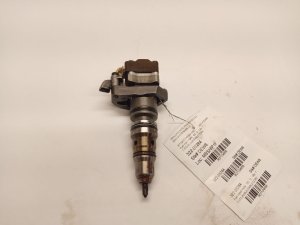
Used OEM Parts in Stock


New Aftermarket Parts Available


The information in this article is provided for general reference and educational purposes only. Vehicle specifications, procedures, and part compatibility can vary by production date, trim level, and region. Always consult your vehicle's factory service manual and verify part numbers before purchasing or performing repairs. Safety-critical components such as airbags, seat belts, and braking systems should be installed by a qualified professional.
- Ford Excursion:
- 🎬 Helpful Videos
- 🛍️ Shop This Part
- What's Unique About the 2003-2005 Ford Excursion
- Symptoms You May Notice
- Most Likely Causes
- Rare But Worth Checking
- Diagnosis Steps
- Parts You'll Likely Need
- Related Codes That Often Appear With This One
- Technical Service Bulletins (TSBs) & Recalls
- Platform-Specific Known Issues
- Mechanic-Grade Diagnostic Values
- Scan Tool Commands That Help
- Wiring & Ground Locations
- Real Owner Repair Stories
- OEM Part Supersession History
- Model Year Variations Within This Range
- Diagnostic Flowchart
- Other Known Issues on This Vehicle
- Used vs. New Parts: Buying Guide for This Vehicle
- Real Owner Stories
- 2003 Ford F-350 6.0L Power Stroke V8
- 2003 Ford Excursion 6.0L Power Stroke V8
- Ford 6.0L Power Stroke V8
- Related OBD-II Codes
- Frequently Asked Questions
- 🎟️ Get 5% Off