

P0245 on 2015-2023 Ford Mustang 2.3L EcoBoost: Wastegate Solenoid 'A' Circuit Low Causes and Fixes
This code indicates an electrical fault with the turbo's wastegate control solenoid. The most common fix is replacing the wastegate control solenoid (also called a boost control solenoid) or repairing its wiring harness. Expect the part to cost between $40 and $100.
- P0245 means your Mustang's computer has detected a low voltage problem in the turbo's wastegate control solenoid circuit.
- The car will protect itself by cutting turbo boost, making it feel very slow.
- The most likely fix is replacing the wastegate control solenoid (OEM Part # BL3Z-9K378-A), which is an affordable part and accessible for DIY replacement.
- Before replacing the part, always check fuse F32 (10A) in the engine bay fuse box and inspect the wiring harness for visible damage.
- Do not mistake this electrical code for a mechanical failure of the turbocharger itself.
What's Unique About the 2015-2023 Ford Mustang
On Ford's EcoBoost engine family, issues with turbocharger control components are relatively common, though P0245 isn't the most frequently discussed code for the 2.3L Mustang. While other EcoBoost platforms like the Escape and Fusion have specific Technical Service Bulletins (TSBs) for P0245 related to failed solenoids or blown fuses, no such specific TSB exists for the S550 Mustang. However, the underlying cause is almost always the same: an electrical failure in the boost control system. The solenoid is often shared across many Ford EcoBoost platforms, but its location and the specific wiring harness routing can differ.
Symptoms You May Notice
- Check Engine Light is on
- Significant loss of engine power and sluggish acceleration
- No boost from the turbocharger
- Vehicle may feel like a non-turbo base model
- Engine may run rough or hesitate
- Replacing the entire turbocharger. P0245 is an electrical code for a control component, not a mechanical code for the turbo itself.
- Replacing the wastegate actuator. The actuator is the mechanical arm that moves the wastegate; 🎬 Watch: How to install a performance wastegate actuator the solenoid is the electrical valve that controls it. The code points to the solenoid or its circuit.
Most Likely Causes
- Faulty Turbocharger Wastegate Control Solenoid 🔴 High Probability Solenoids are subjected to extreme heat and vibration in the engine bay, leading to internal electrical failure (shorts or open circuits) over time. This is a common failure point on many turbocharged vehicles, including the wider Ford EcoBoost family. Manufacturer Bulletin #TSB150162 notes that for other EcoBoost models like the Fiesta ST and Fusion, a lack of power with an illuminated MIL and code P0245 is a documented condition.
How to confirm: After checking wiring, test the solenoid's resistance with a multimeter. Compare the reading to the manufacturer's specification (typically 10-30 ohms). A reading of zero or infinity indicates a failed solenoid. You can also try applying 12V directly to the solenoid to see if it clicks. The solenoid is located near the turbocharger, often mounted on the engine or firewall with vacuum lines running to the turbo.
Typical fix: Replace the wastegate control solenoid. On the Mustang 2.3L, this is often part number BL3Z-9K378-A.
Est. part cost: $40-$100 - Wiring Harness or Connector Issue 🟡 Medium Probability The wiring to the solenoid can become brittle from heat cycles or damaged by abrasion or rodents, leading to a short to ground or an open circuit. On other Ford models like the Escape, chafing of the main engine harness is a known cause for this code per TSB SSM 48895, highlighting a potential vulnerability in harness routing.
How to confirm: Visually inspect the wiring harness leading to the wastegate solenoid for any signs of melting, chafing, or breaks. Unplug the connector and check for corrosion or bent pins. Use a multimeter to check for continuity from the PCM to the solenoid connector and verify there is no short to ground on the control wire.
Typical fix: Repair the damaged section of the wiring harness or replace the connector pigtail.
Est. part cost: $15-$50 - Blown Fuse ⚪ Low Probability On other Ford models like the Escape, a shared fuse (F34 in the engine bay) supplies power to multiple components including the wastegate solenoid. A short in any of these components can blow the fuse, triggering P0245. For the Mustang, the relevant fuse is F32 (10A) in the engine compartment fuse box, which powers the 'Turbocharger bypass valve'.
How to confirm: Consult the owner's manual or fuse diagram for the 2015-2023 Mustang. Locate fuse F32 in the engine bay fuse box. 🎬 Watch: How to find the wastegate actuator fuse location Visually inspect the fuse and test for continuity with a multimeter.
Typical fix: Replace the blown fuse. If it blows again immediately, there is an underlying short circuit that must be diagnosed.
Est. part cost: $1-$5
Rare But Worth Checking
- Faulty Powertrain Control Module (PCM): This is extremely rare. The PCM's internal driver for the solenoid circuit can fail. This should only be considered after all other possibilities, including wiring and the solenoid itself, have been definitively ruled out.
Diagnosis Steps
- Read the code and note any other codes present.
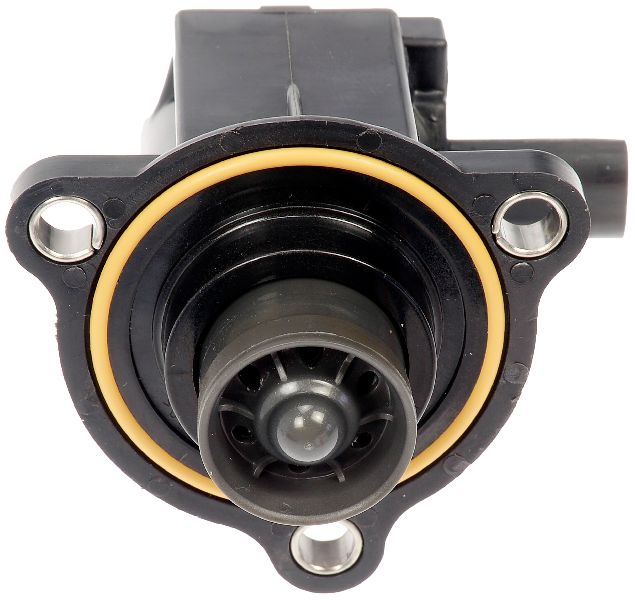
- Visually inspect the wastegate control solenoid, its connector, and the wiring harness leading to it. Look for obvious damage, melting, or loose connections. The solenoid is typically a black plastic valve with two or three hose ports and an electrical connector, located near the turbo.
- Check fuse F32 (10A) in the engine bay fuse box, labeled for the 'Turbocharger bypass valve'.
- If the wiring and fuse appear okay, disconnect the solenoid and test its internal resistance with a multimeter. A reading far outside the 10-30 ohm range indicates a bad solenoid.
- With the key on and engine off, check for battery voltage at the power wire in the solenoid's electrical connector.
- Check the control wire for a short to ground. There should be no continuity to ground with the solenoid disconnected.
- If the solenoid and wiring test good, the issue may be a rare PCM fault, but it's wise to re-check all wiring first.
Parts You'll Likely Need
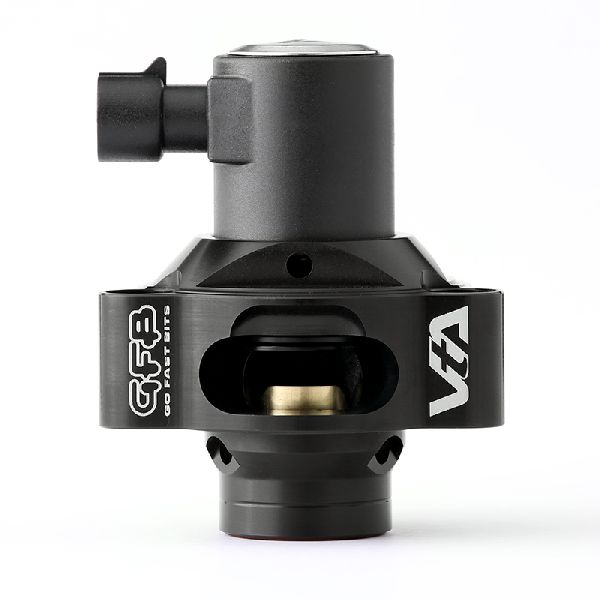
- Turbocharger Wastegate Control Solenoid / Boost Control Valve
(OEM #BL3Z-9K378-A (replaces AA5Z-9K378-A))— This solenoid is the most common point of failure for a P0245 code, as it is an electronic component that lives in a high-heat environment. This part number is widely used across many Ford EcoBoost engines.
Trusted brands: Motorcraft, Pierburg, Dorman
OEM price range: $70-$120
Aftermarket price range: $40-$80
Related Codes That Often Appear With This One
- P0299 — P0299 (Turbocharger Underboost) is a common companion code. If the solenoid fails and cannot command the wastegate to close properly, the turbo cannot build sufficient boost, leading to an underboost condition. 🎬 See how to diagnose a P0299 underboost code
- P0246 — P0246 is the opposite code, 'Wastegate Solenoid 'A' Circuit High'. They both point to an electrical fault in the same circuit, and sometimes an intermittent wiring problem can cause either code to appear.
- P0034 — P0034 ('Turbocharger Bypass Valve 'A' Control Circuit Low') is often used interchangeably or alongside P0245 in Ford documentation and can be triggered by the same faults.
Technical Service Bulletins (TSBs) & Recalls
- TSB 15-0149: Mentions P0245 for 1.6L GTDI engines in other Ford models, pointing to a known issue with wastegate solenoids in the EcoBoost family. *Note: The primary subject of this TSB is actually an idle issue on 3.5L engines and is not directly relevant to the P0245 cause on a 2.3L Mustang.*
- SSM 48895: Notes P0245 can be caused by a blown fuse (F34) on some 2017-2019 Ford Escapes due to a chafing wiring harness. This highlights the possibility of wiring issues as a root cause on the Mustang platform as well.
- Bulletin #SSM 47575: Notes that certain Ford vehicles may exhibit an open fuse F34 and an illuminated MIL with diagnostic trouble code P0245 in the powertrain control module.
- Bulletin #SSM 47086: Reports that vehicles built on or before January 24, 2018, may exhibit an open fuse F34 and an illuminated MIL with code P0245, and may also exhibit an all-wheel drive (AWD) fault.
- Bulletin #TSB150162: Documents lack of power with MIL illuminated and DTC P0245 on various Ford models equipped with 1.6L Gasoline Turbocharged Direct Injection engines.
Platform-Specific Known Issues
- Owner Experience: Solenoid Replacement Fix: A user on a Mustang forum with a 2016 EcoBoost reported getting P0245 along with a P0299 (underboost) code. The car had no power and wouldn't build boost. After checking fuses, they replaced the wastegate control solenoid (boost control solenoid). The repair was straightforward and immediately solved the problem, restoring full power. This confirms the solenoid as the primary culprit.
- Fuse Location Clarification: A YouTube video specifically for the S550 Mustang identifies the fuse for the 'turbocharger bypass valve' as being in position F32 (a 10-amp fuse) in the engine compartment fuse box. This is a critical first check before replacing parts.
Mechanic-Grade Diagnostic Values
- Wastegate Control Solenoid Coil Resistance — expected: 10 - 30 Ohms. Failure: A reading of infinity (open circuit) or near-zero (short circuit) indicates a failed solenoid.
- Voltage at Solenoid Connector (Power Wire) — expected: 11V - 14V (Battery Voltage) with Key On, Engine Off. Failure: Significantly low or no voltage points to a blown fuse (F32) or a break in the power supply wire.
Scan Tool Commands That Help
- Ford IDS (Integrated Diagnostic System) or FORScan: Output State Control / Actuator Self-Test — This function allows a technician to command the wastegate solenoid on and off with the engine off. It's used to audibly verify if the solenoid is clicking, confirming it is electrically functional and not seized. This helps isolate the problem to the solenoid itself versus a wiring or PCM issue.
Wiring & Ground Locations
- G104 — On the left front fender apron, typically behind the battery.. This is a major chassis and data link connector ground. While not directly for the solenoid, a poor connection here can cause a host of bizarre electrical issues and data errors that could mimic sensor or actuator faults.
- G201 — On the passenger side kick panel, near the PCM.. This is a primary ground for the Powertrain Control Module (PCM). A faulty PCM ground can cause incorrect readings and driver operations, potentially leading to a false P0245 code.
- Engine Harness Chafe Point — On other EcoBoost platforms, the harness is known to chafe on the corner of the driver's side cylinder head or nearby brackets.. While not specifically documented for the Mustang, it's a high-probability area to inspect. A short-to-ground of the solenoid control wire at a chafe point is a direct cause of a 'Circuit Low' code.
Real Owner Repair Stories
- Mustang6G.com Forum User (2016 Ford Mustang 2.3L EcoBoost) — Car suddenly lost all power, would not build any boost, and threw codes P0245 and P0299.
❌ Tried (didn't work) Checked fuses, which were all okay.
✅ What actually fixed it Replacement of the turbocharger wastegate control solenoid (also called boost control solenoid). The user reported the repair was simple and immediately restored full engine power and cleared the codes.
OEM Part Supersession History
AA5Z-9K378-A→BL3Z-9K378-A— Unspecified, but part supersessions are typically for design improvement, material change, or supplier change. The function and fitment remain the same.BL3Z-9K378-A→SOL-2 (Motorcraft Service Part Number)— This is the Motorcraft-branded service part number, which is equivalent to the Ford OEM number.
Model Year Variations Within This Range
- 2015-2023: While the Mustang received a facelift in 2018 which included minor engine power adjustments and a new 10-speed automatic option, the fundamental 2.3L engine architecture and the vacuum-actuated turbo wastegate control system related to code P0245 remained consistent. The same boost control solenoid and diagnostic principles apply across the entire S550 generation for this specific fault.
Diagnostic Flowchart
Other Known Issues on This Vehicle
Issues unrelated to this code that are worth knowing about as an owner of this generation:
- Head Gasket Failure ('Ecoboom') 🔴 High — More common on 2015-2019 models due to a block design flaw. Often occurs between 25k-60k miles, especially on tuned or aggressively driven vehicles.
- EVAP Canister Purge Valve Failure 🟡 Low — Very common across all model years. Often causes rough idle or hard starting after refueling. Usually throws codes like P1450, P144C, or P0496. (Ref: TSB 17-0047)
- Low-Pressure Fuel Sensor Failure 🟠 Medium — A known issue, particularly on earlier models. A faulty sensor can provide incorrect fuel pressure readings to the ECU, potentially leading to lean conditions and engine damage. (Ref: Recall 14S27 (for a small batch of 2015 models due to potential leaks))
- Carbon Buildup on Intake Valves 🟠 Medium — A common side effect of direct-injection engines. Over time (50k+ miles), buildup can cause rough idle, misfires, and power loss. More prevalent on the 2015 model year.
- High-Pressure Fuel Pump (HPFP) Wear 🟠 Medium — The mechanical HPFP can wear out over time, leading to fuel pressure issues under load and codes like P0089.
Used vs. New Parts: Buying Guide for This Vehicle
When a used part is the smart pick: For this repair, a used part is generally not recommended. The solenoid is an electronic component that degrades with heat and time, and the cost of a new, warrantied aftermarket or OEM part is low enough that the risk of a used part failing quickly outweighs the small cost savings.
Donor-vehicle mileage cap: roughly under 50000 miles for the part to have meaningful remaining life.
What to inspect on the donor part:
- Ensure the plastic housing is not cracked or showing signs of melting.
- Check that the vacuum nipples are intact and not broken.
- Verify the electrical connector pins are straight and free of corrosion.
- If possible, test the resistance with a multimeter before purchase; it should be between 10-30 Ohms.
Aftermarket brands forum-validated for this vehicle:
- Motorcraft (OEM)
- Pierburg (often an OEM supplier)
- Standard Motor Products (SMP)
- Dorman
Brands owners have reported issues with on this vehicle:
- No-name, unbranded parts from online marketplaces should be avoided due to inconsistent quality control.
Real Owner Stories
Aggregated from forums and TSBs cited above. Mileages and costs reflect what owners reported in those sources.
2016 Ford Mustang 2.3L EcoBoost
Symptoms: The car had no power and wouldn't build boost; the Check Engine Light was on with codes P0245 and P0299.
What fixed it: Replaced the wastegate control solenoid (boost control solenoid) after checking fuses.
Source hint: vehicle_specific_issues: Owner Experience: Solenoid Replacement Fix
2015-2023 Ford Mustang 2.3L EcoBoost
Symptoms: Significant loss of power and a P0245 code, described as a common and relatively easy DIY fix.
What fixed it: Replacing the boost control solenoid.
Source hint: Reddit r/ecoboostmustang
Related OBD-II Codes
Frequently Asked Questions
Does TSB 15-0149 apply to my 2.3L EcoBoost Mustang regarding the P0245 code?
Which fuse should I check on my 2015-2023 Mustang if I have a P0245 code?
What is the specific Ford part number for the wastegate control solenoid on a Mustang 2.3L?
Could a wiring issue like the one described in SSM 48895 affect my Mustang?
Where is the wastegate control solenoid located on the 2.3L EcoBoost engine?
What resistance reading should I see when testing the Mustang's boost control solenoid?
Helpful Videos
Used OEM Parts in Stock

New Aftermarket Parts Available

The information in this article is provided for general reference and educational purposes only. Vehicle specifications, procedures, and part compatibility can vary by production date, trim level, and region. Always consult your vehicle's factory service manual and verify part numbers before purchasing or performing repairs. Safety-critical components such as airbags, seat belts, and braking systems should be installed by a qualified professional.
- Ford Mustang:
- 🎬 Helpful Videos
- 🛍️ Shop This Part
- What's Unique About the 2015-2023 Ford Mustang
- Symptoms You May Notice
- Most Likely Causes
- Rare But Worth Checking
- Diagnosis Steps
- Parts You'll Likely Need
- Related Codes That Often Appear With This One
- Technical Service Bulletins (TSBs) & Recalls
- Platform-Specific Known Issues
- Mechanic-Grade Diagnostic Values
- Scan Tool Commands That Help
- Wiring & Ground Locations
- Real Owner Repair Stories
- OEM Part Supersession History
- Model Year Variations Within This Range
- Diagnostic Flowchart
- Other Known Issues on This Vehicle
- Used vs. New Parts: Buying Guide for This Vehicle
- Real Owner Stories
- 2016 Ford Mustang 2.3L EcoBoost
- 2015-2023 Ford Mustang 2.3L EcoBoost
- Related OBD-II Codes
- Frequently Asked Questions
- 🎟️ Get 5% Off